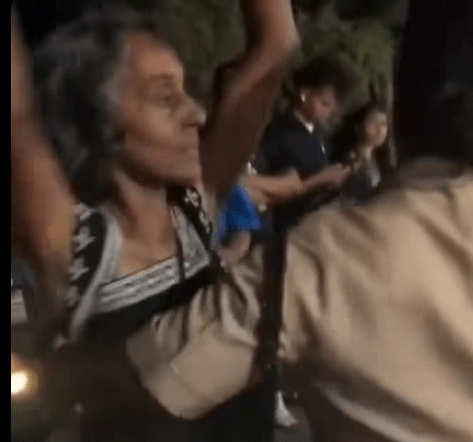
On the evening of July 22, 2026, five female civil society activists attended a government-organized vigil at Georgetown’s Kingston Seawall, gathered to honor victims of the deadly MV Barima ferry disaster. What began as a peaceful demonstration demanding government accountability has now escalated into a planned constitutional challenge against the Guyanese state, after three members of the group were arrested, detained, and allegedly assaulted by local law enforcement.
The activists had positioned themselves on the periphery of the official event, holding silent signs calling for the resignation and criminal prosecution of Public Works Minister Juan Edghill, whom they hold responsible for the preventable tragedy. Throughout the vigil, the group maintained orderly conduct, never disrupting proceedings, blocking access, or harassing other attendees. According to their official joint statement, no event participant raised any complaints about their presence for the first hour of the gathering. When the group moved to stand behind a large event banner, however, officers from the Guyana Police Force approached and ordered them to leave the location. When the activists asked to be told which law they had violated, police were unable to cite any specific regulation.
Choosing to avoid disrupting the vigil, the activists began returning to their original peripheral position, but police escalated the confrontation, arresting Sherlina Nageer, Salima Bacchus-Hinds, and Romola Lucas. Officers claimed the women held “illegal signs” and had not obtained official permission to protest, forcibly dragging Nageer to the Brickdam Police Station at Eve Leary. The three detainees were processed and released that night on their own recognizance, with a summons to return the next morning to meet with the regional police commander. The following day, police dropped all pending charges and extended an apology to the activists – but the group has rejected the gesture as insufficient and insincere.
Nageer, speaking publicly after the incident, described the apology as conditional and dismissive, noting senior officers offered it only on the basis of “if you think you deserve an apology.” For the activists, a formal apology does not address the core harm of arbitrary detention and constitutional rights violations. “The assault and rights violation are real, actual serious things, and saying you’re ‘sorry and just get out of my office’ does not match the scale of what happened,” Nageer told Demerara Waves Online News.
The group is currently seeking legal counsel to file a constitutional challenge at the Guyana High Court, aiming to set a legal precedent that prevents law enforcement from violating citizens’ fundamental rights to peaceful assembly in the future. If the suit moves forward, its core goal will be to legally bar police from arbitrary arrests and forced removals of peaceful protestors from public gatherings. The activists emphasize that Guyana’s constitution explicitly protects the right to peaceful assembly, association, and demonstration under Article 147, which states that “no person shall be hindered in the enjoyment of his or her freedom of assembly, association and freedom to demonstrate peacefully.”
Alongside the planned constitutional lawsuit, the group has submitted an official complaint to the Guyana Police Force’s Office of Professional Responsibility (OPR), which confirmed that OPR representatives received them well during an initial meeting this week.
In their joint statement, the activists characterized the verbal harassment, physical abuse, and arbitrary detention of the three women as a clear case of state overreach and abuse of power that threatens the constitutional rights of all Guyanese citizens. They have rejected attempts to intimidate them into silence, calling on all Guyanese to speak out against the gradual erosion of constitutional and human rights by government and law enforcement officials, and to join their demand for full and lasting accountability.
Beyond the confrontation with police, the group has reaffirmed their core demands related to the MV Barima disaster: they continue to call for Edghill’s resignation and full criminal accountability, an independent and transparent public investigation into the tragedy, and a complete overhaul of Guyana’s coastal and inland public transportation systems. The activists argue that the ferry disaster was entirely preventable, caused by systemic failures including inadequate oversight, ignored safety protocols, failure to complete necessary port infrastructure, and delays in commissioning modern, safe ferry vessels. “Persons must not suffer and die because they are unable to afford a plane ticket, because systems lack oversight, protocols are ignored, stellings not built, and more modern ferries not commissioned in a timely manner,” their statement read.