分类: politics

  • Minister pilots major labour law reforms

    Minister pilots major labour law reforms

    In a landmark move to update decades-old employment regulations, Trinidad and Tobago’s Labour Minister Leroy Baptiste introduced a transformative amendment bill to the Senate Wednesday that aims to rewrite the rulebook for retrenchment practices and strengthen safeguards for workers facing job loss.

    The Retrenchment and Severance Benefits (Amendment) Bill 2026 brings a slate of sweeping changes, including stricter accountability requirements for employers, expanded worker protections, and a marked increase in the minimum severance payments companies must issue to laid-off staff. Baptiste outlined that every core stage of the retrenchment process — from initial layoff planning to final severance payout — will be restructured under the new framework.

    One of the bill’s most financially impactful adjustments comes via Clause 16, which revises the tiered minimum severance payment structure to deliver higher compensation for displaced workers. For non-monthly paid (hourly, daily or weekly) workers with one to fewer than five years of service, the minimum payout rises to three weeks’ pay per year of employment, while monthly-rated workers in the same tenure bracket will receive one month’s pay per year. For workers with five or more years of service, non-monthly workers get four weeks’ pay per year for the first four years, jumping to six weeks’ pay per year for each year starting from the fifth. Monthly-rated workers in this longer tenure group will receive one and a quarter months’ pay per year for the first four years, increasing to one and three-quarter months per year from the fifth year onward.

    Clause 9 of the bill introduces a formal, regulated framework for temporary layoffs, a provision missing from the current outdated law. The new rule caps unagreed temporary layoffs at 90 calendar days; if a worker remains off the job beyond this window, they are automatically classified as redundant starting on the 91st day, triggering the employer’s legal requirement to issue full severance benefits. The legislation does build in limited flexibility: employers can extend the 90-day period if they reach a written agreement with either a recognized majority union representing the worker or the affected employee directly.

    Another key mandate comes via Clause 10, which requires mandatory consultation with recognized majority unions before employers can issue formal redundancy notices. The mandatory consultation period is capped at 21 days unless both parties agree to an extension, and the bill mandates that discussions must be “meaningful and genuine” covering six critical areas: the justifications for proposed layoffs, strategies to avoid or reduce the number of job cuts, criteria for selecting which workers will be terminated, measures to ease the impact on displaced staff, paid time off for job searching, and alternative arrangements such as redeployment, reduced working hours, or temporary layoffs. Employers are also required to disclose all relevant information to facilitate these talks, with a narrow exception for information that would cause material harm to the business if released.

    Additional worker-focused provisions include Clause 12, which requires employers that fail to meet the new 45-day minimum notice period for layoffs to pay the equivalent of wages for the full missed notice period. Clause 13 enshrines a new right for workers facing redundancy to take reasonable paid time off to seek new employment. Clause 14 adds a rehiring preference mandate: if an employer looks to fill a role identical or substantially similar to one made redundant within the previous six months, they must prioritize offering the position to the previously retrenched worker, and are required to make reasonable efforts to notify former staff of the opening.

    Addressing the Senate during debate on the legislation, Baptiste framed the bill as one of the most consequential overhauls to the nation’s labour legal framework in a generation, saying it carries profound social, economic and moral significance for working people across the country. The reform directly addresses the lived experiences of workers who have faced job displacement due to corporate restructuring, insolvency, receivership and business collapse, he added.

    Baptiste also used the speech to criticize the previous People’s National Movement (PNM) administration, saying the public was misled into believing comprehensive labour reform was a top PNM priority, yet the update languished for years without decisive action. He noted that the existing retrenchment law has not been updated since 1985, calling the outdated framework one of the country’s “greatest injustices” against workers, pointing to the 2016 closure of ArcelorMittal as a glaring example of the law’s failures. That sudden shuttering displaced roughly 1,400 workers including contract staff, and laid bare the gaps in the country’s outdated employment protection rules, Baptiste said.

  • Leacock shocked by info ULP gov’t was collecting on citizens (+video)

    Leacock shocked by info ULP gov’t was collecting on citizens (+video)

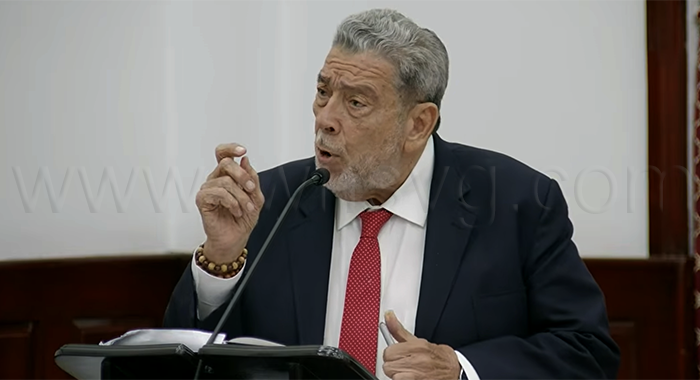
    A fierce political debate has unfolded in St. Vincent and the Grenadines’ Parliament over a proposed national security bill, pitting current Deputy Prime Minister and National Security Minister St. Clair Leacock against former Prime Minister and Opposition Leader Ralph Gonsalves. The tension stems from Leacock’s recent startling revelations about the extent of citizen data collected by Gonsalves’ Unity Labour Party (ULP) administration, which held power for 25 years until its electoral defeat in November 2024.\n\nSpeaking during debate on the Advanced Passenger Information and Passenger Name Record Bill on Tuesday, Leacock expressed shock at the types of intelligence that now cross his desk, collected by the previous government. “When I see the things that come across my desk in this role… sometimes I hold my head and ask, ‘Is this the kind of intelligence the former prime minister held on me, my party, and ordinary private citizens during his time in office?’” Leacock told the legislative chamber.\n\nThe bill, designed to strengthen border and national security by standardizing collection and sharing of traveler data, ultimately passed with no formal unified position from the three-member opposition. Gonsalves, a trained lawyer, launched sharp criticism of the legislation, arguing that it reads like an unfinished draft rather than a final piece of law. He raised pointed concerns about gaps in data protection, unclear frameworks for official appointments, and ambiguous timelines for mandatory information submission, also questioning whether the bill had completed required vetting through the CARICOM Legal Affairs Committee (LAC).\n\nLeacock pushed back forcefully against these critiques, framing Gonsalves’ objections as part of a long-standing pattern of authoritarian control over policy. He told Parliament, “If it is not under the suzerainty of the Honourable Ralph Everett Gonsalves, it ain’t good. Nobody is good enough for him unless he presides over it.” The Central Kingstown MP added that as a former prime minister and decades-long national security minister, Gonsalves has a greater national responsibility to avoid undermining the credibility of current national and regional security institutions. Leacock accused Gonsalves of nitpicking over minor drafting details like punctuation to erode public trust in the new government’s work, calling his focus “all semantics” that amounts to an attack on the integrity of public servants.\n\nLeacock further alleged that Gonsalves’ 25-year administration left St. Vincent and the Grenadines with a disjointed, ramshackle national security apparatus that the new government is working to repair. He pointed to port security as a key example: while the previous ULP government installed passenger screening equipment at the main port, it failed to put in place legal mechanisms that would automatically share screening data with police, leaving critical security gaps. On the question of regional vetting, Leacock clarified that the bill was already reviewed by the CARICOM LAC during Gonsalves’ own tenure, and passed through all required regional processes when Gonsalves led the country’s involvement in CARICOM IMPACS, the regional security body.\n\nResponding to Gonsalves’ comment that the current New Democratic Party administration would only serve one term, Leacock framed the remark as evidence of the opposition’s core goal of undermining the new government rather than working for the national good. “It points to a poison that in order for this country to go forward, we must not underestimate the hurdles that remain for us to climb. Your single purpose is to ensure that we become a one-term government,” he said.\n\nIn his rebuttal, Gonsalves rejected all of Leacock’s claims, denying that he had ever criticized or disrespected regional security bodies.\n\nLeacock closed his argument by reaffirming the core purpose of the new legislation: to protect travelers entering and exiting St. Vincent and the Grenadines, boosting public confidence that the country offers both safety and streamlined access for visitors. He noted that any minor drafting imperfections can be corrected through regular governance processes down the line, and there is no justification for delaying the critical security framework the country needs to address modern transnational threats that may outpace the capacity of the outdated system inherited from the previous administration.

  • US talks on third-country nationals ‘slowed down quite significantly’

    US talks on third-country nationals ‘slowed down quite significantly’

    In a formal address to the country’s parliament on Tuesday, St. Vincent and the Grenadines’ (SVG) Minister of Foreign Affairs Dwight Fitzgerald Bramble issued a clear, public clarification that the Caribbean nation has not entered into any binding agreement with the United States centered on third-country national relocation arrangements, confirming that negotiations over the proposed deal have slowed to a near standstill in recent weeks.

    Brambles’ comments came in direct response to a question posed by opposition senator Carlos James, who asked the ruling administration to confirm whether the U.S. had submitted a formal request for a third-country agreement — a deal that would allow for the transfer of non-U.S. nationals from American territory to SVG for processing and relocation — and whether Kingstown had finalized and signed any such arrangement.

    Bramble laid out the full timeline of the outreach to parliament, explaining that the U.S. government first approached SVG with a formal request to explore a partnership focused on third-country national issues, and followed the initial request by sharing a draft draft memorandum of understanding (MoU) for SVG’s leadership to review. He emphasized that this U.S. initiative is not targeted exclusively at SVG, but is part of a broader regional outreach effort that includes all member states of the Organization of Eastern Caribbean States (OECS).

    In line with the regional scope of the proposal, Bramble noted that SVG has coordinated closely with its OECS neighbors to review the draft text collectively, approaching the potential arrangement through a collaborative regional framework rather than engaging in independent negotiations. Despite months of preliminary discussions and review of the draft document, Bramble stressed that talks have never advanced to the stage of a binding commitment.

    When updating lawmakers on the current state of negotiations, Bramble confirmed that the process has decelerated sharply over the past few weeks, with little to no forward movement on finalizing any terms. He repeated multiple times during his address that no agreement has been signed, nor has any finalized binding deal ever been presented to SVG’s government for approval.

    Brambles did not provide additional specific details on the contents of the draft MoU, including what specific groups of migrants would have been covered by any finalized arrangement. The question from the opposition senator comes amid growing regional and global debate over third-country national processing and relocation schemes, which have become a controversial topic of migration policy discussions across the Americas in recent years. Bramble’s address made a clear distinction between receiving and reviewing a proposal, and formally agreeing to enter into a binding deal, leaving no ambiguity about SVG’s current position on the proposed U.S. partnership.

  • Bevelhebber Labadie: Nieuwe fase voor leger met focus op discipline en vernieuwing

    Bevelhebber Labadie: Nieuwe fase voor leger met focus op discipline en vernieuwing

    On April 25, a historic leadership transition took place for a national army, as newly installed Brigadier General Mitchell Labadie formally took command from President Jennifer Simons during an official inauguration ceremony. In his first public address after assuming office, the newly appointed commander laid out a clear, ambitious vision for the institution’s next chapter, centered on three core pillars: strengthening organizational discipline, driving comprehensive modernization, and reinforcing the army’s core operational capabilities.

    Labadie opened his remarks by framing his appointment as a profound honor, describing the role as a “calling to serve, protect, and lead” the nation and its military personnel. He gave a public assurance that under his leadership, the national army will be guided by unwavering discipline, uncompromising integrity, and steady determination, telling attendees and the public that “the army is in capable hands.”

    The commander emphasized that the armed forces are entering an entirely new phase of development that requires balancing respect for long-held institutional traditions with intentional space for progressive change. “We will strengthen our foundational structures, raise our professional standards, and further shape our unique identity as a national military force,” he stated.

    One of the top policy priorities Labadie identified is rebuilding and embedding strict discipline across every rank and organizational layer of the army. Beyond cultural reform, he also plans to streamline command structures to improve operational efficiency, and advance widespread professionalization through expanded training and education programs for all personnel.

    Military modernization is another key focus of his tenure, with Labadie noting that shifting global security dynamics and emerging hybrid threats demand targeted investments in new technologies, updated equipment, and enhanced operational capabilities. “We must improve our ability to monitor, patrol, and protect our national territory,” he explained, adding that updated infrastructure and resources are critical to meeting 21st-century security challenges.

    Labadie also addressed a long-standing demographic challenge facing the force: aging personnel across multiple branches caused by years of low recruitment intake, which has negatively impacted operational readiness. To reverse this trend, he announced plans for targeted recruitment campaigns and improved compensation and recognition for serving members to attract new talent and retain existing personnel.

    In addition to structural and operational reforms, the new commander stressed that institutional integrity and mutual trust between leadership and troops will be non-negotiable priorities. He said he expects commitment, discipline, and loyalty from all service members, and pledged to uphold the same standards in his leadership of the force. “Leadership is a mutual obligation,” he noted.

    Closing his inaugural address, Labadie called for unity across the entire armed forces, reinforcing a shared commitment to national service. “We will form one corps, one team, one military, united by the same mission and the same dedication to our country,” he said.

  • SIP report notes stable climate of press freedom in the country

    SIP report notes stable climate of press freedom in the country

    Santo Domingo, Dominican Republic – A new mid-year assessment from the Inter-American Press Association (IAPA) has confirmed that press freedom conditions across the Dominican Republic have held steady between October 2025 and April 2026, with no documented cases of direct state censorship or coercive regulatory changes targeting independent journalism. The finding aligns with the country’s strong 2025 performance in the IAPA’s Chapultepec Index, a global benchmark for measuring press freedom respect, where the Dominican Republic earned a top score of 82.17. Researchers confirm that none of the core metrics tracked by the index have shifted significantly over the past six months. The assessment centers on the ongoing debate over a planned overhaul of the country’s decades-old Law 6132, the foundational legislation governing freedom of expression and the dissemination of thought in the Dominican Republic. The proposed reform bill is designed to expand legal protections for working journalists, but it has stalled in the National Congress amid unresolved partisan and stakeholder disagreement. The most contentious provision calls for the creation of a new National Institute of Communication, which critics argue could be weaponized as a tool for indirect censorship, derailing broader consensus on the bill that has widespread support for its other guardrails for press freedom. Authored by Miguel Franjul, director of leading Dominican outlet Listin Diario and vice president of IAPA’s Dominican Republic Press Freedom Commission, the report also acknowledges that while the overall climate for independent reporting remains stable, a handful of isolated but alarming incidents have disrupted journalistic work in recent months. In December 2025, two reporters – María Tejeda of CDN News and Natalia Estrella of Teleuniverso – were physically attacked by staff of the Santiago Water and Sewerage Corporation (Coraasan) while on assignment. The journalists were covering a public water distribution operation in a neighborhood that had been without piped service for weeks following a major pipe rupture, a story that drew public frustration over government response delays. More recently, in March 2026, a confrontation between law enforcement and reporters unfolded during an arrest operation in eastern Santo Domingo. The operation targeted a local teacher accused of assaulting a child at a nearby daycare center, and when journalists arrived to cover the incident, a uniformed National Police officer cocked a firearm and pointed it directly at the assembled press corps. Other officers deployed pepper spray to block reporters from documenting the arrest, and relatives of the accused teacher also allegedly joined in attacking the journalists. The IAPA report reaffirms that these isolated incidents do not represent a systemic rollback of press freedom gains in the country, but urges Dominican authorities to address the attacks, hold responsible parties accountable, and resolve the ongoing impasse over media law reform to cement the country’s status as one of the region’s strongest performers for free expression.

  • Towards a new doctrine for the Armed Forces of Haiti

    Towards a new doctrine for the Armed Forces of Haiti

    Against a backdrop of ongoing efforts to strengthen Haiti’s national security infrastructure and align its military institutions with democratic standards, Haiti’s Minister of Defense Mario Andrésol has launched a key initiative outlined in his 2026-2027 Action Plan: the development of a new core doctrine for the Armed Forces of Haiti (FAd’H).

    To ensure the final document draws on diverse, expert insight, Andrésol has assembled a working group of more than a dozen specialists spanning multiple relevant fields. The collaborative, consultation-driven approach is designed to pool perspectives from military practitioners, defense analysts, geopolitical scholars, strategic and security studies researchers, legal advisors, and criminologists, bringing together cross-sector expertise that goes beyond traditional military-only planning.

    The group includes a roster of high-profile, experienced professionals: former military leader General Prosper Avril, Colonel Antoine Atouriste, Lieutenant-Colonel Marie Sandry Charles Pierre, Prosper Charles of the Security Working Group, military historian Georges Michel, and Me James Boyard, a prominent Haitian security expert who also serves as Chief of Staff to Minister Andrésol, among other qualified contributors.

    Guided by clear framing requirements, the working group has been instructed to embed two critical priorities into the new doctrine. First, the document must update the FAd’H’s core mission to address the growing landscape of asymmetric and hybrid threats that challenge modern national security, expanding the traditional scope of national defense beyond conventional conflict. Second, the doctrine must strictly adhere to the normative standards expected of an armed force operating within a democratic society, including explicit commitments to human rights protections, compliance with international humanitarian law, and adherence to established principles of healthy civil-military relations.

    Minister Andrésol has expressed confidence that the interdisciplinary approach to drafting will produce a technical, rule-based document that is comprehensive, contextually relevant, and widely credible. The finished doctrine will serve as the foundational governing framework for what Haiti aims to build: a modern, professional military capable of adapting to a diverse range of national security challenges.

  • Return of the PM to Haiti, assessment of his official visit (video)

    Return of the PM to Haiti, assessment of his official visit (video)

    Haitian Prime Minister Alix Didier Fils-Aimé returned to Port-au-Prince on Thursday, April 24, 2026, following an official working visit to the United States, and held a press conference immediately upon arrival at the Diplomatic Salon of Toussaint Louverture International Airport to outline key outcomes of his trip.

    Waiting to welcome the prime minister on the tarmac was a high-level cross-institutional delegation, including top members of the Haitian government: Marie Élisabeth Régine Joseph Haddad, Secretary General of the Presidency; Odilien Charles, Secretary General of the Council of Ministers; Lieutenant-General Derby Guerrier, Commander-in-Chief of the Armed Forces of Haiti (FAd’H), accompanied by senior military staff; and Vladimir Paraison, Director General of the National Police of Haiti (PNH), alongside the national police high command.

    In his opening remarks to reporters, Fils-Aimé framed the visit as a productive strategic engagement that aligned with Haiti’s most pressing national priorities: curbing widespread gang violence, shoring up fragile state institutions, and laying the groundwork for long-term, sustainable economic rebound. Over the course of his trip, the prime minister held more than 20 bilateral meetings with representatives of global and regional stakeholders.

    He placed particular emphasis on constructive, forward-looking discussions with senior leadership from three of the world’s leading multilateral financial institutions: the World Bank, the International Monetary Fund (IMF), and the Inter-American Development Bank (IDB). Fils-Aimé noted that these talks centered on accelerating high-impact immediate programs focused on driving domestic private investment and expanding formal job opportunities across the country. “Every new job that we create is a direct, tangible blow to insecurity,” he emphasized, linking economic opportunity directly to the country’s ongoing fight against criminal gangs.

    On the security and governance fronts, Fils-Aimé shared that top global leaders have reaffirmed their unwavering support for Haiti’s efforts to restore full state sovereignty across national territory. These leaders include Organization of American States (OAS) Secretary General Albert Ramdin, U.S. Secretary of State Marco Rubio, United Nations Secretary General António Guterres, and other senior international figures. During his meetings, the prime minister also pushed for the rapid, full deployment of the multinational Gang Suppression Force (GSF) and called for international support to strengthen Haiti’s national electoral infrastructure ahead of upcoming democratic processes.

    Closing his remarks, Fils-Aimé extended sincere gratitude to the international community and U.S. congressional leaders for their continued commitment to Haiti’s stability and development, framing the visit as a critical step forward in rebuilding partnerships to address the country’s most urgent challenges.

  • Opposition Slams Government on Crime, Commissioner Fires Back

    Opposition Slams Government on Crime, Commissioner Fires Back

    As a wave of violent criminal incidents including homicides, abductions and missing person cases continues to grab public attention, the governing Briceño administration is facing mounting political pushback from the country’s main opposition bloc. During a press briefing held this week by the United Democratic Party (UDP), opposition senator Patrick Faber launched a sharp critique of the current government’s public safety strategy, arguing that the recent uptick in violent crime proves the administration has failed to retain control over national security.

    Faber emphasized that criminal activity of this frequency and severity would have prompted sweeping, coordinated national intervention from previous governments, calling into question the current administration’s commitment to protecting civilian communities. Following the opposition’s accusations, local journalists directly pressed Commissioner of Police Richard Rosado to address claims that law enforcement is losing ground in the national fight against violent crime.

    In his direct response, Rosado pushed back against the opposition’s criticism, noting that political factions are fully entitled to their public perspectives. He pointed out that the UDP held national power for 13 years prior to the current administration’s term, challenging the opposition to put forward concrete, actionable policy solutions instead of relying solely on criticism of ongoing efforts.

    Rosado underscored that the national police department is exhausting all available resources to curb violent crime, including leveraging all legal frameworks at the force’s disposal, integrating modern digital technology into patrol and investigation work, and deploying both community-led and intelligence-driven policing strategies to keep criminal activity at a manageable level for communities across the country. Despite law enforcement’s insistence that it is operating at full capacity, questions remain among the general public over whether these current efforts are sufficient to reverse the recent rise in violent incidents and restore widespread public confidence in national safety.

    This report is adapted from a transcribed broadcast of a national evening news program, released digitally on April 24, 2026.

  • Heated Land Dispute Draws Three Ministers to San Marcos

    Heated Land Dispute Draws Three Ministers to San Marcos

    On April 24, 2026, escalating tensions over a contested land parcel in southern Belize’s San Marcos Village prompted three high-ranking government officials to travel to the Toledo District to mediate between conflicting parties. The confrontation has pitted local Maya residents against a private landowner, with the community claiming the territory is held as communal land to which all villagers should retain legal access. According to local residents, the private landowner has recently expanded activities beyond agreed boundaries, encroaching on the land the community has long relied on for collective use.

    As public concern over the standoff grew, Dr. Louis Zabaneh, Minister of Indigenous People’s Affairs, led the government’s on-site intervention, accompanied by Oscar Requena, Area Representative for the district, and Oscar Mira, Minister of Home Affairs. The delegation’s primary priority was to hear unfiltered concerns directly from San Marcos residents and prevent the simmering disagreement from boiling over into open conflict.

    Following a closed-door talks with community representatives, Dr. Zabaneh outlined the government’s approach in an on-the-record interview. “We held a very candid and respectful discussion of the issues,” he explained. “We did both an in-depth look at the situation on the ground in San Marcos where the residents are claiming that a private land owner is impinging on areas that should be communal land or land that residents should have access to. Then we looked at the broader picture of the process ahead with the review panel and how we can move forward towards a resolution.”

    Zabaneh noted that community members spoke openly and passionately about their longstanding connection to the land and their concerns over the encroachment. Following the meeting with villagers, the ministerial delegation planned to hold a separate negotiating session with the private landowner, with the explicit goal of identifying common ground for compromise. The ultimate objective, Zabaneh stressed, is to de-escalate immediate tensions and work toward a permanent, mutually acceptable long-term resolution to the conflict. “We are trying at least, we don’t know how it will transpire. But we are giving it our best shot,” he added.

    The local landowners’ association, Toledo Private and Lease Landowners Limited, has pushed back against the community’s claims. In a statement ahead of the mediation, the group confirmed that the family holding the legal title to the disputed parcel has not taken any action to provoke tensions, asserting that the landowner is only carrying out restoration work on territory that had been cleared previously.

    This report is adapted from a transcript of an evening television newscast, originally published online.

  • Ministry of Defense delivers equipment to the Army to strengthen operational capabilities

    Ministry of Defense delivers equipment to the Army to strengthen operational capabilities

    In a formal ceremony held at the Dominican Republic’s “August 16th” Military Camp, the nation’s Ministry of Defense has formally transferred a large shipment of upgraded military gear to the Dominican Republic Army, marking a key milestone in the government’s ongoing campaign to modernize and strengthen the country’s national defense institutions.

    The handover ceremony was led by Defense Minister Lieutenant General Carlos Antonio Fernández Onofre of the Dominican Republic Army, with the shipment officially accepted by Army Commanding General Major General Jorge Iván Camino Pérez. Senior defense officials including Deputy Defense Ministers, the Armed Forces Inspector General, and members of the Armed Forces General Staff and high military command were in attendance, signaling broad institutional backing for the armed forces’ modernization agenda.

    Per an official press statement from the defense ministry, the equipment delivery is executed in full alignment with directives issued by Dominican Republic President Luis Rodolfo Abinader Corona, who serves as the supreme authority over the nation’s Armed Forces and National Police. The shipment forms a core component of the administration’s broader institutional strengthening and modernization drive for the country’s military.

    The new equipment will be distributed to seven key frontline units critical to national defense and internal security: the 1st Battalion “Juan Pablo Duarte”, 2nd Battalion “Francisco del Rosario Sánchez”, 3rd Battalion “Matías Ramón Mella” under the First Infantry Brigade, as well as the Army’s elite Commando Battalion.

    The full shipment includes a range of advanced firearms: IWI ARAD 5.56-caliber assault rifles, Negev 7.62-caliber machine guns designed for integration with patrol vehicles and transport platforms, precision rifles from Barrett and Daniel Defense, alongside more than 11,000 custom work uniforms manufactured domestically by the Dominican Military Industry, plus a range of additional operational supplies.

    This deployment of new equipment is rooted in the administration’s long-term strategic vision to build a more modern, efficient, and rapidly responsive Dominican Armed Forces. The upgrade is designed to boost the operational readiness of frontline troops and optimize their performance across a wide range of operational scenarios.

    Military officials note that the integration of these new weapons and systems represents a substantial leap forward in military technology for the Dominican Army, bringing improvements to operational reliability and adaptability that will directly enhance the effectiveness of military units as they carry out their core national defense and security missions.