分类: politics

  • How Much Taxpayer Money Really Flowed Through Kukulcan?

    How Much Taxpayer Money Really Flowed Through Kukulcan?

    A newly released cache of leaked invoices has reignited demands for transparency and accountability at Belize’s Ministry of Defense, pulling a little-known private firm, Kukulcan Company Limited, into the center of a growing public procurement scandal.

    The documents, which were first obtained by local broadcaster News Five, lay out a clear pattern of deliberately structured small-value payments: 240 leaked invoices from Kukulcan processed through the ministry’s Smart Stream payment system show that 92.2% of the verified payments came in under the $10,000 threshold that triggers mandatory formal procurement oversight in the country. Of the 205 legible invoices reviewed by reporters, 189 were under the scrutiny limit, adding up to a verified total of more than $1.7 million in public spending. The Ministry of Defense covered nearly $1.45 million of that confirmed sum, according to the leaked records.

    The leaked documents only cover transactions between May 2021 and April 2025, but the partial snapshot included in the leak only captures activity from a handful of months across that four-year window. When reporters examined the sequential numbering of the leaked invoices, they found the earliest document in the batch is numbered 9, while the most recent carries the number 1,113. This sequencing strongly suggests that more than 1,100 Kukulcan invoices exist in the ministry’s payment system, meaning the total public funds directed to the firm could be far higher than the $1.7 million confirmed so far.

    The scandal has already triggered administrative action: Defense Minister Florencio Marin Junior has been placed on administrative leave pending the outcome of a full government audit into the ministry’s contracting and finance practices. The leaked records also confirm that this practice of structuring small-value payments to bypass oversight is not limited to the previously reported Mira Millions scandal, pointing instead to a systemic pattern of corruption embedded in the Ministry of Defense’s procurement processes that allows officials to manipulate the Smart Stream system and skirt established rules.

    Public questions are now mounting over who is ultimately responsible for the scheme. Investigators and critics are pressing for answers on whether senior ministry officials ordered vendors to split large contracts into multiple small invoices to avoid scrutiny, and where accountability will fall. Current questions center on senior finance and contracting officials including Financial Officer Salvador Alas and Kukulcan CEO Dario Tapia, as well as former official Oscar Mira, who has dismissed the scandal as “political noise” and says he is prepared to cooperate with the official audit process. Marin Junior has also declined to comment in detail on the allegations, saying he will speak publicly only after the independent audit is completed, leaving the public to question how senior leadership could have been unaware of the widespread practice, amid ongoing accusations of nepotism and cronyism tied to the contracting process.

    This report is based on a televised investigation broadcast by News Five in Belize, with a full transcript published to the outlet’s digital platform.

  • Towards the institutionalization of the social protection budget in Haiti

    Towards the institutionalization of the social protection budget in Haiti

    On June 30, 2026, Haiti’s Ministry of Social Affairs and Labor kicked off a landmark hybrid seminar focused on embedding the National Policy for Social Protection and Promotion (PNPPS) into formal national budget structures, hosted at Port-au-Prince’s Karibe Hotel. The gathering brought together a diverse coalition of stakeholders, including senior Haitian government officials, members of the national Sectoral Roundtable, and technical experts from leading regional and global development bodies: the Economic Commission for Latin America and the Caribbean (ECLAC), the World Food Programme (WFP), the World Bank, UNICEF, and the International Labour Organization.

    In his opening address to attendees, Minister of Social Affairs and Labor Marc-Elie Nelson framed the budget institutionalization effort as a critical step to supercharge Haiti’s long-term battle against deep-rooted poverty, systemic inequality, and widespread community vulnerability. Nelson highlighted two existing government initiatives that have already laid critical groundwork for national scale-up: the Klere Chimen program and the Multisectoral Emergency Program (PUM), both designed to support social reintegration and stabilize vulnerable populations. These programs, he noted, serve as proven pilot models for a unified national social protection framework, which already relies on the Ministry’s SIMAST digital information system as the country’s official social registry.

    Nelson stressed that embedding PNPPS within the government’s 2026–2029 Three-Year Action Plan and aligning the policy with national program budgeting is non-negotiable to secure consistent, long-term funding, streamline cross-agency interventions, and strengthen sector governance. He closed his opening remarks by calling for coordinated action from all public institutions and international technical and financial partners to deliver more equitable, accessible, and sustainable social protection services to all Haitian people.

    A core focus of the seminar was the launch of a new 57-page consultancy report, *Analysis and Recommendations for the Budgetary Institutionalization of the National Policy for Social Protection and Promotion in Haiti*, authored by ECLAC external consultant and public finance expert Lordis Bernard. The report outlines the most pressing barriers to sustainable social protection financing in Haiti, analyzes the country’s current socio-economic landscape, existing PNPPS institutional architecture, and the national budget system. It proposes a clear pathway to integrate the social protection policy into the state’s core budget priorities, centered on a program-based budgeting approach, and lays out strategic recommendations to strengthen PNPPS’s long-term viability, governance, and sustainability.

    Lucny Cadet, coordinator of the Ministry of Social Affairs and Labor’s Studies and Programming Unit (UEP), praised the report’s rigor and framed the current moment as a turning point for Haitian social protection. “The question is no longer whether we should finance social protection,” Cadet explained, “it is how to better plan, target, coordinate, and evaluate these investments to maximize their economic and social impact.” He emphasized that the end goal is a national social protection system that is more integrated, efficient, responsive, and reliably funded, adding: “Social protection should not be seen as an unproductive expense, but as a strategic investment in human capital, social stability, household resilience, and more inclusive growth.”

    Erwan Rumen, acting WFP country director for Haiti, echoed this framing, affirming that social protection is an indispensable foundation for long-term national development in the country.

    Closing the seminar, Marie Herolle Michel, director general of the Ministry of Social Affairs and Labor, reaffirmed the Ministry’s commitment as the lead sectoral agency to continue deepening collaboration with all national and international stakeholders. The goal, she said, is to build a Haiti with a coherent, integrated, resilient, and adequately funded social protection system, supported by sustainable mechanisms that deliver tangible results for the needs of the Haitian people. Full versions of the report (in French) and Minister Nelson’s opening address are available for public download via HaitiLibre’s document portal.

  • Did They Step Aside or Were They Pushed?

    Did They Step Aside or Were They Pushed?

    In the thick of an ongoing official audit into Belize’s Ministry of Defense, swirling uncertainty over the sudden leave of absence granted to two senior government figures — Oscar Mira and Florencio Marin Junior — has dominated domestic political discourse since late June 2026. While the official government narrative frames the pair’s temporary step-down as a voluntary request, persistent political speculation has claimed that Prime Minister John Briceño explicitly demanded their removal to clear space for the unimpeded audit. This ambiguity has kept local political rumor mills spinning for weeks, prompting a rare on-the-record interview with Mira, the sitting Area Representative for Belmopan, to address the rumors head-on.

    During the televised interview with journalist Paul Lopez, Mira flatly pushed back on claims that he was forced out by the prime minister. He confirmed that he personally approached Briceño to request the leave of absence from his ministerial post, clarifying that the arrangement does not require him to step away from his duties as Belmopan’s elected area representative. Mira explained that stepping back from ministerial responsibilities will free up critical time he has previously missed while fulfilling constituency work, noting that the dual role of minister and area representative is extraordinarily demanding and often leaves representative work neglected.

    Beyond addressing the circumstances of his leave, Mira emphasized that he has no opposition to the ongoing defense ministry audit. He stated that he openly welcomes the review, as he is fully confident that no improper activity will be uncovered linked to his conduct in office.

    The controversy extends beyond Mira’s official role, however: growing public scrutiny has targeted Mira, his siblings, and their privately held business interests in recent weeks. In response to what his legal team frames as widespread defamatory claims in public discourse and media reporting, Mira confirmed that he, his family, and their business entities have retained legal counsel to prepare potential legal action against parties that cross the line into defamation.

    Declining to elaborate further on the details of the allegations to avoid prejudicing any future legal proceedings, Mira noted that all public claims and media statements about his family are currently under review by their legal team. He expressed confidence that once the defense ministry audit is finalized, he and his family will be fully cleared of any wrongdoing, at which point the team will move forward with whatever legal actions they deem appropriate. Mira ended by reaffirming that the judicial process will ultimately prove the family’s name clear of the public accusations being circulated.

    This report is adapted from a full televised evening news interview, originally transcribed for online publication.

  • Fast Construction Denied SIF Contract; SIF Says Otherwise

    Fast Construction Denied SIF Contract; SIF Says Otherwise

    A public contradiction has erupted between a Belizean construction firm and the country’s Social Investment Fund (SIF) over an existing business contract, stirring fresh controversy amid ongoing scrutiny over government payments to the company tied to a prominent local family. As of July 2, 2026, SIF’s top leader has explicitly confirmed that Fast Construction — a company linked to the Mira family via Keith Mira — did secure and carry out a contracted project for the state-backed development institution, directly contradicting a public denial the firm issued just days earlier.

    The controversy first ignited after leaked documents from the Smart Stream platform revealed that Fast Construction had received more than $1.5 million in disbursements from the Government of Belize, with the bulk of those payments channeled through the Ministry of Defense. Facing growing public calls for transparency and allegations that it had received unfair preferential treatment from government agencies, Fast Construction issued an official statement on June 29 pushing back against the claims. A core part of the company’s public defense was an outright rejection of any assertion that it had ever entered into a contract with SIF.

    That denial has now been directly refuted by SIF Executive Director Carlos Tun, who clarified the institutional position during an on-record interview with reporter Paul Lopez. When asked directly whether Fast Construction had ever won a competitive bid for an SIF contract, Tun confirmed that the firm had secured one award to date, under the Belize National Training Fund 10 (BNTF 10) program for the ITVET infrastructure project in Hope Creek, Stann Creek District.

    Tun emphasized that SIF strictly adheres to procurement guidelines set by the Caribbean Development Bank (CDB), the financial backer for many of SIF’s projects, to maintain fairness and accountability. He explained that CDB requires a mandatory prior review process for all procurement activity, meaning the bank must issue a formal no-objection approval at every stage of the bidding and evaluation process before SIF can move forward with awarding any contract. Tun added that Fast Construction is far from the only private construction firm that partners with SIF, noting that other established companies including LB Vega and CM Constructions also regularly bid on and complete projects for the fund.

    When pressed on whether Fast Construction had secured any additional SIF contracts beyond the single Hope Creek project, Tun clarified that no other awards have been finalized to date. He did note that SIF is preparing to launch a new round of infrastructure projects, so Fast Construction could potentially submit bids and win additional work in the future — consistent with the bank’s formal procurement rules.

    Tun also addressed unsubstantiated allegations about bid rigging that had circulated widely on social media platform Facebook, stressing that anyone making claims of improper dealing must back up those assertions with concrete evidence. All tender opportunities for SIF projects, he added, are published in local national newspapers to ensure open access for all eligible construction companies that wish to bid.

    This report is a transcribed version of an evening television news broadcast, with all Kriol language statements adapted to standard English spelling for clarity.

  • August Threatens Legal Action After Cybercrime Case Collapses

    August Threatens Legal Action After Cybercrime Case Collapses

    In a development that has thrown a spotlight on perceived political overreach in law enforcement, former United Democratic Party Deputy Chairman Alberto August is weighing legal action against the Belizean government, months after his arbitrary arrest on unsubstantiated cybercrime charges that were ultimately dismissed last week.

    The saga dates back to late May 2026, when August was taken into custody by local law enforcement over a Facebook post that was critical of then Home Affairs Minister Oscar Mira. Police detained August for more than 24 hours, and seized two of his personal cellphones as evidence. The case was forwarded to the Director of Public Prosecutions (DPP) last week by Acting Home Affairs Minister Julius Espat, and DPP officials quickly issued a directive to drop all charges against August and order the return of his confiscated devices.

    While August has confirmed he received his phones back last week, the former party leader says the experience has left lasting disruption. In an interview following the withdrawal of charges, August explained that after being separated from his devices for more than a month, he is still readjusting to accessing his personal data. Worse, multiple files and stored services on the devices are missing, creating ongoing practical setbacks that he has yet to resolve.

    “Yesterday or the day before, I received a call from Stacey Smith the police spokesperson informing me that on the directive of the director of public prosecution, the charges were withdrawn against me and that my items would have been returned to me. Since then I got them yesterday. After being away from the phone for so long now you have to get used to it all over again because even though he opened the phone, several of the things that I have on it gone missing. So it set me back. I’ve still not been able to fully recover in terms of the services that I used to get from that telephone,” August said.

    When asked directly if he planned to file a civil lawsuit against the government over the wrongful arrest and prosecution, August said he is currently awaiting formal guidance from his lead legal counsel, Michael Peyrefitte, who will outline potential next steps. He added that just days ago, an inspector from the San Ignacio Police Department visited him to schedule an official court hearing to formalize the withdrawal of charges on record.

    August framed the entire incident as a waste of public funds, arguing that the baseless prosecution was a targeted abuse of power by government officials. “It is unfortunate as to what happened afterwards. But like I say, probably- It might be a blessing in disguise when you see as though all the abuse that these people were engaged in, at taxpayers’ expense. We’re hoping for the government to take firm action, for the Prime Minister to take firm action against these individuals so as to send a message to other colleagues in government that, you don’t do these things, man,” he stated.

    For now, August says he feels a small measure of relief after the charges were dropped, but he is not willing to move past the incident without accountability. The former opposition leader’s next move will depend entirely on what legal avenues his counsel advises are available to pursue damages for the wrongful prosecution.

  • Twin Towns Honor the Mayors Who Helped Shape Their Growth

    Twin Towns Honor the Mayors Who Helped Shape Their Growth

    On July 2, 2026, the San Ignacio and Santa Elena Town Council hosted a heartfelt, historic ceremony to celebrate the foundational work of the municipal leaders who turned two small settlements into the thriving, interconnected Twin Towns the community knows today. The centerpiece of the event was the official unveiling of the *Roll of Past Mayors*, a permanent tribute installed at the San Ignacio Santa Elena Town Hall that honors 31 leaders who have overseen the jurisdiction’s development from 1958 through the present day.

    Dozens of attendees gathered for the intergenerational celebration, including sitting municipal officials, current community members, and a roster of former chief executives, among them 100-year-old Don Hector Silva, the oldest surviving former mayor of the Twin Towns, who held office from 1960 to 1963. In a moving address to the crowd, Silva recalled one of his administration’s most pivotal early land purchases that expanded the town’s boundaries: securing 1,420 acres of surrounding land for just $40,000, a deal that required pulling together salaries from every elected official to close the transaction. “We didn’t own these lands. These lands belonged to Melado, and we bought them for forty thousand dollars. Unbelievable. … Mr. Price hurry tell Fonseca, pay them with your salary, with my salary, with everybody’s salary,” Silva shared, highlighting the collective sacrifice that laid the groundwork for future growth.

    The tribute also recognized Orlando Habet, who made history in 2000 as the first mayor of the Twin Towns directly elected by popular vote, following a change to national municipal governance legislation. Habet, who now serves as Area Representative for Cayo Northeast, emphasized the unique calling of public service, noting that elected office requires personal sacrifice of time that would otherwise be spent with family and loved ones. “It was surely an honor to be recognized, and I applaud the mayor for organizing this award ceremony and the unveiling of the plaque with the various mayors that have served since 1958 to the present,” Habet said. “I think all of us have an opportunity to serve, but you have to have that calling also because it is time that you give to the community, sacrifice.”

    For current mayor Earl Trapp, who is the longest-serving sitting chief executive in the Twin Towns’ history, the project was far more than a ceremonial plaque. It was a chance to acknowledge the steady, incremental progress each successive administration contributed to the area’s transformation. Trapp highlighted that public service often demands personal compromises to health and work-life balance in service of the community, making recognition of past leaders all the more critical. “Some of us don’t live a healthy lifestyle because of the dedication to what we have to do here in our community. But yes, it’s important that we always put time aside to honor and acknowledge people that have contributed towards the development of their community and country by extension,” Trapp explained. He also paid tribute to Silva, calling the centenarian former mayor a personal mentor and praising his sharp memory and lasting contributions to the region.

    The Roll of Past Mayors preserves the legacy of every municipal leader, starting with Hamid Musa, the first mayor to take office in 1958, through Trapp’s current tenure, ensuring that future generations can trace the decades of decision-making and sacrifice that built the modern Twin Towns. The report was filed by News Five correspondent Shane Williams, who attended the ceremony.

  • A Risky Run? Jackie Willoughby Bets on the UDP

    A Risky Run? Jackie Willoughby Bets on the UDP

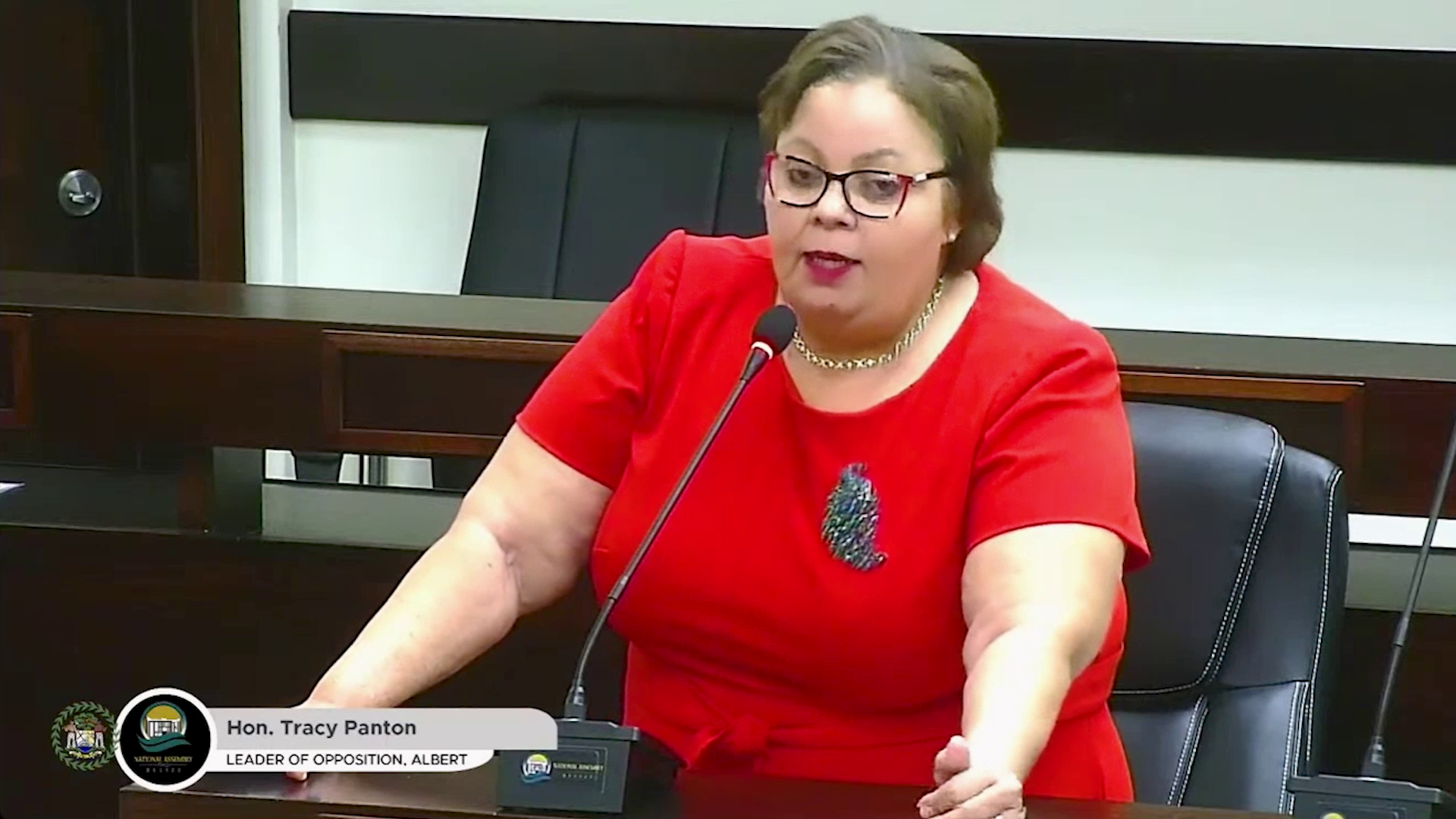
    As the 2027 Belize municipal elections draw closer on the political calendar, a veteran figure with decades of public service experience has thrown her hat into the ring for Belize City’s top municipal post: Jacqueline Willoughby has formally submitted her candidacy application to run for mayor under the banner of the United Democratic Party (UDP), an opposition movement facing steep electoral headwinds ahead of the vote. For a political outsider making her first run for elected office, Willoughby’s decision to join the race with the struggling UDP is widely framed as a high-stakes gambit, but the long-time public servant and labor organizer says her decades of community-focused work have prepared her for the rough-and-tumble of electoral politics. Willoughby brings a uniquely diverse professional background to her campaign: over 35 years of public service across roles as a government employee, trade union negotiator, educator, counselor, and most recently, an attorney after stepping down from her career in public administration. In a recent interview, she framed her entry into electoral politics not as a new departure, but as a natural extension of a life spent centered on public service. “Serving people is embedded in me, heart and mind,” Willoughby explained, pushing back against the generic political rhetoric that has left many Belizean voters disillusioned. Unlike candidates who make untested promises to win office, Willoughby says her proven track record of public service speaks for itself: people, not partisan interests, are the core of her political mission. She points to her proven skills in professional management, collaborative leadership, and decades of on-the-ground service as key assets that will deliver tangible benefits to Belize City residents. A core point of criticism for Willoughby’s campaign is the incumbent municipal council’s recent across-the-board 18% tax hike, a policy implemented without a comprehensive impact assessment and no targeted exemptions for vulnerable groups including elderly residents and people living with chronic illness. For Willoughby, this policy misstep encapsulates the disconnect between sitting officials and the communities they serve. Her campaign is built on a core promise: residents are the boss. “I’m asking for your vote, but you have every right to hold me accountable,” she said, emphasizing that meaningful progress for Belize City can only be achieved through equal, collaborative partnership between residents and their elected leadership. Willoughby also pushed back against long-held public perceptions of her party, arguing that the UDP of today is unrecognizable from the party voters have known in the past. Under the leadership of the Honorable Tracy Tega Panton, she says the UDP has undergone meaningful reform, emerging as a movement defined by fresh energy, radical transparency, and unwavering integrity. As the opposition party works to rebuild public trust ahead of 2027, political analysts still give the UDP an uphill battle to unseat the sitting government at the polls. But with Willoughby’s candidacy, the party is betting that a candidate with deep roots in public service and a commitment to accountability can resonate with voters hungry for change at City Hall.

  • Trapp Seeks Another Term as Mai Launches Mayoral Bid

    Trapp Seeks Another Term as Mai Launches Mayoral Bid

    Months ahead of the upcoming municipal elections in Belize’s San Ignacio and Santa Elena, more commonly known as the Twin Towns, a high-stakes political contest is already taking shape that will test the political endurance of one of the country’s longest-serving local leaders. After 21 consecutive years of United Democratic Party (UDP) control over the Twin Towns municipal government, three-term incumbent Mayor Earl Trapp has confirmed he will seek another term at the head of the San Ignacio and Santa Elena Town Council, setting the stage for a competitive showdown with a sitting councilor from the opposing People’s United Party (PUP).

    Trapp, whose tenure has made him a staple of local Belizean politics, says his record of steady, transformative development justifies another term in office. Ahead of the UDP’s internal nominating convention scheduled to take place within the next 30 days, the mayor confirmed that roughly 10 candidates have applied to serve on his council slate, and the full team will be finalized by the end of the convention. “The work has never stopped. I am excited, ready, and willing to continue delivering for our community,” Trapp said in an interview with News Five.

    This election cycle marks an unusual challenge for the incumbent: Trapp’s opponent is Aaron Mai, a sitting PUP councilor who currently serves inside the Town Council itself. Mai, who has held his council seat for two consecutive terms, is the only PUP representative to win a seat on the UDP-dominated council over the past six years. Now, he is running on a platform of intergenerational change, arguing that after more than two decades of single-party leadership, the Twin Towns are ready for a new vision.

    Mai emphasized that he recognizes the progress made under Trapp’s leadership, saying “we have to honor the past” while pushing to build a brighter future for local residents. “It’s time for new leadership, for a younger vision that matches where the Twin Towns are heading,” Mai said. “The people are calling for change, and I am ready to deliver that change.” The challenger’s candidacy has already earned the public backing of Orlando Habet, former Twin Towns mayor and current Area Representative for Cayo Northeast, who also framed the election as a moment to open the door for new leadership.

    Habet praised Trapp for his years of public service, but argued that no political office should become a permanent position. “After a while, voters start to look for new perspectives,” Habet said. “For his own health, his family, it is also time for him to move on.”

    Trapp has pushed back against the argument that his 20-plus years in office should disqualify him from seeking re-election, countering that effectiveness and results, not tenure length, are what matter most to Twin Towns residents. When asked to respond to critics who say he has held office too long, Trapp noted “it’s not about being here long. It’s about how effective and efficient you’ve been for this community. Why fix what is not broken? This has been the most progressive municipality in all of Belize during my time in office, and that progress will continue if voters return me to office.” He added that he welcomes public scrutiny of his record, saying he is prepared to address any uncompleted projects and explain their status to voters.

    For Mai, the campaign will center on asking voters to extend his track record of work as a councilor to the mayor’s office. “Residents have seen what I have delivered for them over the past six years as a councilor,” Mai said. “Just imagine what I can do as mayor of the Twin Towns.” As both candidates prepare for the official election campaign, the race is shaping up to be one of the most closely watched municipal contests in Belize this cycle.

  • Landy Habet Questions Public Service Transfer System

    Landy Habet Questions Public Service Transfer System

    A high-profile public sector controversy unfolding in Belize has put a long-criticized internal personnel practice under renewed scrutiny, with a senior cabinet minister openly questioning the effectiveness of the country’s public service transfer system for underperforming staff. The debate emerged in late June 2026, against a backdrop of an ongoing investigation into alleged misspending at the nation’s Ministry of Defense, and has cast a spotlight on systemic gaps in public sector accountability.

    At the center of the investigation is Salvador Alas, a finance officer who oversaw dozens of purchases under $10,000 at the Defense Ministry that are now being audited for potential irregularities. Rather than facing disciplinary action following the launch of the probe, Alas was reassigned to the Ministry of Sustainable Development, led by Minister Orlando Habet. Shortly after his transfer, Alas was placed on administrative leave pending further review of the allegations tied to his previous role.

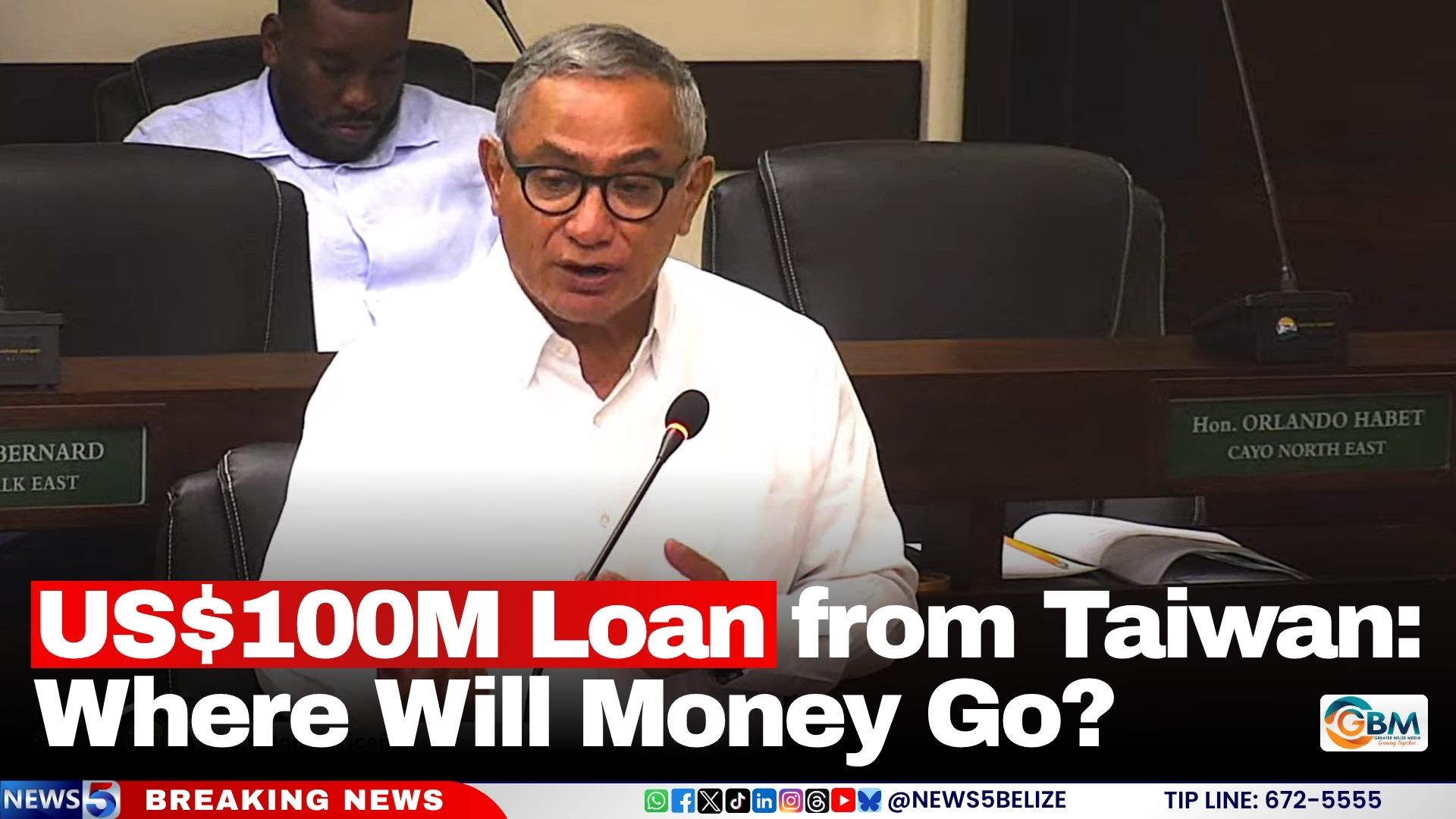
    In a recent on-camera interview with local reporter Shane Williams, Habet acknowledged the widespread concern the case has raised about how public service administrators handle problematic employees. While the minister declined to comment directly on Alas’ ongoing suspension, citing that he had not been given full access to the details of the investigation, he did not hold back on criticizing the broader transfer policy that allowed the finance officer to move to his ministry in the first place.

    Habet explained that under current public service rules, day-to-day financial operations and personnel management within each ministry are delegated to the department’s chief executive officer, rather than the elected cabinet minister heading the portfolio. “Ourselves as ministers are not directly involved in the daily work of the finance section. Maybe we should be more involved, but current legislation assigns those responsibilities to the chief administrative officer, the CEO, for each ministry,” Habet noted during the interview.

    When asked if he saw the systemic risk of this transfer practice in his own department, Habet gave a clear and direct answer: yes. He argued that the current approach of rotating underperforming or problematic public officers between different departments does nothing to resolve underlying performance or conduct issues, instead simply shifting problems from one ministry to another.

    “The public service has a limited pool of trained, experienced senior staff. It takes years for an officer to advance to a senior role like a ministry finance officer,” Habet explained. “When an employee doesn’t meet the performance expectations set by the minister and CEO, the common response right now is to request a transfer. All that does is move the problem around. It becomes an endless cycle that never gets fixed.”

    Pressed on why Alas was ultimately placed on administrative leave after joining the Ministry of Sustainable Development, Habet confirmed that the action was tied to reported irregularities, but once again emphasized that the details of the case remain managed by the Public Service Ministry, not his own department’s leadership. “He falls directly under the purview of the Public Service Ministry, not my cabinet portfolio, so I have not been privy to all the specifics of the ongoing investigation,” Habet added.

    This report is a written adaptation of a televised news interview broadcast on July 2, 2026, transcribed and published for online audiences.

  • Friends, Family, or Fair Process? Osmond Martinez Responds

    Friends, Family, or Fair Process? Osmond Martinez Responds

    Scheduled for publication on July 2, 2026, this political report centers on newly raised questions about potential nepotism and improper favoritism in public fund spending by Dr. Osmond Martinez, the Area Representative for Toledo East. Martinez pushed back early on suggestions of improper contracting, noting that most of his work across government ministries focuses on large-scale infrastructure and development projects that receive backing and independent oversight from multilateral global institutions. He added that these high-value projects almost never involve small contracts worth less than $10,000, a scale that characterizes much of the local spending scrutiny he now faces.

    But critics and journalists have homed in on one critical unaddressed line of inquiry: the $20,000 monthly constituency development fund allocated directly to Martinez to support local programming and community needs. The fund, designed to benefit residents and small businesses within his Toledo East district, has sparked questions about whether contractors awarded work from the pot are selected based on merit or personal and political connections. Specifically, questions linger over whether any suppliers who receive funding are close friends, immediate family members, or key political allies of the representative.

    In a direct, on-the-record interview with reporters, Martinez addressed these questions one by one. When discussing the seasonal holiday food distribution program he runs for local Mayan communities each Christmas, Martinez confirmed that one major supplier, Caribbean Chicken, consistently wins the contract to provide poultry for the initiative. He defended the selection, pointing out that the company provides critical logistical support that other local vendors cannot: most rural Mayan communities lack reliable refrigeration infrastructure to store meat for large events, so Caribbean Chicken handles last-mile delivery on December 23 or 24, just in time for holiday celebrations. Martinez also added that the company has shown flexibility with delayed public payments, a fact that he said any representative from the firm can confirm publicly.

    When pressed directly by a reporter to state categorically that none of his regular suppliers have familial ties to him, Martinez responded that his immediate family does not own any supermarkets or large food supply businesses in the district that would be eligible for contracts. Beyond Caribbean Chicken, he confirmed that the only other regular suppliers used for local programming are two small Chinese-owned stores located in Bella Vista, neither of which have any connection to his family.

    This report is a direct transcript of an evening television news broadcast, with all words from Creole-speaking sources translated and transcribed using a standardized spelling system for accuracy. Readers can access the full unedited video of the newscast via the original publication’s website.