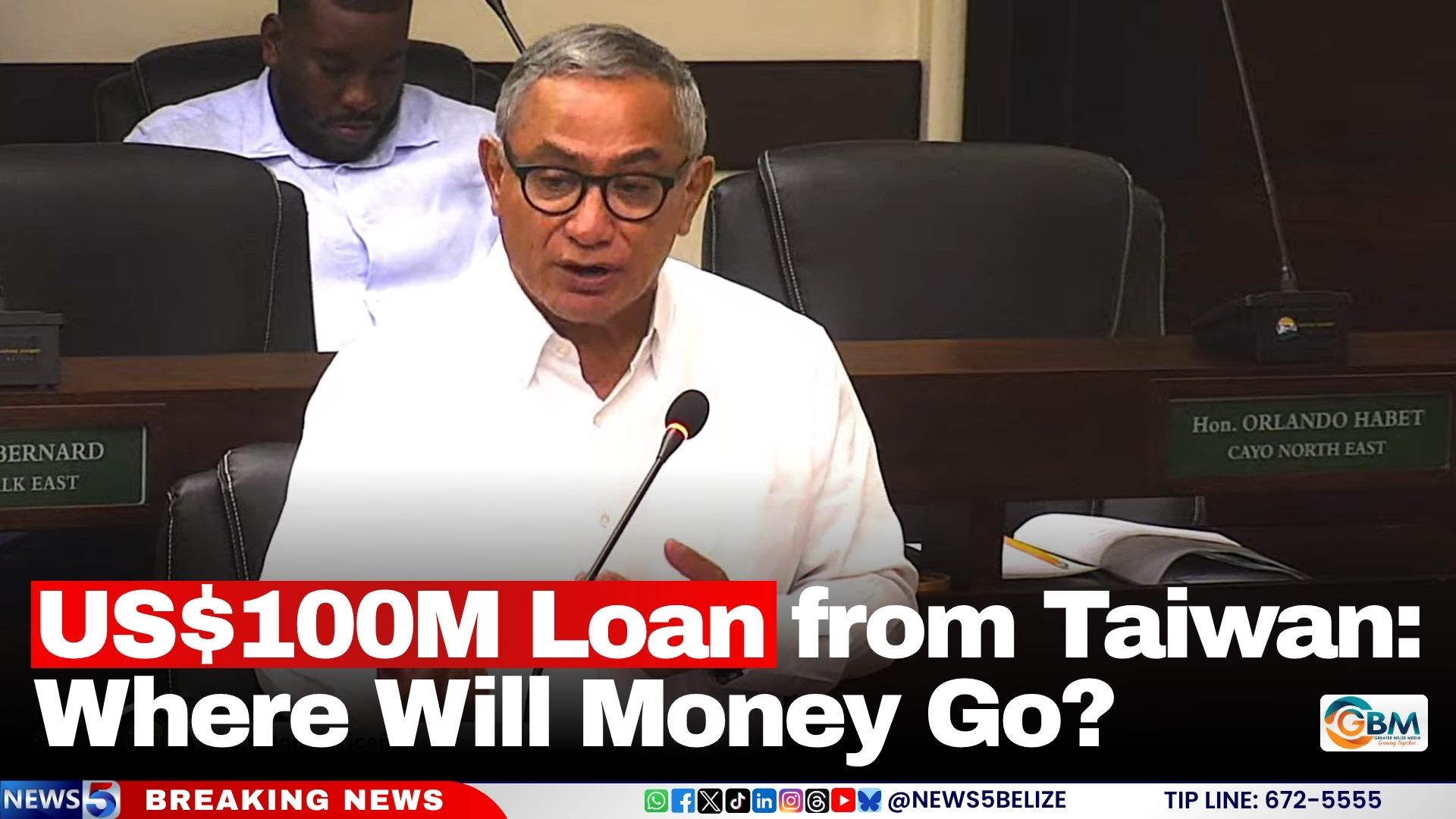
In a special sitting of Belize’s House of Representatives held on August 21, 2026, Prime Minister John Briceño confirmed details of a $100 million concessionary loan agreement with Taiwan, announcing that the first disbursement of $40 million will be made available to the Central American nation by the end of the calendar year.
Unlike many development lending packages that tie funding to pre-approved infrastructure or social programs, this five-year financing facility is structured to cover general government funding requirements across Belize’s public sector, with no binding project-specific allocation built into the agreement. The loan terms offer a 20-year repayment window with a three-year grace period, designed to ease near-term fiscal pressure on Belize’s government. Repayments will be structured as 34 semi-annual installments of approximately $2.94 million, starting 42 months after the first tranche is issued.
Briceño outlined that his administration intends to prioritize capital investments when allocating the loan funds, specifically noting that the money will be used to meet counterpart financing requirements for projects backed by international development partners. “While there is no legal restriction that dictates how these funds must be distributed across our annual national budgets,” Briceño told legislators, “we have no plans to divert this money to covering routine government operating costs such as public servant salaries. Instead, we will direct these resources to long-term investments across the country, spanning infrastructure, education, health care and other priority development projects.”
The announcement drew immediate scrutiny from Opposition Leader Tracy Panton, who challenged the government’s vague allocation framework, particularly amid widespread public frustration over skyrocketing energy costs that have strained household budgets across Belize. Panton pressed the administration to clarify how much of the $100 million facility would be dedicated to shoring up the country’s energy security, a top public concern as electricity rates have continued to climb with no government relief plan in sight.
“The obvious question that every Belizean is asking right now is, what portion of this $100 million will go toward addressing the energy crisis?” Panton said during the debate. “Electricity bills have increased exponentially and keep going up, with no end in sight and no solution put forward by this administration.”
Briceño declined to set aside any specific portion of the Taiwan loan for energy cost relief or energy security investments, sticking to his original framing that the funds would be allocated across the administration’s existing priority investment areas of infrastructure, education and health.