分类: politics

  • COMMENTARY: World Press Freedom Day

    COMMENTARY: World Press Freedom Day

    As the world marks World Press Freedom Day 2026 on May 3, the latest annual assessment from Reporters Without Borders (RSF) delivers a stark warning: global press freedom has declined to its lowest point in two and a half decades, with more than half of all nations now categorized as having either “difficult” or “very serious” conditions for independent journalism.

    The iconic American journalist Walter Cronkite once summarized the inseparable link between a free press and democratic governance: “Freedom of the press is not just important to democracy, it is democracy.” Decades later, that statement carries new urgency as the global retreat of press freedom accelerates. Journalists across every region face growing rates of imprisonment, targeted harassment, and heightened scrutiny of their work, while heavy-handed state regulation of media activity signals deepening democratic erosion. When press rights are curtailed, it is always the general public that bears the greatest cost, as independent oversight of power and access to unbiased information are eroded.

    First introduced decades ago, RSF’s World Press Freedom Index evaluates the state of press freedom across 180 countries and territories. The framework defines press freedom as the ability of journalists to carry out their work independently, free from political, economic, legal, or social interference and without threats to personal safety. It scores countries based on five core indicators: the surrounding political context for media, the legal framework governing journalism, economic conditions for media workers, the broader socio-cultural environment, and on-the-ground safety for reporters.

    Observed annually on May 3 and formally established by the United Nations General Assembly in 1993, World Press Freedom Day serves two core purposes: it is a day to stand in solidarity with media outlets facing censorship or attempts to shut down independent reporting, and a moment of remembrance for journalists who have lost their lives while pursuing the truth. The day also acts as a global checkpoint to celebrate the foundational principles of press freedom, assess global conditions for independent journalism, defend media independence from targeted attacks, and honor reporters killed while practicing their profession.

    This year’s theme, “Shaping a Future at Peace,” aligns with the UN’s stance that independent, free media and press freedom underpin global peace, equitable economic recovery, sustainable development, and the protection of human rights by enabling access to reliable information, strengthening accountability, fostering constructive public dialogue, and building public trust. Today, that work is facing unprecedented new threats: malicious actors are leveraging artificial intelligence to spread disinformation and manipulate public discourse, eroding public trust in media and undermining national security. At the same time, independent media outlets face growing economic instability that threatens their survival. The RSF report notes that self-censorship among journalists has risen by more than 60% globally, driven by fear of retaliation, coordinated online harassment, judicial intimidation, and crippling economic pressure. Against this backdrop, World Press Freedom Day 2026 provides a critical opportunity to reaffirm global commitments to freedom of expression, and to align actors across journalism, technology (including the AI sector), and human rights groups around actionable solutions to strengthen resilient, independent information ecosystems for the future.

    One of the most alarming trends highlighted in the 2026 index is the accelerating criminalization of journalism across the globe. Anne Bocande, a representative from RSF, emphasized that existing international protection mechanisms for journalists are no longer adequate, as international law is increasingly undermined and cases of violence against journalists go unpunished with widespread impunity. The erosion of journalistic independence and increasing suppression of core press principles are the central findings of the 2026 index.

    Regional performance varies widely across the Americas and beyond. Jamaica ranked 26th out of 180 countries, holding a relatively strong regional standing but continuing a years-long downward slide: it fell from 24th place in both 2024 and 2025, and from a top-10 ranking in 2020, with growing concerns over journalist safety and declining government transparency driving the drop. Trinidad and Tobago fell 13 places to rank 32nd; while the country still holds an overall “good” rating for press freedom, worsening economic and political conditions have eroded its media environment. Canada placed 20th, while the United States ranked 64th. At the lower end of the index, Russia ranked 172nd, China 178th, North Korea 179th, and Eritrea ranked last at 180th. In the Caribbean, Guyana slipped three spots to 76th, with an overall score of 59.58 (down from 60.12 in 2025), placing its media environment in the “problematic” category. Haiti ranked 107th, with a global score of 50.32, landing it in the “Difficult” category, reflecting a ongoing, severe crisis for independent journalism in the country. Burkina Faso ranked 110th overall. For the tenth consecutive year, Norway held the top spot on the index, with the Netherlands and Estonia rising to second and third place respectively, leading a top tier dominated by Nordic and Baltic nations with strong protections for press freedom.

    As the global community gathers to mark World Press Freedom Day 2026, the occasion serves as a urgent reminder to governments worldwide to uphold their formal commitments to protecting press freedom. It is also a moment for media professionals to reflect on the challenges facing press freedom and core ethical standards of their work. In the words of former U.S. President Barack Obama: “we have to uphold a free press and freedom of speech because, in the end, lies and misinformation are no match for the truth.”

    This commentary is from Wayne Campbell, an educator and social commentator focused on how development policies shape culture and gender equity, and does not represent the views of Duravision Inc., Dominica News Online, or any of its affiliated brands.

  • GDF soldier shot on border with Venezuela

    GDF soldier shot on border with Venezuela

    On Monday morning, May 4 2026, a shooting incident on the disputed Guyana-Venezuela border left a member of the Guyana Defence Force (GDF) wounded, adding new tension to a long-running territorial dispute that is currently being reviewed by the International Court of Justice (ICJ).

    According to an official statement released by the GDF, the attack took place at approximately 11:30 a.m. local time in the Black Water area, where a GDF boat patrol was conducting an escort mission for three civilian vessels carrying personnel and cargo traveling from Makapa to Eteringbang. Unidentified attackers opened fire on the convoy, striking the deployed soldier twice in the right leg. Military medics quickly stabilized the injured service member, who is now being evacuated to the capital city of Georgetown to receive advanced medical care.

    After the ambush, the GDF patrol engaged the attackers in return fire and successfully maneuvered the entire civilian convoy out of the high-risk zone to safety. To date, the GDF has not confirmed whether the individuals who opened fire were Venezuelan security forces or armed civilians operating from the Venezuelan side of the border. However, a senior unnamed GDF officer noted in an off-the-record comment that Venezuelan authorities must be aware of the armed groups operating in the area, which uses the dense jungle along the Cuyuni River as cover to launch attacks against Guyanese personnel. “We are being attacked from the Venezuelan side of the Cuyuni by a group who uses the jungle as cover from sight and fire. The Venezuelan authorities can not be unaware of this situation,” the senior officer stated.

    This shooting is not an isolated event: the GDF confirmed that prior attacks targeting Guyanese soldiers have occurred in the same border region in previous months and years. The timing of Monday’s incident coincides with the opening of public hearings at the ICJ focused on the substantive merits of the territorial dispute between the two South American nations. At the core of the dispute is the legal validity of the 1899 Arbitral Tribunal Award, which originally established the current land boundary between Guyana and Venezuela.

    In the aftermath of the attack, the GDF reaffirmed its commitment to securing the country’s western border. “The Force remains fully committed to the protection of its personnel and the safeguarding of Guyana’s territorial integrity,” the statement read, adding that the military will maintain a robust, active operational presence across the entire border region moving forward.

  • Suriname, diaspora en de toekomst: drie lijnen voor duurzame ontwikkeling

    Suriname, diaspora en de toekomst: drie lijnen voor duurzame ontwikkeling

    At the PSA Diaspora and Investor Dialogue held in Amsterdam on Sunday, Ashwin Adhin, Speaker of the National Assembly of Suriname, laid out a comprehensive, long-term vision for strengthening ties between the South American nation and its global diaspora community, outlining three interconnected pillars to guide Suriname’s development through 2050.

    Decades of institutional disconnection have shaped the relationship between Suriname and its diaspora: since the country gained independence from the Netherlands in 1975, hundreds of thousands of Surinamese people living abroad have fallen outside Suriname’s formal legal framework, losing their official citizenship status despite retaining deep cultural and emotional connections to their homeland. Adhin argues this long-standing gap requires a fundamental shift in policy framing.

    For generations, Adhin noted, Suriname has approached its diaspora primarily through the lens of potential investment, rather than recognizing community members as full members of the Surinamese nation. To reverse this dynamic, Adhin proposed four legislative priorities he will bring back to the capital Paramaribo for formal consideration. These include practical adjustments such as extending existing PSA resident status and expanding residency rights, as well as more sweeping reform: a new Law of National Connection that would allow Surinamese people living abroad to restore their formal legal ties to Suriname without being forced to renounce their current citizenship. Additional proposals include a new “PSA-plus” status that grants broad rights to diaspora members without full citizenship, and a constitutional amendment to permanently enshrine the relationship between Suriname and its diaspora, preventing future governments from weakening these protections.

    The second pillar of Adhin’s vision centers on economic development, with a specific focus on the country’s emerging oil and gas sector. Suriname is preparing to enter a transformative new phase, with commercial oil production from the country’s large GranMorgu field slated to begin in 2028. Projected revenues from the sector are expected to reach billions of dollars, representing an unprecedented opportunity for national growth.

    Despite this potential, Adhin issued a clear warning against overreliance on fossil fuel extraction. Oil is not an end goal, he emphasized, but rather a tool to finance broad-based economic transformation. Overdependence on the sector would leave Suriname dangerously vulnerable to global oil price volatility and growing international pressure to transition away from fossil fuels.

    To avoid this trap, Adhin introduced the “Oil & Gas Plus” strategy, which would channel oil revenues into developing six key non-extractive sectors to build a diversified economy: agriculture and food production, water economy, gold value chain expansion, carbon credit development and forest management, medical tourism, and ecotourism. Adhin added that the diaspora is uniquely positioned to drive growth in these new sectors, as many Surinamese people living abroad hold specialized expertise in high-demand fields including healthcare, information technology, finance, and education.

    The third and final pillar lays out Adhin’s 2050 long-term vision, which aims to reposition Suriname from a commodity-dependent economy to a strategic regional hub. This shift would move Suriname from a “resource-based” national identity to a “network-based” identity, with four core focus areas: a regional financial hub with modern banking regulation and a regional stock exchange, a logistics hub with upgraded ports, aviation infrastructure and cross-border connections, a digital hub with investments in data centers, cybersecurity and digital infrastructure, and an educational hub that serves as a regional center for advanced training and higher education. Under this plan, the services sector would become the largest contributor to Suriname’s GDP by 2050, creating thousands of new jobs in technology, consulting, and financial services.

    A core throughline of Adhin’s address was the recognition that the Surinamese diaspora is already a major economic force, not just a potential source of future investment. Diaspora members currently send hundreds of millions of dollars in remittances back to Suriname each year, making them current financial partners in the country’s development rather than distant future investors. Adhin called for expanded structural support to grow this role, highlighting existing opportunities including tax incentives and access to international financing through institutions such as Afreximbank for diaspora entrepreneurs looking to launch businesses in Suriname.

    As Speaker of the National Assembly, Adhin emphasized that his role is not to implement policy directly, but to advance these priorities through legislative action, pushing for long-stalled dossiers to finally receive parliamentary consideration and enshrine the diaspora relationship in permanent law. He also stressed the critical importance of bilateral cooperation with the Netherlands, including updates to existing bilateral treaties, noting that mutually agreed bilateral arrangements are the only way to reach a sustainable, widely accepted solution to nationality and rights issues for diaspora members.

    Closing his address, Adhin framed Suriname’s future as a collective choice for all Surinamese, whether they live within the country’s borders or abroad. The country must decide whether to remain dependent on finite natural resources, or build a resilient, diverse economy rooted in knowledge, strong institutions, and cross-community collaboration. The diaspora, he emphasized, is not just a source of capital – it is a core partner in building Suriname’s future for generations to come.

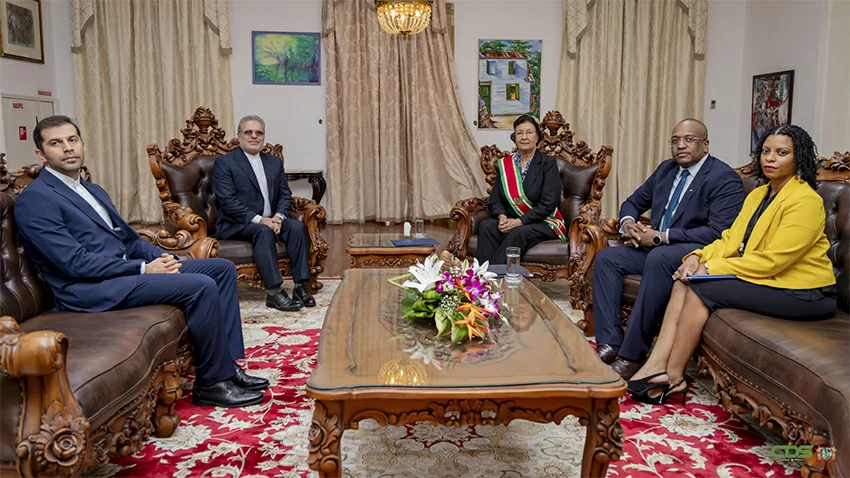
  • Caribbean Court of Justice strengthens judicial cooperation through high-level European knowledge exchange visit

    Caribbean Court of Justice strengthens judicial cooperation through high-level European knowledge exchange visit

    Between April 27 and 30, 2026, a delegation led by Caribbean Court of Justice (CCJ) President Winston Anderson wrapped up a high-impact four-day knowledge-sharing and collaboration tour of key European judicial institutions, built to strengthen cross-regional judicial capacity and foster long-term institutional partnerships. Funded by the European Union through the 11th European Development Fund, the mission marked a deliberate step to connect two major regional judicial systems and exchange actionable insights on modern court operations.

    The CCJ delegation’s itinerary centered on three of Europe’s most influential international legal bodies, starting with the Court of Justice of the European Union (CJEU) based in Luxembourg. There, the team was officially received by CJEU President Koen Lenaerts and Vice President Marc van der Woude, holding structured high-level discussions before observing ongoing court proceedings. Beyond formal dialogues, the delegation gained exclusive behind-the-scenes access to the CJEU’s core administrative functions, from digital case management infrastructure and communications protocols to specialized judicial library services. This hands-on exposure allowed the CCJ team to study the CJEU’s tested approaches to boosting operational efficiency and embedding innovation into daily court work.

    From Luxembourg, the delegation traveled to Strasbourg, France—a global hub recognized for advancing international human rights law and intergovernmental legal cooperation—to meet with leadership from the European Court of Human Rights (ECtHR) and the Council of Europe. The CCJ team held judicial dialogues with ECtHR judge Arnfinn Bårdsen and members of the court’s Section V registrar team, and President Anderson also paid a formal courtesy call to Council of Europe Secretary General Alain Berset.

    Across all Strasbourg engagements, participants centered talks on three defining priorities for modern regional courts: upholding unwavering judicial independence, advancing effective regional integration through law, and clarifying the critical role that supranational judicial bodies play in defending democratic values, the rule of law, and fundamental human rights. For the CCJ, these dialogues reinforced its long-standing commitment to continuous institutional improvement and mutually beneficial global judicial collaboration.

    Unlike one-off diplomatic visits, this mission was designed as a two-way exchange: while the CCJ delegation drew on decades of European experience in supranational judicial governance to identify opportunities for refining its own operations, CCJ officials also shared their unique perspective on adjudicating disputes within a developing regional integration framework. The EU’s funding for the initiative underscores the bloc’s ongoing investment in strengthening rule of law institutions across the Caribbean, and lays the groundwork for future joint initiatives, training programs, and collaborative research between the CCJ and its European partner institutions.

  • Pringle Calls for Unity and Respect for Workers at ABWU Labour Day Rally

    Pringle Calls for Unity and Respect for Workers at ABWU Labour Day Rally

    On Labour Day in Antigua and Barbuda, United Progressive Party (UPP) Leader and opposition head Jamale Pringle delivered a keynote address to crowds gathered at the Antigua and Barbuda Workers’ Union (ABWU) rally, centering his remarks on honoring working people and pushing for cross-group unity to drive national progress. Opening his speech with formal greetings to the union’s executive branch, president, and general secretary, Pringle first extended his sincere praise to all members and organizers who dedicate their time and effort to sustain the union’s operations in service of the working class. Pringle emphasized that Labour Day carries far deeper meaning than a simple day off from work. He framed the annual observance as a living tribute to the generations of effort and sacrifice that workers across every sector of the country have poured into national growth. “Labour Day is not just a holiday. It is a celebration of dedication, skill, and the countless hours that keep our industries, businesses, and neighborhoods thriving,” he told the gathered crowd. Going beyond purely economic contributions, Pringle highlighted the far-reaching social impact of working people’s daily labor. He noted that workers’ effort does more than boost national output—it lays the foundation for strong families, nurtures individual and collective dreams, and builds the long-term future of Antigua and Barbuda. In his remarks, Pringle also acknowledged the persistent daily challenges that working people across the country face, while commending their consistent resilience in navigating and overcoming those barriers. A core policy-focused point of his address centered on workplace justice, with the UPP leader stressing that fair, respectful treatment must be non-negotiable for every worker. “Every worker deserves respect, fair treatment, and opportunity,” he stated, reaffirming his party’s commitment to advancing worker rights. The central throughline of Pringle’s speech was a urgent call for national unity, framing collective action as the only sustainable path toward meaningful national progress. “Progress is made together… we have to be united,” he told attendees, urging workers, union members, and political allies to align around shared goals for national development. Closing his address, Pringle reiterated unwavering solidarity between his party, the national labor movement, and all working people, closing with three rousing declarations of support: “Long live the United Progressive Party. Long live the working class. Long live the Antigua Barbuda Workers Union.”

  • PM Orders Back Pay to Be Cleared: ‘Every Single Worker Must Be Paid’

    PM Orders Back Pay to Be Cleared: ‘Every Single Worker Must Be Paid’

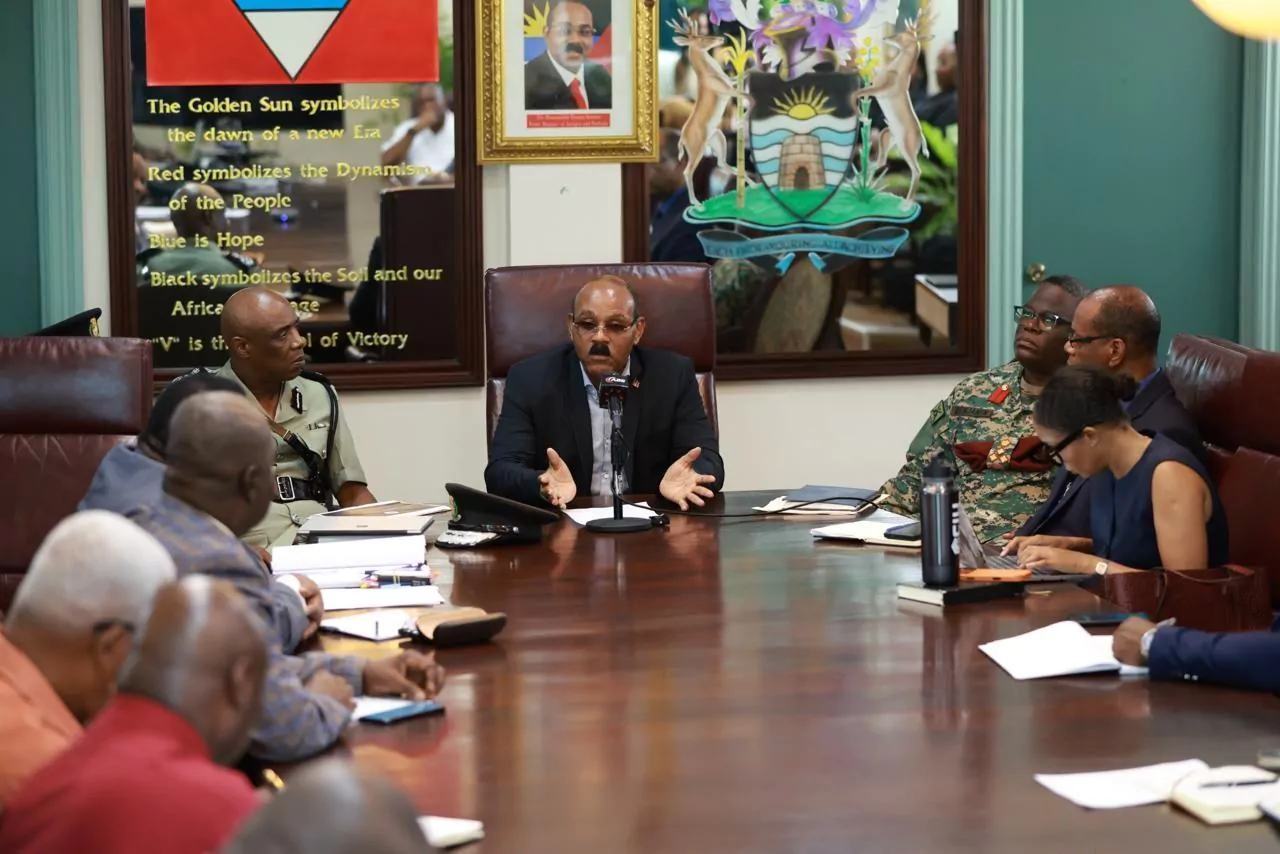
    Fresh off his administration’s return to power following the April 30 general election, Prime Minister Gaston Browne of Antigua and Barbuda has delivered a forceful mandate to public sector leadership: clear all lingering back pay owed to public workers immediately, with no further delays or excuses.

    Speaking at the annual Labour Day rally jointly hosted by the Antigua Trades and Labour Union (AT&LU) and the Antigua and Barbuda Labour Party, Browne centered his address on upholding labor rights and fulfilling commitments to the nation’s workforce. Among his top priorities is resolving longstanding unpaid wage disputes, including those accumulated during the period of the COVID-19 vaccine mandate, when dozens of workers faced suspended pay over compliance requirements.

    The prime minister made clear that the administrative ball is now firmly in the court of senior public sector officials, who he has tasked with taking direct ownership of processing all outstanding claims. “When we said to you that they must process their back pay, we expect you to do so and to make sure that every single worker is paid,” Browne stated in his address. He went on to emphasize that funding for the payments is already secured and held in the national treasury, removing any financial justifications for continued hold-ups. “Do the research… provide the documentation, the money is in the treasury. Every single worker must be paid,” he added.

    Browne’s hardline stance comes in response to persistent complaints from public sector workers across multiple departments, who have reported months-long delays in receiving owed back pay. Beyond the immediate financial issue, the prime minister warned that failing to address workers’ legitimate grievances erodes public trust in governmental institutions, stressing that all laborers deserve dignified, respectful treatment from their public sector employers. “Treat the workers with respect,” he said.

    This order forms a core plank of the new administration’s broader labor agenda, which centers on raising wages, strengthening workplace protections, and improving overall working conditions for all workers across Antigua and Barbuda. Browne reaffirmed that securing full entitlements for the nation’s labor force will remain a top priority for his government as it works to deliver on the campaign commitments that secured its renewed mandate last month.

  • Gov’t allocates roughly $250m for pre-hurricane mitigation works

    Gov’t allocates roughly $250m for pre-hurricane mitigation works

    KINGSTON, Jamaica — Facing a growing trend of more intense extreme weather events across the Caribbean, the Jamaican government has set aside $246 million in targeted funding to carry out pre-hurricane mitigation work across the island ahead of the 2026 Atlantic Hurricane Season. The bulk of the planning and investment centers on clearing clogged drainage systems and complementary flood-reduction projects that officials say will cut potential damage when storms arrive.

    In an official public statement released Tuesday, the responsible ministry outlined how the total budget will be distributed across administrative and national levels. On average, each of the island’s constituencies will receive approximately $2 million to deploy for drain clearing operations in high-risk, priority communities. This 2026 funding allocation matches the increased budget levels rolled out last year, a policy shift that boosted local parliamentary capacity to lead community-level mitigation work ahead of hurricane season, allowing for faster, more targeted action at the neighborhood level.

    The remaining portion of the total $246 million budget will go to Jamaica’s National Works Agency, which will take on large-scale, specialized mitigation projects that exceed the scope of constituency-level drain clearing. These national projects include interventions in areas that require specialized technical expertise, heavy industrial construction equipment, or landscape modifications that cross local administrative boundaries.

    Robert Nesta Morgan, the minister with oversight for public works, emphasized that the early, consistent funding reflects the current administration’s commitment to proactive disaster planning, practical resilience-building, and reducing the impact of storms on Jamaican communities. “We are acting before the storms come,” Morgan explained. “Last year, the Government increased the allocation to constituencies for pre-hurricane mitigation, and this year we have maintained that strengthened level of support. This will allow critical drain cleaning to continue in communities before the peak of the hurricane season.”

    Morgan went on to note that Jamaica has already seen a clear increase in the intensity of rainfall events in recent years, putting unprecedented strain on existing drainage infrastructure, gullies, roads, bridges and other critical public assets. This pre-hurricane mitigation programme, he added, is just one part of a broader, government-wide resilience strategy that includes ongoing road repairs, bridge retrofitting, gully stabilization projects and improved inter-agency coordination to respond to weather events.

    Under the terms of the current programme, local members of parliament will work in close consultation with municipal authorities and technical engineering teams to map out priority drainage sites and critical areas that require urgent clearing. All projects will prioritize communities that face the highest risk of flooding, repeated drain blockages, and inadequate stormwater runoff management.

    While routine drain maintenance rarely draws major public attention, Morgan stressed that it is one of the most cost-effective, impactful measures the government can take to cut flood risk, protect private and public property, and limit storm damage during periods of extreme rainfall. “We cannot prevent hurricanes, but we can reduce the damage they cause by preparing properly,” he added.

    Beyond government-led infrastructure work, the administration is calling on Jamaican residents to support the mitigation effort by changing harmful waste disposal habits. Officials warned that dumping of household garbage, bulky waste, construction debris and other discarded materials in drains, gullies and natural waterways remains one of the leading causes of preventable flooding during heavy downpours.

    Morgan closed by reaffirming that the government will continue collaborating with parliamentarians, municipal corporations, the National Works Agency and other key stakeholders to ensure all mitigation work is targeted to the highest-need areas and completed well ahead of the 2026 hurricane season peak.

  • Abaco residents angry over wiped power bills

    Abaco residents angry over wiped power bills

    Six years after Hurricane Dorian devastated large swathes of Abaco, leaving thousands of residents homeless and economically shattered, anger is boiling over over the Davis administration’s last-minute pre-general election decision to erase all outstanding electricity bills for residents of Grand Cay and Moore’s Island – while leaving similarly devastated mainland Abaco communities without any comparable relief.

    Survivors across hard-hit mainland settlements including Marsh Harbour, Dundas Town, Spring City and Murphy Town have decried the selective relief as a transparent, insulting political gambit that ignores the ongoing suffering of thousands of Dorian survivors who have yet to recover from the 2019 storm.

    Neulessa Major, a lifelong Marsh Harbour resident whose home suffered catastrophic damage during Dorian, described the unequal treatment as a slap in the face to all mainland Abaco residents still picking up the pieces. Her $55,000 home roof was completely destroyed, all her personal belongings were ruined by storm surge and wind, and she was unable to move back into her repaired property until 2022. Today, she says massive outstanding utility bills burden most families and business owners across central Abaco – none of whom were offered the debt forgiveness extended to the two smaller island communities.

    “When I learned that only certain groups were getting their entire balances wiped clean, I was shocked,” Major said in an interview. “All of central Abaco was hit just as hard, with these enormous bills that people can’t possibly pay. Six years on, we still have people living in tents and temporary dome shelters. A lot of homes look finished from the street, but step inside and there aren’t even floor tiles. The government acts like everything is fine for us here, but it’s not.”

    The controversial debt cancellation came two weeks ahead of the national general election, after Prime Minister Philip “Brave” Davis visited Grand Cay and publicly promised the relief to voters there. Government officials defended the move, framing it as a resolution to long-running billing disruptions triggered first by Hurricane Dorian and later by the COVID-19 pandemic. Officials noted that Grand Cay and Moore’s Island residents faced unique hardships including limited banking access, extended travel and business restrictions, and that accumulated debt accrued through circumstances outside consumers’ control. The government confirmed the outstanding balances would be covered through an offsetting agreement with Bahamas Power and Light.

    But that explanation has done little to ease the anger among mainland Abaco residents, who point out they weathered the same storm and the same subsequent economic crisis, with many still struggling to rebuild. Major emphasized that many Marsh Harbour residents did not wait for government aid to begin rebuilding their homes and businesses, only to be saddled with crippling utility debt that the government has refused to address.

    She also called out the ruling Progressive Liberal Party (PLP) for a separate recently revealed government-funded gift card program that saw small $300 gift certificates distributed to Abaco residents just ahead of the vote – a move she dismissed as insufficient and politically motivated. The Tribune previously confirmed that more than $200,000 in public funds was used for the gift certificates, which bear the signatures of PLP officials despite being a government initiative.

    “A $300 gift certificate six years after we lost everything? What is that even supposed to cover?” Major asked. “A lot of people might celebrate a small handout right before an election, but that doesn’t fix what’s broken here. I was even offered $500 in cash at my door by campaign workers – I refused it. I don’t want a personal payout. I want the government to actually do something for our community.”

    Lorane Burrows, a Dundas Town resident whose home was damaged in Dorian, shared Major’s fury, noting she was forced to pay outstanding water and sewerage bills even after her storm damage left her facing major financial strain. “They need to get out,” Burrows said. “This was a slap in the face to all of us. They’ve done nothing for Abaco, nothing for people like me who are still hurting. They failed us entirely.” Burrows confirmed she and all eight voting members of her household will not support the PLP in the upcoming election.

    Rochelle Lightbourn, a 55-year-old Spring City resident who lost all her belongings when her rented home was destroyed in Dorian, argued the selective relief is a clear political calculation. “I think they’re doing this because they know they’re going to lose these districts, and they’re trying to buy back support,” she said. “It’s not going to work. I still haven’t even replaced everything I lost six years ago.”

    Lottie Williams, a 64-year-old Spring City resident who lost the entire back section of her home in the storm and had to be rescued by emergency crews, said relief should have been extended to every Abaco resident impacted by Dorian. “Ninety-five percent of the homes in Spring City were destroyed,” she noted. “I understand those outer cays have challenges, but we fought for our lives here, we came home and rebuilt on our own, and we got zero help from this government. High electricity bills affect all of us. It’s just not fair to only write off bills for two small communities when we’re all struggling. That money should have been spread out to everyone who needed it.”

    Many residents also recalled the slow, burdensome process of restoring power after the storm, noting that even long-term local residents were forced to produce extensive documentation just to reconnect service, despite the small community where most homeowners and occupants were already well-known to utility officials. For many, the compounding stress of Dorian’s destruction followed by the economic collapse of the COVID-19 pandemic left them unable to keep up with accumulated utility costs – a hardship the government has only chosen to address for a select few, weeks before voters head to the polls.

  • Pornhub owner partially reopens access for UK users

    Pornhub owner partially reopens access for UK users

    Nearly eight months after blocking new user access to its adult platforms in the United Kingdom over age verification requirements, Cyprus-based adult content conglomerate Aylo — owner of major platforms including Pornhub, YouPorn and Redtube — announced a limited rollback of its restriction on Tuesday.

    The company confirmed it has reopened access to Pornhub exclusively for eligible UK-based adult users who complete Apple’s new native age verification checks, a rollout limited to users with Apple iPhones and iPads that have been updated to the latest iOS 26.4 operating system.

    Aylo framed Apple’s new tool as a groundbreaking development in digital safety for minors: the Cupertino-based tech giant has rolled out what it calls the world’s first device-integrated age verification system for UK users, which automatically applies strict default safety settings to accounts belonging to children, teens, and any adult users that have not completed formal age confirmation.

    Aylo called the launch “a major first step toward a global solution that stands to better protect children everywhere.”

    The original UK-wide block was implemented back in February, when Aylo pulled access citing its obligation to comply with the UK’s landmark Online Safety Act, which mandates that all pornographic platforms implement robust age checks to block underage users. Platforms that fail to comply face severe financial penalties.

    From the start, however, Aylo has criticized the UK regulation, arguing that forcing compliant mainstream platforms to block access pushed users toward unregulated, anonymous dark web porn sites that lack any minor protection protocols. The company said earlier this year that the policy “has not achieved its goal of protecting minors” and merely diverted traffic to “darker, unregulated corners of the internet.”

    This is not an isolated conflict between adult content operators and regional regulators. Aylo has enacted similar blocks on its platforms in France and multiple US states over identical age verification mandate disputes. At the European Union level, regulators opened a case in March accusing Pornhub and three other major adult platforms of violating EU digital safety rules by failing to block minor access to content, a violation that could result in billions of euros in fines for the companies.

    Following Aylo’s Tuesday announcement, Britain’s independent media and digital regulator Ofcom said it will conduct a thorough review of the new access arrangement. The regulator emphasized that the Online Safety Act places full legal responsibility for blocking minor access to adult content on the platforms and applications themselves, and it will ensure all requirements are fully met before approving any permanent change to access rules.

  • PPV operators will have to wait longer for 16% fare hike, says Vaz

    PPV operators will have to wait longer for 16% fare hike, says Vaz

    Jamaica’s public passenger vehicle (PPV) operators, already grappling with skyrocketing fuel costs driven by ongoing Middle East conflict, will face an extended wait for a long-promised 16 percent fare adjustment, the country’s transport minister confirmed this week.

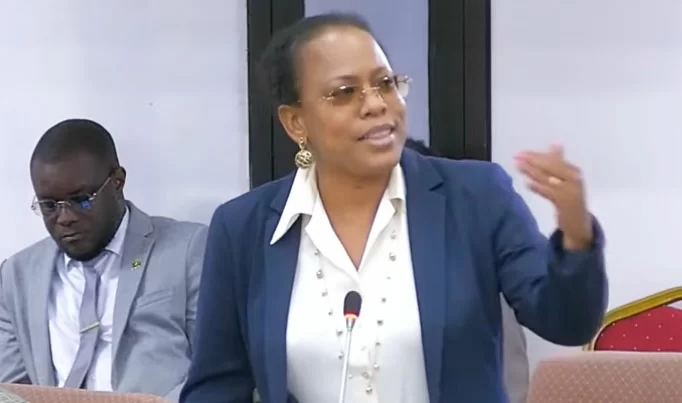
    Addressing the House of Representatives Tuesday during debate on the 2026/27 national sectoral budget, Transport Minister Daryl Vaz acknowledged the mounting pressure facing the island’s public transport sector. The push for a fare increase began immediately after fuel prices started climbing in late February, when the United States and Israel launched a military strike on Iran that sent global energy markets into volatility. Even after a fragile ceasefire took effect on April 8, oil prices have maintained their upward trajectory, triggering cascading price increases across nearly all other goods and services in Jamaica’s import-dependent economy.

    “I am aware that Jamaica’s public passenger vehicle sector is under extreme strain from both surging fuel costs and the long-outstanding 16 percent fare adjustment,” Vaz told lawmakers.

    The minister noted that unforeseen disruptions have repeatedly derailed the government’s timeline for implementing the promised adjustment. “As I’ve said before, the 16 percent fare adjustment remains under active consideration, with close attention to its potential impact on overall national inflation. As the local saying goes, bad luck is worse than obeah – every time we approach a final decision, a hurricane or another unexpected crisis throws off our economic forecasts and plans,” Vaz explained. “But I can give a firm assurance: the commitment we made will be honored.”

    Vaz outlined the severe financial pressures pushing the sector to the brink: fuel alone now makes up as much as 65 percent of a PPV operator’s monthly operating costs, on top of rising toll fees, climbing insurance premiums, and growing maintenance expenses. All of these combined, he acknowledged, are “threatening the sector’s very sustainability.”

    To address the immediate crisis, Vaz confirmed the government is accelerating the groundwork for the 16 percent adjustment, including developing a coordinated public communication strategy to prepare commuters for the change. Alongside the planned fare hike, officials are exploring a suite of targeted relief measures, including cuts to mandatory insurance premiums, concessionary discounted toll rates for PPV operators, and stricter regulatory enforcement to crack down on unlicensed illegal transport operators that siphon revenue from licensed services.

    For the long term, the government is advancing structural reforms to stabilize the sector. Key initiatives include updating national vehicle age rules to enable fleet modernization, offering financial incentives for operators to transition to electric and hybrid vehicles, expanding access to technical and business training for sector workers, and investing in upgraded public parking infrastructure across the island.

    “These targeted interventions are designed to strike a careful balance between the pressing financial needs of operators and the affordability concerns of commuters,” Vaz said. “Our goal is to protect the long-term viability of a sector that is absolutely critical to Jamaica’s national mobility, domestic commerce, and overall economic resilience.”