
Antigua and Barbuda’s top leadership is advancing plans to reform the country’s overburdened judicial system, with a specialized traffic court emerging as a serious proposal – but a separate court dedicated exclusively to firearm-related offenses has been ruled out for the foreseeable future. Prime Minister Gaston Browne shared these updates during an appearance on the local Browne and Browne Show Saturday, where he outlined the administration’s ongoing deliberations over justice system strengthening. When pressed for details about whether a standalone traffic court was in the works, Browne confirmed that the government is actively evaluating multiple pathways to implement the new judicial body. The core goal of creating a separate traffic court, he explained, is to siphon routine traffic-related cases out of the already stretched general court system, easing the backlog and operational pressure that has hampered judicial efficiency across the country. The idea of adding a specialized gun court to handle firearm offenses has been raised by some stakeholders, Browne noted, but the proposal does not pass a practical test based on current crime data. “Some would suggest that we should have a gun court as well, but I don’t think we have the prevalence of firearm offences to have a specific gun court,” he told listeners. Instead of creating a new standalone court for gun crimes, Browne said the government will push for faster processing of these cases within the existing judicial framework. He acknowledged that the judiciary currently operates with limited structural and personnel capacity, but the administration is hopeful that pending firearm cases can still be expedited to deliver quicker justice. At this stage, the prime minister did not share a formal timeline for when the traffic court might be established, nor did he release specific details about its operational location or staffing structure. The deliberations mark a key step in the government’s broader push to improve judicial access and efficiency for residents across the twin-island nation.
分类: politics
-

Residents can get up to $ 5000 for information on illegal gun
In a bold new push to curb rising gun-related violence, the government of Antigua and Barbuda has rolled out a comprehensive crime-fighting strategy anchored by a financial incentive program that offers a 5,000 Eastern Caribbean dollar reward to anyone who provides information that helps police recover illegal firearms. Prime Minister Gaston Browne unveiled the initiative during an appearance on the *Browne and Browne Show* on Saturday, emphasizing that the plan is designed to bridge the gap between local communities and law enforcement by encouraging active public participation in removing dangerous weapons from public spaces.
Browne explained that the 5,000 EC dollar payout often exceeds the actual street value of most unregistered firearms, creating a powerful financial motivation for individuals who hold information about illegal weapon caches or possess unauthorized guns themselves to come forward and cooperate with authorities. The reward program is backed by a total government allocation of 500,000 EC dollars, funding that supports the entire information-driven crime reduction initiative.
The reward scheme is not an isolated measure, but rather a core component of the administration’s broader, multi-pronged response to escalating gun crime and other violent offenses across the nation. Alongside the financial incentives for public tips, Browne highlighted that expanded community policing will play a critical role in the strategy. By increasing consistent, positive engagement between officers and local residents, the government aims to build long-term public trust in law enforcement, making communities more willing to share intelligence that can prevent violent crimes before they occur.
Beyond community-focused measures, authorities have already ramped up stop-and-search operations across high-risk areas, a step Browne confirmed has already yielded tangible results, with additional illegal firearms and ammunition seized and removed from circulation in recent weeks. Looking ahead, the government has outlined several key infrastructure and policy upgrades to modernize the country’s law enforcement capacity: it plans to acquire police drones outfitted with night-vision capabilities to expand patrol coverage in hard-to-access areas, extend the national network of public surveillance cameras to increase monitoring of high-traffic and high-crime zones, and complete the full digitization of police records to streamline investigative work and information sharing.
To further strengthen the criminal justice system’s ability to deter violent offending, the administration is also preparing new legislation that will introduce mandatory minimum sentences for serious gun offenses and violent sexual crimes, part of a broader overhaul of the country’s criminal justice framework aimed at increasing public safety and reducing repeat offending.
-
PM Vows Crackdown on ONDCP Employees Collecting Full Salaries for Half-Days
Antigua and Barbuda’s Prime Minister Gaston Browne has issued a direct order to staff at the country’s Office of National Drug and Money Laundering Control Policy (ONDCP), demanding that employees currently working reduced hours immediately return to their standard eight-hour workdays. The prime minister has publicly accused a subset of the agency’s workforce of exploiting workplace flexibilities to collect full government salaries while only fulfilling half of their required duties.
-

Manning hits back after Sando East resignations
An escalating internal conflict within the People’s National Movement (PNM)’s San Fernando East constituency branch has intensified in recent days, following the departure of two local executive members and renewed calls from constituency MP Brian Manning to address long-simmering grievances against branch chairperson Patricia Alexis. In an exclusive interview with the Sunday Express, Manning detailed the sequence of events that pushed two executive members to step down last week, tying their resignations directly to a controversial, unilaterally issued public statement critical of him that was posted to the constituency’s official Facebook page against party guidance.
The August 20 statement was published even after senior PNM leaders explicitly called on all factions to avoid public displays of internal division. The public rebuke of Manning came in response to his earlier decision to go public with concerns over Alexis holding multiple overlapping key party positions. Beyond her role as San Fernando East constituency chair, Alexis serves as the PNM’s assistant general secretary, a San Fernando East representative on the party’s General Council, and a member of the PNM Central Executive. Manning argues that this concentration of roles risks undermining impartial decision-making for local constituency matters, and has also raised questions about an unannounced executive vacancy that was filled by an individual with close ties to Alexis.
Manning pushed back against widespread framing that the dispute is a personal power struggle between himself and Alexis, emphasizing that the concerns stem from grassroots constituency members. “Many of these issues involve the chairman of the constituency. The constituency is crying out for a chairman they can trust. It is my job as MP to report such matters to the national executive of the party and I have done just that,” he told the Sunday Express.
The MP also addressed unconfirmed reports of a recent no-confidence motion brought against him by factional opponents within the local executive, confirming the motion was introduced but failed dramatically before it could even reach a formal vote. “(It) was shouted down. It didn’t even get a vote because so many were against it,” he claimed. In the wake of the failed motion, the critical public statement targeting Manning was released, according to his account, without the knowledge or approval of the full executive. Most members were only informed after the statement went public, prompting the two resignations in protest of the undemocratic, unilateral action.
Manning added that he has exhausted all internal party channels to escalate the concerns to PNM national leadership, but his complaints have been sidelined for months. When asked if he had received any outreach from Opposition Leader Pennelope Beckles, who leads the PNM, Manning confirmed no communication had been received. “No, the matter has been ignored for months,” he said.
In the official executive statement defending its actions, members argued that Manning’s choice to name Alexis publicly and repeat what they call damaging allegations left them no choice but to respond publicly, breaking the party’s unwritten rule of keeping internal disputes private. The statement noted that Alexis had already cooperated fully with party processes, agreeing to an internal investigation led by national party leadership. PNM officials have confirmed that an investigative team met with both Manning and Alexis, and a full final report has already been submitted to the PNM leadership and General Council for review.
The statement pushed back against Manning’s approach, arguing that he cannot simultaneously claim to support formal due process while publicly undermining the ongoing investigation. In a striking addition, the statement referenced Manning’s late father, former Trinidadian Prime Minister Patrick Manning, to argue that his political legacy cannot be exploited to avoid accountability. “(Patrick) Manning’s legacy was earned through discipline, service, accessibility and performance. That legacy cannot be reduced to a surname, nor can it be used as a shield against accountability. Heritage is not a substitute for leadership,” the statement read. “San Fernando East is greater than any one officeholder, personality or surname. Our responsibility remains service to the people, loyalty to the Party and respect for the democratic institutions upon which the People’s National Movement was built.”
The Sunday Express attempted to reach Beckles for comment on the ongoing rift, asking whether she had reached out to de-escalate tensions between the two factions, but no immediate response was available as of press time. PNM national chairman Marvin Gonzales has called for all parties involved to exercise restraint and avoid making further public statements that could deepen the party split.
-
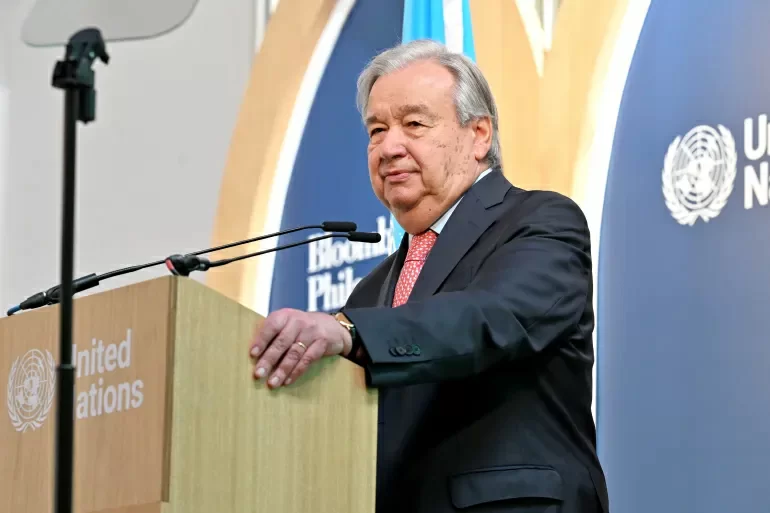
Guyana’s Rodrigues Birkett leidt informele stemming in race om volgende VN-leider
The race to succeed António Guterres as the next United Nations Secretary-General has entered a new stage, with Guyanese diplomat Carolyn Rodrigues Birkett emerging as the early frontrunner following the second non-binding straw poll conducted by the UN Security Council. As the UN works to build consensus ahead of the end of Guterres’ current term this December, Rodrigues Birkett secured eight encouraging votes from Security Council members, putting her at the top of the eight-candidate field. Guterres, who has held the role of UN Secretary-General since 2017, will step down when his second term concludes at the end of 2025; while the UN charter does not impose a formal term limit on the position, no previous secretary-general has served more than two full terms. Trailing closely behind Rodrigues Birkett are two contenders: Costa Rican diplomat Rebeca Grynspan, who led the first informal straw poll held in July, and Rafael Grossi, the Argentine head of the International Atomic Energy Agency. Both candidates earned seven encouraging votes, but differ significantly in their levels of opposition: Grossi received six discouraging votes, while Grynspan only earned four. The remaining candidate pool includes a roster of high-profile global figures: former Senegalese President Macky Sall, former UN General Assembly President Maria Fernanda Espinosa of Ecuador, former Chilean President Michelle Bachelet, veteran Ugandan diplomat Olara Otunnu, and Ecuadorean diplomat Ivonne A-Baki. These informal, non-binding straw polls are a longstanding procedural step designed to gauge support for candidates among the Security Council’s 15 members, helping to winnow the field gradually before a formal vote is held. To advance to confirmation by the UN General Assembly, a candidate must secure a minimum of nine favorable votes in a formal Security Council vote – and crucially, cannot be vetoed by any of the body’s five permanent members: the United States, China, France, Russia, and the United Kingdom. Whoever ultimately claims the role will inherit one of the most challenging diplomatic briefings in modern UN history: the organization faces widespread calls to strengthen its global standing, which has eroded considerably in recent years. Critics have repeatedly highlighted that the UN has failed to effectively prevent or end major global conflicts and crises since its founding in the aftermath of World War II, pointing to ongoing crises including the devastating war in Gaza and Russia’s full-scale invasion of Ukraine as evidence of the organization’s structural and functional shortcomings.
-

Vision and future of the Armed Forces of Haiti (FAd’H)
On August 22, 2026, Haiti’s Ministry of Defense advanced work on its high-stakes National Forum focused on shaping a new strategic vision and long-term future for the country’s Armed Forces, known locally as FAd’H. The second day of the gathering centered on targeted, in-depth debates across core priority areas: evolving national security threats, the military’s current operational capacity, shifting regional and global geopolitical dynamics, and pressing gaps in intelligence gathering, weapons infrastructure, and cyber defense capabilities.
Opening the day’s panel discussions, Lieutenant General Derby Guerrier, Commander-in-Chief of the FAd’H, led a conversation centered on the theme “Internal Threats to State Stability: Typology and Nature.” During his address, Guerrier outlined the most pressing structural constraints limiting the armed forces’ effectiveness today, including widespread shortages of essential equipment, underdeveloped military infrastructure, insufficient human capital, and gaps in ongoing specialized training. Despite these significant hurdles, he highlighted that the FAd’H has delivered measurable key achievements even with severely limited resource allocations, while stressing that systemic strengthening and comprehensive rebuilding of operational capacity remain non-negotiable priorities for the institution.
Subsequent presentations dug into broader security contexts and emerging threat vectors. Colonel Antoine Atouriste, whose talk focused on “The Army in the Regional and International Context,” offered a detailed analysis of dominant regional security threats and their direct implications for Haiti’s national defense and domestic stability. For his contribution, independent expert Pierre Antoine Louis turned attention to external threats to Haiti’s state sovereignty, centered specifically on the urgent need to protect and expand the country’s underdefended maritime natural and territorial heritage.
Lieutenant Colonel Edwin Florexil centered his remarks on the interconnected domains of military intelligence and weapons systems, emphasizing that a robust, functional intelligence service is an irreplaceable foundational pillar of effective national defense. Closing out the day’s scheduled addresses, cybersecurity specialist Guy P. Etienne explored the growing risks of cyberattacks and the integration of new defense technologies, stressing that Haiti’s defense institutions must rapidly upgrade their digital resilience to counter rapidly evolving threats in the global cyber domain.
By the end of the day’s proceedings, the series of targeted presentations had fostered a far deeper collective understanding of the multi-layered challenges facing the FAd’H, as well as consensus around the critical reforms and investments needed to build a modern, professional military that is well-resourced and aligned with Haiti’s unique on-the-ground security realities. The National Forum is set to continue its deliberations on Sunday, August 23, 2026, with further discussions expected to outline concrete roadmaps for institutional reform.
-

US court lifts immigrant visa ban for 75 countries including Dominica
In a landmark ruling that marks a major blow to the Trump administration’s broader efforts to curtail legal immigration, a U.S. federal judge has invalidated a policy that froze immigrant visa processing for nationals of 75 countries across the globe, opening a path forward for thousands of aspiring permanent residents.
Issued on Friday, August 21 by U.S. District Judge Jeannette Vargas in the Southern District of New York (Manhattan), the ruling concluded that the blanket policy unlawfully overstepped the statutory authority granted to Secretary of State Marco Rubio and directly conflicted with the core provisions of the U.S. Immigration and Nationality Act (INA). Judge Vargas labeled the policy “patently unlawful” and ordered it fully vacated under the Administrative Procedure Act, erasing the policy from federal rulebooks.
The controversial suspension took root in January 2026, when the U.S. Department of State announced it would pause all processing of immigrant visas—documents that grant recipients the ability to settle permanently in the U.S. and eventually apply for a green card, or lawful permanent resident status. The freeze covered 75 countries spanning every major region: from the Caribbean (where Dominica was named among the affected nations) to Africa, Asia, Latin America, the Middle East and the Balkans. Notably, the suspension did not extend to non-immigrant visas such as tourist or business travel documents, but it halted processing for all family-sponsored and employment-based immigrant visa applicants from the listed nations.
In justifying the policy, the State Department argued that nationals from the 75 countries faced an elevated risk of becoming a “public charge” — a term describing immigrants who rely heavily on U.S. government assistance programs, placing what the department called an unacceptable burden on American taxpayers. Officials cited federal data claiming that more than 30 percent of immigrant households from the affected nations accessed some form of public support, asserting that a blanket suspension was necessary to screen out applicants who would draw on public resources.
The central legal question before Judge Vargas centered on whether the Secretary of State held the legal authority to implement a blanket, nationality-based suspension of immigrant visa processing, rather than requiring case-by-case assessments of individual applicants. The judge firmly ruled that no such authority exists.
Under existing U.S. immigration law codified in the INA, individual consular officers are granted the exclusive responsibility to evaluate whether each specific applicant meets all eligibility criteria for an immigrant visa, including assessments of whether they are likely to become a public charge. Vargas found that the Trump administration’s policy entirely eliminated this individualized decision-making process, replacing it with a categorical blanket rule: any applicant holding nationality from one of the 75 listed countries was automatically barred from receiving an immigrant visa, regardless of their personal circumstances.
In one of the most definitive passages of the ruling, Vargas wrote: “The Policy, which categorically prohibits the issuance of immigrant visas based upon the nationality of the applicant, represents a direct abrogation of this statutory scheme.” The judge emphasized that federal law does not permit the Secretary of State to predetermine visa eligibility for an entire national group, instead requiring that each applicant’s qualifications be evaluated on their own merits. The court further rejected the administration’s public charge justification, holding that a country-wide risk assessment cannot replace the individualized inquiry mandated by federal immigration law. The question of public charge, the ruling clarified, must be assessed for each specific applicant, not automatically assigned based on where a person was born or holds citizenship.
For applicants from affected nations including Dominica, the ruling removes the nationality-based barrier that had frozen their visa applications. It is important to note, however, that the decision does not guarantee automatic approval of immigrant visas for all affected applicants. All applicants will now return to the standard eligibility process, where consular officers will evaluate each case against existing U.S. immigration requirements, and applications can still be denied for other legitimate legal reasons.
The ruling is widely viewed as a significant legal victory for immigration advocates and a major setback for the Trump administration’s goal of reducing overall levels of legal immigration to the United States.
-

64‑year‑old facing misconduct, conflict of interest charges
A 64-year-old Barbadian woman facing corruption-related public office charges has been released on bail following her first court appearance Saturday. Sonea Anita Jordan, a resident of 131 Plum Grove, Lodge Road, Christ Church, stands accused of two key offenses: failing to disclose a mandatory conflict of interest and misconduct while holding public office. Law enforcement authorities confirm the alleged unlawful activity occurred between September 1, 2024, and November 25, 2025. The charges against Jordan were brought jointly by two specialized units of the Barbados Police Service: the Serious Organised Crime Unit and the Anti-Corruption & Anti-Terrorism Unit, signaling the investigation’s priority status for local anti-graft agencies. During the hearing at District ‘A’ Criminal Court, Magistrate Gayle Scott presided over the proceedings. Under standard legal procedure for pre-trial hearings in Barbados, Jordan was not required to enter a formal plea to the charges at this stage. The court granted her conditional release on bail set at $3,000. Jordan is next scheduled to appear before the court to continue proceedings on November 17, 2026. As the case remains in early pre-trial stages, no further details about the nature of the alleged conflict of interest or Jordan’s specific public role have been released to the public.
-

Belgian car salesman becomes prince after DNA test proves royal parentage
A quiet, low-key ceremony held six months ago at a Belgian town hall has pulled back the curtain on a decades-old royal secret, bringing a new member into the country’s royal family: 26-year-old Clément Vandenkerckhove, a working car salesman who has now been legally acknowledged as the biological son of Prince Laurent, younger brother of Belgium’s reigning King Philippe.
Vandenkerckhove’s journey to this formal recognition began long before the DNA test that confirmed his royal lineage. His mother, former Belgian singer Wendy Van Wanten (real name Iris Vandenkerckhove), first met Prince Laurent by chance at a 1990s Paris fashion show, and the pair dated for a period before ultimately splitting. Longstanding public speculation suggests that the former Belgian king, Laurent’s father, opposed the relationship, leading to its end. Clément, born in August 2000, was not told the identity of his biological father until his 16th birthday, a reveal that came 10 years before this formal legal step.
Four years after learning his father’s identity, Vandenkerckhove reached out directly to Prince Laurent to share what his mother had disclosed. The prince agreed immediately to take a DNA test alongside Vandenkerckhove. In recounting the experience to Belgian broadcaster VTM in a September documentary, Vandenkerckhove recalled a small gesture that shaped their early connection: “We went to the hospital together and I remember him saying, ‘I’ll go first so you’re feeling at ease.’” Once the test confirmed paternity beyond dispute, the pair held a series of “open and honest conversations” that laid the groundwork for formal recognition. Earlier this year, Prince Laurent officially registered Vandenkerckhove as his son with Belgium’s national civil registry, a step that granted Vandenkerckhove the official title of prince, The Telegraph first reported Wednesday.
The legal recognition brings Vandenkerckhove equal inheritance rights to Prince Laurent’s private estate, alongside the three children Laurent shares with his wife Princess Claire: 20-year-old Princess Louise, 20-year-old Prince Nicolas, and 19-year-old Prince Aymeric. However, the new prince will not hold any claim to the Belgian throne, will not receive an annual public royal allowance, and will not be required to carry out any official royal duties on behalf of the monarchy. Though he is eligible to adopt the royal family name Saxe-Coburg, Vandenkerckhove has made clear he has no plans to abandon the surname he has carried his whole life. “I am proud of the name Vandenkerckhove,” he told Flemish daily newspaper Het Nieuwsblad recently. “If I were to sacrifice that family name, it would be a betrayal of everything my mother has done for me.”
This revelation marks the second high-profile secret paternity case to emerge from the Belgian royal family in recent years. Prince Laurent’s father, 92-year-old former King Albert II, fought a years-long paternity dispute before formally acknowledging in 2020 that he fathered an illegitimate daughter, Delphine Boël, during an extramarital affair. Boël, now 58, won her legal battle for recognition and was granted the official title of princess, and she now uses the name Delphine de Saxe-Coburg.
-

Government presents Eficompras, the first virtual store in the Dominican State
In a high-profile launch event in Santo Domingo, the Dominican Republic has unveiled Eficompras, a cutting-edge digital procurement tool designed to accelerate small-scale public sector purchasing, integrated directly into the country’s existing Electronic Public Procurement System (SECP). The new platform is tailored for all public purchases valued below the established threshold of RD$268,111.38, addressing long-standing delays in low-value procurement that have slowed public sector operations for years.
President Luis Abinader, who headlined the official launch ceremony, emphasized that the development of Eficompras positions the Dominican Republic as a regional leader in digital public procurement. Rather than relying on guidance from more established international counterparts, Abinader noted the country is now prepared to share its expertise and offer advisory support to other nations seeking to modernize their own public purchasing systems, a milestone he called a point of national pride in public sector innovation. The president highlighted that the platform delivers three core benefits for the Dominican state: enhanced operational efficiency, greater public utility, and full transaction transparency, with a particular focus on streamlining routine minor supply purchases for public hospitals across the country.
Carlos Pimentel, director of the Dominican General Directorate of Public Procurement (DGCP), detailed the transformative impact Eficompras will have on procurement timelines. Previously, small-scale purchases falling under the RD$268,111.38 threshold took between five and eight full business days to complete. With the new digital tool, Pimentel confirmed these entire transactions can now be processed in a matter of minutes, a dramatic reduction that will free up public administration staff to focus on higher-priority tasks. Beyond speed, the platform was intentionally designed to prioritize access for Micro, Small, and Medium-sized Enterprises (MSMEs), opening new revenue streams for domestic small businesses that have historically faced barriers to entering public sector supply chains.
The journey to launch took two years of iterative development, ending with a successful pilot program that concluded on August 17, 2026. The pilot involved 10 participating public institutions, including the Ministry of Finance and Economy and the National Lottery. Trial results demonstrated the platform’s reliability: during testing, 29 completed purchase orders were processed successfully, the platform’s public catalog grew to include 777 distinct products, and more than 89,600 pre-vetted suppliers registered to participate.
The purchasing process is intentionally simplified for public sector buyers: users only need to browse the centralized product catalog, compile their order and delivery details, validate available budget through the integrated Financial Management Information System, confirm the purchase, and await final activation before payment and delivery. Registered suppliers are responsible for maintaining inventory of all common goods listed on the platform, which span a wide range of categories including potable water, office supplies, coffee, sugar, cleaning products, packaging materials, and small technical equipment.
Carlos Romero, managing director of the DGCP, clarified that Eficompras operates as a complement to the existing SECP system, not a replacement or a full competitive tender. All product pricing, availability, and stock information is displayed directly on the public portal, removing layers of administrative complexity from small purchasing transactions. Romero added that the platform is fully integrated with the Dominican government’s existing financial management systems and internal controls, ensuring full compliance with public finance regulations.
Per Resolution PNP-07-2026, published in July 2026, use of Eficompras is mandatory for all state bodies and entities covered under Dominican Law 47-25. To support a smooth transition, all affected public institutions will receive a 90-day adaptation and training period, with both synchronous and asynchronous learning resources available through the DGCP Virtual Campus to help staff master the new platform.