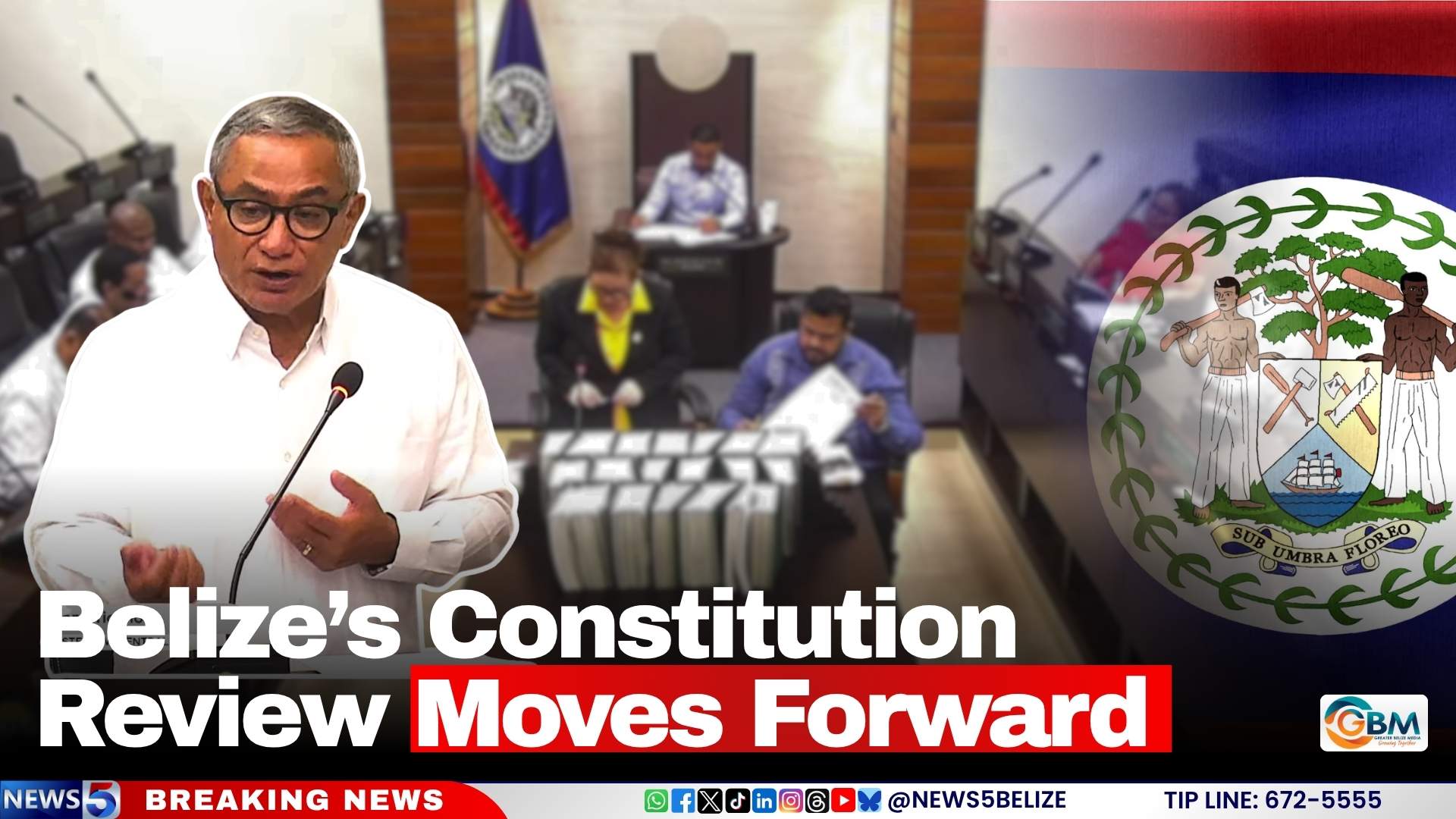
Four years after its formal establishment to spearhead a national conversation on constitutional overhaul, Belize’s People’s Constitution Commission (PCC) has delivered its landmark final report to the country’s National Assembly, marking a critical milestone in the nation’s long-awaited constitutional reform process.
Prime Minister John Briceño confirmed details of the report’s evolution in official remarks following the tabling, noting that the document initially included 167 original policy and structural recommendations. These proposals were first streamlined to 53 full constitutional amendments after a rigorous review by an independent external expert committee chaired by King’s Counsel Edward Fitzgerald — a mandatory step outlined in the PCC founding legislation that was required to be completed by May 2026. Following the expert committee’s assessment, the 53 remaining proposals were passed to Belize’s Attorney General’s Ministry for additional legal and procedural review.
Briceño explained that the panel of constitutional experts evaluated each proposal against eight core criteria to ensure alignment with the nation’s long-term interests. Key benchmarks included alignment with modern governance standards, protection of fundamental human rights, long-term structural durability, democratic legitimacy, and the ability for courts to enforce amendments without overstepping into the role of elected policymakers.
Under the framework established by the PCC Act, the final stage of the reform process will require a national referendum to approve any changes to Belize’s constitution. However, before any public vote is held, the country will enter an extended period of public engagement to ensure all Belizeans have the opportunity to understand and weigh in on the proposed changes.
The prime minister outlined that the government will first roll out a nationwide public awareness campaign designed to educate citizens on the content and implications of the 53 proposed amendments, before the full package returns to the National Assembly for further procedural consideration. Briceño emphasized that not all recommendations will ultimately be adopted as part of the final reform package, noting that public input will play a central role in shaping the government’s final position.
“This consultation process creates a formal mechanism for the public to review and analyze the PCC’s recommendations, as well as understand the government’s rationale for any adjustments it proposes,” Briceño said. “In turn, this process allows the government to gather critical feedback directly from the Belizean people that we will use to refine our approach.”
Briceño projected the full public engagement and consultation period will take between six and eight months to complete, and he issued a formal call for all Belizean citizens to engage with the report and participate actively in the upcoming public discussions.
“I encourage all Belizeans to take the time to assess and review the PCC report and its recommendations,” Briceño said. “As the government rolls out its awareness campaign over the coming months, I urge you to participate in a sober and responsible manner to help shape the future of our nation’s governing framework.”