分类: environment

  • Belize City’s Sargassum Bill: $10,000 Now, Could Need Up to $325K for Seasons Ahead

    Belize City’s Sargassum Bill: $10,000 Now, Could Need Up to $325K for Seasons Ahead

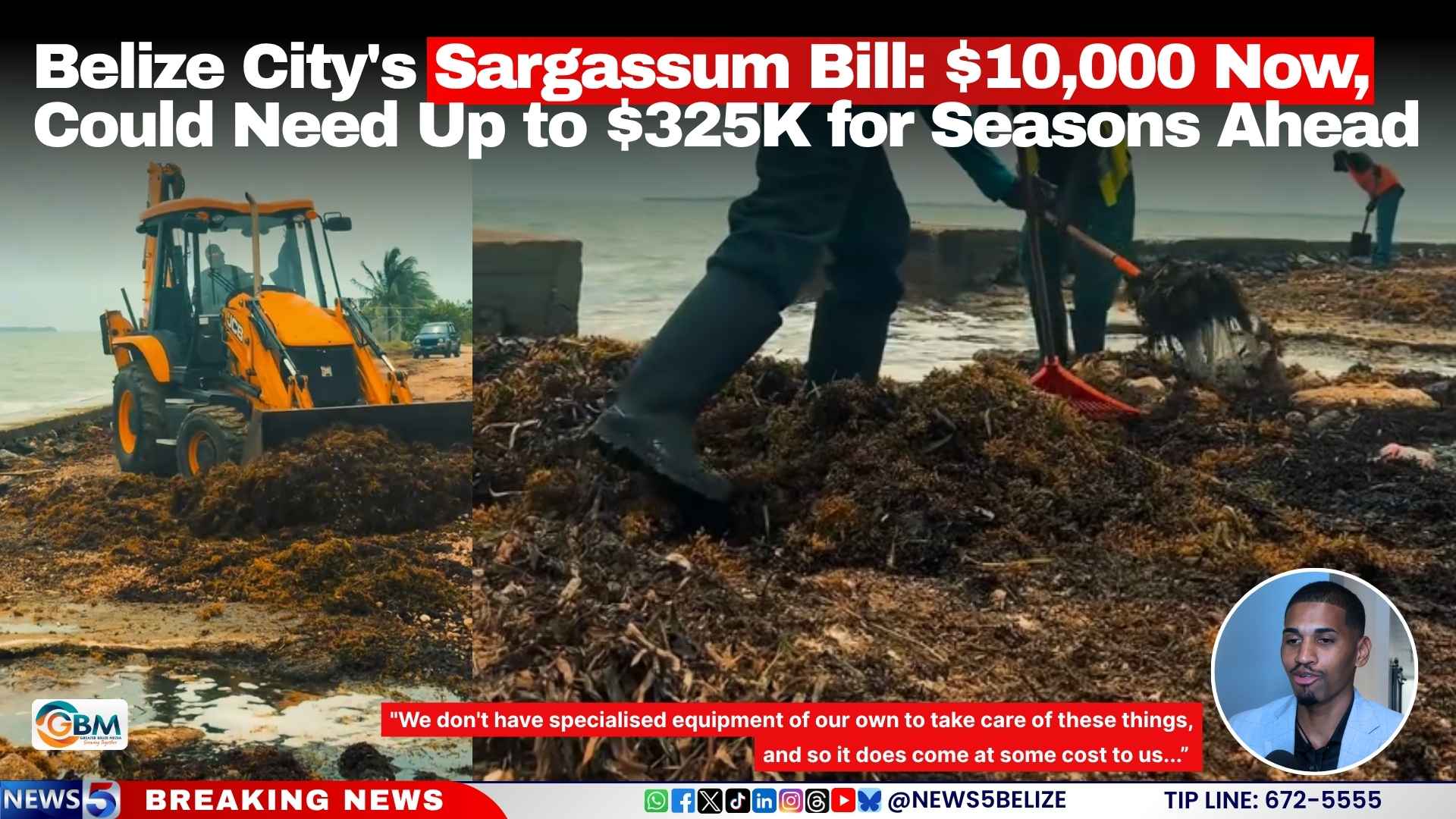
    By July 24, 2026, the persistent problem of invasive sargassum seaweed has pushed the Belize City Council to pursue long-term mitigation strategies, after the local government already allocated thousands of dollars in emergency funding to clear shorelines along the city’s coastline.

    Deputy Mayor Eluidge Miller shared details of the city’s ongoing response in a Thursday briefing, noting that cleanup operations are currently reactive: crews are only deployed when official forecasts predict large, disruptive influxes of the floating brown algae that threatens Belize’s coastal ecosystems and tourism economy. To address an early-July sargassum bloom, the council arranged to rent a specialized seaweed harvester from the Hol Chan Marine Reserve, running a three to four day clearing operation that cost an estimated $10,000. That price tag covered only the harvester rental and its operating crew; extra costs for dump trucks, fuel, and supporting heavy machinery pushed total spending for this initial cleanup even higher.

    Unlike larger coastal management agencies, Belize City does not own its own specialized sargassum removal equipment, meaning every emergency cleanup requires renting gear from outside partners, adding unplanned costs to the city’s annual budget. To address this gap, the council is currently evaluating a new removal approach recommended by the national government’s Sargassum Task Force: adapting standard excavators for sargassum clearing, a method that has already delivered successful results in other coastal regions of Belize.

    An internal engineering assessment completed earlier this month framed sargassum blooms as a permanent, recurring seasonal challenge for Belize City, rather than a one-time environmental event. The assessment called for creating a dedicated, sustained funding stream to support ongoing cleanup and mitigation work. According to the report’s projections, a fully resourced emergency response program would cost roughly $170,000, while a comprehensive year-round seasonal maintenance strategy to keep shorelines clear through peak bloom periods would require between $250,000 and $325,000 in total funding.

    Miller emphasized that city leadership is under no illusion that the sargassum problem will resolve on its own. “I don’t think it’s a problem that will go away,” he said, confirming that the council is actively building institutional and financial capacity to tackle the ongoing challenge consistently in coming years.

  • APUA Adjusts Water Distribution Schedule as Drought Strains Plants

    APUA Adjusts Water Distribution Schedule as Drought Strains Plants

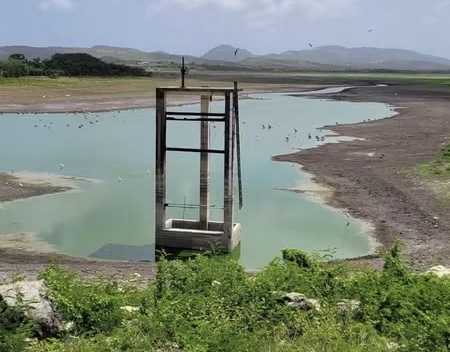
    A devastating prolonged drought has pushed Antigua’s critical water infrastructure to the breaking point, forcing the Antigua Public Utilities Authority (APUA) to implement emergency adjustments to its national water distribution network, officials confirmed this week. At a post-Cabinet media briefing Thursday, Director General of Communications Maurice Merchant shared that while APUA’s network of reverse-osmosis desalination plants, the country’s primary source of treated drinking water during dry conditions, remain online, they are currently operating at maximum capacity to meet ongoing public demand. The relentless strain of the extended dry period has taken a heavy toll on key equipment: multiple facilities now require ongoing frequent maintenance and regular replacement of the specialized membrane modules that power the reverse-osmosis purification process, adding further operational challenges for the authority. Recognizing the severe disruption that inconsistent water access creates for residential households across the island, APUA has moved to revise its official water distribution schedule with a core goal of cutting the duration of unplanned supply outages in the hardest-hit communities. “Water is an absolute necessity, and that reality becomes even clearer when taps stop running,” Merchant noted, acknowledging the hardship placed on communities. Despite the targeted adjustments to distribution, Merchant cautioned that temporary supply interruptions will remain unavoidable as the authority carefully manages its limited available water reserves through the drought event. He urged the Antiguan public to extend patience and understanding to utility teams as they work to mitigate the crisis. Merchant emphasized that while Antigua and Barbuda has long been classified as a drought-prone nation, current dry conditions rank among the most severe that national meteorological experts have recorded in decades. The drought-related water crisis is not isolated to Antigua, he added: several other Caribbean nations and regions across the globe are grappling with similar drought-driven water scarcity challenges, underscoring the growing scope of the climate-linked event. APUA’s emergency revisions represent a proactive effort to balance limited supply with public needs while long-term adaptive measures are developed to address increasingly frequent severe drought events linked to shifting global climate patterns.

  • Heat and dust from the Sahara: Have you seen smoke in Santo Domingo? Here’s what’s happening

    Heat and dust from the Sahara: Have you seen smoke in Santo Domingo? Here’s what’s happening

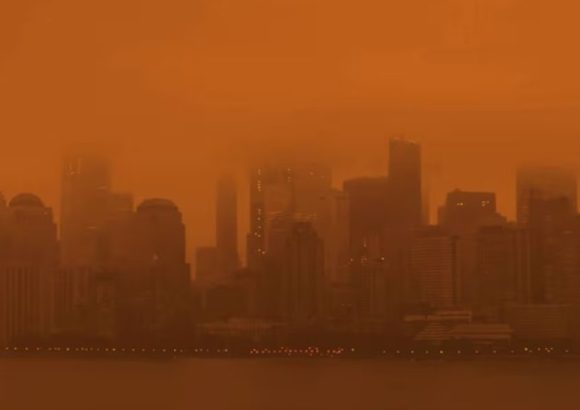
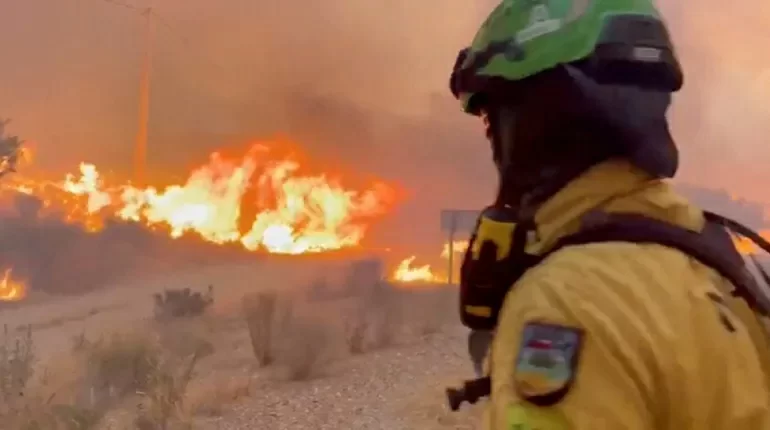
    Residents across Santo Domingo have recently reported widespread hazy conditions and the faint smell of smoke hanging over the capital, prompting initial fears of an unreported local blaze. But officials have now confirmed that the poor air quality and reduced visibility stem not from a domestic fire, but from an unusual combination of two far-traveled atmospheric phenomena: wildfire smoke drifting south from hundreds of active blazes across Canada, and a massive plume of Saharan dust that has already settled over much of the Dominican Republic.

    After widespread social media and local reports of unusual smoke across the Greater Santo Domingo area, Dominican outlet HOY reached out to General José Luis Frómeta Herasme, head of the National District Fire Department, to confirm the source of the haze. Frómeta Herasme clarified that his department had not received any emergency calls for active fires within the capital’s boundaries, ruling out local blazes as the cause of the low air quality.

    Meteorological analyst Jean Suriel broke down the unusual atmospheric event, noting that the upcoming Father’s Day weekend would be defined by oppressive, record-adjacent heat driven by the combined air mass carrying both Canadian wildfire particles and Saharan dust across the Atlantic Ocean to the Caribbean.

    The mix of fine wildfire ash and mineral dust from the Sahara carries notable public health risks for vulnerable groups. Suriel urged people living with respiratory conditions and allergic diseases to strengthen their preventive measures, including staying indoors with air filtration when possible and wearing well-fitted masks outdoors, to minimize their exposure to the high concentration of airborne particles.

    Temperatures across the country are already climbing ahead of the weekend. Suriel projected that Sunday, the date of Father’s Day celebrations, will see heat index values ranging between 40°C and 45°C across most of Dominican territory. The northern and western provinces of Dajabón, Montecristi, Santiago Rodríguez, Valverde and Elías Piña will face the most stifling, dangerous heat conditions, according to the forecast.

    Suriel confirmed that the 12th major Saharan dust plume of the annual season has already fully reached the Dominican Republic, creating the widespread milky, hazy skies that have caught residents’ attention across the country.

    Looking ahead to the weekend forecast, Saturday will bring partly cloudy skies paired with persistent haze from the Saharan dust plume. While the dust plume will begin to gradually weaken on Sunday, it will still remain in place enough to sustain poor air quality and elevated temperatures. Forecasters also note that late afternoon showers may become more widespread on Sunday as Tropical Wave 30 approaches the island from the east.

    The arrival of the tropical wave will bring shifts to the country’s air quality and weather starting on Monday, Suriel explained. The system’s onshore winds will push most of the remaining Saharan dust out of the region, bringing improved air quality after days of haze. However, the tropical wave will also bring increased humidity, sustaining hot conditions even as dust clears, with scattered showers and thunderstorms expected across many parts of the country after midday on Monday.

  • Belize Looks to Go Green and Digital Through UNIDO Partnership

    Belize Looks to Go Green and Digital Through UNIDO Partnership

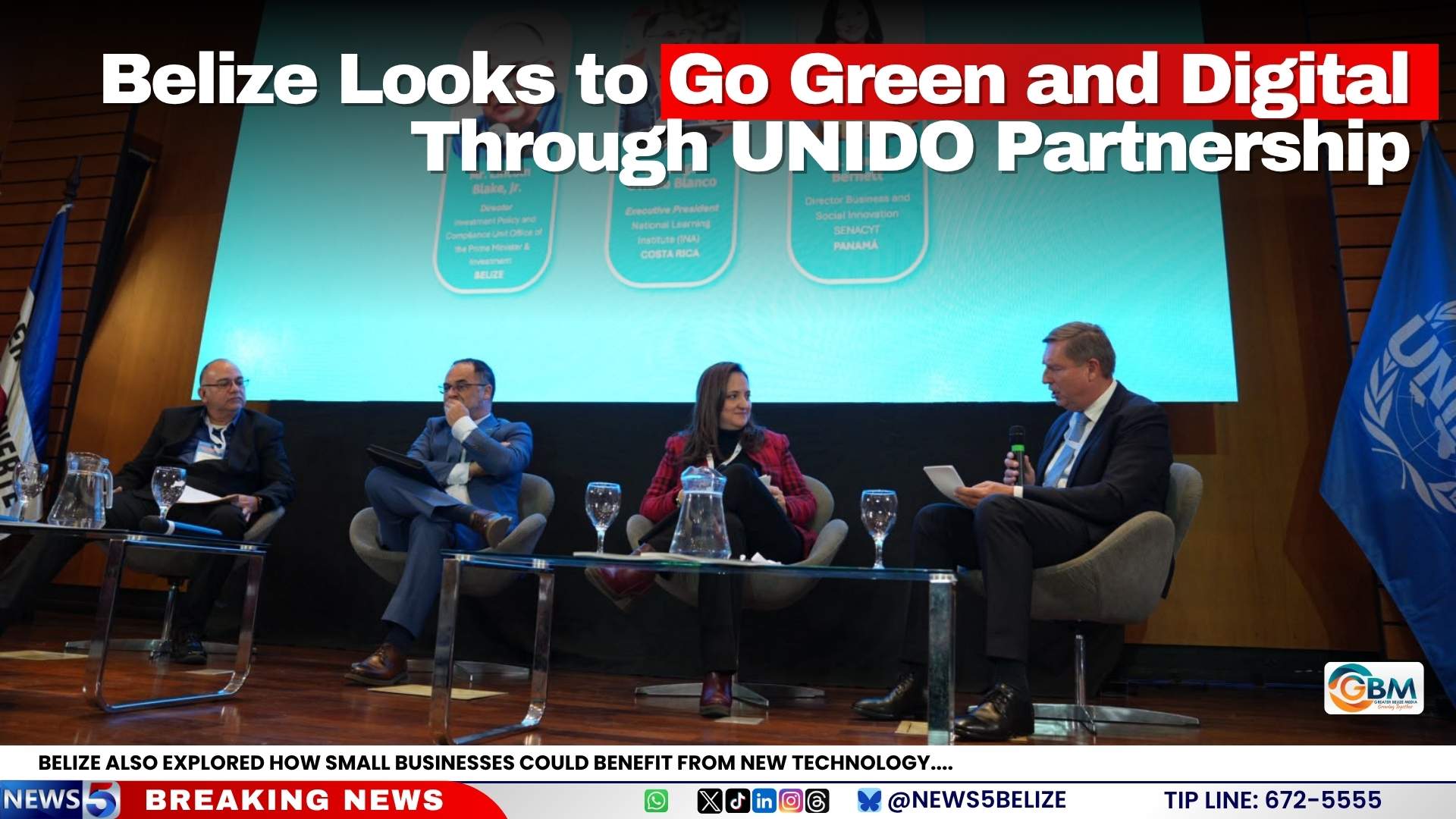
    In July 2026, following its participation in a high-profile regional gathering hosted in Montevideo, Uruguay, Belize has laid out an ambitious roadmap to advance green industrial development and digital inclusion for its small business sector through a new collaboration with the United Nations Industrial Development Organization (UNIDO).

    The UNIDO Regional Conference for Latin America and the Caribbean, held 15 to 16 July, brought together heads of state, private sector stakeholders, and international development partners from across the region to address pressing challenges: how to strengthen industrial resilience, unlock inclusive economic opportunities, and build systems that prioritize long-term sustainability over short-term growth. Belize’s delegation, led by the country’s Ministry of Investment, took a prominent role at the event, showcasing its ongoing policy work and building new connections to support its development goals.

    At the core of Belize’s policy agenda is a National Industrial Strategy centered on expanding the country’s green and blue economies. This initiative, which already receives targeted support from both UNIDO and the Government of Japan, targets high-potential sectors including sustainable agro-processing and low-carbon manufacturing. By focusing on these areas, Belize aims to drive balanced economic growth that creates local jobs while preserving its rich natural ecosystems, a critical asset for the nation’s long-term prosperity.

    Beyond green industrial development, Belize is also prioritizing digital upskilling for its smallest business operators. Delegates held targeted working meetings with representatives from UNIDO’s AIM Global Alliance to explore concrete partnerships that would bring artificial intelligence training and accessible digital tools to micro, small, and medium-sized enterprises (MSMEs), which form the backbone of Belize’s domestic economy. These collaborations aim to close the digital divide, helping small local businesses compete in regional and global markets by leveraging cutting-edge technology.

    Regional development experts note that Belize’s approach aligns with a growing shift across Latin America and the Caribbean, where small and medium-sized economies are increasingly turning to sustainable development and digital innovation to reduce reliance on traditional sectors and build more resilient, future-proof economies.

  • Asabina eist duidelijkheid over massale vissterfte

    Asabina eist duidelijkheid over massale vissterfte

    A months-long delay in official explanations for a widespread mass fish death event in Suriname’s main river has drawn sharp criticism from a leading opposition lawmaker, who is pressing the national government to break its silence and deliver urgent clarity for affected communities.

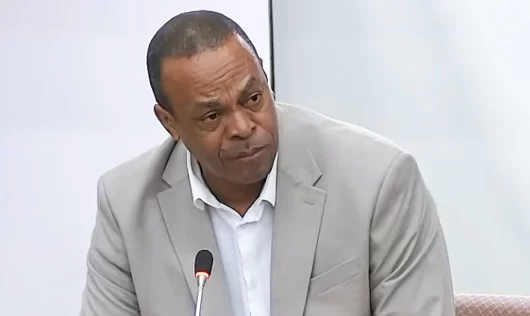
    Ronny Asabina, parliamentary faction leader of the Brotherhood and Unity in Politics (BEP) party, raised the alarm during a plenary debate on current affairs in Suriname’s National Assembly Thursday, highlighting that more than four weeks have passed since the mass mortality was first reported, and local households still have no answers about what caused the disaster.

    For riverine communities living along the Suriname River and its surrounding creeks, fishing is far more than a recreational activity: it is the primary source of both daily food and household income. Since the fish die-off was recorded, however, residents have been forced to avoid consuming fish and other aquatic resources from the area, leaving them grappling with severe immediate economic and social hardship that has only worsened as the government’s investigation drags on.

    Asabina emphasized that to date, the Surinamese government has not released any public update on the progress of its promised investigation, nor has it confirmed a definitive root cause for the mass fish deaths. The BEP leader called on authorities to immediately share full, transparent updates with impacted communities, putting an end to the costly delays that have left residents in limbo.

    A petition on the issue was already submitted to the national legislature earlier, Asabina noted, adding that local residents have a fundamental right to protection and certainty about the safety of both their living environment and their primary food supply. He further stressed that if an investigation finds the fish die-off was the result of human activity – including negligence, illegal dumping of toxic waste, or other criminal acts – authorities must pursue action not just administratively, but through criminal law.

    “Any parties found responsible for this disaster must be identified and prosecuted to the full extent of the law,” Asabina told lawmakers.

    The BEP leader did not hold back in criticizing the government’s slow response, accusing the administration of stalling and avoiding clear answers for weeks, even as the human and economic costs of the disaster continue to mount for vulnerable riverine communities.

  • REOI: Consultancy Services for Environmental Health and Safety Officer (EHSO)

    REOI: Consultancy Services for Environmental Health and Safety Officer (EHSO)

    The Government of Grenada has secured multilateral financing to advance its ambitious Grenada Geothermal Drilling Project, an initiative designed to expand the Caribbean nation’s renewable energy capacity and boost its climate resilience goals. Implemented by the country’s Ministry of Climate Resilience, the Environment and Renewable Energy and overseen by the dedicated Geothermal Project Management Unit (GPMU), the project will carry out exploration drilling at two pre-selected sites. Both locations are situated on private agricultural land in the northern region of Grenada’s main island: Site C in Tricolar, St Patrick Parish, and Site F at Plaisance Estate in St John Parish.

    As a project supported by multiple lending institutions, the initiative is bound by a rigorous set of international environmental and social safeguard frameworks. These include the Caribbean Development Bank’s (CDB) official review protocols, Inter-American Development Bank (IDB) safeguard policies, and the International Finance Corporation’s (IFC) widely recognized Performance Standards. The project scope covers civil engineering works and core exploration drilling, both of which will be procured via international competitive bidding, alongside a suite of contracted consultancy and individual specialist roles. All procurement activities follow the CDB’s established procurement guidelines for funded projects, aligned with Grenada’s domestic national procurement legislation. In cases where the two regulatory frameworks conflict, the terms of the relevant financing agreement take precedence.

    To ensure full adherence to all environmental, health and safety requirements during the project’s active phases, the executing ministry has launched a search for a qualified consultant to fill the role of dedicated Environmental Health and Safety Officer (EHSO). The core objective of this consultancy is to act as the GPMU’s central point of responsibility for all EHSO matters, with a mandate to guarantee the project complies with all approved regulatory documents throughout the civil works and exploration drilling stages. These requirements include the original Environmental and Social Impact Assessment (ESIA), the updated ESIA, finalized Environmental and Social Management Plans (ESMPs), all relevant Grenadian national laws, and the mandatory standards set by the project’s lending partners.

    The contracted EHSO will be employed on a full-time basis for an initial term of two years, with adjustments possible to align with evolving project needs. The ministry is now calling for expressions of interest from eligible individual consultants who meet the required qualification and experience benchmarks to deliver the services outlined.

    When evaluating submitted expressions of interest, the selection panel will prioritize candidates with a proven track record of successful delivery on comparable assignments. The mandatory qualifications for the role are as follows: candidates must hold either a bachelor’s degree paired with 10 years of relevant professional experience, or a postgraduate degree paired with at least 5 years of relevant experience, in a field such as environmental science, environmental engineering, occupational health and safety, or another closely related discipline. Candidates must also demonstrate hands-on experience carrying out EHS monitoring and implementing ESMPs in active project environments, with preference given to applicants with experience in the extractive, energy, or construction sectors. Additional requirements include a demonstrated working knowledge of occupational health and safety management systems and practices tailored to construction and drilling operations. Strong preference will be given to candidates already familiar with IFC Performance Standards or equivalent multilateral development bank safeguard frameworks, and prior experience working on geothermal or extractive industry project operations will be considered a distinct advantage.

    All application materials must be submitted in English. Interested candidates can access full project details, including the complete Terms of Reference for the role, via the In-Tend public procurement portal. General queries will be answered between the hours of 8 am and 4 pm, Monday to Friday, with responses issued within three working days of receipt.

    Completed expressions of interest must be submitted exclusively through the In-Tend portal, and must be received no later than Friday, 7 August 2026. All submissions must include the applicant’s full name and contact address, and be clearly marked with the text: “Expression of Interest – Consultancy Services for Environmental Health and Safety Officer (EHSO)” to avoid misclassification.

    After the evaluation process is completed, the candidate assessed as having the strongest technical capabilities and most relevant experience will be invited to enter into contract negotiations with the ministry. The Government of Grenada retains full legal rights to accept or reject any late submissions, to cancel the current call for expressions of interest either partially or in full, and is not obligated to provide any justification for its decision to select or reject any applicant. The government will also not cover any costs incurred by applicants during the preparation and submission of their expressions of interest.

    Submissions are addressed to the Permanent Secretary of the Ministry of Climate Resilience and Renewable Energy, located at the Ministerial Complex, Sir Eric Matthew Gairy Botanical Gardens, Tanteen, St George’s. The portal can be accessed at https://in-tendhost.co.uk/gnd, and candidates requiring assistance with portal registration can direct queries to [email protected].
  • OIS eist actie van president Simons na milieuramp in Saramacca

    OIS eist actie van president Simons na milieuramp in Saramacca

    On July 24, the Organization of Indigenous Peoples in Suriname (OIS) delivered a scathing rebuke of the Surinamese national government in an open letter addressed to President Jennifer Simons, centered on the ongoing, unaddressed environmental disaster that has devastated communities in the country’s Saramacca region.

    In the letter, the OIS outlines that to date, the government’s response to the crisis has been lacking in visibility, cross-agency coordination, and tangible effectiveness. Affected indigenous communities are currently facing severe gaps in critical humanitarian aid, including access to clean drinking water, nutritious food, and other basic life-sustaining provisions. This absence of support has left local populations feeling abandoned, with a widespread sense that their suffering is not being treated with the necessary urgency, nor that they are receiving equitable treatment compared to other groups impacted by national crises.

    Beyond the immediate humanitarian fallout, the OIS warns of cascading, long-term economic harm for communities tied to the Saramacca River. For hundreds of local households, the river serves as both the primary source of daily food and the backbone of household income through small-scale artisanal fishing. The ongoing contamination has made all fishing activity unsafe and economically unviable, pushing countless families into immediate loss of livelihood with no alternative income streams to fall back on. The organization is calling on the government to immediately launch a full, independent assessment of the full scope of damage caused by the disaster, followed by the rollout of a fair, accessible compensation program for impacted households and communities.

    A further point of disappointment highlighted by the OIS is the complete absence of senior government leadership from the disaster zone. To date, neither the Minister of Natural Resources nor the Minister of Oil, Gas and the Environment has conducted an on-site visit to meet with affected residents and assess damage first-hand. The organization stresses that in moments of national crisis, senior elected and appointed officials have a responsibility to demonstrate visible, on-the-ground leadership and enter into direct, collaborative dialogue with the communities bearing the brunt of the disaster.

    The OIS has issued an urgent appeal to President Simons to step in, accept full political accountability for the failed response, and launch a critical review of the performance of the two cabinet ministers responsible for coordinating disaster and environmental response. The organization has issued a 14-day deadline for the government to roll out concrete, actionable measures to address the crisis. If no meaningful progress is made within that window, the OIS says it is prepared to escalate the issue through further action, including outreach to regional and international human rights and environmental organizations to advocate for justice and defend the fundamental territorial and human rights of Suriname’s indigenous populations.

  • Klimaatverandering versterkt droogterisico’s in Europa door extreme hitte

    Klimaatverandering versterkt droogterisico’s in Europa door extreme hitte

    A new landmark study carried out by an international team of climate researchers has delivered a stark warning: human-driven climate change has drastically amplified drought conditions across Europe, and rising extreme heat — not falling rainfall — is the single leading cause of the continent’s record dry conditions. The research, published Thursday, confirms that warmer atmospheric temperatures have sharply increased the likelihood of severe drought and destructive wildfire outbreaks across the region.

    Europe is currently grappling with one of its most severe drought events in recent history. In the wake of a historic heatwave that swept across the continent last June, countries stretching from Western Europe to Eastern Europe are facing parched rivers, mandatory water restrictions, and devastating wildfires that have burned thousands of hectares of land. The new research confirms that a warmer global climate accelerates moisture loss from soils, lakes, and river systems, dramatically raising the probability of extreme dry periods that overwhelm local adaptation capacity.

    Mariam Zachariah, co-author of the study and a researcher at Imperial College London, emphasized the outsized role of rising temperatures in driving the current crisis. “Our results show that this drought is not primarily the result of low rainfall, but of a warmer atmosphere that creates far greater moisture deficits across land,” Zachariah explained. “Even in regions where rainfall has barely changed, or even experienced seasonal increases, drought risk still continues to climb.”

    The mechanism behind this trend is rooted in basic atmospheric science: warmer air can hold more water vapor, with its moisture-holding capacity increasing by roughly 7% for every 1 degree Celsius of temperature rise. Since the pre-industrial era, global average temperatures have risen by approximately 1.4 degrees Celsius, a shift driven overwhelmingly by human greenhouse gas emissions from fossil fuel combustion.

    Dominik Schumacher, a researcher at Switzerland’s ETH Zurich, outlined the dangerous feedback loop that turns mild dry conditions into catastrophic events. “Warm air dries out soils, which leads to even higher temperatures and even drier ground,” Schumacher explained. “This rapid drying also leaves land far more vulnerable to destructive wildfires once a spark ignites.”

    To reach their conclusions, the research team compared historical weather data and modern climate model simulations of current conditions to a hypothetical pre-industrial world with 1.4 degrees Celsius lower average temperatures. The results were staggering: extreme dry soil conditions in Western Europe are now five times more likely than they would be without anthropogenic climate change, while in Eastern Europe that risk jumps to 11 times higher. For atmospheric evaporative demand — the atmosphere’s ability to pull moisture out of soils and plants — the risk in Western Europe during spring and early summer is an extraordinary 80 times higher than it would be in a pre-warming climate.

    Zachariah noted that this increased atmospheric “thirst” has shifted the entire baseline for drought risk across the continent. “Because the atmosphere is now thirstier, a rainfall deficit that might not have caused drought in the past can now lead to far more severe drought conditions today,” she said.

    The study’s findings underscore the urgent need for accelerated action to cut greenhouse gas emissions and strengthen adaptation measures to limit growing drought and wildfire risks across Europe and the rest of the world. As extreme heat events become more frequent and intense due to ongoing climate change, researchers warn that without immediate intervention, these catastrophic dry conditions will become the new normal for much of the continent.

  • Say no to whale hunting, NGOs urge Antigua & Barbuda’s PM

    Say no to whale hunting, NGOs urge Antigua & Barbuda’s PM

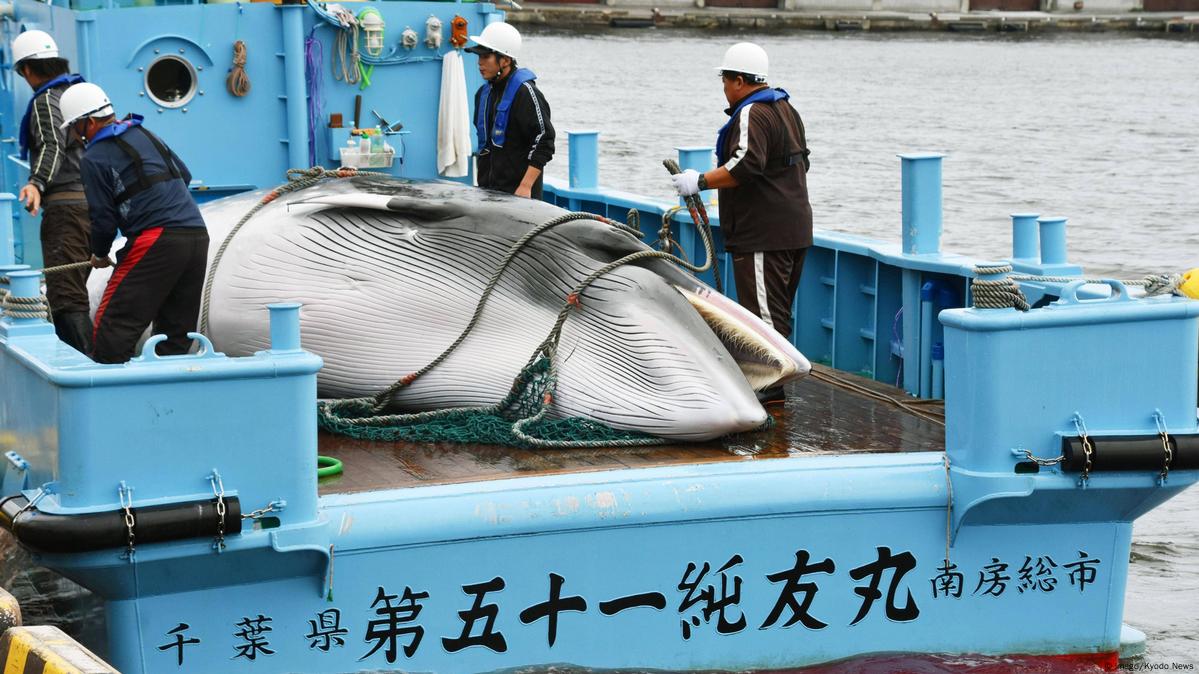
    A coalition of international and regional non-governmental environmental organizations has issued a direct public appeal to the Prime Minister of Antigua & Barbuda, calling on the Caribbean nation to rule out any return to commercial whaling activities. The appeal comes amid growing international speculation that some small island nations may reconsider lifting long-standing bans on whale hunting in exchange for economic incentives from pro-whaling countries.

    NGOs argue that Antigua & Barbuda has built a thriving, sustainable whale watching tourism industry that draws thousands of wildlife enthusiasts to its waters each year, generating far greater long-term economic benefits for local communities than commercial hunting could ever deliver. Beyond economic concerns, the groups emphasize that protecting whale populations supports critical marine ecosystem health—whales play a key role in carbon sequestration and maintaining balanced ocean food webs, which are essential to the Caribbean’s fishing and tourism sectors that form the backbone of the nation’s economy.

    The coalition also notes that Antigua & Barbuda’s participation in any resumption of commercial whaling would damage its international reputation as a leader in Caribbean marine conservation. Environmental advocates say they are collecting public signatures from both local residents and global tourists who support permanent protection for the humpback whales and other cetacean species that migrate through Antigua & Barbuda’s waters annually. As of the latest update, the Prime Minister’s office has not issued an official response to the NGOs’ appeal, leaving the international conservation community awaiting clarification on the nation’s future whaling policy.

  • Reyme slaat alarm over vervuiling Marowijnerivier

    Reyme slaat alarm over vervuiling Marowijnerivier

    A20 parliamentary faction leader Steven Reyme has publicly called on the Surinamese government to prioritize an immediate response to widespread pollution and potentially unregulated gold mining operations taking place in and along the Marowijne River, a critical transboundary waterway that supports local communities on both sides of the Suriname-France border.

    Speaking before the National Assembly of Suriname earlier this week, Reyme revealed that he had completed an on-site inspection of the river basin just one day prior to his address, where he witnessed what he described as completely unacceptable environmental practices. During his visit, he directly observed one active gold mining operation dumping all of its processing waste directly into the Marowijne River with no form of treatment or containment, he confirmed.

    Reyme has issued a stark warning that these unregulated mining activities carry severe long-term risks for both the river’s fragile ecosystem and the hundreds of local residents who rely on the waterway for drinking water, fishing, agriculture, and daily livelihoods. Without prompt intervention, he argues, the contamination could irreparably damage the region’s natural resources and threaten public health for communities along the river.

    The A20 faction leader added that he has received multiple credible reports that several uninhabited islands within the Marowijne River have been seized and occupied by mining interests. While Reyme could not immediately confirm whether these seizures are legal or unauthorized, he emphasized that the government has an obligation to launch a full investigation into the status of these land claims and any related mining activity.

    Crucially, Reyme noted that the environmental threats facing the Marowijne River are not limited to the Surinamese side of the border. Mining operations on the opposite French Guiana side of the boundary are also carrying out activities that pose significant harm to the river and surrounding habitats, he said.

    In closing, Reyme stressed the urgent need for swift government intervention, calling on authorities to launch a full formal inquiry into the scale of mining activity in the border region, confirm which operations are operating with legal authorization, and introduce clear, enforceable oversight frameworks for gold mining and environmental protection across the entire transboundary Marowijne River basin.