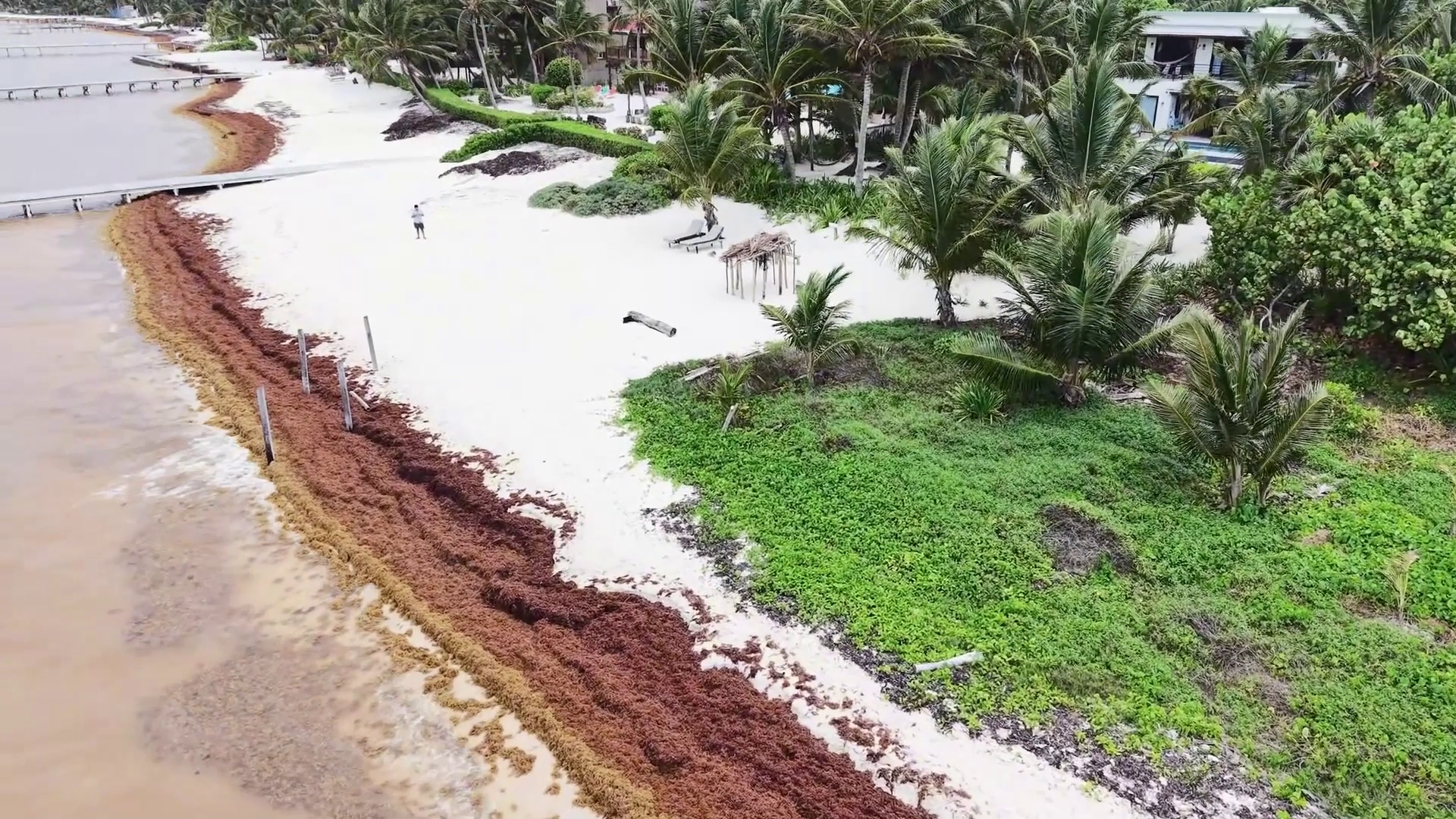
As of September 3, 2026, what began as an unsightly nuisance along Belize’s tropical coastlines has evolved into a major economic threat targeting the nation’s most vital industry: tourism. Roughly 70% of Belize’s international travelers come to experience its pristine, turquoise coastal landscapes, and the accelerating sargassum invasion is putting that core attraction at severe risk.
On the popular Placencia peninsula, thick, dense mats of brown seaweed now stretch across large swathes of the once-pristine shoreline. Local residents and tourism businesses have once again been forced to divert time, labor and limited financial resources to organize another large-scale cleanup operation. But as the annual seaweed invasions grow in size, frequency and cost, temporary, ad-hoc cleanups are no longer sufficient to keep the coastlines functional, according to the Belizean government.
Faced with a worsening crisis, authorities are now exploring a permanent, long-term funding model to tackle the sargassum problem. One proposal on the table would allocate a portion of a planned hotel tax increase to fund ongoing seaweed removal and mitigation efforts. Tourism Minister Anthony Mahler emphasized that Belize can no longer afford to treat sargassum as a mere seasonal annoyance, given that it endangers one of the country’s most economically valuable tourism assets.
Addressing public confusion around the proposed tax, Mahler clarified his position: he has long been opposed to imposing new tax burdens on the tourism industry, a stance that dates back to previous policy proposals including the $10 air security fee. Mahler noted that while he understands the necessity of revenue for critical public projects, he has pushed to ensure the private tourism sector is consulted before any tax changes move forward. Under the current proposal, if the 3.5% hotel tax increase is approved, 1.5 percentage points of that new revenue would be earmarked specifically for sargassum mitigation and cleanup operations across the country’s coastlines.
Beyond domestic revenue, the Belizean government is also actively seeking $20 million in grant funding from international financial institutions to scale up its battle against the invasive seaweed, in a move designed to reduce the financial burden on local businesses and travelers alike.
This report is adapted from a live transcript of an evening television newscast originally published by the local outlet.