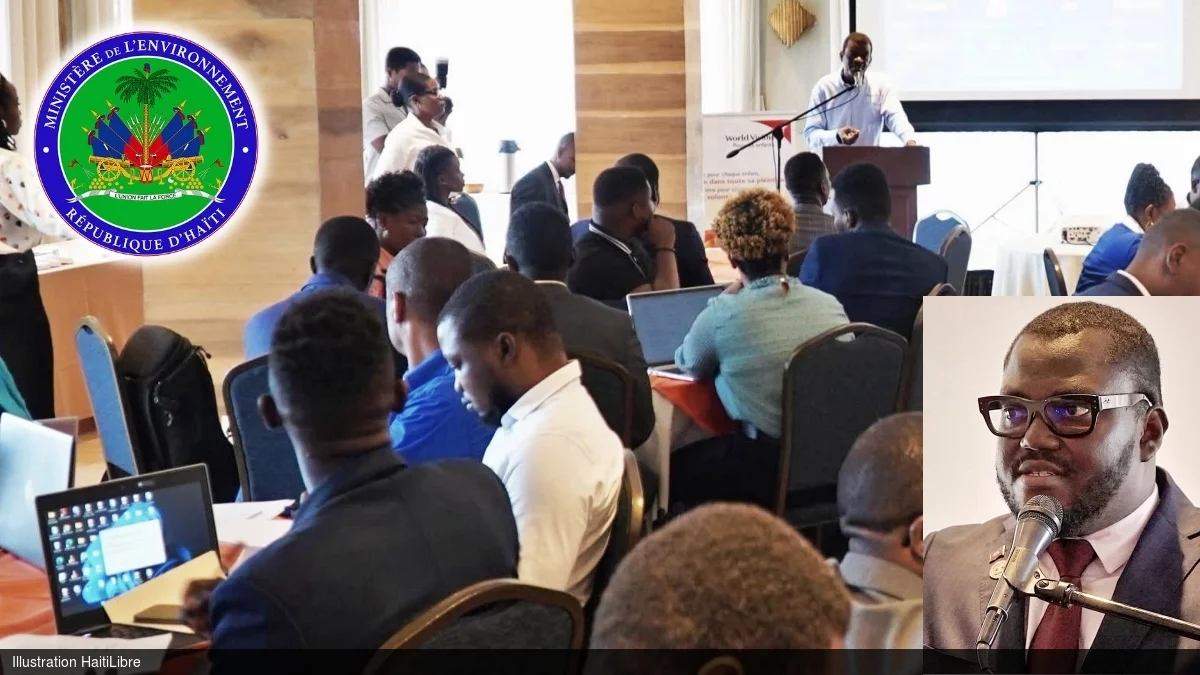
Against a backdrop of worsening climate impacts that disproportionately hit vulnerable small island developing states like Haiti, national environment authorities organized a landmark two-day stakeholder gathering focused on climate financing in early September 2026. Hosted by the Ministry of Environment’s Directorate of Climate Change, the sectoral round table brought together a cross-section of key actors spanning government sectoral ministries, international technical and financial partners, grassroots ecological advocacy groups, local non-governmental organizations, and private sector representatives.
The core objective of the convening was to advance more cohesive national climate action by bridging the divide between national development planning and climate priorities, fostering stronger alignment between sectoral policy agendas and the country’s climate resilience goals. At the opening of the event, Environment Minister Valéry Fils-Aimé opened with a candid assessment of Haiti’s current climate financing landscape, emphasizing a critical mismatch between the severity of the climate and environmental challenges the nation confronts and the level of financial resources currently deployed to address them. “In Haiti, financial commitments are not up to the environmental challenges,” Fils-Aimé stressed, urging stakeholders to pursue broader, more context-responsive mobilization efforts that reflect Haiti’s unique on-the-ground realities.
The minister further pushed for a shift away from empty pledges and symbolic announcements, calling for a renewed focus on directing available funding to tangible, results-driven interventions that deliver direct benefits to the most climate-vulnerable communities and economic sectors across the country. During his opening remarks, Fils-Aimé also formally recognized the ongoing support that World Vision has provided to Haiti’s national climate action efforts, highlighting how partner investment strengthens both national institutions and local communities as they work to develop long-term sustainable solutions to climate change impacts.
Ministry of Environment Director General Engineer Astrel Joseph followed with a comprehensive stocktake of existing climate finance mobilization in Haiti, breaking down both currently available resources and the persistent gaps that remain unaddressed. Additional presentations were delivered by key stakeholders: Raoul Vital outlined Haiti’s official national ambitions for scaling up climate financing, while Odré Valbrun led a discussion on designing a national coordination mechanism for climate action, framing the conversation around the country’s Nationally Determined Contributions (NDC) under the Paris Agreement and the national Strategic Framework for Environment and Climate Action (CSEA).
By the close of the two-day dialogue, cross-stakeholder discussions and input from all participating groups had successfully laid the foundational framework for a future National Climate Finance Roadmap. This roadmap will serve as a guiding document to structure national efforts to mobilize, coordinate, manage, and direct climate finance resources in line with Haiti’s national development priorities, its international climate commitments, and the urgent resilience needs of local territories and communities across the country.