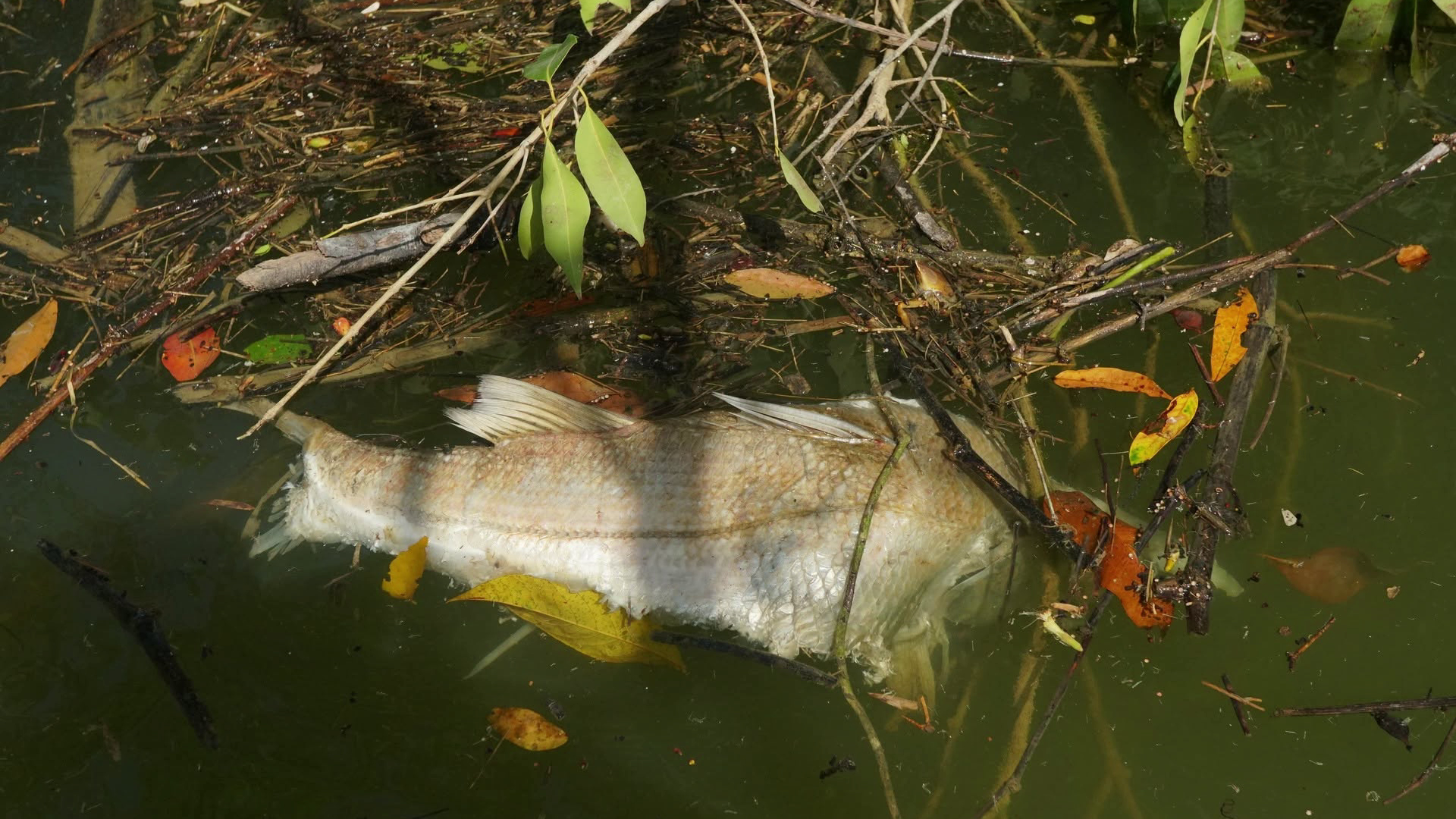
Even after pumping tens of millions of dollars into mitigation and cleanup, the persistent, growing sargassum crisis plaguing Belize’s Caribbean coastline remains largely unresolved, with the floating brown algae already beginning to pile up on popular beaches ahead of another devastating peak season.
分类: environment
-

Hotter Years Ahead as Global Temperatures Keep Rising
A landmark new climate assessment from the World Meteorological Organization (WMO), developed in partnership with the UK Met Office, delivers a sobering outlook for global temperatures over the coming half-decade: the planet is bracing for a streak of extraordinary hot years, with at least one 2026–2030 period year set to exceed the warmth of 2024, currently ranked among the hottest years ever documented in modern climate records.
The collaborative analysis projects that global average temperatures will hold near all-time record levels across the entire five-year window, hovering between 1.3°C and 1.9°C above the baseline average measured before large-scale industrial expansion began in the 19th century. This range puts the world on track to brush close to the 1.5°C warming threshold that the 2015 Paris Agreement identifies as a critical limit to avoid the most catastrophic, irreversible climate impacts.
One of the most striking disparities highlighted in the report is the accelerated warming of the Arctic, a polar region that has long acted as the planet’s natural cooling buffer. Scientists confirm the Arctic will continue to warm far more rapidly than any other region on Earth, with projected winter temperatures in the area coming in roughly 2.8°C above pre-industrial averages — a rate of warming more than three times the global average.
This rapid temperature rise will drive continued dramatic shrinkage of Arctic sea ice, the report predicts, with the most significant losses concentrated in key regional bodies of water: the Barents Sea, located between Norway and Russia, and the Bering Sea, which separates Russia and Alaska. Reduced Arctic sea ice not only threatens vulnerable polar ecosystems and Indigenous communities dependent on traditional hunting practices but also amplifies warming further through the albedo effect, when dark open ocean absorbs more solar energy than reflective ice, creating a dangerous feedback loop.
Beyond Arctic trends, the assessment also flags a notable risk of a new El Niño event developing in late 2026. The El Niño Southern Oscillation’s warm phase is known to trap additional heat in the global climate system, and its emergence would likely push global temperatures even higher, drastically boosting the probability that 2027 will become a new all-time record hot year for the planet.
-

Mesoplodon whale found dead on shore of Playa Grande
A rare member of the Mesoplodon genus, a little-seen group of deep-dwelling beaked whales, has been found dead on the sands of Playa Grande, located in the Dominican Republic’s María Trinidad Sánchez Province. The unusual stranding has caught the attention of both local coastal communities and regional environmental regulators, as sightings of this elusive cetacean are extremely uncommon in nearshore waters of the area.
Mesoplodon whales fall under the beaked whale group, part of the broader Ziphiidae cetacean family. Unlike many whale species that frequent continental shelf waters or coastal migration routes, these marine mammals are specially adapted to life in remote, open-ocean deep waters, thousands of meters below the surface. Their biology allows them to spend extended periods foraging at extreme depths, only breaking the surface for short, infrequent intervals to breathe. This deep-water lifestyle makes them one of the least observed large mammal groups on Earth, even though researchers currently recognize roughly 14 distinct Mesoplodon species, and the Ziphiidae family counts among the most widely distributed and numerically abundant whale groups in global oceans.
Local environmental authorities confirmed that the stranding of this individual near Río San Juan’s coastline is an out-of-the-ordinary event. Mesoplodon whales almost never venture into shallow coastal waters unless disoriented, injured, or ill, so the presence of a deceased specimen on a popular local beach has raised questions among researchers and officials. At present, environmental teams are conducting a full investigation to pinpoint the exact cause of the whale’s death, and to determine what factors may have driven the animal to leave its preferred deep-water habitat and end up washed ashore.
-

Suspension of sand quarrying activities in Pèlerin, Laboule and Boutillier (video)
In a regulatory action aimed at curbing unregulated resource extraction and protecting at-risk local populations, Haiti’s Ministry of the Environment (MdE) has ordered an immediate, indefinite suspension of all sand quarrying operations across three communities in the municipality of Pétion-ville: Pèlerin, Laboule, and Boutillier. The decision comes on the heels of mounting resident complaints and multi-agency field assessments that confirmed alarming degradation of the region’s already fragile environmental and geological landscape. Technical teams from the West Departmental Directorate, the Directorate of Environmental Inspection and Monitoring (DISE), and the National Bureau of Environmental Assessment (BNEE) collaborated to inspect the sites, documenting a suite of severe hazards tied to the unlicensed, illegal quarry operations. These risks include destabilized hillside slopes, accelerated soil erosion, and elevated threats of catastrophic landslides and rockfalls that pose direct, life-threatening dangers to local residents and critical nearby infrastructure. The Ministry emphasized that regulatory restrictions on quarrying in these geologically vulnerable zones have been in place for decades, with formal prohibitions first enacted and renewed in 2012, 2016, 2021, and 2025. All existing restrictions remain fully enforceable and legally binding, the agency confirmed. The MdE also clarified the legal framework governing extractive activities in the country, noting that Article 36.5 of Haiti’s amended 1987 Constitution explicitly designates all mines and quarries as part of the state’s public domain, meaning they cannot be claimed as private property. Additionally, all quarry operations are required to adhere to strict national environmental protection standards laid out in Article 253 of the Constitution and Article 64.8 of the 2006 Framework Decree on Environmental Management and Citizen Conduct. Citing its statutory mandate to safeguard Haiti’s natural environment and enforce existing environmental legislation, the Ministry finalized the suspension order, halting all sand extraction activities in the three affected communities until further official notice.
-

Eco-Bahia Foundation showcases Cayo Levantado restoration project at international congress
When leading botanical and conservation experts from across the Caribbean and Central America gathered in Santo Domingo for the 2026 International Botanical Bridges Congress, hosted at the Dominican Republic’s National Botanical Garden, one standout initiative took center stage: the award-winning ecological restoration work at Cayo Levantado Resort, spearheaded by the Eco-Bahia Foundation with backing from Piñero.
Far from a standard tourism development project, the Cayo Levantado restoration has reimagined what sustainable travel can look like in the Caribbean, blending biodiversity protection with thriving hospitality operations. The project’s leaders framed it as a replicable blueprint for balancing economic growth from tourism with long-term ecological health, drawing keen interest from attendees representing scientific institutions, environmental nonprofits, and policy bodies across the region.
During the congress, Juan Uranga González, an environmental engineer leading the on-site restoration work, broke down the dramatic transformation that has reshaped the resort’s landscape. Rather than sticking to the water-heavy, non-native landscaping common to many Caribbean hospitality sites, the team rebuilt the area into a climate-resilient native ecosystem centered on local and endemic plant species. Official biodiversity surveys conducted at the site have documented 308 distinct plant species, 67 percent of which are native to the Dominican Republic – a remarkable shift from the resort’s original landscaping that relied heavily on water-intensive, non-native ornamental plants.
Following presentations at the congress, participating experts traveled to Cayo Levantado for an on-site tour, allowing them to observe the restored ecosystem’s progress firsthand. Alex Matás, a key stakeholder in the initiative, emphasized that the project defies the common misconception that tourism and conservation are incompatible. Instead, Matás noted, the Cayo Levantado model proves that the travel sector can overhaul its operations to cut ecological harm, protect native biodiversity, suppress invasive species, and still deliver high-quality visitor experiences.
The restoration project was developed in close collaboration with the Dr. Rafael María Moscoso National Botanical Garden, a partnership that highlights the power of linking academic scientific research with private sector tourism development. Organizers of the congress noted that this cross-sector collaboration makes the Cayo Levantado project particularly valuable for other regions grappling with how to advance ecosystem restoration while supporting livelihoods tied to travel.
Key themes of this year’s International Botanical Bridges Congress ranged from large-scale ecosystem restoration and native flora conservation to urban sustainability, the expansion of global seed bank networks, and expanding public environmental education. The inclusion of the Cayo Levantado project as a featured case study underscores the growing global focus on integrating conservation into high-impact economic sectors like tourism, particularly in biodiversity-rich tropical regions.
-

PRESS RELEASE: Young Commonwealth photographers have two weeks left to win £1,000, and they only need one photograph
As the countdown to the entry deadline ticks on, organizers of the 2026 Commonwealth Youth Photography Competition, themed ‘Waves of Change’, have issued a last call for young creators across the bloc to submit their work before submissions close at 23:59 BST on June 8, 2026 – also recognized globally as World Oceans Day.
Open exclusively to young people between the ages of 18 and 30 who hold Commonwealth nationality or legal residency, the competition invites emerging photographers to capture visual narratives around global water systems – from vast open oceans and winding rivers to inland lakes, rugged coastlines, and community waterways – and explore how these critical resources intersect with human communities, ecological health, and the future of our planet.
In a push to make creative participation accessible to all, entry to the competition is completely free, and no formal professional photography experience is required to participate. Entrants only need to submit one original, unpublished photograph alongside a short explanatory statement of no more than 300 words to be considered. Four distinct thematic categories are available for submission: Human-Ocean Connection, Hope and Resilience, Threats and Challenges, and Innovative Solutions. Together, these categories cover the full scope of humanity’s evolving relationship with marine and freshwater environments in 2026, spanning both the crises facing water systems and the creative action being taken to protect them.
Prizes for standout work include a £1,000 cash award for the overall competition winner, with £250 going to each of the four category winners. The competition is a collaborative initiative led by the Royal Commonwealth Society, with partnering support from the Commonwealth Secretariat and the City of London Corporation’s Youth Natural Environment Board. Following judging, winning entries will be showcased across the vast network of Commonwealth institutions, reaching audiences across the bloc’s 56 member nations and a global audience of more than 2.7 billion people.
Coming ahead of the 2026 Commonwealth Games in Glasgow, and amid growing global urgency around protecting ocean health – a top priority on the international environmental agenda – the ‘Waves of Change’ competition fills a unique role: it centers the perspectives of young people, who are on the frontlines of climate and environmental change, inviting them to share their observations, experiences and visions through the creative medium of photography.
Interested entrants can submit their work via the competition’s official website at www.royalcwsociety.org/environment/cypc before the June 8 deadline.
-

Environment Ministry denies illegal extraction on Haina River, cites restoration project
In Santo Domingo, recent active construction along the Haina River in the Manoguayabo district sparked widespread rumor and resident anxiety, with many local community members claiming the activity was unregulated illegal material mining. On Wednesday, the Dominican Republic’s Ministry of Environment and Natural Resources issued an official statement to dispel these claims, confirming that the ongoing operations form part of a state-backed environmental recovery and sanitation initiative for the degraded river basin.
The intervention is authorized under Resolution No. 0002-2026, which designated the full-scale restoration of the Haina River basin as an official environmental emergency. For decades, unmanaged development and pollution have left the river system in worsening condition, prompting the government to fast-track a coordinated intervention to reverse damage and protect at-risk local populations. The project focuses on high-priority zones of the basin, including Palavé and adjacent stretches along the Haina industrial corridor. Preliminary technical surveys have documented a range of critical hazards in these areas: extreme sediment accumulation that clogs water flow, accelerated riverbank erosion, severely diminished drainage capacity, and unauthorized human settlement inside designated river protection zones.
According to ministry officials, the scope of work extends far beyond basic cleanup. Crews are conducting full riverbed restoration, implementing engineered bank stabilization measures, replanting native riparian vegetation, and removing accumulated waste and debris. All works are designed explicitly to cut flood risk for nearby residential areas and critical infrastructure, a pressing concern during the region’s annual heavy rainfall seasons. A key sustainable innovation of the stabilization work is the use of gabion structures constructed from repurposed recycled tires, turning waste material into a cost-effective, eco-friendly flood defense tool.
The official clarification was triggered after residents of Palavé, Lechería, and other nearby Manoguayabo neighborhoods raised public alarms over the presence of heavy construction equipment along the river. In response, the ministry stressed that all operations are carried out under constant official oversight, with backing from multiple partner agencies including SENPA, the national Environmental Prosecutor’s Office, and other institutions tasked with preventing and enforcing environmental crime. Officials have called on local residents to set aside their concerns, noting that the Haina River restoration project is one of the regional government’s top priorities for both environmental recovery and community safety.
-

Days of Fire, Growing Damage; Baldy Beacon Under Threat
Nearly a week after an out-of-control wildfire ignited in one of Belize’s most treasured protected ecosystems, public outrage is growing over lapses in security protocols and the rapidly expanding damage to ecologically critical land. As of May 22, 2026, the blaze, which has already scorched hundreds of acres of forest at Baldy Beacon in the Mountain Pine Ridge Reserve, remains active, though officials report it has not yet crossed Roaring Creek, with cooler overnight temperatures expected to help contain the flames this evening.
The fire, which has already left irreversible scars on the iconic Bald Hills landscape, was started accidentally by military training exercises involving explosives, a fact Belize’s Ministry of Defense has now officially acknowledged – a shift from its previous refusal to accept blame for similar blazes in the region. The conflict over responsibility has pitted former government minister and local landowner Elvin Penner against defense officials, after Penner stepped forward to sound the alarm over what he calls reckless mismanagement that allowed the fire to spread unchecked.
Penner, a controversial figure who has returned to the public spotlight to push for accountability, told reporters that the Ministry of Defense failed to implement basic safety measures ahead of the explosive training that sparked the fire. Ministry CEO Francis Usher defended the department’s actions, stating that the training area is a designated military zone with strict security protocols to restrict civilian access and prevent unnecessary risk. Usher added that the military has deployed substantial resources to contain the blaze and avoid further destruction of private and public property, noting that while the department accepts accountability, some factors surrounding the fire’s spread were outside of its control.
But a firsthand on-site inspection by News Five reporter Shane Williams directly contradicted the Ministry’s claims of proper safety barriers. Williams was able to drive within a few hundred yards of the detonation site without encountering any secured blockades; the only obstruction to entry was a fallen tree trunk along the road, and the only warning marker was a small, unnoticeable red rag tied to a tree. The only public notice posted at the entrance to the access road restricts entry solely to logging operations and unauthorized military vehicles, with no mention of active training or fire risk.
Penner, who owns 10 acres of scorched land in the affected area, said that he has spent a decade cultivating pine trees on his property and intends to file a damage claim against the government. He added that during past joint military training exercises with British forces, the area was always properly barricaded, marked with clear warning signs, and patrolled by personnel to keep civilians out. When the military withdrew from the area years ago, much of the land was transferred to private owners, but the Ministry of Defense returned to resume training without updating its safety protocols to account for the new private land holdings.
Conservation groups, including Friends for Development, which maintains a former British military base in the area for conservation work, are now leading efforts to protect the remaining intact forest. Ecologists and local residents warn that the fire carries far-reaching risks beyond the immediate reserve damage: Baldy Beacon Valley feeds directly into the Macal River, which connects to the Belize River – the main source of drinking and irrigation water for more than half of Belize’s population. Ash, sediment, and toxins from the burned vegetation could contaminate the watershed for months to come if the fire is not fully contained quickly.
As cooler weather is forecast to aid containment efforts, the core debate over accountability for the damage and future regulation of military training in protected ecological zones remains unresolved.