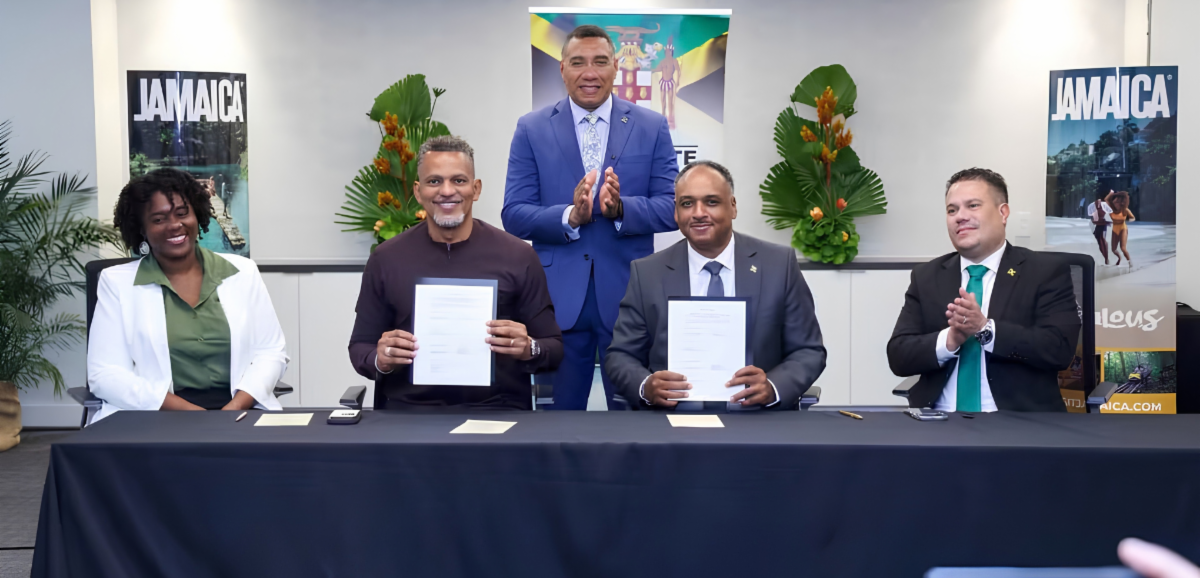
Jamaica’s underserved rural communities are poised to gain long-overdue improved access to consistent, high-quality drinking water after a landmark $36 million infrastructure upgrade program was formalized by the Caribbean Development Bank (CDB) and the Jamaican government on September 16. The Jamaica Rural Water Supply Program, a five-year initiative, will revamp six existing water supply systems that serve communities across five of the island’s parishes, targeting some of the nation’s most water-insecure populations.
In an official statement following the signing of the agreement, CDB President Daniel M. Best emphasized that the project extends far beyond physical infrastructure construction. “The Jamaica Rural Water Supply Programme is about far more than pipes, pumps and reservoirs. It is about improving lives,” Best said. He explained that reliable access to treated water is a foundational need that touches every corner of community life, supporting residential households, local schools, public health clinics, small-scale agricultural producers, and local businesses, while also building critical resilience to the growing impacts of climate change across the Caribbean.
Currently, 62 percent of the population that will be served by the program relies on unimproved, inconsistent water sources such as natural springs and collected rainwater. Once completed, the initiative is projected to dramatically expand access to utility-grade treated water, cut down the countless hours rural households currently spend collecting and storing water, and unlock new economic growth across key local sectors including agriculture, small-scale commerce, and community tourism.
Jamaican Prime Minister Andrew Holness noted that the investment aligns with the government’s ongoing national goal to achieve universal access to utility-grade water across the island. “We are edging closer to achieving universal utility-grade water access in Jamaica. Every year, we are making investments of this nature,” Holness said.
The planned upgrades cover a range of climate-smart infrastructure improvements: enhancements to existing water treatment and transmission networks, development of new sustainable water sources and expanded storage capacity, and installation of energy-efficient pumping equipment, grid-tied solar photovoltaic systems, and modern remote monitoring technology to improve system management.
Funding for the program is structured as a collaborative investment: the CDB is contributing $30 million, equal to roughly 83 percent of total project costs, with the majority of this financing coming as concessional loans from the bank’s Special Development Fund. The Government of Jamaica is covering the remaining $6.249 million of the project budget.
Best stressed that the investment is particularly critical at a time when climate change is intensifying pressure on Caribbean water resources through more frequent and severe droughts, shifting seasonal rainfall patterns, and destructive extreme weather events. “As we respond to today’s needs, we must also prepare for tomorrow’s realities. Investments such as this allow us to deliver essential services while building the resilience communities need for the future,” he added.
Implementation of the program will be led by Jamaica’s Rural Water Supply Limited over a 60-month timeline, with final completion scheduled for September 2031. Once all upgrades are finished and brought into compliance with National Water Commission (NWC) technical standards, the upgraded systems will be transferred to the NWC for long-term operation and maintenance.