As climate change accelerates and methane emerges as a critical contributor to global warming, the small town of Orange Walk is stepping up to the challenge with a ground-up sustainability initiative that starts in the most unexpected place: local residents’ kitchens. Scheduled for official launch in May 2026, the town’s first-ever Home Composting Program turns the everyday problem of household food waste into a tangible climate solution, diverting organic scraps from overflowing landfills and turning them into nutrient-rich compost. So far, 50 local households have already joined the program, receiving hands-on training and specialized tools to help them convert kitchen leftovers into a valuable soil amendment, marking a small but meaningful shift in how the community approaches waste management. The initiative is rooted in hard local data: according to Orange Walk Town Councilor Joyce Castillo, 32% of all municipal waste generated in the town is organic material that currently gets dumped at the town’s open landfill, where it decomposes without oxygen and releases methane — a greenhouse gas 80 times more heat-trapping than carbon dioxide. Without a fully operational waste transfer station to handle organic waste properly, landfill methane emissions have remained a persistent problem for the town, motivating local leaders to seek out community-focused solutions. The Home Composting Program is part of Orange Walk’s broader participation in the global Recycle Organics Program, an international initiative designed to cut global methane emissions by redirecting food and green waste from landfills to compost production. Local leaders drew insights and best practices from peer municipalities in other countries to shape the program’s design, adapting proven strategies to fit Orange Walk’s unique community needs. Complementing the residential composting push, the town also recently took delivery of a new industrial woodchipper, shared jointly with Benque Municipality through the Recycle Organics Program. This new equipment will allow the town to process yard waste and tree branches that were previously dumped in landfills, shredding the green waste into a material suitable for composting. Because Orange Walk does not yet operate a municipal composting facility, the town council has signed a formal memorandum of understanding with BSI Factory, a local facility that already runs its own composting operation. Under the agreement, BSI will accept all processed shredded yard waste from the town to integrate into its existing compost production workflow. Once the town’s new waste transfer station comes online — which local leaders hope will happen by the end of 2026 — the facility will no longer accept yard waste or organic material, making the new pre-processing and diversion systems even more critical to keeping organic material out of landfills. For Orange Walk, the initiative represents more than just a waste management upgrade: it’s a model for how small communities can take local action to address a global climate crisis, turning individual daily habits into collective impact. By engaging residents directly in waste reduction and pairing community participation with strategic municipal partnerships, the town is building a more sustainable, low-emission waste system that can serve as a blueprint for other small municipalities grappling with similar challenges.
分类: environment
-

Expertise France and Guadeloupe sign MoU to strengthen regional resources in combatting sargassum crisis
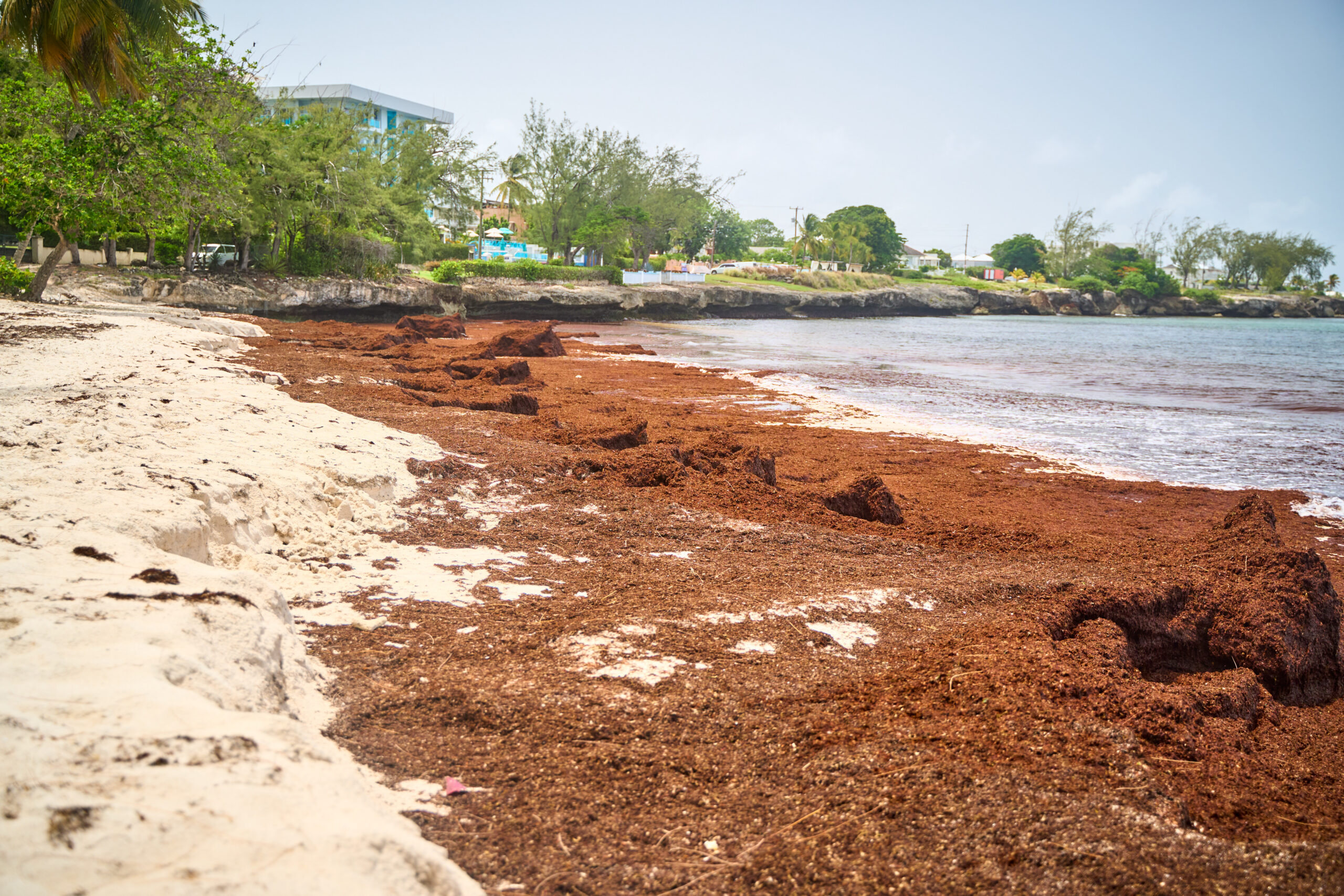
The Caribbean region, long plagued by annual massive influxes of invasive sargassum seaweed that devastate coastal ecosystems, public health, tourism revenues and local livelihoods, has taken a major step forward in coordinated action: Expertise France and the Guadeloupe Regional Council have formally signed a Memorandum of Understanding (MoU) to align their existing anti-sargassum initiatives for more impactful, region-wide progress.
The partnership brings together two of the Caribbean’s largest ongoing sargassum management projects: the SARSEA project, funded by the Agence Française de Développement and executed by Expertise France, and SARG’COOP II, a regional program headed by the Guadeloupe Region and backed by European Union INTERREG grant funding. Combined, the two initiatives represent a total pooled investment of €11 million, all dedicated to advancing sargassum monitoring, cleanup, processing and long-term management across Caribbean territories.
Speaking after the signing, Ms. Gustave-Dit-Duflo, Vice-President of the Guadeloupe Region’s Environmental Commission, underscored that collaboration rather than siloed competition is the only path to meaningful change. “Our two programs bring nearly €11 million in collective investment to this crisis, and we have committed to this partnership to ensure these resources work in synergy, not against each other, to build robust, actionable solutions,” she explained.
Under the terms of the agreement, the partners have outlined clear shared commitments: eliminating duplicated work through full transparency, pooling open access to research, data and project deliverables to strengthen consistent regional action, co-hosting regional and international advocacy and knowledge-sharing events, providing coordinated support to local stakeholders including private businesses, non-governmental organizations and public authorities, and embedding two critical priorities—socio-economic impact assessment and women’s inclusion—across all program activities.
Officials note the core purpose of the MoU is to strengthen technical and institutional coordination between the two organizations, while facilitating the exchange of scientific data, technical expertise and innovative management strategies. The partnership also includes provisions for joint research into new commercial and practical uses for harvested sargassum, turning a harmful invasive species into a potential economic resource for local communities.
The overarching mission of the aligned effort is to cut the environmental, social and economic harm sargassum inflicts on Caribbean communities, while advancing scientific understanding of the growing sargassum phenomenon and strengthening evidence-based public policy responses across the region.
Mathilde de Williencourt, Deputy Director of the Sustainable Development Department at Expertise France, reaffirmed her organization’s long-term commitment to Caribbean nations and French overseas territories facing the sargassum crisis. “Through the SARSEA project, and in close coordination with the Guadeloupe Region under the SARG’COOP framework, Expertise France is proud to support the rollout of integrated sargassum management, help build a resilient, connected regional sargassum value chain, and advance cross-regional scientific cooperation to deepen our understanding of this crisis and inform research-backed policy,” de Williencourt said. “This partnership strengthens our commitment to the Caribbean and its overseas territories, by leveraging the deep French institutional expertise already present in the region.”
To keep the partnership aligned, the two organizations will put in place shared governance structures, including regular coordination meetings and intentional alignment with other existing regional sargassum initiatives. Leaders behind the new agreement believe this collaborative model will pave the way for more effective, sustainable and unified action across the entire Caribbean.
By pooling technical expertise, financial resources and on-the-ground regional knowledge, the partners aim to turn the shared challenge of sargassum into a catalyst for deeper Caribbean cooperation, innovative solutions and long-term regional resilience to future sargassum influxes.
-

BTIA Demands Stop to Sand Mining in Placencia, Ambergris Caye
Belize’s leading tourism industry body has reignited calls for urgent government action to curb unregulated sand extraction and dredging in two of the country’s most ecologically sensitive and economically critical coastal regions: the Placencia Lagoon and targeted coastal zones of Ambergris Caye. The campaign, which has gained growing community backing, highlights the deep interconnectedness between Belize’s natural environment and its multibillion-dollar tourism sector, warning that unregulated extraction threatens both ecosystems and livelihoods across the country.
-

OECS and EU support water protection efforts in St. Kitts through new arboretum project
Against a backdrop of escalating climate pressure on global natural resources, regional environmental cooperation has delivered a landmark conservation milestone in the Eastern Caribbean. On May 13, 2026, the Organisation of Eastern Caribbean States (OECS), the European Union (EU), and the government of Saint Kitts and Nevis formally inaugurated the new Royal Basseterre Valley National Park Arboretum, completing a key component of the OECS’ five-year Integrated Landscape Management (ILM) Project, a EU-funded regional conservation initiative.
Amid accelerating climate change and environmental degradation, small island developing states like those in the Eastern Caribbean face disproportionate risks to their limited natural resources, particularly freshwater supplies. The ILM Project was developed to address these vulnerabilities by scaling up sustainable landscape and ecosystem management across the region, with the Royal Basseterre Valley Arboretum serving as one of its flagship on-the-ground outcomes.
The newly completed arboretum occupies a section of Royal Basseterre Valley National Park, which sits atop a critical aquifer that supplies clean drinking water to nearly 40 percent of St. Kitts’ population. Funded through an EU grant, the project included installation of protective perimeter fencing to safeguard the sensitive ecosystem, as well as targeted afforestation to establish the new arboretum. Beyond protecting the region’s vital water resources, the initiative was designed to enhance the site’s value for recreation, environmental education, cultural engagement, and biodiversity conservation, through the strategic planting of both fruit-bearing and native ornamental tree species.
The official handover ceremony drew a diverse cross-section of attendees, including government leaders, OECS and EU representatives, local students, community members, development partners, and environmental stakeholders. The gathering celebrated the project’s completion and reaffirmed collective commitments to regional sustainable development and climate-resilient conservation.
In her remarks at the event, Joyelle Clarke, Saint Kitts and Nevis’ Senator and Minister of Sustainable Development, Environment and Climate Action and Constituency Empowerment, emphasized the arboretum’s central role in the federation’s national sustainability strategy, which integrates environmental protection, public health and wellness, and long-term freshwater security.
“This arboretum is a testament to what we can achieve through partnership and our regional systems,” Clarke said. “We are able to benefit from an initiative that actively takes into consideration our local realities and caters to the unique needs of this protected space, all while strengthening our environmental resilience.”
Derionne Edmeade, Director of Saint Kitts and Nevis’ Department of Environment, framed the project as a dual investment in ecological health and public good. “This initiative reflects the Federation’s collective commitment to biodiversity conservation, climate resilience, environmental stewardship, and sustainable development for current and future generations,” he noted.
Delamine Andrew-Williams, speaking on behalf of the OECS Commission, hailed the project as a tangible demonstration of regional conservation vision. “The Royal Basseterre Valley National Park Arboretum stands as a practical example of this vision in action, where environmental stewardship, community benefit, and national development come together harmoniously,” she said. “The successful establishment of the arboretum, including its fencing and afforestation, is a testament to sustained collaboration and technical excellence.”
Quentin Peignaux, representing the European Union, reaffirmed the bloc’s long-term commitment to supporting biodiversity, soil and water protection, and sustainable development across the Caribbean. “It is very important for the European Union to participate in initiatives such as the ILM Programme because water resources and soil conservation are inseparable and are both essential to protecting the natural resources that sustain our living environment,” Peignaux explained. He added that the EU continues to back a broad portfolio of conservation action in the OECS region, including biodiversity programs, protected area management, blue carbon projects, and nature-based climate solutions.
The ceremony concluded with two symbolic acts: the unveiling of a commemorative plaque marking the arboretum’s opening, and a collective tree-planting activity aligned with Saint Kitts and Nevis’ national day tree planting initiative. Attendees including government officials, OECS delegates, students, environment ministry staff, community members, and development partners all took part, underscoring the cross-sector commitment to long-term environmental conservation and sustainable landscape management in the federation.
-

In Haiti, Collection of local seeds to support national reforestation
In a major push to reverse decades of deforestation and rebuild Haiti’s fragile ecosystems, two key environmental agencies have ramped up a national native seed collection campaign focused on safeguarding the country’s unique ecological heritage. The initiative, led by the Directorate of Forests and Renewable Energies (DFER) in partnership with the Northeast Departmental Directorate (DDNE) under Haiti’s Ministry of the Environment (MdE), kicked off earlier this week with targeted field work in the country’s northern coastal region.
Teams of DDNE-MdE technical staff have been deployed across two key collection sites: Carrefour Chivry and the Morne Casse Border Police (PoliFRONT) post in the Fort-Liberté commune. Their primary target is seed from two ecologically and economically valuable native species: local mahogany (Swietenia mahagoni) and guaiac tree (Guaiacum officinale), both of which are iconic components of Haiti’s native forest ecosystems.
Agronomist Eder Audate, head of DFER’s Department of Forestry and Rural Development, publicly praised the relentless work of Luckin Charles, DDNE’s departmental director, and the entire field technical team. Audate emphasized that the seed collection operation is a strategically critical step that will underpin all upcoming national forest restoration projects and long-term biodiversity preservation programs across the country.
To date, the teams have already collected more than 126 kilograms of high-quality seed, sorted and processed following a strict, science-based methodology. Collectors assess each batch based on fruit maturity and quality, the health and morphology of parent trees, the density of surrounding vegetation cover, and site accessibility to ensure only the most robust seed is selected for propagation.
This campaign is a concrete reflection of Environment Minister Valéry Fils-Aimé’s commitment to advancing Haitian forest regeneration through native, locally sourced seed. Unlike imported tree stock, locally harvested seed is naturally adapted to Haiti’s specific climatic conditions, soil types, and regional environmental stressors, resulting in higher survival rates for transplanted seedlings. After several months of germination and growth in controlled nurseries, the seeds will develop into seedlings that will be planted out in mass reforestation campaigns scheduled across all regions of Haiti in the coming months.
-

COMMENTARY: Bee together for people and the planet, a partnership that sustains us all
Across the globe, the extraordinary diversity of bees remains vastly underappreciated by the general public. To date, scientific documentation has recorded more than 20,700 distinct bee species – a total that exceeds the combined number of all known bird and mammal species on Earth. This number continues to grow annually, as entomologists uncover new taxa in understudied ecosystems. While some high-profile groups such as honeybees, bumblebees, and stingless bees are well researched, over 96% of all bee species lack comprehensive scientific documentation. Of particular note are the more than 600 species of stingless honey bees, which thrive in tropical and subtropical regions worldwide, living in large colonies typically nested in tree hollows and producing nutrient-dense, flavorful honey.
Since 2018, the international community has marked May 20 as World Bee Day, a global observance designed to encourage coordinated action across governments, nonprofits, civil society groups, and individual citizens to protect pollinator habitats, boost pollinator populations and diversity, and advance sustainable beekeeping practices. The date was intentionally chosen to honor the birth of Anton Janša, a Slovenian pioneer of modern apiculture who came from a multi-generational family of beekeepers in a region where apiculture has long been a central part of agricultural and cultural heritage.
The 2026 theme for World Bee Day, “Bee Together for People and the Planet: A Partnership That Sustains Us All”, centers on the millennia-long interdependence between humans and bees, while calling for urgent collaborative action to shield pollinators from growing modern threats. This year’s observance highlights how coevolution between human communities and bees has shaped apiculture across every inhabited continent, and promotes innovative, inclusive strategies that improve bee health and productivity while supporting the livelihoods of marginalized beekeeper groups, including women and young people. It also emphasizes that combining traditional Indigenous and community-held knowledge of beekeeping with cutting-edge modern technology can drive more sustainable apiculture, while cross-sector partnerships can advance the transformation of global agrifood systems to benefit both pollinators and people.
In line with this year’s theme, the Caribbean Agricultural Health and Food Safety Agency (CAHFSA), an intergovernmental body under the Caribbean Community (CARICOM) focused on strengthening regional agricultural health, food safety, and cross-border agricultural trade, has used World Bee Day to draw attention to the critical role pollinators play in underpinning Caribbean agriculture, biodiversity, and regional food security. By raising public and policy awareness of pollinator protection, CAHFSA continues to support regional efforts to build safe, resilient, and sustainable agricultural systems across the Caribbean.
Pollinator populations are currently declining at an alarming rate globally. Wild bees, butterflies, hoverflies, moths, and other pollinating species face intensifying threats from widespread habitat destruction, industrial intensive agriculture, toxic pollution, invasive species incursion, and human-driven climate change. The impacts of these losses extend far beyond wild ecosystems: pollinators are foundational to global food systems, ecosystem resilience, and global biodiversity. To address this growing crisis, the Food and Agriculture Organization (FAO) is currently consulting with governments, research institutions, and key stakeholders to develop a new Global Pollinator Platform, which will strengthen cross-border cooperation, improve knowledge sharing, and expand policy support for global pollinator conservation efforts.
Within the Caribbean, Jamaica’s beekeeping sector stands out as a fast-growing, economically valuable agricultural sub-sector. Beyond their irreplaceable role as pollinators that boost crop yields and strengthen national food security, bees provide a range of high-value products, including the globally beloved honey, as well as royal jelly, bee pollen, beeswax, propolis, and medicinal honeybee venom. For thousands of Jamaicans, apiculture has become a critical source of household income, with honey production offering particularly strong profit margins.
To protect local bee populations from the global threat of Colony Collapse Disorder and introduced pathogens, Jamaica enforces a strict ban on imported bee products. While this policy has successfully shielded local colonies from foreign diseases, it requires domestic beekeepers to manage their own wax processing and colony expansion independently. The Jamaican government’s Apiculture Unit, housed within the Ministry of Agriculture, Fisheries and Mining, continues to lead the development of the domestic beekeeping industry, and reports show growing public interest in the sector: every month, dozens of aspiring beekeepers express interest in establishing their own apiaries, and community and interest groups regularly request formal apiculture training to enter the industry. Currently, Jamaica’s domestic beekeeping sector manages more than 100,000 active bee colonies.
The 2026 World Bee Day theme places particular emphasis on the role of youth as future leaders in pollinator conservation and sustainable apiculture. Young people bring energy, innovative thinking, and technological literacy to the sector, positioning them to develop new solutions for sustainable beekeeping and advocate more effectively for pollinator protection. In Jamaica’s St. Elizabeth parish, industry leaders are actively urging young people to enter the growing beekeeping sector to meet unmet local and international demand for honey and other bee-derived products. “Jamaica has potential; very, very big potential in beekeeping, because honey is in short supply both locally and internationally,” explained Elton Cawley, First Deputy Chairman of the Jamaica Federation of Commercial Apiculturists (JFCA). Formal beekeeping training is currently available across Jamaica through the HEART Trust/NTA’s Ebony Park Academy in Clarendon and the national Jamaica 4-H Clubs network.
As the global community marks World Bee Day 2026, the call to action remains clear: strengthening the mutually beneficial partnership between humans and bees requires collective, inclusive action across all sectors of society. As St. Francis de Sales once observed, bees harvest nectar from flowers without damaging the plant itself, leaving it intact and healthy just as they found it – a model of sustainable coexistence that human communities can learn from as we work to protect pollinators for future generations.
-

World Bee Day: Bee together for people and the planet
As one of the planet’s most ecologically critical groups of insects, bees play an irreplaceable role in supporting global ecosystems and sustaining the world’s food supplies. Science has already documented more than 20,700 distinct bee species across the globe – a total that exceeds the combined number of all bird and mammal species on Earth – and new species are added to scientific records every year.
Bee species exhibit extraordinary diversity in their lifestyles: well-known groups including honeybees, bumblebees, and stingless bees live in cooperative social colonies, while over 96% of all bee species lead solitary lives. Beyond their ecological role as primary pollinators of most staple food crops, many bee species also produce valuable goods for human use. More than 600 species of stingless honey bees, for example, thrive in tropical and subtropical regions worldwide, nesting in large colonies in tree hollows and producing a nutrient-rich, flavorful honey prized by communities.
Despite their overwhelming importance, the vast majority of bee species remain poorly studied by scientists, and pollinator populations around the world are now declining at an alarming rate. Habitat destruction, intensive industrial agriculture, widespread pollution, invasive species incursion, and the accelerating impacts of climate change are pushing wild pollinators – including bees, butterflies, hoverflies, and moths – into growing jeopardy, with consequences that extend far beyond biodiversity loss to threaten global food security and ecosystem resilience.
Since 2018, the global community has marked May 20 as World Bee Day, a dedicated observance designed to encourage action from governments, organizations, civil society groups, and individual members of the public to protect pollinators, restore their habitats, boost their populations, and support sustainable beekeeping practices. The date was chosen to honor the birth of Anton Janša, a Slovenian pioneer of modern apiculture who came from a multigenerational family of beekeepers in a region where beekeeping has deep cultural and agricultural roots.
The 2026 theme for World Bee Day, “Bee Together for People and the Planet. A partnership that sustains us all,” centers on the longstanding, mutually beneficial relationship between humans and bees, and underscores the urgent need for cross-sector collaboration to address the threats pollinators face. This year’s observance explores how human-bee partnerships have evolved over thousands of years across diverse cultures and landscapes, while elevating innovative strategies that improve bee health and productivity, and support sustainable livelihoods for beekeepers – particularly marginalized groups including women and young people. It also emphasizes how combining traditional ecological knowledge of beekeeping with modern technological innovation can advance sustainable apiculture, and how inclusive cross-stakeholder partnerships can secure a resilient future for both pollinators and human communities, while driving much-needed transformation of global agrifood systems.
In the Caribbean region, the Caribbean Agricultural Health and Food Safety Agency (CAHFSA), an intergovernmental body established by the Caribbean Community (CARICOM) to strengthen regional agricultural health, food safety, and cross-border agricultural trade, is using World Bee Day to draw attention to the outsized role pollinators play in supporting Caribbean agriculture, biodiversity, and food security. By raising public awareness of pollinator conservation needs, CAHFSA is backing regional efforts to build safe, resilient, and sustainable agricultural systems across the Caribbean.
At the global level, the Food and Agriculture Organization (FAO) is currently consulting with national governments, researchers, and a wide range of stakeholders to develop a new Global Pollinator Platform, an initiative designed to strengthen international cooperation, expand knowledge sharing, and improve policy support for pollinator conservation worldwide.
In Jamaica specifically, beekeeping has emerged as a fast-growing, profitable agricultural sub-sector that delivers multiple benefits to local communities. Beyond their critical role boosting crop yields and supporting national food security as pollinators of fruit and seed crops, bees produce a range of high-value products including honey, royal jelly, pollen, beeswax, propolis, and honeybee venom. For many Jamaicans, beekeeping has become a vital source of income, with honey sales offering particularly strong profit margins.
To protect local bee populations from the global threat of Colony Collapse Disorder and introduced pathogens, Jamaica enforces a strict ban on imported bee products. This policy has successfully shielded domestic bee colonies from outside diseases, but requires local beekeepers to manage their own colony development and wax production independently.
Jamaica’s Apiculture Unit, under the country’s Ministry of Agriculture, Fisheries and Mining, continues to lead the expansion of the domestic beekeeping industry, and reports growing public interest in joining the sector. Dozens of new inquiries from prospective beekeepers are received every month, and numerous community groups have applied for formal beekeeping training to enter the industry. As of 2026, Jamaica is home to more than 100,000 managed bee colonies.
Industry leaders emphasize that young Jamaicans have particular opportunities to build successful careers in the growing sector, as global and local demand for honey and other bee products far outpaces current supply. “Jamaica has potential; very, very big potential in beekeeping, because honey is in short supply both locally and internationally,” explained Elton Cawley, First Deputy Chairman of the Jamaica Federation of Commercial Apiculturists (JFCA). Formal beekeeping training is currently available to aspiring beekeepers through HEART Trust/NTA’s Ebony Park Academy in Clarendon and the Jamaica 4-H Clubs, giving young people the skills they need to enter the field.
Proponents of pollinator conservation note that young people are uniquely positioned to drive change in the sector, as the future generation of beekeepers and environmental stewards. Young people bring energy, digital literacy, and innovative vision to advance pollinator protection and build more sustainable apiculture practices, and many are already actively engaged in global and local conversations about bee conservation.
As the world marks World Bee Day, the 2026 theme calls on all stakeholders to strengthen the collaborative partnership between humans and bees that sustains both people and the planet. Echoing the words of St Francis de Sales, bees exemplify sustainable harvest: they collect honey from flowers without damaging the plants, leaving them whole and healthy just as they found them – a model of harmonious coexistence that human communities can strive to emulate.
-

Illegal Dredging Claims Mexico Rock Near Ambergris Caye
Belize’s coastal ecosystems are facing an urgent, unaddressed threat from unregulated development and illegal dredging, environmental advocates have warned, pushing authorities to tighten enforcement of existing conservation rules and halt harmful activity immediately. In a public joint statement released this May, the Ambergris North Alliance (ANA), a local environmental advocacy group, has named Mexico Rocks near Ambergris Caye as the site of the most recent confirmed violation, where dredging operations have continued long after their original official permits expired.
ANA President Catherine Paz detailed the most recent incident, which unfolded just one week before the group’s formal announcement, at a newly constructed bulkhead located roughly 600 yards from X’tan Ha Resort, right along the boundary of the Mexico Rocks Marine Reserve. From the moment the bulkhead was built, ANA raised red flags, submitting formal concerns to Belize’s Department of the Environment (DOE), the local mayor, and the area’s elected representative. No action was taken to remove or modify the structure, leaving a persistent problem that has now escalated into illegal activity.
Paz explained that the bulkhead’s placement causes recurring navigational issues for barges accessing the site: shifting sand frequently traps vessels, forcing crews to dig out the channel again and again. The ANA captured clear video evidence of the most recent unauthorized dredging, which continued illegally until midnight, pausing only briefly for a couple of hours before resuming. Paz confirmed that while the project held valid permits during its initial phase, those approvals have expired, and no new permit has been granted for ongoing work.
This single incident is not an isolated case, according to ANA. The organization points to a long pattern of unregulated dredging, land reclamation, and quarrying across northern Ambergris Caye and other sensitive coastal zones across Belize, including Hol Chan, Bacalar Chico, Placencia, and Corozal Bay. Cumulative damage from these activities is already putting the region’s unique biodiversity and natural climate resilience at severe risk, Paz says, and the repeated failure of authorities to respond to community concerns has eroded public trust in government environmental oversight.
The ecological risk of the illegal dredging is particularly acute because of the site’s proximity to the Belize Barrier Reef, one of the world’s most important coral reef systems. Paz noted that the reef sits less than a quarter-mile from the shore at Mexico Rocks, and moves even closer to land further north. Sediment stirred up by dredging (a process called siltation) is carried directly to the reef by natural currents, smothering corals and disrupting the entire marine food web that supports both local wildlife and the coastal tourism and fishing industries that are the backbone of the local economy.
After years of quiet outreach and repeated requests for meetings with authorities that went unanswered, ANA moved to issue its public call for action. The group is demanding an immediate halt to all development activity in the country’s most sensitive coastal and marine protected areas, alongside much stricter enforcement of existing environmental protection laws.
In response to inquiries from reporters, Belize’s Department of the Environment and Mining Unit confirmed that they have received ANA’s formal reports of illegal activity, and stated that the incident is now under active investigation.
-

Placencia Lagoon Controversy Exposes Permit Violations
Scheduled for publication on May 19, 2026, a simmering dispute over unauthorized sand extraction from Belize’s Placencia Lagoon has erupted into a broader conflict over coastal development governance, pushing environmental accountability and community representation into the national spotlight. What began as local outrage over a private contractor violating the terms of its dredging permit has grown into a coordinated demand from local leaders for a formal voice in critical environmental and resource development decisions.
After the country’s Department of Environment and national Mining Unit stepped in to address the initial violation, the Placencia Village Council launched an independent investigation that uncovered multiple additional permit breaches. Now, the council is pushing for a permanent seat at the table when government agencies review environmental clearances and mining permits for the peninsula.
Placencia Village Councilor Kristine Small emphasized that the stakes of the conflict extend far beyond the boundaries of a single local jurisdiction. Any development activity along the Placencia Peninsula, she explained, shapes the economic and environmental well-being of all residents across the region. Small noted that the unregulated dredging has already damaged critical coastal ecosystems, including seagrass beds that serve as core habitat for manatees, commercial fish species and other forms of marine life that form the foundation of the peninsula’s livelihoods. Many local residents, tour guides and artisanal fishers rely on the lagoon’s natural resources for both food and income, she added.
At the center of the community’s complaint is the lack of local oversight over high-impact coastal development. Small pointed to long-standing government claims that understaffing prevents consistent monitoring of permitted projects, a gap that the Placencia Village Council is ready to fill. “We want to appoint a trusted local representative to carry out consistent oversight to ensure all projects follow the rules moving forward,” Small said, stressing that cross-jurisdictional impacts make local input non-negotiable for projects along the peninsula.
The controversy in Placencia Lagoon has coincided with growing opposition criticism of the government’s approach to coastal development across Belize. Gabriel Zetina, United Democratic Party caretaker for Belize Rural South, has accused the ruling government of trading long-term environmental sustainability for quick short-term economic gains, amid parallel complaints from residents of Ambergris Caye and the Placencia Peninsula over unregulated dredging operations.
Zetina said that no level of government has been willing to accept accountability for the flawed permitting process. When questioned, national officials in Belmopan shift blame to local leaders, while local leaders point back to the national Department of Environment (DOE) as the authority responsible for granting permits. The DOE, in turn, claims that permits are only approved when local leaders issue a letter of no objection, creating a circular blame game that leaves no one responsible for monitoring and enforcement.
“We are killing the goose that lays the golden eggs just to sell the feathers,” Zetina said, noting that Placencia residents have watched for weeks as dredging equipment damages one of the country’s most biologically diverse coastal ecosystems. He added that residents across Belize Rural South will continue pushing for full transparency around dredging and coastal development projects, where critical public information has been largely inaccessible.
For its part, the Placencia Village Council says it remains optimistic that national authorities will agree to include local stakeholders in future decision-making processes, addressing the governance gap that allowed repeated permit violations to occur.