As the Caribbean nation of Guyana faces a strengthening El Niño event with projected extreme dry conditions through early 2027, top meteorological officials are sounding the alarm that severe water shortages, disrupted supply chains, and strained infrastructure could become reality if critical year-end rainfall fails to materialize.
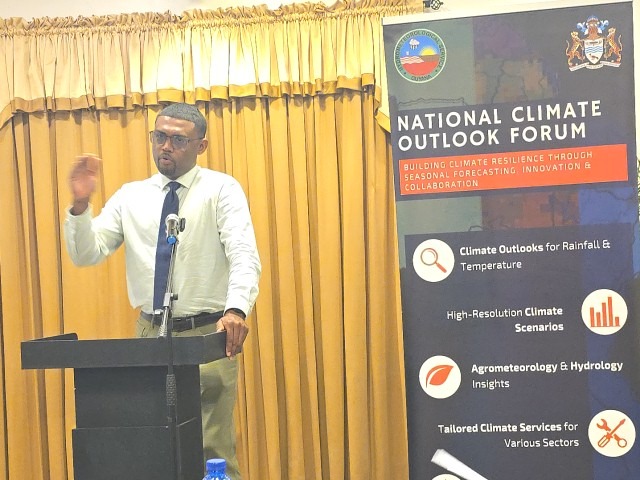
Speaking at the 21st National Climate Outlook Forum hosted at Georgetown’s Herdmanston Lodge on Tuesday, chief hydrometeorologist Dr. Garvin Cummings noted that while current water supplies remain adequate despite ongoing record heat, the situation is hanging in the balance dependent on late-year precipitation. Forecasters are closely monitoring storage levels in the country’s key water conservancies, which rely on seasonal rainfall to refill to capacity for the dry season.
“If there is no rainfall, then those levels are going to continue to fall, and that’s where water rationing becomes a real thing,” Dr. Cummings told attendees. He outlined that one of the country’s largest water storage hubs, the East Demerara Water Conservancy, has already dropped two meters (measured on the Georgetown Datum scale) from 58 GD in early August to 56 GD as of late September. Should levels fall further to 55 GD or lower, he warned, the situation would escalate to a major public concern.
Forecasters hold out a moderate path for avoiding crisis: if significant rainfall arrives before year’s end, levels could rebound to between 56 and 57 GD, enough to sustain communities through to the start of the next main rainy season. Without that replenishment, however, officials will be forced to implement emergency water management strategies to stretch existing supplies.
Already, state agencies have begun rolling out mitigation measures to reduce drought impacts, particularly for agriculture and vulnerable communities. The National Drainage and Irrigation Authority has deployed mobile pumping units along Guyana’s coastal belt to move stored water to agricultural regions, and large black storage tanks are being distributed to high-risk areas to help households and small farms stockpile water. Policymakers and technical teams have been fully briefed on evolving forecast conditions to coordinate rapid response if conditions worsen.
Beyond water access, the drought poses cascading risks to critical supply links for Guyana’s interior hinterland communities. Falling river levels will disrupt the shallow-draft water transport that moves most food, medical supplies, and harvested timber into and out of remote regions. In a worst-case scenario, officials would be forced to shift to far more expensive air freight, driving up the cost of essential goods for already marginalized inland populations.
“We want to prepare, we’re hoping for the best, but preparing for the worst,” Dr. Cummings said. “If the rains are not going to come, then water transport becomes an issue.”
The grim forecast comes after meteorological modeling confirmed an overwhelming likelihood of a sustained strong El Niño through the first quarter of 2027. Specialist hydrometeorologist Komalchand Dhiram told the forum that models show an over 85% probability of below-average rainfall through the end of the year, with zero chance of above-average or even average precipitation across the country.
Dhiram added that Guyana can expect between 50 and 60 days of extreme heat through March, with both daytime and nighttime temperatures projected to stay well above the long-term seasonal average. Even scattered light showers will not be enough to offset the persistent heat and drying, he noted.
The extreme heat will also add unplanned strain to the country’s energy infrastructure, particularly in remote interior regions. Hydropower stations that serve communities in Rupununi and Paramakatoi will face dual pressure: falling water levels reduce power generation capacity, while elevated temperatures drive increased consumer demand for electricity to power cooling systems.