A cross-continental air quality incident is unfolding this week, as smoke from Canada’s persistent wildfire season is on track to drift thousands of miles south to reach the northeastern Caribbean, according to the Antigua and Barbuda Meteorological Service (ABMS). However, the national weather agency has moved to reassure residents that the hazy plume will not trigger meaningful declines in local air quality. In an official air quality advisory published Tuesday, ABMS noted that latest atmospheric modeling suggests the smoke mass has already reached upper atmospheric layers over the region. The plume is projected to continue its westward trajectory, moving across the northern Caribbean and the Bahamas by the end of Wednesday. Even as the smoke moves through the broader Caribbean basin, air quality measurements across Antigua and Barbuda still rank in the World Health Organization’s “Good” category, and forecasters project this stable, healthy condition will hold steady throughout the plume’s passage. While the Canadian wildfire smoke will have little tangible impact locally, Antigua and Barbuda is already bracing for the next potential air quality challenge: a significant influx of Saharan dust that is forecast to arrive in the region starting Thursday. ABMS confirmed that it will maintain continuous monitoring of atmospheric and air quality conditions, and will issue additional public updates whenever new developments require it.
分类: environment
-

Engineer backs US study highlighting energy transition barriers
Barbados’ ambitious goal to shift from fossil fuels to renewable energy has hit a major roadblock, according to a new U.S.-led study that has sparked sharp debate among local energy experts over the root causes of delays.
The study, conducted by U.S.-based research firm MarketScale, pinpointed deep-rooted structural and regulatory barriers that have slowed the island’s transition, noting that long-standing industry power dynamics have reinforced the status quo rather than driving meaningful change. Barbados still relies heavily on costly imported fossil fuels to power its national electricity grid, the research found. It also highlighted that two key players — the private utility Barbados Light and Power Company Ltd. and state-owned Barbados National Energy Company — hold structurally dominant positions in the local energy market, blocking out alternative models and underutilized renewable technologies including onshore wind, pumped-storage hydro, and biofuels made from locally sourced sargassum and sugarcane bagasse.
The findings, first reported by Barbados TODAY on Friday, drew contrasting reactions from two leading local energy industry figures. Trevor Browne, a veteran electrical engineer and former president of the Barbados Association of Professional Engineers (BAPE), publicly backed the MarketScale analysis, arguing that bureaucratic and structural gridlock has effectively stalled the entire transition.
Browne pushed back against claims that institutional resistance from incumbent energy providers is not a primary barrier, a position held by Aidan Rogers, former president of the Barbados Renewable Energy Association (BREA). Rogers dismissed the MarketScale study as lacking both contextual accuracy and local nuance, arguing that Barbados has already taken significant steps to curb the influence of long-standing market incumbents. Instead, Rogers blamed under-resourced regulatory bodies and poorly defined intervenor processes for the slow pace of change, noting that delays in licensing, tariff setting, planning approval and regulatory decision-making are the main drags on progress.
But Browne rejected that framing, saying the MarketScale study offers one of the most accurate breakdowns of the systemic challenges holding back Barbados’ energy transformation. Six years after the government launched its landmark 2019–2030 National Energy Policy (BNEP), Browne emphasized, the country still has no detailed public implementation plan outlining how the shift from fossil fuels to renewables will be rolled out. He pointed to high-profile unresolved examples, including a 2022 rate hike application submitted by Barbados Light and Power that remains pending as of 2026, with consumers stuck on temporary interim rates with no clarity on when a final decision will be reached.
Transitioning the entire national energy system while keeping core services operational is an unprecedented challenge that requires overcoming major technical, administrative, financial, political, social and educational hurdles, Browne explained. He aligned with the MarketScale conclusion that incumbent providers actively resist shifts that would disrupt their existing market power, arguing that the current sector structure continues to dictate the slow pace and conservative direction of the transition.
Browne also noted that the study identifies multiple underpromoted viable alternative energy approaches that have been sidelined to protect the status quo. “Concepts such as cooperative ownership, the use of biofuels such as bagasse and sargassum, and of pumped storage – rather than battery storage, appear to have been discarded due mainly to various pressures applied in order to maintain their status quo, by the incumbent, dominant players,” he said.
The veteran engineer stressed that fundamental planning, structural and regulatory issues remain unaddressed six years after the BNEP was adopted, which is why the transition has ground to a halt. “Such a complex engineering and management undertaking as the BNEP can never be implemented successfully in the absence of very exact and detailed professional preparation, planning, and strategising being put into place upfront. No such planning has ever been shared with the public or with the various stakeholders,” he said.
Unresolved core issues range from sector ownership structures and regulatory frameworks to financing models and legal provisions, Browne added. He also warned of a growing “photovoltaic dead end,” where hundreds of millions in private solar investment has been effectively trapped because the national grid lacks sufficient energy storage capacity to absorb the extra power generated. The ongoing uncertainty around the unresolved rate case and the absence of a clear national strategy has also spooked potential investors, he noted.
To move the process forward, Browne is calling on the Barbadian government to treat the energy transition as the large-scale, complex engineering project it is, and hand oversight to experienced professional administrators. He proposed establishing a multi-disciplinary panel of engineering, financial, regulatory and business experts to develop a comprehensive overarching framework and draft a formal public national energy transformation plan. Additional recommendations include updating outdated energy legislation and regulatory rules, appointing a dedicated professional engineering or project management entity to oversee day-to-day implementation, and ensuring full public and stakeholder engagement and education throughout the process.
Browne emphasized that the success of the BNEP is critical to securing long-term energy reliability for Barbados, and that industry stakeholders stand ready to support the government in delivering on the policy’s goals.
-
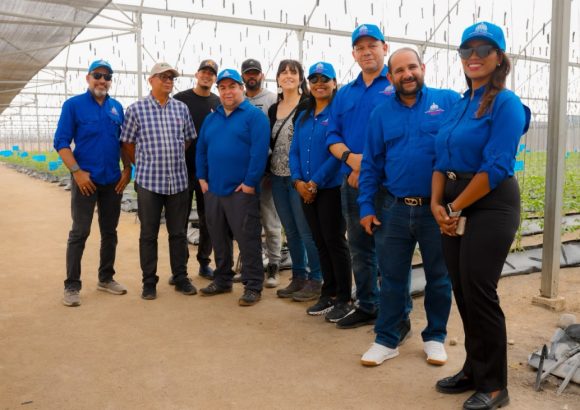
Chilean delegation visits Dominican Republic to study irrigation technology
A high-level technical delegation from Chile’s National Irrigation Commission (CNR) has arrived in the Dominican Republic for a week-long knowledge-sharing visit, hosted by the Dominican Executive Directorate of National Irrigation Technology (TNR). The trip centers on examining the Caribbean nation’s cutting-edge progress in irrigation innovation and climate-controlled protected agriculture, as part of a broader bilateral cooperation agreement between the two countries.
The core goal of this collaborative initiative is to facilitate the cross-border exchange of technical knowledge, industry-tested best practices, and proven institutional management models, with the ultimate aim of boosting agricultural innovation capacity for both nations. Over the course of the visit, Chilean delegates are holding in-depth working sessions with senior TNR officials and conducting on-site tours of advanced greenhouse irrigation projects across three key Dominican agricultural regions: Jarabacoa, San José de Ocoa, and Azua.
During these site visits, the CNR team is closely studying Dominican strategies for cutting water waste through efficient conservation frameworks, integrating emerging technologies into agricultural water management, and raising overall crop productivity to meet growing domestic and export demand. At the official opening session of the visit, TNR Planning and Development Director Manuel Mejía underscored how far the Dominican Republic has advanced in recent years to modernize its national irrigation infrastructure and scale up production in controlled agricultural environments.
Mejía emphasized that this peer-to-peer exchange is far more than a technical visit: it is a critical opportunity to strengthen regional collaboration on sustainable agriculture and build long-term institutional capacity for both sides. For their part, the Chilean delegation has also presented an overview of their own country’s decades of experience in irrigation system governance and water resource management. By the end of the visit, both delegations confirmed they are actively exploring new avenues for future joint work focused on advancing sustainable, climate-resilient agricultural development across the region.
-
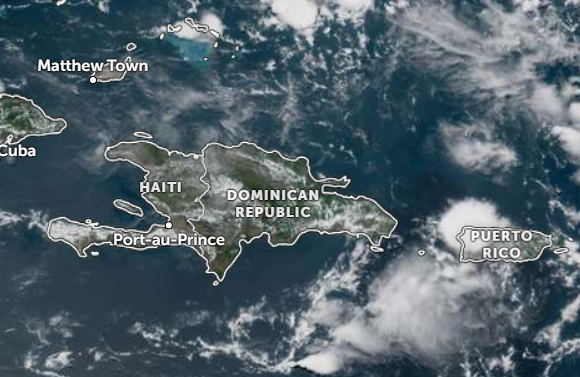
Canadian wildfire smoke to impact air quality in the Dominican Republic
Residents of the Dominican Republic are bracing for declining air quality over the coming days, as two separate transcontinental pollution events are set to sweep through the island nation, according to leading meteorological analyst Jean Suriel. The overlapping hazards, consisting of lingering wildfire smoke from Canada’s ongoing blazes and a fresh, seasonal dust plume originating from the Sahara Desert, are projected to combine to create unhealthy breathing conditions across much of the country.
Suriel explained that the initial wave of Canadian wildfire smoke has been transported all the way to the Caribbean region by a low-pressure trough stretching across the North Atlantic. As this smoke disperses across Dominican territory, it raises the risk of uncomfortable and potentially dangerous allergic reactions for sensitive groups including children, the elderly, and individuals with preexisting respiratory conditions.
Beyond the air quality impacts, the same weather system that carried the smoke will bring variable precipitation to multiple regions of the country. Periods of rainfall are expected across the Central Mountain Range, as well as the country’s southeast, northeast, and northwest regions. Conditions are set to shift by Thursday, when the trough combined with the approaching Tropical Wave No. 29 will spark broader coverage of showers and thunderstorms across the nation. This same shift will also push most of the Canadian wildfire smoke out of Dominican airspace by the end of the day, offering only a brief reprieve before the next hazard arrives.
Meteorological forecasts project that the 12th Saharan dust cloud of the 2024 season will make landfall in the Dominican Republic on Friday, and will remain trapped over the area through Sunday. Suriel warned that this dust plume will bring widespread hazy skies that will reduce visibility, push daily temperatures higher than the seasonal average, and exacerbate existing risks for people living with allergies and chronic respiratory illnesses such as asthma. Health officials are expected to issue public warnings in the coming days advising sensitive groups to limit prolonged outdoor exposure while both hazards are present.
-
Tropical Storm Bertha forms in the Gulf, forecasts warn of flooding
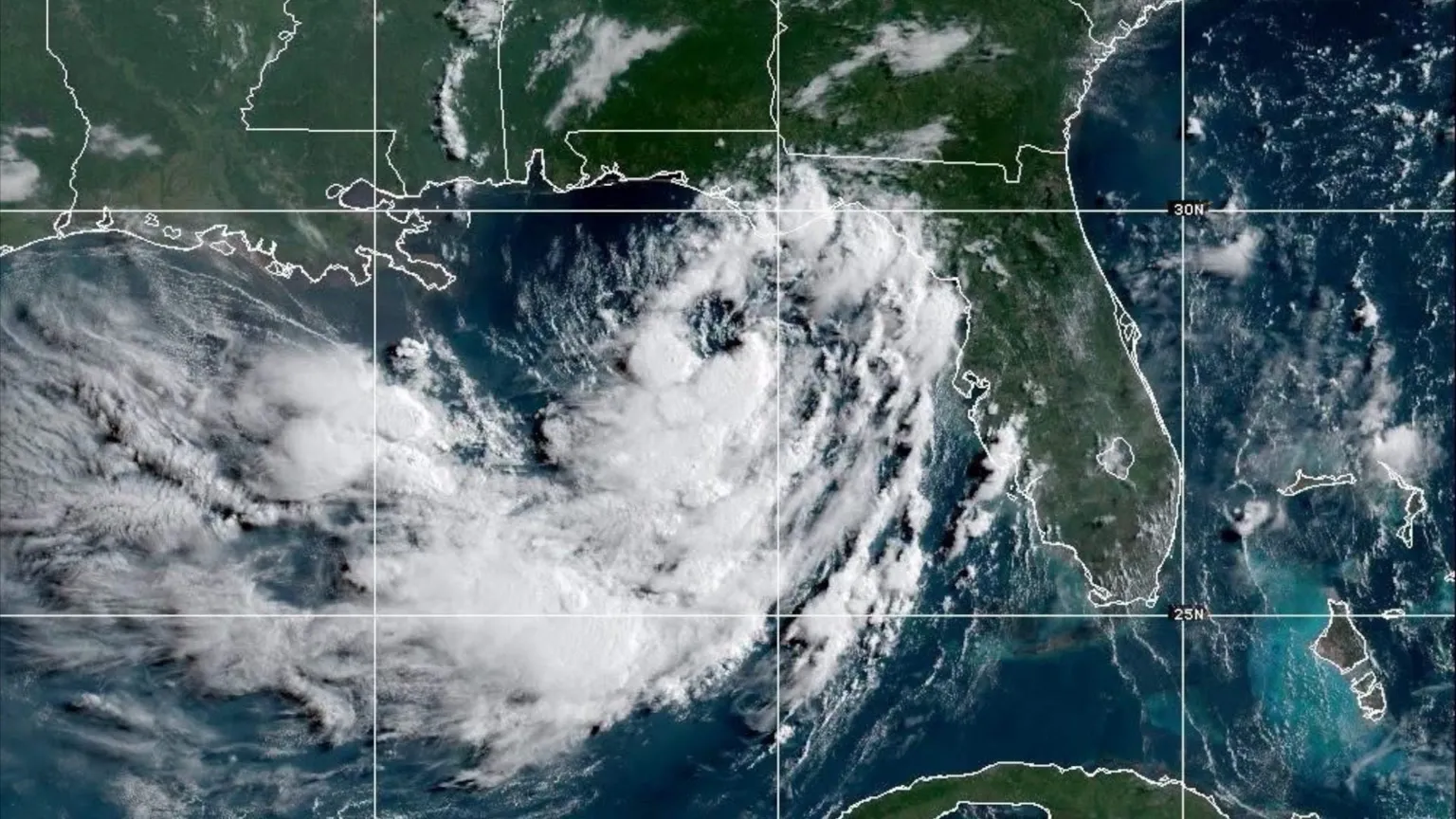
As the 2024 Atlantic hurricane season gains early momentum, the U.S. Gulf Coast is bracing for significant disruptive weather, with Tropical Storm Bertha poised to bring heavy downpours, life-threatening coastal flooding and isolated severe weather to much of the American Southeast this week. As of Monday afternoon, the National Hurricane Center (NHC), the Miami-based agency that monitors Atlantic and Pacific tropical weather systems, reported that the named storm was circling roughly 105 miles (165 kilometers) south of Panama City, Florida, packing sustained maximum wind speeds of 40 miles per hour (65 kilometers per hour), right at the threshold for tropical storm classification.
In its official forecast, the NHC projected that Bertha will track slowly near or parallel to the northern Gulf of Mexico coastline over the coming three days, moving northwest at just 3 miles per hour, with tropical storm-force winds extending 70 miles out from the storm’s central circulation. The slow-moving system is forecast to bring hazardous conditions to four Gulf Coast states: Alabama, Florida, Louisiana and Mississippi, as it drifts westward toward the Texas coastline.
Forecasters warn that accumulated rainfall could reach as much as 8 inches (20 centimeters) in hard-hit areas by the end of this workweek, creating a high risk of flash flooding in low-lying and urban regions where drainage systems can become overwhelmed quickly. Additionally, isolated tornadoes are possible across parts of Florida through midweek, and coastal areas in Louisiana and Mississippi are expected to see storm surges of 1 to 4 feet above normal tide levels — a surge that the NHC warns could become life-threatening in vulnerable low-lying coastal communities.
As of Monday evening, an updated NHC bulletin indicated that the storm is likely to intensify gradually over the next 48 hours before a projected landfall near New Orleans, Louisiana, on Wednesday. In preparation for the storm’s arrival, local New Orleans officials have begun distributing sandbags to residents to help reinforce properties against incoming floodwaters, and have asked homeowners and business owners to clear debris from local storm drains to improve drainage capacity.
The storm’s approach comes as the U.S. South is already grappling with a sustained period of sweltering summer heat, adding an extra layer of risk for residents who may lose power amid storm-related outages. After making landfall, the NHC forecasts that Bertha will gradually weaken, degrading to a tropical depression by Thursday and likely dissipating entirely by the end of the week as it approaches the Texas coast.
This storm is only the second named storm of the 2024 Atlantic hurricane season, following Tropical Storm Arthur, which brought moderate flooding to parts of the U.S. East Coast last month. A tropical storm watch is currently in effect from the Ochlockonee River in Florida westward to the Jefferson/Plaquemines Parish border in Louisiana, urging residents to monitor updated forecasts and follow any evacuation orders issued by local officials.
-
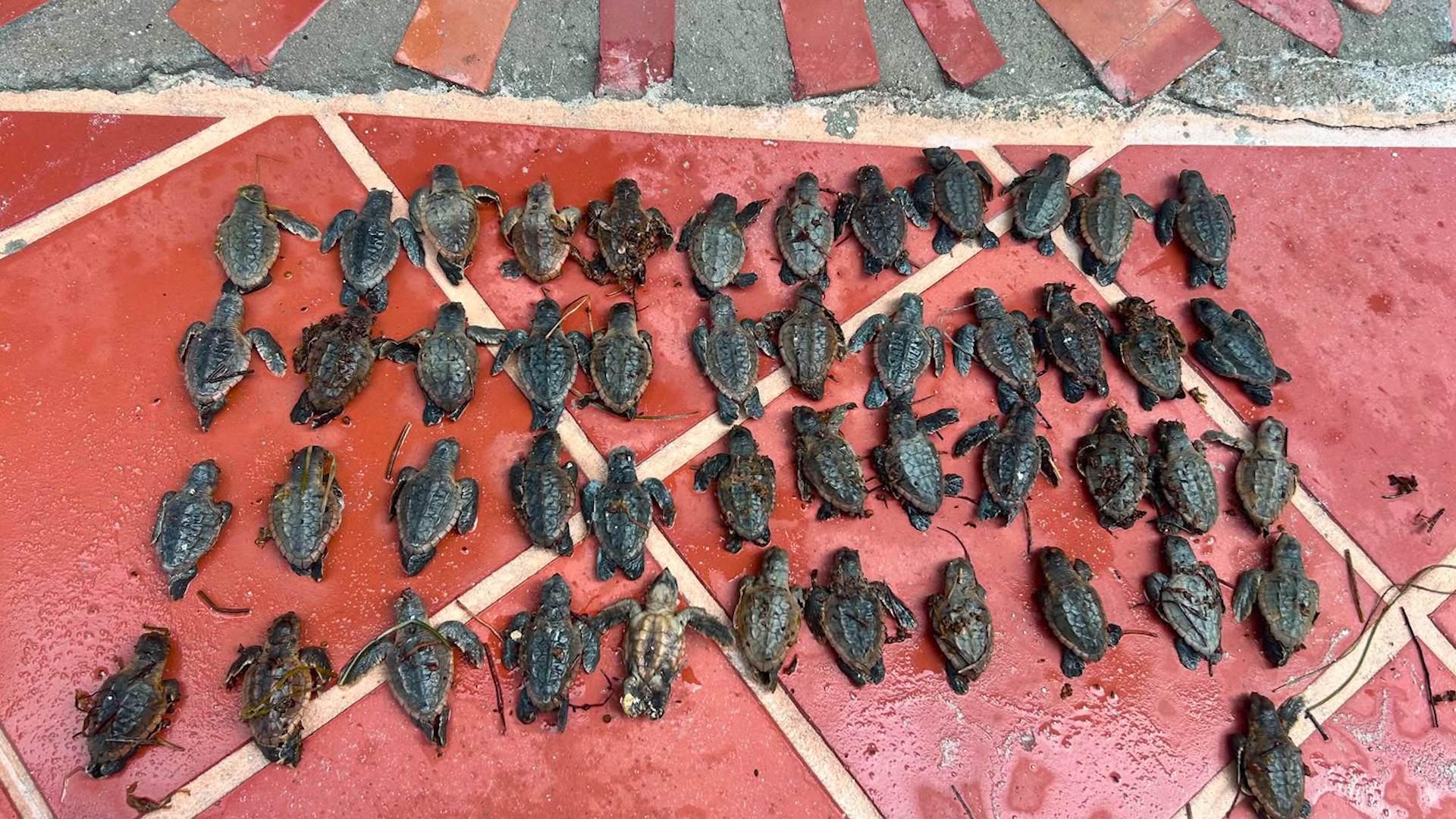
Sargassum Kills Dozens of Loggerhead Hatchlings
Scheduled for publication on July 20, 2026, this incident spotlights a growing threat to endangered marine species along Belize’s coastlines, where loggerhead sea turtles are legally protected from harm. Last week, a routine beach walk on a private stretch of Ambergris Caye uncovered a devastating loss that has local conservation advocates calling for urgent government action.
The grim discovery was made by Joshua Seguro, an employee at the property owned by coastal residents Scott and Maria Sussman. While walking along the sand, Seguro spotted dozens of motionless tiny hatchlings tangled in dense, floating mats of sargassum, a brown seaweed that has increasingly piled up on Caribbean coasts in recent years. All of the hatchlings had died before they could complete their critical first journey from the nesting sand to the open ocean.
“While on the beach I looked down at my feet and saw a bunch of baby turtles hatchlings. I immediately identified them as loggerheads and I said oh no, these are dead, we have to contact the Fisheries Department,” Seguro explained in an interview with News Five. “From our observation it appeared to be an entire clutch that passed away. We counted up to fifty-two and it could be more. So I am fully convinced it is the sargassum that killed them.”
Maria Sussman recounted the moment the group surveyed the full extent of the loss, saying: “We all rushed to the beach but they were all dead and we wanted to see what happened, and first we saw very close to the beach about seventeen turtles, then we started walking further on our pier and from both sides of the pier we started seeing more and more dead turtles stuck in the sargassum.”
For property owner Scott Sussman, the incident is not just a single tragedy—it is a warning of a much larger unreported crisis unfolding across Belize’s unmonitored coastlines and uninhabited islands. “I think it is a tragedy. Like Josh said this is something we happened to find, and a neighbor happened to find another instance a mile down the beach,” Sussman noted. “So, who knows how often this is happening and where. This is just two groups of people who saw this. All these uninhabited islands and everywhere else, it could be hundreds of turtles dying every month during the hatching season.”
Sussman is pushing for the Belizean government to intervene and implement coordinated measures to manage sargassum accumulations on nesting beaches during critical hatching windows, to prevent further unnecessary deaths of this protected species. Local authorities are urging any beachgoer who encounters dead or distressed loggerhead turtles along the coast to contact the Belize Fisheries Department immediately to report the sighting.
-
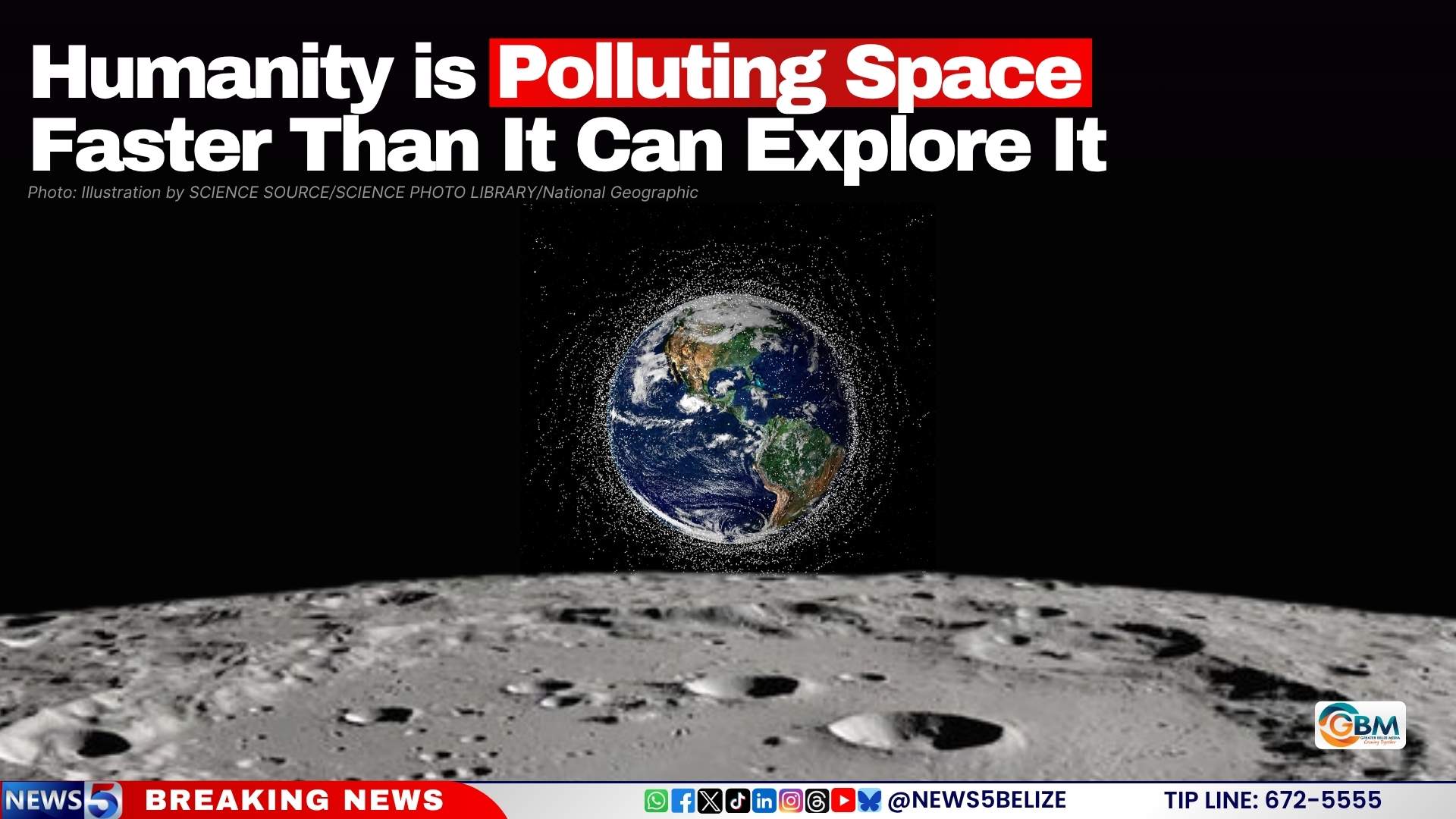
Humanity is Polluting Space Faster Than It Can Explore It
On July 20, 2026, which marks the annual observance of International Moon Day, the United Nations has issued a stark wake-up call to the global community: human activity is polluting outer space at a rate that far outpaces the expansion of new exploration efforts, leaving a growing, dangerous trail of orbital debris that threatens both space operations and life on Earth.
According to UN estimates, more than 140 million pieces of debris are currently circling Earth. While the vast majority of these fragments measure larger than 1 millimeter and are too small for existing tracking systems to monitor, they still carry enough velocity and mass to cause catastrophic damage to operational satellites and crewed spacecraft, exacerbating what experts already call an escalating orbital pollution crisis.
The timing of the UN’s warning is no coincidence: countries and private aerospace entities around the world are ramping up investment and planning for a new wave of lunar exploration over the coming decade. Major spacefaring nations including the United States via NASA, China, India, and Japan have all laid out ambitious lunar mission timelines, with goals ranging from scientific research to establishing permanent surface infrastructure and testing resource extraction capabilities.
“Decades of rapidly expanding space activity have shown that each launch leaves an environmental footprint, and it can take a long time to understand the impact fully,” explained Jason Jabbour, Senior Officer at the UN Environment Programme. “This is why it is so crucial to consider the sustainability of these programmes early on.”
The risks posed by orbital debris extend far beyond collisions in low-Earth orbit, the UN notes. Fragments from defunct satellites and spent rocket stages already regularly re-enter Earth’s atmosphere, and some large, heavy components survive the fiery descent to crash into populated or ecologically sensitive land areas. Even when debris burns up completely during re-entry, it releases hazardous heavy metals into the upper atmosphere, a pollutant source that scientists are still working to fully characterize. Currently, researchers are conducting ongoing studies to determine whether this accumulating space pollution could alter atmospheric chemistry and damage the planet’s protective ozone layer, which shields all life from harmful ultraviolet radiation.
While existing international space treaties include language promoting responsible exploration and debris mitigation, the UN argues that current measures are insufficient to keep pace with the coming boom in lunar and deep space activity. The organization is calling on national governments to strengthen regulations, adopt stricter debris reduction mandates for both public and private space missions, and prioritize long-term environmental protection for both Earth and outer space before the new era of lunar exploration fully launches.
-
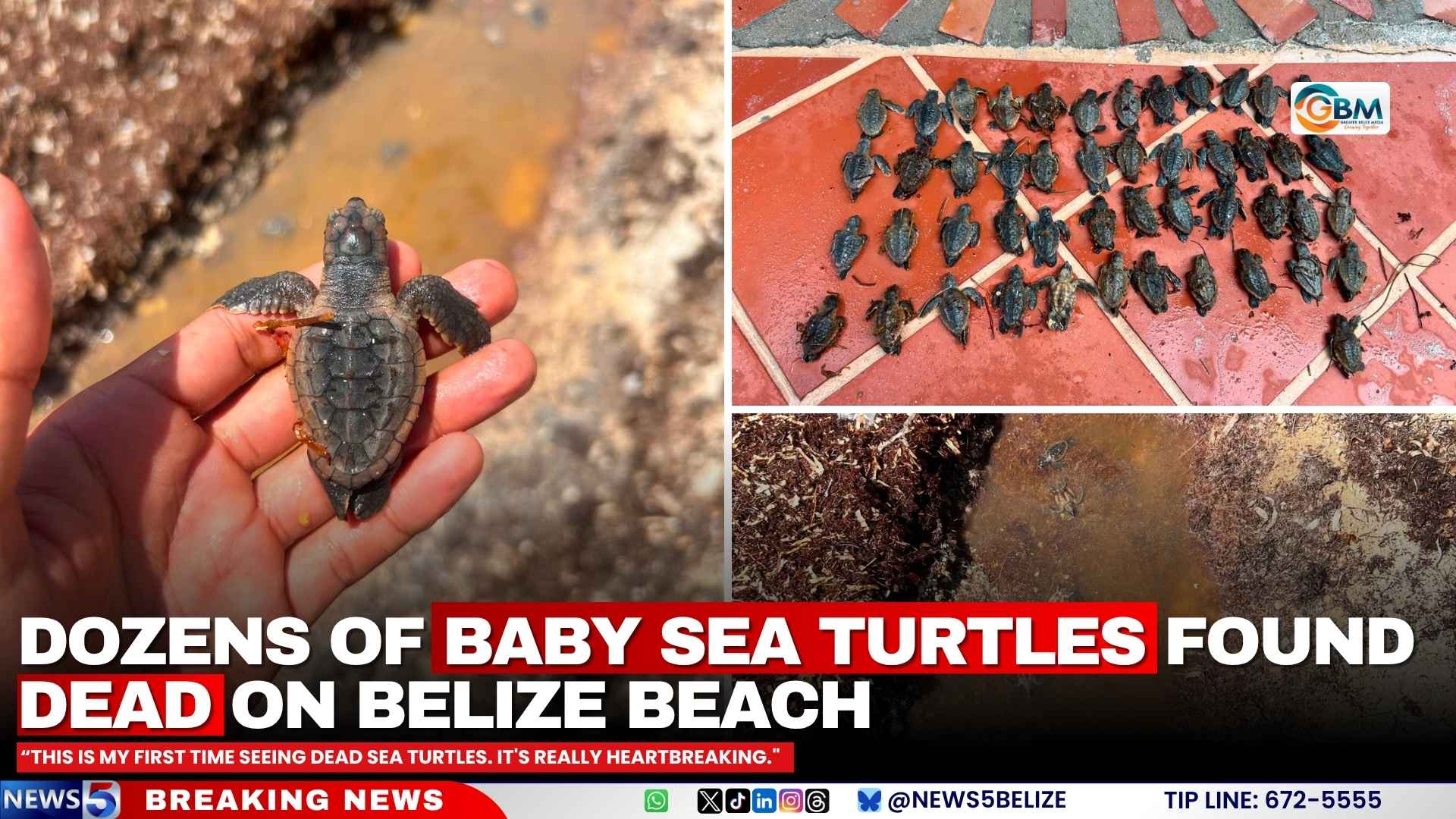
Dozens of Baby Sea Turtles Found Dead on Belize Beach
On a quiet private stretch of shoreline on Belize’s Ambergris Caye, a devastating discovery earlier this month has thrown a harsh spotlight on the escalating sargassum seaweed crisis threatening Caribbean coastal ecosystems. At least 52 dead loggerhead sea turtle hatchlings, all from what appears to be a single complete nest that never reached the ocean, were found trapped in thick mats of rotting seaweed, triggering urgent calls for government intervention to address the growing environmental disaster.
The grim find was made early one morning by Joshua Seguro, a part-time property worker who has been spending summers on this stretch of coast for more than 15 years. As he made his routine walk along the shore, he immediately recognized the small creatures as loggerheads – a globally threatened species of sea turtle – and realized none were still alive. Following protocol, he first notified the property’s owners before reaching out to the Belize Fisheries Department, which coordinated next steps with the Belize Sea Turtle Network.
Fisheries officer Alicia Eck guided the local team remotely, instructing them not to disturb the protected wildlife and to conduct a full count to establish the scale of the die-off. By the time the count was completed, the group had documented 52 dead hatchlings, confirming the entire nest had perished before reaching open water. For local observers, the cause of death is unambiguous: the overwhelming blanket of decomposing sargassum that has choked Belize’s shorelines in recent years.
Property co-owner Maria Sussman recalled that her family initially thought the hatchlings were alive when Seguro first brought the news. Excited to share the experience with their 5-year-old daughter, the whole group rushed to the beach, only to find more and more small bodies tangled in the thick seaweed as they walked along the pier. The team searched for the original nest in the hope of rescuing any remaining unhatched turtles, but could not locate it – it is believed to be buried deep beneath the pier, trapped under layers of accumulated sargassum.
Seguro, who remembers watching healthy turtle hatchlings make their way to the ocean as a child, says this mass die-off is the starkest marker yet of how dramatically the coastal ecosystem has declined. He notes that successful turtle hatchings have become extremely rare in the area, with his last live sighting of a hatchling roughly a decade ago – that individual was also trapped in sargassum, but was rescued and released successfully. “We’ve never seen anything like this. Especially dead. This is my first time seeing dead sea turtles. It’s really heartbreaking,” he said.
Crucially, this mass mortality event is not an isolated incident. Seguro says a similar discovery of dead hatchlings was made just 300 feet along the same coastline, raising alarming questions about the true scale of turtle deaths across Belize’s entire 200-plus miles of coast. “Now imagine the entire coastline of Belize. How many turtles are dying every single day?” he asked.
Property co-owner Scott Sussman has called the deaths an unacknowledged tragedy, warning that uncounted thousands of turtles could be dying every month during hatching season without any formal documentation. He is pushing the Belizean government to take immediate, large-scale action to manage the sargassum crisis, pointing to successful mitigation efforts in neighboring Mexico as a model. Sussman noted that the government recently received $25 million in earmarked funds to address the sargassum problem, arguing that targeted investment in clearing and management would not only protect vulnerable marine species but also preserve Belize’s critical tourism industry.
Today, Sussman says the sargassum accumulation on his beach is so thick that the shore cannot be traversed without hiring labor to clear a path, and the problem grows worse with every passing month. Beyond turtles, the sargassum bloom is damaging the entire coastal ecosystem: during a recent boat trip just five miles north of the property, Sussman encountered water thick with discoloration and reeking of decomposition, with hundreds of seabirds feeding on dead fish. Long-time residents report that once-common species including porpoises and abundant lobster populations have vanished from the area, replaced by 150 feet of murky brown water choked with rotting seaweed.
Roberta Schulte, Sussman’s mother-in-law, added that the mass die-off of loggerhead hatchlings raises broader concerns about species preservation and economic risk. “You’re talking about the preservation of a species, and you don’t know what other species are being impacted,” she said. “People come to Belize for the sea, and to see what is being allowed to happen is really disappointing and possibly a deterrent for tourism.” Without urgent government intervention, locals warn, the damage to Belize’s marine ecosystems could become irreversible.
-
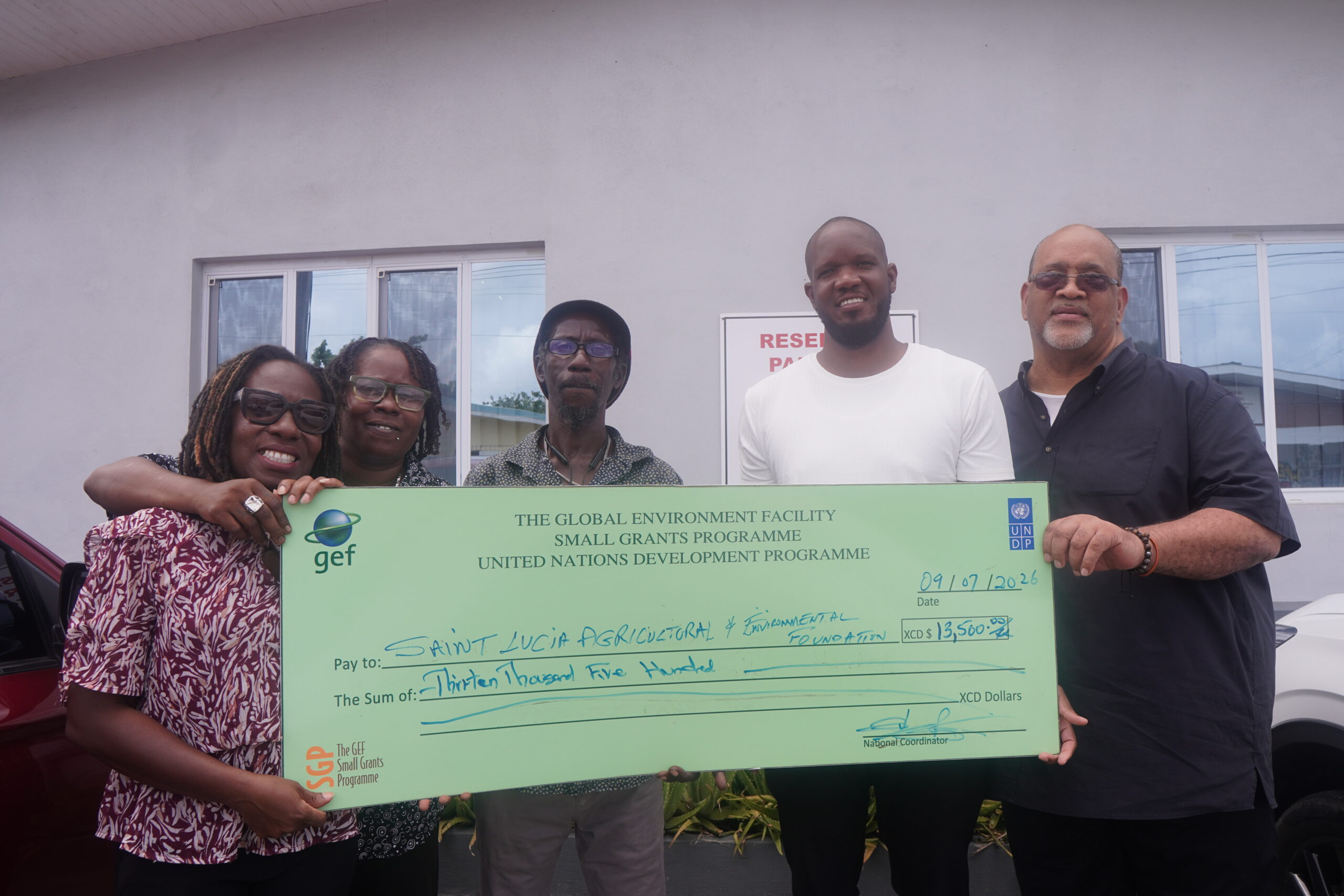
Environmental and Agricultural Foundation gets $13,500 grant for eco project
The Caribbean island nation of Saint Lucia has secured critical new funding to advance its national eco-sustainability agenda, after the St. Lucia Environmental and Agricultural Foundation received a targeted grant from the Global Environment Facility’s (GEF) Small Grants Programme this Friday.
Valued at 13,500 Eastern Caribbean dollars (EC$), the award will fund the initial design phase of a landmark national initiative centered on two interconnected priorities: climate-resilient sustainable agriculture and evidence-based coastal zone management. Over the design period, the funding will cover three core activities: baseline scientific research on current agricultural and coastal ecosystem health, multi-stakeholder consultation workshops bringing together local farmers, conservation groups, and government officials, and technical support to help the foundation develop a scalable, long-term operational business model for the project.
Once the design phase is completed, the foundation plans to submit a full project proposal to GEF to secure a 45,000 U.S. dollar implementation grant, equivalent to roughly 121,615 Eastern Caribbean dollars. Giles Romulus, national coordinator for the project, framed the initial grant award as far more than a one-off injection of funding — rather, it marks the starting point of a broader national movement toward more responsible resource stewardship across the island. Immediately following the grant announcement, Romulus led an orientation seminar to walk project stakeholders through the requirements and next steps for advancing the initiative.
“This is the beginning of a long relationship with this group, and we are hoping that because the group works all over Saint Lucia, they will demonstrate how to use resources sustainably and also build the capacity of other groups that have similar missions and visions for Saint Lucia,” Romulus explained in an interview with local outlet St Lucia Times.
Romulus emphasized that the initiative aligns directly with Saint Lucia’s core national goals for long-term food security, public health, and sustainable land use. As a small island developing state with extremely limited land and natural resources, intentional, rigorous stewardship is not an optional policy goal but an existential necessity, he noted.
“When you are small, you need to take care of what you have even more consciously and in a more rigorous, focused way,” he said. “Therefore, what they are trying to do is say, ‘Okay, we have limited space, we have limited land, we have limited soil. Let us find a way to use the soil in a sustainable way and to produce produce that has minimum or zero toxic chemicals in it’. This will not, for example, later down the road contribute to cancer cases in Saint Lucia and other morbidity issues. So, this project has both a food security and, in many respects, a nutritional security and health component. But most importantly, it is about taking care of what we have.”
Cherica Toussaint, president of the St. Lucia Environmental and Agricultural Foundation, welcomed the grant as a transformative opportunity for the organization and the country as a whole, expressing profound gratitude for GEF’s investment in Saint Lucia’s sustainable future.
“I stand here today with immense gratitude. We are very honoured in receiving these grants, and I hope that it serves as a powerful catalyst for a more sustainable Saint Lucia and a healthier environment,” Toussaint said.
-
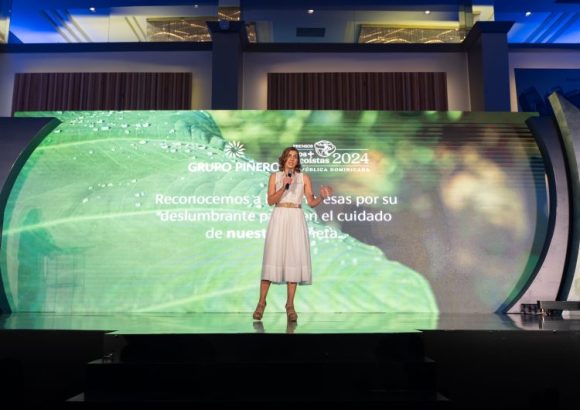
Piñero invites nominations for third “Los + Ecoístas” awards promoting sustainable tourism
In a move to amplify global momentum for environmental stewardship in the tourism and private sectors, Dominican hospitality leader Piñero has opened nominations for the third iteration of its prestigious “Los + Ecoístas” awards, a recognition program celebrating entities advancing sustainability across the Caribbean nation. This year marks a notable expansion of the initiative, with new categories adding content creators, independent environmental advocates, and specialized media outlets to the traditional pool of recognized companies, institutions, and industry partners. The awards program sits at the core of Piñero’s global “We Are Ecoístas” campaign, an overarching effort to embed responsible environmental practices across regional industries and cultivate a more ecologically conscious model for tourism development in the Dominican Republic. By opening recognition to communication-focused actors, the company aims to elevate the work of changemakers who use digital platforms, journalism, and public outreach to build widespread public support for climate action and conservation. Eligible nominations cover work across four key environmental focus areas: renewable and efficient energy systems, direct climate action, circular economy innovation, and biodiversity protection. Organizations and individuals interested in consideration have until September 14 to submit their entries, with winners set to be revealed at a dedicated ceremonial event scheduled for the end of 2024. In a unique addition to this year’s program, Piñero has formed collaborative partnerships with the Dominican Republic’s National Center for Handicrafts (Cenadarte) and the national Ministry of Culture to launch a special design competition. Up-and-coming local artisans are invited to compete to create the official award statuettes, an initiative designed to center sustainable craft practices and elevate emerging Dominican creative talent. Since the awards launched, a range of the country’s leading public and private entities have been honored for their environmental work. Past recipients include major national players Grupo Universal, Banco Popular Dominicano, Aerodom, the National Botanical Garden, Cervecería Nacional Dominicana, and electric mobility provider Evergo, all recognized for their measurable contributions to advancing conservation and sustainable development across the country.