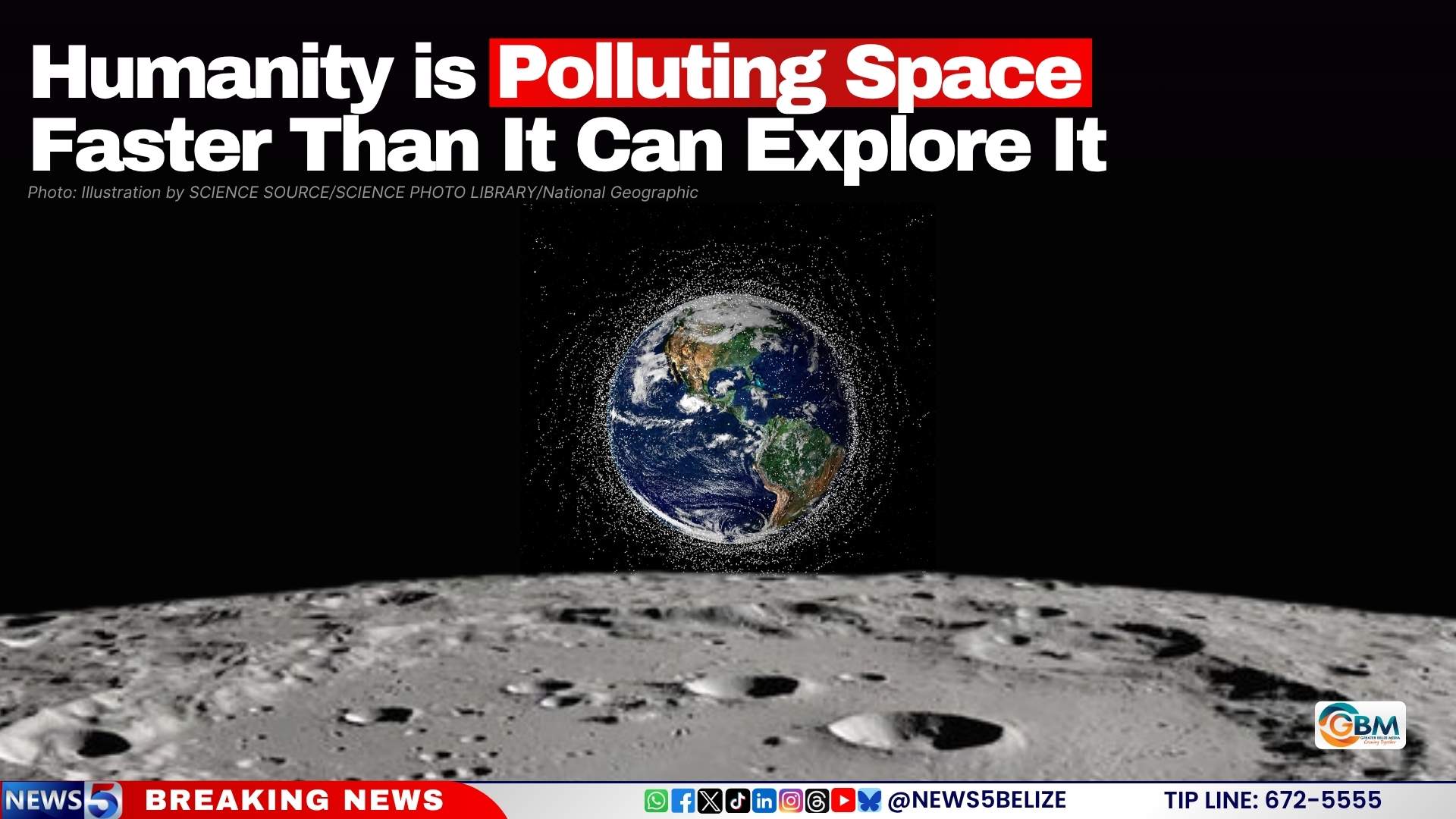
On July 20, 2026, which marks the annual observance of International Moon Day, the United Nations has issued a stark wake-up call to the global community: human activity is polluting outer space at a rate that far outpaces the expansion of new exploration efforts, leaving a growing, dangerous trail of orbital debris that threatens both space operations and life on Earth.
According to UN estimates, more than 140 million pieces of debris are currently circling Earth. While the vast majority of these fragments measure larger than 1 millimeter and are too small for existing tracking systems to monitor, they still carry enough velocity and mass to cause catastrophic damage to operational satellites and crewed spacecraft, exacerbating what experts already call an escalating orbital pollution crisis.
The timing of the UN’s warning is no coincidence: countries and private aerospace entities around the world are ramping up investment and planning for a new wave of lunar exploration over the coming decade. Major spacefaring nations including the United States via NASA, China, India, and Japan have all laid out ambitious lunar mission timelines, with goals ranging from scientific research to establishing permanent surface infrastructure and testing resource extraction capabilities.
“Decades of rapidly expanding space activity have shown that each launch leaves an environmental footprint, and it can take a long time to understand the impact fully,” explained Jason Jabbour, Senior Officer at the UN Environment Programme. “This is why it is so crucial to consider the sustainability of these programmes early on.”
The risks posed by orbital debris extend far beyond collisions in low-Earth orbit, the UN notes. Fragments from defunct satellites and spent rocket stages already regularly re-enter Earth’s atmosphere, and some large, heavy components survive the fiery descent to crash into populated or ecologically sensitive land areas. Even when debris burns up completely during re-entry, it releases hazardous heavy metals into the upper atmosphere, a pollutant source that scientists are still working to fully characterize. Currently, researchers are conducting ongoing studies to determine whether this accumulating space pollution could alter atmospheric chemistry and damage the planet’s protective ozone layer, which shields all life from harmful ultraviolet radiation.
While existing international space treaties include language promoting responsible exploration and debris mitigation, the UN argues that current measures are insufficient to keep pace with the coming boom in lunar and deep space activity. The organization is calling on national governments to strengthen regulations, adopt stricter debris reduction mandates for both public and private space missions, and prioritize long-term environmental protection for both Earth and outer space before the new era of lunar exploration fully launches.