分类: business

  • Saint Lucia, Martinique hardly trade, but that could change

    Saint Lucia, Martinique hardly trade, but that could change

    Decades of underutilized trade potential between neighboring Caribbean neighbors Saint Lucia and the French overseas territory of Martinique could soon be unlocked, according to France’s top envoy to the Eastern Caribbean and Barbados, Ambassador Marie-Noëlle Duris.

    Located just 37 kilometers apart, the two island jurisdictions share deep geographic and cultural common ground that makes expanded cross-border commerce a natural fit, Duris explained in an exclusive interview with local outlet St Lucia Times. Currently, bilateral trade volumes between the two remain disproportionately small: 2024 data from French diplomatic officials shows that less than 3% of total exports from Martinique and neighboring French Caribbean territory Guadeloupe flow to Saint Lucia, while Saint Lucia accounts for less than 1% of those two territories’ total imports. But ongoing diplomatic and trade negotiations are working to change that, with negotiators currently targeting 15 locally produced goods for streamlined import-export rules. While Duris did not share the full product list during the interview, she confirmed key categories include dairy goods and luxury beauty items such as perfumes.

    Duris emphasized that expanded trade would deliver mutual economic benefits to both sides. Martinique’s nearly 400,000 residents represent a large, accessible consumer market for Saint Lucian producers, while Martinique’s exporters gain a new nearby market for their own local goods, she noted.

    The current push to deepen trade ties builds on more than a decade of regional trade development initiatives. As early as 2017, a trade mission organized by the Organisation of Eastern Caribbean States (OECS) to Saint Lucia, Martinique and Dominica first mapped out structural barriers to cross-border commerce, identifying gaps in transportation infrastructure, logistics networks, production capacity, product certification protocols, phytosanitary inspection systems and digital communication infrastructure. In 2018, the EU-backed Trade Enhancement for the Eastern Caribbean programme launched to boost trade and investment between Martinique and OECS member states including Saint Lucia, but the initiative uncovered additional hurdles, including fragmented business coordination across islands and low levels of export readiness among small and medium-sized producers on both sides.

    Earlier this year, Martinique and Guadeloupe led a high-profile export mission to Saint Lucia, bringing 18 local companies to explore partnership and sales opportunities on the island. Even after years of preparatory work, barriers remain: Duris noted that strict European Union product and safety standards currently create procedural hurdles for non-EU producers seeking to export to Martinique, a French territory bound by EU trade regulation.

    Yet the ambassador struck an optimistic tone about progress, saying that multiple stakeholder groups from both sides are collaborating to address these regulatory and structural challenges. “Nothing is insurmountable,” Duris said. “It is thanks to the will to move forward together and to common work that it will be possible to find solutions.” She added that she expects negotiators to reach actionable agreements to streamline trade for at least a handful of products in the near term, with plans to expand the list of eligible goods as initial cooperation proves successful. Former French Ambassador Francis Étienne echoed this outlook during the 2024 export mission, noting that “the potential for improvement is infinite…Anything we can do to support business is necessary but, more importantly, essential.”

  • IICA NEWS: Jamaica to host 2026 Caribbean Week of Agriculture, which will have a focus on innovation and IICA as one of its organizers

    IICA NEWS: Jamaica to host 2026 Caribbean Week of Agriculture, which will have a focus on innovation and IICA as one of its organizers

    The Caribbean’s most influential agricultural gathering is set to return for its landmark 20th iteration this year, bringing together cross-sector stakeholders from across the region and beyond to reimagine the future of food production and trade. Scheduled to run from September 27 to October 2 in Kingston, Jamaica, the 2026 Caribbean Week of Agriculture (CWA) has been themed “The New Face of Caribbean Food Systems”, with co-organization led by the Inter-American Institute for Cooperation on Agriculture (IICA), alongside the Caribbean Community (CARICOM), the Caribbean Institute for Agricultural Research and Development (CARDI), and the United Nations Food and Agriculture Organization (FAO).

    Details of the high-profile event were formally announced during a recent hybrid launch ceremony hosted in Kingston, which drew regional agriculture ministers, senior CARICOM administrative leaders, and IICA Director General Muhammad Ibrahim. Designed as a collaborative platform for knowledge exchange and strategic partnership building, the week-long event aims to accelerate the development of a more modern, competitive, and climate-resilient agricultural sector across all Caribbean nations. A diverse cross-section of participants, from smallholder farmers and agribusiness entrepreneurs to public policymakers, youth leaders, and rural women advocates, will gather to tackle four core priority areas: strengthening regional food security, scaling climate-smart agricultural technologies, boosting agricultural export growth, and expanding sustainable agribusiness development.

    As the premier annual event on the Caribbean agricultural calendar, CWA 2026 will feature a full schedule of policy seminars, high-level stakeholder roundtables, and on-the-ground field visits to innovative agricultural operations, drawing decision-makers from both the public and private sectors across the globe. This year’s conference comes at a critical juncture for host nation Jamaica, which is still recovering from the impacts of Hurricane Melissa— the most destructive storm to hit the country in modern history, which caused widespread damage to agricultural infrastructure and erased thousands of farming livelihoods in 2025.

    Speaking at the launch ceremony, Jamaica’s Minister of Agriculture, Fisheries and Mining Floyd Green emphasized the unifying role of agriculture across the Caribbean amid mounting systemic challenges. “For generations, Caribbean agriculture has fed our communities and sustained livelihoods across our societies. Guaranteeing food security means protecting our peoples, which is why every stakeholder has a seat at this critical regional gathering,” Green stated. He noted that the region faces overlapping pressures, from intensifying natural disaster risk and skyrocketing agricultural input costs to ongoing global economic volatility, but expressed confidence that the conference would deliver a clear path forward. “We are not defeated. Agriculture has always brought this region together, as it sits at the heart of our economic and social development. We aim to leave CWA 2026 with a transformed vision for our food systems, centered on food security, climate action, and expanded export opportunities,” Green added.

    Zulfikar Mustapha, Guyana’s Agriculture Minister and head of the CARICOM Ministerial Task Force on Agriculture and Food Security, echoed this optimism, pointing to meaningful progress the region has already made despite persistent headwinds. Mustapha credited innovative policy frameworks, cross-border strategic partnerships, and growing targeted investment for driving steady advances in Caribbean agriculture, noting that “The Week of Agriculture is more than an annual meeting. It is a promoter of practical solutions in support of food security.”

    IICA Director General Ibrahim reaffirmed his organization’s 83-year-long commitment to supporting the Caribbean region, which has centered on delivering science-backed solutions to address the most pressing challenges facing local agricultural production. He also previewed two new major initiatives set to boost regional agriculture: the upcoming launch of a regional innovation and sustainable agriculture hub in Guyana, developed in partnership with the Brazilian Agricultural Research Corporation (EMBRAPA), which will work to directly improve the productivity and resilience of Caribbean agrifood systems. He also shared details of a European Union-funded project currently being implemented across five Caribbean nations, focused on expanding global market access for small and medium-sized regional agricultural producers. “We have the political will and capacity to advance an agenda aimed at strengthening and attracting investment for Caribbean agriculture,” Ibrahim affirmed.

    First launched in 1999 in Trinidad and Tobago, the Caribbean Week of Agriculture has grown steadily over nearly three decades to evolve into the region’s flagship strategic forum for agricultural development. St. Kitts and Nevis served as host for the 2025 iteration of the annual event.

  • Price of ‘Dollar Van’ To Increase

    Price of ‘Dollar Van’ To Increase

    Belize’s local public transportation sector is facing immediate change, as two major taxi associations have moved to raise shared van fares within a single week, with growing operational costs driven by dramatic swings in regional fuel prices cited as the core trigger for the adjustment.

    The first change is set to take effect on June 1, 2026, after the Belize Dollar Van Taxi Association made its official public announcement last Friday. Under the new pricing structure, standard adult fares will climb by 50% from the existing rate of BZ$2 to BZ$3. To reduce the financial burden on family passengers, the association confirmed that discounted children’s fares will stay unchanged at BZ$1.

    A second association, the Bullet Tree Taxi Association, has already rolled out its updated pricing faster, implementing the new rate schedule just this week on May 23. The new rates bring specific changes to inter-community routes: shared rides from Bullet Tree to San Ignacio now cost BZ$4 per passenger, while travel to Santa Elena has increased to BZ$7 per person. Children aged four and above, who previously qualified for discounted pricing, will now pay BZ$3 per trip. Additional services also come with extra charges: passengers who request unscheduled stops along the main route will pay BZ$1 extra per stop, and direct drop-offs at residential homes are now priced at BZ$5, with supplementary fees applied for more remote or out-of-the-way locations.

    These industry-wide fare adjustments come directly on the heels of major, volatile fuel price corrections announced by fuel regulators in Belize just one week prior. The past week has seen unusual and sharp swings in fuel prices across the country: regular grade gasoline jumped by more than BZ$1 per gallon, a dramatic single-week increase that caught both transportation operators and consumers off guard. At one point, temporary price dips for premium gasoline and diesel actually made premium cheaper than regular gasoline, an unusual market anomaly. However, by the end of the working week, premium prices rebounded sharply with a 93-cent per gallon increase, returning to its traditional position as the most expensive fuel grade for consumers. Currently, premium gasoline sits BZ$0.63 per gallon higher than regular gasoline, erasing the brief price inversion.

    Local transportation operators have long noted that fuel costs make up the single largest operating expense for shared van services, which serve as a primary affordable public transit option for working-class residents and low-income families across Belize District. The latest round of price hikes reflects how sustained fuel market volatility is forcing providers to pass increased costs on to consumers, with impacts expected to ripple through local household budgets in the coming months.

  • MIVHED reports 93% surge in construction licenses in early 2026

    MIVHED reports 93% surge in construction licenses in early 2026

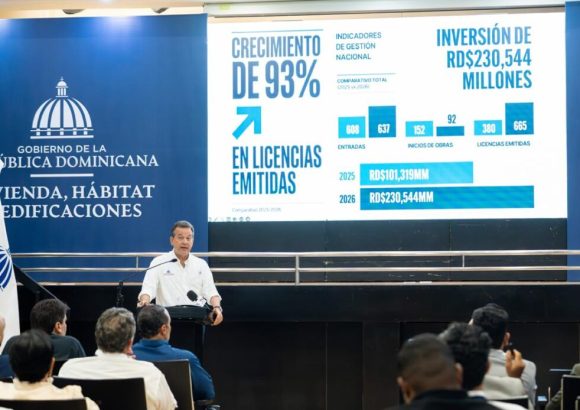
    In Santo Domingo, the Dominican Republic’s Ministry of Housing, Habitat and Buildings (MIVHED) has reported a dramatic 93% year-over-year increase in construction permits issued through the first four months of 2026, a milestone that underscores the success of the government’s sweeping efforts to streamline permitting workflows and upgrade institutional operations.

    The new data was presented by Housing Minister Víctor “Ito” Bisonó at the official launch of “MIVHED en Marcha,” a new regular media outreach program designed to keep the public informed about the ministry’s institutional progress, ongoing digital transformation efforts and major strategic infrastructure projects across the country.

    Between January and April 2026, MIVHED approved a total of 594 construction permits, which are tied to more than 230 billion Dominican pesos (RD$) in private sector investment. That represents a 126% jump in the total value of approved investment compared to the same four-month period in 2025, when just RD$101 billion in projects received permits.

    Bisonó explained that the series of administrative and regulatory reforms driving this growth were crafted to resolve longstanding public and industry complaints about lengthy permit approval delays, limited institutional operational capacity and low administrative efficiency. He also shared complementary positive indicators for the national construction sector: the industry grew 6.6% in the first quarter of 2026, while cement sales rose 6% year-over-year to hit a total of 1.5 million tons, signaling expanding on-the-ground construction activity.

    As a core component of its broader modernization strategy, MIVHED has already launched “MIVHED Intelligence,” a new digital platform that gives applicants and the public the ability to track permit applications online, bringing greater transparency and accessibility to the permitting process. The ministry also confirmed that its highly anticipated new Single Window for Construction system is currently 50% complete. Once launched, the system will feature updated technical evaluation frameworks aligned with the country’s latest construction regulations.

    Beyond permitting reforms, Bisonó outlined the wide range of ongoing national public works projects being advanced under the ministry’s “Route of Works that Unite” initiative. These projects include new correctional facilities across the country, affordable housing developments and urban renewal programs, new hospital construction, and targeted upgrades to sports infrastructure in preparation for the 2026 Central American and Caribbean Games.

  • Salada posts stronger half-year profit as sales recover after Hurricane Melissa

    Salada posts stronger half-year profit as sales recover after Hurricane Melissa

    KINGSTON, Jamaica — Jamaican food manufacturer Salada Foods Jamaica Limited has delivered a robust set of half-year financial results for the 2025/26 fiscal period, logging double-digit profit gains and steady revenue growth as the company solidifies its recovery from Hurricane Melissa’s disruptions and capitalizes on strengthening demand across both domestic and international export markets.

    For the six-month window closing on March 31, 2026, the firm recorded gross revenue totaling JMD 838.8 million, marking a 9.2% uptick from the JMD 767.9 million reported in the same half-year period a year earlier. Company chairman Patrick Williams noted that the strong financial performance mirrors consistent consumer demand across the company’s product lines, as Salada steadily rebuilds operational momentum after the severe supply and production disruptions triggered by the hurricane last year.

    The single quarter ending March 2026 saw an even more dramatic acceleration in growth, with total revenue surging 29.4% year-over-year to hit JMD 478.4 million, up from JMD 369.7 million in the comparable quarter of 2025.

    Against a backdrop of persistent volatility in global raw material pricing and ongoing uncertainty in cross-border supply chains, Salada still managed to outpace last year’s profitability metrics by significant margins. The company’s gross margin edged up slightly to 31.1% from 30.8% in the prior year’s half-year period, an improvement Williams credited to targeted, stringent cost management strategies implemented across all operational segments.

    Aggregate operating profit for the first half of the fiscal year climbed 19.2% year-over-year to reach JMD 127.7 million. For the March quarter alone, operating profit more than doubled, jumping 102.9% to JMD 88.2 million compared to the same quarter last year.

    Throughout the reporting period, Salada maintained its strategic focus on boosting operational efficiency. Selling and promotional expenses held steady at 5.5% of total revenue, matching the prior year’s share even as the company scaled up marketing efforts to capture growing demand. Administrative costs also fell as a share of revenue, dropping to 10.4% from 11.6% year-over-year, a shift that reflects the company’s targeted cost containment measures amid a broader inflationary environment impacting the Caribbean region.

    Net profit for the half-year period rose 12.8% to JMD 100.2 million, up from JMD 88.8 million in the prior year. Earnings per share also improved, rising to JMD 0.10 from JMD 0.09 a year earlier. By the end of the reporting period, Salada held total assets of JMD 1.53 billion, representing a 2.5% expansion in total asset value compared to the end of the prior fiscal year.

    Beyond its core financial results, Salada has continued to advance corporate social responsibility commitments, supporting employees and local farming communities that sustained damage from Hurricane Melissa through targeted relief and long-term recovery programs.

    Company leadership emphasized that the strong half-year performance puts Salada in a solid position to pursue planned expansion and product innovation initiatives through the remainder of the 2025/26 fiscal year.

  • The Dominican Republic’s venture capital market is bigger than startups

    The Dominican Republic’s venture capital market is bigger than startups

    For years, the Dominican Republic has approached innovation in the same manner as many other emerging economies: with lofty aspirations, symbolic gestures, and more often than not, performative action. Startup contests sprung up across the country, accelerator programs launched, official delegations made trips to Silicon Valley, and panels on entrepreneurship became a staple at universities, chambers of commerce, and public institutions all eager to align themselves with the language of future-focused growth.

    But beneath this surface-level optimism, a harsher reality has lingered. The Dominican Republic never built out the robust institutional and financial infrastructure needed to turn innovation into a scalable, core component of its national economy. Today, as global capital markets evolve at breakneck speed, the country’s underdeveloped innovation framework is falling further behind.

    This crossroads presents the Dominican Republic with two stark possible outcomes: it could become one of the nation’s most consequential missed economic opportunities, or it could evolve into one of its most transformative strategic openings. The core of this turning point lies in a critical re framing of the country’s venture capital landscape: the opportunity no longer centers on startups themselves — it centers on building the right infrastructure. This is not physical infrastructure, but rather a layered system of financial, institutional, and innovation-focused finance infrastructure: the invisible frameworks that let global capital move confidently into emerging domestic sectors.

    This distinction carries enormous weight, because the global venture environment that defined the 2015–2021 era no longer exists. Data from PitchBook and CB Insights confirms that the end of the global zero-interest-rate era has reshaped the venture capital industry entirely. Today’s investors increasingly prioritize operational maturity, commercialization readiness, transparent governance, and efficient deployment over unproven speculative growth stories. Put simply: markets no longer reward ecosystems just for sounding innovative. They reward ecosystems that can cut through friction between capital and on-the-ground execution.

    This global shift reshapes the Dominican Republic’s strategic position in significant ways. Unlike many of its Caribbean peers, the country already boasts many of the core structural attributes that global investors now actively seek: consistent macroeconomic stability, close geographic proximity to the United States, growing financial sophistication, rising international profile, world-class tourism infrastructure, a globally connected diaspora, and growing appeal for internationally mobile founders, operators, and remote professionals. Yet institutionally, the country still treats innovation as a side conversation, rather than a core long-term economic transition. This gap between potential and action is becoming impossible to ignore.

    ## Capital Has Arrived — The System Has Not Caught Up

    One of the most persistent myths about Caribbean venture capital is that the region’s biggest problem is a lack of capital. The reality tells a different story: capital is already present in the Dominican Republic. What is missing at the necessary scale is the institutional infrastructure capable of turning early-stage innovation into deployable, financeable, and internationally recognizable economic activity.

    This gap creates widespread challenges across the ecosystem. Domestic financial institutions still struggle to assess innovation-related risk using outdated traditional underwriting models. Most early-stage Dominican startups remain structurally underprepared for the level of scrutiny institutional investors require. Many local accelerator programs operate in isolation, with no meaningful integration into broader global capital markets. Foreign investors consistently face operational ambiguity, fragmented information, and inconsistent commercialization standards when entering the market.

    The end result is a recurring paradox that now defines the ecosystem: global capital remains interested in the Dominican Republic, but it stays hesitant. This hesitation does not stem from a lack of national potential — it stems from a lack of intermediary infrastructure that can reduce uncertainty for institutional investors looking to deploy capital into innovation.

    This is why the conversation has outgrown startups alone. Around the world, innovation finance is quietly emerging as a core category of institutional modernization. Global banks are actively seeking standardized frameworks for evaluating innovation risk. Multinational corporations are hunting for structured commercialization pipelines. Governments are looking to build exportable digital industries that can diversify their economic output away from traditional sectors. Multilateral organizations are searching for scalable innovation models that can be deployed across emerging markets. And global venture firms are looking for operationally transparent entry points into undervalued regional markets. While most Caribbean economies are still debating the merits of supporting entrepreneurship, global capital has already moved on to prioritizing infrastructure.

    ## The Structural Gap Distorting the Domestic Venture Market

    One of the least discussed structural flaws in the Dominican Republic’s emerging venture ecosystem is the absence of properly structured, priced pre-seed infrastructure — a gap that carries far more risk than most local institutions currently acknowledge.

    In mature venture markets, pre-seed capital does more than just fund early-stage startups: it acts as a filtration and risk-distribution layer that lets downstream capital markets operate rationally. It absorbs early-stage uncertainty, progressively validates a startup’s operational maturity, and creates a clear structured pathway from early experimentation to large-scale institutional capital deployment. Without this foundational layer, the entire investment pipeline becomes distorted.

    Founders end up pursuing large institutional funding before they have reached the necessary operational maturity. Accelerator programs become symbolic branding exercises rather than commercially focused transitional steps. Investors are confronted with inconsistent governance, weak reporting systems, unclear paths to commercialization, and no standardized venture-readiness benchmarks. Domestic banks avoid engaging with innovation sectors entirely, because the market lacks standardized mechanisms to turn innovation into financeable risk.

    The outcome is not just higher startup failure rates — it is what can be described as capital market cannibalization. When early-stage risk is not properly structured, validated, and priced incrementally, later-stage capital becomes increasingly reluctant to participate at all. This dynamic partially explains why so many of the Dominican Republic’s most ambitious globally oriented founders end up bypassing local capital systems entirely: they incorporate their companies abroad, join foreign accelerator programs, and build relationships with international venture networks that understand structured capital progression far better.

    Over time, this creates a dangerous structural cycle: the country produces globally competitive entrepreneurial talent, but it exports most of the long-term economic value tied to that talent. Innovation does not disappear — it just grows and compounds elsewhere. This may ultimately prove to be the Dominican Republic’s biggest venture capital risk: not that innovation fails to emerge, but that the country fails to build the institutional systems needed to retain, finance, and scale that innovation domestically.

    ## Regional Competition Is Already Underway

    Across the Western Hemisphere, countries are already quietly repositioning themselves for the next era of cross-border capital and innovation finance leadership. Miami has consolidated its role as the primary gateway between U.S. capital and Latin American innovation. Puerto Rico leverages tax incentives and financial migration to attract founders and investment. Costa Rica and Medellín have built strong reputations among globally mobile technical talent and venture-backed operators. Even smaller regional economies are waking up to the reality that innovation infrastructure will be one of the defining competitive advantages of the 2020s.

    For the Dominican Republic, the core strategic question is now clear: will it merely participate in regional innovation trends, or will it step into a role as a regional intermediary? The country’s greatest opportunity ultimately has less to do with becoming the Caribbean’s largest startup ecosystem, and more to do with becoming its most strategically coordinated innovation finance hub. That is a very different ambition — and one that promises far greater long-term value.

    Recent modernization efforts in the Dominican Republic’s capital markets, including ongoing developments tied to Law 249-17 and the steady evolution of the country’s broader financial ecosystem, show that the nation is already moving toward greater institutional sophistication. The critical open question remains: will innovation finance evolve alongside this broader modernization, or will it remain disconnected from the country’s institutional progress?

    The countries that will win the next generation of global venture competition will not be the ones with the flashiest startup branding. They will be the countries that can make innovation legible and accessible to global institutional investors.

    ## A New Economic Category Waiting To Be Captured

    The next wave of economic growth in emerging markets will not come exclusively from traditional sectors like tourism, construction, and basic services. Increasingly, it will go to countries that can position themselves as coordinated platforms for innovation finance, digital commercialization, cross-border venture deployment, and exportable intellectual property. This global transition is already underway.

    The Dominican Republic now faces a clear choice: it can continue treating innovation as a branding exercise to promote its ecosystem, or it can start treating it as core economic architecture. The difference between these two approaches will define the country’s competitiveness for the next decade.

    Many of the current institutional bottlenecks holding back the ecosystem are not just weaknesses — they are significant modernization opportunities that can reshape how capital interacts with the broader Dominican economy:
    – Weak pre-seed underwriting frameworks lead to distorted capital progression and lower investor confidence, creating unmet demand for standardized venture-readiness systems and innovation-risk translation mechanisms
    – Fragmented accelerator ecosystems lead to higher startup mortality before companies reach financeable maturity, creating demand for integrated commercialization and capital-coordination infrastructure
    – Limited operational standardization for founders reduces institutional legibility for investors, creating demand for cross-functional venture governance and operational frameworks
    – Regulatory and deployment ambiguity slows foreign capital participation and creates unnecessary friction, creating demand for clearer market-entry and innovation-finance coordination mechanisms
    – Weak integration between innovation and domestic finance leads to low conversion of innovation into exportable economic activity, creating demand for broader institutional modernization and dedicated innovation-finance infrastructure

    Taken together, these friction points make clear that the Dominican Republic’s venture capital opportunity is not just about funding more startups. It is about building the institutional architecture that can make innovation legible, financeable, and scalable at both the national and international levels. This is why the country’s opportunity is ultimately far bigger than startups: the larger prize is becoming the Caribbean’s leading gateway for innovation finance itself — not just a place where companies are launched, but a place where capital, institutions, commercialization, and cross-border innovation come together in a coordinated, efficient ecosystem.

    ## Santo Domingo’s Evolution Beyond Tourism

    The shifts unfolding in Santo Domingo mirror a broader geopolitical and economic transition across the entire Caribbean. Remote workers, multinational operators, globally mobile founders, investors, and innovation-focused institutions are all converging on a new regional reality: the Caribbean no longer competes solely on tourism. It is now competing for talent, capital, infrastructure, venture deployment, and long-term economic positioning.

    Events like the Digital Nomad Summit Santo Domingo reflect this shift. What began as conversations about remote work and digital mobility have evolved into broader discussions about innovation finance infrastructure, cross-border entrepreneurship, venture capital modernization, digital exports, and the future economic positioning of the entire Caribbean region.

    The countries that will lead regional economic development over the next decade will not necessarily be the ones that attract the most tourists. They will be the countries that can transform innovation into institutional infrastructure before the rest of the region realizes the game has already changed.


  • Dominican Republic adopts WE Finance Code, marking regional milestone in financial inclusion

    Dominican Republic adopts WE Finance Code, marking regional milestone in financial inclusion

    In a groundbreaking move for gender-inclusive economic development, the Dominican Republic has made history as the first nation in Latin America and the Caribbean to embed mandatory gender-disaggregated MSME financing data reporting into its national financial supervision regulatory framework.

    The new rule, issued by the Superintendency of Banks of the Dominican Republic (SB) via official circular CSB-REG-2026000008, imposes quarterly reporting requirements on all licensed banks and other regulated financial entities operating within the country. Under the mandate, institutions must break down data on micro, small and medium-sized enterprise (MSME) financing by the gender of business ownership, including detailed records of the share of female ownership for each client, the volume of loan applications from women-led ventures, approval and rejection rates, and documented justifications for every loan denial. The first mandatory reporting period will conclude on September 30, 2026, giving institutions time to adjust their internal data systems to meet the new standards.

    This policy intervention is directly aligned with the global WE Finance Code initiative, a collaborative program spearheaded by the Women Entrepreneurs Finance Initiative (We-Fi) and the Organisation for Economic Co-operation and Development (OECD). The core mission of the WE Finance Code is to close the persistent global financing gap that disproportionately blocks growth opportunities for women-led businesses, which are systematically more likely to face credit access barriers than male-owned enterprises.

    Recent high-level coordination meetings brought together representatives from the SB, the Dominican Republic Bankers Association (ABA), and the Inter-American Development Bank Group (IDB Group) to map out the next stage of implementation. A key milestone on the agenda is the preparation of the Dominican Republic’s first national report of gender-disaggregated financial indicators to be submitted to the OECD for regional and global benchmarking.

    Private sector buy-in for the initiative has been nearly universal across the Dominican financial system. The ABA confirms that 26 major financial institutions, which collectively hold approximately 97% of all assets in the country’s financial sector, have already formally joined the WE Finance Code initiative. Since collaborative work on the framework launched in 2023, participating entities have collaborated to develop unified reporting standards, build out the technical infrastructure required for consistent data collection, and adopt a shared regulatory definition of women-led MSMEs that aligns with the new national mandate.

    The IDB Group’s private sector lending arm, IDB Invest, has provided critical financial backing to advance the effort, committing over $160 million in targeted investments and financing programs designed to expand affordable capital access for women entrepreneurs across the Dominican Republic.

    Today, the WE Finance Code operates in more than 33 countries across all regions of the world. With the Dominican Republic’s landmark regulatory integration, proponents expect the initiative to gain further momentum and expand rapidly across other Latin American and Caribbean nations in the years ahead, opening up new economic opportunities for millions of women business owners across the region.

  • BOJ warns inflation could breach target

    BOJ warns inflation could breach target

    The Bank of Jamaica (BOJ) has issued a cautious inflation forecast, warning that consumer price growth is on track to exceed the upper bound of the nation’s 4-6% target range during the second and third quarters of 2026. The primary driver of this projected overshoot, central bank officials confirm, is the steady climb in global crude oil prices, which has already begun pushing up costs for Jamaican electricity providers and transportation operators. Domestic fuel prices have already absorbed these increases, traced directly to persistent geopolitical volatility roiling key global energy markets. BOJ Governor Richard Byles emphasized during a recent public press briefing that the magnitude of the target range breach will hinge entirely on how intense and long-lasting the ongoing Middle East conflict proves to be.

    Economic forecasting experts at the central bank have flagged that risks to the inflation outlook remain at heightened levels. On the upside, two key additional threats stand out: El Niño-driven weather patterns that could disrupt domestic agricultural output and push food prices higher, and stronger-than-expected consumer and business demand stemming from post-hurricane reconstruction efforts across the island. On the downside, the BOJ warns that extended periods of elevated energy costs could erode household disposable income, dragging down broader consumer spending on non-essential goods and services.

    Current data shows inflation remains well-contained for the moment: headline inflation hit 4.3% in April 2026, holding firmly within the BOJ’s official target range. Once geopolitical tensions de-escalate and global oil markets stabilize with normalized supply levels, the central bank projects headline inflation will gradually cool back into the target range.

    Against this backdrop, the BOJ’s Monetary Policy Committee (MPC) voted unanimously to leave the benchmark interest rate unchanged at 5.50%. The central bank will also continue its targeted special foreign exchange interventions, designed to preserve stability in Jamaica’s domestic currency market. Byles noted that the current monetary policy stance remains appropriate even with the projected 2026 target breach, explaining that the central bank’s priority is limiting what economists term ‘second-round effects’ — a cycle where higher fuel and transport costs spill over into broad-based price increases across every sector of the economy.

    “Recent geopolitical tensions have injected significant uncertainty and new challenges into Jamaica’s economic outlook,” Byles stated. “That said, the Bank of Jamaica remains fully committed to its core mandate of preserving price stability for the Jamaican people.”

    During the post-briefing question-and-answer session, Byles pushed back against calls for the BOJ to adjust its official inflation target range to account for mounting global economic uncertainty. The current 4-6% range was set by the Jamaican government following technical recommendations from the BOJ, and Byles argued it remains well-suited to the needs of the domestic economy, with no adjustments planned in the near term. He explained that shifting the range lower would require aggressive monetary tightening, pushing interest rates higher and dampening economic growth, while raising the target range would allow looser policy and lower rates — only to generate higher persistent inflation that would place an unfair burden on Jamaican households.

    Jamaica first adopted the 4-6% inflation targeting framework in 2017. The framework was codified into law with 2020 amendments to the Bank of Jamaica Act, which also strengthened the central bank’s operational independence and formalized its inflation-targeting mandate. While the BOJ has not kept inflation within the target band consistently over the past nine years, central bank leadership assesses the framework as largely successful overall. Past target breaches include inflation spikes in 2017 and 2018, when extreme rainfall and widespread flooding pushed agricultural prices above normal levels. The most significant recent overshoot occurred between 2021 and 2023, during the post-pandemic global inflation surge, driven by skyrocketing shipping costs, elevated global energy and food prices, widespread supply chain disruptions, and the spillover effects of the Russia-Ukraine war. BOJ data shows inflation peaked at roughly 11.8% in April 2022, one of the highest annual inflation readings recorded in Jamaica in recent decades.

  • Capex brings government and business leaders Together in Santiago

    Capex brings government and business leaders Together in Santiago

    SANTIAGO, Dominican Republic — A high-profile business gathering focused on long-term national economic strategy brought together top government officials and private sector leaders this Tuesday, with Dominican Republic Vice President Raquel Peña headlining the guest list for the industry luncheon “Building the Future from a Business Vision.” Organized by business association Capex and hosted at the UTESA Dominican Convention and Culture Center, the event centered on a keynote address from legendary Dominican tourism entrepreneur Frank Rainieri, drawing cross-sector attendance from executives, public policymakers, and representatives of the country’s key productive industries.

    In her opening remarks at the summit, Vice President Peña underscored the critical value of collaborative public-private dialogue to shape the Dominican Republic’s long-term economic trajectory. She paid public tribute to Rainieri, crediting his decades of work as a foundational driver of the Dominican tourism sector’s transformation and broader national economic expansion.

    Speaking to reporters on the sidelines of the event, Peña framed Rainieri as a pioneering visionary whose decades of on-the-ground experience offer invaluable lessons for the country’s next chapter of growth. She also addressed ongoing volatility in the global economic landscape, confirming that the administration of President Luis Abinader remains proactive in monitoring shifting international conditions. The government, she noted, is rolling out targeted policy measures designed to safeguard broad-based economic stability and protect vulnerable industries and communities from external headwinds.

    During his keynote presentation, Rainieri walked attendees through the humble, challenging origins of Punta Cana, one of the Caribbean’s most iconic tourism destinations. He recalled the steep obstacles development teams faced decades ago, when the region was marked by sparse basic infrastructure and limited connectivity to the rest of the country. Reflecting on the project’s eventual success, Rainieri pushed back on common framing of the achievement as mere luck or coincidence. “Some call it opportunity, others call it luck; I call it vision,” he stated, emphasizing that Punta Cana’s steady growth was the product of intentional, decades-long strategic planning.

    Beyond his own tourism legacy, Rainieri outlined core principles he said are required to deliver lasting, sustainable progress across the Dominican economy. He argued that enduring growth depends on three key pillars: building intentional strategic alliances between public and private stakeholders, maintaining flexibility to adapt to shifting market conditions, and sustaining consistent investment in high-gloom sectors outside of tourism. Key sectors he highlighted for future investment included manufacturing, pharmaceuticals, agro-industry, and domestic production with enhanced value-add, all of which he said can drive diversified, inclusive growth for the nation.

    The closed-door luncheon and discussion created a rare space for cross-sector exchange, with attendees focusing on three core themes for national development: strong, forward-looking leadership, widespread innovation across industries, and unlocking untapped opportunities for expanded economic growth across the Dominican Republic.

  • OUR Soap expands into Fontana Pharmacy stores through Aventa partnership

    OUR Soap expands into Fontana Pharmacy stores through Aventa partnership

    KINGSTON, Jamaica — Homegrown Jamaican plant-based skincare label OUR Soap has announced a major expansion of its retail presence across the island, locking in a new distribution partnership with leading local pharmacy chain Fontana Pharmacy. Through the brand’s official pharmacy channel distributor Aventa Jamaica, the company’s full line of gentle, natural soap collections is now available on shelves at Fontana locations nationwide.

    This retail expansion aligns with a rapidly shifting consumer landscape in Jamaica, where local buyers are increasingly prioritizing holistic wellness, clear ingredient labeling, and domestically produced personal care goods over imported alternatives. As customer demand for transparent, sustainably made skincare continues to climb, domestic brands like OUR Soap have stepped forward to meet that unmet need in the premium retail space.

    OUR Soap’s premium product range includes three core formulations: Aloe Hydrate & Soothe, Coconut Afterglow, and Olive Nourish & Restore. All of the brand’s products are intentionally formulated without parabens, sulfates, or harsh abrasive chemicals, a key selling point for consumers seeking gentler options for everyday skincare. The brand frames its offerings not just as basic cleansing products, but as an accessible, foundational component of regular self-care practice.

    The new partnership marks the latest milestone in OUR Soap’s strategic growth strategy, which centers on expanding access to its products in high-quality retail locations across Jamaica. To celebrate the official launch of the collaboration, leadership teams from OUR Soap, Fontana Pharmacy, and Aventa Jamaica hosted a kickoff event on May 19 at Fontana’s Waterloo Square outlet. The gathering welcomed key stakeholders including OUR Soap Marketing Officer Brianna Burke, Fontana Pharmacy Waterloo Supervisor Dainty Walters, Aventa Jamaica Sales Supervisor Nicola Nelson Pollack, and digital content creator and OUR brand partner Sara Hazel.

    For Aventa Jamaica, the collaboration is more than a new distribution deal: it is part of a broader push to increase the visibility and accessibility of Jamaican-made wellness and personal care products within the country’s retail pharmacy sector, creating more space for local brands to compete alongside international labels.