分类: business

  • Three Southern Communities Lead Belize’s New Economic Shift

    Three Southern Communities Lead Belize’s New Economic Shift

    In a groundbreaking shift toward community-led development in Belize, three southern villages — Hopkins, Seine Bight, and Maya Center — have made history as the first pilot participants in the European Union-supported PROSPER project, a four-year initiative designed to turn local innovation into inclusive, long-term economic expansion. Unlike traditional development models that rely on top-down policy planning, this groundbreaking program places direct decision-making power in the hands of local residents, putting community needs and local knowledge at the center of growth strategy.

    The project’s priorities span a range of locally rooted economic sectors, from expanding sustainable, eco-friendly tourism infrastructure to scaling up climate-resilient cacao farming and supporting micro and small local enterprises. A core focus of the initiative is expanding equitable economic opportunity, with targeted investment in removing barriers for women and young people — two groups that have historically faced disproportionate barriers to economic participation in rural Belize.

    The selection of the three pilot communities was not arbitrary. Each village earned its spot through a rigorous, multi-criteria screening process that evaluated local natural and human resource assets, existing business potential, and demonstrated community commitment to collective development. Their selection now positions these three villages as trailblazers for the program’s next phase, with 12 additional rural communities in the Toledo district slated to join the initiative in the coming months.

    Ultimately, the PROSPER project aims to transform a small pilot into a nationwide grassroots movement, building broader economic resilience across rural Belize by empowering local communities to drive their own growth from the bottom up, rather than relying on external planning that does not reflect local needs.

  • Belize Shines with Two World-Class Fishing Captains

    Belize Shines with Two World-Class Fishing Captains

    In a landmark win for Belize’s recreational fishing and tourism sector, two local fishing captains have secured one of the industry’s most prestigious international awards, cementing the Central American nation’s status as a world-class angling destination. As of May 26, 2026, Joel Moratoya from San Pedro and Stefan Musa from Belize City have been named recipients of FishingBooker’s 2026 Angler’s Choice Award, an honor that spotlights the most exceptional fishing guides across the globe. The selection process was fiercely competitive: out of nearly 9,500 nominated captains from around the world, fewer than 800 earned a spot on the final award list, making Moratoya and Musa’s inclusion all the more notable.

    Unlike many industry awards that only celebrate record catches, the Angler’s Choice Award evaluates guides across multiple critical metrics: consistent service quality, outstanding customer satisfaction, and uncompromising adherence to safety protocols. Both Belizean captains posted an extraordinary 98% reliability score, positioning them among the most trusted and dependable fishing tour operators in the entire Caribbean region.

    In an interview following the announcement, Musa shared his thoughts on the global recognition, emphasizing that the award reflects the daily dedication of Belize’s entire community of fishing guides. “There’s a lot of multi-talented guides across the country. We put in a lot of work day to day ensuring our equipment, our boats, our crew, everybody is up to standard, everything is top tier,” he said. Musa added that his team prioritizes vessel safety and works to create a welcoming, positive experience for every visitor, going beyond fishing excursions to help guests explore inland attractions and promote all that Belize has to offer.

    When asked what advice he would share with other local guides hoping to earn similar recognition, Muso highlighted core principles for long-term success: unwavering dedication to the craft, discipline, attentive customer service, and a commitment to sustainable fishing practices. “Promote sustainable fishing. Take care of the natural resources for future generations to come. It’s very important,” he noted.

    FishingBooker CEO Vukan Simic also praised the two Belizean captains, noting that they have consistently delivered the highest quality fishing experiences across the Western Caribbean’s most iconic angling waters. For Belize, the dual award serves as a major public vote of confidence in the country’s fast-growing reputation as a premier global fishing destination, a key driver of tourism revenue and local economic growth. The achievement also underscores the critical role that experienced, customer-focused local operators play in building Belize’s international brand in the competitive ecotourism and adventure travel space.

  • Guyana to launch diaspora investment bond

    Guyana to launch diaspora investment bond

    On Tuesday, May 26 2026, as Guyana marked its 60th anniversary of independence, President Irfaan Ali made a landmark economic announcement that opens new pathways for global Guyanese to contribute to their home nation’s rapid development. Speaking at a joint press conference alongside Barbados Prime Minister Mia Mottley, Ali confirmed that the South American Caribbean country will launch a diaspora bond as early as next week, designed specifically to attract investment from Guyanese residing overseas.

    The financial instrument is structured to pool capital from the global Guyanese community to fund a broad pipeline of public infrastructure projects across the country, which is currently experiencing an economic boom driven by new offshore oil discoveries. “Members of the diaspora, here is your opportunity to make your contribution and to be part of the massive transformation taking place in our country,” Ali stated, framing the bond as an inclusive invitation for overseas Guyanese to participate directly in national growth.

    Following President Ali’s announcement, Prime Minister Mottley revealed a parallel collaborative initiative between the two Caribbean nations: the establishment of the Trident Arrow Investment Fund, a collective investment vehicle built to give ordinary retail investors access to stakes in critical infrastructure projects, as well as medium and long-term opportunities across the utility, digital technology, and agricultural processing sectors.

    Mottley emphasized that the fund addresses a long-running financial inequality facing Caribbean citizens, noting that traditional savings accounts currently deliver returns as low as 0.1% – a rate that fails to keep pace with inflation, effectively eroding the purchasing power and wealth of working people over time. “In an inflationary environment you effectively pauperise your citizens,” she explained, arguing that the fund provides a far more viable alternative for ordinary people to build long-term wealth.

    A core stated mission of the Trident Arrow fund is to reframe ownership of strategic national assets: instead of ceding majority control of critical economic sectors to exclusively foreign investors, the collective vehicle allows local and diaspora Guyanese and Barbadians to hold stakes in the development of their home countries. Mottley framed this as a shift from lifetime tenancy to collective ownership, saying “Instead of allowing only other foreign investment to come into hold critical parts of aspects of our economy, it allows ordinary people who could not do it on their own, but who, as part and parcel of a collective group, can make it happen in those countries.”

    Moving to address potential concerns over governance, Mottley gave explicit assurances that the fund would operate entirely outside of political influence, with strict adherence to global prudential financial regulations, formal oversight mechanisms, and robust legal frameworks to protect investor interests.

    The dual announcements mark a new approach to inclusive development in the Caribbean, tapping into diaspora wealth and expanding local citizen participation in large-scale national projects that have historically relied heavily on external financing.

  • 3 Southern Villages Join New EU Job and Farming Project

    3 Southern Villages Join New EU Job and Farming Project

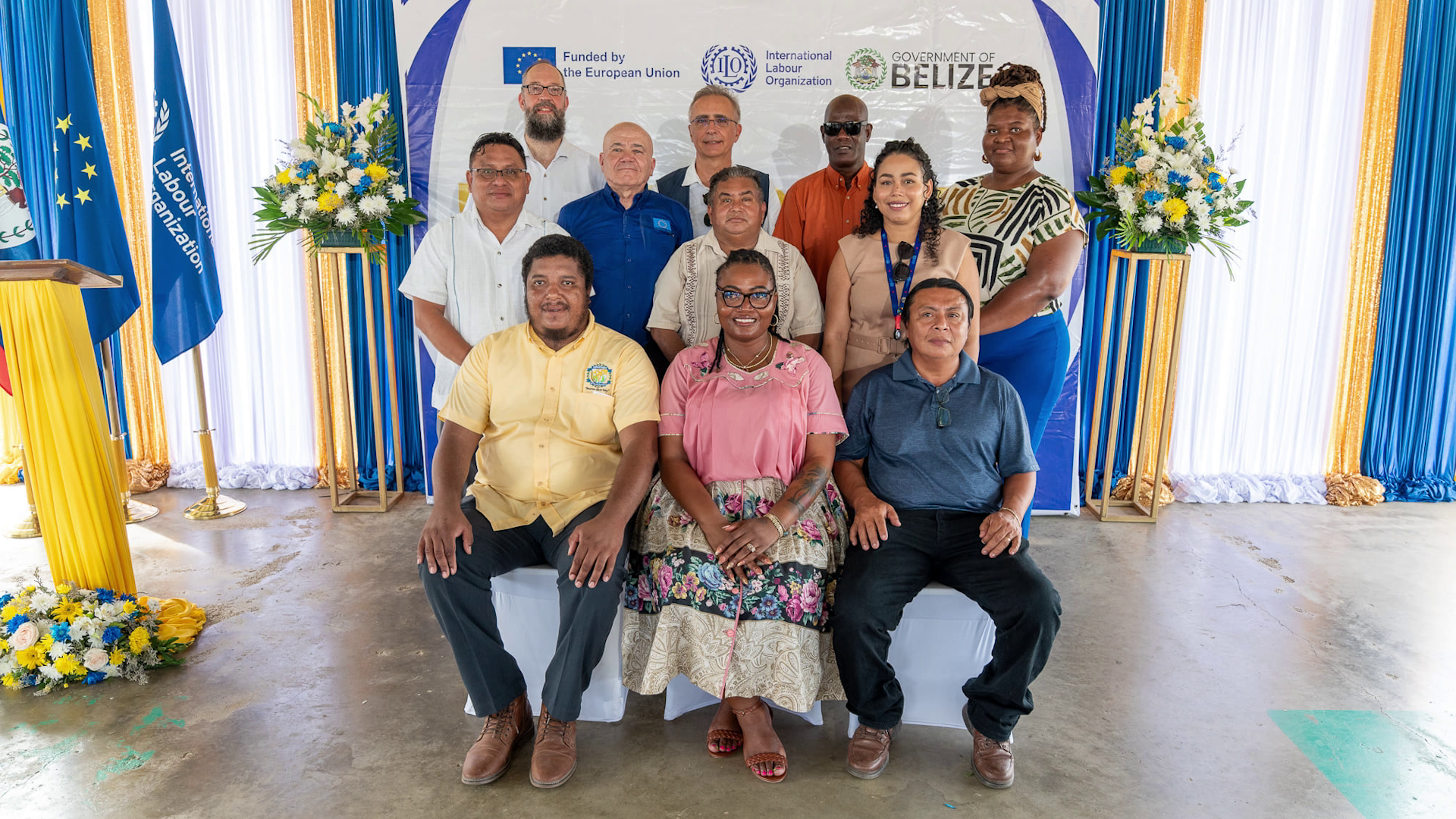
    In a major milestone for rural economic development in southern Belize, three local communities—Hopkins Village, Seine Bight, and Maya Center Village—have formally signed on to become the inaugural participants in the four-year PROSPER project, an international initiative backed by the European Union and implemented in partnership with the Government of Belize and the International Labour Organization. Scheduled to run from 2026 to 2030, the program targets expanded job creation and sustainable farming growth for Indigenous Maya and Garifuna communities across the country, with 12 additional communities in Toledo District set to join later this year after final community consultations conclude.

    Unlike many top-down development projects, PROSPER centers on community-led decision-making to ensure that economic gains from local industries—from cultural tourism to agricultural exports—remain in the hands of local residents rather than outside entities. Each participating community will establish a dedicated local action group, giving everyday residents direct voting power to set funding priorities and select which development projects move forward first. This collaborative approach was built into the project from its early planning stages: more than 100 residents from Hopkins and Seine Bight were consulted back in December 2025 to shape project priorities during the pre-launch groundwork phase.

    The selection of the first three communities followed a rigorous assessment process that evaluated each village’s existing small business ecosystem, cooperative infrastructure, and overall readiness to launch new development initiatives. Two core pillars anchor the project’s work: the first is expanded investment in sustainable cacao agroforestry, a traditional farming practice that aligns with Belize’s goals for climate-resilient agriculture and economic growth. Local vocational schools will integrate cacao cultivation training into their official curricula, and will receive targeted equipment upgrades and expert training support to deliver high-quality education to new and emerging farmers.

    Rodwell Ferguson, Belize’s Minister of Agriculture, emphasized the long-term value of the project’s focus on cacao agroforestry during the signing ceremony. “By investing in and supporting our rural farming communities, we can do more than just boost short-term incomes,” Ferguson noted. “We can strengthen rural livelihoods across the country and build more resilient agricultural systems that will serve generations of Belizeans to come.”

    PROSPER’s overarching mission addresses a longstanding challenge in many rural tourism and agricultural economies across the Global South: how to ensure that revenue generated from local land and labor translates into sustained, community-wide prosperity rather than leaking out to external third parties. By centering Indigenous and Afro-Indigenous community leadership, the project aims to create a replicable model for inclusive rural development that can be expanded across Belize and potentially adapted to other regional contexts in the Caribbean and Central America.

  • IDB hosts Invest Sustainability Week confab here

    IDB hosts Invest Sustainability Week confab here

    Against a backdrop of escalating climate threats, aging infrastructure gaps, and unmet social development needs across small island developing states (SIDS), the Inter-American Development Bank (IDB) has brought its annual Sustainability Week conference to the Caribbean for the first time, launching a multi-day dialogue in Barbados to connect global and regional investment capital with high-priority development projects across Latin America and the Caribbean.

    Hosted at the Wyndham Grand Barbados Sam Lords Castle Hotel in the parish of St Philip, the event draws more than 300 participating businesses from across the Caribbean and Latin America, with a total of over 700 in-person attendees and an additional 1,000 virtual participants joining from around the globe. Running through Thursday, the conference features targeted discussions on four core themes: scaling renewable energy adoption, strengthening national and community disaster resilience, expanding sustainable infrastructure financing, and opening new private-sector investment pathways across the region.

    Barbados Minister of Finance Ryan Straughn framed the island nation as the ideal host for the landmark gathering, noting that SIDS confront a unique set of systemic barriers when it comes to accessing affordable financing for development and climate action. “As smaller states, we do have peculiar needs with respect to our financing arrangements,” Straughn told reporters on the opening day of the conference Tuesday. “This gathering brings private sector stakeholders from across Latin America, the Caribbean and the globe together to co-design solutions that work not just for Barbados, but for every small island across the region.”

    Over the past eight years, Straughn explained, Barbados has led regional advocacy to expand access to concessional financing that supports equitable development and climate resilience-building, particularly in the wake of the COVID-19 pandemic that exacerbated existing economic gaps across the Caribbean. The conference, he said, is a core component of a broader regional push to mobilize both public and private capital to help countries meet their sustainable development targets.

    Straughn emphasized that any new financing must be directly tied to projects that deliver measurable, equitable outcomes across three key pillars: environmental sustainability, social inclusion, and targeted support for vulnerable and marginalized communities. This approach has become a core evolution of corporate social responsibility over the past decade, he noted, as stakeholders increasingly demand tangible impact alongside financial returns. “As we continue to press for the reform of the international financial architecture, we are seeking to match finance with specific deliverables and projects to ensure that we can close persistent development gaps,” Straughn said. “Because at the end of the day, you are as strong as the most vulnerable amongst you.”

    A key priority for Barbados, the finance minister added, is expanding access to regional investment opportunities for ordinary Barbadians, moving beyond a system where growth benefits only large traditional financial institutions. “We need more Bajans investing abroad… Bajans have money, so we are working with credit unions as well as traditional banks to create pathways for local citizens to bid on and invest in these regional opportunities, generate income outside of Barbados, and strengthen our own economic resilience,” he explained. The government’s goal, he noted, is to create inclusive investment opportunities that allow ordinary people to earn returns both at home and across the region, rather than concentrating profits exclusively in the coffers of large institutional investors.

    To attract sustained private-sector investment, Straughn stressed, national governments must first establish stable, clear regulatory and macroeconomic conditions. “A transparent regulatory environment that enables private sector participation is non-negotiable, and that’s something we’ve been working to build here in Barbados,” he said. “Fiscal discipline, stable governance, and a predictable political economy are equally critical for private investment to take root, but the opportunities for impactful growth are clearly there.”

    Straughn pointed to a series of existing successful partnerships between the Barbados government and the IDB as proof of concept for this model, including climate-focused coastal protection initiatives, critical public infrastructure upgrades, and social development projects. Among the examples he cited were the south coast and west coast boardwalk projects, which simultaneously protect coastal ecosystems and properties from climate-related erosion while expanding public recreational space. He also highlighted ongoing multi-partner investments in education, healthcare, and water infrastructure, noting that universal access to reliable potable water remains a top development priority for the island. “Over the last several years, we’ve worked with the IDB, World Bank, the Caribbean Development Bank and other regional partners to develop a comprehensive water master plan to replace pipes originally installed by British colonial authorities over 150 years ago, and upgrade sewerage treatment plants in Bridgetown and the south coast to enable water reuse,” he explained.

    Hosting the conference also delivers direct economic benefits to Barbados, Straughn noted, by supporting the island’s expanding meetings, incentives, conferences and exhibitions (MICE) sector and driving economic activity during traditional off-peak tourism periods. “These events not just help us to focus on better delivery of projects and financing, but it also helps to keep economic activity moving in the way that we want it to,” he said.

    In a pre-recorded opening address, Minister of Public and Private Investments Indar Weir called hosting Sustainability Week a milestone moment for Barbados and the entire Caribbean region, noting that the island has long sought to lead, rather than observe, global conversations about sustainability and climate resilience. “Barbados does not want to be on the sideline of the conversation. We actually want to be part and center of the conversation, and all of you do know the tremendous work and leadership that our Prime Minister has given to the whole subject of sustainability and indeed resilience,” Weir said.

    The gathering creates a unique space for governments, private investors, environmental advocates, and business leaders to align on priorities and forge new impact-focused partnerships, Weir added, noting that the Caribbean was selected to host this year’s event in recognition of the region’s growing sustainable investment potential and its global leadership on climate action. More than 350 companies are participating in this year’s Sustainability Week, with nearly half based in Caribbean countries. “The Caribbean has a clear opportunity to position itself as a global hub for sustainable investment, innovation, resilience, and inclusive growth, and that is exactly what this week is all about,” Weir said.
  • Air Peace route opens new economic opportunities for Barbados, says UWI economist

    Air Peace route opens new economic opportunities for Barbados, says UWI economist

    Following the launch of the first direct commercial flight between Nigeria and Barbados by Nigerian airline Air Peace over the weekend, regional economic experts have outlined wide-ranging long-term opportunities for trade expansion, tourism growth and cross-cultural collaboration between the two nations.

    The new connection marks a key milestone in Barbados’ ongoing strategy to diversify its international tourism and trade partners, moving beyond its traditional source markets to tap into emerging opportunities across the African continent. According to University of the West Indies economist Marion Alleyne, the direct air link creates an unprecedented physical foundation to boost economic engagement between the Caribbean island and West Africa, unlocking untapped potential for multiple core sectors.

    For Barbados’ $4.5 billion tourism industry, which accounts for nearly 40% of the island’s national employment, Nigeria’s 220 million-strong population and fast-expanding middle and upper class represent a high-value opportunity to attract higher-spending international visitors and business travelers. Unlike mass tourism that focuses on volume, this new market is expected to deliver greater revenue per visitor, lifting Barbados’ overall tourism profitability. “Nigeria is a much larger economy with a large population in the hundreds of millions, and they do have a growing affluent middle to high income sector that is perfectly positioned to become core high-value visitors to Barbados,” Alleyne explained.

    Beyond tourism, the new air route addresses a long-standing barrier to bilateral trade: for decades, commercial exchange between Barbados and the entire 54-nation African continent has remained extremely low, with limited direct transport options making cross-border business logistics unfeasible for most small and medium-sized enterprises. The twice-monthly Air Peace service, which operates from Nigeria’s commercial hub Lagos to Bridgetown before continuing on to Antigua, creates a reliable travel and cargo conduit that will allow business leaders from both sides to meet in person, explore partnership opportunities, and map out new areas for collaboration. Alleyne noted that the complementary strengths of both economies create natural trade synergies: Nigeria holds vast natural resources that Barbados lacks, while Barbados has built strong specialized service sectors and intellectual capacity that it can export to growing West African markets.

    Cultural and creative industries are also expected to reap major benefits from strengthened connections. With African cultural influence increasingly resonating across global creative sectors, Alleyne said the new link will open pathways for two-way cultural exchange, including collaborative projects in music, fashion, film and digital content that can position both regions’ creative industries for global growth. Barbados’ creative sectors will gain access to the large and fast-growing African consumer market, while African creators will gain easier access to Caribbean and North American markets via Barbados’ existing regional transport and trade networks.

    Alleyne also echoed comments from Barbados’ High Commissioner to Nigeria Juliette Bynoe-Sutherland, who highlighted that the new route could allow Barbados to position itself as a key regional transit hub connecting other West African nations to destinations across the Caribbean. Even for travelers continuing onward to other islands, Barbados will capture indirect revenue from transit services and layover spending, adding another layer of economic benefit.

    Air Peace currently plans to operate the route twice monthly between May and September, with local officials holding out hope that demand will grow quickly enough to upgrade the service to a weekly schedule in the near future. Alleyne emphasized that the new route aligns directly with the Barbadian government’s stated commitment to diversify tourism source markets and deepen strategic ties with African nations, calling the launch a tangible step forward in delivering on those policy goals.

    While Alleyne cautioned that tangible growth in trade and visitor numbers will not happen overnight, noting that it will likely take 12 to 24 months for businesses and travelers to adjust to the new connection and build lasting partnerships, he stressed that the long-term outlook for the route is overwhelmingly positive. Over time, he projected, both product and service exports between the two regions will see consistent growth, laying the foundation for a mutually beneficial strategic relationship.

  • Caribbean tourism leaders to gather in New York for Caribbean Week 2026

    Caribbean tourism leaders to gather in New York for Caribbean Week 2026

    One of the Caribbean tourism sector’s most anticipated annual industry gatherings is gearing up to kick off in New York City next year, with top public and private sector stakeholders from across the region set to convene for Caribbean Week in New York 2026.

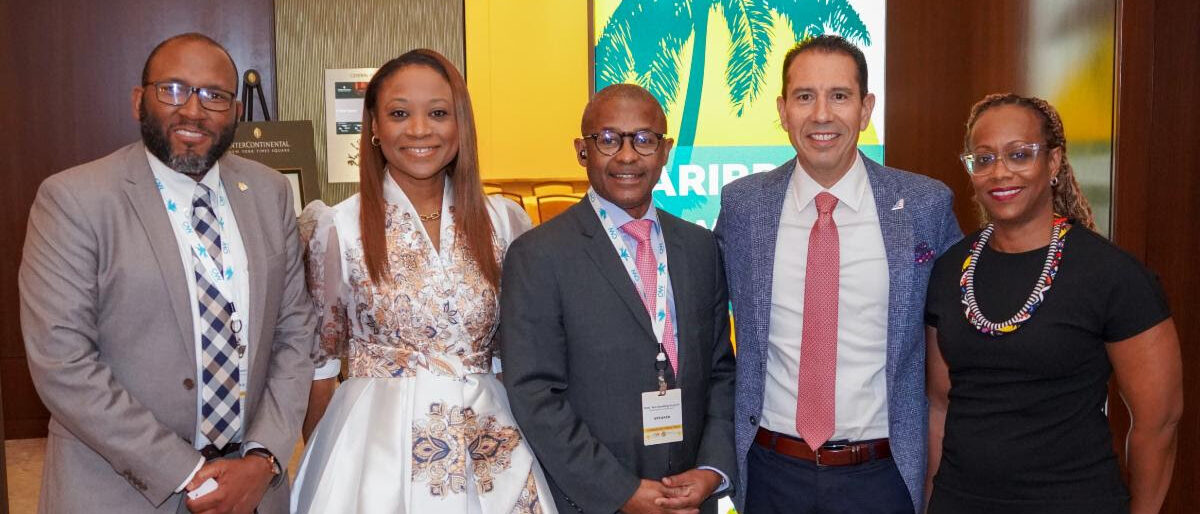
    Organized by the Caribbean Tourism Organization (CTO), the week-long event will open its doors on June 1, 2026, at the InterContinental New York Times Square, aligning perfectly with the annual observance of Caribbean American Heritage Month. Under this year’s central theme, “One Caribbean: Infinite Experiences,” the gathering aims to unite industry voices to shape the future of the region’s $50 billion-plus tourism economy.

    A high-profile delegation will lead the event, including Albert Bryan Jr., Governor of the United States Virgin Islands, Natalio Wheatley, Premier of the British Virgin Islands, and Ian Gooding-Edghill, CTO Chairman and Barbados’ Minister of Tourism and International Transport. They will be joined by a broad cohort of tourism ministers, government commissioners, destination marketing directors and C-suite executives from leading regional and international hospitality, travel and aviation brands.

    In comments ahead of the gathering, Dona Regis-Prosper, CTO Secretary-General and CEO, framed the event as far more than a networking session: it is a critical strategic hub for the entire Caribbean tourism ecosystem. “Caribbean Week in New York is a critical platform for collaboration, strategy development and celebration of our region’s tourism industry,” Regis-Prosper said. “We are delighted to welcome Governor Bryan, Premier Wheatley, Minister Gooding-Edghill and senior tourism leaders from across the Caribbean as we highlight the strength, resilience and infinite potential of our destinations.”

    The event’s opening day will feature a stacked lineup of keynotes and addresses. Governor Bryan is scheduled to deliver remarks to attendees during the official opening ceremony on June 1, while Gooding-Edghill will deliver the conference’s flagship opening keynote address. Wheatley will join the CTO Council of Ministers for a popular featured panel discussion, “Around the Caribbean in 60 Minutes,” which will touch on pressing challenges and emerging opportunities across the region’s top destinations.

    Over the course of the week, attendees will take part in a diverse roster of programming focused on the most pressing issues facing Caribbean tourism. Workshops, strategy meetings, networking mixers and industry roundtables will cover topics ranging from sustainable tourism development and inclusive growth to next-generation destination marketing, expanding air connectivity, and integrating new technology to improve visitor experiences.

    Standout events on the full schedule include a one-day dedicated marketing conference for destination and industry marketing teams, the annual Caribbean Media Awards honoring outstanding travel journalism focused on the region, and the CTO Foundation Scholarship Awards Luncheon, which supports the next generation of Caribbean tourism professionals. The 2026 event will also mark the official debut of CTO TV, the organization’s new digital media platform, alongside a curated tourism marketplace connecting media and travel trade professionals with destination representatives. An allied members showcase breakfast will highlight the work of industry partners, and the event will host the official launch of a new regional supply-side tourism development initiative aimed at strengthening local participation in the sector.

    Caribbean Week 2026 has drawn broad backing from a diverse group of regional and international sponsors spanning governments, hospitality brands, aviation companies and travel technology firms. The United States Virgin Islands holds the event’s top Platinum Elite sponsorship level, while Antigua and Barbuda and the British Virgin Islands serve as Gold Elite sponsors. Additional tiered sponsors include The Bahamas, Saint Kitts and Nevis, Global Ports Holding, Grenada, Sandals Resorts, SITA, Barbados, Sojern, Travel & Adventure Show, and Trove Tourism Development Advisors. Contributing sponsorship comes from Bay Gardens Resorts, Carnival Corporation in partnership with Acordis International Corp., Diamonds International, Expedia Group, Sunrise Airways, Travel Unity, TRÈFLE and Virgin Voyages. The Inter-American Development Bank and Royal Caribbean International are partnering to support the event’s Regional Nex-Gen Tourism Showcase, which highlights innovative young leaders and startups in the Caribbean travel space.

  • Gas prices down $0.25, diesel down $0.25

    Gas prices down $0.25, diesel down $0.25

    KINGSTON, Jamaica — Jamaica’s state-owned oil refinery Petrojam has released its latest ex-refinery pricing update, confirming a series of adjustments to fuel costs that will go into effect for consumers across the island starting Thursday, May 28. Contrary to initial warnings that motorists would face higher gasoline prices at retail pumps, most common fuel grades have actually received a modest per-litre price cut.

    The 90-octane gasoline grade, a popular option for many modern vehicles, will be priced at $201.58 per litre following a $0.25 reduction. Similarly, the more widely used 87-octane gasoline will drop by the same $0.25 margin, bringing its ex-refinery price to $194.13 per litre.

    Diesel products have also seen matching downward adjustments. Regular automotive diesel will now carry an ex-refinery cost of $201.75 per litre, down $0.25 from the previous cycle, while ultra-low sulphur diesel, which meets stricter emissions standards, will retail at an ex-refinery price of $208.60 per litre, also reflecting a $0.25 per-litre decrease.

    Not all fuel products moved lower in this pricing cycle, however. Kerosene, commonly used for cooking, heating and certain industrial applications, saw a $0.25 per-litre increase that brings its ex-refinery price to $186.40.

    Liquefied petroleum gas (LPG) products saw far more dramatic shifts. Liquid propane will now cost $83.09 per litre, marking a $2.00 reduction from prior pricing, while liquid butane dropped even more sharply by $3.06 per litre, landing at an ex-refinery price of $94.17.

    It is important to note that these published figures represent Petrojam’s ex-refinery base costs. Independent marketing companies and retail gas station operators will add their own standard markups to these base prices before consumers see the final cost at the pump.

  • Jetour Jamaica officially launches, unveils new vehicles

    Jetour Jamaica officially launches, unveils new vehicles

    On Sunday, May 24, 2026, Chinese automotive brand Jetour held a grand official launch ceremony at its new Mary Brown’s Corner showroom in St Andrew, Jamaica, formally cementing its place in the country’s competitive automotive retail space. The event brought together a diverse cross-section of attendees, from top business leaders and local government officials to opposition representatives, automotive enthusiasts, loyal pre-launch customers, and members of the national media, all gathering to mark the brand’s official entry into the Jamaican market.

    The partnership between Jetour and local dealer Tyre Warehouse Automotive came after months of extensive market research to identify a brand that aligned with local consumer demand, according to Elijah Buddhan, head of operations for Tyre Warehouse Automotive. Buddhan explained that the team set out to find an automotive marque that balanced accessible pricing with premium, luxury-adjacent features that would make owners feel they had invested in a high-value vehicle. What they found in Jetour checked every box, he noted, adding that the brand has already claimed the title of Jamaica’s best-selling new car marque since November 2025, months ahead of its official full launch.

    Among the high-profile guests in attendance was retired Jamaican Olympic sprinter Asafa Powell and his wife Alyshia Powell, who joined the celebration of the brand’s local expansion. Delano Seiveright, Minister of State in Jamaica’s Ministry of Industry, Investment and Commerce, offered official praise for the brand’s rapid growth and thoughtful market approach over its first 20 months of operating in Jamaica prior to Sunday’s launch. Seiveright highlighted Jetour Jamaica’s marketing strategy as unparalleled in the local market, noting that the brand’s strategically placed billboards feature clear, practical messaging that includes all key details consumers need—from vehicle pricing and warranty terms to monthly payment plans and contact information. He called the campaign the most sensible, well-executed advertising he has observed in the Jamaican market in years.

    At the core of the launch event was the public unveiling of six all-new 2027 models tailored to meet the diverse mobility and lifestyle needs of Jamaican consumers: the T2, G700, T1, X70 Plus, Dashing, and X50. As a brand focused primarily on SUV and crossover production, Jetour designed each model to balance modern integrated technology, premium interior comfort, class-leading advanced safety features, and unbeatable market value, company representatives emphasized during the presentation. Following the official unveiling, event guests had the opportunity to explore the full new lineup in person, walk through the updated showroom, and speak directly with brand representatives to learn more about the technology and customer benefits included with every Jetour purchase.

    Jetour is part of a growing wave of Chinese automaker that are expanding their footprint across Jamaica’s automotive market, all built around a core value proposition of accessible affordability, modern styling, and innovative design that undercuts traditional established brands on price while matching or exceeding their feature offerings. A key competitive differentiator for Jetour Jamaica is its industry-leading warranty package, which far outpaces the coverage offered by longer-standing global brands in the market. Purchasers of a new Jetour receive a six-year or 150,000-kilometre vehicle warranty, plus an additional three years or 42,500 kilometres of complimentary service, and a full year of connected vehicle monitoring—extra perks included at no additional cost by local dealer Tyre Warehouse Automotive. Jetour is not the only Chinese marque growing its local presence; other popular brands including BYD, MG, and BAIC have also expanded their retail footprint and customer base in Jamaica in recent years.

  • Russell returned unopposed as MoBay chamber president

    Russell returned unopposed as MoBay chamber president

    ST JAMES, Jamaica — In a unanimous confirmation of confidence in his leadership, local businessman Jason Russell will serve an additional one-year term as president of the Montego Bay Chamber of Commerce. The announcement came following Wednesday evening’s annual general meeting, hosted at the University of the West Indies’ Western Jamaica Campus, where Russell secured re-election without any opposing candidates.

    Russell first stepped into the presidential role 12 months ago, taking over from former leader Oral Heaven, who opted not to pursue another term in office. Since assuming his position, Russell has earned widespread praise across the local business community for his approachable, grounded leadership style — particularly for his steady guidance through the aftermath of Hurricane Melissa, when the chamber played a critical role in supporting affected local enterprises.

    Joining Russell on the executive leadership team for the coming term will be three re-elected vice presidents, all of whom also ran unopposed: Paulette Neil will remain in the post of first vice president, Nadine Spence retains her role as second vice president, and Richard Burrowes continues as third vice president.

    The full executive body will be backed by a 14-member board of directors. Eight of these board members are returning to their positions to provide institutional continuity, while the remaining six slots will be filled by first-time directors bringing new perspectives to the chamber’s work supporting Montego Bay’s business ecosystem.