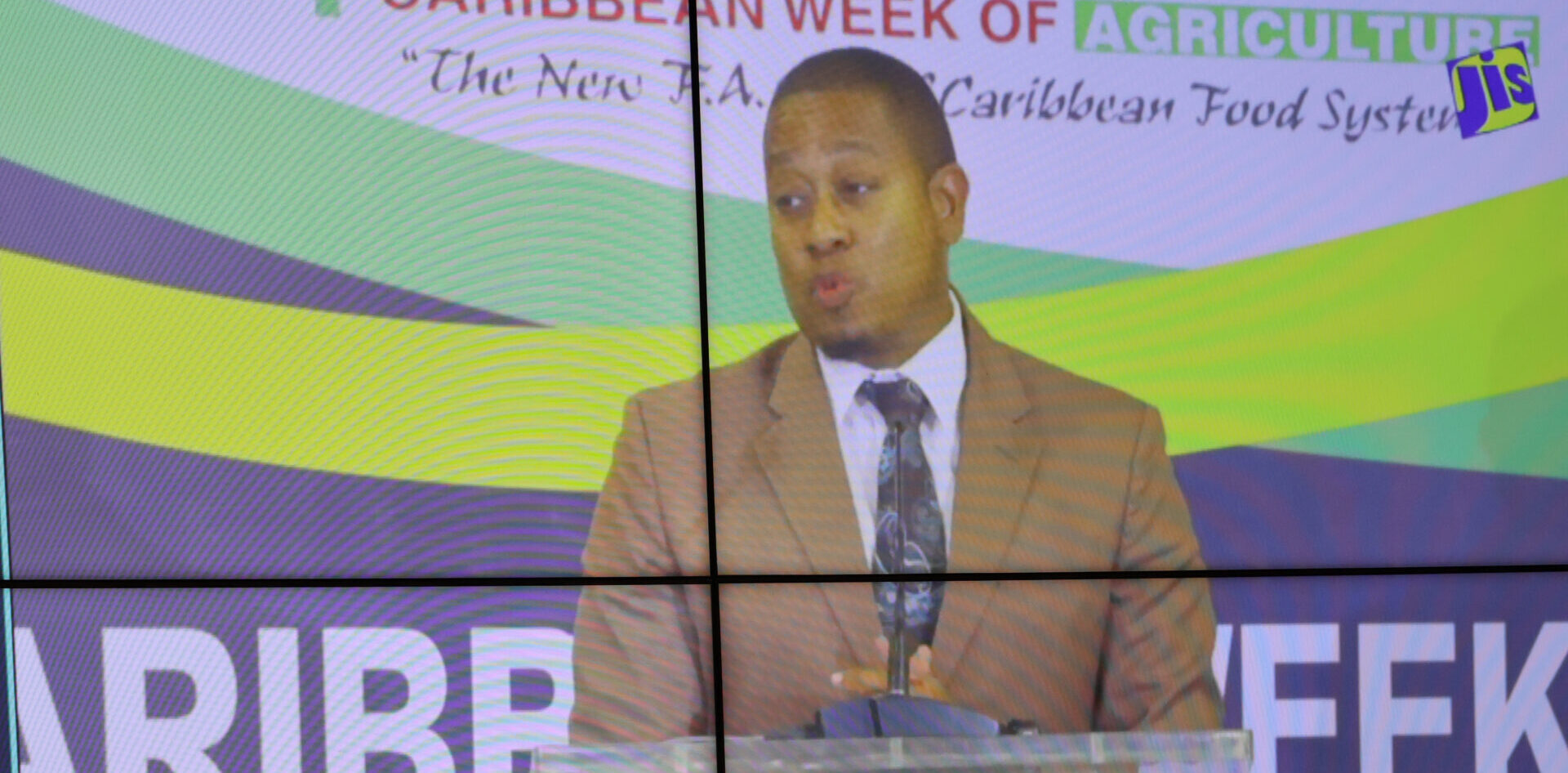
The Caribbean’s most influential agricultural gathering is set to return for its landmark 20th iteration this year, bringing together cross-sector stakeholders from across the region and beyond to reimagine the future of food production and trade. Scheduled to run from September 27 to October 2 in Kingston, Jamaica, the 2026 Caribbean Week of Agriculture (CWA) has been themed “The New Face of Caribbean Food Systems”, with co-organization led by the Inter-American Institute for Cooperation on Agriculture (IICA), alongside the Caribbean Community (CARICOM), the Caribbean Institute for Agricultural Research and Development (CARDI), and the United Nations Food and Agriculture Organization (FAO).
Details of the high-profile event were formally announced during a recent hybrid launch ceremony hosted in Kingston, which drew regional agriculture ministers, senior CARICOM administrative leaders, and IICA Director General Muhammad Ibrahim. Designed as a collaborative platform for knowledge exchange and strategic partnership building, the week-long event aims to accelerate the development of a more modern, competitive, and climate-resilient agricultural sector across all Caribbean nations. A diverse cross-section of participants, from smallholder farmers and agribusiness entrepreneurs to public policymakers, youth leaders, and rural women advocates, will gather to tackle four core priority areas: strengthening regional food security, scaling climate-smart agricultural technologies, boosting agricultural export growth, and expanding sustainable agribusiness development.
As the premier annual event on the Caribbean agricultural calendar, CWA 2026 will feature a full schedule of policy seminars, high-level stakeholder roundtables, and on-the-ground field visits to innovative agricultural operations, drawing decision-makers from both the public and private sectors across the globe. This year’s conference comes at a critical juncture for host nation Jamaica, which is still recovering from the impacts of Hurricane Melissa— the most destructive storm to hit the country in modern history, which caused widespread damage to agricultural infrastructure and erased thousands of farming livelihoods in 2025.
Speaking at the launch ceremony, Jamaica’s Minister of Agriculture, Fisheries and Mining Floyd Green emphasized the unifying role of agriculture across the Caribbean amid mounting systemic challenges. “For generations, Caribbean agriculture has fed our communities and sustained livelihoods across our societies. Guaranteeing food security means protecting our peoples, which is why every stakeholder has a seat at this critical regional gathering,” Green stated. He noted that the region faces overlapping pressures, from intensifying natural disaster risk and skyrocketing agricultural input costs to ongoing global economic volatility, but expressed confidence that the conference would deliver a clear path forward. “We are not defeated. Agriculture has always brought this region together, as it sits at the heart of our economic and social development. We aim to leave CWA 2026 with a transformed vision for our food systems, centered on food security, climate action, and expanded export opportunities,” Green added.
Zulfikar Mustapha, Guyana’s Agriculture Minister and head of the CARICOM Ministerial Task Force on Agriculture and Food Security, echoed this optimism, pointing to meaningful progress the region has already made despite persistent headwinds. Mustapha credited innovative policy frameworks, cross-border strategic partnerships, and growing targeted investment for driving steady advances in Caribbean agriculture, noting that “The Week of Agriculture is more than an annual meeting. It is a promoter of practical solutions in support of food security.”
IICA Director General Ibrahim reaffirmed his organization’s 83-year-long commitment to supporting the Caribbean region, which has centered on delivering science-backed solutions to address the most pressing challenges facing local agricultural production. He also previewed two new major initiatives set to boost regional agriculture: the upcoming launch of a regional innovation and sustainable agriculture hub in Guyana, developed in partnership with the Brazilian Agricultural Research Corporation (EMBRAPA), which will work to directly improve the productivity and resilience of Caribbean agrifood systems. He also shared details of a European Union-funded project currently being implemented across five Caribbean nations, focused on expanding global market access for small and medium-sized regional agricultural producers. “We have the political will and capacity to advance an agenda aimed at strengthening and attracting investment for Caribbean agriculture,” Ibrahim affirmed.
First launched in 1999 in Trinidad and Tobago, the Caribbean Week of Agriculture has grown steadily over nearly three decades to evolve into the region’s flagship strategic forum for agricultural development. St. Kitts and Nevis served as host for the 2025 iteration of the annual event.