分类: business

  • Inauguration of the new air link connecting Newark (New Jersey) to Cap

    Inauguration of the new air link connecting Newark (New Jersey) to Cap

    A new era of connectivity between northern Haiti and the United States launched this week, as Sunrise Airways officially inaugurated its direct air link between Newark, New Jersey and Cap-Haïtien. The inaugural service from Cap-Haïtien to Newark entered operation on June 1, with the return route launching one day later on June 2, marking a milestone in Haiti’s efforts to revitalize its international tourism sector.

    Haiti’s Minister of Tourism Stéphanie Smith hailed the new route as a transformative development for the country’s northern region. In remarks at the launch ceremony, she framed the connection as both a critical step forward in integrating Haiti deeper into the global community and a once-in-a-generation opportunity to drive renewed growth for tourism across northern Haiti. “This route is more than just an air service – it is a vital bridge connecting Haiti to its large diaspora community based in the United States,” Smith emphasized, noting the strategic importance of the link for family ties and economic exchange.

    Hosted by Sunrise Airways, the official inauguration ceremony took place at Cap-Haïtien International Airport, with the Haitian Ministry of Tourism’s Northern Departmental Directorate leading government participation for the event. The ceremonial gathering drew a cross-section of influential stakeholders, including leaders from Haiti’s global diaspora, national and local business communities, regional government officials, and high-profile cultural figures. Among the notable guests was Jimmy Jean-Louis, the acclaimed Haitian-American actor who serves as a cultural ambassador for Haiti.

    Industry analysts and government leaders project that the new direct flight will deliver widespread economic benefits across the region. By cutting out layover routes that currently add time and cost to travel, the connection is expected to drive a measurable increase in visitor arrivals to northern Haiti. This growth will ripple through the full local tourism value chain, supporting small and medium businesses from hotels and restaurants to local transportation providers, handicraft artisans, and independent tourism service operators.

    Beyond economic gains, the new air route opens a unique opportunity to showcase the unrivaled cultural and natural heritage of northern Haiti to the global traveling public. The region is home to some of the Caribbean’s most significant historic landmarks, including the iconic Citadelle Laferrière – the largest fortress in the Americas built by formerly enslaved people – and the opulent Sans-Souci Palace, a UNESCO World Heritage Site. Complementing these historic treasures are the region’s pristine white-sand beach resorts that draw visitors seeking tropical getaways, making northern Haiti a one-of-a-kind destination in the Caribbean.


  • Tourism faces labour shortages as hotels struggle to find staff – industry leader

    Tourism faces labour shortages as hotels struggle to find staff – industry leader

    Barbados’ accommodation sector is currently navigating an unprecedented labor crisis, a top industry executive has confirmed, describing widespread hiring challenges that are putting mounting pressure on local hotels. Speaking exclusively to Barbados TODAY this Wednesday, Cicely Denise Callender, Executive Director of Intimate Hotels of Barbados (IHB), pulled no punches when outlining the sector’s most pressing threat: a persistent, industry-wide shortage of willing and qualified workers.

    Addressing attendees at IHB’s 26th annual general meeting, held this year at the Ocean Spray Apartments in Inch Marlow, Callender explained that open positions exist across every corner of the island’s hospitality trade, yet local interest in filling these roles has dropped to worrying lows.

    “From housekeeping to front-of-house restaurant and waitstaff roles, every single segment of our industry is facing a critical staffing gap,” Callender said. “To put it plainly, we are on a struggle bus right now when it comes to finding Barbadian workers who want to build a career in this sector, stay in their roles, and bring passion to the work they do to support our national tourism economy.”

    Callender noted that what makes this shortage particularly striking is the historical centrality of tourism to Barbados’ national identity and economy. For generations, the sector was a cornerstone of local employment, but a clear cultural shift has seen younger workers and job seekers drifting away from hospitality roles entirely.

    She pointed to one pervasive misconception that may be fueling this exodus: a widespread public belief that hospitality work equals servitude, rather than the skilled, valuable professional service it actually is. Highlighting the sharp difference between these two perceptions, Callender called for targeted public outreach and educational campaigns starting at the primary and secondary school levels to reframe the industry and showcase the meaningful career opportunities it offers.

    As Barbados continues to recover and grow its international tourism footprint, the labor shortage remains a major barrier to further expansion and improved visitor experiences, with industry leaders now pushing for coordinated action to reverse the current trend.

  • Belize Showcases Maritime Strength at Global Expo

    Belize Showcases Maritime Strength at Global Expo

    As one of the world’s most influential gatherings for the international shipping industry gets underway in the Greek capital, Belize has stepped onto the global stage to highlight its growing capabilities in maritime and allied financial services. The biennial Posidonia 2026 expo, hosted in Athens, has drawn a high-stakes national delegation from the Central American nation, which is leveraging the high-profile event to roll out an integrated, one-stop offering spanning everything from commercial vessel registration to tailored maritime financial solutions.

    At the core of Belize’s promotional push is its flagship national ship registry, a asset that has seen steady growth in recent years to now encompass more than 800 vessels operating across global trade routes. Backed by a robust, far-flung network of international representative offices, the registry has emerged as a key competitive offering for the country, designed to attract ship owners and operators seeking efficient, reliable regulatory services.

    The 2026 expo also carries notable internal significance for Belize’s maritime authority: it marks the first international public appearance of Abilio Domínguez, the newly appointed Managing Director of the Institute of Marine Affairs of Belize (IMMARBE). Domínguez’s debut comes as the country executes a deliberate strategy to deepen existing industry partnerships and carve out a larger, more visible share of the global maritime market.

    According to senior delegation officials, the objectives guiding Belize’s participation at Posidonia 2026 are straightforward and ambitious. Beyond simply raising the country’s profile among global shipping decision-makers, the team is focused on attracting new commercial clients and cementing Belize’s reputation as a credible, competitive leader in the global shipping and maritime financial services space. Industry observers note that the country’s push aligns with a broader trend of small coastal nations expanding their maritime service sectors to drive economic growth and diversify their national economies.

  • Farmers sign on as $84.4m crop drive begins to cut food imports

    Farmers sign on as $84.4m crop drive begins to cut food imports

    Barbados is moving forward with a bold new agricultural strategy designed to shrink its heavy annual food import bill, with government officials confirming this week that the island nation has begun signing participating farmers onto a targeted 16-crop development programme. Chief Agricultural Officer Paul Lucas disclosed in an interview with Barbados TODAY Wednesday that final contract negotiations with participating growers are currently wrapping up, marking the official launch of the coordinated public sector initiative.

    The programme is a collaborative effort between the Ministry of Agriculture’s technical teams, its specialized strategic planning unit, and the state-run Barbados Agricultural Development and Marketing Corporation (BADMC), with a long-term goal of strengthening the island’s domestic agricultural sector and delivering sustained economic benefits to local farming communities. According to Lucas’s projections, the initiative is on track to generate approximately $84.4 million in wholesale value once fully operational, a milestone that would make significant progress toward the government’s core objective of cutting Barbados’ annual food import bill, which currently sits between $80 million and $100 million.

    “Our calculations, based on current wholesale market pricing, put the total projected value at around $84.4 million,” Lucas explained. “In the long run, this programme will help us cut unnecessary national spending, and our overarching goal is to keep reducing our reliance on foreign food imports as much as possible.”

    A key pillar of the strategy is prioritizing crop varieties that are naturally well-adapted to Barbados’ tropical climate and soil conditions. Among the 16 selected crops, four already boast robust domestic production that has already pushed import volumes for these products to minimal levels: cucumber, cassava, sweet potato, and yams. Lucas noted that these staples have long been traditional crops for Barbadian farmers, who have honed generations of expertise growing them successfully in local conditions.

    To remove common barriers to entry for small and medium-scale growers, the Ministry of Agriculture is providing critical production inputs and infrastructure support ahead of the upcoming planting season, including a network of new water storage tanks to help growers manage inconsistent rainfall. Additionally, all farmers joining the programme are guaranteed a fixed buyer market for their harvested produce, eliminating the risks of volatile market price swings and post-harvest uncertainty that have long discouraged expanded production in the sector.

    “For growers who want the security of a guaranteed market for their crops when harvest time comes, we can deliver that security,” Lucas said. “They don’t have to worry about finding a buyer or absorbing marketing losses, because that side of the operation is already handled through the programme.”

    This targeted support has already sparked a notable resurgence of interest in onion production, a crop that struggled to gain traction among farmers due to post-harvest challenges. BADMC’s new dedicated onion drying facility has addressed a longstanding pain point: inconsistent tropical weather made traditional open-air curing a high-risk process that often left farmers with significant post-harvest losses. Lucas reported that since the facility and the broader programme were announced, farmer interest in growing onions has risen sharply.

    “Before this infrastructure was in place, farmers always worried they would lose entire crops during the drying stage because weather conditions were never predictable,” he said. “Now that that risk has been removed, we’ve seen a real renewed appetite to expand onion production.”

    The initiative is rolling out amid broader climate concerns, however, as meteorologists have forecast an upcoming El Niño pattern that brings elevated risks of drought and increased pressure on soil health across the Caribbean. Despite these potential headwinds, the Ministry of Agriculture says it has put in place robust technical support to help farmers adapt to challenging conditions and meet production targets. Officials are also urging Barbadian consumers to back the initiative by prioritizing locally grown produce when shopping for groceries.

    “When you choose to buy local, you’re improving lives and strengthening livelihoods across our farming communities, and helping our whole society build a more resilient food system,” Lucas emphasized. “We all benefit from fresher, healthier local food, more sustainable agricultural systems, and we’re supporting working families and helping rural communities grow. Choosing local is an investment in building a stronger Barbados.”

    The full breakdown of the 16 priority crops and their projected annual production volumes (in kilograms) is as follows: 127,055 kg of beets, 1,295,255 kg of butter squash, 298,897 kg of cabbage, 226,093 kg of cantaloupe, 510,719 kg of carrots, 672,093 kg of cassava, 1,342,641 kg of cucumber, 662,238 kg of lettuce, 1,020,696 kg of onion, 625,121 kg of hot pepper, 878,460 kg of sweet pepper, 294,546 kg of pumpkin, 2,897,083 kg of sweet potato, 803,682 kg of tomato, 1,051,496 kg of watermelon, and 924,789 kg of yam.

  • Flow Antigua Donates Laptop to Seaview Farm Primary Following Educational Tour

    Flow Antigua Donates Laptop to Seaview Farm Primary Following Educational Tour

    A recent stakeholder engagement session took place at Flow Antigua’s headquarters, where company representatives delivered a comprehensive introduction to the modern telecommunications landscape shaping Antigua and Barbuda’s digital ecosystem.

    During the closed-door session, attendees gained insights into how the regional telecom provider is evolving its infrastructure, expanding service access, and adapting to shifting consumer demands across the island nation. The discussion covered core topics ranging from broadband network expansion to emerging digital services that support both residential and business customers. Company leaders also outlined the role of private investment in strengthening the country’s connectivity, noting that robust telecommunications infrastructure is a cornerstone of economic growth and social inclusion for local communities.

    This gathering forms part of Flow Antigua’s ongoing outreach effort to keep key stakeholders, government partners, and community leaders informed about the company’s strategic development plans in the Caribbean region.

  • Grenada represented at 28th Caribbean Postal Union Conference

    Grenada represented at 28th Caribbean Postal Union Conference

    The 28th Caribbean Postal Union Conference, themed “Leading for Resilience —Transforming Caribbean Posts for a Connected Future”, brought regional postal leaders together in Nassau, Bahamas from May 25 to 29, 2026, and the Grenada Postal Corporation (GPC) emerged as a key contributor to shaping the sector’s future across the Caribbean.

    Grenada sent a high-level delegation to the important regional gathering, led by Post Director Randal Robinson and Deputy Post Director Abeesha Toussaint-Maximay. Both delegates took active part in pivotal conversations focused on modernizing and strengthening postal services throughout the region, with GPC holding a prominent position in the conference’s technical program.

    On the second day of the conference, Toussaint-Maximay took on the role of moderator for a targeted panel discussion centered on artificial intelligence, digital transformation, and innovation in postal operations. The session delved into critical questions around how regional postal providers can adapt to sweeping industry changes, retain their competitive edge in an evolving digital landscape, and secure long-term operational and financial sustainability.

    The following day, Robinson joined the panel for discussions dedicated to postal sector growth, the rising impact of e-commerce, navigating evolving competitive markets, and building systemic resilience. During his participation, he outlined actionable strategies for developing customer-centric delivery ecosystems that meet modern consumer expectations, while also emphasizing the urgent need to strengthen interconnected regional postal networks to better serve cross-border communities and trade.

    According to GPC representatives, the organization’s active leadership and visible participation in these high-level regional discussions signals that Grenada’s postal expertise is earning growing recognition across the Caribbean. The delegation’s involvement also reaffirms GPC’s longstanding commitment to three core priorities: driving innovation, building systemic resilience that can withstand economic and operational shocks, and delivering consistent service excellence to Grenadian residents and regional partners.

    As the conference concluded, GPC noted that the organization remains dedicated to collaborative work alongside other regional postal entities to continue shaping a more connected, innovative, and resilient future for postal services across the entire Caribbean region.

  • Discover Dominica Authority appoints new Destination Marketing Manager

    Discover Dominica Authority appoints new Destination Marketing Manager

    The Discover Dominica Authority (DDA), the governing body behind the Caribbean island nation’s tourism development, has announced the appointment of seasoned Caribbean tourism executive Wendy Lake to the role of Destination Marketing Manager, with her tenure officially starting on June 1, 2026.

    In an official press release published by the DDA, the organization laid out the core priorities of Lake’s new role: leading the design and execution of high-impact strategic marketing projects that will elevate Dominica’s standing on the global travel stage and drive consistent, sustainable growth in annual visitor arrivals to the island.

    Lake brings 16 years of hands-on industry experience across the Caribbean tourism sector to her new position. Her professional background spans a diverse range of critical tourism marketing functions, from crafting cohesive destination branding identities and conducting in-depth market trend analysis to building productive stakeholder relationships and developing hyper-targeted marketing campaigns that resonate with core traveler segments. Over the course of her career, she has partnered extensively with both public sector tourism agencies and private sector hospitality businesses to deliver successful tourism infrastructure projects and large-scale promotional initiatives.

    Academically, Lake boasts a robust credential set rooted in marketing and business management, all earned from the University of the West Indies’ St. Augustine campus in Trinidad. She graduated with distinction with a Master of Science degree in International Strategic Marketing, and holds an undergraduate Bachelor of Science degree in Management Studies with a supplementary minor in Economics. She also completed professional certification in Administrative Professional Secretaryship from the same institution.

    The DDA emphasized that Lake’s cross-cutting experience across tourism operations, end-to-end project management, and destination marketing has given her a nuanced, highly practical understanding of shifting global travel market conditions and evolving consumer travel preferences — a skill set that is increasingly valuable in a post-pandemic global tourism landscape.

    In her new role as Destination Marketing Manager, Lake will take charge of the DDA’s central marketing team. She will lead core organizational priorities focused on refining Dominica’s national tourism brand, expanding mutually beneficial trade partnerships with global travel industry stakeholders, and rolling out data-driven marketing strategies across the island’s key source tourism markets. Her key responsibilities will also include amplifying Dominica’s appeal to international leisure travelers and coordinating all promotional activities across both regional Caribbean and global markets.

    Lake’s appointment comes at a time of growing momentum for Dominica’s tourism sector. Global traveler interest in the island has risen steadily in recent years, driven by rising demand for nature-focused, wellness-centered, and adventure tourism experiences — a trend the DDA has actively capitalized on through ongoing international marketing investment.

    Marva Williams, Chief Executive Officer and Director of Tourism at the Discover Dominica Authority, extended a formal welcome to Lake upon her appointment, and expressed strong confidence in her ability to help the DDA advance its core organizational objectives.

    “Wendy’s appointment brings invaluable marketing leadership to our team as we work to sharpen Dominica’s competitive edge in the global tourism market,” Williams noted in her statement. “Her deep industry insight and collaborative working approach will be instrumental in building impactful cross-sector partnerships, strengthening our global brand presence, and positioning our destination effectively in a fast-changing global travel market.”

    For her part, Lake shared her excitement about joining the DDA team and contributing to the ongoing growth and evolution of Dominica’s tourism sector.

    “I am excited and truly honoured to begin a new chapter as Destination Marketing Manager with Discover Dominica Authority,” Lake said. “I look forward to contributing to the promotion and marketing of beautiful Dominica, showcasing its rich culture, breathtaking natural beauty, authentic one-of-a-kind travel experiences, and warm, welcoming people to the whole world. I am grateful for this opportunity and excited to work alongside the DDA team and our local and international stakeholders to strengthen the destination’s global visibility, foster meaningful long-term partnerships, and support the continued sustainable growth of tourism in Dominica.”

    Looking forward, the DDA reaffirmed its ongoing commitment to rolling out strategic marketing initiatives that will strengthen the destination’s global competitiveness, boost annual visitor arrivals, and create long-term, sustainable economic benefits for the island’s local tourism and hospitality industry.

  • Flow says it has invested over US$1 million to address network interference in northern Dominica

    Flow says it has invested over US$1 million to address network interference in northern Dominica

    Caribbean telecommunications provider Flow is moving forward with a $1 million-plus investment purpose-built to resolve persistent mobile connectivity interference that has degraded service for communities across northern Dominica, the company announced in an official press statement.

    The issue first came to light several months ago, when Flow’s network monitoring systems flagged unusual performance dips in coverage across the island’s northern region. After weeks of comprehensive technical investigations, the firm traced the root of the disruption to external radio frequency interference originating from a mobile network operator based in neighboring Guadeloupe, a French overseas territory.

    From the moment the interference was confirmed, Flow mobilized to mitigate immediate customer impacts, rolling out temporary network adjustments, 24/7 monitoring and iterative testing to keep service as stable as possible while developing a permanent fix. As the centerpiece of its long-term resolution strategy, the company has procured custom-built network upgrade equipment and specialized technical tools that carry a total price tag of more than $1 million. The new hardware is scheduled to arrive in Dominica between June 5 and June 15, 2026, with full installation and testing to follow immediately after delivery. Once the upgrade is fully commissioned, company officials project the solution will completely eliminate the ongoing interference and restore service quality to normal levels for all affected northern communities.

    Beyond fixing the current disruption, Flow emphasizes that the investment will also boost overall network resilience across Dominica, cutting the risk of similar cross-border interference events from impacting customer service in the future. This proactive step, the company notes, underscores its commitment to delivering reliable connectivity even for challenges that originate outside of its own managed network infrastructure.

    Flow has not worked in isolation to address the issue: the provider has partnered closely with Dominica’s National Telecommunications Regulatory Commission (NTRC) and the regional Eastern Caribbean Telecommunications Authority (ECTEL) from the earliest stages of the investigation. Company representatives praised the ongoing collaboration between local and regional regulators, noting that coordinated multi-stakeholder engagement is critical to resolving transboundary telecommunications issues. While the in-country network upgrade will resolve immediate customer impacts, Flow confirmed that ongoing diplomatic and regulatory engagement with French authorities remains in progress to secure a permanent, long-term solution that addresses the interference at its source.

    “From the moment we identified this issue, our teams have worked around the clock to find a fix,” shared Sharon Jemmott, Country Manager for Flow Dominica. “We know how critical consistent, reliable connectivity is for our customers, whether they’re connecting with family, running a business, or accessing emergency services. Even though this problem started outside of our network, we refused to wait for a third party to act. We’ve invested heavily in a solution, collaborated closely with regulators and regional partners, and stayed focused on delivering the high-quality service our customers expect and deserve.”

    Flow says it will publish regular public updates as the equipment arrives, installation progresses, and the solution goes live. The company also extended its gratitude to affected customers for their patience, understanding, and continued trust as the resolution process moves forward.

  • CDB launches reform plan to limit effects of climate change, economic shocks

    CDB launches reform plan to limit effects of climate change, economic shocks

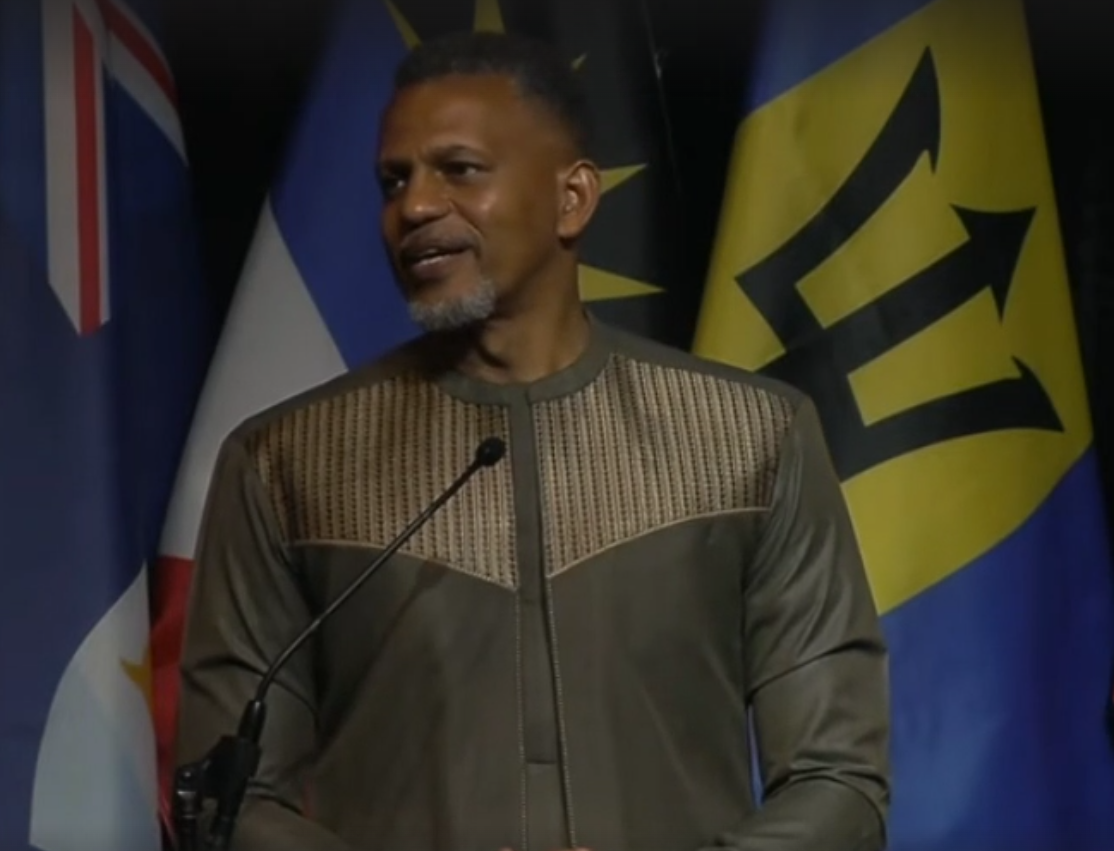
    Against a backdrop of mounting global economic turbulence, intensifying climate instability, and dwindling international development financing, the Caribbean Development Bank (CDB) has unveiled an ambitious transformative roadmap for regional progress, launched during its 56th Annual Meeting hosted in Nassau, The Bahamas.

    Opening the gathering, CDB President Daniel Best delivered an impassioned call to action for regional stakeholders, framing the current era of persistent uncertainty as a catalyst to pursue a full “rebirth” of the 56-year-old development institution. Best emphasized that the overlapping crises facing small island Caribbean nations demand unprecedented levels of cross-border collaboration, noting that The Bahamas was a particularly symbolic host for this pivotal moment. Five decades earlier, the CDB held its very first meeting in the country, at a time when the region was navigating the profound upheaval of post-colonial political and economic transition.

    Looking back to the institution’s founding, Best highlighted a core lesson from the region’s early leaders: uncertainty is not a signal to retreat, but a mandate to build collective solutions. He pointed to accelerating climate threats playing out across Caribbean communities, recalling a firsthand visit to Jamaica in the immediate aftermath of Hurricane Melissa. “What I witnessed was nothing short of gut-wrenching; communities flattened, homes gone, and a hospital barely standing. And yet within those damaged walls, nurses and doctors pressed on, working tirelessly to care for the injured, because that is who we are as a region. We persevere even in the face of devastation,” Best said.

    To turn that perseverance into tangible progress, Best announced that the CDB has already significantly expanded its development interventions: since 2025, the bank has approved and disbursed more than $400 million in funding to upgrade critical infrastructure, expand educational access, and strengthen private sector growth across the region. Of that financing, a historic $226.7 million has been committed to climate action – a new annual record for the institution. This includes the first-ever single-country Green Climate Fund (GCF) project for The Bahamas, which will upgrade national water security systems and boost coastal storm resilience. Best also revealed a groundbreaking unified regional initiative led by the CDB: a multi-country housing retrofit program spanning more than 15 Caribbean nations, which will convert millions of climate-vulnerable residential structures into storm-resistant shelters, protecting families from future extreme weather events.

    The Nassau gathering, which brought together regional finance leaders including Barbados Finance Minister Ryan Straughn, served as the official launch pad for the CDB’s new 10-year strategic framework, which will guide the bank’s work from 2026 through 2035. The strategy centers on building three core pillars of resilience: social, economic, and environmental, with an explicit priority on investing in Caribbean youth – a demographic that makes up nearly half of the region’s total population. “Too many remain disconnected from opportunity,” Best warned, identifying youth unemployment and disenfranchisement as one of the region’s most pressing long-term economic challenges. “Our strategy prioritizes skills development, entrepreneurship support, and expanded access to finance so that our young people can build their futures here at home.”

    To demonstrate the early impact of this youth-focused approach, Best highlighted the success of Nkrumah Fong, a young Jamaican clean technology innovator and founder of Ceres Labs. Through a CDB-funded clean-tech incubator program, Fong’s company developed Vector One, a breakthrough carbon absorption technology that cuts greenhouse gas emissions from vehicles, commercial ships, and heavy industrial generators.

    Beyond youth development, Best stressed that strengthened institutional governance is a non-negotiable foundation for sustained regional progress, pointing to the CDB’s successful governance reform partnership with Belize’s Development Finance Corporation as a replicable model for turning policy commitments into tangible results.

    To equip the CDB to deliver on its ambitious new strategic goals, Best announced a sweeping internal transformation initiative called CDB Forward. Built around four core pillars – a non-negotiable culture of operational excellence, a streamlined operating model, enhanced governance frameworks, and expanded long-term financial capacity – the reform program is designed to position the CDB as a faster, more agile partner for its borrowing member countries. “CDB Forward speaks to how the bank must change, but more importantly, to why that change matters for our citizens,” Best explained. He added that the reforms will eliminate bureaucratic bottlenecks that cause project delays, speed up delivery of development support to member nations, and expand access to financing to help countries address mounting sovereign debt pressures and growing climate-related costs.

    Closing his opening address, Best urged delegates gathered for the week of solution-focused workshops and policy seminars to move beyond discussion and prioritize immediate, actionable execution. He challenged the current generation of Caribbean leaders to match the courage and vision of the CDB’s founding fathers, who established the institution 56 years ago to support the region’s independent development. “The Caribbean has never waited for history to happen to it. We have always been at our best when we had the courage to shape history ourselves. Let us leave determined to build a Caribbean that is stronger, greener, more resilient, more inclusive, and more prosperous than the one we inherited,” Best said.

  • PM Calls Chamber’s Fuel Tax Request “Embarrassing”

    PM Calls Chamber’s Fuel Tax Request “Embarrassing”

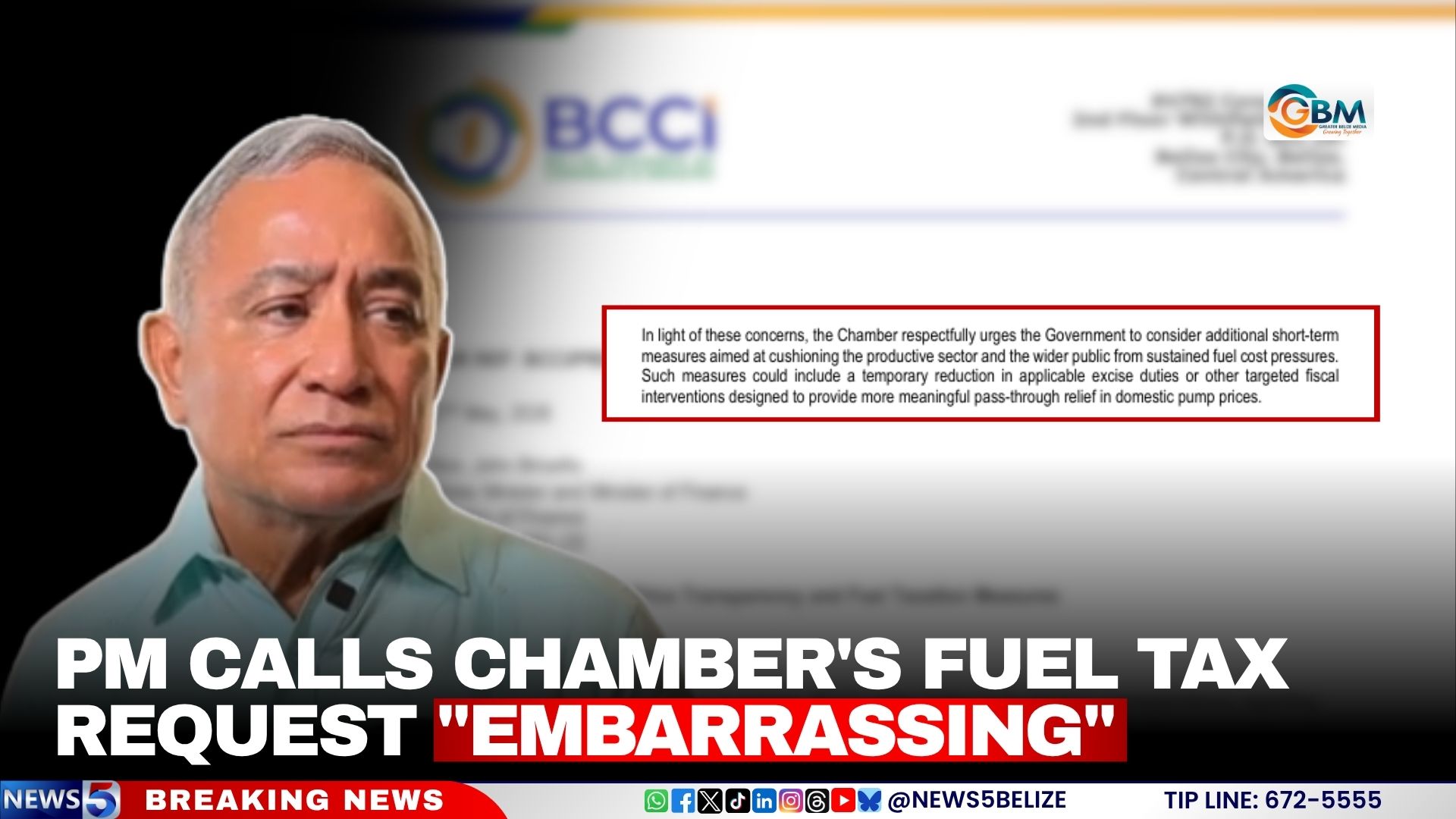
    A public dispute over fuel taxation has emerged between Belize’s top government official and the nation’s leading business advocacy group, after Prime Minister John Briceno publicly dismissed a call for fuel tax reductions from the Belize Chamber of Commerce and Industry (BCCI) as “embarrassing” in comments made to local outlet News 5.

    The confrontation stems from a formal letter BCCI delivered to the government on May 27, 2026, where the industry group praised the administration’s recent decision to resume public disclosure of detailed fuel price breakdowns, but argued that greater transparency alone cannot address the burden of persistently high fuel costs for consumers and businesses across Belize.

    In its letter, BCCI pointed out that while the proportional share of taxes included in retail fuel prices has dipped marginally in recent months, the total nominal tax amount charged per gallon has remained largely static. Even as global crude oil prices have trended downward, this taxation structure has prevented those international savings from reaching consumers at local fuel pumps, the chamber noted. BCCI explained that excise duties, one of the core components of fuel taxation, have stayed within a narrow consistent range regardless of swings in global commodity prices, creating a bottleneck that blocks price relief for end users.

    High fuel prices have cascading effects across Belize’s entire economy, the business group warned, pushing up costs for passenger and freight transportation, raising overhead for small and large businesses alike, and driving up the price of everyday consumer goods that most households rely on. To remedy the issue, BCCI called on the Briceno administration to implement short-term targeted measures, starting with a temporary cut to fuel excise taxes. The organization closed its letter by emphasizing its willingness to collaborate with the government to craft solutions that strike a balance between the nation’s critical revenue requirements and the need for broad economic stability.

    However, Briceno rejected the chamber’s proposal outright in his response, dismissing the core of the group’s argument as fundamentally flawed. The prime minister contended that reshuffling tax burdens across different tax categories – whether environmental levies, goods and services tax (GST), excise duties, or import taxes – does not reduce the government’s total overall tax take from fuel sales. “If you collect $100 in taxes… it doesn’t matter where you take it from. You could take it off environmental tax or the import tax or the excise tax. It’s still removing money from the whole amount,” Briceno explained. He went further to say that “it’s embarrassing sometimes to read such proclamations from the Chamber,” drawing a sharp line between the government’s fiscal position and the business community’s lobbying efforts.