分类: business

  • Dominican business sector responds to U.S. forced labor investigation

    Dominican business sector responds to U.S. forced labor investigation

    In Santo Domingo, the Dominican Republic’s leading business advocacy group, the National Council of Private Enterprise (CONEP), has publicly thrown its weight behind the national government’s handling of a wide-ranging labor practices investigation launched by the Office of the United States Trade Representative (USTR). The probe, which centers on compliance with labor standards across global supply chains, has placed the Dominican Republic under heightened trade scrutiny, but CONEP has moved quickly to reinforce the country’s longstanding dedication to upholding internationally recognized labor rights and trade norms.

    CONEP emphasized in its official statement that the USTR review is not targeted solely at the Dominican Republic. Instead, the inquiry forms part of a broader, global effort by U.S. trade authorities that covers more than 60 nations across multiple regions. The business organization clarified that the initiation of the investigation does not amount to a formal accusation of wrongdoing against the Dominican Republic, and pointed to the constructive ongoing dialogue between Dominican government agencies, local productive sectors, and U.S. trade officials as a positive step toward addressing any potential concerns raised during the review process.

    According to CONEP, Dominican federal authorities have maintained consistent, open lines of communication with their U.S. counterparts throughout the process. The national government has also partnered closely with the country’s private sector to compile and submit detailed data and documentation, designed to give USTR investigators a full and accurate picture of labor regulations and practices across the Dominican Republic’s export-focused supply chains. The organization reaffirmed that private industry stands ready to continue full collaboration with domestic authorities and U.S. investigators, and expressed cautious confidence that ongoing technical discussions will ultimately confirm the Dominican Republic’s full compliance with all binding labor and trade obligations.

    The CONEP statement comes in direct response to the Dominican Republic’s recent inclusion in the USTR probe, which is being carried out under Section 301 of the U.S. Trade Act of 1974. The investigation focuses on alleged gaps in national efforts to eliminate forced labor from global supply chains connected to U.S. imports. If deficiencies are found, the U.S. government could implement punitive additional tariffs on goods imported from countries that fail to address the identified issues. As of the CONEP statement, no sanctions or trade restrictions have been imposed against the Dominican Republic, but the inquiry marks a new period of enhanced trade scrutiny for the Caribbean nation, coming as the U.S. ramps up its policy focus on labor rights, supply chain transparency, and national economic security.

  • Pay up!

    Pay up!

    Seven months after Category 5 Hurricane Melissa carved a path of destruction across multiple regions of Jamaica, mounting frustration over glacial insurance claim settlements has drawn public intervention from the country’s top leadership. During a public handing-over ceremony for 27 residential service lots in Malvern, St Elizabeth on Thursday, Prime Minister Dr Andrew Holness publicly called on private insurance providers to accelerate payout processing, framing timely claim resolution as an indispensable pillar of the island’s post-disaster national recovery effort.

    In his remarks, Holness drew a sharp contrast between the performance of private insurers and the state-run National Housing Trust (NHT), which he lauded for its rapid progress on Hurricane Melissa-related claims for mortgaged properties. To date, the NHT has processed 3,835 claims with a total assessed value of $7 billion. After accounting for policy deductibles, the agency is expected to disburse approximately $6 billion in payouts, with $2.85 billion already released to claimants via a phased disbursement structure — representing nearly half of the total eligible claims, according to Holness.

    While the prime minister highlighted the NHT as a model of swift disaster response, the agency has not escaped criticism entirely, with a subset of mortgagors still waiting for updates on their pending applications. Holness acknowledged the backlog, noting that processing remains ongoing across all outstanding claims.

    The prime minister’s public call to action follows weeks of growing complaints from both individual property owners and business leaders across Jamaica, who say seven months without settlement has left many families and enterprises in crippling financial limbo. Holness confirmed he has received hundreds of personal testimonials from claimants who have completed damage assessments but have yet to receive any communication or payout from their private insurers.

    Business leaders have repeatedly warned that prolonged delays threaten the long-term survival of storm-impacted enterprises. In a May interview with Business Observer, Montego Bay Chamber of Commerce & Industry President Jason Russell emphasized that slow claim settlements directly undermine a company’s ability to retain employees, fulfill payment obligations to suppliers, and resume normal operations post-disaster. “We’re talking about the life and death of a business. A business can’t wait a year to get paid,” Russell noted.

    Individual business owners have also gone public with their experiences to highlight systemic failures in the private insurance sector. In a letter to the editor published in Wednesday’s Jamaica Observer, Andrew Houston Moncure, managing director of Westmoreland-based Bluefields Bay Villas & Suites, detailed his family’s seven-month struggle to get updates on their property damage claim, saying they have received nothing but “silence” from their insurer’s loss adjuster since November last year.

    Houston Moncure clarified that he and his family do not expect an unreasonably fast resolution for complex claims, acknowledging that Hurricane Melissa created an unprecedented backlog that stretched industry resources thin across the hardest-hit parishes like Westmoreland, where thousands of structures were destroyed. Instead, he is calling for basic, consistent communication from providers — a standard he says his family’s long-time insurer has failed to meet, even as the family led local recovery efforts for their community without waiting for their own claim payout.

    The business owner also pointed to existing Jamaican regulations that mandate timely claim settlement: Regulation 135 of the country’s Insurance Regulations requires providers to resolve all valid claims within 30 days of meeting payment conditions, with statutory interest added for late payments. The Financial Services Commission’s 2022 Market Conduct Rules further require insurers and their intermediaries to settle claims fairly, without undue delay, and via transparent, efficient processes.

    Top industry leaders have already acknowledged the widespread delays constitute a major failure of the private insurance sector. During a panel discussion at the Insurance Association of Jamaica’s annual business conference in May, BCIC CEO Peter Levy described the industry’s slow post-Melissa response as a “significant failure”.

    Levy, however, outlined significant operational and logistical challenges that providers faced in the immediate aftermath of the storm. In the storm’s wake, key transportation routes were blocked, national communication infrastructure was disabled, and even independent contractors tasked with preparing damage estimates were themselves dealing with personal storm damage. The unprecedented volume of claims left the entire industry stretched beyond its existing resource capacity, he added.

    In response to the breakdown, the Jamaican insurance industry has launched a full review of its disaster response protocols to identify gaps and implement critical changes ahead of future catastrophic weather events. Key areas under review include loosening some verification requirements during large-scale disasters and streamlining processing for claims where loss estimates fall within a pre-defined reasonable range, with the goal of cutting down overall payout timelines for most claimants.

  • Super reveal for Omoda | Jaecoo

    Super reveal for Omoda | Jaecoo

    In late May, automotive brand Omoda | Jaecoo brought its cutting-edge new hybrid models and proprietary powertrain technology to Santiago, Chile, marking an important milestone in its expansion across the Caribbean and Latin American (LATAM) regions.

    Hosted across May 26 and 27, the LATAM Super Hybrid Experience invited automotive journalists from more than 15 regional markets to get firsthand behind-the-wheel experience with the brand’s new electrified offerings through a curated lineup of exclusive activities. Chile was selected as the host venue for a strategic reason: it was the brand’s first entry point into the LATAM market three years prior, and has since served as a stable base for its regional growth, executives explained.

    Caesar Huang, Deputy General Manager for Omoda | Jaecoo’s LATAM Region, shared the brand’s outlook on electrification with the Jamaica Observer’s Auto magazine. “We see that hybrid electric, plug-in hybrid, and fully battery electric powertrains are the clear global trend – we’ve watched this shift unfold in China, across Europe, in Southeast Asia, and now it is taking hold across LATAM as well,” Huang said. Nicolas Pietrantoni, Commercial Director for Omoda | Jaecoo Chile, echoed this framing, noting that the event gave visiting regional journalists an opportunity to test vehicles and familiarize themselves with the brand’s new Super Hybrid System (SHS) before introducing the technology to consumers in their home markets.

    The two core variants of SHS anchor the brand’s new electrified lineup: SHS-H, the standard hybrid configuration, and SHS-P, the plug-in hybrid option. Regardless of variant, the brand says models equipped with SHS deliver more than 1,000 kilometers of range on a single full tank of fuel. To validate this claim and let reporters experience real-world performance, the brand organized a cross-country fuel efficiency challenge following the initial press briefing. Journalists took the wheel of two preview models – the Omoda C5 SHS-H and Jaecoo J7 SHS-P – on a route that stretched from downtown Santiago through Chile’s rural wine country and back, putting both models through a mixed set of road and traffic conditions while efficiency data was tracked. A pair of Peruvian drivers, Enrique Pérez and Nicolás Orihuela, took top honors in the challenge.

    On the event’s second day, the newly unveiled Omoda C7 joined the existing test fleet, giving journalists the chance to push all three models to their performance limits on a closed driving course. That evening, the brand made three models’ regional debuts official: the Omoda C5 SHS-H, Jaecoo J8 SHS-P, and Omoda C7 SHS-P. The Omoda C7 SHS-P will roll out to a limited number of regional markets initially, Huang confirmed.

    All SHS-equipped models share a core powertrain architecture centered on a 1.5-litre turbocharged four-cylinder internal combustion engine paired with a dedicated hybrid transmission (DHT) that integrates dual electric motors. The full system delivers a combined 224 brake horsepower and 218 pound-feet of torque. The standard SHS-H hybrid uses a 1.83kWh lithium iron phosphate (LFP) battery, while the SHS-P plug-in variant upgrades to a larger 18.4kWh LFP battery, adds 40kW external fast-charging capability, boosts total output, and includes standard all-wheel drive.

    Looking ahead to the rest of 2024, Huang announced that the brand is preparing to launch another high-volume model, the Omoda 4, which was first unveiled in April at the Beijing Auto Show at the brand’s Wuhu, China headquarters. The new model will be launched in the second half of the year across the region, and will offer three powertrain options: traditional internal combustion, hybrid electric, and fully battery electric, with the variant lineup coming to Caribbean markets in the near future.

  • Showfa Express and Paymaster launch flat-rate parcel delivery service

    Showfa Express and Paymaster launch flat-rate parcel delivery service

    Two Jamaican service providers, Showfa Express Limited and Paymaster Jamaica, have joined forces to roll out a new fixed-price parcel delivery initiative, designed to deliver more dependable and budget-friendly shipping options for domestic customers across the island.

    The new offering, branded Showfa One, made its official debut Thursday at Paymaster’s corporate headquarters located on Molynes Road in St Andrew. Under the terms of the new service, customers can send and receive documents and small goods that fit into a standard-sized shipping envelope for a fixed flat fee of JMD $690, with drop-off and pick-up available at four carefully selected Paymaster locations to start: the Molynes Road headquarters, the Burke Road branch in Spanish Town, and outlets in Mandeville and May Pen.

    Jamie Hall, Chief Executive Officer of Mandeville-based Showfa Express, explained that the collaborative service is built to deliver maximum value for Jamaican shippers. “For many people, arranging reliable transport to send or pick up parcels is either out of reach or carries prohibitive costs and time commitments,” Hall said. “Paymaster has built its reputation on seamless, accessible money movement, while Showfa specializes in efficient goods delivery. This partnership brings our two strengths together to create a far more efficient option for people across Jamaica.”

    Founded only in 2023, Showfa Express already operates across five Jamaican parishes: Manchester, St Elizabeth, Clarendon, St Catherine, and Kingston and St Andrew’s Corporate Area. According to Hall, the firm has aggressive expansion plans: it will roll out Showfa One to St Ann and St James in the coming months, with a target of full islandwide coverage by the end of the calendar year.

    Athinia Campbell, acting general manager of Paymaster, noted that the partnership aligns perfectly with the company’s core mission of expanding accessible, convenient services for its customer base. “Moving documents and small goods between locations is a widespread unmet need for our clients,” Campbell explained. “This new service adds another key offering to our portfolio, allowing customers to handle all their tasks in a single stop at Paymaster. It also gives shippers access to more drop-off and pick-up points, plus extended operating hours that work far better for most people’s schedules.”

    Angeline Barrett-Stewart, Paymaster’s head of sales, emphasized that the flat-rate model will deliver particular benefits for small and micro entrepreneurs across Jamaica. “As Jamaica’s economy evolves, demand for affordable, reliable courier services has grown dramatically,” Barrett-Stewart said. “People need to connect with family members across the country, and small business owners need to get products to their customers. This service fills that gap, offering an easier, more convenient, and lower-cost way to get these tasks done.”

    Hall added that early testing of the service through a pilot program has already drawn overwhelmingly positive feedback from the company’s long-standing clients. “Small business owners are particularly excited about the predictability of the flat rate,” he said. “Unexpectedly high distance-based delivery fees can often be the factor that kills a sale. With a fixed, low $690 rate, that variable is removed, giving small businesses more room to grow instead of staying stuck at their current size.”

  • JMMB’s banking bet paying off

    JMMB’s banking bet paying off

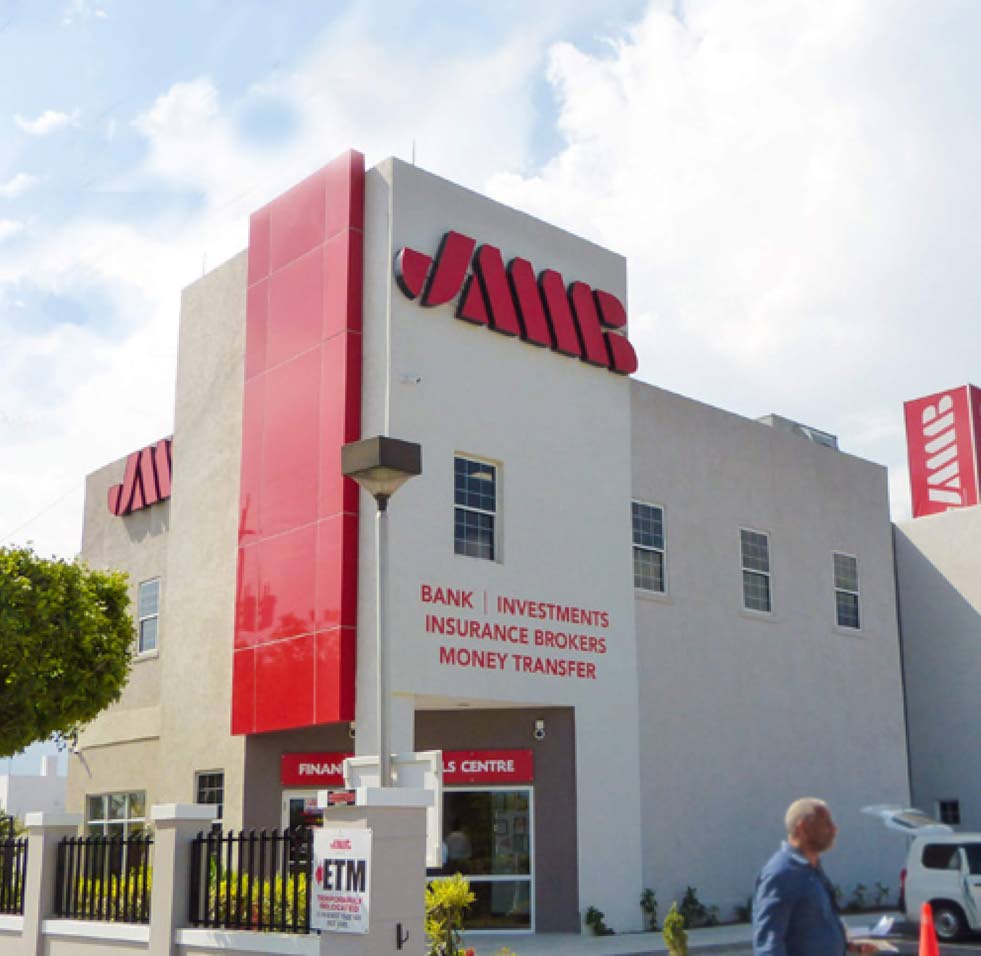
    JMMB Group, the Caribbean-based financial services conglomerate, has released full-year results ending March 31, 2026 that paint a contradictory yet revealing picture of its 10-plus-year corporate transformation: overall shareholder profit plummeted 56 percent to $1.55 billion, even as core banking operations delivered robust double-digit growth and customer confidence surged across the region.

    On paper, the mixed set of financial metrics appears contradictory: while headline profit dropped sharply, customers added $41.4 billion in new deposits to lift the group’s total deposit base to $267.8 billion, the overall loan portfolio expanded by $19.2 billion to hit $236.4 billion, and the banking segment’s operating contribution jumped 38 percent year-over-year to $6.24 billion. This disparity, however, is not a reporting anomaly—it is a clear reflection of the strategic shift JMMB has pursued for more than a decade, as it works to reduce its historic reliance on volatile investment-driven earnings.

    Long known to Jamaican consumers as a specialist in fixed-income investments and securities brokerage, JMMB has steadily expanded beyond its original core business over the past 10 years, building out a full regional banking footprint across Jamaica, Trinidad and Tobago, and most recently the Dominican Republic. Group leadership made the deliberate decision to diversify after identifying that overreliance on investment income left the business overly vulnerable to swings in global financial markets and shifting interest rate environments.

    “We recognised that we needed diversification in earnings and that the investment business line is a little bit more subject to market movement and movement of interest rates and what we call market risk,” Group CEO Keith Duncan explained in an interview with local media.

    The first major milestone of this transition came in 2012, when JMMB acquired Capital & Credit Financial Group to secure its first merchant banking license. Five years later, the group secured a full commercial banking charter, opening the door to widespread expansion of traditional deposit-taking and lending activities that generate more stable, recurring income. The 2025/26 fiscal year represented one of the first major stress tests of this long-term strategy, and the results have borne out the logic of the shift, Duncan said.

    “When we started this journey, the objective was to build a more balanced business model where earnings would not be dependent on a single business line,” Duncan noted. “What you’re seeing now is the benefit of having multiple earnings streams contributing to the group.”

    The latest results bear this out: while banking and related services delivered $6.24 billion in operating contribution, up from $4.51 billion in the prior year, JMMB’s legacy financial services segment—which encompasses securities brokering, investment management, and advisory services—recorded a $2.05 billion loss for the period. Banking not only outperformed all other business units; it effectively absorbed the losses from the investment division to keep the group solvent through a period of market volatility.

    The sharp overall drop in headline shareholder profit can be traced largely to external factors outside JMMB’s core operating performance, specifically weaker results from Sagicor Financial Company, where JMMB holds a major stake. JMMB’s share of Sagicor’s profit fell to $1.01 billion, down from $2.84 billion in the prior year. While Sagicor’s core operating activities remained profitable, generating $25 billion in core earnings during the March quarter, broad volatility in U.S. and Canadian equity and bond markets pushed Sagicor to report a net attributable loss of $34.4 million for the period. As a major shareholder, JMMB is required to reflect its proportional share of Sagicor’s results in its own financial statements, pulling down the group’s overall bottom line.

    Additional headwinds included lower trading gains from JMMB’s own securities activities, where net gains fell from $5.79 billion to $4.27 billion year-over-year, and $1.61 billion in provisions set aside to cover potential future losses on financial assets amid market uncertainty.

    Despite the headline profit drop, Duncan emphasized that investors should prioritize the long-term structural shift in the group’s revenue mix over short-term bottom-line fluctuations. The banking division continues to gain market traction across the Caribbean, he noted, with net interest income—core profitability for most banks—climbing from $11.3 billion to $14.8 billion year-over-year. Foreign exchange trading gains also rose from $1.8 billion to $2.9 billion, driven largely by strong performance in Trinidad and Tobago, even as Jamaica’s market faced temporary disruption from Hurricane Melissa.

    “The banking business continues to show strong momentum across the region,” Duncan said. “Those operations are providing a strong foundation for the group. What investors should really focus on in our numbers is the fact that we’re achieving greater and greater diversification of revenues.”

    JMMB still retains a large exposure to financial markets: investment securities remain the group’s largest single asset category at $359.5 billion, and the company continues to offer investment management, wealth management, and securities trading services to clients across the region. But the 2025/26 results make clear how dramatically the group’s earnings profile has shifted over the past decade. A decade ago, a period of market volatility like this would have erased the group’s entire annual profit, driven by its near-total reliance on investment performance. Today, the growing banking division acts as a built-in stabilizer, cushioning the blow from market swings and laying the groundwork for more stable long-term growth.


  • Bartlett leads launch of Caribbean Tourism Supply-Side initiative

    Bartlett leads launch of Caribbean Tourism Supply-Side initiative

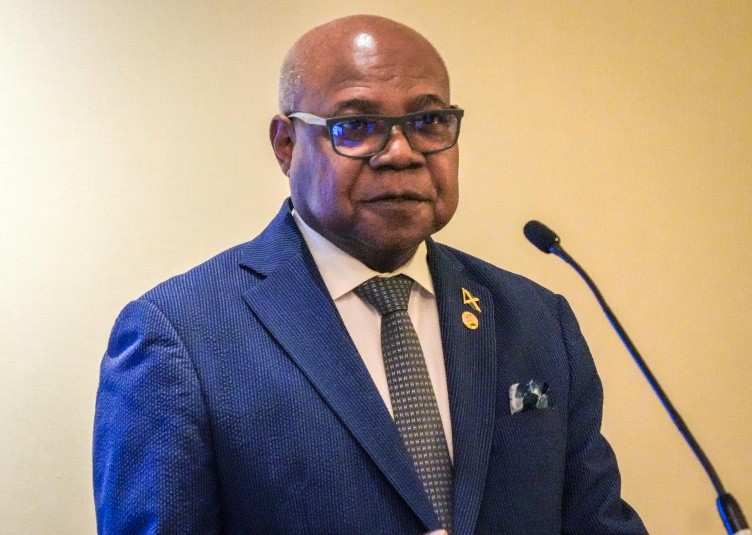
    During a launch event hosted this Thursday in Manhattan, New York, Jamaica’s Tourism Minister Edmund Bartlett, who also chairs the Tourism Supply-Side Ministerial Committee, called for a foundational overhaul of the way Caribbean nations approach the growth and measurement of their travel and tourism sectors.

    Opening the Caribbean Tourism Organization (CTO)’s new Supply-Side Initiative under the overarching theme “Reimagining Caribbean Tourism”, Bartlett made the case that the region has long relied on outdated metrics to gauge tourism success, such as annual visitor arrival numbers and hotel occupancy rates. Moving forward, he argued, the sector must center its growth strategy on three core priorities: boosting local production across all Caribbean economies, integrating and strengthening regional value chains, and keeping more tourism-generated wealth within local and regional communities instead of leaking it to outside suppliers.

    “What we must now prioritise is the extent to which tourism stimulates production, strengthens regional value chains, and retains wealth within our economies,” Bartlett stated during his address. “We are building a practical architecture for regional economic integration — one that connects what we produce, how we move it, and how it is consumed within the tourism economy.”

    The transformative initiative has secured core backing from the Inter-American Development Bank (IDB), which is providing both financial and technical support to advance its core goals. First, the IDB will fund a targeted, demand-driven analysis of all goods and services that the regional tourism sector regularly sources. This analysis will map purchasing trends across every major Caribbean tourism destination, and quantify how much of this existing demand can be met by local and regional producers, rather than importing from outside the bloc.

    Second, the IDB will support the design of a unified regional logistics hub framework, with Jamaica selected as the pilot site for the project. This logistics development will build on the IDB’s existing investment in Jamaica’s Special Economic Zone (SEZ) program, most notably the large-scale Caymanas SEZ. The new framework will create a clear, direct link between the country’s industrial policy, cross-border trade facilitation efforts, and the growing demand for goods and services from the tourism sector. The first phase of the full initiative is scheduled for completion by February 2027.

    Bartlett emphasized that the Supply-Side Initiative is a intentional, coordinated push to integrate multiple key economic sectors — including agriculture, manufacturing, logistics, transportation, creative industries and digital technology — directly to tourism demand. The end goal, he explained, is to transition the Caribbean to a new, self-sustaining tourism model where local and regional producers supply the majority of goods for regional hotels, and regional creative professionals build authentic, one-of-a-kind experiences for visitors.

    “If we execute this with discipline and unity of purpose, we will not only strengthen tourism — we will strengthen the economic architecture of the Caribbean itself,” Bartlett said in closing.

    The initiative unites a wide coalition of stakeholders to deliver on its goals, including Caribbean national governments, the CTO, the Caribbean Hotel and Tourism Association, and global and regional development partners. All parties are aligned on the shared objective of transforming tourism from a volatile, export-led sector into a consistent, sustained engine that drives inclusive regional economic growth and development.

  • Why concerns over forced labor could affect Dominican Republic exports

    Why concerns over forced labor could affect Dominican Republic exports

    The Caribbean nation of the Dominican Republic has been drawn into growing U.S. trade oversight, after the Office of the United States Trade Representative added it to a high-stakes probe evaluating if global trading partners are adequately cracking down on forced labor in cross-border supply chains. This inquiry carries tangible risks: nations found lacking in their labor regulation enforcement could face punitive additional tariffs on their goods exported to the United States, a outcome that has sparked widespread anxiety across the Dominican Republic’s export-focused commercial ecosystem. The stakes of this review cannot be overstated given the United States’ long-standing role as the Dominican Republic’s largest single trading partner. Provisional trade data for 2025 shows the country hit a new export milestone, shipping out a total of $14.6 billion in goods. Nearly half of that total – $7.1 billion, equal to 48.6% of all exports – was bound for U.S. consumers and businesses. The potential economic impact is even more pronounced for the Dominican Republic’s network of free trade zones, which alone contributed more than $6.3 billion in U.S.-bound exports last year. These zones are a foundational pillar of the country’s economy, driving widespread job creation, attracting critical foreign direct investment, and fueling consistent national economic growth. Should U.S. authorities ultimately enforce tariffs aligned with the penalties proposed for other nations currently under review, Dominican exporters could see hundreds of millions of dollars in extra annual operating costs. Key export sectors that would bear the brunt of these new costs include medical device manufacturing, pharmaceutical production, electronics assembly, textile and apparel production, and tobacco product exports. Yet for all the near-term risks the investigation creates, it also opens unexpected strategic opportunities for the Dominican Republic. The same probe that threatens tariffs on the Caribbean nation could also lead to new tariffs on major Asian manufacturing competitors, a shift that would accelerate the growing nearshoring trend that has seen U.S. companies move production closer to the North American mainland. With its prime geographic location adjacent to North America, preferential trade access under the Dominican Republic-Central America Free Trade Agreement (DR-CAFTA), and a mature, well-developed free trade zone infrastructure, the Dominican Republic is uniquely positioned to capture new manufacturing investment and operations from companies looking to reduce their reliance on Asian supply chains. U.S. officials have confirmed the investigation is on track to reach a final conclusion within the coming weeks. As the outcome nears, labor compliance standards and end-to-end supply chain traceability have become make-or-break factors for Dominican exporters seeking to retain unobstructed access to the lucrative U.S. market.

  • NCB to relocate Falmouth branch to Champion Plaza

    NCB to relocate Falmouth branch to Champion Plaza

    In a strategic move to accommodate booming growth in Trelawny’s tourism and commercial sectors, Jamaica’s National Commercial Bank Limited (NCB) has announced it will move its Falmouth branch to a new home at Champion Plaza starting July 6. The relocation is designed to address longstanding challenges at the current site, and deliver better accessibility, expanded parking, and more efficient customer service to the bank’s expanding local client base.

    Per NCB’s official announcement, the new branch will operate out of Shop B2 at Champion Plaza, located at 63A Market Street. The new site sits roughly 10 minutes away from the branch’s current location, which has served the Falmouth community for decades. Both the town of Falmouth and NCB’s local customer base have grown far beyond the capacity of the existing facility, making a move unavoidable to keep up with rising demand.

    “As our customers’ needs continue to evolve, so too must the spaces in which we serve them,” noted Andrew Walters, service quality manager for NCB’s Falmouth branch. “The move to Champion Plaza allows us to provide a more accessible, comfortable and secure environment, with the amenities and layout needed to support faster, more efficient service.”

    A key constraint that pushed the relocation is the current branch’s status as part of a designated heritage site. Falmouth is widely recognized as one of the best-preserved Georgian towns in the Western Hemisphere, a historical distinction NCB says it values deeply. However, heritage site restrictions block the extensive renovations needed to modernize the space and improve customer movement through the branch. While preserving the town’s historical character is a priority, upgrading the facility to meet modern customer needs was not feasible at the existing location, making relocation the most practical solution.

    The new Champion Plaza location will solve many of the pain points long associated with the current branch, including limited parking, outdated infrastructure, and accessibility barriers. NCB notes the new site will feature upgraded security systems, modernized building infrastructure, more convenient entry and exit points for customers with mobility needs, and expanded parking that eliminates the common congestion issues at the current site.

    This relocation and corresponding investment underscores NCB’s commitment to supporting Trelawny’s rapid emergence as a key hub for tourism, local commerce, and new investment across Jamaica. As the region continues to draw more visitors and business activity, demand for robust, accessible financial services has grown sharply, and the bank is adapting its physical footprint to match that demand.

    Currently, NCB runs a network of 27 full-service branches and more than 300 automated banking machines spread across Jamaica. The company says it remains focused on investing in both its physical brick-and-mortar locations and its digital banking infrastructure, ensuring it can meet the shifting needs of customers across the island, who increasingly want a mix of in-person and digital financial services.

  • Dominican mango exports set to reach 10 million boxes this year

    Dominican mango exports set to reach 10 million boxes this year

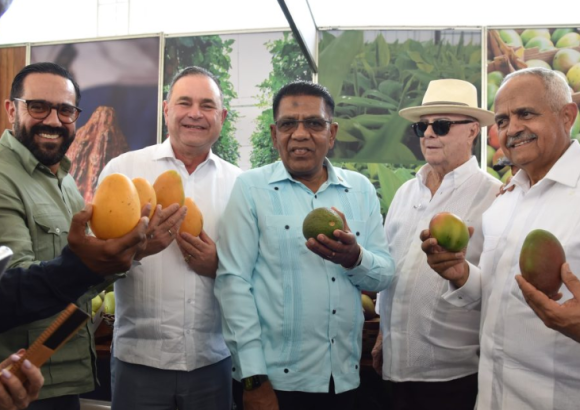
    BANÍ, Dominican Republic — The Dominican Republic’s mango export industry, one of the nation’s most valuable agricultural sectors, is poised for substantial expansion, with a projected target of nearly 10 million export boxes by 2026, according to the country’s Minister of Agriculture Francisco Oliverio Espaillat. Espaillat shared the ambitious growth forecast during the opening ceremony of the annual Expo Mango 2026, held in Baní, the nation’s newly designated Mango Capital. The minister attributed the sector’s consistent upward trajectory to the collaborative effort of independent producers, targeted government investment, widespread adoption of new agricultural technologies, and ongoing industry-wide modernization projects. Beyond its direct financial contribution, Espaillat emphasized that the mango industry delivers far-reaching benefits to the Dominican economy: it brings in critical foreign exchange, creates tens of thousands of stable jobs across the supply chain, revitalizes rural communities by supporting local livelihoods, and fuels broad-based national economic development. Senior industry officials have noted that Dominican mangoes have earned growing global acclaim in recent years, evolving from a regional commodity to a globally recognized symbol of Dominican agricultural excellence and a strong national brand in competitive international fresh produce markets. Event organizers released updated 2025 industry data confirming the sector’s rapid expansion: the country now boasts more than 150,000 acres dedicated to mango cultivation, supports over 2,100 active producers, and saw total exports exceed 34 million kilograms in 2025. Industry leaders also highlighted untapped growth opportunities in key high-demand markets, most notably the United States. These opportunities have been unlocked by targeted investments in modern processing facilities and upgraded export infrastructure, which have reduced supply chain bottlenecks and improved product quality for international consumers. Expo Mango 2026 serves as a central gathering place for producers, exporters, private sector business leaders, and government policymakers to highlight the industry’s recent achievements and map out strategies for future growth. The event also aligns with Baní’s ongoing efforts to cement its status as the heart of the Dominican mango industry, following recent national legislation that officially named the city the Dominican Republic’s Mango Capital.

  • Stewart’s Automotive opens US$7-million GWM showroom in Kingston

    Stewart’s Automotive opens US$7-million GWM showroom in Kingston

    KINGSTON, Jamaica — In a bold show of confidence for Jamaica’s automotive industry despite recent economic headwinds from Hurricane Melissa, Stewart’s Automotive Group has inaugurated a new $7 million flagship showroom for Chinese automaker Great Wall Motor (GWM) along Kingston’s South Camp Road.

    Named the Diana Stewart Building in an official dedication, the 9,000-square-foot facility opened its doors to operations on June 3. Designed as GWM’s core retail hub across Jamaica, the modern space is outfitted to display up to eight vehicles at a time, headlined by the brand’s newly launched premium off-road SUV lineup: the Tank 400 and Tank 700. The grand opening ceremony drew more than 500 invited guests, where both Tank models were formally unveiled to the Jamaican public as GWM positions itself to capture a larger share of the country’s fast-growing premium SUV segment. As a unique community touch, the showroom also hosts a permanent site-specific art installation created by students from local Genesis Academy, which draws creative inspiration from GWM’s popular Tank vehicle line.

    Jacqueline Stewart-Lechler, managing director of Stewart’s Automotive Group, framed the seven-figure investment as far more than a simple expansion of physical infrastructure. “Tonight marks far more than the opening of a new space, it represents confidence in our market, belief in our people, and a clear vision of the road ahead of Jamaica’s automotive industry,” she stated at the ceremony. Beyond boosting the local automotive retail landscape, the new facility is already projected to deliver tangible economic benefits for the country. It currently employs approximately 40 local workers, with built-in capacity to add more roles as customer demand rises. Stewart-Lechler projected that the operation will contribute a minimum of $400 million in combined tax and General Consumption Tax revenues to the Jamaican government by 2027.

    Aubyn Hill, Jamaica’s Minister of Industry, Investment and Commerce, echoed Stewart-Lechler’s optimism, noting that the partnership between the local automotive group and global brand GWM represents a critical endorsement of Jamaica’s standing as an attractive destination for international investment. “When a global brand like Great Wall Motor, one of China’s leading privately owned automotive manufacturers operating in more than 170 countries and regions, chooses to establish a permanent purpose-built presence in Jamaica, it is a clear vote of confidence in Jamaica’s economy,” Hill said.

    The Kingston showroom launch aligns with GWM’s broader strategic push to expand its footprint across the Caribbean region. Hankin Zhao, general manager of GWM International, shared that the company has surpassed 1,500 vehicle sales in Jamaica since it first entered the market in 2021. Beyond local growth, the Jamaican operation has served as a strategic regional hub for the brand, enabling GWM to extend its reach into 13 additional Caribbean markets including Barbados and the Cayman Islands. Zhao emphasized GWM’s long-term approach to market expansion, prioritizing product reliability over rapid short-term growth: “At GWM, quality is our first thing. We are providing a reliable and safe product rather than a faster sale.”

    The expansion comes as the local automotive sector navigates post-hurricane recovery, with industry stakeholders framing the new investment as a key milestone in strengthening Jamaica’s economic resilience and positioning the country as a leading automotive market in the Caribbean.