分类: business

  • Pay up!

    Pay up!

    Seven months after Category 5 Hurricane Melissa carved a path of destruction across multiple regions of Jamaica, mounting frustration over glacial insurance claim settlements has drawn public intervention from the country’s top leadership. During a public handing-over ceremony for 27 residential service lots in Malvern, St Elizabeth on Thursday, Prime Minister Dr Andrew Holness publicly called on private insurance providers to accelerate payout processing, framing timely claim resolution as an indispensable pillar of the island’s post-disaster national recovery effort.

    In his remarks, Holness drew a sharp contrast between the performance of private insurers and the state-run National Housing Trust (NHT), which he lauded for its rapid progress on Hurricane Melissa-related claims for mortgaged properties. To date, the NHT has processed 3,835 claims with a total assessed value of $7 billion. After accounting for policy deductibles, the agency is expected to disburse approximately $6 billion in payouts, with $2.85 billion already released to claimants via a phased disbursement structure — representing nearly half of the total eligible claims, according to Holness.

    While the prime minister highlighted the NHT as a model of swift disaster response, the agency has not escaped criticism entirely, with a subset of mortgagors still waiting for updates on their pending applications. Holness acknowledged the backlog, noting that processing remains ongoing across all outstanding claims.

    The prime minister’s public call to action follows weeks of growing complaints from both individual property owners and business leaders across Jamaica, who say seven months without settlement has left many families and enterprises in crippling financial limbo. Holness confirmed he has received hundreds of personal testimonials from claimants who have completed damage assessments but have yet to receive any communication or payout from their private insurers.

    Business leaders have repeatedly warned that prolonged delays threaten the long-term survival of storm-impacted enterprises. In a May interview with Business Observer, Montego Bay Chamber of Commerce & Industry President Jason Russell emphasized that slow claim settlements directly undermine a company’s ability to retain employees, fulfill payment obligations to suppliers, and resume normal operations post-disaster. “We’re talking about the life and death of a business. A business can’t wait a year to get paid,” Russell noted.

    Individual business owners have also gone public with their experiences to highlight systemic failures in the private insurance sector. In a letter to the editor published in Wednesday’s Jamaica Observer, Andrew Houston Moncure, managing director of Westmoreland-based Bluefields Bay Villas & Suites, detailed his family’s seven-month struggle to get updates on their property damage claim, saying they have received nothing but “silence” from their insurer’s loss adjuster since November last year.

    Houston Moncure clarified that he and his family do not expect an unreasonably fast resolution for complex claims, acknowledging that Hurricane Melissa created an unprecedented backlog that stretched industry resources thin across the hardest-hit parishes like Westmoreland, where thousands of structures were destroyed. Instead, he is calling for basic, consistent communication from providers — a standard he says his family’s long-time insurer has failed to meet, even as the family led local recovery efforts for their community without waiting for their own claim payout.

    The business owner also pointed to existing Jamaican regulations that mandate timely claim settlement: Regulation 135 of the country’s Insurance Regulations requires providers to resolve all valid claims within 30 days of meeting payment conditions, with statutory interest added for late payments. The Financial Services Commission’s 2022 Market Conduct Rules further require insurers and their intermediaries to settle claims fairly, without undue delay, and via transparent, efficient processes.

    Top industry leaders have already acknowledged the widespread delays constitute a major failure of the private insurance sector. During a panel discussion at the Insurance Association of Jamaica’s annual business conference in May, BCIC CEO Peter Levy described the industry’s slow post-Melissa response as a “significant failure”.

    Levy, however, outlined significant operational and logistical challenges that providers faced in the immediate aftermath of the storm. In the storm’s wake, key transportation routes were blocked, national communication infrastructure was disabled, and even independent contractors tasked with preparing damage estimates were themselves dealing with personal storm damage. The unprecedented volume of claims left the entire industry stretched beyond its existing resource capacity, he added.

    In response to the breakdown, the Jamaican insurance industry has launched a full review of its disaster response protocols to identify gaps and implement critical changes ahead of future catastrophic weather events. Key areas under review include loosening some verification requirements during large-scale disasters and streamlining processing for claims where loss estimates fall within a pre-defined reasonable range, with the goal of cutting down overall payout timelines for most claimants.


  • Super reveal for Omoda | Jaecoo

    Super reveal for Omoda | Jaecoo

    In late May, automotive brand Omoda | Jaecoo brought its cutting-edge new hybrid models and proprietary powertrain technology to Santiago, Chile, marking an important milestone in its expansion across the Caribbean and Latin American (LATAM) regions.

    Hosted across May 26 and 27, the LATAM Super Hybrid Experience invited automotive journalists from more than 15 regional markets to get firsthand behind-the-wheel experience with the brand’s new electrified offerings through a curated lineup of exclusive activities. Chile was selected as the host venue for a strategic reason: it was the brand’s first entry point into the LATAM market three years prior, and has since served as a stable base for its regional growth, executives explained.

    Caesar Huang, Deputy General Manager for Omoda | Jaecoo’s LATAM Region, shared the brand’s outlook on electrification with the Jamaica Observer’s Auto magazine. “We see that hybrid electric, plug-in hybrid, and fully battery electric powertrains are the clear global trend – we’ve watched this shift unfold in China, across Europe, in Southeast Asia, and now it is taking hold across LATAM as well,” Huang said. Nicolas Pietrantoni, Commercial Director for Omoda | Jaecoo Chile, echoed this framing, noting that the event gave visiting regional journalists an opportunity to test vehicles and familiarize themselves with the brand’s new Super Hybrid System (SHS) before introducing the technology to consumers in their home markets.

    The two core variants of SHS anchor the brand’s new electrified lineup: SHS-H, the standard hybrid configuration, and SHS-P, the plug-in hybrid option. Regardless of variant, the brand says models equipped with SHS deliver more than 1,000 kilometers of range on a single full tank of fuel. To validate this claim and let reporters experience real-world performance, the brand organized a cross-country fuel efficiency challenge following the initial press briefing. Journalists took the wheel of two preview models – the Omoda C5 SHS-H and Jaecoo J7 SHS-P – on a route that stretched from downtown Santiago through Chile’s rural wine country and back, putting both models through a mixed set of road and traffic conditions while efficiency data was tracked. A pair of Peruvian drivers, Enrique Pérez and Nicolás Orihuela, took top honors in the challenge.

    On the event’s second day, the newly unveiled Omoda C7 joined the existing test fleet, giving journalists the chance to push all three models to their performance limits on a closed driving course. That evening, the brand made three models’ regional debuts official: the Omoda C5 SHS-H, Jaecoo J8 SHS-P, and Omoda C7 SHS-P. The Omoda C7 SHS-P will roll out to a limited number of regional markets initially, Huang confirmed.

    All SHS-equipped models share a core powertrain architecture centered on a 1.5-litre turbocharged four-cylinder internal combustion engine paired with a dedicated hybrid transmission (DHT) that integrates dual electric motors. The full system delivers a combined 224 brake horsepower and 218 pound-feet of torque. The standard SHS-H hybrid uses a 1.83kWh lithium iron phosphate (LFP) battery, while the SHS-P plug-in variant upgrades to a larger 18.4kWh LFP battery, adds 40kW external fast-charging capability, boosts total output, and includes standard all-wheel drive.

    Looking ahead to the rest of 2024, Huang announced that the brand is preparing to launch another high-volume model, the Omoda 4, which was first unveiled in April at the Beijing Auto Show at the brand’s Wuhu, China headquarters. The new model will be launched in the second half of the year across the region, and will offer three powertrain options: traditional internal combustion, hybrid electric, and fully battery electric, with the variant lineup coming to Caribbean markets in the near future.

  • Showfa Express and Paymaster launch flat-rate parcel delivery service

    Showfa Express and Paymaster launch flat-rate parcel delivery service

    Two Jamaican service providers, Showfa Express Limited and Paymaster Jamaica, have joined forces to roll out a new fixed-price parcel delivery initiative, designed to deliver more dependable and budget-friendly shipping options for domestic customers across the island.

    The new offering, branded Showfa One, made its official debut Thursday at Paymaster’s corporate headquarters located on Molynes Road in St Andrew. Under the terms of the new service, customers can send and receive documents and small goods that fit into a standard-sized shipping envelope for a fixed flat fee of JMD $690, with drop-off and pick-up available at four carefully selected Paymaster locations to start: the Molynes Road headquarters, the Burke Road branch in Spanish Town, and outlets in Mandeville and May Pen.

    Jamie Hall, Chief Executive Officer of Mandeville-based Showfa Express, explained that the collaborative service is built to deliver maximum value for Jamaican shippers. “For many people, arranging reliable transport to send or pick up parcels is either out of reach or carries prohibitive costs and time commitments,” Hall said. “Paymaster has built its reputation on seamless, accessible money movement, while Showfa specializes in efficient goods delivery. This partnership brings our two strengths together to create a far more efficient option for people across Jamaica.”

    Founded only in 2023, Showfa Express already operates across five Jamaican parishes: Manchester, St Elizabeth, Clarendon, St Catherine, and Kingston and St Andrew’s Corporate Area. According to Hall, the firm has aggressive expansion plans: it will roll out Showfa One to St Ann and St James in the coming months, with a target of full islandwide coverage by the end of the calendar year.

    Athinia Campbell, acting general manager of Paymaster, noted that the partnership aligns perfectly with the company’s core mission of expanding accessible, convenient services for its customer base. “Moving documents and small goods between locations is a widespread unmet need for our clients,” Campbell explained. “This new service adds another key offering to our portfolio, allowing customers to handle all their tasks in a single stop at Paymaster. It also gives shippers access to more drop-off and pick-up points, plus extended operating hours that work far better for most people’s schedules.”

    Angeline Barrett-Stewart, Paymaster’s head of sales, emphasized that the flat-rate model will deliver particular benefits for small and micro entrepreneurs across Jamaica. “As Jamaica’s economy evolves, demand for affordable, reliable courier services has grown dramatically,” Barrett-Stewart said. “People need to connect with family members across the country, and small business owners need to get products to their customers. This service fills that gap, offering an easier, more convenient, and lower-cost way to get these tasks done.”

    Hall added that early testing of the service through a pilot program has already drawn overwhelmingly positive feedback from the company’s long-standing clients. “Small business owners are particularly excited about the predictability of the flat rate,” he said. “Unexpectedly high distance-based delivery fees can often be the factor that kills a sale. With a fixed, low $690 rate, that variable is removed, giving small businesses more room to grow instead of staying stuck at their current size.”

  • JMMB’s banking bet paying off

    JMMB’s banking bet paying off

    JMMB Group, the Caribbean-based financial services conglomerate, has released full-year results ending March 31, 2026 that paint a contradictory yet revealing picture of its 10-plus-year corporate transformation: overall shareholder profit plummeted 56 percent to $1.55 billion, even as core banking operations delivered robust double-digit growth and customer confidence surged across the region.

    On paper, the mixed set of financial metrics appears contradictory: while headline profit dropped sharply, customers added $41.4 billion in new deposits to lift the group’s total deposit base to $267.8 billion, the overall loan portfolio expanded by $19.2 billion to hit $236.4 billion, and the banking segment’s operating contribution jumped 38 percent year-over-year to $6.24 billion. This disparity, however, is not a reporting anomaly—it is a clear reflection of the strategic shift JMMB has pursued for more than a decade, as it works to reduce its historic reliance on volatile investment-driven earnings.

    Long known to Jamaican consumers as a specialist in fixed-income investments and securities brokerage, JMMB has steadily expanded beyond its original core business over the past 10 years, building out a full regional banking footprint across Jamaica, Trinidad and Tobago, and most recently the Dominican Republic. Group leadership made the deliberate decision to diversify after identifying that overreliance on investment income left the business overly vulnerable to swings in global financial markets and shifting interest rate environments.

    “We recognised that we needed diversification in earnings and that the investment business line is a little bit more subject to market movement and movement of interest rates and what we call market risk,” Group CEO Keith Duncan explained in an interview with local media.

    The first major milestone of this transition came in 2012, when JMMB acquired Capital & Credit Financial Group to secure its first merchant banking license. Five years later, the group secured a full commercial banking charter, opening the door to widespread expansion of traditional deposit-taking and lending activities that generate more stable, recurring income. The 2025/26 fiscal year represented one of the first major stress tests of this long-term strategy, and the results have borne out the logic of the shift, Duncan said.

    “When we started this journey, the objective was to build a more balanced business model where earnings would not be dependent on a single business line,” Duncan noted. “What you’re seeing now is the benefit of having multiple earnings streams contributing to the group.”

    The latest results bear this out: while banking and related services delivered $6.24 billion in operating contribution, up from $4.51 billion in the prior year, JMMB’s legacy financial services segment—which encompasses securities brokering, investment management, and advisory services—recorded a $2.05 billion loss for the period. Banking not only outperformed all other business units; it effectively absorbed the losses from the investment division to keep the group solvent through a period of market volatility.

    The sharp overall drop in headline shareholder profit can be traced largely to external factors outside JMMB’s core operating performance, specifically weaker results from Sagicor Financial Company, where JMMB holds a major stake. JMMB’s share of Sagicor’s profit fell to $1.01 billion, down from $2.84 billion in the prior year. While Sagicor’s core operating activities remained profitable, generating $25 billion in core earnings during the March quarter, broad volatility in U.S. and Canadian equity and bond markets pushed Sagicor to report a net attributable loss of $34.4 million for the period. As a major shareholder, JMMB is required to reflect its proportional share of Sagicor’s results in its own financial statements, pulling down the group’s overall bottom line.

    Additional headwinds included lower trading gains from JMMB’s own securities activities, where net gains fell from $5.79 billion to $4.27 billion year-over-year, and $1.61 billion in provisions set aside to cover potential future losses on financial assets amid market uncertainty.

    Despite the headline profit drop, Duncan emphasized that investors should prioritize the long-term structural shift in the group’s revenue mix over short-term bottom-line fluctuations. The banking division continues to gain market traction across the Caribbean, he noted, with net interest income—core profitability for most banks—climbing from $11.3 billion to $14.8 billion year-over-year. Foreign exchange trading gains also rose from $1.8 billion to $2.9 billion, driven largely by strong performance in Trinidad and Tobago, even as Jamaica’s market faced temporary disruption from Hurricane Melissa.

    “The banking business continues to show strong momentum across the region,” Duncan said. “Those operations are providing a strong foundation for the group. What investors should really focus on in our numbers is the fact that we’re achieving greater and greater diversification of revenues.”

    JMMB still retains a large exposure to financial markets: investment securities remain the group’s largest single asset category at $359.5 billion, and the company continues to offer investment management, wealth management, and securities trading services to clients across the region. But the 2025/26 results make clear how dramatically the group’s earnings profile has shifted over the past decade. A decade ago, a period of market volatility like this would have erased the group’s entire annual profit, driven by its near-total reliance on investment performance. Today, the growing banking division acts as a built-in stabilizer, cushioning the blow from market swings and laying the groundwork for more stable long-term growth.

  • Butch Stewart’s family differences resolved

    Butch Stewart’s family differences resolved

    Nearly three years after the passing of iconic Jamaican tourism and business leader Gordon “Butch” Stewart, his family has announced a resolution to internal disagreements that emerged following his death in January 2021. The formal announcement was delivered through a joint press statement released by Bahamas-based law firm LennoxPaton, bringing a close to a period of public uncertainty surrounding the future of Stewart’s multi-billion dollar hospitality empire.

    Stewart, widely celebrated as one of the Caribbean’s most influential entrepreneurs, revolutionized regional tourism through the founding of the Sandals & Beaches Group, an all-inclusive resort brand that put Jamaica and other Caribbean island destinations on the map as premium leisure getaways. His passing left not just a gap in the Caribbean business community, but also sparked unreported internal divisions among his heirs over the direction and governance of the brand he built from the ground up.

    In the official joint statement, the Stewart family confirmed that all parties have reached an amicable agreement that puts past disagreements to rest. “The family of The Hon Gordon “Butch” Stewart OJ, the founder of the Sandals & Beaches Group, are pleased to announce that they have resolved their differences that arose following Butch’s death in January 2021,” the statement reads.

    Looking ahead, the family says they are unified in their focus on upholding Stewart’s transformative legacy, prioritizing the ongoing expansion and long-term success of the Sandals & Beaches Group. The resolution comes as a welcome development for stakeholders across the Caribbean tourism industry, which has relied on Stewart’s brand to drive billions in annual revenue and support hundreds of thousands of local jobs across the region. With internal disputes settled, the brand is now positioned to move forward with planned growth initiatives as global travel demand continues to rebound post-pandemic.

  • Elon Musk set to Become World’s First Trillionaire

    Elon Musk set to Become World’s First Trillionaire

    Elon Musk, already the wealthiest individual on the planet, stands on the cusp of an unprecedented financial milestone, with SpaceX’s upcoming initial public offering (IPO) on track to push his net worth into the never-before-seen 13-figure territory, business analysts and financial outlets confirm.

    Per reporting from Forbes and the Associated Press, the private aerospace firm is preparing to launch its public debut later this month, with a projected valuation of roughly $1.75 trillion. Under the current terms, each share will be priced at $135, a structure that would allow the company to raise approximately $75 billion through the offering. If the listing proceeds as planned, it will claim the title of the largest initial public offering in global stock market history.

    Musk’s vast fortune has long been closely intertwined with SpaceX’s explosive growth, and the IPO would mark another landmark achievement in the billionaire’s decades-long career of building transformative technology companies. Current filings and financial tracking show Musk holds 4.8 million shares of SpaceX common stock alongside 350 million stock options. At the proposed $135 per share share price, these existing holdings alone would be valued at an estimated $688 billion, according to Forbes’ calculations.

    When combined with Musk’s existing equity stakes in Tesla, his artificial intelligence startup xAI, brain-computer interface firm Neuralink, tunnel construction venture the Boring Company, and his other business assets, the jump in SpaceX valuation will push his total net worth across the $1 trillion threshold, analysts project. That would make him the first person in recorded history to reach a trillion-dollar net worth.

    Beyond reshaping global rankings of personal wealth, the SpaceX IPO will also cement the company’s position among the most valuable public corporations on Earth. At a finalized valuation of roughly $1.77 trillion, only six current S&P 500 companies would outrank SpaceX in market capitalization, the Associated Press notes.

    Crucially, even after the company transitions to public ownership, Musk will retain overwhelming controlling interest in SpaceX. Through his holdings of Class B shares, which carry enhanced voting rights, Musk is positioned to hold approximately 82.4% of the company’s total voting power. He will continue to lead the firm in his triple role as chief executive officer, chief technical officer, and chairman of the board.

    The planned IPO comes as the latest high-stakes milestone for Musk’s sprawling business empire, which has expanded rapidly across electric vehicles, space exploration, artificial intelligence, and emerging infrastructure technology over the past two decades. It also arrives less than 12 months after Tesla shareholders approved a landmark compensation package for Musk that could ultimately be worth more than $1 trillion if the executive hits a series of aggressive long-term growth targets for the electric automaker, multiple business outlets including CNBC, Business Insider, and NBC News have confirmed.

    Shortly after that shareholder vote, Musk spoke at Tesla’s annual general meeting in Austin, Texas, where he expressed gratitude for investor support and framed the package as a foundation for transformative future growth. “I super appreciate it. Thank you, everyone,” Musk told attendees, per NBC News reporting. “What we’re about to embark upon is not merely a new chapter on the future of Tesla but a whole new book,” he added.

  • Notice of Annual Meeting of Shareholders

    Notice of Annual Meeting of Shareholders

    Carib Brewery (Grenada) Limited, a prominent beverage industry player operating in Grenada, has officially issued a formal notification to all its shareholders detailing plans for the company’s 66th Annual Meeting. Scheduled to take place on Friday, June 26, 2026, the gathering will kick off at 4:30 p.m. local time at the Greenery Room within the Radisson Grenada Beach Resort, located in Grand Anse, St. George’s.

    The meeting will center entirely on standard corporate business that aligns with the company’s annual governance requirements. First on the agenda is the formal presentation and review of the audited financial statements for the full 12-month fiscal period ending December 31, 2025, alongside the annual reports submitted by the company’s Board of Directors and independent auditors covering this financial cycle. Following the review of financial documents, shareholders will proceed with two key electoral and appointment matters: the re-election of sitting board directors and the re-appointment of the company’s independent auditors, with the Board of Directors granted authorization to set the auditors’ remuneration for the upcoming fiscal term.

    In compliance with venue requirements, all shareholders planning to attend the in-person meeting are reminded that they must adhere to all existing public safety and entry protocols established by Radisson Grenada Beach Resort, as well as any additional public health or access policies that may come into effect by the date of the meeting. For shareholders seeking to review the company’s full 2025 Annual Report ahead of the gathering, the document is currently available for digital access via the Ansamcal group’s official website at www.ansamcal.com.

    This official notification was dated April 27, 2026, and signed by Aldyn Henry-Bishop, the Company Secretary of Carib Brewery (Grenada) Limited. This announcement was published through NOW Grenada, which includes a standard disclaimer stating that the platform does not take responsibility for opinions, statements, or third-party contributed content featured in its publication, and provides a channel for users to report any content that violates platform guidelines.

  • Barbuda Hosts U.S. Tourism Delegation for Cultural Visit

    Barbuda Hosts U.S. Tourism Delegation for Cultural Visit

    In a strategic move to deepen transatlantic tourism collaboration and unlock new market opportunities, Barbuda played host to a delegation from a United States-based tourism organization on May 27. The visit was crafted to give American industry leaders first-hand exposure to the island nation’s distinctive cultural heritage, growing agricultural sector, and tight-knit community way of life.

    The day’s itinerary kicked off with a welcoming breakfast at local favorite Wa’omoni’s, where delegates sat down with a cross-section of Barbuda’s tourism and industry stakeholders, including prominent local leader Jackie Desouza. Over the course of the visit, the American group held direct, engaging conversations with local producers, from small-scale crop farmers and artisan beekeepers to commercial fisheries representatives. These interactions offered delegates unfiltered insight into the foundational sectors that shape both Barbuda’s economy and its centuries-old cultural identity.

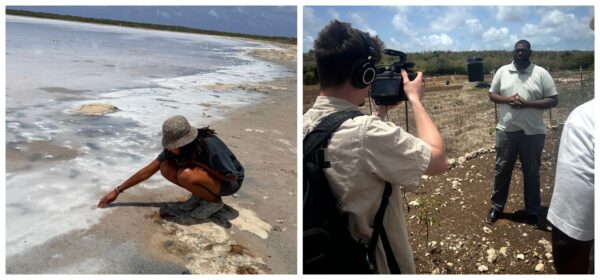
    To bring these conversations to life, the delegation embarked on two key site visits: a tour of the working Highland Farm, followed by a stop at the iconic Salt Pond. At the Salt Pond, they watched local practitioners carry out time-honored traditional salt-picking practices, a craft that has been passed down through generations of Barbudan families. The day also included a deep dive into the island’s culinary culture: delegates sampled local specialties, including Barbuda’s famous deer burger, and experienced the island’s renowned warm hospitality during a leisurely stop at Roddy’s, another beloved local establishment.

    Event organizers emphasized that the on-the-ground visit served a dual purpose: it created a rare platform for Barbuda to showcase its under-tapped natural beauty, rich cultural assets, and untapped tourism potential, while also strengthening personal and professional ties with key industry partners in the U.S. This exchange is just one part of a sustained, long-term campaign by Barbuda to position itself as a one-of-a-kind travel destination, one that prioritizes community-led experiences and highlights the unique appeal of its local industries and cultural heritage for international travelers.

  • PM Slams Chamber Over Fuel Tax Demands

    PM Slams Chamber Over Fuel Tax Demands

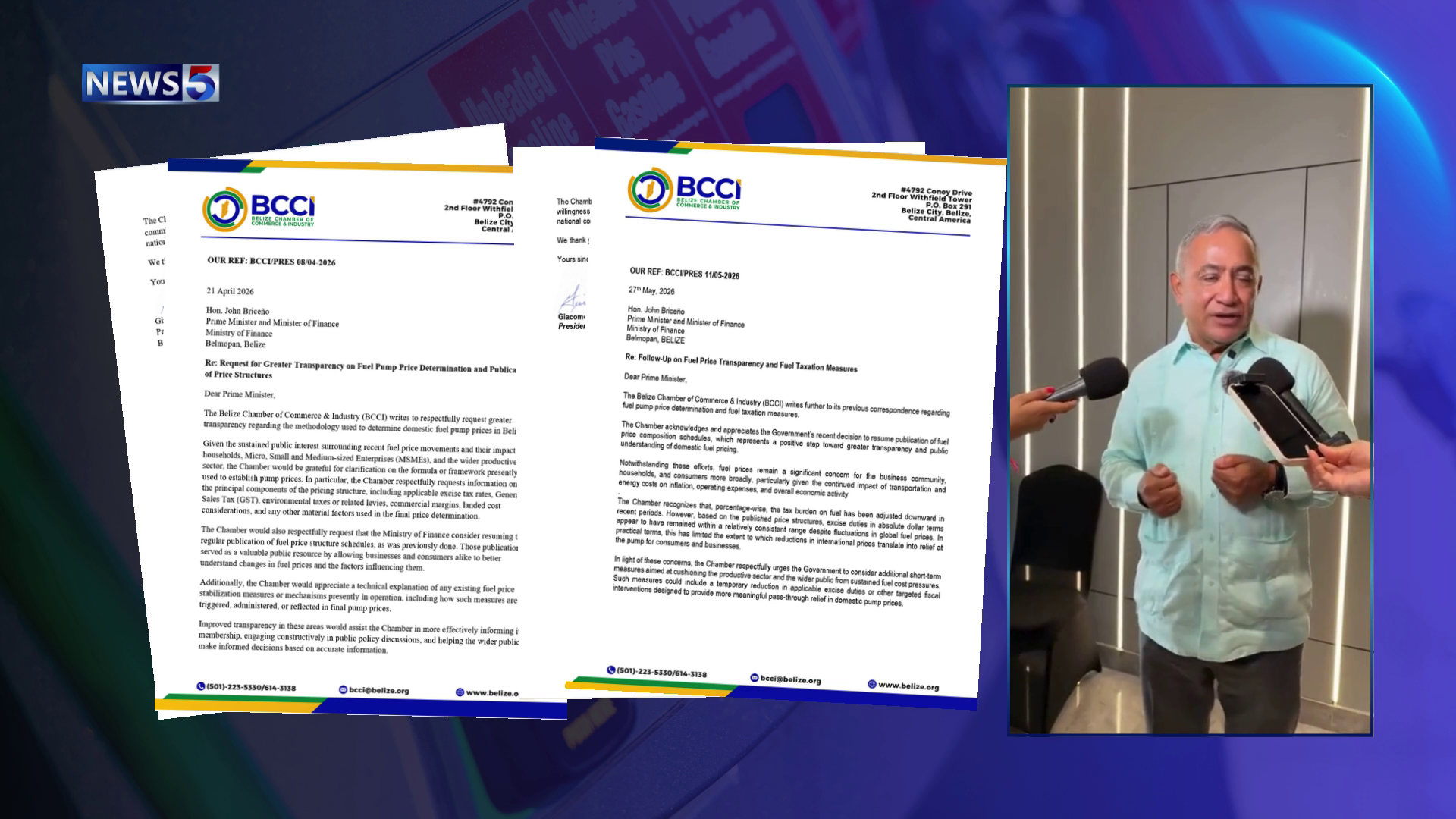
    A public clash between Belize’s top government leader and the nation’s leading business association has put the country’s ongoing fuel price crisis front and center, exposing deep divides over economic policy and shared burden amid global market volatility. As of June 3, 2026, the Belize Chamber of Commerce and Industry has ramped up calls for temporary reductions to national fuel taxes, claiming that recent dips in global crude prices have not translated to savings for ordinary consumers at local gas pumps. The business group argues that cutting fuel levies would deliver much-needed relief to households and small businesses already grappling with broad-based cost-of-living increases. But Prime Minister John Briceño has pushed back hard against the proposal, dismissing the Chamber’s demand as a misinformed argument that misunderstands the role of fuel taxes in government revenue, and even calling the group’s public stance “embarrassing.”

    Briceño explained that regardless of how fuel taxes are split across different levies—including environmental taxes, goods and services tax (GST), excise tax and import duties—any overall cut would remove the same total amount of critical revenue from government coffers, which funds essential public services and social programs across the country. The prime minister’s rejection sets the stage for a broader standoff over how to address soaring fuel costs, which have been amplified by ongoing geopolitical tensions in the Middle East that have pushed global energy prices upward in recent months.

    Beyond rejecting the tax cut push, Briceño has called for collective action across all parts of the fuel supply chain, noting that the government has already sacrificed millions of dollars in foregone fuel tax revenue to cushion the blow of global price increases for consumers. He pointed out that the current national fuel pricing framework was established back in 2004, when global crude prices were far lower than today’s levels, and argued that the outdated formula no longer aligns with 2026’s volatile economic realities.

    Notably, Briceño declared a conflict of interest related to the debate, noting that his family owns a service station in Orange Walk Town, which is why he has delegated discussions on the issue to the financial secretary and avoided direct negotiations. Drawing a parallel to the collective sacrifices made during the COVID-19 pandemic, when the government appealed to public sector unions to accept temporary salary cuts to address a national fiscal crisis, the prime minister is now calling on fuel importers and dealers to reduce their profit margins to help ease pressure on consumers.

    “It’s not something that we do out of malice or anything, but this – we’re all in this boat together so everybody has to do their part,” Briceño stated in his remarks. “I’m appealing to them, and I’m hoping that common sense is going to prevail.”

    The disagreement underscores a growing tug-of-war across Belize between business groups pushing for consumer tax relief and government leaders working to protect already strained public revenues amid ongoing economic uncertainty. For ordinary Belizean drivers, who have already seen their household budgets stretched thin by rising fuel costs, the standoff means immediate relief at the pump remains unlikely for the near term.

  • New Bus Deal Aims to Modernize Fleet Nationwide

    New Bus Deal Aims to Modernize Fleet Nationwide

    Belize is set to undergo a major transformation of its national public bus transportation network, after the country’s Cabinet gave formal approval to a new concession agreement between the National Bus Company and the national Transport Board. The landmark policy shift, announced in June 2026, targets long-standing structural flaws in the current transit system that have blocked fleet modernization and left both operators and commuters underserved. For years, Belize’s bus operators have operated under a system of annual licensing, a short-term framework that has created significant financial uncertainty. Prime Minister John Briceño explained that this annual model has made it nearly impossible for operators to secure bank financing to purchase new, upgraded vehicles. “You can’t take that [yearly] license and go to the bank and say, ‘I want to borrow to buy a new bus or a very good bus,’ because you don’t know [if it will be renewed]. The bank will say, ‘What if next year they don’t renew?’” Briceño said in an official address following the Cabinet’s decision. The new framework addresses this barrier by introducing long-term licensing terms, designed to give operators the operational and financial stability needed to invest in fleet upgrades. To qualify for these extended licenses, operators will be required to meet strict new standards set by the transport department, including upgrading existing vehicles or adding new, modern buses to their fleets, with enhanced requirements for passenger safety and service quality. Independent bus operators, who have long advocated for policy changes to extend licensing terms, have so far refrained from official public comment on the approved deal. Bus Association President Philip Jones told reporters he would not release a statement until the association holds a scheduled meeting with the Ministry of Transport to review the full terms of the concession agreement. Government officials anticipate the reforms will deliver widespread benefits, from a more reliable, safer travel experience for daily commuters to a cleaner, more modern national bus fleet that supports long-term economic activity across the country. This report is adapted from a transcript of an original evening television news broadcast.