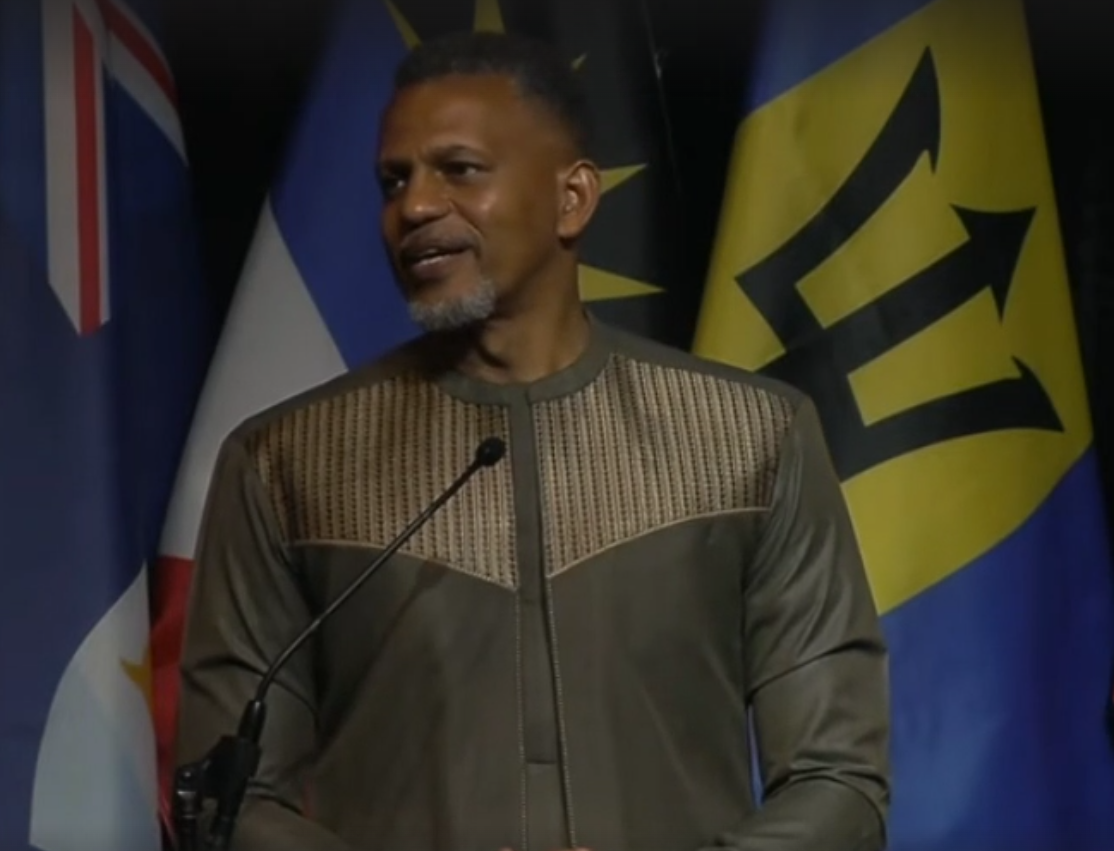
Against a backdrop of mounting global economic turbulence, intensifying climate instability, and dwindling international development financing, the Caribbean Development Bank (CDB) has unveiled an ambitious transformative roadmap for regional progress, launched during its 56th Annual Meeting hosted in Nassau, The Bahamas.
Opening the gathering, CDB President Daniel Best delivered an impassioned call to action for regional stakeholders, framing the current era of persistent uncertainty as a catalyst to pursue a full “rebirth” of the 56-year-old development institution. Best emphasized that the overlapping crises facing small island Caribbean nations demand unprecedented levels of cross-border collaboration, noting that The Bahamas was a particularly symbolic host for this pivotal moment. Five decades earlier, the CDB held its very first meeting in the country, at a time when the region was navigating the profound upheaval of post-colonial political and economic transition.
Looking back to the institution’s founding, Best highlighted a core lesson from the region’s early leaders: uncertainty is not a signal to retreat, but a mandate to build collective solutions. He pointed to accelerating climate threats playing out across Caribbean communities, recalling a firsthand visit to Jamaica in the immediate aftermath of Hurricane Melissa. “What I witnessed was nothing short of gut-wrenching; communities flattened, homes gone, and a hospital barely standing. And yet within those damaged walls, nurses and doctors pressed on, working tirelessly to care for the injured, because that is who we are as a region. We persevere even in the face of devastation,” Best said.
To turn that perseverance into tangible progress, Best announced that the CDB has already significantly expanded its development interventions: since 2025, the bank has approved and disbursed more than $400 million in funding to upgrade critical infrastructure, expand educational access, and strengthen private sector growth across the region. Of that financing, a historic $226.7 million has been committed to climate action – a new annual record for the institution. This includes the first-ever single-country Green Climate Fund (GCF) project for The Bahamas, which will upgrade national water security systems and boost coastal storm resilience. Best also revealed a groundbreaking unified regional initiative led by the CDB: a multi-country housing retrofit program spanning more than 15 Caribbean nations, which will convert millions of climate-vulnerable residential structures into storm-resistant shelters, protecting families from future extreme weather events.
The Nassau gathering, which brought together regional finance leaders including Barbados Finance Minister Ryan Straughn, served as the official launch pad for the CDB’s new 10-year strategic framework, which will guide the bank’s work from 2026 through 2035. The strategy centers on building three core pillars of resilience: social, economic, and environmental, with an explicit priority on investing in Caribbean youth – a demographic that makes up nearly half of the region’s total population. “Too many remain disconnected from opportunity,” Best warned, identifying youth unemployment and disenfranchisement as one of the region’s most pressing long-term economic challenges. “Our strategy prioritizes skills development, entrepreneurship support, and expanded access to finance so that our young people can build their futures here at home.”
To demonstrate the early impact of this youth-focused approach, Best highlighted the success of Nkrumah Fong, a young Jamaican clean technology innovator and founder of Ceres Labs. Through a CDB-funded clean-tech incubator program, Fong’s company developed Vector One, a breakthrough carbon absorption technology that cuts greenhouse gas emissions from vehicles, commercial ships, and heavy industrial generators.
Beyond youth development, Best stressed that strengthened institutional governance is a non-negotiable foundation for sustained regional progress, pointing to the CDB’s successful governance reform partnership with Belize’s Development Finance Corporation as a replicable model for turning policy commitments into tangible results.
To equip the CDB to deliver on its ambitious new strategic goals, Best announced a sweeping internal transformation initiative called CDB Forward. Built around four core pillars – a non-negotiable culture of operational excellence, a streamlined operating model, enhanced governance frameworks, and expanded long-term financial capacity – the reform program is designed to position the CDB as a faster, more agile partner for its borrowing member countries. “CDB Forward speaks to how the bank must change, but more importantly, to why that change matters for our citizens,” Best explained. He added that the reforms will eliminate bureaucratic bottlenecks that cause project delays, speed up delivery of development support to member nations, and expand access to financing to help countries address mounting sovereign debt pressures and growing climate-related costs.
Closing his opening address, Best urged delegates gathered for the week of solution-focused workshops and policy seminars to move beyond discussion and prioritize immediate, actionable execution. He challenged the current generation of Caribbean leaders to match the courage and vision of the CDB’s founding fathers, who established the institution 56 years ago to support the region’s independent development. “The Caribbean has never waited for history to happen to it. We have always been at our best when we had the courage to shape history ourselves. Let us leave determined to build a Caribbean that is stronger, greener, more resilient, more inclusive, and more prosperous than the one we inherited,” Best said.