
As part of an ongoing bilateral healthcare collaboration that has already integrated dozens of Ghanaian nursing professionals into its public care system, the government of Antigua and Barbuda is launching a new recruitment drive focused on specialized medical personnel from Ghana. Health Minister Michael Joseph shared details of the expanded initiative during an appearance on the Browne and Browne Show this Saturday, confirming that official discussions have already been held with Ghanaian health authorities to identify qualified candidates for hard-to-fill roles. “We’ve actually gone back to them, I’ve had discussions with the minister from Ghana about identifying specific medical specialists,” Joseph stated during the interview. The minister framed the new recruitment push as the next formal phase of the growing partnership between the two Caribbean and West African nations. For Antigua and Barbuda, a persistent gap in specialized care capacity has limited the public health system’s ability to deliver a full spectrum of services to local communities. Despite ongoing efforts to attract global talent, the small island nation has long struggled to draw suitably qualified medical specialists to meet local demand. “Our challenge oftentimes is the specialists that we’re able to attract,” Joseph explained. “We’re hoping through that partnership we’re able to bring more specialists in so that we can provide more services to the people of Antigua and Barbuda.” The foundation for this expanded collaboration was built by the cohort of Ghanaian nurses already working in Antigua and Barbuda, who have earned widespread praise for their impact on the public healthcare system. Minister Joseph noted that patient feedback on the existing nursing staff has been overwhelmingly positive, with many local patients highlighting the compassion and patient-centered care approach of the Ghanaian recruits. “A lot of patients have actually said to us that they prefer the care of the Ghanaians, to be quite open and honest, because they’re more compassionate and they’re more understanding,” he added. The success of Antigua and Barbuda’s recruitment model has not gone unnoticed in the broader Caribbean region. Joseph shared that neighboring Caribbean territories have already reached out to learn from the initiative, with several moving forward with their own recruitment partnerships with Ghana. Most recently, St. Kitts and Nevis brought on approximately 47 Ghanaian nurses to join its public health workforce, while a jurisdiction in the Virgin Islands has requested information to develop a similar program, he confirmed. At this stage, the Antigua and Barbuda government has not released details on which specific medical specialties it is targeting, nor has it shared a public timeline for the arrival of the new recruits.
作者: admin
-

New Police Drones to Have Night Vision and 25-Kilometre Range
Prime Minister Gaston Browne of Antigua and Barbuda has unveiled new technical details about the upcoming surveillance drones set to join the Royal Police Force’s law enforcement toolkit, confirming the unmanned aircraft will come equipped with high-performance night-vision technology and an impressive operational radius of roughly 25 kilometers. While the administration first publicly shared its plan to purchase the drones earlier, the prime minister offered fresh insight into the system’s capabilities during a recent appearance Saturday on the local Browne and Browne Show.
One of the most notable features of the new drone fleet is its remote operability, Browne explained. Police personnel will not need to be on location near the surveillance target to pilot the craft; operators can control the drones directly from either the central Police Headquarters or the St. John’s Police Station, even when monitoring activity in distant communities across the country. He offered a concrete example of the system’s functionality: officers based in St. John’s can fly the drone to a specific property in Gray’s Farm, several kilometers outside the city center, and track activity on the ground in real time without leaving their base.
The 25-kilometer range eliminates the need to deploy frontline officers directly to potentially high-risk areas when conducting surveillance, creating an added layer of safety for law enforcement personnel. Complementing the long operating range, the integrated night-vision capability removes the limitation of daytime-only surveillance, allowing officers to detect and track suspicious after-hours activity that often goes unseen by ground patrols.
In his remarks, Browne framed the acquisition as a major expansion of the country’s law enforcement capacity, noting “we’re scaling up big time” to address ongoing public safety challenges. Notably, the prime minister declined to share several key details about the procurement, including the total number of drones being purchased, the expected delivery timeline, and the total cost of the equipment to public coffers.
The drone purchase forms a core component of a broader government push to bolster Antigua and Barbuda’s law enforcement infrastructure, a response to growing public and official concern over rising rates of gun violence and other violent criminal offenses across the twin-island nation.
-

Antigua and Barbuda Sugar Tax Expected in Parliament Before End of 2026
The government of Antigua and Barbuda is on track to submit landmark sugar tax legislation to national Parliament before the close of 2026, the country’s Health Minister Michael Joseph has publicly confirmed. The policy initiative, designed to curb a growing public health crisis linked to poor dietary habits, remains in active collaborative development between the Ministry of Health, the Ministry of Finance, and the Office of the Chief Nutritionist, with ongoing negotiations fine-tuning the proposal’s details.
Speaking during an appearance on the Browne and Browne Show this past Saturday, Joseph revealed that high-level discussions over the framework were still progressing at pace. “As recent as Thursday, I held a meeting with the financial secretary,” he stated. “I have made clear to the chief nutritionist that my priority is getting this sugar tax proposal before Parliament by the end of the year.”
All revenue generated by the new levy will be earmarked for specific public health priorities: expanding preventive healthcare services, scaling up public nutrition education campaigns, and funding community programs that promote sustainable healthy lifestyles, according to Joseph. The policy comes as the twin-island nation grapples with two interconnected pressures on its public health system: steadily rising healthcare costs driven by advancing medical technology and growing patient demand, and an epidemic of preventable noncommunicable diseases (NCDs) tied directly to unhealthy diets and inactive daily routines.
Regional public health data underscores the urgency of the crisis: NCDs account for roughly 75% of all deaths across the Caribbean, and cause approximately 50% of all long-term illness and disability cases in Antigua and Barbuda. These chronic conditions, which include type 2 diabetes and hypertension, often lead to devastating outcomes such as limb amputation, loss of mobility, and impaired speech, placing unsustainable financial and operational strain on the country’s public healthcare infrastructure.
Joseph framed the tax as a practical solution to align consumer behavior with public health needs. “If people choose to live unhealthy lifestyles that create an extra burden on the public health budget, we need dedicated resources to manage that strain,” he explained. To build public support for the measure, the minister has ordered administrators at the country’s flagship Sir Lester Bird Medical Centre to calculate the total cost of caring for patients hospitalized for two weeks with uncontrolled high blood sugar or hypertension. The resulting data will be released publicly to help residents understand the severe economic toll that entirely preventable illnesses impose on the national health system.
Before the proposal can move to public input, it must first receive formal approval from the Ministry of Finance. Once cleared, government officials will launch a series of public consultations to outline exactly how the tax will work, which sugary products will fall under the levy, and answer questions from community stakeholders and industry groups.
The minister noted that the government has already invested in softer public outreach campaigns to encourage consumers to choose healthier food and beverage options, but rising mortality rates have convinced policymakers that more decisive regulatory action is required. “If we fail to act now, our people will keep dying, and they are dying younger from these preventable noncommunicable diseases,” Joseph warned.
He also added that public health officials share deep concern over the high levels of harmful additives, including high-fructose corn syrup and artificial preservatives, found in many processed foods widely consumed across the country. At this stage, the government has not released details on the proposed tax rate, nor has it confirmed a timeline for when the levy would take effect if the legislation is approved by Parliament.
-

Antigua and Barbuda to Screen 15,000 Schoolchildren for Vision Problems
Starting this September, Antigua and Barbuda is set to roll out an ambitious two-month public health initiative that will provide free vision screenings to as many as 15,000 schoolchildren across the twin-island nation, according to local health authorities. Health Minister Michael Joseph announced in a recent interview on the Browne and Browne Show that a specialized team of 10 experienced eye-care professionals from the Trinidad Eye Hospital will arrive in the country during the first week of September to lead the screenings. This program marks the second phase of the national Prime Minister’s Vision Programme, a government-backed effort designed to remove financial barriers to critical eye care services ranging from routine examinations to specialized treatment for residents of all ages. In a statement shared Saturday, Joseph confirmed that the Antigua and Barbuda government has finalized a partnership agreement with the Trinidad Eye Hospital and will fully cover all costs associated with the two-month screening initiative. Critically, any student found to require corrective prescription glasses during the screening process will receive their lenses at no out-of-pocket cost to their family, with the entire expense covered by public funds. Health officials aim to reach every enrolled schoolchild across the country over the course of the initiative, ensuring no young person goes without access to this essential preventive care. The first phase of the Prime Minister’s Vision Programme prioritized adult eye care, focusing on distributing free reading glasses to members of the public experiencing age-related near-vision impairment. During the opening two weeks of the first phase, held at the Villa Polyclinic, the government successfully distributed approximately 1,400 pairs of reading glasses to eligible adults, before expanding the initiative to the Gray’s Green community to serve more residents. Looking ahead, Joseph outlined the long-term transformative goal of the national program: to cut rates of preventable blindness across Antigua and Barbuda to negligible levels within the next two years. Public health experts note that undiagnosed childhood vision issues are a leading cause of poor academic performance and long-term eye health complications, making early screening a cost-effective investment in both the well-being and future productivity of the nation’s youth.
-
Automatic One-Third Sentence Reduction for Antigua and Barbuda Prisoners Ends
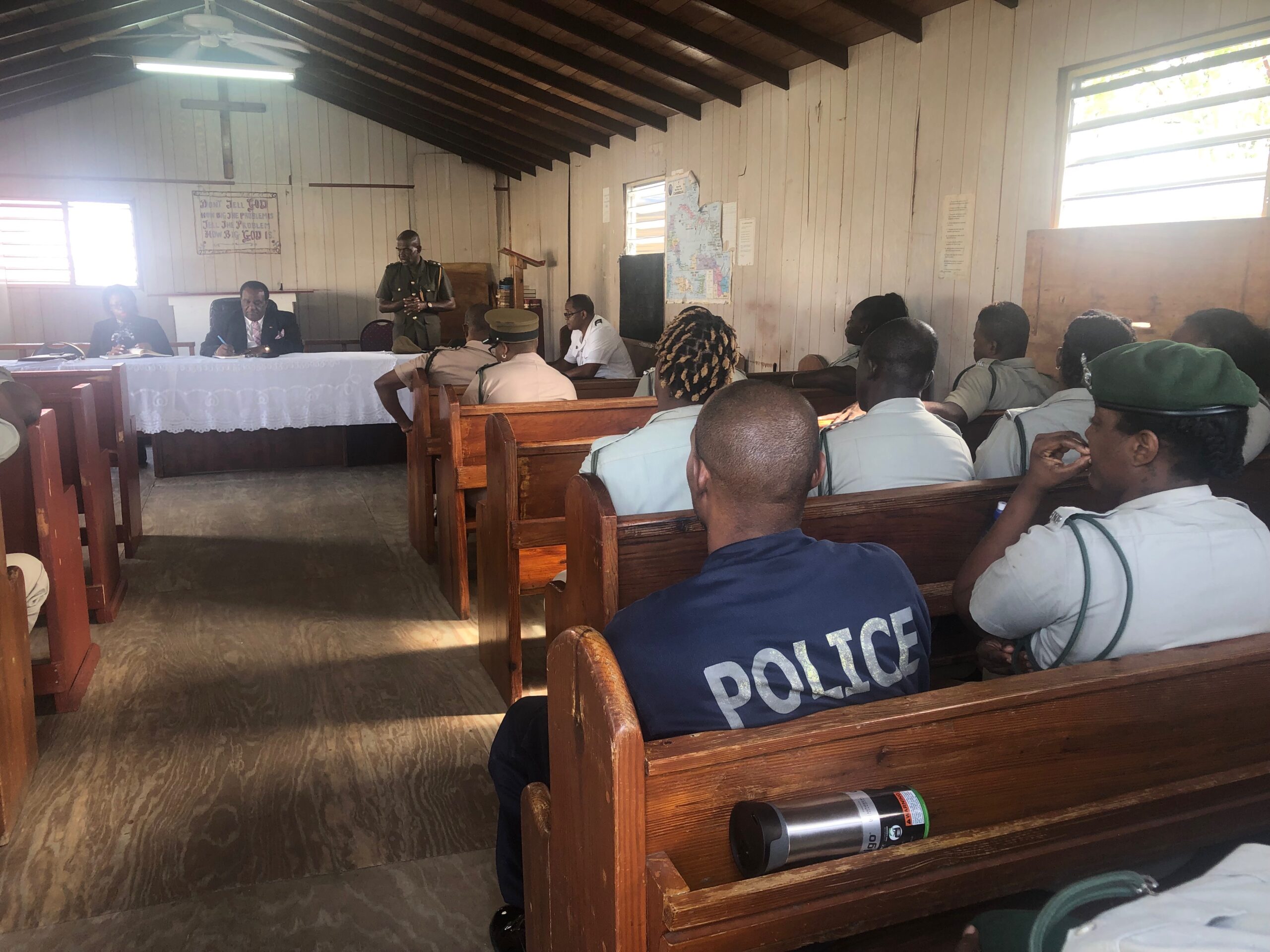
The twin-island nation of Antigua and Barbuda has ushered in a landmark shift to its criminal sentencing rules, ending a decades-long policy that automatically shaved one-third off inmates’ sentences for so-called good behavior behind bars. The policy change, which revises long-standing statutory rules governing sentence remission, is a core component of the Browne administration’s broader push to crack down on rising serious crime by strengthening gaps in the country’s justice system.
Prime Minister Gaston Browne confirmed the amendment to the statutory instrument in an appearance Saturday on the local *Browne and Browne Show*, noting that the revision removes broad discretionary power the prison superintendent previously held to grant the automatic sentence reductions. Under the old framework, any inmate deemed to meet basic good behavior standards during their incarceration was eligible for the one-third sentence cut as a matter of routine, no additional review required.
Browne openly questioned the logic of the existing good behavior standard, casting doubt on how meaningful the classification actually is in a carceral setting. “I say ‘well behaved’ in inverted commas because I don’t know how badly behaved you can be in prison,” he told listeners. Going forward, the automatic pathway to sentence reduction will be eliminated entirely, replaced by a more rigorous, multi-step approval process.
Under the new rules, any request for sentence remission will require the prison superintendent to draft a formal recommendation addressed to the governor general, who will then review the request before making a final decision. “If there’s any discretion, the prison superintendent going forward will have the authority to write to the governor general to make a recommendation for some remission in the sentencing,” Browne explained.
The sentencing overhaul is not an isolated policy change, but one piece of a broader package of criminal justice reforms the Antigua and Barbuda government is advancing to combat growing rates of serious crime. Browne argued that systemic weaknesses including automatic sentence cuts, overly lenient court-imposed penalties, and under-resourced law enforcement have hamstrung the country’s crime-fighting efforts, prompting the administration to take sweeping action.
In addition to revising sentence remission rules, the government is currently drafting binding minimum sentencing legislation for firearms offenses and sexual violence crimes. The administration is also moving to strengthen prosecutorial services across the country and boost budget and personnel resources for local law enforcement agencies, aiming to create a more deterrent, effective criminal justice system that reduces violent and organized crime.
-
The dignity, independence, and sovereignty of Cuba have also been defended by its women
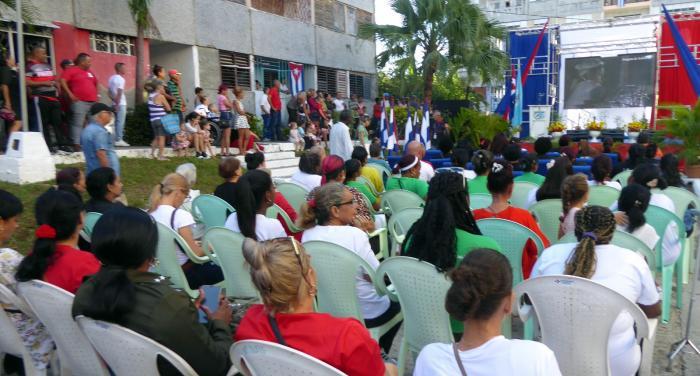
On August 23, 2026, at a landmark commemoration held in Cuba’s western province of Pinar del Río, top Cuban women’s movement leader Teresa Amarelle Boué marked six decades of transformative work by the Federation of Cuban Women (FMC), highlighting the organization’s indelible role in advancing gender equity and defending national sovereignty.
Amarelle Boué, who serves both as a member of Cuba’s Political Bureau and the FMC’s General Secretary, opened her address by grounding the organization’s legacy in the broader struggle for Cuban self-determination: the dignity, independence and sovereignty that define modern Cuba are not just achievements of the revolution — they are victories built and defended in equal part by Cuban women, she stressed. Over 66 years, what began as a grassroots movement has reshaped the place of women in Cuban society, shifting their role from passive observers of national life to central protagonists shaping their own history and the country’s future.
The FMC’s founding, which followed closely on the 1959 Cuban Revolution, unlocked unprecedented opportunities for millions of women across the island, Amarelle Boué recalled. Before the revolution, widespread exclusion barred most women from education, formal work and public leadership. Today, the tides have shifted dramatically: women now make up the majority of the workforce in key sectors including education, public health, scientific research and the national judicial system. Their presence is also growing rapidly in new areas of the economy, including the non-state business sector, agricultural production cooperatives, and senior leadership positions across all levels of government. As a striking example of this progress, Cuba currently holds the world’s second-highest share of female representation in its national parliament, a statistic that underscores the depth of women’s integration into Cuban governance.
Even as the organization celebrates these milestones, Amarelle Boué acknowledged the steep challenges that persist, most notably shaped by the decades-long U.S. economic blockade of Cuba, which has been intensified in recent years to severe effect on everyday Cuban households. Against this backdrop, the FMC is prioritizing targeted support for the most vulnerable segments of the population, she said. Key priorities include extending outreach and opportunity to young women who are currently neither enrolled in education nor employed, sustaining ongoing efforts to close remaining gender gaps, and expanding programming to prevent gender-based violence across the island. Amarelle Boué emphasized that the FMC will work in close coordination with other national institutions to identify actionable solutions to these pressing challenges.
The anniversary event, hosted at the Hermanos Cruz People’s Council, also included an awards ceremony to recognize outstanding work by regional FMC chapters across Cuba. Four provinces — Artemisa, Matanzas, Cienfuegos, and Villa Clara — received honors for their exceptional program delivery and community impact. Host province Pinar del Río was awarded the distinguished National Vanguard designation for its leadership in advancing the FMC’s mission.
-

Díaz-Canel congratulates Cuban women
On the 66th anniversary of the founding of the Federation of Cuban Women (FMC), Cuba’s top leader Miguel Díaz-Canel Bermúdez, who serves as both First Secretary of the Central Committee of the Communist Party of Cuba and President of the Republic of Cuba, publicly paid tribute to Cuban women’s contributions across the country’s revolutionary and development efforts in a social media post shared on his official Twitter account.
In his message, Díaz-Canel extended heartfelt recognition and warm solidarity to all Cuban women, highlighting that their consistent dedication to national work continues to serve as a powerful source of inspiration for the entire nation, even in the face of ongoing challenges and difficulties that Cuba has navigated in recent years.
Beyond celebrating their legacy, the Cuban president stressed the indispensable role that women play in advancing the country’s revolutionary agenda, stating clearly that the revolution relies on their engagement, effort and commitment to carry forward all its core tasks.
To close his commemorative message, Díaz-Canel invoked the words of Fidel Castro, the iconic historical leader of the Cuban Revolution, to reinforce his tribute: As Fidel once declared, “The women of this nation are invincible.” The commemorative post was accompanied by an image courtesy of the Federation of Cuban Women, and was originally published by state news outlet Granma on August 24, 2026.
-
Column: Niet alleen opleiden, maar ook vasthouden
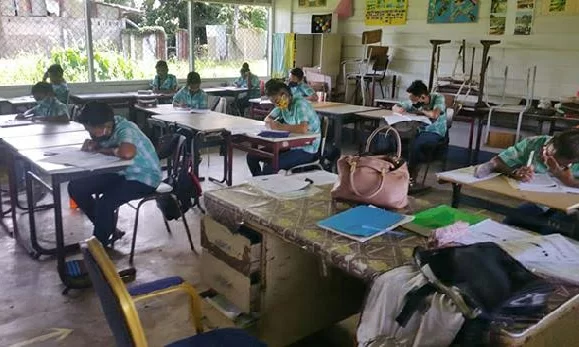
Suriname is currently facing a long-running crisis that threatens the core of its public services: a growing exodus of trained teachers and nurses leaving the country for better opportunities abroad. Now, President Jennifer Simons is taking a first step to reverse the trend, with a urgent public appeal to young students to enroll in teacher training programs at pedagogical institutions across the nation.
To remove initial barriers to entry, Simons announced that incoming trainees in the 2024-2025 academic year will receive full government support covering key costs, including enrollment fees and required study materials. For the administration, this initiative reflects the government’s ranking of education as a top policy priority, and a renewed commitment to building a pipeline of highly qualified, well-prepared teachers for Suriname’s schools.
But the challenge facing the country runs far deeper than low enrollment numbers, observers warn. For decades, Suriname has grappled with the persistent issue of skilled professional emigration, a problem that hits both the education and healthcare sectors equally hard. While offering financial incentives to attract new trainees is a critical opening move, retaining those trained professionals within the country’s borders remains an entirely separate and far more complex challenge.
Teachers and nurses play irreplaceable foundational roles in shaping a healthy, functional society. Teachers guide children, adolescents and young adults to grow into fully developed, responsible citizens, equipping them with the knowledge, core values and practical skills that form the bedrock of a stable, forward-moving nation. Nurses, meanwhile, safeguard public welfare by caring for vulnerable people during illness and recovery, providing life-changing support that bridges the gap between suffering and healing, and upholding the overall health and function of local communities. Without a strong, stable workforce in these two fields, Suriname cannot build a resilient, thriving society.
Working in either profession is widely recognized as a calling, not merely a job. It is a choice made from conviction: a commitment to nurturing young people with care and giving them the focused attention they need to grow, or to tending to patients with compassion to help them heal in comfort. But in modern Suriname, the conversation around these roles has increasingly shifted to financial compensation, driven by growing dissatisfaction among working professionals. Teachers and nurses have repeatedly spoken out demanding better pay, all while carrying out their duties under strained, often difficult working conditions.
This situation is deeply distressing, because the problem extends far beyond inadequate salaries. It is also a matter of public recognition and professional respect. People who enter these fields choose a life of dedication and service to their communities. But when that choice is not matched by fair working conditions and a clear path to long-term security, many young professionals opt to leave the sector entirely, or cross borders in search of better opportunities abroad.
President Simons’ appeal and financial support package mark a welcome step in the right direction, but experts emphasize it is only the first step. Suriname must look far beyond covering up-front enrollment fees and study materials to address the root causes of emigration. The nation needs to invest in building a working environment where teachers and nurses feel truly valued, seen, and supported at every stage of their careers. Only through that kind of systemic change can the country retain trained professionals not just through their training, but for their entire working lives in service to Suriname.
Education and healthcare are the foundational pillars of a healthy, developed society. If those pillars are weak and unstable, the entire structure of national progress will falter. Retaining talent in these essential professions is not an act of charity — it is a matter of national urgency. Suriname must therefore act decisively to deliver fair working conditions, widespread public respect, and clear growth opportunities, so that the professionals who hold the nation together choose to stay and build their future at home.
-
Verkeersveiligheidsplan vraagt minimaal USD 414.500 tot 2030
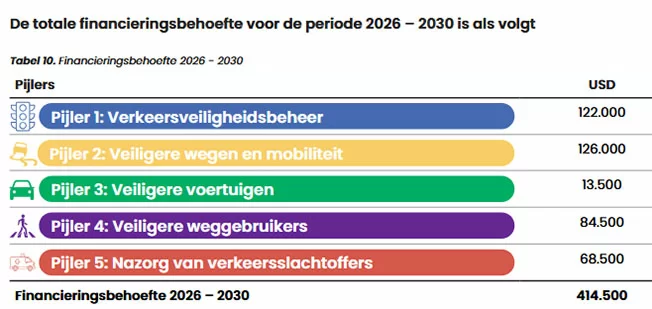
Suriname has laid out an ambitious five-year strategic plan to cut road traffic fatalities and severe injuries in half by 2030, compared to 2021 levels, with an initial indicative funding estimate of at least $414,500 for core coordination activities. However, government planners have cautioned that the total cost of full implementation will be significantly higher, as major expense categories such as large-scale infrastructure upgrades, police enforcement operations, staff salaries, and direct victim care are excluded from the initial baseline estimate, and will need to be covered separately by relevant ministries and public agencies.
The $414,500 figure outlined in the plan represents only the minimum core financing required for the country’s Road Safety Institute (VVI), which will be reorganized into the future Road Authority, to coordinate and support cross-agency execution of the plan’s initiatives. Broken down by priority area, the largest allocation of $126,000 is earmarked for advancing safer road infrastructure and mobility systems. A further $122,000 is budgeted for integrated road safety management, $84,500 for programs targeting safer road user behavior, $68,500 for post-crash victim care coordination, and $13,500 for measures to improve vehicle safety standards.
To advance the goal of safer roads, the plan outlines a series of targeted infrastructure improvements. First, comprehensive safety audits will be conducted for the 25 roads and intersections that recorded the highest number of traffic collisions over the past five years. School zones will also be assessed and upgraded to create protected travel routes for children and youth. The plan calls for annual speed reduction interventions to be rolled out in 10 selected high-risk streets each year, alongside the creation of a national digital database to track the structural condition and safety rating of all paved roads across the country. Regular scheduled maintenance is also mandated for high-traffic corridors in the districts of Paramaribo, Wanica, Para, Commewijne, and Nickerie.
Vehicle safety is another key focus of the new strategic framework. Planners have proposed a full evaluation and targeted upgrade of the national vehicle inspection system, alongside amendments to the 1957 Road Decree to align domestic regulations with updated national and international safety standards. A verifiable mandatory technical inspection procedure will also be developed specifically for mopeds and motorcycles. To raise overall fleet safety, new regulations will ban the import of any motor vehicles that do not meet established national safety standards. Mandatory installation of GPS and tachographs is proposed for all passenger buses and heavy freight trucks. For moped users, a formal national certification system will be introduced, and imports of safety helmets that do not meet legal or international standards will be prohibited, with existing regulations on helmet use strengthened.
The plan also prioritizes more intensive, targeted enforcement of existing traffic laws. It calls for expanded police presence and road checkpoints, with a focus on the high-population, high-traffic districts of Paramaribo, Wanica, Para, Nickerie, and Commewijne. Additional traffic officers will be recruited, trained, and deployed at high-risk locations during peak travel periods. More frequent inspections are planned for public transport vehicles, freight trucks, and logging trailers, with strict enforcement of regulations covering cargo weight, height, and length limits. The plan also introduces a new requirement that cyclists, moped riders, and motorcyclists must wear reflective safety vests when traveling after dark. Stricter qualification rules are proposed for bus drivers, truck drivers, and driving instructors, including mandatory periodic medical examinations, regular alcohol and drug testing, defensive driving training, and mandatory fatigue monitoring.
A standout component of the plan is its focus on improving post-crash emergency response and victim care. To reduce response times and improve survival outcomes, the proposal calls for the deployment of additional first aid stations and ambulance services along major national highways, distributed to ensure fair geographic coverage and decentralized access. The performance of the national 115 emergency hotline will also be evaluated, including a review of response times for police, fire, and ambulance services. Training in basic first aid will be rolled out not only for first responders but also for taxi drivers, bus drivers, and ordinary members of the public to enable immediate intervention after crashes. The Victim Care Bureau under the Ministry of Justice and Police will receive institutional, professional, and financial strengthening to support long-term victim support. The plan also includes provisions to draft a new damage compensation fund law and introduce legal protections for Good Samaritans who provide emergency first aid at crash sites.
As it stands, the $414,500 indicative budget only covers core coordination and planning activities carried out by the VVI. Salaries for VVI staff are not included, as these personnel are seconded by the government, and all costs for frontline implementation led by other agencies are excluded from this baseline estimate. The final total cost of the plan will depend on the level of funding individual ministries allocate to infrastructure upgrades, enforcement, emergency care, and other required initiatives. The overarching 50% reduction target for traffic deaths and severe injuries by 2030 remains the plan’s core guiding policy goal.
-

CTEC and the Question of Standards: Setting the Record Straight
BRIDGETOWN, BARBADOS – As public discourse grows around the Caribbean Examinations Council’s (CXC) new Caribbean Targeted Education Certificate (CTEC), the organization’s Registrar and Chief Executive Officer Wayne Wesley has stepped forward to address widespread questions about the modular qualification’s academic standards, structure, and intended impact across the region’s education landscape.
Wesley notes that public scrutiny of CTEC is a healthy part of educational innovation, and opens by framing the new certification as a targeted response to a decades-long crisis in Caribbean education: thousands of secondary students leave the system every year without recognized certification in Mathematics, a foundational requirement for further study, skills training, and entry to the workforce. Traditional one-size-fits-all assessment structures have failed to serve the needs of all learners, he argues, creating an urgent need for alternative pathways that recognize incremental progress.
The most common criticism leveled at CTEC is that it represents a deliberate lowering of academic standards designed to inflate pass rates through easier assessments. Wesley pushes back firmly against this claim, emphasizing that CTEC’s Mathematics modules draw from the same syllabus, test the same mandated learning outcomes, and are held to the same rigorous quality assurance standards that underpin all existing CXC qualifications. The only difference between CTEC and traditional assessment models is the pathway to certification, not the bar for competence, he explains.
Unlike traditional terminal examinations that require students to demonstrate mastery of an entire subject’s content in a single high-stakes sitting, CTEC allows learners to earn credit for focused, modular sections of the syllabus over time. This modular structure is not equivalent to simplifying content, Wesley stresses. Modular and stackable credentials have long been accepted as a legitimate assessment model by universities, professional bodies, and certification agencies across the globe, with academic rigor remaining the core priority for CXC.
The modular approach directly solves a well-documented flaw of all-or-nothing high-stakes testing, Wesley argues. Many students master large portions of the Mathematics syllabus but walk away with no formal recognition of their achievement simply because they could not demonstrate full mastery on a single exam day. CTEC reframes success from a binary “pass or fail” outcome to a cumulative process: every completed module delivers documented, verified proof of learning, building incrementally toward the full qualification. This structure does not reduce expectations; it creates a more accessible, manageable pathway for learners to demonstrate their skills.
Wesley also addresses transparency concerns around how CTEC credentials will be interpreted by employers and higher education institutions. He confirms that CXC agrees full transparency is non-negotiable for a credential to hold value: completion of a single CTEC module only certifies competence in that specific module’s learning outcomes, and does not represent completion of the full subject qualification. The full CTEC subject qualification is only awarded once all required modules are successfully completed and all certification requirements are met.
To eliminate ambiguity for stakeholders, CXC plans to expand guidance for employers and higher education institutions, redesign official transcripts, and update certification documentation to clearly distinguish between partial module completion and full qualification achievement. The organization’s core goal, Wesley says, is to ensure every learner’s progress is recognized accurately and transparently.
On questions of whether the full CTEC qualification is equivalent in mastery to the traditional terminal examination, Wesley notes that assessment validity depends on whether competencies are accurately measured and standards are maintained – not on whether testing occurs in a single sitting or spread across multiple sittings. The CTEC framework is built to require candidates to demonstrate proficiency across all required learning domains before awarding a full qualification. Recognizing that public confidence requires tangible evidence rather than just assurance, CXC will conduct ongoing evaluation of progression patterns, completion rates, performance outcomes, and qualification standards as the program scales.
Critics have also raised concerns about the risk of a “pass and forget” phenomenon, where learners complete modules and do not retain earlier foundational knowledge as they progress. Wesley explains that cumulative reinforcement of earlier learning is built into the progressive modular pathway, and CXC has already implemented a maximum time limit for completing modules toward a full qualification to mitigate this risk. He notes that this challenge is not unique to CTEC, and CXC will continue to monitor learner progression and refine support structures as the program evolves, consistent with the organization’s commitment to pairing innovation with ongoing evaluation.
Another pressing concern addressed is the risk that CTEC could deepen educational inequality if it becomes a de facto second-tier pathway primarily used by under-resourced schools, while more privileged institutions continue to rely exclusively on traditional assessment routes. Wesley stresses that this concern is taken very seriously by CXC, noting that CTEC was never designed to serve a specific group of learners, schools, or communities. Instead, it was built to expand opportunity for all diverse learners, including in-school students, out-of-school youth, adult learners, and those pursuing flexible learning routes.
Wesley says the success of CTEC will not be measured solely by participation or pass rates. It will be judged by whether it expands access, supports consistent learner progression, delivers completed qualifications, earns stakeholder confidence, and reduces opportunity gaps. CXC’s goal is not to create a parallel, two-tier education system, but to broaden access to rigorous, recognized certification while upholding longstanding academic standards.
Wesley concludes by emphasizing that CTEC is only one component of broader educational transformation across the Caribbean. The qualification is not a substitute for systemic education reform, nor a shortcut to improved outcomes. It is an additional pathway that allows learners to build competence, earn verified credentials, and progress incrementally toward recognized qualifications that open doors to future opportunity.
Welcoming ongoing public debate about the future of Caribbean education, Wesley notes that the questions being raised about CTEC are not obstacles to its success – they are the exact questions responsible educational institutions must address to improve learner outcomes. As CXC moves forward with implementation, the organization remains committed to transparency, evidence-based policy, stakeholder engagement, and unwavering maintenance of academic standards. Ultimately, CTEC will be judged by one metric: whether it helps more Caribbean learners demonstrate real competence, earn recognized credentials, access new opportunities, and reach their full potential. That is the standard CXC uses to hold itself accountable.