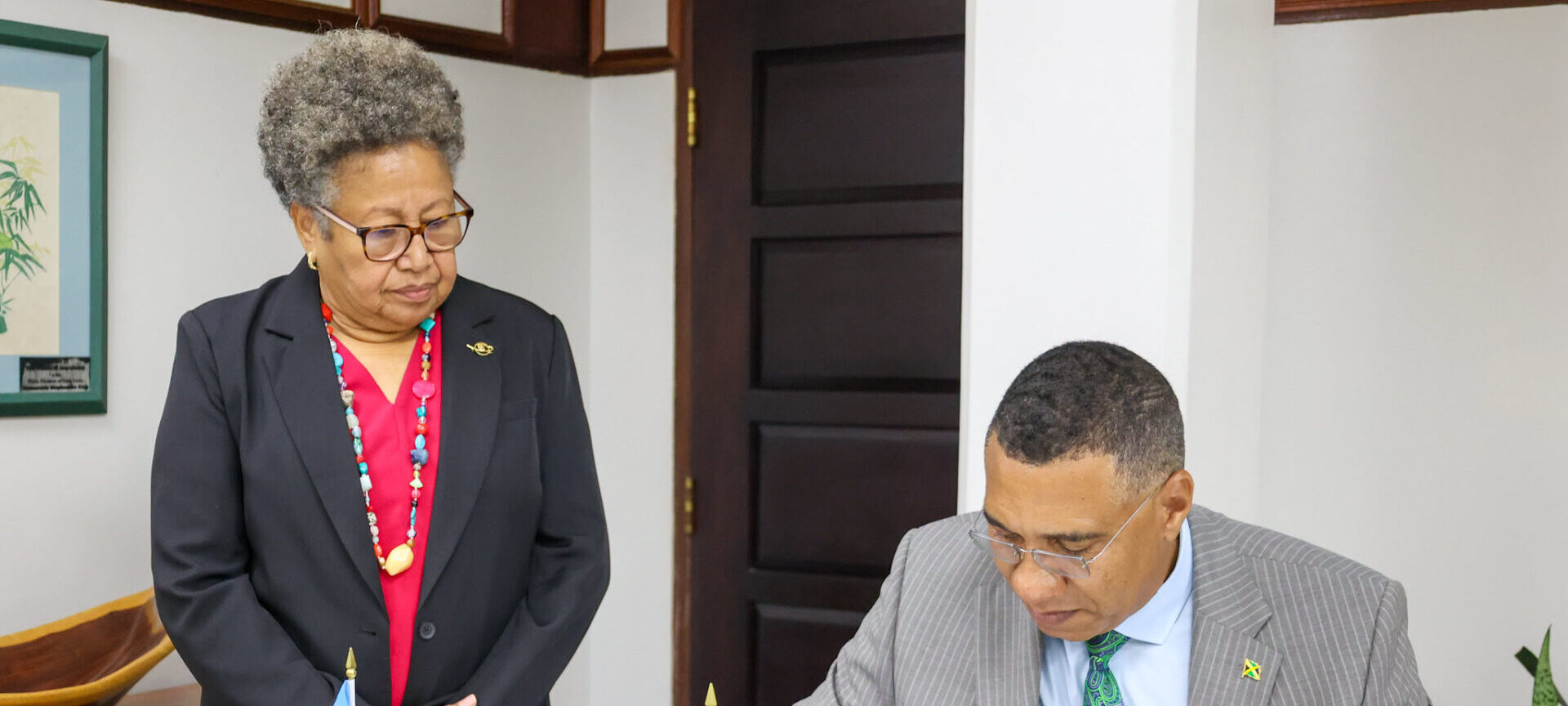
During an official working visit to Guyana that included a stop at the Caribbean Community (CARICOM) Secretariat Headquarters in Georgetown, Jamaican Prime Minister Andrew Holness has publicly underscored CARICOM’s irreplaceable role in driving Jamaica’s national development, framing the 15-nation regional bloc as a foundational platform for collective action and diplomatic coordination on shared regional challenges.
In comments delivered to Secretariat staff and released in an official CARICOM statement, Holness emphasized that CARICOM retains its centrality to Jamaica’s growth trajectory even as the global order shifts toward greater geopolitical and economic uncertainty. “We see CARICOM as absolutely important to our own national development,” the prime minister stated, noting that the integration body serves as both a critical tool for multilateral diplomacy and a core pillar of Jamaica’s foreign policy strategy.
Holness acknowledged that member states do not always align on every individual foreign policy position, but pointed out that the regional integration movement allows even diverse nations to advance shared, mutually beneficial foreign policy goals that no single small island state could achieve alone.
Beyond diplomatic cooperation, the prime minister used his visit to highlight untapped potential for deeper economic integration across the Caribbean. Speaking at the opening ceremony of the four-day 2026 International Building Expo in Georgetown on June 25, Holness argued that the region holds vast, underexploited opportunities for cross-border economic collaboration. “The opportunities for economic collaboration are very wide and very deep,” he said. To unlock this potential, he added, collective action beyond one-on-one bilateral agreements is required: Caribbean nations must work together to standardize cross-border rules and regulations, creating a unified framework that allows all members to capitalize on shared economic opportunities.
Holness stressed that nearly all of the most pressing challenges facing Caribbean nations, from climate vulnerability to global economic volatility, demand coordinated regional responses rather than isolated national action. “There are common challenges that we need to pursue as a Region, and the best institution to do that is CARICOM,” he said.
The prime minister also paid tribute to the critical work carried out by the CARICOM Secretariat, noting that its team of technical experts and administrative staff play an indispensable role in helping regional political leaders navigate fast-shifting global and regional developments. “Your job as regional administrators and technocrats is to help us, the political leaders, understand the dynamics and the changes that are happening globally and regionally,” Holness said. “We rely on you to make sense of the changing and complex global situation, and our regional situation as well.”
He further highlighted the Secretariat’s core responsibility to oversee implementation of the Revised Treaty of Chaguaramas, the legal framework governing CARICOM integration, and ensure the bloc’s legal and operational systems function effectively. “At the heart of it is that if the legal framework and the Treaty are not perfected, then bilateral and multilateral relationships can become very difficult,” he explained.
Holness added that the true measure of CARICOM’s success is not institutional progress alone, but tangible improvements to the daily lives of ordinary citizens across member states. This includes delivering on the bloc’s core commitments such as the free movement of labor and capital, expanding cross-border education and training opportunities, and rolling out other integration initiatives that directly benefit working people and communities.
Closing his remarks, the prime minister expressed full confidence in CARICOM Secretary-General Carla Barnett and the entire Secretariat staff, noting that the team is making dedicated efforts to equip member states with the strategic guidance needed to respond to global shifts, seize emerging economic opportunities, and advance the core objectives laid out in the Revised Treaty of Chaguaramas.