
As an upcoming election moves steadily closer, the top official of the national electoral body has stepped forward to clear up widespread confusion over the agency’s legal powers to address disputed voter claims and objections during the pre-election period. Speaking to assembled journalists at the Electoral Office’s headquarters on August 20, 2026, Chief Electoral Officer Anthea Joseph outlined the hard legal boundaries that limit her team’s work once an election is formally called. Joseph explained that under the newly enacted Registration of Electors Act 2025, specifically Section 24(2), the agency is barred from launching or conducting any investigations into claims or objections submitted after the official election writ is issued and before voting concludes on polling day. This legally mandated pause, she emphasized, is not a procedural oversight or a failure to act, but an explicit rule set by the nation’s legislature to streamline pre-election operations and avoid last-minute disruptions to voting preparations. Joseph confirmed that the restriction is temporary, and full investigative powers will be restored to the Electoral Office immediately after polling day. At that point, the agency will resume work on all outstanding claims and objections in line with its legislative mandate. The official clarification comes as the Electoral Office continues its incremental preparations for the upcoming vote, with all work being carried out strictly in adherence to the timelines and operational limits laid out in the nation’s electoral legislation. Joseph’s public statement was widely interpreted as a proactive move to pre-empt public criticism and misinformation about the office’s responsibilities in the final lead-up to the election.
作者: admin
-

Paul Quinn Back in Hospital After Health Setback, Family Says He Is Improving
One of Antigua and Barbuda’s most recognizable veteran broadcasters, Paul Quinn, is now showing encouraging signs of improvement after being readmitted to a medical facility this week, as he continues his long road to recovery following a devastating major stroke late last year.
According to a statement released by Quinn’s family, the well-known media personality was transferred to the hospital on Thursday afternoon after clinicians detected three concerning health complications: abnormally low blood pressure, an irregular cardiac rhythm, and aspiration pneumonia. These new issues emerged just months after Quinn suffered the severe stroke that has kept him in recovery since November 10, 2024.
In an update shared with the public Friday, Quinn’s relatives reported that the 78-year-old broadcaster has responded positively to the targeted medical interventions he has received since being readmitted. Calling on the wider community that has long supported Quinn throughout his career to continue standing with him during this challenging time, the family asked for continued prayers and well-wishes.
“He is doing a lot better now. Please keep him in your prayers,” the family said in a brief, heartfelt statement to local media.
Quinn has built a decades-long legacy in Antigua and Barbuda’s media landscape, most notably for his long tenure at Observer Radio. There, he co-hosted the station’s flagship and widely popular talk show “Voice of the People”, a program that became a staple of daily local discourse for thousands of listeners across the twin-island nation, giving a platform to ordinary citizens to share their concerns, opinions, and experiences.
Since Quinn first suffered his severe stroke late last year, the outpouring of support for the veteran broadcaster has been widespread across Antigua and Barbuda. Former on-air colleagues, long-time listeners, community leaders, and other members of the public have all shared messages of support, hope, and solidarity with Quinn and his family as he works through his extended recovery process.
-

Nieuw gerechtsgebouw Nickerie wordt vandaag opgeleverd; zittingen vanaf oktober
On August 24, Suriname marks a key milestone in its judicial infrastructure upgrade, with the official handover of a purpose-built new courthouse in Nieuw Nickerie, located along Mohamed Jasin Nasrullahstraat. The facility is scheduled to begin hosting full court sessions starting this October, bringing an end to decades of inadequate housing for the district’s judicial operations.
Harish Monorath, Suriname’s Minister of Justice and Security, is set to lead the handover ceremony, capping off months of construction and final preparations for the project. Speaking to local outlet Starnieuws ahead of the event, Monorath confirmed that all core structural construction work on the building has been completed, meeting all required standards for official handover. A small set of final outfitting tasks remains to be finished before judicial staff can move into the space: these include paving the public parking lot and installing custom court furniture and security infrastructure across the facility.
The new building replaces the district’s current courthouse, which Monorath noted is nothing more than a repurposed residential home ill-suited to formal judicial proceedings. Unlike the outdated converted space, the new facility is a purpose-built, modern justice center designed to support all types of court activities, from routine small claims hearings to high-profile criminal trials.
This infrastructure upgrade aligns with a broader national push to expand judicial capacity across Suriname, aimed at reducing case backlogs and improving access to justice for all citizens. Vice President Gregory Rusland previously announced to the National Assembly that he signed official authorization documents on July 30 for the appointment of 15 new judges across the national judiciary. The remaining procedural steps — including the president’s formal appointment resolution, official swearing-in, and onboarding of the new judicial officers — are still pending, but preparatory work is already underway following the approval of the authorization missives.
According to Rusland, national judicial leadership has already received formal notification of the authorization, allowing planning for the new judges’ deployment to move forward. Current projections expect the 15 new judicial officers to begin active service starting in October, matching the timeline for the opening of the new Nieuw Nickerie courthouse.
For residents and legal practitioners in western Suriname, the combined upgrades are expected to deliver long-overdue improvements to local justice services. Beyond the obvious benefit of better, more dignified facilities for conducting hearings, the new courthouse and expanded judicial capacity will streamline court operations, reduce waiting times for case resolutions, and make judicial services more accessible to communities across Nickerie and the broader western region of the country.
-
![CFU Challenge 2026 (U-14) : Haiti Caribbean Champions, humiliate Jamaica [4-0]](https://wp.caribscopeonline.com/wp-content/uploads/2026/08/c4d691a9bc0c95d445befffb378df2f3.webp)
CFU Challenge 2026 (U-14) : Haiti Caribbean Champions, humiliate Jamaica [4-0]
On August 23, 2026, Caribbean youth football made history at the Los Establos stadium in Cap Cana, Punta Cana, Dominican Republic, as Haiti’s under-14 men’s national team—the young Grenadiers—delivered a masterclass performance to claim the 2026 Caribbean Football Union (CFU) Boys’ Under-14 Challenge Series Tier I championship with a resounding 4-0 victory over Jamaica’s Reggae Boyz. This win marks Haiti’s third title in the competition, following previous triumphs in 2021 and 2022, cementing the nation’s reputation as a dominant force in regional youth football.
Heading into the highly anticipated final match, head coach Jean Marc Alexandre made one strategic adjustment to his starting lineup, calling up Wood-James Bernard from Haiti’s EFAT academy to replace Jerry Petit-Homme of FC Toro. The starting eleven that took the field featured captain Cédric Claremond of Les Rouleurs FC, goalkeeper Marc-Evens Lubin of Ideal FC, and standout young talents Ronelson Pelé Janvier (Les Rouleurs FC) and Jodley Sheeckensley Delmas (EXAFOOT), among other rising prospects from leading Haitian youth clubs.
The first half saw Haiti assert control of possession early, creating multiple dangerous scoring opportunities before breaking the deadlock in the 28th minute. A well-timed through pass from Ronelson Pelé Janvier found Jodley Sheeckensley Delmas inside the box, who coolly slotted his shot into the bottom left corner to give Haiti a 1-0 lead going into halftime.
Coming out of the break, Haiti’s momentum showed no signs of slowing. Just seven minutes into the second half, Wensley Dumorne, positioned just outside Jamaica’s penalty area, hit a clinical strike to double the Grenadiers’ lead to 2-0. In the 46th minute, Jamaica’s goalkeeper made a sharp save to deny a shot from Marvens Fenelon, but Haiti quickly extended their advantage anyway. Eddyson Paul-Jean played a perfect through ball to Dumorne, who dribbled past two Jamaican defenders before tapping in his second goal of the match, putting Haiti up 3-0.
The final goal of the match came in the 58th minute, when Janvier outpaced a Jamaican defender on a breakaway and slid the ball into the back of the net to cap off the 4-0 rout. When the final whistle blew, the Haitian young squad erupted in celebration, officially lifting the regional trophy for the third time in five years.
Individual honors reflected Haiti’s dominant run throughout the entire tournament: Delmas finished the competition as its top goalscorer, while Dumorne, who scored two crucial goals in the final, was named the 2026 CFU U-14 Challenge Series Most Valuable Player. The win caps off an impressive campaign for Haiti, which had previously secured big wins over the Dominican Republic, Trinidad and Tobago, and French Guiana en route to the final, only dropping one group stage match to Puerto Rico’s Huracans Azul.
-

Hazel wants chairman job
Deepening internal friction within the People’s National Movement’s (PNM) San Fernando East constituency has prompted a veteran figure from one of the region’s most storied political families to enter the race for the local party chairmanship, aiming to calm rising tensions and mend fractured party cohesion.
Hazel Manning, a former government minister and widow of iconic former prime minister Patrick Manning, made her candidacy official in a written statement released Saturday. The announcement was shared publicly on Facebook by her son Brian Manning, the current incumbent Member of Parliament for the San Fernando East constituency. In her address, Hazel Manning framed her decision as a response to widespread calls from party members, noting that after countless outreach efforts from constituents, she had agreed to put her name forward for the chairman role in the interest of restoring unity to the deeply divided constituency.
Her entry into the race comes against a backdrop of escalating open conflict that erupted after Brian Manning publicly aired formal concerns about the performance and conduct of the constituency’s current executive and its sitting chair, Patricia Alexis. The public dispute drew an immediate rebuke from national PNM chairman Marvin Gonzales, who warned party members against airing internal disagreements in public, while confirming that the leadership was reviewing the concerns Brian Manning had raised. Despite this official call for discretion, the constituency executive moved forward with a public rebuttal, deepening the rift within the local party branch.
In her statement, Hazel Manning emphasized that she had personally watched tensions climb and documented the growing unease among San Fernando East residents over the conduct, public reputation, and operations of some current local party representatives. She described the constituency as far more than a standard legislative seat, noting that it holds deep symbolic meaning not only for the Manning family’s decades-long political legacy but also for the PNM as a whole.
“For decades I watched my husband, and now my son Brian Manning, walk every street, take note of every issue and make sacrifices to try to reach and represent every constituent,” she wrote, calling for cross-faction collaboration to move the constituency forward. “Let us work together to repair, recover and rebuild.”
Hazel Manning brings decades of partisan and governmental experience to the race. Records from the Parliament of Trinidad and Tobago confirm she first entered national office as a PNM government senator in 2002, before going on to serve as Minister of Education from 2002 to 2007, and later as Minister of Local Government starting that same year. Her late husband Patrick Manning, one of the PNM’s most prominent leaders, held the San Fernando East seat for 44 years, from 1971 through 2015, and served two non-consecutive terms as the country’s prime minister between 1991 and 2010. Brian Manning has held the family constituency seat since he won it for the PNM in the 2020 general election.
Following the announcement, local media outlet *Trinidad Express* reached out to key stakeholders for additional context on the development. Brian Manning declined to offer further comment beyond confirming that his mother would release additional details in the coming days. Requests for comment from PNM political leader Pennelope Beckles and national chairman Marvin Gonzales went unanswered as of press time.
-
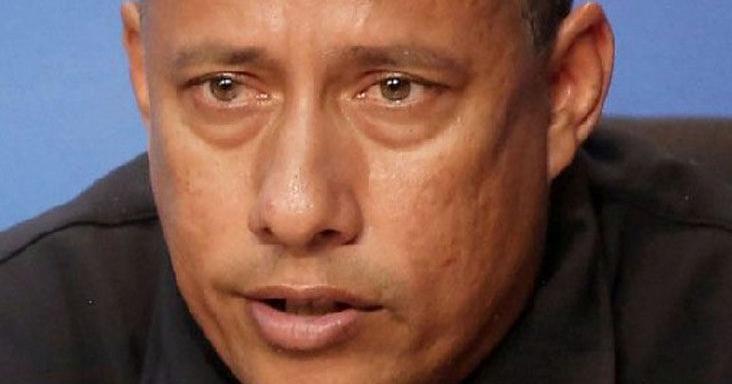
…Gary wants tougher penalties for offenders
Against the backdrop of a recent spike in disruptive bomb threats across Trinidad and Tobago, former national security minister Gary Griffith has launched a bold push for sweeping legal and operational reforms to how the country addresses these incidents. In an exclusive interview with local outlet the Express on Wednesday, Griffith argued that treating these cases solely as routine police work misses their far-reaching implications for national stability, calling for a whole-of-government response that draws on the country’s full intelligence and security infrastructure.
Griffith pointed out that repeated bomb threats, particularly those involving claims of improvised explosive devices (IEDs), do more than just disrupt daily life—they are often intended to sow widespread public panic and erode confidence in state institutions. He questioned whether current legislative frameworks are robust enough to hold perpetrators accountable for the far-reaching harm they cause, and called for a nuanced legal distinction between isolated, frivolous threats and coordinated acts designed to destabilize the nation.
Under Griffith’s proposal, cases that meet criteria for intentional destabilization should be prosecuted under existing terrorism legislation, carrying the possibility of life imprisonment for convicted offenders. He also noted that where evidence links organized criminal groups to coordinated threat campaigns, the country’s anti-gang laws should also be deployed to pursue maximum penalties. The former minister stressed that these harsher sanctions are not just punitive—they are a necessary deterrent for actors seeking to undermine national order.
Beyond legislative changes, Griffith criticized the current response model that leaves primary responsibility for investigations with the Trinidad and Tobago Police Service (TTPS), arguing that this siloed approach is outdated and ineffective. He recalled that the National Operations Centre (NOC), an agency launched during his tenure as national security minister following official recommendations from the Commission of Enquiry into the 1990 attempted coup, was specifically built to fix this gap in coordination. The NOC was designed to bring together personnel from the Strategic Services Agency (SSA), the Trinidad and Tobago Defence Force, and multiple divisions of the TTPS to streamline information sharing and joint operations for national security threats.
“This is a matter that demands joint collaboration across all arms of the country’s intelligence community, not just a single agency,” Griffith emphasized. He pushed back against public narratives that reduce the bomb threat wave to a routine policing issue with imminent arrests promised, calling that framing a backward approach that ignores the potential for coordinated subversion. “It is only in a backward country that you’re hearing there’s bomb threats, and it’s a police matter, and the police investigating,” he said.
Griffith clarified that his criticism of the current response structure does not reflect a lack of confidence in the country’s security personnel. He expressed unwavering optimism that perpetrators will eventually be identified and brought before the courts, grounding that confidence in the extensive training and advanced capabilities of personnel across all protective service branches, not just the TTPS. “I am very confident that this matter would be dealt with, and those persons will be brought to justice,” he said.
In closing, Griffith repeated his call for urgent review and amendment of national security legislation to close gaps that allow those who cause mass disruption and panic to face disproportionately lenient consequences. He reiterated that threats deliberately crafted to destabilize the nation and spark political upheaval deserve the same severe penalties as other acts of terrorism, arguing that this alignment of law and policy is critical to protecting public safety and national security moving forward.
-

Sexual misconduct court martial set to start today
After a two-year hiatus, the Trinidad and Tobago Defence Force (TTDF) is preparing to convene its first court martial proceedings since 2022, centered on a years-old sexual misconduct allegation that lay dormant for months before being resurrected under a looming legal deadline.
The case, which stems from an incident that occurred nearly three years ago, centers on a reserve corporal accused of making unwanted sexual advances toward a female service member. The investigation was originally closed after initial evidence was collected, but went cold until the alleged victim threatened to file a formal legal suit against the TTDF, forcing the military leadership to reopen the inquiry.
Commodore Don Polo, Chief of Defence Staff, has formally approved an ordinary court martial for the accused service member. Proceedings are scheduled to kick off today at the TTDF Headquarters located in Chaguaramas. Legal timelines play a critical role in this case: under Section 128 of the national Defence Act, military court martials face a strict three-year limitation period for initiating disciplinary proceedings, meaning the current proceedings have been called just days before the window to bring the case would have expired permanently.
A structured judicial panel has been assembled to oversee the proceedings. Squadron Leader K Ramsingh will serve as the president of the court, with fellow panel members Squadron Leader S Chase and Captain D Sealey supporting the proceedings. Captain (N) ZM King has been appointed as Judge Advocate to preside over the conduct of the trial, while Captains B Francois and S Soodeensingh have been tapped to lead the prosecution. As of the opening of proceedings, the accused reservist has not yet entered a plea in response to the allegations against him.
-
NLCB eyes third Lotto draw
The National Lotteries Control Board (NLCB) is plotting a series of strategic expansions to its legal gaming operations, including a potential third weekly Lotto draw and new digital payment options, as it works to chip away at the Caribbean nation’s massive multi-billion-dollar illegal gambling market. The organization projects strong sales growth in the coming fiscal year, riding high on the unexpected success of a recent Sunday gaming initiative launched earlier this year.
-

Antigua and Barbuda’s One Nation Concert Could Expand to Three Nights in January
One of Antigua and Barbuda’s most anticipated annual cultural gatherings, the One Nation Concert, is currently in advanced planning stages that could see the popular event stretch across three full nights when it returns in January, event organizers have confirmed. The concert, which has long served as a unifying platform for celebrating the Caribbean nation’s diverse artistic talent and shared national identity, has historically run as a single-night or two-night showcase, drawing thousands of local attendees and international tourists each year.
-

China stelt lancering Chang’e-7-maanmissie uit, jacht op waterijs op pauze
China has announced a last-minute delay to its highly anticipated Chang’e-7 lunar mission, a groundbreaking unmanned expedition targeted at the moon’s south pole that aimed to detect and study buried water ice deposits. The mission, originally scheduled for launch within the next few days from the Wenchang Space Launch Center on China’s southern island province of Hainan, was called off after Chinese space authorities determined the probe failed to meet pre-launch technical requirements.
In a brief statement released Sunday, the China National Space Administration confirmed that the mission will not proceed within its originally planned launch window this year. The decision followed a comprehensive technical evaluation conducted under the core guiding principles of caution, reliability, and a commitment to ensuring absolute mission success. No further details have been provided on the specific issues that prompted the delay, and no revised launch date has been announced to date.
As the seventh mission in China’s expanding Chang’e lunar exploration program, Chang’e-7 is widely regarded as the most technologically sophisticated unmanned lunar mission the country has ever developed. The multi-component mission consists of four separate craft: an orbiter that will circle the moon, a main lander, a wheeled rover, and an innovative small flying robot capable of crawling, jumping, and hovering across challenging lunar terrain. Its primary objective is to touch down in the permanently shadowed craters that dot the moon’s south pole, a remote region where planetary scientists suspect large, viable deposits of water ice have been preserved over billions of years.
The discovery and characterization of lunar water ice carries enormous strategic and scientific value for future human deep space exploration. These deposits could be processed to produce drinking water, breathable oxygen, and even rocket propellant — resources that are critical to establishing a long-term permanent human outpost on the moon. This potential has turned the lunar south pole into the epicenter of a new global space race, led primarily by China and the United States. While the U.S. has deployed multiple probes targeting the region, no mission to date has successfully completed core sampling and verification of accessible water ice deposits.
Prior to the delay announcement, experts noted that Chang’e-7 was positioned to become the first mission to achieve this historic milestone, and the postponement could temporarily shift the dynamics of the ongoing global lunar competition. “With Chang’e-7, China’s lunar program is shifting from pure exploration to a focus on resource utilization,” Yuqi Qian, a lunar geologist at the University of Hong Kong, previously told CNN. The mission was expected to deliver definitive answers on whether the lunar south pole holds enough usable water ice to support future human activities, marking a key step forward in global lunar research.
China’s lunar program takes its name from Chang’e, the traditional Chinese moon goddess. The program’s most recent prior mission, Chang’e-6, made global history in 2024 as the first probe ever to return rock and soil samples from the far side of the moon, a feat that demonstrated China’s growing advanced deep space exploration capabilities. As of now, the timeline for Chang’e-7’s new launch date remains unclear.