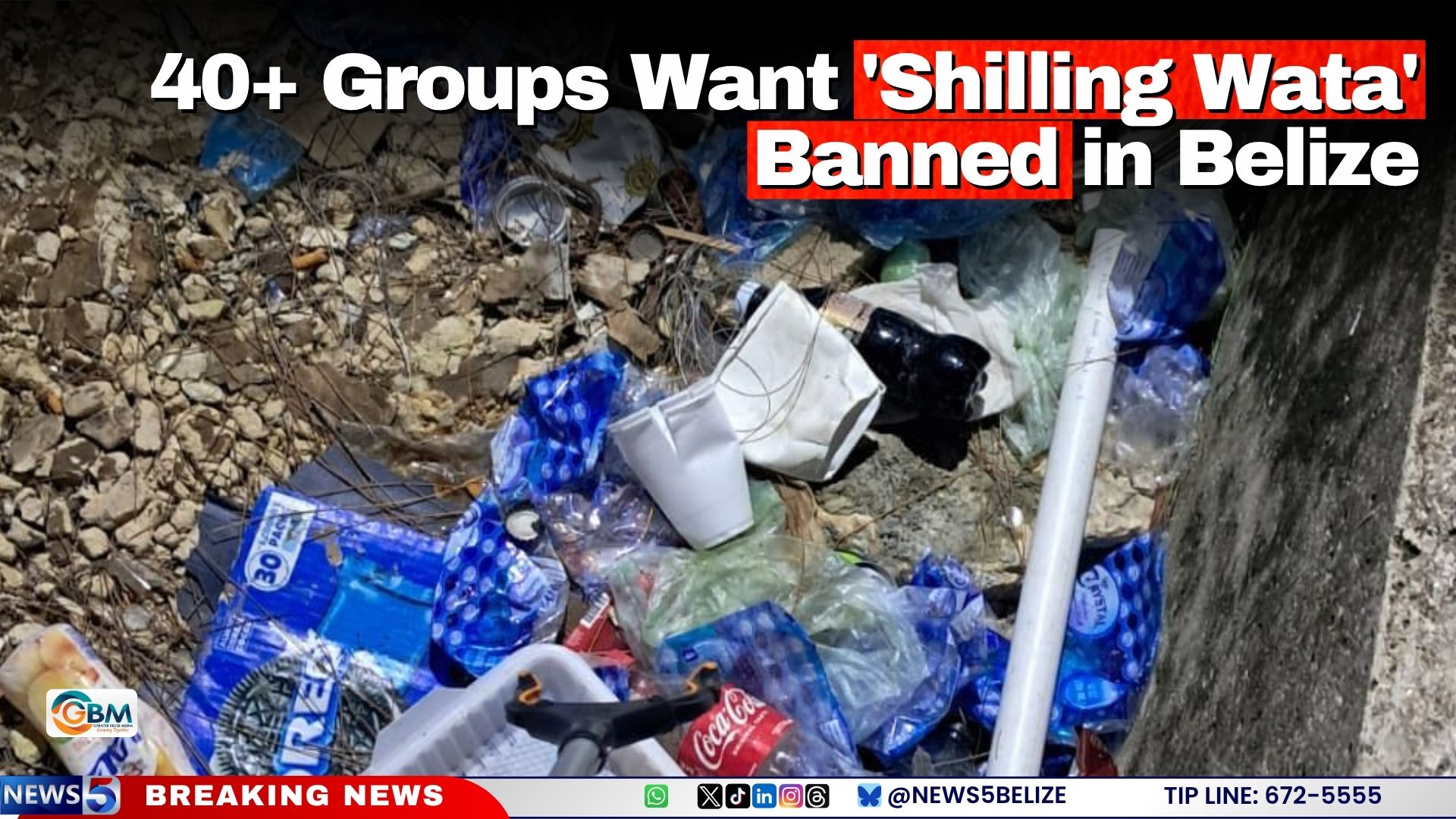
In a growing push to curb plastic pollution across Belize, a broad coalition of more than 40 civil society organizations, academic institutions, and private businesses is demanding a three-year phased national ban on the ubiquitous single-use plastic water pouches locally known as “shilling wata”.
The campaign, which first launched with an initial proposal submitted to national regulators in April, gained significant traction this week when coalition members submitted an updated letter to Minister of Sustainable Development Orlando Habet and Chief Environmental Officer Anthony Mai, adding dozens of new supporting organizations to the effort. The revised list of signatories, delivered to officials on Thursday, now includes major national stakeholders such as the University of Belize, Galen University, the Belize Audubon Society, Oceana Belize, the Belize Zoo, the Belize Territorial Volunteers, and a wide range of leading tourism and conservation groups across the country.
Coalition members emphasize that these low-cost single-use water pouches have emerged as one of the most pervasive and damaging plastic waste products currently circulating in Belize. Discarded pouches are found littered across public spaces nationwide: blown across neighborhood streets, clogging urban canals and rural rivers, scattered across school playgrounds and campuses, and even dumped and discarded across the seafloor of Belize’s ecologically critical coastal ecosystems.
The coalition’s statement outlines the unique environmental hazards posed by these pouches, noting that they are manufactured from non-recyclable low-density plastic that cannot be processed or recovered through Belize’s existing waste management infrastructure. As the pouches break down over time, they release complex microplastic particles that contaminate marine ecosystems, the country’s freshwater supplies, and agricultural and natural soils, creating long-term risks for both biodiversity and public health.
To balance environmental action with practical adjustment for industry and consumers, the coalition has laid out a gradual, three-phase timeline for the ban. In the first year following implementation, the restriction would apply only to single-use water pouches sold or distributed in all government-owned buildings and at events officially sanctioned by the Belizean government. In the second year, the ban would expand to all primary, secondary, and post-secondary educational institutions across the country. By the third year, the coalition is calling for a full national ban that covers all production, importation, distribution, and retail sale of the plastic water pouches nationwide. Supporters argue that this gradual rollout will give producers, distributors, and consumers adequate time to transition to more sustainable alternative packaging options, reducing economic disruption while delivering long-term environmental benefits.