作者: admin

  • Davis: Lottery would benefit private operators rather than public

    Davis: Lottery would benefit private operators rather than public

    Thousands of energized Progressive Liberal Party (PLP) supporters packed the Bahamas Beach Soccer Stadium on Wednesday evening for a raucous pre-general election rally, where Prime Minister Philip “Brave” Davis launched a scathing attack on the opposition Free National Movement (FNM), questioning its policy agenda and leadership credibility amid mounting domestic and global uncertainty.

    Opening his address to the crowd, which filled the venue’s bleachers with supporters clad in the party’s signature blue and yellow “Choose Progress” apparel, Davis framed the upcoming election as a critical juncture for the island nation. He emphasized that The Bahamas is navigating a complex web of interconnected challenges, from the ongoing conflict in the Middle East and accelerating climate change risks to volatile shifts in the global economy, all of which demand steady, experienced governance that only the incumbent PLP can deliver.

    Davis reserved his sharpest criticism for the FNM’s flagship proposal to introduce a national lottery, arguing the plan is structured to prioritize private profit over public good. “They want the government to underwrite their numbers game, but all the profits go to their connected private operators,” Davis told the cheering crowd. He went on to accuse the opposition of plotting to roll back landmark social programs introduced by his administration, including the widely popular National School Breakfast Programme and the National Youth Guard, while suppressing wage growth for working Bahamians.

    Turning his attention to Opposition Leader Michael Pintard, Davis mocked Pintard’s grip on his own party, claiming the FNM leader is pushed in whichever direction political winds blow. “Poor Pintard. I actually feel a little sorry for him,” Davis said. “He doesn’t lead his party. His party leads him, and that wind is kicking up some very big waves.” Multiple other PLP candidates and sitting Members of Parliament echoed this criticism throughout the event, questioning Pintard’s ability to unify his fractured party and lead the country, dismissing him as inexperienced, petty, and prone to what speakers called deceptive “politricks.”

    The rally drew a massive show of support from across the country’s constituencies: colorful motorcades stretched for blocks along the roads leading to the stadium, with supporters riding on open trucks, waving PLP flags, and chanting for their local candidates. Motorcyclists weaved through nearby traffic, party emblems flying behind them. Along with speeches from a slate of PLP candidates including Mount Moriah hopeful McKell Bonaby, Freetown candidate Wayne Munroe, and Fort Charlotte newcomer Sebastian Bastian, the event featured lively musical performances to rile up the crowd. Bishop Lawrence Rolle delivered a moving rendition of “It Is Well,” while Geno D performed an upbeat rake n’ scrape track encouraging voter turnout. Former Prime Minister Perry Christie, a towering figure in PLP history, received a roaring welcome when his iconic campaign anthem “Sound of a Victory” played over the stadium speakers.

    Davis also took a moment to target FNM’s St James candidate Rick Fox, a former PLP ambassador who switched party affiliation to run for the opposition. Jabbing at Fox’s conduct on nomination day, Davis joked: “People were asking me what kind of Junkanoo dancing that was, if he had some kind of issue. I didn’t know what to say. But don’t be too hard on him. He’s still got a lot to learn. He’s just a First Time Voter.” Davis added that Fox and other FNM candidates frequently launch aggressive personal attacks against him and the PLP, but cry foul when their own weaknesses are pointed out, falsely claiming bullying.

    Deputy Prime Minister Chester Cooper closed the formal policy remarks by urging voters to return the PLP to office to allow the current administration to continue delivering on its development agenda. In his closing remarks, Davis framed the upcoming election as a clear binary choice for Bahamian voters: either continue on a path of consistent progress under the PLP, or reverse course and return to the old pattern of halting critical infrastructure and social projects every time a new administration takes office. “This election isn’t just about changing personalities. It’s about choosing whether we move forward together, or fall backward into the same old cycles that have held our country back,” Davis said.
  • Harvey Weinstein rape retrial hears opening arguments

    Harvey Weinstein rape retrial hears opening arguments

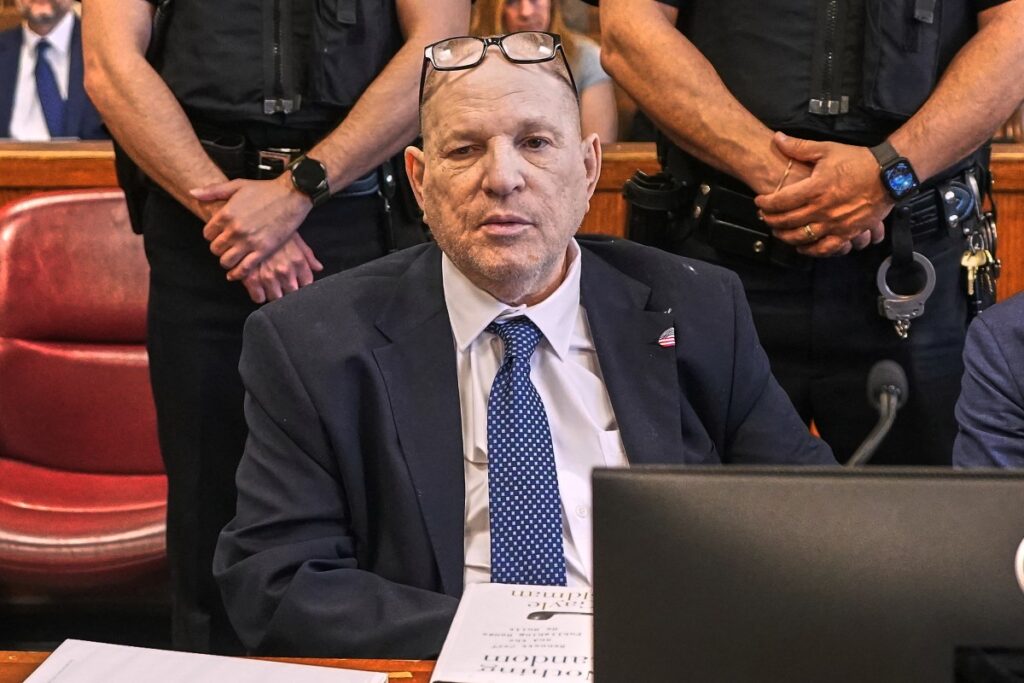
    More than six years after explosive sexual misconduct allegations against Harvey Weinstein ignited the global #MeToo movement, a Manhattan state supreme court jury has begun hearing the disgraced Hollywood film mogul’s retrial on a third-degree rape charge brought by actress Jessica Mann.

    The 74-year-old former producer, who uses a wheelchair due to chronic poor health, already remains behind bars serving a 16-year sentence for a separate 2022 rape conviction in California stemming from an assault on a European actress more than a decade ago. He is currently appealing that conviction, as well as a lower-court conviction from his first 2023 New York trial. Regardless of the outcome of this retrial, Weinstein will not be released from custody.

    This retrial marks a second attempt to prosecute the Mann case, after a mistrial was declared last June. The initial proceeding collapsed when the jury foreperson withdrew amid internal conflict within the jury room and refused to continue deliberations. In that first trial, the jury did convict Weinstein of sexual assault against former film producer Miriam Haley, while acquitting him on the same charge brought by Polish-born actress Kaja Sokola.

    For this new proceeding, Weinstein has assembled an entirely new defense team led by prominent high-profile attorney Marc Agnifilo, who currently represents rap mogul Sean “Diddy” Combs in his own ongoing legal battles.

    Weinstein, who is being held at New York’s Rikers Island jail complex, has previously claimed he faces constant threats and harassment from other incarcerated people at the facility, forcing officials to hold him in almost permanent solitary confinement. In an interview with *The Hollywood Reporter* earlier this year, he stated, “I’m constantly threatened and derided. I wouldn’t last long out there.”

    Long before the 2017 reckoning, Weinstein’s reputation as a powerful, temperamental industry kingmaker was paired with open industry rumors that he abused his position to sexually harass and assault young women seeking careers in Hollywood. Those rumors became public in October 2017, when *The New York Times* and *The New Yorker* published blockbuster investigative reports detailing decades of alleged abuse from more than a dozen accusers. The publication of those reports triggered a wave of additional allegations from more than 80 women total, and sparked the #MeToo movement that reshaped global conversations about sexual harassment and gender-based power abuse across all industries.

  • Florida man faces execution after 35 years on Death Row

    Florida man faces execution after 35 years on Death Row

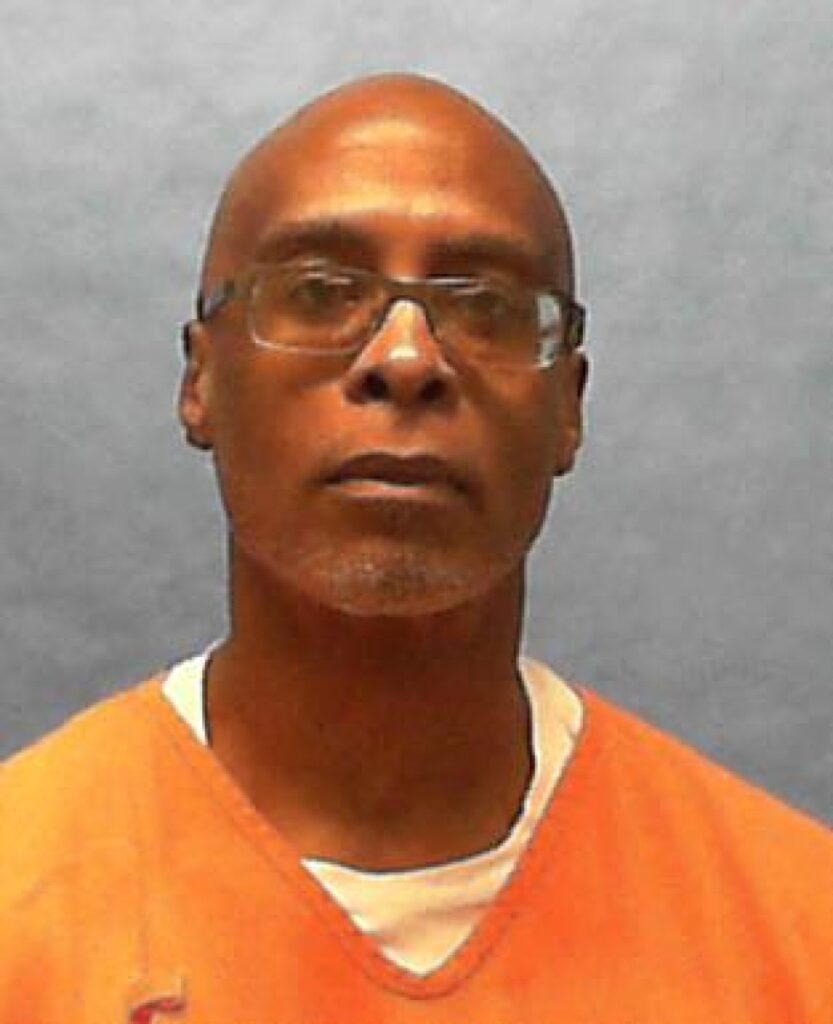
    RAIFORD, Fla. – A Florida man who has spent more than three decades awaiting execution for the 1990 murder of his neighbor is scheduled to receive a lethal injection at the state’s Raiford prison on Tuesday, marking one of a growing number of executions carried out across the United States in recent years.

    Chadwick Willacy, 58, was convicted and sentenced to death in 1991 for the killing of 56-year-old Marlys Sather during a home burglary at Sather’s property. His 35-year stint on Death Row places him among the longest-serving inmates awaiting capital punishment in the state.

    Willacy’s upcoming execution will be the seventh carried out across the U.S. in 2026 to date. Of those seven, four have taken place in Florida alone, with two more in Texas and one in Oklahoma, according to data collected on national capital punishment usage.

    Last year, the U.S. recorded 47 executions nationwide, the highest annual number recorded since 2009, when 52 inmates were put to death. Florida led all states in 2025 with 19 executions, far outpacing the next highest: Alabama, South Carolina, and Texas each carried out five executions over the same 12-month period.

    Lethal injection remains the most common method of execution nationwide, accounting for 39 of last year’s 47 executions. Three inmates were executed by firing squad, while five were killed via nitrogen hypoxia, a relatively new method that pumps pure nitrogen gas into a sealed face mask to cause suffocation.

    Nitrogen hypoxia has faced widespread international condemnation, with United Nations human rights experts labeling the practice cruel, inhumane, and a violation of basic human rights standards. Despite this criticism, a growing number of U.S. death penalty states have adopted the method as an alternative when lethal injection drugs are difficult to source.

    Capital punishment remains a deeply divided policy issue across the U.S. To date, 23 of the country’s 50 states have abolished the death penalty entirely, and three additional states – California, Oregon, and Pennsylvania – maintain formal moratoriums halting all executions. However, capital punishment retains strong support among conservative political circles: former President and current 2024 presidential candidate Donald Trump has repeatedly positioned himself as a vocal backer of the death penalty, and has publicly called for expanding its use to target what he describes as “the vilest crimes.”

    The upcoming execution of Willacy comes as conservative-led state legislatures in a number of death penalty states have pushed to speed up execution timelines and expand the list of crimes eligible for capital punishment, reversing decades of gradual decline in the use of the practice nationwide.

  • US official says gas prices have peaked despite Iran war

    US official says gas prices have peaked despite Iran war

    Less than 24 hours after President Donald Trump publicly called out his top energy official for a more muted assessment of volatile fuel costs, US Energy Secretary Chris Wright has offered a sunnier outlook, telling a Senate committee Tuesday that national gasoline prices appear to have already hit their highest point following a jump tied to escalating tensions around the Iran conflict.

    Speaking before the Senate Energy and Natural Resources Committee, Wright acknowledged that long-term forecasts for energy markets remain uncertain, but pointed to early market indicators that suggest the recent upward price spike has already run its course. “I don’t know the future of energy prices — often I will speculate or look at those things. I would say, gasoline prices, it looks like they peaked about a week or so ago,” Wright told the panel during the oversight hearing.

    Wright also drew a direct comparison between current price levels and the record peaks recorded under the prior administration of Joe Biden, noting that this year’s highest per-gallon price remains one full dollar lower than the all-time record set during Biden’s tenure. He framed the current price trajectory as a notable win for the administration even amid ongoing geopolitical upheaval in one of the world’s most critical energy-producing regions. “Yet we’re in the midst of ending a 47-year conflict in the Middle East, a major energy-producing region,” he added, positioning the administration’s handling of energy markets as a strong point amid widespread public concern over household fuel costs.

  • Seiveright urges college students to adapt in rapidly evolving world

    Seiveright urges college students to adapt in rapidly evolving world

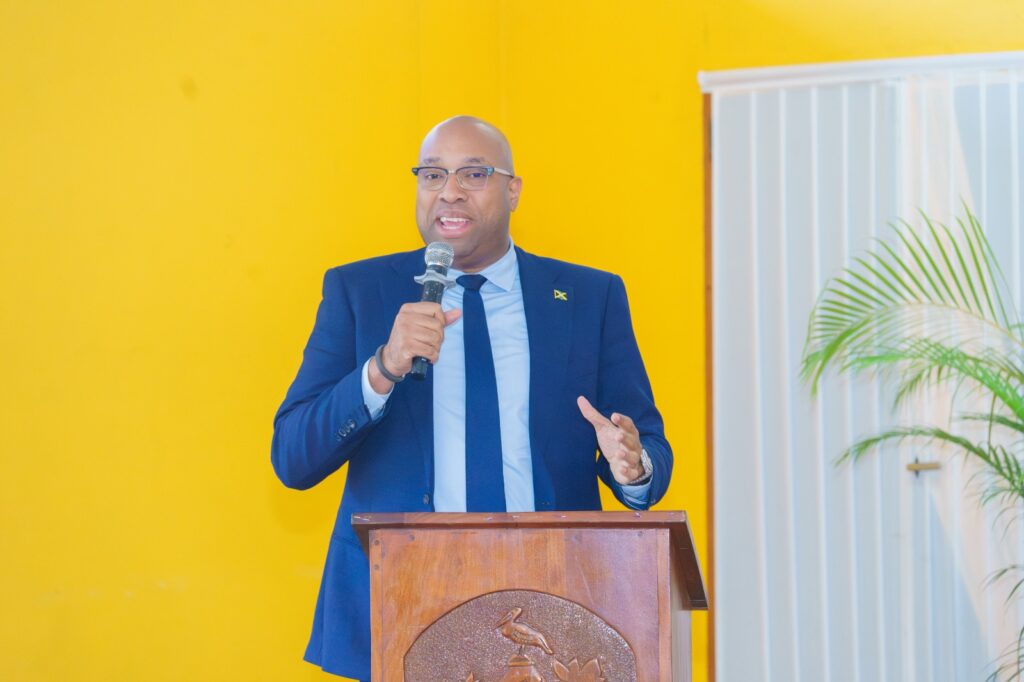
    KINGSTON, Jamaica — At a youth-focused forum held last Thursday on the Mona campus of the University of the West Indies (UWI), organized by the Mona Campus Youth League in partnership with the UWI Guild of Students, Delano Seiveright, State Minister for Jamaica’s Ministry of Industry, Investment and Commerce, delivered a rousing call to action for the island’s emerging workforce. Seiveright challenged attending students to abandon rigid, outdated career planning and pivot toward agile, forward-thinking strategies, stressing that the accelerating pace of global transformation has rendered traditional, slow-moving approaches obsolete.

    Seiveright opened his address by emphasizing that the world is evolving faster than at any other moment in recorded human history. Where major paradigm shifts once took centuries or decades to reshape global society, he noted, meaningful change now unfolds over mere months, meaning missed moments of opportunity rarely come around again. Tracing the arc of technological progress from the 15th-century invention of the printing press through the breakthroughs of electricity, automobile manufacturing, broadcast radio and television, cellular communications, and the modern internet and social media era, Seiveright argued that today’s young people face a unique requirement for constant adaptation that previous generations never needed.

    “Static skills and a fixed 40-year career plan can no longer carry you to success,” Seiveright told the crowd of students. “The leaders and achievers of this era are those who act quickly, commit to lifelong learning, and adjust their paths at the first sign of shifting tides.”

    Beyond adaptability, Seiveright pressed students to expand their professional horizons far beyond Jamaica’s national borders. With Jamaica’s population sitting at roughly 2.8 million, he noted, the island is embedded in a far larger regional and global marketplace: the broader Caribbean counts 45 million consumers, North America adds more than 390 million, and Latin America contributes an additional 660 million. Voluntarily limiting one’s ambitions to the local market, he argued, is an unnecessary restriction on personal and professional potential.

    Crucially, Seiveright pointed out that digital innovation and the rise of remote work have removed historic barriers to international economic participation. Jamaican workers and creators no longer need to relocate abroad to access global markets and earn foreign currency, opening new pathways to prosperity that were unavailable to previous generations.

    A core highlight of the minister’s presentation centered on the under-tapped economic potential of Jamaica’s creative industries, a sector he identified as one of the country’s most promising untapped growth areas. From globally renowned music to large-scale entertainment events and digital content creation, Seiveright noted that the global creative economy generates massive revenue, pointing to Jamaica’s own world-famous events including Reggae Sumfest, Dream Weekend, Best Weekend Ever, Sandz and Zimi as proof of the sector’s local capacity.

    He held up three prominent Jamaican creative entrepreneurs — Andrew Bellamy, Romeich Major and Kamal Bankay — as models for young people to follow. Notably, both Bellamy and Bankay are UWI Mona graduates who built their successful companies from humble beginnings, proving that creative culture is far more than artistic expression: it is a viable, high-growth business. Seiveright also pushed back against the cultural default of relying solely on traditional 9-to-5 employment, noting that in an era of rising living costs, global competition, and rapid technological change, a single full-time job is often no longer enough to sustain financial security. Instead, he encouraged students to pursue multiple streams of income, building side projects and independent ventures alongside traditional careers.

    Seiveright also emphasized two underrated skills that drive long-term success: intentional professional networking and emotional intelligence, noting that the vast majority of valuable career opportunities emerge through informal professional connections rather than formal job application channels.

    Turning to one of the most transformative modern technologies, artificial intelligence, Seiveright framed the AI boom as one of the most significant economic shifts of the 21st century, not a passing fad. Global corporate and venture investment in AI is projected to hit $2.5 trillion by 2026 — a sum more than 100 times the size of Jamaica’s entire annual gross domestic product. “Those who learn to leverage these AI tools will expand their opportunities and reach exponentially,” he said. “Those who ignore them will be left behind.”

    Closing his address, Seiveright urged students to take decisive action immediately, rather than overplanning or waiting for the “perfect moment” to pursue new opportunities. Opportunities already exist across every core sector of Jamaica’s economy, from agriculture and culture to professional services and technology, he said. The only question is whether young people are prepared to seize them. “No one is going to build your future for you,” Seiveright concluded. “Start where you are, use what you have, think globally, and move.”

  • 60 years since Selassie’s visit: Some notable Jamaicans who crossed paths with the Emperor

    60 years since Selassie’s visit: Some notable Jamaicans who crossed paths with the Emperor

    April 21 marks six decades since one of the most culturally transformative visits to Jamaican soil: the state arrival of Ethiopian Emperor Haile Selassie I. When the small-statured monarch touched down at Kingston’s then-Palisadoes Airport, tens of thousands of onlookers flooded the tarmac to catch a sight of him — among them throngs of passionate Rastafarians, who have long revered Selassie I as the divine incarnation of God.

    Selassie I’s four-day Jamaican tour in 1966 formed part of a broader Caribbean itinerary, which included stops in Trinidad and Tobago ahead of his Jamaica visit, followed by a trip to Haiti after departing Kingston. For Jamaica’s large Rastafarian community, the visit was far more than a routine diplomatic stopover: the movement’s beliefs center on Selassie I as the Supreme Being, tracing his ancestral lineage directly back to the biblical King Solomon.

    The groundwork for the Emperor’s visit was laid years earlier, rooted in growing cultural and political connection between Jamaica’s Rastafarian community and Ethiopia. In 1960, Rastafarian leaders partnered with three academics from the University of the West Indies (UWI) — M G Smith, Roy Augier, and Rex Nettleford — to conduct the first formal major study of the Rastafarian movement. The following year, the Jamaican government authorized a three-person Rastafarian delegation, including Mortimo Planno, Douglas Mack, and Philmore Alvaranga, to conduct a fact-finding mission to Africa, where the group met Selassie I in the Ethiopian capital of Addis Ababa. A second government-funded technical research delegation also traveled to the continent that same year, deepening the ties that would lead to Selassie I’s historic 1966 visit.

    For context, Haile Selassie I was crowned Emperor of Ethiopia in 1930, ruled the East African nation for more than four decades, and was ultimately overthrown by a communist military junta in September 1974. He died in state custody in August 1975 at the age of 83. To mark the 60th anniversary of the Jamaican visit, Jamaica’s Observer Online collected firsthand recollections from figures who either met or witnessed the Emperor during his 1966 tour. Below are their accounts, which preserve the enduring cultural impact of the visit:

    ### Mortimo Planno
    Born in Cuba, Planno was one of the founding pioneers of the Jamaican Rastafarian movement, best known for his revolutionary open-air “binghi” teaching gatherings in Kingston’s iconic Trench Town neighborhood. Many of his students went on to become global reggae legends, including Bob Marley, Peter Tosh, and Bunny Wailer (born Bunny Livingston), the core members of The Wailers. Planno was part of the 1961 Jamaican government-sanctioned delegation that met Selassie I in Addis Ababa, and during the 1966 arrival, he was the figure who greeted the Emperor at the aircraft door to guide him down the stairs to Jamaican soil. Planno, widely known by his Rastafarian name Kumi, died in 2006 at the age of 76.

    ### Justice Ronald Small
    Born to parents who were followers of the pan-Africanist Marcus Garvey, Ronald Small made history as Jamaica’s first Black Supreme Court justice. On April 21, 1966, he was the first person scheduled to greet Selassie I at an official reception at King’s House, Jamaica’s official government residence. His youngest son, Robin “Jerry” Small, who was 18 and a practicing Rastafarian at the time of the visit, told Observer Online that Selassie I personally extended an invitation for his father to visit Ethiopia — an invitation Justice Small never acted on. Jerry Small recalled, “He told me that was the biggest mistake of his life. He said meeting Selassie was the proudest moment of his life.” Two of Justice Small’s other sons, Hugh and Richard, went on to become prominent Jamaican lawyers. He died in 2005 at 97 years old.

    ### Bruce Golding
    During Selassie I’s visit, Bruce Golding was a student and head boy at Jamaica College, one of the island’s most prestigious secondary schools, which hosted a brief stop by the Emperor on April 22, 1966. Golding would go on to become a Member of Parliament and serve as Jamaica’s Prime Minister from 2007 to 2011. Recalling the visit in a 2021 interview with the Jamaica Observer, Golding explained: “In my day, the head boy had significant authority as well as responsibility in terms of discipline. Not only was I informed of the visit, but I was involved and we greeted His Imperial Majesty as he stepped out of his vehicle. He didn’t spend a long time. As a matter of fact, he was on his way to the University of the West Indies. He inspected a guard of honour of the cadet corps and when he was leaving, I said, ‘Three cheers for the Emperor!’”

    ### Dr Peter Phillips
    Dr. Phillips was a sixth-form student at Jamaica College when Selassie I stopped at the campus, the alma mater of former Jamaican Prime Minister Norman Manley and other national luminaries. In a 2020 interview with the Jamaica Observer, he reflected on the immediate impact of seeing the Emperor: “We were just there mesmerised by the very powerful presence of this African monarch. One of the things that the visit did was to impel us to learn more, and part of that learning more was through contact with Rastafarians in Jamaica.” Shortly after graduating from Jamaica College, Phillips converted to Rastafarianism. He went on to become a UWI lecturer, a cabinet minister for the People’s National Party, and eventually led the opposition party until 2020.

    ### Copeland Forbes
    Forbes, a member of the Boy Scouts of Jamaica, was assigned the official role of opening the car door for Selassie I throughout the visit — a role he had previously filled for Britain’s Princess Margaret during Jamaica’s 1962 independence ceremony at the National Stadium. Recalling the chaotic, joyful scenes at Palisadoes Airport in an interview with American author David Katz, Forbes described the arrival as a nearly spiritual experience: “That experience is something I will never forget. I don’t know if you want to call it a miracle, but it was raining heavy, and when the plane popped over the clouds, the sun came out. When the plane touched down on the runway, the pilot pulled the window open and put out an Ethiopian flag, and the plane was surrounded by hundreds; I saw people leaning up by the plane wheel, smoking a chalice, and drum beating, so the official welcome party had to be abandoned.” After the visit, Forbes became a leading figure in the global reggae industry, managing iconic acts including Peter Tosh, Jimmy Cliff, Black Uhuru, Dennis Brown, and Luciano.

    ### Fred Locks
    At 16 years old, the aspiring reggae singer was living in East Kingston’s Harbour View neighborhood when he heard the radio announcement that Selassie I’s motorcade was approaching the local Harbour View roundabout. Overcome with excitement as the procession arrived, Locks recalled running into the street to get within five yards of the Emperor, who returned the moment with a warm salute. “I find myself running and reached out like five yards in front of him. And His Majesty was saluting, and I was hearing in my head, ‘Oh ye of so little faith’. I said, ‘wow! I was astonished, I couldn’t think straight. I didn’t want to go home,’” he remembered. Locks went on to build a successful decades-long career in reggae, and his 1975 anthem *Black Star Liner*, centered on the Rastafarian call for repatriation to Africa, remains one of the genre’s most iconic tracks.

  • Danae Brown leads Queen’s to three-peat in ISSA urban basketball

    Danae Brown leads Queen’s to three-peat in ISSA urban basketball

    On Monday, Queen’s School cemented its status as the undisputed powerhouse of urban Jamaican schoolgirls basketball, claiming a third consecutive Inter-Secondary Schools Sports Association (SSA) championship title after a convincing 49-33 victory over St Andrew High in the final clash hosted at the UWI Bowl.

    Having already lifted the trophy in 2024 and 2025, the reigning champions entered the final as favourites, and they lived up to every expectation by controlling the tempo of the game from opening tip-off. By the end of the first quarter, Queen’s had already built an insurmountable 19-6 lead, putting St Andrew High on the back foot for the remainder of the match. The defending champions never surrendered their momentum, closing out the contest with a comfortable 16-point winning margin to extend their historic reign.

    Standout performer Danae Brown led all scorers with an impressive game-high 23 points, earning her the tournament’s Most Valuable Player award for her decisive contributions on the court. For runners-up St Andrew High, Kimani Solomon topped the team’s scoring sheet with 10 points in the losing effort.

    In her post-match comments, Brown attributed her consistent strong performances throughout the tournament to her cross-training background in multiple sports. The MVP, who switched to basketball from an early start in football, credited the guidance of her various coaches – including those on the national team – for her development, alongside her own relentless commitment to improvement. “I’ve been interested in sports since I was very little. I started from football, actually, but I transferred to basketball. So, coming up, I’ve made this progress with a lot of coaches, even on the national team. They taught and trained me hard to get to this level, and I pushed myself as well to get to this level,” Brown shared while holding her newly awarded MVP trophy.

    She added that representing the three-time defending champions has been a source of immense pride, particularly as the program continues its undefeated streak of title victories. “It’s been wonderful, actually, for a school undefeated over and over again and reclaiming this title. It’s been an honour to play for Queen’s,” she said.

    Donald Bimmer, head coach of the champion Queen’s School side, echoed that the victory was rooted in his squad’s explosive opening quarter, a result of careful pre-game planning. “We got a good jump because we were able to get a 19-6 first quarter. And then from there, we just kind of managed the scoring and the possessions because we were able to get the lead that we wanted, which I had planned for,” Bimmer explained.

    The coach confirmed that the team’s ambition for the 2026 season extended far beyond the urban title, mirroring the program’s successful 2024 run that saw the squad claim both the urban and all-island championships. “This year, clearly, the plan was to win everything. That’s the plan, just like we did two years ago when we won all, both urban and all-island,” he added.

  • Family island leaders decry lack of power and delayed pay

    Family island leaders decry lack of power and delayed pay

    When The Bahamas’ Progressive Liberal Party (PLP) took office under the Davis administration, it laid out an ambitious “Blueprint for Change” centered on revamping local governance and unlocking long-delayed development across the country’s smaller Family Islands. Three years into the current term, senior local government leaders say the initiative has delivered uneven results at best, with many core pledges still unmet despite legislative progress and scattered infrastructure wins.

    A cornerstone of the administration’s reform agenda was the 2024 Local Government Bill, designed to devolve greater power over community projects, planning, and revenue generation from the national capital in Nassau to locally elected island councils. Government officials argue the legislation successfully expanded councils’ financial autonomy and created new avenues for public participation, marking a meaningful step toward the PLP’s campaign goals. But top local councillors across multiple islands told The Tribune that central control remains entrenched, leaving elected local leaders with too little authority to address pressing community needs.

    Marvin Campbell, chief councillor for Acklins, pointed to outdated approval rules that require all municipal contracts worth $5,000 or more to be signed off by national officials in Nassau. “We know the contractors on this island. We know what projects our community needs,” Campbell argued. “If the people elected us to serve, we should be competent enough to manage a $5,000 contract. If we can’t do that, there’s no reason for us to hold these positions.”

    Clay Sweeting, the national Minister of Local Government, defended the central approval requirement, noting that both national and local bodies are bound by the Public Procurement Act to uphold mandatory standards of accountability and transparency for public spending.

    Concerns over limited local autonomy are not isolated to Acklins. In Central Abaco, councillor Roscoe Thompson said local leaders are often expected to respond to urgent community emergencies—including wildfires—yet lack the independent authority to take immediate action. “When there’s a fire, we have to call the Disaster Risk Management authority or our members of parliament just to get help clearing fire breaks,” Thompson explained. “As for the empowerment this new act was supposed to bring local government? To us, it’s just hogwash.”

    Beyond decision-making authority, the PLP also failed to deliver on a key fiscal promise: a planned 10% annual increase in local government budgets phased in over five years. To date, only one incremental increase has been implemented since the administration took office—a fact that has left many local councils struggling to cover basic operational costs.

    In Mayaguana, Deputy Chief Councillor Cleveland Brown says local elected officials and community workers are still waiting for back pay owed since January, with payments consistently delayed. “They haven’t been here since December, and when they do come to pay, they only cover one month. They owe a lot of people a lot of money,” Brown said, describing the ongoing fiscal situation as “terrible.” Minister Sweeting attributed the delays to a recent break-in at a Mayaguana government facility that required security upgrades, including the installation of a new safe. He also noted that the single budget increase already implemented marks the first raise for local government budgets in more than 20 years.

    Broader structural reforms also remain unfinished. The administration’s plan to establish a formal local government system for New Providence, the country’s most populous island, has yet to be realized. Infrastructure investment across the Family Islands has also progressed unevenly: while key clinic upgrades in Abaco and drainage improvement projects in Acklins broke ground, many projects have stalled mid-construction, and critical needs from road repair to healthcare access remain unaddressed across multiple districts.

    Campbell confirmed that work on two critical clinics in Acklins’ Salina Point and Spring Point started but has been idle for months. “I can’t say for sure why it stopped—whether it’s a funding shortfall, a dispute with the contractor, or something else entirely,” he said. “All I know for sure is that money was spent, and work was underway before it stopped.”

    The administration also pledged to improve air and ferry connectivity to the Family Islands to boost tourism and local business. While increased airline capacity has been rolled out for popular destinations including Eleuthera, Exuma, and Abaco, smaller less tourist-heavy islands have seen no improvement. Inagua still only receives twice-weekly service from national carrier Bahamasair, a limitation Campbell says has devastated local businesses. “A lot of businesses are losing money. Lodges are losing money. Ordinary people are losing money all because of this terrible airlift service,” he added.

    Brown went further in his criticism of the administration, accusing it of outright neglecting Mayaguana and calling for the island to be designated an official port of entry to unlock new tourism opportunities and job growth for local residents.

    For its part, the Davis administration maintains that its Family Island development program represents the largest investment in local island infrastructure in decades, with hundreds of millions of dollars already allocated and spent. The government’s own public “Blueprint for Change” progress tracker lists most local government commitments as fulfilled, with only the full series of budget increases and the New Providence local government system still marked as outstanding. Healthcare, transport, and public service upgrades across the Family Islands are noted as ongoing works in progress.

  • ‘Slow down and love one another’urges nation’s newest centenarian

    ‘Slow down and love one another’urges nation’s newest centenarian

    As Dorothea Louise Strachan marked her 100th birthday this week, the newly-minted centenarian offered a simple but profound piece of advice for the Bahamas’ younger generations: slow down, and choose love over haste. Surrounded by loved ones at the couple’s modest two-story home on Soldier Road, the milestone celebration drew official recognition from the country’s highest ceremonial office, as well as a personal message from the British royal family.

    Hosting the day at her family home alongside Errol “Duke” Strachan, her 93-year-old husband and one of the Bahamas’ most legendary musicians, Strachan welcomed Governor General Dame Cynthia A. Pratt for an official visit marking her achievement. Along with Dame Cynthia’s congratulations, a note of warm wishes was delivered from His Majesty King Charles III and Queen Camilla, adding a touch of global recognition to the intimate local celebration. This year also brings another remarkable milestone for the couple: they will mark 71 years of marriage on June 21, a testament to their decades-long partnership rooted in community and shared purpose.

    Strachan, who never imagined she would live to see her 100th year, credits her long and fulfilling life to unwavering faith and a consistent practice of gratitude. In a heartfelt address to younger Bahamians, she urged them to reject the culture of rush that defines modern life, and to center human connection in all they do.

    “Don’t be too fast,” she emphasized. “Don’t be too in a hurry for everything you see, everything you want. Good things take time. Don’t rush into anything because you might fall down, but if you take your time, you get what you’re looking for when the moment is right.”

    Strachan’s 50-plus year career in the Bahamas’ vital tourism and hospitality industry shaped her commitment to service, a value she carried from her first job at 16 as a waitress on Bay Street through to her retirement. After working her way up into management roles, she eventually launched and operated her own restaurant, and also spent years serving guests at the iconic Holiday Inn on Paradise Island, where she became beloved for her warm, personalized approach to hospitality. Her decades of contributions to the nation’s tourism sector were formally honored in 2006, when she was awarded the prestigious Cacique Minister’s Award in recognition of her outstanding service.

    Even after retiring from full-time work in 1991, Strachan never stepped back from her commitment to community. For years, she spent several days a week preparing and delivering homemade lunches to local offices, keeping her tradition of service alive and staying connected to the neighborhood she called home.

    Walls throughout the Strachan home are lined with decades of personal and cultural history, a visual timeline of the couple’s deep ties to Bahamian public life. Framed photographs mingle snapshots of family gatherings and community events with portraits of prominent figures who have visited the home over the years: legendary Bahamian-American actor Sidney Poitier, American soul musician Isaac Hayes, and NBA greats Patrick Ewing and Julius Erving are all counted among the guests who have passed through their doors. A back room holds the couple’s collection of awards and commemorative plaques, alongside Errol Strachan’s musical instruments. For years, the home hosted regular community concerts and social gatherings, cementing the couple’s reputation as core pillars of local cultural life.

    During her official visit, Dame Cynthia praised Strachan for her sharp intellect and enduring independence, noting that the centenarian remains fully clear-minded and engaged with the world around her. “To reach the age of 100, if that’s not a blessing, tell me what is,” the Governor General said. “Because you came from good stock, and you have good stock following you right now.” She extended the “heartiest congratulations” on behalf of the Bahamian people, and expressed “the profound gratitude of a proud nation” for Strachan’s decades of contributions to national development.

    The celebration comes one month after a controversial incident that made headlines nationwide involving Errol Strachan. During a funeral procession passing the couple’s Soldier Road home, a correctional officer fatally shot one of the couple’s pet dogs. Video of the incident circulated widely on social media, sparking widespread public outrage and condemnation from animal welfare advocates across the country.

    Following an internal review, authorities announced that no breach of departmental policy was found, and the officer would not face any disciplinary action. The Department of Correctional Services issued a formal apology to Strachan, and agreed to provide a replacement dog as a gesture of goodwill. Strachan stated at the time that he accepted the department’s apology and offer, but still grieved the loss of his dog, calling the shooting “totally unnecessary.” As of the 100th birthday celebration, it remains unclear whether the replacement dog has been delivered to the couple.

  • Material girl: Madonna offers reward for missing clothes

    Material girl: Madonna offers reward for missing clothes

    Pop music icon Madonna has launched a public appeal for the return of irreplaceable vintage performance outfits that went missing following her surprise guest appearance at this year’s Coachella Valley Music and Arts Festival in Southern California. The 67-year-old legendary performer, who first rose to global stardom in the 1980s, took to her official Instagram account this week to share the news of the loss and ask fans and festival organizers for help recovering the pieces. The garments were pulled directly from Madonna’s own personal archive of career memorabilia to wear for her viral collaborative set with rising pop star Sabrina Carpenter during the festival’s second weekend. The lost items include a vintage jacket, corset, dress and several other complementary garments, all tied to key eras of Madonna’s decades-long trailblazing career. “These aren’t just clothes, they are part of my history,” the singer wrote in her Instagram post, noting that additional archival pieces from the same career period also disappeared after the performance. Madonna’s surprise Coachella appearance alongside 25-year-old Carpenter quickly became one of the most talked-about moments of this year’s festival, with video clips of the duo’s performance racking up millions of views across social media platforms. The pair delivered energetic live renditions of two of Madonna’s most iconic worldwide chart-topping hits: 1990’s genre-defining “Vogue” and 1989’s groundbreaking “Like A Prayer” — both major global hits that topped music charts long before Carpenter launched her own entertainment career. In her appeal, the singer said she is holding out hope that the items will be returned, saying, “I’m hoping and praying that some kind soul will find these items and reach out.” To incentivize the safe return of the one-of-a-kind pieces, Madonna confirmed that she is offering a cash reward for anyone who can help bring the costumes back to her. As of press time, no further details about the reward amount or circumstances surrounding the costumes’ disappearance have been released.