作者: admin

  • Caribbean urged to prepare for hotter, drier conditions as El Niño develops

    Caribbean urged to prepare for hotter, drier conditions as El Niño develops

    BRIDGETOWN, Barbados — Regional climate scientists are sounding the alarm, calling on Caribbean governments, private sector actors, agricultural producers, and local communities to put proactive preparedness measures in place ahead of a developing El Niño event forecast to bring prolonged high heat and severe dry conditions across the Caribbean between 2026 and 2027.

    El Niño, the warm phase of the El Niño-Southern Oscillation (ENSO) climate cycle, forms every two to seven years when surface ocean temperatures rise across the central and eastern tropical Pacific. This warming weakens the normally persistent easterly trade winds, allowing warm ocean water to shift eastward across the Pacific, a shift that ripples through global weather systems and triggers far-reaching environmental disruption.

    Dr. Cedric Van Meerbeeck, a climatologist at the Barbados-headquartered Caribbean Institute of Meteorology and Hydrology (CIMH), explains that this upcoming event is projected to bring extended stretches of below-average rainfall combined with dangerously humid high temperatures. These conditions will strain regional water supplies, disrupt agricultural production, raise the risk of widespread heat stress, and exacerbate dry conditions across the region.

    Without comprehensive advance planning, CIMH warns that the cascading, overlapping hazards triggered by El Niño will cause severe socio-economic damage across the Caribbean. Historically, El Niño events have been tied to catastrophic regional droughts, including the major dry spells of 2009–2010 and 2014–2016. The climate pattern also amplifies risks of extreme heat events, out-of-control wildfires, and marine heatwaves that drive mass coral bleaching.

    These overlapping, destructive impacts were already seen during the record-breaking hot years of 2010, 2023, and 2024. Regions already facing ongoing drought, particularly across the Eastern Caribbean, could see extremely slow recovery of groundwater and surface water reserves during the upcoming wet season, which is set to begin as early as May 2026.

    While El Niño is historically associated with reduced Atlantic hurricane activity, Dr. Van Meerbeeck stressed that hurricane and storm risk cannot be dismissed: even a single powerful storm or intense rainfall event can cause catastrophic damage, as seen when Hurricane Andrew battered the Bahamas in 1992 and Tropical Storm Erika devastated Dominica in 2015.

    Professor Michael Taylor, co-director of the University of the West Indies Climate Studies Group Mona (UWI CSGM), noted that current forecasts point to the emergence of a new multi-hazard climate regime, where extreme heat, drought, and marine environmental damage occur simultaneously and amplify one another.

    “Our research has long identified these compound extreme events as a major threat to lives and livelihoods across the Caribbean,” Taylor said. “With advance warning of this looming overlapping threat, preparedness is not optional—it requires coordinated, cross-sector action and a unified regional approach.”

    Both CIMH and UWI CSGM confirm that this emerging climate pattern reflects a broader shift toward more complex, interconnected climate risks that threaten the Caribbean’s most critical sectors, including agriculture, water management, energy, and public health.

    Reduced rainfall paired with elevated temperatures will likely drive widespread agricultural losses, undermining regional food security and threatening the livelihoods of rural communities. Public health risks will also rise, with impacts on drinking water quality, increased transmission of vector-borne diseases, and a spike in heat-related illnesses. Water and energy infrastructure will come under growing strain, as demand for cooling rises—particularly in nations that depend on hydroelectric power or energy production cooled by freshwater.

    Broader economic disruptions will also hit key regional industries, including tourism, fisheries, and maritime shipping. Because the Caribbean relies heavily on imported goods, global supply chain disruptions linked to El Niño will impact trade, logistics, and access to essential goods and services. Governments have been urged to proactively assess risks to supply chains, transportation networks, and critical trade routes.

    For example, recent drought events have already disrupted operations at the Panama Canal, a key transit hub for goods bound for the Caribbean and U.S. East Coast ports. These disruptions directly harm regional food security and drive up the cost of living across Caribbean nations.

    El Niño forecast accuracy typically improves significantly starting in May, so Dr. Van Meerbeeck is urging all stakeholders to monitor evolving forecasts and impacts closely, adding that regional climate teams will continue tracking conditions and releasing timely public updates. He encourages decision-makers and the general public to watch for outcomes from the next Caribbean Climate Outlook Forum (CariCOF), hosted by CIMH and scheduled for the week of May 24.

    At the forum, regional climate experts and staff from National Meteorological and Hydrological Services will collaborate with national, regional, and international stakeholders from climate-sensitive sectors to deliver targeted guidance ahead of the upcoming wet season and Atlantic hurricane season.

    CIMH Principal Dr. David Farrell emphasized that early awareness and proactive preparedness are critical, noting that timely, actionable climate information is foundational to effective decision-making across the region.

    “Proactive measures are essential to reduce the impact of extreme weather on climate-sensitive sectors, vulnerable communities, and national economies,” Farrell said, reinforcing CIMH’s long-term commitment to strengthening regional climate resilience. He added that the institute has strategically expanded its services to place greater focus on water resources, marine ecosystems, earth observation, and climate forecasting, to support the development of more effective early warning systems across the Caribbean.

    In recent years, CIMH has dedicated substantial resources to studying how climate hazards like El Niño generate cascading, cross-sector impacts that lead to widespread socio-economic harm across the region. This research informs the design of risk-informed climate adaptation programs, which are core to building Caribbean resilience to long-term climate change and growing climate variability.

    Farrell concluded that strengthening early warning systems and expanding public access to clear, actionable climate information remains the top priority for boosting regional preparedness, and thanked regional governments and international development partners for their ongoing support of CIMH’s work to improve early warning infrastructure across the Caribbean.


  • ICT Authority marks first anniversary with launch of JDXP

    ICT Authority marks first anniversary with launch of JDXP

    On April 10, Jamaica’s ICT Authority celebrated one full year since its transition from eGov Jamaica Limited, hosting a special media launch to mark the institutional milestone and unveil a transformative new infrastructure for the island nation’s digital government strategy.

    The anniversary gathering was more than a retrospective celebration of progress: it served as a formal introduction to the Jamaica Data Exchange Platform (JDXP), a flagship initiative that stands as the most significant advancement in Jamaica’s public sector digital integration in recent years. Delivering the event’s keynote address, Minister of Efficiency, Innovation and Digital Transformation Audrey Marks reinforced the Jamaican government’s unwavering commitment to building a public sector that is more connected, operationally efficient, and centered on the needs of everyday citizens.

    Unlike the fragmented, disconnected digital systems that have long hampered public service delivery across Jamaican government agencies, the JDXP functions as a national interoperability backbone that enables frictionless information sharing and cross-agency communication. By breaking down long-standing data silos, the platform cuts down on redundant work, eliminates unnecessary administrative delays, and unifies disjointed agency systems – changes that directly translate to faster, more reliable public services for Jamaican residents.

    In her remarks, Minister Marks framed the platform as a fundamental paradigm shift for Jamaica’s public administration. “The JDXP represents a simple but powerful shift from data silos to data sharing, from fragmented systems to an integrated government, from slow manual processes to real-time seamless services,” she explained. “It will transform how ministries, departments, and agencies collaborate, ultimately improving the experience for every citizen.”

    Anika Shuttleworth, Chief Information Officer of the ICT Authority, emphasized that the launch of the JDXP is not an isolated project, but a core milestone in the authority’s broader institutional transformation agenda. She noted that in an increasingly unpredictable global landscape, digital upgrading is no longer a discretionary upgrade for national governments, but a critical foundation for public service resilience and effective delivery. “Platforms like the Jamaica Data Exchange Platform will allow government entities to communicate seamlessly, reducing duplication and improving the experience for every citizen,” Shuttleworth added.

    The event also included a ceremonial unveiling of a custom commemorative plaque for the ICT Authority, a symbolic marker of the organization’s evolution from its former iteration as eGov Jamaica Limited and its redefined mandate to lead digital change across Jamaica’s entire public sector. Over its first year of operation, the agency has prioritized three core priorities: strengthening digital governance frameworks, expanding and upgrading national digital infrastructure, and cultivating a culture of innovation within government operations. The launch of the JDXP stands as the pivotal achievement of this first year of work, bringing the authority one step closer to its end goal of a fully integrated, efficient national digital public ecosystem.

    As the ICT Authority enters its second year of operations, leadership has reaffirmed its commitment to developing technology-driven solutions that boost public sector efficiency, increase government transparency, and lift quality of life for all Jamaican people.

  • AM Best affirms financial strength of Coralisle Group and its subsidiaries

    AM Best affirms financial strength of Coralisle Group and its subsidiaries

    Leading global credit rating agency AM Best has formally reaffirmed the solid financial strength rating of ‘A’ (Excellent) for all of Coralisle Group’s life, health, property and casualty insurance subsidiaries operating across Bermuda and the Caribbean. Beyond the financial strength rating, the agency has also upheld the long-term issuer credit rating of ‘a’ (Excellent) for the affected subsidiaries, with a consistent stable credit outlook assigned to every rated entity.

    The decision to maintain these top-tier ratings stems from AM Best’s comprehensive evaluation of Coralisle Group’s core operational and financial metrics. The agency highlighted that the group’s balance sheet strength remains among the strongest in the regional insurance sector, with strong marks also awarded to its consistent operating performance, well-defined business profile, and robust enterprise risk management framework.

    In its detailed assessment, AM Best pointed out that Coralisle Group sustains the highest level of risk-adjusted capitalization, a position backed by ample liquidity reserves and a proven ability to allocate resources efficiently across its entire organizational network. The group’s stable financial footing is further reinforced by disciplined underwriting practices, prudent capital management strategies, and ongoing operational alignment across all the jurisdictions where it operates.

    Looking ahead, AM Best projects that Coralisle Group will deliver steady, consistent operating results through 2026. This positive forecast is rooted in expectations of continued gradual premium growth and sustained strong performance across all of the group’s core regional markets.

    Coralisle Group Chief Executive Officer Naz Farrow welcomed the rating affirmation, noting, “We are pleased to have our financial strength affirmed by AM Best. This recognition reflects our continued focus on building and maintaining a strong financial foundation year on year. Through disciplined execution and a consistent approach across the Group, we ensure we are well positioned to provide meaningful support to our clients when they need us most.”

    The full list of Coralisle Group subsidiaries that received a stable outlook alongside their rating affirmation includes: Coralisle Insurance BVI Ltd. (British Virgin Islands), British Caymanian Insurance Company Limited (Cayman Islands), Coralisle Insurance Company Ltd., Coralisle Life Assurance Company Ltd., Coralisle Medical Insurance Company Ltd., CG Atlantic Medical and Life Insurance Ltd. (Bahamas), CG Atlantic General Insurance Ltd. (Bahamas), and CG United Insurance Ltd. (Barbados).

  • ‘You can’t instruct the police’, Chang tells civil society groups

    ‘You can’t instruct the police’, Chang tells civil society groups

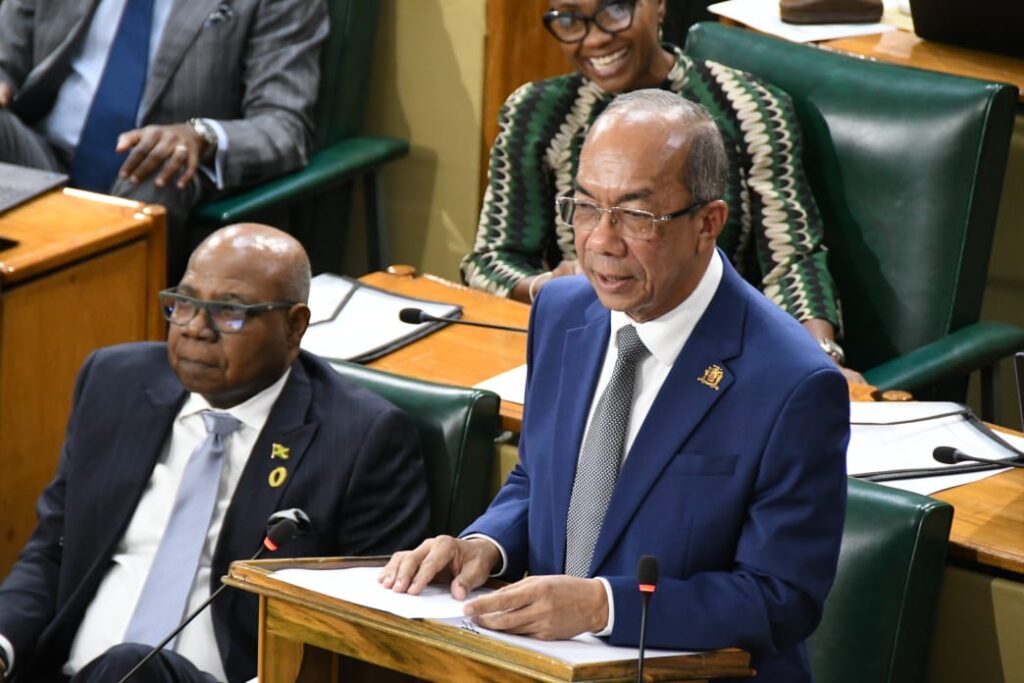
    KINGSTON, Jamaica — Tensions between Jamaica’s top security leadership and local civil society organizations have flared once again, as National Security Minister and Deputy Prime Minister Dr. Horace Chang reiterated that no independent advocacy group has the authority to dictate operational decisions to the country’s national police force.

    Chang delivered the sharp rebuke Tuesday afternoon during his opening address for the 2026/27 Sectoral Debate held at Gordon House, Jamaica’s parliamentary building. The comment comes as the latest chapter of a long-running, combative dispute between Chang and civil society groups — most prominently Jamaicans For Justice (JFJ) — over a key policing reform demand: mandatory body-worn camera use for officers during planned operations.

    The push for expanded body camera deployment gained traction last year, when JFJ stepped up its calls amid a significant spike in fatal police shootings across the island. That period coincided with an unexpected nationwide drop in homicide rates, a trend the government has highlighted as a sign of progress in its anti-crime strategy.

    Addressing lawmakers, Chang pushed back against civil society pressure while confirming that the government has followed through on its commitment to acquire body cameras for the Jamaica Constabulary Force (JCF), with all purchased units already delivered to the service. But he emphasized that operational deployment decisions rest exclusively with the country’s top police leadership.

    “Body-worn cameras are part of modern police equipment, and the only person who has the authority and the professional capacity to instruct where they should go is the commissioner of police and his team,” Chang told the legislative chamber. “No civil society organisation can tell us where to put them. That was what was damaging the police for years. Everybody [acts like] cowboy policing and ‘donmanship’ and tell police where to go police.”

    Despite pushing back on external demands for deployment timelines and scope, Chang acknowledged that body cameras serve a critical purpose in strengthening police transparency and accountability. He added that the government is continuing its investment in the technology, with another 1,000 units already on order to expand access across the force.

    Chang also outlined his government’s broader surveillance infrastructure investment plans during the address. The Jamaica Eye Programme, the country’s national public closed-circuit television network, is on track to expand its footprint, with a target of 3,000 active cameras operational by the 2028 budget year, he confirmed.

    Closing his remarks on police governance, Chang reaffirmed the division of responsibilities between political leadership and law enforcement command. “My job is oversight and providing equipment,” he said. “[The] society holds them accountable, they do policing, and we have an excellent commissioner of police.”

    Reporting by Lynford Simpson

  • Mbappe on the mark as Real Madrid sink Alaves

    Mbappe on the mark as Real Madrid sink Alaves

    In a critical La Liga fixture held on Tuesday at Madrid’s home ground, Carlo Ancelotti’s side claimed a hard-fought 2-1 victory over low-tier Alaves, keeping their distant title challenge against Barcelona on track. The match marked a welcome end to a frustrating two-match winless drought for the 14-time European champions, who entered the fixture under pressure to pick up full points to stay in the title race.

    It was France superstar Kylian Mbappe who broke the deadlock in the 30th minute, netting his first league goal since early February. The striker’s effort took a deflection off an Alaves defender, wrong-footing the goalkeeper and rolling into the back of the net to hand Madrid the opening lead.

    Early in the second half, Brazilian winger Vinicius Junior doubled the hosts’ advantage with a powerful long-range strike that left the Alaves shot-stopper with no chance to save. The two-goal cushion proved necessary, as Alaves substitute Toni Martinez pulled one back for the visitors in stoppage time, setting up a nervy final few minutes for Madrid. The home side held on to secure all three points, however.

    The result moves Madrid back to within six points of current La Liga leaders Barcelona, who are set to host Celta Vigo in their latest league fixture on Wednesday. Barring a slip-up from the league leaders, Madrid will remain in second place regardless of Wednesday’s result, but the three points have kept their slim title hopes alive heading into the final stretch of the season.

    In other Tuesday night La Liga action, Real Betis pulled off a comeback 3-2 away win against Girona, with Rodrigo Riquelme scoring the game-winning goal with just 10 minutes left to play. At Athletic Bilbao’s San Mamés stadium, Gorka Guruzeta’s first-half finish was enough to secure a 1-0 victory over Osasuna. Finally, Mallorca and Valencia shared the points in a 1-1 draw at Mallorca’s home ground.

  • Ambulance involved in crash in MoBay

    Ambulance involved in crash in MoBay

    A multi-vehicle collision involving a public health ambulance shut down a busy three-way intersection in St. James, Jamaica early [reporting period], leaving one vehicle overturned and another damaged, but remarkably no people harmed, emergency officials confirmed.

    The crash unfolded at the junction connecting Howard Cooke Boulevard, Alice Eldemire Drive, and Tony Hard Boulevard, where a Toyota Hiace ambulance operated by Jamaica’s Western Regional Health Authority (WRHA) collided head-on with a separate Toyota Hiace passenger bus. Initial on-scene assessments show the ambulance suffered significant structural damage to its front left end, while the impact forced the bus to flip onto its side across the roadway, blocking all lanes of traffic through the busy intersection.

    Initial casualty reports indicate the crash resulted in zero injuries across all parties involved. Three people total were in the two vehicles at the time of the impact: two WRHA personnel were traveling in the ambulance, and one driver occupied the bus, all of whom walked away from the wreckage without harm.

    Notably, the collision took place just a short distance from the Freeport Police Station, allowing law enforcement officers to arrive at the scene within minutes to secure the area, redirect traffic away from the wreckage, and begin preliminary investigations into the root cause of the incident. As of the latest update, crews are working to clear the overturned bus and open the intersection back to regular traffic.

  • Former Premier League champions Leicester relegated to third tier

    Former Premier League champions Leicester relegated to third tier

    LONDON, AFP – It is a downfall that has shaken English football: a decade on from one of the most extraordinary underdog triumphs the sport has ever seen, former Premier League champions Leicester City have been relegated to England’s third-tier League One, marking only the second time the club has dropped this low in its 140-year history.

    The fateful result came on a tense Tuesday night at the King Power Stadium, where Leicester hosted Hull City needing all three points to keep their faint survival hopes alive. The script unfolded with heartbreak for the Foxes faithful: Hull took an early lead through Liam Millar’s 18th-minute strike, before a 52nd-minute penalty from James Justin drew Leicester level. Two minutes later, Luke Thomas put the hosts ahead, sparking fleeting hopes of a dramatic great escape. Those dreams were snuffed out just 11 minutes later, when Oli McBurnie netted Hull’s second equalizer to secure a 2-2 draw.

    With just two matches remaining in the 2024-25 Championship season, second-from-bottom Leicester sit seven points adrift of safety, confirming their drop to League One – the club’s first appearance in the third tier since the 2008-09 campaign. The milestone caps a stunning three-year decline for a side that defied 5000-1 odds to lift the Premier League title in 2016, one of the most iconic fairy-tale achievements in modern football.

    In the immediate aftermath of the relegation confirmation, interim manager Gary Rowett called on the club to confront the scale of the failure and learn from its mistakes. “We have to learn. I think the club have to accept this is the horrible part of the journey of a football club,” Rowett told reporters. “This club won the Premier League not too many moons ago. That was an incredible high at the time for the fans, for everyone associated with the club. I think everyone saw that as an amazing achievement. I think we can be equally as disappointed with how poor this moment is.”

    This relegation marks Leicester’s third drop in four seasons: the club exited the Premier League in 2023, slipped from the top flight again in 2025, and now faces the unpalatable prospect of facing lower-league sides including Bromley, Mansfield Town and Wycombe Wanderers next term. The 2016 title triumph, masterminded by Claudio Ranieri with a squad led by Jamie Vardy, Riyad Mahrez and N’Golo Kanté, was followed by a run to the Champions League quarter-finals in 2017 and an FA Cup title in 2021 – a golden era that now feels like a distant memory.

    “The bigger picture is you don’t get relegated over three or four games, you get relegated over a season,” Rowett added. “The club has to rise again but it has to learn its lessons because it’s certainly been a season of an awful lot of regret.”

    Analysts and fans point to a string of missteps on and off the pitch that led to the club’s historic collapse. Relegation from the Premier League in 2023 was widely expected to act as a wake-up call for Thai owner Aiyawatt Srivaddhanaprabha and under-fire sporting director Jon Rudkin, but the club’s hierarchy failed to address critical structural flaws in the squad and business model.

    Compounding on-pitch struggles, Leicester’s ruinous financial management resulted in a six-point deduction this season for breaching the EFL’s spending rules. The departure of Jamie Vardy at the end of last season severed the final remaining link to the title-winning 2015-16 squad, leaving the side without the talismanic leadership that had carried it through years of top-flight football.

    The club’s management chaos only compounded their problems. Marti Cifuentes was hired in the summer to mount a promotion push, but struggled to right the ship of an unbalanced, inexperienced squad and was sacked in January. Interim manager Andy King was unable to reverse the club’s slide, with relegation fears turning to near-certainty after Leicester blew a 3-0 first-half lead to lose 4-3 to promotion-chasing Southampton.

    By the time Rowett, a former Leicester defender, was appointed in February, the Foxes were already two points adrift of safety, and he has managed just one win from 12 matches in charge. A pattern of boardroom misdecision stretches back years: Ranieri, the architect of the 2016 title, was infamously sacked just months after lifting the trophy, and successive managers including Craig Shakespeare, Claude Puel and most recently Brendan Rodgers – who delivered the 2021 FA Cup and two top-five Premier League finishes – were unable to stem the long-term decline before also being dismissed.

    Elsewhere in Tuesday’s Championship action, Coventry City secured the league title with a resounding 5-1 victory over Portsmouth. Frank Lampard’s side already sealed promotion back to the Premier League on Friday, ending a 25-year absence from the top flight. Millwall climbed into second place with a 3-1 away win over Stoke City, while fourth-placed Southampton’s bid for automatic promotion was hit by a 2-2 draw against Bristol City.

  • Rosenior blasts Chelsea flops after ‘unacceptable’ Brighton defeat

    Rosenior blasts Chelsea flops after ‘unacceptable’ Brighton defeat

    BRIGHTON, UK – The tension around Chelsea Football Club reached a fever pitch on Tuesday after the Blues suffered a demoralizing 3-0 defeat to Brighton & Hove Albion at the Amex Stadium, a result that left interim manager Liam Rosenior fuming at his squad and put both their Champions League qualification hopes and his managerial future in serious jeopardy.

    Goals from Brighton’s Ferdi Kadioglu, Jack Hinshelwood and Danny Welbeck consigned Chelsea to a fifth straight Premier League defeat without a single goal scored – a grim milestone the club has not hit since 1912, stretching back more than a century. The Blues’ abysmal recent form stretches across all competitions: seven losses in their last eight outings, and just one win from nine previous league matches. That poor run has left Chelsea mired in seventh place in the league table, seven points adrift of fifth-placed Liverpool, the position that currently guarantees a spot in next season’s Champions League. Worse still, if the slump continues, Chelsea could miss out on European football entirely next campaign.

    By the final whistle, sections of the travelling Chelsea supporters were chanting for Rosenior’s sacking, and the manager did not push back on their anger in a scathing post-match press conference, instead placing full blame for the collapse at the feet of his players. “I have defended the players at times when it was the correct thing but I can’t defend that performance,” Rosenior told reporters. “It doesn’t represent this football club, it doesn’t represent anything I ask from the group and that has to change.”

    The manager, who only took the job in January after moving from Strasbourg to replace Enzo Maresca, said the defeat left him numb with rage, and rejected any suggestion that the poor result was down to tactical mistakes. “Tonight was not tactical. This was about desire, spirit, courage and I did not see enough of that,” he said. “I feel numb I’m so angry. I always speak on what I see and that was unacceptable. The goals we conceded were unacceptable and that is something I have to hold my hands up to. Nowhere near good enough and we have to improve that.”

    Pressed on how he plans to reverse the club’s nosedive in form, Rosenior insisted he would not make excuses for the performance, and said he would be holding every member of the squad accountable for drastic changes. “I have my own ideas, I am not here to make excuses. That was unacceptable from everyone involved, with me at the head of it. That needs to change,” he said. “It was nowhere near the levels. Tackles, duels, intensity, spirit, energy, passion all lacking and that is the reason we lost. I will look at the team, will look at individuals and I will look at a team I can trust to do the basics of football. It is something we have to adjust very quickly. It is accountability.”

    In a sign of the internal friction building at the club, senior defender Trevoh Chalobah publicly contradicted Rosenior’s assessment of the squad’s work ethic, offering a far different explanation for the defeat. Chalobah argued the poor result stemmed not from a lack of effort, but from widespread fatigue across the squad. “I thought personally that the boys were running their socks off. Everyone in the changing room is tired. It’s nothing to do with effort. We gave it our all, we just got beat,” Chalobah said. “We ran today. You can say the stats this, the stats that, but I can see the boys are tired.”

    Chalobah added that the squad shared the frustration of the manager and the fanbase, and urged the club to avoid falling into a cycle of negativity. “As players we have to be accountable for the performance. We know how much the fans have been behind us and we know they are disappointed with the results. We have to stay positive. Negativity is not going to help. Us being negative, us dwelling on the past is not going to help the situation,” he said.

    Despite the growing toxicity around Stamford Bridge, Rosenior this week reiterated that Chelsea’s ownership group has continued to back him through the slump, describing their support as “magnificent”. Co-owner Behdad Eghbali has also publicly stated the club remains optimistic about long-term success under Rosenior’s leadership.

    All eyes now turn to Sunday’s FA Cup semi-final against Leeds United at Wembley, where a defeat could push Rosenior to the exit door just four months into his tenure at the helm of one of the world’s most high-profile clubs.

  • Paulwell wants consumers to be compensated for dropped calls and data failure

    Paulwell wants consumers to be compensated for dropped calls and data failure

    KINGSTON, Jamaica — During his Tuesday address to the House of Representatives contributing to the 2026/27 Sectoral Debate, opposition telecommunications spokesperson Phillip Paulwell has thrown down the gauntlet to Jamaica’s telecom regulators, demanding an immediate investigation into widespread consumer complaints of constant dropped calls and chronic data service disruptions plaguing mobile users across the island. Paulwell characterized the daily service failures that Jamaican consumers contend with as a damning indictment of the country’s flawed telecom regulatory framework, labeling the ongoing crisis an unacceptable breakdown of oversight that has left paying customers shortchanged. The opposition spokesman emphasized that telecommunications users across the country are being charged premium, market-rate prices for services that consistently fail to meet the minimum quality standards outlined in formal service contracts. In a formal call to action directed at the Office of Utilities Regulation (OUR), Paulwell pushed the independent regulator to treat the issue as a top priority, publicly disclose what remedial steps the agency plans to roll out to fix service quality, and explore the feasibility of implementing a formal consumer compensation scheme. This framework would provide financial restitution to customers who have lost paid service credits as a direct result of ongoing network outages and service failures, he said. Beyond the immediate service quality crisis, Paulwell also pressed the government for a full, transparent update on a long-promised new entrant to Jamaica’s competitive cellular market. Four years ago, current Telecommunications Minister Daryl Vaz publicly announced that a new provider had already secured all necessary telecommunications operating licenses and spectrum allocations to launch operations. But four years on, the new provider has yet to enter the market, leaving Jamaican consumers waiting for the promised benefits of increased competition that would lower prices and improve service quality. Paulwell demanded that Parliament receive a clear public update, pressing for answers on where the new provider stands in its launch timeline, and when consumers will finally see the tangible benefits of expanded market competition. The opposition spokesman also called for formal confirmation that the country’s legislated telecommunications infrastructure sharing policy is actually being implemented in practice, rather than just existing as a written policy. Parliament previously mandated a comprehensive national co-location framework designed to make it easier for new providers to access existing network infrastructure, lowering the barrier to entry for new market players. Paulwell stressed that this policy framework must be genuinely accessible to incoming competitors, not just a written commitment that never translates to real-world change for consumers and new entrants.

  • Mexico pyramid shooter planned attack, fixated on US massacre

    Mexico pyramid shooter planned attack, fixated on US massacre

    MEXICO CITY, Mexico – Authorities have confirmed that a deadly mass shooting that left one Canadian tourist dead and 13 other people injured at Mexico’s iconic Teotihuacan archaeological site was carefully planned days in advance, with evidence pointing to radicalization inspired by a notorious 1990s United States massacre. The attack, which unfolded on Monday at the UNESCO World Heritage site, comes just weeks before Mexico hosts multiple matches for the 2026 FIFA World Cup, prompting immediate calls for sweeping security overhauls at tourist destinations nationwide.