作者: admin

  • Voter turnout voter turnout a ‘tragic’ 58%

    Voter turnout voter turnout a ‘tragic’ 58%

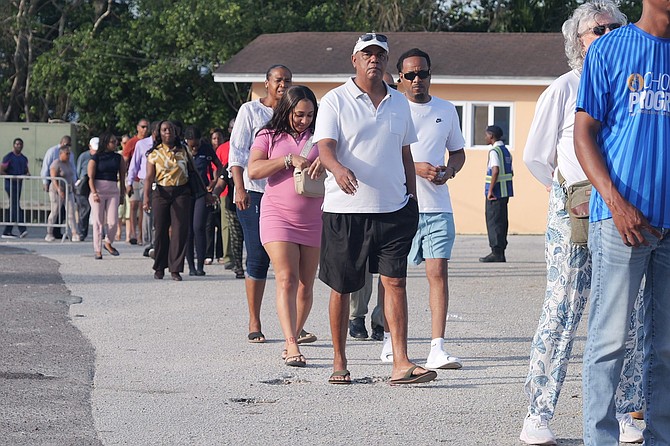
    In the wake of Tuesday’s general election in the Bahamas, an alarming projected voter turnout of just 58 percent has sent shockwaves through the nation’s political landscape, with senior electoral officials warning the figure would mark an unprecedented collapse in civic participation if officially confirmed. Geoffrey McPhee, an election consultant with the country’s Parliamentary Registration Department, told reporters Wednesday that the unofficial estimate — which remains subject to confirmation as recounts proceed across 25 contested constituencies — points to voter turnout falling even lower than the 2021 snap election held at the height of the COVID-19 pandemic.

    McPhee emphasized that the 58 percent figure is still preliminary, drawn from preliminary on-the-night assessments by election staff, but called the projected drop a devastating blow to the country’s democratic culture. “Our folks, we have gone south with respect to excitement about elections. That is really, really, that’s horrible,” he said, adding that the 2021 COVID-era turnout, already a historic low, outperforms the current projection. “That’s tragic, because with elections, once they miss the election, they don’t feel the urgency to reengage.”

    The projected slump represents a staggering break from the Bahamas’ strong post-independence voting tradition. For decades after the nation gained independence, general election turnout routinely exceeded 88 percent, and regularly climbed above 90 percent through the first three decades of self-governance. The 1977 inaugural post-independence general election recorded an 88.6 percent turnout, with numbers rising to 90.4 percent in 1982 and holding above 90 percent through 1987. Turnout stayed consistently high even as power shifted between major parties: it hit 91 percent when the Free National Movement (FNM) ended the Progressive Liberal Party’s (PLP) decades-long hold on government in 1992, and reached 93.2 percent when the FNM secured a landslide second term in 1997. Through 2002, 2007 and 2012, turnout remained firmly above 90 percent, and even in 2017, the first election to show a clear downward trend, participation still hit 88.4 percent.

    The first historic rupture came in 2021, when turnout fell sharply to 64.9 percent. If the current 58 percent projection holds, Tuesday’s election will set a new post-independence low for voter engagement. The low turnout coincided with the PLP securing a commanding second consecutive term in office, with unofficial results showing the party winning 32 of 41 seats, nearly matching its 2021 landslide victory that ousted the FNM from power.

    Prime Minister Philip “Brave” Davis, leader of the PLP, acknowledged the unexpectedly low turnout, noting that weak participation is never healthy for a democratic society and that more work must be done to help all voters feel that their ballots carry meaningful weight. So far, the highest recorded local turnout is expected in the New Providence constituency of Fort Charlotte, where former Island Luck CEO Sebas Bastian defeated FNM candidate Travis Robinson by more than 2,300 votes on an estimated 72 percent turnout, according to local insiders.

    Civil society leaders have joined electoral officials in sounding the alarm, stressing that the projected low turnout should concern all Bahamians regardless of partisan alignment. Matt Aubry, head of the nonpartisan Organisation for Responsible Governance (ORG), said that weak participation does not necessarily equal voter apathy. Instead, he argued, many disengage because they do not feel their concerns are being addressed or that voting will lead to tangible change in their daily lives.

    During the organization’s voter education outreach across the election cycle, Aubry said, ORG teams heard repeated frustration, particularly from young and first-time voters, who criticized campaigns for focusing heavily on personality politics and sensationalized rhetoric instead of the bread-and-butter issues affecting most Bahamian households. These include persistent struggles with the cost of living, limited economic opportunity, rising crime, high energy costs, inadequate housing and eroding public trust in political leadership.

    Voters also repeatedly raised concerns about longstanding gaps in governance transparency, accountability, public procurement, campaign finance reform and access to information, even as more residents recognize how directly policy choices impact their daily lives and opportunities. Beyond policy grievances, Aubry noted that issues during the advanced voting process — including reported gaps in preparedness and efficiency — combined with ongoing public anger over the violation of campaign laws around candidate treat-giving by multiple parties, may have further eroded motivation to participate. The delayed and partial rollout of new biometric voter identification cards, paired with widespread misinformation and speculation on social media, also created confusion that may have undermined public confidence in the integrity of the electoral process for some voters, he added.

  • Minnis ‘disappointed’ by loss but pledges to remain active

    Minnis ‘disappointed’ by loss but pledges to remain active

    One day after final votes were tallied in The Bahamas’ general election, former prime minister Hubert Minnis opened up about his unexpected loss of the Killarney constituency seat — a post he held for nearly 20 years — revealing that while disappointment lingers, his engagement with the community he represented is far from over.

    Minnis’ defeat came after a historic and politically charged campaign that saw the former leader of the Free National Movement (FNM) split from the party he once headed, launching a rare independent bid for re-election following months of public friction with current FNM leader Michael Pintard and the party’s senior leadership. When the FNM leadership declined to renominate Minnis as its candidate for the 2026 general election, he opted to stay in the race, marking the first time any former Bahamian prime minister has run as an independent after leaving the party they once led. On election night, early results projected FNM nominee Michela Barnett-Ellis as the winner of the Killarney seat, ending Minnis’ decades-long hold on the constituency.

    The former prime minister arrived at a mandatory vote recount at the New Providence Community Centre on Thursday morning clad in his signature campaign gear — a branded “Killarney Strong” shirt and matching hat — and remained outwardly calm throughout the process. Speaking to reporters after the recount confirmed his loss, Minnis acknowledged the letdown of the outcome, but framed defeat in an unexpectedly reflective light.

    “Of course, I would have been somewhat disappointed that I lost in Killarney,” he told reporters outside the centre. “Sometimes defeat can be victory. In terms of feeling, I still feel good. I woke up this morning and did my usual thing and just came from coffee house with my lovely wife enjoying a nice morning of coffee.”

    As a long-time resident of the Killarney constituency, Minnis made clear that he has no plans to step back from community work. He announced a new initiative to launch an Educational Trust Fund, designed to provide much-needed financial aid to local high school students facing economic barriers. The former prime minister confirmed he will seed the fund with $100,000 of his own personal capital, and he plans to solicit additional donations from outside sponsors to expand the fund’s reach.

    For months leading up to election day, Minnis remained confident he would retain the Killarney seat, even as pundits questioned his odds as an independent candidate. When asked on election day what his future would hold if he lost, he dismissed the question and reaffirmed his belief in a victory.

    When asked Thursday whether his defeat signals the end of his formal political career, Minnis said he has not yet held in-depth conversations with his family about his long-term plans, stressing that his loved ones will be central to any future decision he makes. When pressed on whether he would consider reconciling and rejoining the FNM, he ruled out that possibility, noting that he currently plans to shift his focus to supporting his children as they grow their own business ventures. When asked what factors led to his defeat, he simply replied, “Only God knows.”

    The 2026 general election delivered a decisive victory for the incumbent Progressive Liberal Party (PLP), which secured a second consecutive term in office. Unofficial final results show the PLP winning 33 of the 41 available parliamentary seats, while the FNM only captured eight seats. When asked for comment on the FNM’s poor overall performance in the election, Minnis said he does not interfere in the internal affairs of his former party.

    “To be honest with you, I can’t tell you my real belief or what I believe happened,” he said. “I will write that in my journals, you know, but that’s my belief, and it would be backed up with some facts, but it’s not for public consumption at this time, the public is not prepared to take that. They can’t devour it at this time.”

  • Abinader arrives in Guyana to sign new cooperation agreements with President Ali

    Abinader arrives in Guyana to sign new cooperation agreements with President Ali

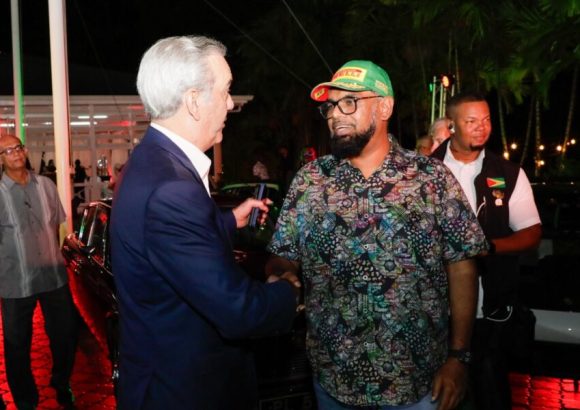
    GEORGETOWN, GUYANA – Dominican Republic President Luis Abinader touched down in Georgetown Wednesday evening to launch his fourth official working visit to the South American nation, a trip aimed at reinforcing long-standing bilateral ties and expanding collaborative frameworks between the two countries through new agreements with Guyanese President Mohamed Irfaan Ali.

    Upon his arrival at Cheddi Jagan International Airport, Abinader received an official welcome from a senior Guyanese delegation led by Prime Minister Mark Anthony Phillips, Foreign Minister Hugh Todd, alongside Ernesto Torres, the Dominican Republic’s resident ambassador to Guyana. After participating in formal military honors to mark the official nature of his visit, the Dominican leader joined Guyanese government officials for a welcoming reception hosted at Government House.

    A full day of diplomatic engagement is scheduled for Thursday, starting with a closed-door bilateral meeting between Abinader and Ali to discuss shared priorities and ongoing collaborative projects. Following their talks, the two heads of state will oversee the signing of a new bilateral cooperation agreement that expands on existing partnerships.

    This current visit builds directly on progress achieved in 2023, when the two governments signed six memorandums of understanding targeting key sectors of mutual interest: sustainable energy development, national food security, and cross-border trade expansion. Abinader is traveling with a senior cabinet and delegation, including Joel Santos, the Dominican Minister of Energy and Mines, Samuel Pereyra, chairman of the Dominican Petroleum Refinery (Refidomsa), and Tulio Rodríguez, the government’s special coordinator for Guyana affairs. The Dominican president is scheduled to complete his diplomatic engagements and depart for the Dominican Republic by the end of Thursday.

  • Fusion Multicultural Cuisine

    Fusion Multicultural Cuisine

    Nestled at 10 Dominica Drive in New Kingston, Jamaica, Fusion Multicultural Cuisine sets the tone for an elevated dining experience the moment guests arrive. A uniformed concierge greets visitors at the door, communicating arrival details through an earpiece and radio — a small, polished touch that immediately signals the exclusive, atmospheric vibe that awaits behind the restaurant’s ornate entrance. The dim, moody interior, complete with soft backlighting at the bar, plush green velvet seating, and understated global EDM playing in the background, successfully transports diners out of central Kingston and into a cozy, luxe escape perfect for social gatherings and memorable food outings.

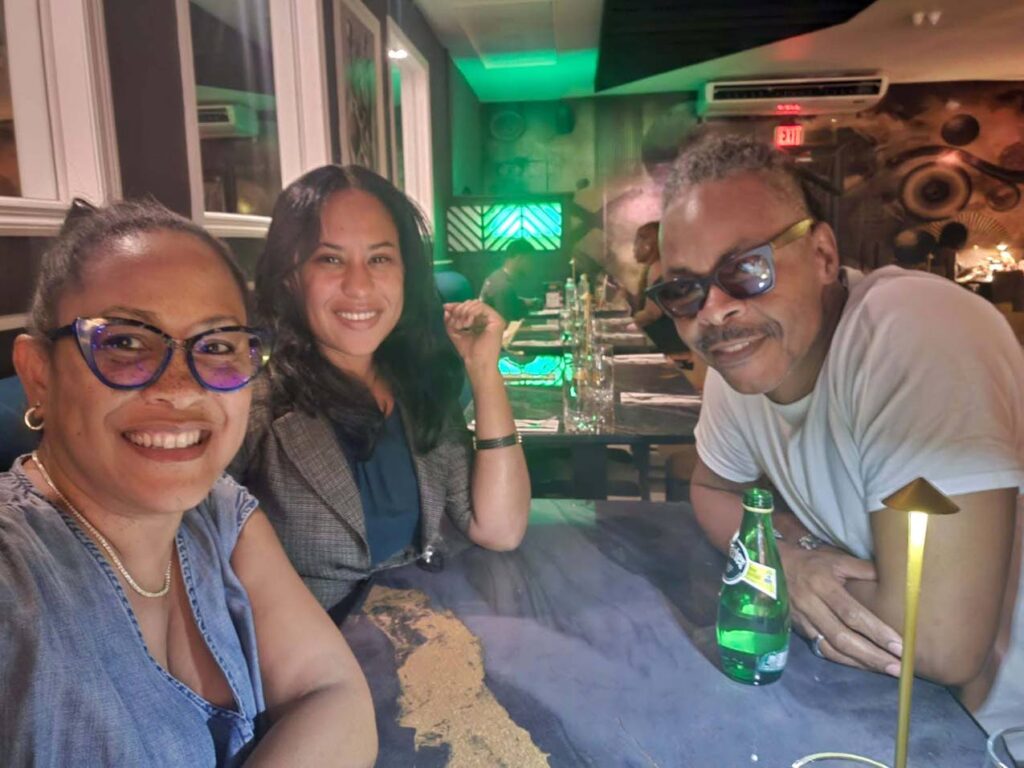
    Two judges from the Jamaica Observer Table Talk Food Awards, Adolph Raynor and Annaliesa Lindsay, recently visited the restaurant to sample its eclectic menu that draws culinary inspiration from across the globe. Their tasting journey began with three appetizer and small-plate offerings: Nairobi Wings drawing from Kenyan flavors, traditional-inspired Japanese Chicken Ramen, and Glazed Korean Pork Belly. Portion sizes were carefully calibrated to leave room for a full multi-course meal, with the ramen even crafted into a perfectly portioned “chibi” size ideal for tasting.

    Moving to the main course, the judging trio sampled an array of dishes: Coconut Curry Snapper served with steamed bammy, creamy Shrimp Mac & Cheese, and herb-rubbed Lamb Chops paired with fresh steamed vegetables. Despite leaving the group comfortably full, the party carved out space to split a rich chocolate muffin finished with a generous drizzle of velvety fudge sauce for dessert.

    To complement their meal, the group explored Fusion’s craft cocktail list, which matched the sultry mood of the dining room. They ultimately selected three standout drinks: the creative Amaretto Sour Twist, which adds a surprising layered base of red wine to the classic cocktail; the gin-based Fusion Thai Basil, infused with bright herbal notes; and a simple, elegant double shot of Tanqueray topped with sparkling water.

    Overall, the menu delivers a gentle introduction to global flavors that feels approachable for Jamaican diners accustomed to local Caribbean cuisine. The Nairobi Wings emerged as the clear standout of the meal, boasting a perfectly crispy crust coated in a tangy, spiced Nairobi sauce that offers a subtle but satisfying twist on the grilled and fried flavors local diners know well. The Glazed Korean Pork Belly ranked as the group’s second-favorite dish: fork-tender half-inch slices of pork get a light char that creates a delicious textural contrast under the sweet barbecue-style glaze, with flavors familiar enough to feel comfortable but distinct enough to feel like a small, exciting culinary trip. The Chicken Ramen, meanwhile, looked like an authentic trans-Pacific culinary experience at first glance, complete with a traditional soy-marinated soft-boiled egg that nails classic Japanese presentation. But the broth’s flavor and noodle texture were adjusted to align with local Jamaican tastes, making it a familiar yet fun twist on the international staple. Mains stuck closer to flavors recognizable to local palates, but all dishes impressed with generous portions of high-quality protein, from the flaky snapper to the hearty lamb and plump shrimp in the mac and cheese.

    Beyond the food and drink, the judging panel praised Fusion’s service team extensively for their warm, attentive, and knowledgeable care that elevated the entire dining experience. The venue, they noted, is perfectly suited for guests seeking luxe, Instagram-worthy moments — especially for visitors looking to capture elegant cocktail shots alongside creative, far-reaching menu options that stand out from standard local lounge bar fare.

    For diners interested in visiting Fusion Multicultural Cuisine: the restaurant is located at 10 Dominica Drive in Kingston, and can be found on Instagram @fusioncuisinejm. Opening hours run from 4:30 pm to 10:00 pm from Monday through Thursday, and extend to 12:00 am on Friday, Saturday, and Sunday. Reservations and inquiries can be made via telephone or WhatsApp at (876) 464-0636. The total cost for the three-person tasting experience reviewed came to $37,697 Jamaican dollars.

  • Konshens ushers in summer vibes with Pool Party 2.0

    Konshens ushers in summer vibes with Pool Party 2.0

    As warm summer days approach, iconic Jamaican dancehall artist Konshens has launched his highly anticipated new 12-track project, *Pool Party 2.0*, that puts unfiltered fun and high-energy party vibes front and center. Released globally on Friday, May 8, this album marks the follow-up to his hit first *Pool Party* compilation, a record that cemented his reputation as one of dancehall’s most successful cross-over acts with a massive global fanbase.

    While the first installment generated major industry buzz and career-changing momentum for Konshens, the artist says his core priority for this second iteration is not critical acclaim or commercial performance – it is spreading joy. “My vision for this album was all about fun and good energy,” Konshens shared in comments about the project. “I’m trying to make people think of the dancehall, especially with summer right around the corner. Good vibes, high energy – that’s literally my mode for the remainder of my career, because I think there isn’t enough focus on that. This 2.0 version will be different from the last Pool Party project because it’s not as serious, and no attempt was made to strike that forced balance. This one is just fun party bangers.”

    The project features a stacked roster of collaborative talent, bringing together producers and recording artists from across the Caribbean and international markets to create a cohesive sound rooted in classic Jamaican party culture, with flourishes of Caribbean, Latin, and global contemporary influences. The album’s lead focus track, *Like We*, pairs Konshens with legendary dancehall pioneer Beenie Man, offering a fresh modern reimagining of Beenie Man’s iconic 1996 hit *Old Dog*. Originally crafted by fabled dancehall producer Dave Kelly for his iconic Madhouse Records imprint, the original track featured on the genre-defining Stink rhythm. Remarkably, *Like We* is co-produced by Kelly himself, bridging decades of dancehall history by blending the raw, timeless energy of the 1996 original with a cutting-edge contemporary production that resonates with today’s global dancehall audience.

    For Konshens, the collaboration is more than just a catchy party track – it is a deliberate contribution to the growing nostalgia wave reshaping dancehall, designed to introduce a new generation of young listeners to the genre’s legendary roots. “I think it’s important to contribute to the nostalgia wave in dancehall right now,” he explained. “I realise there’s an effort to get kids nowadays to see and hear for the first time what made these sounds and moods from back in the day so fire and not corny like they’ve been programmed to believe. I’m excited to see what this realisation will do to their creativity in the next few years.” He added that the track was actually recorded years ago and shelved, as he never expected Kelly would approve the sample clearance. To his surprise, the legendary producer praised the track as “tough” and gave it his full blessing to be released.

    Production on the full album is led primarily by IZYBEATS and SUBMACHINE ENT, who anchor the project’s overall sonic direction, with additional production contributions from Dave Kelly, Tony Kelly, Jonny Blaze, Stadic, King Kosa, and Symon Dice. Alongside Beenie Man, featured artists include UK-based dancehall favorite Stylo G, Chudney J, and Ayetian. Standout tracks beyond the lead single include *Perfect Timing* produced by King Kosa and Jonny Blaze, *Rum Club* produced by Jonny Blaze and Stadic, and *South Side* produced by Symon Dice. The project also includes a notable lead guitar performance from Xeryus Gittens on *She Jus Wah Wine*, with publishing administered through Songs of Universal (BMI).

  • LET’S SAVE IT!

    LET’S SAVE IT!

    For decades, fans and cricket stakeholders across the Caribbean have voiced growing anxiety over the steady decline of West Indies cricket, a once-dominant force in the global sport that now faces cascading on-field and off-field challenges. Now, former St Vincent and the Grenadines Prime Minister Dr Ralph Gonsalves, who led the island nation for 24 years until his election defeat in November 2024, is stepping forward to demand urgent systemic change, arguing that regional governments must claim a formal seat at the decision-making table to reverse the sport’s downward trajectory.

    The urgency around reform has spiked sharply over the past 12 months, after West Indies suffered a humiliating Test series defeat to Australia last summer, capped by a shocking 27 all out at Kingston’s Sabina Park – one of the lowest batting totals in the team’s long international history. Current International Cricket Council (ICC) rankings underscore the depth of the on-field crisis: the men’s senior team sits in the bottom half of all ICC global rankings, holding 8th place in Tests, 10th in One-Day Internationals, and 7th in the Twenty20 format.

    Off the pitch, the sport’s regional governing body, Cricket West Indies (CWI), is facing severe financial strain, with the organization projecting a $26 million USD loss for the current year, though it forecasts a return to profitability by 2027. Gonsalves argues that these overlapping crises cannot be resolved by CWI’s current private governance model alone, and that regional governments must be granted formal decision-making authority if they are expected to inject much-needed public funding into the sport.

    Speaking in an interview with the Jamaica Observer, Gonsalves noted: “The governments have to get involved but the governments [are] not going to get involved seriously if Cricket West Indies continues to think that government will pour money into Cricket West Indies without them having a say.” Currently, the Caribbean Community (Caricom) maintains a cricket subcommittee – once chaired by Gonsalves himself – but the regional bloc holds no formal governing power within CWI. ICC rules also ban official government interference in the internal administration of its member organizations, a regulation Gonsalves says is outdated and ill-suited to the Caribbean context.

    Drawing a comparison to South Asia, Gonsalves pointed out that the Indian Supreme Court has already ruled that top-tier cricket is a public good that cannot be managed exclusively by private entities. “I’m sure if it comes to our courts that they will rule similarly because it makes perfect sense,” he said. “The law is right reason and right reason indicates that you can’t have a public good, of this type being run by a private entity and certainly you can’t expect the parliaments to vote money to put it inside of the organisation, Cricket West Indies, where they seek to conflate Cricket West Indies with cricket in the West Indies. I’ve thought long and hard about this thing and, I dare anybody to tell me that my conclusions are not correct.”

    Gonsalves’ proposed path forward calls for regional leaders to collectively present a formal diplomatic demarche to the ICC, outlining the severity of the current crisis and requesting approval for expanded government involvement to restructure and reform CWI. “If this matter is discussed within the context of the region and governments decide this is way we’re going to do it and we want to play a part in the management of it and to restructure it, we have to make a demarche to the ICC and say this thing cannot continue like this, because if it continues like this, it would fold,” he explained. “So I don’t think it’s a question of trust. It’s whether we as governments in the region decide whether we’re going to be involved in this matter. And in order to comply with the perspectives of the ICC, where are the tolerable limits for the state’s involvement because we are in a crisis.”

    West Indies cricket is set to return to the international spotlight next month, when the team will host Sri Lanka for three ODIs and three T20Is at Sabina Park, against a backdrop of growing calls for sweeping systemic change to secure the sport’s future in the Caribbean.

  • ‘Rescue the JUTC’Phillips says State-run bus company in “most pathetic state” as losses mount

    ‘Rescue the JUTC’Phillips says State-run bus company in “most pathetic state” as losses mount

    Jamaica’s main opposition party has launched a scathing attack on the current administration, accusing it of allowing the nation’s flagship public transit provider, the Jamaica Urban Transit Company (JUTC), to fall into the worst crisis in its institutional history.

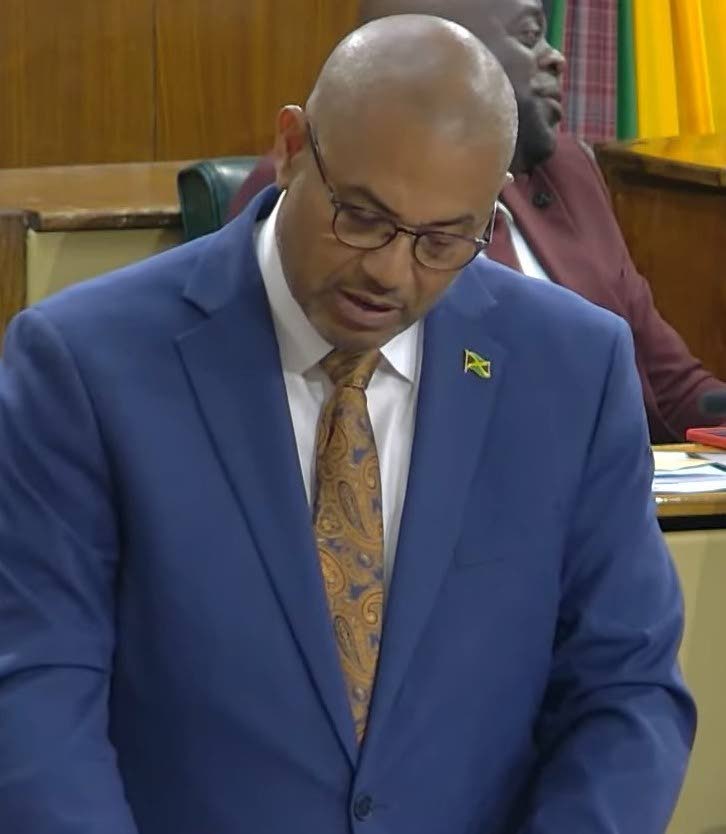
    Speaking during the ongoing sectoral debate in Jamaica’s House of Representatives, opposition transport spokesperson Mikael Phillips drew a stark medical metaphor to describe the state-owned bus operator’s decline, saying the JUTC has spent a full decade lingering in the “accident and emergency department” amid ballooning financial losses and sustained government policy neglect. He called the current situation the “most pathetic state” the agency has faced since its founding.

    Phillips pushed back against government claims of progress, pointing out that successive ruling party budgets have poured billions of dollars in public subsidies into the JUTC and greenlit the purchase of hundreds of new transit vehicles—yet the agency continues to drift deeper into systemic financial and operational failure. He derided the government’s half-hearted interventions, comparing them to “calling on a carpenter to examine a critical patient, when what is truly required is oxygen and a skilled physician to diagnose the ailment and prescribe the cure.”

    The opposition spokesperson laid out grim financial figures to back his criticism, noting that cumulative losses for the JUTC have topped $100 billion over the past 10 years. This fiscal year alone, the agency is projected to post a staggering $14.8 billion deficit, and remains operational only through an emergency $11 billion government grant that keeps it afloat month to month.

    Even with major capital investments in the fleet, Phillips argued, core performance metrics for the JUTC have failed to improve. He raised pointed questions about the agency’s soaring maintenance and fuel costs, particularly perplexing given that a large share of the updated fleet now runs on lower-cost compressed natural gas or electric power.

    Beyond financial mismanagement, Phillips also criticized the current administration’s decision to expand JUTC routes into rural parts of the island. That expansion, he argued, has sparked unnecessary and escalating friction between the state-owned transit giant and smaller private transport providers that already serve those communities.

    At its core, Phillips argued, the JUTC’s deepening crisis is a symptom of a larger failing: the complete absence of a coherent, long-term national public transportation policy from the current government. He issued a clear warning that continued delays to comprehensive structural reform will only further erode public transit access and reliability across the entire island of Jamaica.

  • Fiscal discipline without growth leaving Jamaicans behind, says Hylton

    Fiscal discipline without growth leaving Jamaicans behind, says Hylton

    During Tuesday’s Sectoral Debate on the 2026/27 national budget in Jamaica’s House of Representatives, Opposition trade, industry and global logistics spokesperson Anthony Hylland launched a pointed critique of the country’s decade-long economic trajectory, arguing that years of strict fiscal discipline have failed to deliver the structural transformation ordinary Jamaicans desperately need – a gap that hits low-income households the hardest.

    Drawing on the core lesson of the popular business fable *Who Moved My Cheese?*, Hylton pressed the governing Jamaica Labour Party (JLP) administration for clear action. “As we continue this Sectoral Debate on the 2026/27 Budget, I ask this Government a very simple question: You clearly see that the cheese has moved, so where is the strategy to find it?” he said.

    In a measured assessment, Hylton did not dismiss the progress the country has made on macroeconomic stability over the past ten years. He acknowledged that substantial fiscal consolidation has delivered tangible results: debt-to-GDP ratios have fallen consistently, primary budget surpluses have been maintained, inflation control has improved, and the hard-won macroeconomic stability is a real achievement. “Both administrations deserve measured credit for maintaining that discipline because the sacrifices required to achieve it were significant and felt by the Jamaican people,” Hylton noted.

    But he pushed back against framing stability as an end goal in itself. “Stability is not development. Stability is simply the foundation upon which development must be built. A stable foundation only matters if something transformative is eventually constructed upon it,” he added.

    After a full decade of JLP leadership, Hylton argued, the deep structural change Jamaica’s economy requires has yet to materialize, with evidence of stagnation visible across multiple key sectors. Manufacturing’s contribution to national GDP has seen no meaningful expansion, value-added exports remain stuck at low growth levels, and the country is still overly reliant on the same core economic pillars – tourism, bauxite and remittances – that supported the economy a generation ago.

    He also flagged growing risks to the once-promising business process outsourcing (BPO) sector, which was long billed as a engine for middle-class job growth and opportunity. Hylton said the sector has now hit a plateau, and faces an existential threat from rapid automation and artificial intelligence advancement – a major risk that the 2026/27 budget barely acknowledges. The government’s flagship logistics hub project, he added, remains more of an unfulfilled vision than a fully implemented initiative. Even the country’s long-term development blueprint, Vision 2030, has struggled to meet its targets: now past its midpoint, key structural goals have been quietly deferred, delayed or scrapped entirely, according to Hylton.

    Turning directly to the new 2026/27 budget tabled by Finance Minister Fayval Williams, Hylton argued that the proposal is little more than a hurricane recovery package repackaged as a growth-focused budget. While the Opposition fully recognizes the catastrophic impact of Hurricane Melissa, which caused an estimated US$12.2 billion in damages – equal to nearly 57% of Jamaica’s total GDP – and destroyed countless lives and livelihoods, Hylton said the government has failed to outline any clear strategy for long-term transformative growth beyond emergency response.

    “The Jamaican people deserve more than crisis management, they deserve a coherent plan for growth and national advancement. And the pressures facing ordinary Jamaicans continue to intensify,” he told the chamber.

    Hylton highlighted the gap between the budget’s assumptions and on-the-ground realities for working people. When the budget was drafted, policymakers assumed oil prices would sit around US$60 per barrel, but current prices hover near US$100. That difference will not be absorbed by government ministers, he noted – it will be paid by the single mother filling up her gas tank, the small farmer running an irrigation pump, and the small domestic manufacturer seeing electricity costs eat into already thin profit margins.

    “These are the realities confronting Jamaicans every day; realities that cannot be solved by macroeconomic talking points alone,” Hylton said.

    The West St Andrew Member of Parliament concluded that the projected 1-2% GDP growth forecast in the wake of Hurricane Melissa is not evidence of transformation – it is merely survival. “Jamaica deserves more than endurance, it deserves direction. Discipline without direction ultimately becomes endurance without destination, and the Jamaican people have endured long enough without seeing the level of transformation their sacrifices were supposed to produce,” he said.

  • ITA to spend $58m to repair Hurricane Melissa-ravaged depots

    ITA to spend $58m to repair Hurricane Melissa-ravaged depots

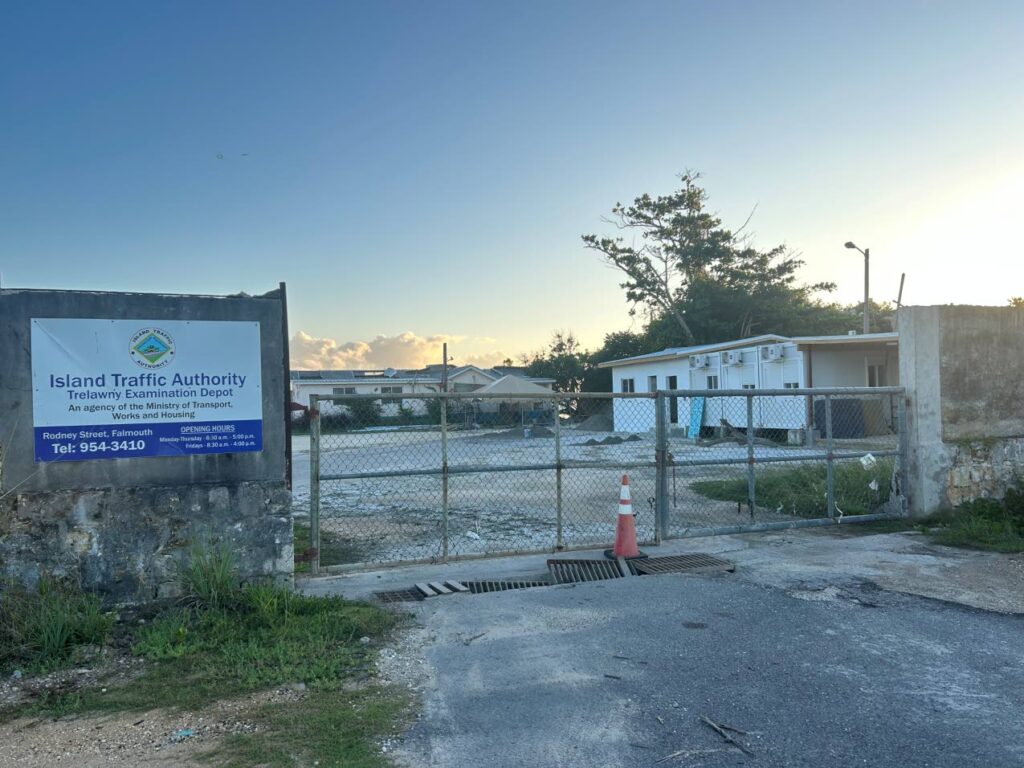
    FALMOUTH, Trelawny – Months after Category 5 Hurricane Melissa tore through Jamaica, leaving a trail of widespread destruction across multiple parishes, one critical public service facility is finally on the cusp of returning to full operation. The Island Traffic Authority’s (ITA) Falmouth Service Hub, which has been shuttered since the storm hit last October, is almost fully repaired and is set to welcome motorists again in the near future, bringing much-needed relief to thousands of Trelawny residents who have faced persistent logistical hurdles to access basic vehicle services.

    Since the facility closed, local drivers have been forced to travel outside their home parish to complete mandatory tasks including vehicle roadworthiness certification, driver testing, and engine registration updates. For many, the extended journey and unfamiliar processes have turned routine administrative work into days-long, exhausting ordeals.

    Joseph Hamilton, a Trelawny resident who recently had to travel to Montego Bay to update his engine registration and secure a new vehicle fitness certificate, described the experience as deeply inconvenient. “It was so inconvenient as it was unfamiliar territory and it was a long wait,” Hamilton told the Jamaica Observer this week.

    Fellow local resident Anthony Whyte echoed that frustration, recalling his own recent stressful trip to the Montego Bay hub. “I hope that the Falmouth depot will be opened by the next time I need their services. I have to waste a whole day to beat the heavy traffic to reach Montego Bay, and then the long wait at the depot. It is just too tedious,” Whyte said, pointing directly to Hurricane Melissa as the root cause of the ongoing disruption.

    The ITA confirmed that the Falmouth examination depot sustained severe structural damage during the Category 5 storm, but restoration work is now in its final stages. In an official response to queries from the Jamaica Observer, the ITA’s Corporate Communications and Public Relations Branch stated that motorists will receive formal notification of the exact reopening date in the very near future.

    In the interim period before Falmouth resumes operations, Trelawny residents can still access all required ITA services at the fully operational Montego Bay and St Ann’s Bay hubs. A third potential alternative, the Black River depot in St Elizabeth, remains closed after also suffering heavy damage from the hurricane.

    Restoration of the two storm-damaged ITA facilities will cost a combined total of approximately $58 million Jamaican dollars. The Black River site is expected to remain closed for much longer than Falmouth, as it sustained far more extensive destruction that required a lengthy technical assessment before work could begin. The ITA confirmed that technical evaluations and finalization of the work scope for Black River are now complete, with full renovation set to launch during the current fiscal year.

    As part of the Black River rehabilitation project, officials are also considering adding structural upgrades that would boost the building’s ability to withstand future severe weather events, a key priority after the extreme damage caused by Melissa. During the restoration period, St Elizabeth residents are being redirected to access ITA services at the Savanna-la-Mar and Mandeville hubs.

    Hurricane Melissa was one of the most catastrophic natural disasters in Jamaica’s recent history. The storm hit last October, causing the worst damage to parishes including St Elizabeth, Westmoreland, Hanover, Trelawny, and St James. Across the country, the storm claimed at least 45 lives and caused an estimated J$1.952 trillion (US$12.2 billion) in total damage and economic losses – a sum equivalent to 56.7% of Jamaica’s entire 2024 gross domestic product.

  • Ja eyes bigger slice of US$180-b global wedding market

    Ja eyes bigger slice of US$180-b global wedding market

    Against the backdrop of post-hurricane recovery, Jamaica is making an aggressive push to capture a larger share of the $180-billion global wedding tourism market, with top industry leaders confident the Caribbean nation is primed to grow its already leading position in the lucrative destination wedding niche. The push is being highlighted by the inaugural Love Caribbean: Jamaica Edition 2026 conference, hosted this week at Princess Grand Jamaica Hotel in Hanover’s Green Island, bringing together hundreds of wedding industry professionals from across the globe.

    Speaking exclusively to the Jamaica Observer on the sidelines of the three-day event, which kicked off Monday and wraps up Wednesday, Deputy Director of Tourism Philip Rose, who oversees tourism outreach across the United States, Latin America, and the Caribbean, framed the niche as a critical growth opportunity for the island’s economy. “The global destination wedding market is enormous, and it would be irresponsible for us not to secure our rightful share of this growing segment,” Rose said.

    Sponsored by the Jamaica Tourist Board (JTB), the conference is a flagship professional gathering that connects international wedding planners, travel advisors, and industry stakeholders to showcase Jamaica’s offerings for romantic travel and destination weddings. Unlike remote marketing campaigns, Rose emphasized that on-the-ground experiences for key industry partners are the most effective way to promote the island. “While our global team shares all of Jamaica’s incredible offerings with international audiences, nothing beats having our core partners — in this case, wedding planners — experience everything the island has to offer first-hand,” he explained. “This is already proving to be a fruitful investment, and we expect strong returns in future bookings as a result.”

    The event is organized by the International Association of Destination Wedding Professionals (IADWP), an industry body with 18 years of experience hosting global romance travel events. While the IADWP has run its annual World Romance Travel Conference for nearly two decades, this marks the first iteration of the region-specific Love Caribbean: Jamaica Edition. Notably, the local event was officially launched on October 28 — the same day Hurricane Melissa swept through southern and western parishes, causing widespread damage. Rose noted that moving forward with the conference regardless of the storm’s aftermath serves as a powerful demonstration of Jamaica’s ability to recover quickly. “Hosting this event here gives us a chance to show the world that we are without a doubt the most resilient people, and we carry that resilience with a smile that is totally unique to Jamaica,” he said.

    New data shared by the JTB lays out the massive scale of the opportunity: the global wedding industry is currently valued at $180 billion, with 25 percent of that total — $45 billion — coming from destination weddings. Industry analysis shows the segment hit $36.2 billion in revenue in 2024, and is projected to grow to $47.78 billion in 2025, with forecasts pointing to explosive expansion to $124.6 billion by 2032. That rapid growth has made the niche a top priority for tourism-focused economies across the Caribbean and Latin America.

    IADWP founder and president Kitzia Morales told attendees that 250 delegates from 16 countries — including Pakistan, India, Italy, the United States, Canada, Colombia, and Mexico — traveled to Jamaica for the conference, and that organizers never wavered in their commitment to host the event post-storm. “This is exactly the time when destinations need visitors and tourism revenue to support recovery,” Morales said. “That’s why we knew this was the right time and the right place to hold this conference.”

    Morales confirmed that Jamaica already holds the top spot for destination weddings among all English-speaking Caribbean islands, even amid stiff competition from popular destinations like Mexico and the Dominican Republic. That leadership, she explained, is the result of decades of intentional collaboration between public and private tourism stakeholders. “More than 15 years ago, the Jamaica Tourist Board recognized that this niche would be transformative for the island, and they pioneered initiatives no other destination had tried before — things like dedicated welcome experiences for wedding couples at the airport and large-scale global marketing that frames Jamaica as the ultimate romantic getaway,” she said. “But you can’t build this kind of industry alone. Jamaica’s resorts stepped up to make destination weddings a core part of their business models, and that combined public-private effort is why the island has taken the lead.”

    Morales added that each destination wedding creates ripple benefits across nearly every segment of Jamaica’s local economy, supporting up to 72 different economic activities ranging from beauty services and floral production to local agriculture, beverage manufacturing, transportation, and excursion providers. She also expressed confidence that Jamaica can retain its top position in the segment, noting that the conference itself proves the island is open and ready to welcome visitors just months after the hurricane. “Jamaica will always be Jamaica, with its unbeatable culture and natural beauty,” she said. “This conference lets the world see that even after a major storm, Jamaica’s resilience shines through — the resorts are ready, the people are ready, and guests will have an incredible experience when they choose to get married here.”