作者: admin

  • Xi warns Trump on Taiwan at Beijing summit

    Xi warns Trump on Taiwan at Beijing summit

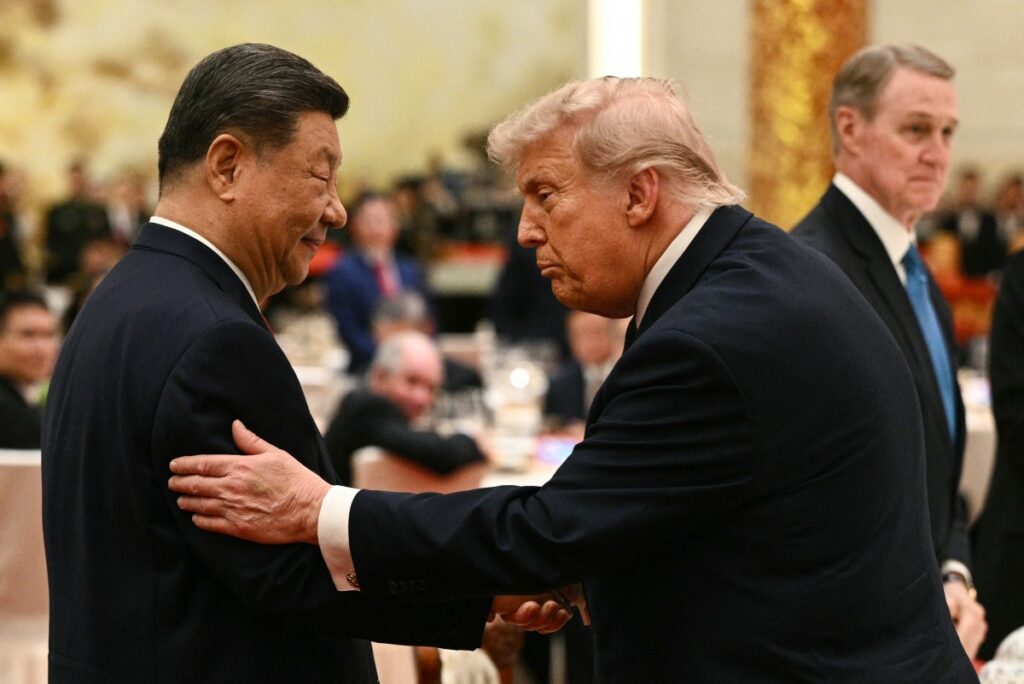
    BEIJING, China – In a dramatic opening to a high-stakes 2017 superpower summit held in Beijing on Thursday, Chinese President Xi Jinping delivered a blunt warning to visiting U.S. President Donald Trump that mismanagement of the long-simmering Taiwan issue could spark open conflict between the world’s two largest powers. The meeting marked the first visit by a sitting U.S. president to China in nearly a decade, an occasion wrapped in elaborate ceremonial pageantry that masked deep, unresolved frictions spanning trade, geopolitics and regional security.

    Trump arrived in Beijing with warm public praise for his Chinese counterpart, hailing Xi as both a “great leader” and a personal friend, and extended a formal invitation for Xi to visit the White House the following September. Despite the lavish red-carpet welcome complete with a military fanfare, 21-gun salute, and cheering schoolchildren waving welcome signs at the Great Hall of the People, Xi struck a measured, firm tone in his opening remarks, cutting directly to the core of Beijing’s most sensitive territorial priority.

    “ The Taiwan question is the most important issue in China-US relations,” Xi stated, according to official readouts published by Chinese state media shortly after the 135-minute talks wrapped. “If mishandled, the two nations could collide or even come into conflict, pushing the entire China-US relationship into a highly perilous situation.”

    In a nod to longstanding debates over great power competition, Xi referenced the “Thucydides Trap” – the theory popularized by ancient Greek historian Thucydides that warns rising powers inevitably clash with existing ruling powers – asking whether the two nations could escape this pattern and build a new framework for peaceful major-power relations. By the evening state banquet, Xi struck a more cooperative note, framing the countries’ core national goals as mutually compatible: “Achieving the great rejuvenation of the Chinese nation and making America great again can totally go hand in hand… and advance the wellbeing of the whole world,” he said, nodding explicitly to Trump’s “Make America Great Again” political platform.

    Despite the public displays of cordiality, the Taiwan issue has remained the single most volatile flashpoint in bilateral ties for decades. Beijing claims the self-governing democratic island of Taiwan as an integral part of its sovereign territory, has repeatedly vowed to unite it with the mainland, and has ramped up military pressure on the island in recent years. While the U.S. officially recognizes Beijing’s government, decades-old U.S. law mandates that Washington provide defensive arms to Taiwan, a policy that has consistently drawn fierce condemnation from China.

    Following Xi’s comments, Taiwan’s government responded quickly, calling Beijing the “sole risk” to cross-strait and regional peace, and reaffirmed that Washington has repeatedly made clear its firm support for Taipei. In a notable shift from previous U.S. policy, Trump had indicated days before the summit that he planned to discuss U.S. arms sales to Taiwan with Xi, breaking with longstanding Washington practice of refusing to consult Beijing on the matter. While the White House called the initial talks “good,” it made no mention of Taiwan in its official public readout, and Trump did not address questions about the issue from reporters on Thursday.

    Analysts note that Xi’s direct, unvarnished framing of the Taiwan risk marked an unusual step for a Chinese leader. Adam Ni, editor of the China-focused newsletter China Neican, told Agence France-Presse that while blunt language on Taiwan is common in Chinese state party media, it is rare for the country’s top leader to deliver such stark warnings directly to a U.S. president during a summit. Chong Ja Ian, a China affairs analyst at the National University of Singapore, told AFP that the comments signal Beijing’s hope to win concessions from Trump on the Taiwan issue. “Xi’s demand could suggest they see some opportunity to convince Trump,” he explained. U.S. Treasury Secretary Scott Bessent told CNBC that Trump would share more details on his discussions of the issue in the following days.

    Beyond Taiwan, the ongoing Iran conflict overshadowed portions of the summit, an issue that had already forced Trump to postpone his trip to China and that analysts say weakened the U.S. president’s negotiating position. In its readout, the White House confirmed that the two leaders agreed the Strait of Hormuz, a critical global energy chokepoint, must remain open for unimpeded energy trade. According to U.S. officials, Xi also stated China opposes any efforts to militarize the waterway or impose tolls on transit through the strait. The Chinese foreign ministry confirmed the Middle East was discussed but offered no additional details.

    Economic cooperation and trade were also key items on the agenda, with Trump seeking to lock in new business deals for U.S. companies in key sectors including agriculture, commercial aviation and manufacturing. A delegation of top U.S. business leaders, including Nvidia co-founder and CEO Jensen Huang and Tesla CEO Elon Musk, attended the welcome ceremony and joined part of the one-on-one talks between the two leaders, the White House confirmed. After the day of formal discussions, as the two leaders prepared for a state banquet featuring a menu of lobster and iconic Beijing roast duck, Trump called the talks “extremely positive” and described the evening as “another cherished opportunity to discuss among friends.”
  • Business giant Dennis Lalor has died

    Business giant Dennis Lalor has died

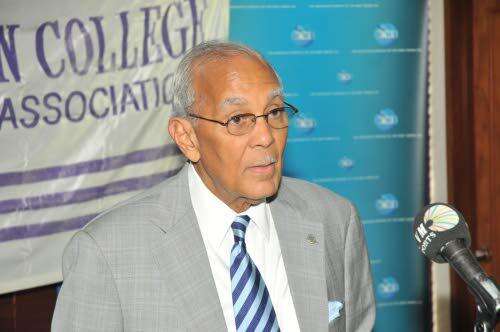
    KINGSTON, Jamaica — Jamaica’s business community is mourning the loss of one of its most towering figures this week, after Dennis Lalor, the pioneering chartered insurer and founding visionary behind ICWI Group Limited, passed away on Wednesday night. Lalor had been in declining health for an extended period prior to his death.

    Over a career that spanned more than six decades, Lalor transformed ICWI from a small startup into one of the Caribbean’s largest full-service financial institutions, with operational footprints spanning Jamaica and dozens of regional markets across the Caribbean archipelago. His legacy extends far beyond the insurance sector, as he took on leadership and board roles across a diverse range of public and private institutions throughout his professional life.

    His board service reads like a snapshot of Jamaica’s key civic and economic institutions: among the many organizations he contributed to are the national former flag carrier Air Jamaica, Freemasons Association (Jamaica) Limited, the Jamaica Association for the Deaf, the Lister Mair/Gilby School for the Deaf, the Betting, Gaming & Lotteries Commission, and the Jamaica Racing Commission.

    Lalor also earned widespread acclaim for his transformative contributions to both sports administration and national financial development in Jamaica. In recognition of his work across business and sports, he was awarded the Prime Minister’s Medal in 1983. Six years later, in 1989, he was inducted into Jamaica’s Thoroughbred Racing Hall of Fame, and also received the Thoroughbred Breeders Regency Award for his decades of service to the island’s horse racing industry.

    The Jamaican government appointed Lalor to the country’s Privy Council in 1990, the same year he accepted a position on the Council of the University of the West Indies, one of the Caribbean’s most prestigious higher education institutions. He later went on to serve as a member of the university’s Audit Committee, bringing his decades of financial expertise to support the institution’s governance.

    Between 1990 and 1992, Lalor held the presidency of the Private Sector Organisation of Jamaica (PSOJ), a critical period during which the organization partnered closely with the Jamaican government to advance the country’s landmark economic liberalization agenda. His leadership during this era helped lay the groundwork for decades of economic development across the island, cementing his reputation as a leader who balanced private sector growth with public good.

  • Bannister says Pintard must resign after crushing defeat

    Bannister says Pintard must resign after crushing defeat

    Following the Free National Movement’s (FNM) humbling defeat in last Tuesday’s general election in the Bahamas, internal divisions have erupted over the future of party leader Michael Pintard, with a senior former party official calling for his immediate resignation in line with longstanding political tradition.

    The election delivered a second consecutive consecutive term to the incumbent Progressive Liberal Party (PLP), while the FNM secured only eight out of 40 contested parliamentary seats – a result that nearly mirrored the party’s historic poor performance in the 2021 poll. While Pintard managed to hold onto his own Marco City constituency, he has so far declined to confirm whether he will step down, noting only that he will consult with his inner circle in the coming days to determine his next move.

    Despite minor gains for the FNM, which flipped the Freetown and MICAL seats from the PLP, the party lost its hold on St Barnabas, leaving it badly outnumbered in the new parliament. The election also brought an unexpected shakeup: the upstart Coalition of Independents performed far stronger than predicted against FNM candidates, particularly across multiple constituencies in New Providence, signaling growing voter discontent with the established opposition party.

    Opinions within the FNM’s senior ranks are deeply split on how to move forward. Some top officials have privately argued that Pintard should stay on in the interim to keep the party stable until a formal leadership convention can be called. Others, however, are pushing for an immediate exit, arguing that new leadership is required to rebuild the party’s base and reignite supporter enthusiasm.

    Desmond Bannister, the country’s former deputy prime minister and a long-time FNM figure, is the most prominent voice calling for Pintard’s departure. “The tradition in politics is that if you lose an election, you resign,” Bannister explained in comments this week. “That doesn’t mean that you don’t have a chance to come back at some stage.” He pointed to former FNM leader Dr Hubert Minnis, who stepped down after defeat and later launched a bid to retake the party leadership, as a well-known example of this precedent. Bannister added that stepping aside would not close the door on a potential future comeback for Pintard.

    But FNM Secretary General Serfent Rolle pushed back against calls for an immediate resignation, arguing that it is far too early to pressure the leader out. He emphasized that the FNM has longstanding internal processes for addressing leadership questions, and party councils are already holding a series of meetings to assess the election result, review the party’s financial position and map out a path forward.

    “We have to have a stable party, and that’s what I’m going to be fighting for,” Rolle said. “People want blood all the time because they like drama, and it’s all that. But nobody can die for that. It will happen. There will ultimately be a convention.”

    As the party conducts its post-election internal review, key questions continue to swirl around why the FNM’s policy and campaign message failed to resonate with Bahamian voters. Carlyle Bethel, a former official with the FNM’s Torchbearers Youth Association, released a public statement calling for sweeping restructuring and generational renewal within the party, paired with an end to the infighting that has plagued internal operations. Bethel argued that the party’s long-time loyalists have been sidelined and treated as disposable for far too long, noting that a fundamental shift in party culture is non-negotiable.

    Bannister echoed those criticisms, confirming that many long-time FNM supporters felt alienated by the current leadership team. “These are loyal FNM supporters who decided that they’d been alienated by the party,” he said. “Whether reasonable or not, they didn’t support the party in the election. These are people who campaigned for the FNM all their adult life. Many of them actually led the campaigns of PLP candidates who were successful.” Bannister stressed that the FNM must urgently develop a targeted strategy to rebuild trust and reconnect with supporters who have walked away from the party.

    The former deputy prime minister also raised serious alarm over alleged widespread violations of electoral law during the campaign, including systemic vote buying and undue influence over voters. “I’m alarmed that almost every candidate I saw was breaking the law in terms of what benefits they give to voters,” he said, calling for the country to strengthen existing legislation banning voter inducements and improve enforcement of existing rules. Bannister specifically called on the FNM’s team of prominent lawyers to review whether legal challenges should be filed over irregularities in the Grand Cay and Moore’s Island constituencies, where the incumbent PLP government rolled out new benefits to voters just days before polling opened.

    Bannister also gave credit to the PLP for running what he described as a masterful, well-resourced campaign, and urged the FNM to undertake a full review of how political parties structure their operations and prepare for national elections. He argued that leadership focused on policy development should not be tasked with managing election organization, adding that the FNM must become far more professional and efficient in its campaign operations to compete going forward.

    He also noted that the relatively low voter turnout in the election suggests the PLP still holds only minority support among the overall electorate, with many voters choosing to stay home rather than back either the incumbent government or the FNM as a viable alternative.

    With Pintard’s future uncertain, the FNM is widely expected to face a competitive leadership contest in the coming months. The eight FNM candidates who won their seats, in addition to Pintard, are J Leo Ferguson in MICAL, Lincoln Deal in Freetown, Kwasi Thompson in East Grand Bahama, Dr Andre Rollins in Long Island, Adrian White in St Anne’s, Frazette Gibson in Central Grand Bahama, and Michela Barnett-Ellis in Killarney. Bannister described the incoming group of FNM MPs as highly competent, noting that any of the newly elected lawmakers would be capable of serving as the party’s parliamentary leader.

  • Election of nine women shows real progress, says former MP

    Election of nine women shows real progress, says former MP

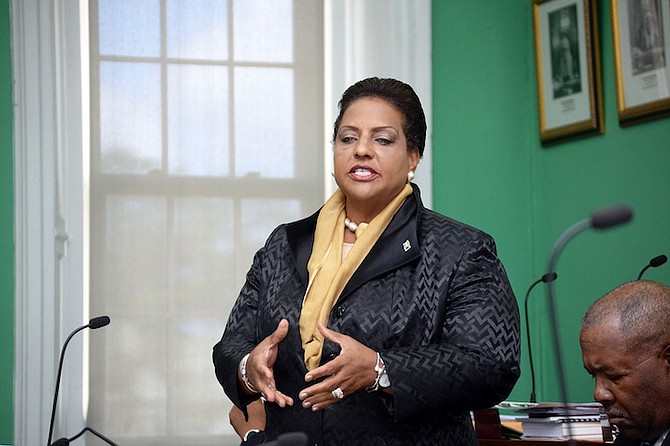
    A historic milestone for gender parity in Bahamian politics has emerged after this week’s general election, with nine women securing seats in the 41-member House of Assembly — a result former opposition leader Loretta Butler-Turner calls an unprecedented leap forward for women’s participation in frontline governance.

    Butler-Turner, a former Long Island Member of Parliament representing the Free National Movement (FNM), told local media the outcome signals the long-standing political glass ceiling blocking women from national office is far more permeable than it was in previous election cycles. While she emphasized that systemic barriers still place disproportionate pressure on female candidates compared to their male counterparts, she framed the 202? election results as a clear sign of shifting attitudes among Bahamian voters.

    “The Bahamian people have spoken, and with more women at the legislative table than ever before, I’m optimistic we’re building a Parliament that better reflects the country it serves,” Butler-Turner said.

    Of the nine women elected this cycle, seven represent the Progressive Liberal Party (PLP) and two are members of the FNM. The full list of newly elected female MPs includes Glenys Hanna-Martin for Englerston, Michela Barnett-Ellis for Killarney, Frazette Gibson for Central Grand Bahama, Leslia Miller-Brice for Sea Breeze, Lisa Rahming for Marathon, JoBeth Coleby-Davis for Elizabeth, Ginger Moxey for Pineridge, Patricia Deveaux for Bamboo Town, and Pia Glover-Rolle for Golden Gates. Combined, women will now hold roughly 22 percent of all seats in the House of Assembly, a marked improvement from the 2021 general election, when only seven PLP women won seats and no female FNM candidates claimed victory.

    Butler-Turner noted that the progress achieved this election cycle is just the first step toward meaningful gender equity in Bahamian politics. The next critical challenge, she argued, is to retain newly elected women in public service and build on the current momentum to recruit and support more female candidates in future races. She added that while Bahamian voters are increasingly open to electing women, female candidates still face structural disadvantages that their male peers do not encounter.

    “There’s more openness now, but women still have to work harder to be seen as viable political candidates,” Butler-Turner said. “That’s changing as more of us run and win.”

    She identified three persistent core barriers for women in Bahamian politics: limited access to the substantial campaign funding required to compete competitively, competing personal responsibilities that leave many women with less time to dedicate to full-time campaigning, and the disproportionate public scrutiny female candidates face over their personal and professional lives. Even so, she stressed that growing numbers of women are overcoming these hurdles, and voter attitudes continue to evolve in favor of female leadership.

    Butler-Turner also highlighted the strong campaign run by outgoing PLP Senator Robyn Lynes, who ran for the Killarney seat and ultimately lost to Barnett-Ellis. She praised Lynes’ ability to connect quickly with voters and build cross-partisan support for her policy platform, noting her performance demonstrated how strategic messaging and energetic campaigning can shift electoral dynamics even in the final stages of a race.

    “She connected with voters quickly, and her message gained traction across the political spectrum,” Butler-Turner said. “It’s a good example of how a clear message and strong delivery can shift momentum, even late in a race. Her high-energy campaign and messaging was commendable.”

  • Voter turnout voter turnout a ‘tragic’ 58%

    Voter turnout voter turnout a ‘tragic’ 58%

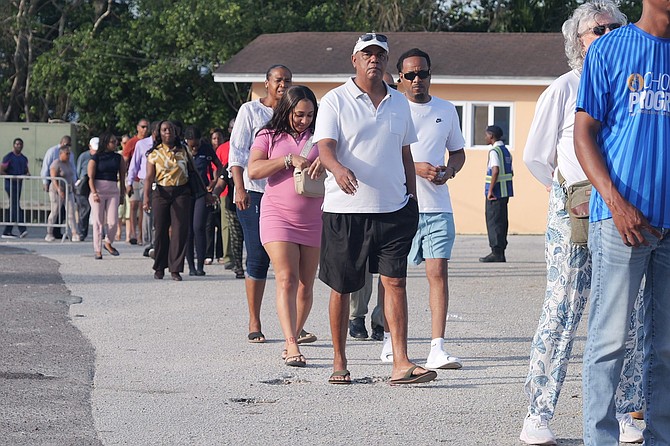
    In the wake of Tuesday’s general election in the Bahamas, an alarming projected voter turnout of just 58 percent has sent shockwaves through the nation’s political landscape, with senior electoral officials warning the figure would mark an unprecedented collapse in civic participation if officially confirmed. Geoffrey McPhee, an election consultant with the country’s Parliamentary Registration Department, told reporters Wednesday that the unofficial estimate — which remains subject to confirmation as recounts proceed across 25 contested constituencies — points to voter turnout falling even lower than the 2021 snap election held at the height of the COVID-19 pandemic.

    McPhee emphasized that the 58 percent figure is still preliminary, drawn from preliminary on-the-night assessments by election staff, but called the projected drop a devastating blow to the country’s democratic culture. “Our folks, we have gone south with respect to excitement about elections. That is really, really, that’s horrible,” he said, adding that the 2021 COVID-era turnout, already a historic low, outperforms the current projection. “That’s tragic, because with elections, once they miss the election, they don’t feel the urgency to reengage.”

    The projected slump represents a staggering break from the Bahamas’ strong post-independence voting tradition. For decades after the nation gained independence, general election turnout routinely exceeded 88 percent, and regularly climbed above 90 percent through the first three decades of self-governance. The 1977 inaugural post-independence general election recorded an 88.6 percent turnout, with numbers rising to 90.4 percent in 1982 and holding above 90 percent through 1987. Turnout stayed consistently high even as power shifted between major parties: it hit 91 percent when the Free National Movement (FNM) ended the Progressive Liberal Party’s (PLP) decades-long hold on government in 1992, and reached 93.2 percent when the FNM secured a landslide second term in 1997. Through 2002, 2007 and 2012, turnout remained firmly above 90 percent, and even in 2017, the first election to show a clear downward trend, participation still hit 88.4 percent.

    The first historic rupture came in 2021, when turnout fell sharply to 64.9 percent. If the current 58 percent projection holds, Tuesday’s election will set a new post-independence low for voter engagement. The low turnout coincided with the PLP securing a commanding second consecutive term in office, with unofficial results showing the party winning 32 of 41 seats, nearly matching its 2021 landslide victory that ousted the FNM from power.

    Prime Minister Philip “Brave” Davis, leader of the PLP, acknowledged the unexpectedly low turnout, noting that weak participation is never healthy for a democratic society and that more work must be done to help all voters feel that their ballots carry meaningful weight. So far, the highest recorded local turnout is expected in the New Providence constituency of Fort Charlotte, where former Island Luck CEO Sebas Bastian defeated FNM candidate Travis Robinson by more than 2,300 votes on an estimated 72 percent turnout, according to local insiders.

    Civil society leaders have joined electoral officials in sounding the alarm, stressing that the projected low turnout should concern all Bahamians regardless of partisan alignment. Matt Aubry, head of the nonpartisan Organisation for Responsible Governance (ORG), said that weak participation does not necessarily equal voter apathy. Instead, he argued, many disengage because they do not feel their concerns are being addressed or that voting will lead to tangible change in their daily lives.

    During the organization’s voter education outreach across the election cycle, Aubry said, ORG teams heard repeated frustration, particularly from young and first-time voters, who criticized campaigns for focusing heavily on personality politics and sensationalized rhetoric instead of the bread-and-butter issues affecting most Bahamian households. These include persistent struggles with the cost of living, limited economic opportunity, rising crime, high energy costs, inadequate housing and eroding public trust in political leadership.

    Voters also repeatedly raised concerns about longstanding gaps in governance transparency, accountability, public procurement, campaign finance reform and access to information, even as more residents recognize how directly policy choices impact their daily lives and opportunities. Beyond policy grievances, Aubry noted that issues during the advanced voting process — including reported gaps in preparedness and efficiency — combined with ongoing public anger over the violation of campaign laws around candidate treat-giving by multiple parties, may have further eroded motivation to participate. The delayed and partial rollout of new biometric voter identification cards, paired with widespread misinformation and speculation on social media, also created confusion that may have undermined public confidence in the integrity of the electoral process for some voters, he added.

  • Minnis ‘disappointed’ by loss but pledges to remain active

    Minnis ‘disappointed’ by loss but pledges to remain active

    One day after final votes were tallied in The Bahamas’ general election, former prime minister Hubert Minnis opened up about his unexpected loss of the Killarney constituency seat — a post he held for nearly 20 years — revealing that while disappointment lingers, his engagement with the community he represented is far from over.

    Minnis’ defeat came after a historic and politically charged campaign that saw the former leader of the Free National Movement (FNM) split from the party he once headed, launching a rare independent bid for re-election following months of public friction with current FNM leader Michael Pintard and the party’s senior leadership. When the FNM leadership declined to renominate Minnis as its candidate for the 2026 general election, he opted to stay in the race, marking the first time any former Bahamian prime minister has run as an independent after leaving the party they once led. On election night, early results projected FNM nominee Michela Barnett-Ellis as the winner of the Killarney seat, ending Minnis’ decades-long hold on the constituency.

    The former prime minister arrived at a mandatory vote recount at the New Providence Community Centre on Thursday morning clad in his signature campaign gear — a branded “Killarney Strong” shirt and matching hat — and remained outwardly calm throughout the process. Speaking to reporters after the recount confirmed his loss, Minnis acknowledged the letdown of the outcome, but framed defeat in an unexpectedly reflective light.

    “Of course, I would have been somewhat disappointed that I lost in Killarney,” he told reporters outside the centre. “Sometimes defeat can be victory. In terms of feeling, I still feel good. I woke up this morning and did my usual thing and just came from coffee house with my lovely wife enjoying a nice morning of coffee.”

    As a long-time resident of the Killarney constituency, Minnis made clear that he has no plans to step back from community work. He announced a new initiative to launch an Educational Trust Fund, designed to provide much-needed financial aid to local high school students facing economic barriers. The former prime minister confirmed he will seed the fund with $100,000 of his own personal capital, and he plans to solicit additional donations from outside sponsors to expand the fund’s reach.

    For months leading up to election day, Minnis remained confident he would retain the Killarney seat, even as pundits questioned his odds as an independent candidate. When asked on election day what his future would hold if he lost, he dismissed the question and reaffirmed his belief in a victory.

    When asked Thursday whether his defeat signals the end of his formal political career, Minnis said he has not yet held in-depth conversations with his family about his long-term plans, stressing that his loved ones will be central to any future decision he makes. When pressed on whether he would consider reconciling and rejoining the FNM, he ruled out that possibility, noting that he currently plans to shift his focus to supporting his children as they grow their own business ventures. When asked what factors led to his defeat, he simply replied, “Only God knows.”

    The 2026 general election delivered a decisive victory for the incumbent Progressive Liberal Party (PLP), which secured a second consecutive term in office. Unofficial final results show the PLP winning 33 of the 41 available parliamentary seats, while the FNM only captured eight seats. When asked for comment on the FNM’s poor overall performance in the election, Minnis said he does not interfere in the internal affairs of his former party.

    “To be honest with you, I can’t tell you my real belief or what I believe happened,” he said. “I will write that in my journals, you know, but that’s my belief, and it would be backed up with some facts, but it’s not for public consumption at this time, the public is not prepared to take that. They can’t devour it at this time.”

  • Abinader arrives in Guyana to sign new cooperation agreements with President Ali

    Abinader arrives in Guyana to sign new cooperation agreements with President Ali

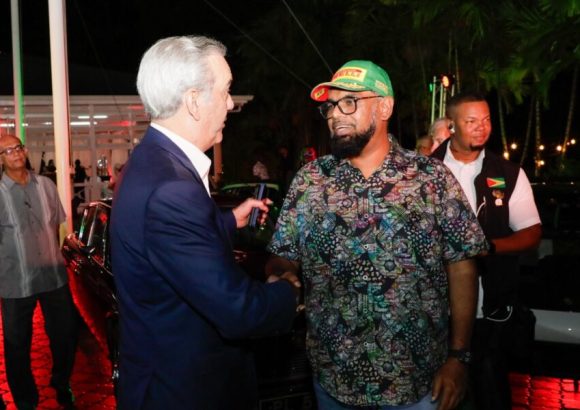
    GEORGETOWN, GUYANA – Dominican Republic President Luis Abinader touched down in Georgetown Wednesday evening to launch his fourth official working visit to the South American nation, a trip aimed at reinforcing long-standing bilateral ties and expanding collaborative frameworks between the two countries through new agreements with Guyanese President Mohamed Irfaan Ali.

    Upon his arrival at Cheddi Jagan International Airport, Abinader received an official welcome from a senior Guyanese delegation led by Prime Minister Mark Anthony Phillips, Foreign Minister Hugh Todd, alongside Ernesto Torres, the Dominican Republic’s resident ambassador to Guyana. After participating in formal military honors to mark the official nature of his visit, the Dominican leader joined Guyanese government officials for a welcoming reception hosted at Government House.

    A full day of diplomatic engagement is scheduled for Thursday, starting with a closed-door bilateral meeting between Abinader and Ali to discuss shared priorities and ongoing collaborative projects. Following their talks, the two heads of state will oversee the signing of a new bilateral cooperation agreement that expands on existing partnerships.

    This current visit builds directly on progress achieved in 2023, when the two governments signed six memorandums of understanding targeting key sectors of mutual interest: sustainable energy development, national food security, and cross-border trade expansion. Abinader is traveling with a senior cabinet and delegation, including Joel Santos, the Dominican Minister of Energy and Mines, Samuel Pereyra, chairman of the Dominican Petroleum Refinery (Refidomsa), and Tulio Rodríguez, the government’s special coordinator for Guyana affairs. The Dominican president is scheduled to complete his diplomatic engagements and depart for the Dominican Republic by the end of Thursday.

  • Fusion Multicultural Cuisine

    Fusion Multicultural Cuisine

    Nestled at 10 Dominica Drive in New Kingston, Jamaica, Fusion Multicultural Cuisine sets the tone for an elevated dining experience the moment guests arrive. A uniformed concierge greets visitors at the door, communicating arrival details through an earpiece and radio — a small, polished touch that immediately signals the exclusive, atmospheric vibe that awaits behind the restaurant’s ornate entrance. The dim, moody interior, complete with soft backlighting at the bar, plush green velvet seating, and understated global EDM playing in the background, successfully transports diners out of central Kingston and into a cozy, luxe escape perfect for social gatherings and memorable food outings.

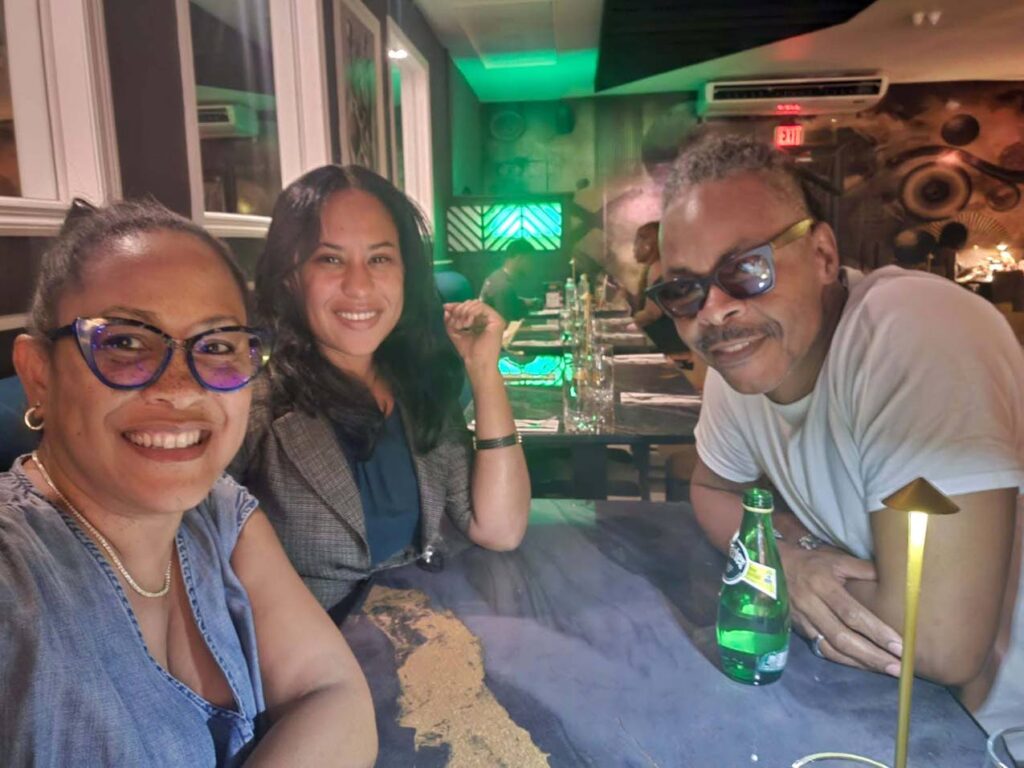
    Two judges from the Jamaica Observer Table Talk Food Awards, Adolph Raynor and Annaliesa Lindsay, recently visited the restaurant to sample its eclectic menu that draws culinary inspiration from across the globe. Their tasting journey began with three appetizer and small-plate offerings: Nairobi Wings drawing from Kenyan flavors, traditional-inspired Japanese Chicken Ramen, and Glazed Korean Pork Belly. Portion sizes were carefully calibrated to leave room for a full multi-course meal, with the ramen even crafted into a perfectly portioned “chibi” size ideal for tasting.

    Moving to the main course, the judging trio sampled an array of dishes: Coconut Curry Snapper served with steamed bammy, creamy Shrimp Mac & Cheese, and herb-rubbed Lamb Chops paired with fresh steamed vegetables. Despite leaving the group comfortably full, the party carved out space to split a rich chocolate muffin finished with a generous drizzle of velvety fudge sauce for dessert.

    To complement their meal, the group explored Fusion’s craft cocktail list, which matched the sultry mood of the dining room. They ultimately selected three standout drinks: the creative Amaretto Sour Twist, which adds a surprising layered base of red wine to the classic cocktail; the gin-based Fusion Thai Basil, infused with bright herbal notes; and a simple, elegant double shot of Tanqueray topped with sparkling water.

    Overall, the menu delivers a gentle introduction to global flavors that feels approachable for Jamaican diners accustomed to local Caribbean cuisine. The Nairobi Wings emerged as the clear standout of the meal, boasting a perfectly crispy crust coated in a tangy, spiced Nairobi sauce that offers a subtle but satisfying twist on the grilled and fried flavors local diners know well. The Glazed Korean Pork Belly ranked as the group’s second-favorite dish: fork-tender half-inch slices of pork get a light char that creates a delicious textural contrast under the sweet barbecue-style glaze, with flavors familiar enough to feel comfortable but distinct enough to feel like a small, exciting culinary trip. The Chicken Ramen, meanwhile, looked like an authentic trans-Pacific culinary experience at first glance, complete with a traditional soy-marinated soft-boiled egg that nails classic Japanese presentation. But the broth’s flavor and noodle texture were adjusted to align with local Jamaican tastes, making it a familiar yet fun twist on the international staple. Mains stuck closer to flavors recognizable to local palates, but all dishes impressed with generous portions of high-quality protein, from the flaky snapper to the hearty lamb and plump shrimp in the mac and cheese.

    Beyond the food and drink, the judging panel praised Fusion’s service team extensively for their warm, attentive, and knowledgeable care that elevated the entire dining experience. The venue, they noted, is perfectly suited for guests seeking luxe, Instagram-worthy moments — especially for visitors looking to capture elegant cocktail shots alongside creative, far-reaching menu options that stand out from standard local lounge bar fare.

    For diners interested in visiting Fusion Multicultural Cuisine: the restaurant is located at 10 Dominica Drive in Kingston, and can be found on Instagram @fusioncuisinejm. Opening hours run from 4:30 pm to 10:00 pm from Monday through Thursday, and extend to 12:00 am on Friday, Saturday, and Sunday. Reservations and inquiries can be made via telephone or WhatsApp at (876) 464-0636. The total cost for the three-person tasting experience reviewed came to $37,697 Jamaican dollars.

  • Konshens ushers in summer vibes with Pool Party 2.0

    Konshens ushers in summer vibes with Pool Party 2.0

    As warm summer days approach, iconic Jamaican dancehall artist Konshens has launched his highly anticipated new 12-track project, *Pool Party 2.0*, that puts unfiltered fun and high-energy party vibes front and center. Released globally on Friday, May 8, this album marks the follow-up to his hit first *Pool Party* compilation, a record that cemented his reputation as one of dancehall’s most successful cross-over acts with a massive global fanbase.

    While the first installment generated major industry buzz and career-changing momentum for Konshens, the artist says his core priority for this second iteration is not critical acclaim or commercial performance – it is spreading joy. “My vision for this album was all about fun and good energy,” Konshens shared in comments about the project. “I’m trying to make people think of the dancehall, especially with summer right around the corner. Good vibes, high energy – that’s literally my mode for the remainder of my career, because I think there isn’t enough focus on that. This 2.0 version will be different from the last Pool Party project because it’s not as serious, and no attempt was made to strike that forced balance. This one is just fun party bangers.”

    The project features a stacked roster of collaborative talent, bringing together producers and recording artists from across the Caribbean and international markets to create a cohesive sound rooted in classic Jamaican party culture, with flourishes of Caribbean, Latin, and global contemporary influences. The album’s lead focus track, *Like We*, pairs Konshens with legendary dancehall pioneer Beenie Man, offering a fresh modern reimagining of Beenie Man’s iconic 1996 hit *Old Dog*. Originally crafted by fabled dancehall producer Dave Kelly for his iconic Madhouse Records imprint, the original track featured on the genre-defining Stink rhythm. Remarkably, *Like We* is co-produced by Kelly himself, bridging decades of dancehall history by blending the raw, timeless energy of the 1996 original with a cutting-edge contemporary production that resonates with today’s global dancehall audience.

    For Konshens, the collaboration is more than just a catchy party track – it is a deliberate contribution to the growing nostalgia wave reshaping dancehall, designed to introduce a new generation of young listeners to the genre’s legendary roots. “I think it’s important to contribute to the nostalgia wave in dancehall right now,” he explained. “I realise there’s an effort to get kids nowadays to see and hear for the first time what made these sounds and moods from back in the day so fire and not corny like they’ve been programmed to believe. I’m excited to see what this realisation will do to their creativity in the next few years.” He added that the track was actually recorded years ago and shelved, as he never expected Kelly would approve the sample clearance. To his surprise, the legendary producer praised the track as “tough” and gave it his full blessing to be released.

    Production on the full album is led primarily by IZYBEATS and SUBMACHINE ENT, who anchor the project’s overall sonic direction, with additional production contributions from Dave Kelly, Tony Kelly, Jonny Blaze, Stadic, King Kosa, and Symon Dice. Alongside Beenie Man, featured artists include UK-based dancehall favorite Stylo G, Chudney J, and Ayetian. Standout tracks beyond the lead single include *Perfect Timing* produced by King Kosa and Jonny Blaze, *Rum Club* produced by Jonny Blaze and Stadic, and *South Side* produced by Symon Dice. The project also includes a notable lead guitar performance from Xeryus Gittens on *She Jus Wah Wine*, with publishing administered through Songs of Universal (BMI).

  • LET’S SAVE IT!

    LET’S SAVE IT!

    For decades, fans and cricket stakeholders across the Caribbean have voiced growing anxiety over the steady decline of West Indies cricket, a once-dominant force in the global sport that now faces cascading on-field and off-field challenges. Now, former St Vincent and the Grenadines Prime Minister Dr Ralph Gonsalves, who led the island nation for 24 years until his election defeat in November 2024, is stepping forward to demand urgent systemic change, arguing that regional governments must claim a formal seat at the decision-making table to reverse the sport’s downward trajectory.

    The urgency around reform has spiked sharply over the past 12 months, after West Indies suffered a humiliating Test series defeat to Australia last summer, capped by a shocking 27 all out at Kingston’s Sabina Park – one of the lowest batting totals in the team’s long international history. Current International Cricket Council (ICC) rankings underscore the depth of the on-field crisis: the men’s senior team sits in the bottom half of all ICC global rankings, holding 8th place in Tests, 10th in One-Day Internationals, and 7th in the Twenty20 format.

    Off the pitch, the sport’s regional governing body, Cricket West Indies (CWI), is facing severe financial strain, with the organization projecting a $26 million USD loss for the current year, though it forecasts a return to profitability by 2027. Gonsalves argues that these overlapping crises cannot be resolved by CWI’s current private governance model alone, and that regional governments must be granted formal decision-making authority if they are expected to inject much-needed public funding into the sport.

    Speaking in an interview with the Jamaica Observer, Gonsalves noted: “The governments have to get involved but the governments [are] not going to get involved seriously if Cricket West Indies continues to think that government will pour money into Cricket West Indies without them having a say.” Currently, the Caribbean Community (Caricom) maintains a cricket subcommittee – once chaired by Gonsalves himself – but the regional bloc holds no formal governing power within CWI. ICC rules also ban official government interference in the internal administration of its member organizations, a regulation Gonsalves says is outdated and ill-suited to the Caribbean context.

    Drawing a comparison to South Asia, Gonsalves pointed out that the Indian Supreme Court has already ruled that top-tier cricket is a public good that cannot be managed exclusively by private entities. “I’m sure if it comes to our courts that they will rule similarly because it makes perfect sense,” he said. “The law is right reason and right reason indicates that you can’t have a public good, of this type being run by a private entity and certainly you can’t expect the parliaments to vote money to put it inside of the organisation, Cricket West Indies, where they seek to conflate Cricket West Indies with cricket in the West Indies. I’ve thought long and hard about this thing and, I dare anybody to tell me that my conclusions are not correct.”

    Gonsalves’ proposed path forward calls for regional leaders to collectively present a formal diplomatic demarche to the ICC, outlining the severity of the current crisis and requesting approval for expanded government involvement to restructure and reform CWI. “If this matter is discussed within the context of the region and governments decide this is way we’re going to do it and we want to play a part in the management of it and to restructure it, we have to make a demarche to the ICC and say this thing cannot continue like this, because if it continues like this, it would fold,” he explained. “So I don’t think it’s a question of trust. It’s whether we as governments in the region decide whether we’re going to be involved in this matter. And in order to comply with the perspectives of the ICC, where are the tolerable limits for the state’s involvement because we are in a crisis.”

    West Indies cricket is set to return to the international spotlight next month, when the team will host Sri Lanka for three ODIs and three T20Is at Sabina Park, against a backdrop of growing calls for sweeping systemic change to secure the sport’s future in the Caribbean.