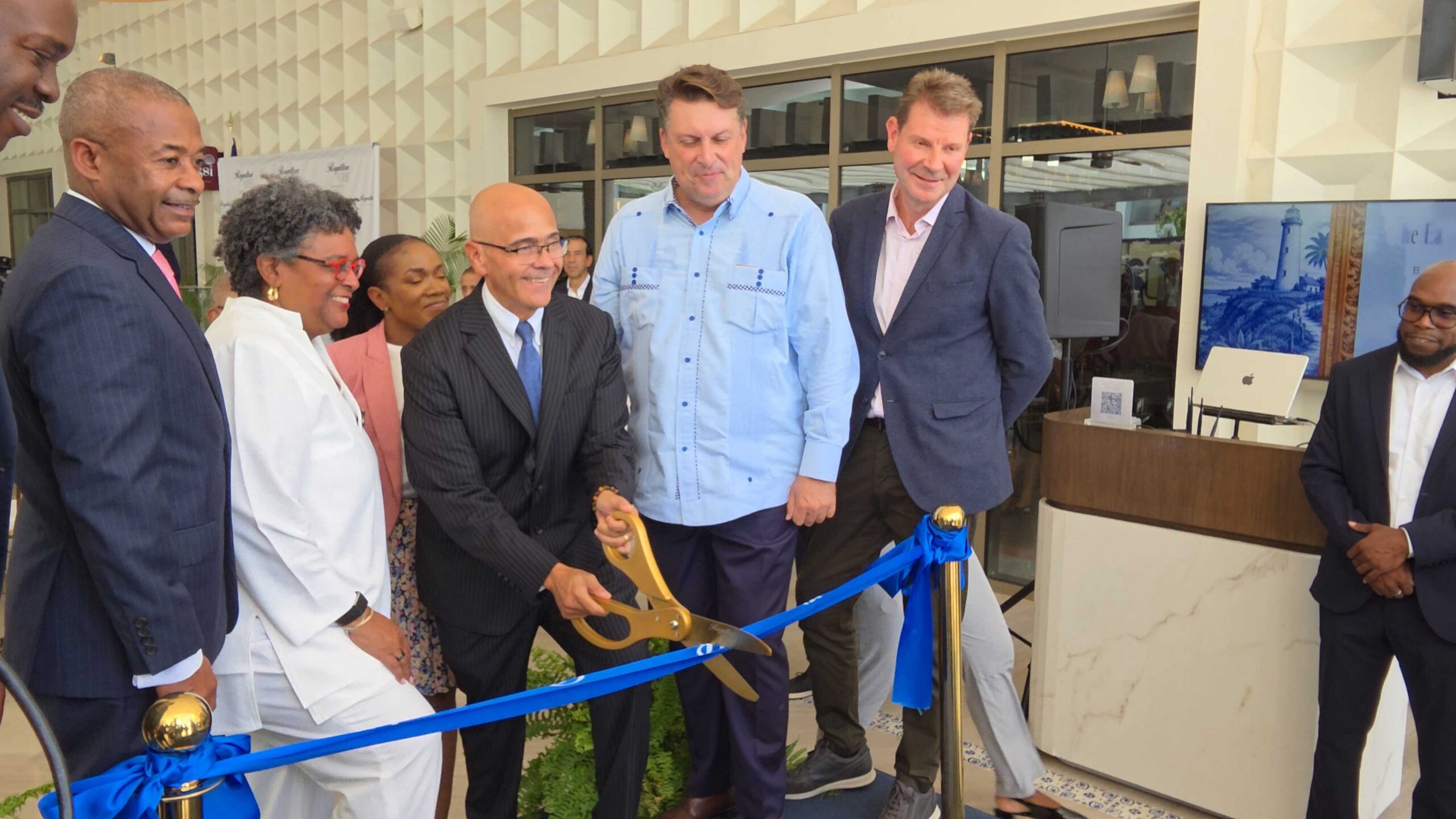
Barbados has wrapped up years of economic recovery and is stepping into a new chapter of tourism-fueled expansion, led by an unprecedented wave of hotel development and a forward-thinking strategic rebrand dubbed “Tourism 3.0”, Prime Minister Mia Mottley has announced. Mottley made the official declaration during the ribbon-cutting ceremony for the newly opened Royalton Vessence resort, located in the coastal town of Holetown, St. James. She framed the Caribbean nation’s journey out of economic crisis as a carefully structured transition that moved from emergency stabilization to long-term growth.
Speaking to a crowd of investors, government officials and leading hospitality industry stakeholders, Mottley used a vivid medical analogy to explain the island’s multi-stage recovery. “Put simply, if the body is bleeding, stop the bleeding,” she said. “When you stop the bleeding, do the transformation, do the operation, and when you finish the operation, get into recuperation, and when you finish recuperating, get into physiotherapy. We are at the point now where we passed the physiotherapy with the opening of this luxury resort over the course of the last few months.”
The prime minister emphasized that the country is currently experiencing a surge in tourism infrastructure development that has no parallel in recent Barbadian history. Ten new hotels have either been completed in recent months or are currently under construction across the island, including the upcoming Indigo Hotel in the popular Hastings area. She also highlighted that the capital city of Bridgetown is undergoing sweeping structural changes designed to reposition it as a leading hospitality and accommodation hub that serves both international visitors and local residents.
“When I ask those involved in tourism, what other similar period of time can we reflect on that had this volume of hotels and construction and new product going on, most cannot tell you a comparable period,” Mottley said of the current development boom.
Against the backdrop of Barbados’ small geographic footprint, which spans just 166 square miles, Mottley addressed public concerns over growing development density by defending the government’s strategy of repurposing existing developed properties instead of clearing new inland land or pursuing large-scale land reclamation projects. She acknowledged that increasing population and development density remains a divisive issue, but argued that the approach is necessary to maintain high-quality public services and infrastructure for all Barbadians.
“If this country is to finance its way, then it does need in many instances to increase its density, and that the status quo that worked for some will not be able to deliver a good life for the majority,” she explained.
Mottley also walked through the evolution of Barbados’ national tourism model. She noted that in the decades following independence, the sector relied heavily on small, locally owned hospitality properties. While these establishments helped preserve Barbados’ unique national cultural identity, they often struggled to access global marketing networks and secure large-scale capital investment. The entry of major international hospitality brands like Royalton, she argued, represents a necessary evolution for the sector, as long as intentional steps are taken to preserve the country’s distinct national character.
Tourism currently contributes approximately 45% of Barbados’ total gross domestic product, meaning nearly half of the country’s overall economic activity is tied directly to the hospitality sector. To ensure that the benefits of the current boom are shared broadly across the local economy, Mottley called on new resort developers to strengthen local supply chains by prioritizing goods and services from Barbadian farmers, manufacturers, artists, and other domestic providers. She pointed to successful local sourcing initiatives already implemented by the island’s cruise sector as a model for new hospitality developments to follow.
The prime minister also extended public praise to the public servants and regulatory agencies that supported the delivery of the Royalton Vessence project, including her special envoy William Duguid and director general Gabrielle Springer.
She closed her remarks by noting that Barbados has recently been named one of the world’s top tourism destinations for 2026 by a leading international travel publication, but warned against overconfidence as the country enters its new growth phase. “Let us not become giddy, let us not become distracted, let us stay on course,” Mottley said. She invoked a classic tourism campaign slogan from the early 1980s to rally public and industry support for the new era: “Tourism is our business. Let us play our part.”