标签: Trinidad and Tobago

特立尼达和多巴哥

  • Call for ministers to resign

    Call for ministers to resign

    A second horrific mass killing in just two weeks has plunged Trinidad and Tobago into renewed outrage over the ruling administration’s failed national security policies, with senior opposition lawmakers demanding the immediate departure of the country’s top two security officials.

    The latest tragedy unfolded in Belmont, where a triple shooting left a two-year-old child dead, two adult men killed, and a mother fighting for her life in critical care. This attack comes only 14 days after another mass shooting in Morvant that claimed four lives, including a nine-year-old child.

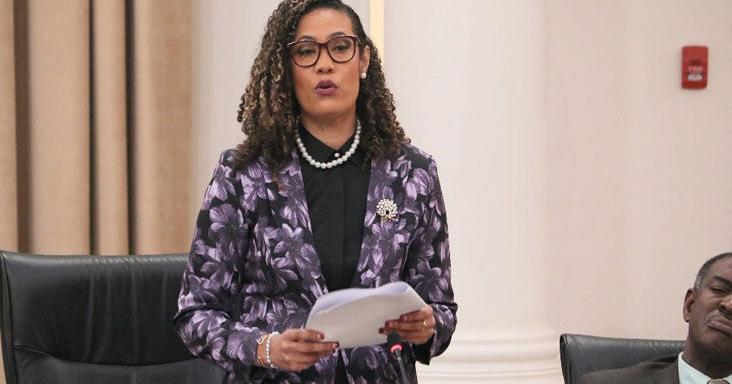
    Stuart Young, opposition Member of Parliament for Port of Spain North/St Ann’s West, was among the first to issue a blunt call for resignations, targeting Minister of Defence Wayne Sturge and Minister of Homeland Security Roger Alexander. Young slammed the ruling Kamla Persad-Bissessar-led government over its singular approach to surging violent crime: repeated declarations of states of emergency (SoE).

    “For most of this administration’s tenure, the country has been locked under some form of state of emergency,” Young noted. “We are now on the third iteration of a United National Congress state of emergency, and mass killings continue without any slowdown. This government has no actual plan to curb violence, and it is ordinary law-abiding citizens who bear the cost.” He called the killing of the innocent toddler “unforgivable,” adding that the government’s failure on national security is now undeniable to the entire population.

    Young also lashed out at Phillip Alexander, a junior minister in the Ministry of Housing, over what he called a blatantly politicized Facebook rant targeting his Belmont constituents in the wake of the shooting. “This deranged official, paid by the prime minister using taxpayer dollars, is adding insult to injury for families already reeling from senseless loss of life,” Young wrote on his own Facebook page. “No amount of empty, foolish ranting from government officials will give citizens any sense of safety or reassurance right now.”

    Kareem Marcelle, opposition MP for Laventille West, framed the back-to-back killings of children as part of a deeply alarming, terrifying trend that has numbed communities to unthinkable violence. “We have reached the point where even these heinous acts no longer shock us,” Marcelle wrote in a social media statement. “Our youngest children are being killed before they even get the chance to grow up and chase their dreams.”

    Marcelle drew a direct line between the latest death and a recent child killing laid to rest just days prior: “Just this past Friday, we buried young J’Layna. Less than a week later, another family is now forced to bury two-year-old Akini, along with his unfulfilled dreams and hope for the future. My heart breaks for these families. We are heading down a road from which we cannot return if we do not act now.” He extended his deepest condolences to the loved ones of all three victims, and added his prayers for the wounded mother’s full recovery.

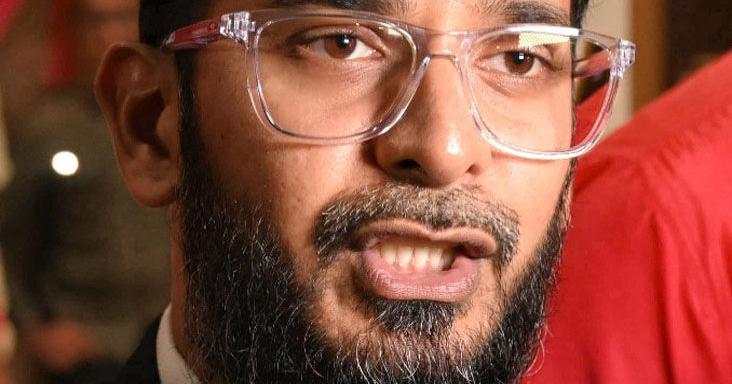
    Marvin Gonzales, opposition MP for Arouca/Lopinot, joined the calls for Roger Alexander’s removal, describing the homeland security minister as an “embarrassment” and a “national failure” who has been distracted from his core duty of keeping citizens safe. Gonzales also pushed for an end to the ongoing state of emergency, arguing that the policy has become an empty charade. “As of 2026, we have spent 97 days under this current state of emergency, and the country has already recorded 130 murders this year,” he noted. “It is past time for the government to end this farce and restore the constitutional rights of the Trinidad and Tobago people.”

  • Dad, toddler among 3 shot dead in ambush: mom injured

    Dad, toddler among 3 shot dead in ambush: mom injured

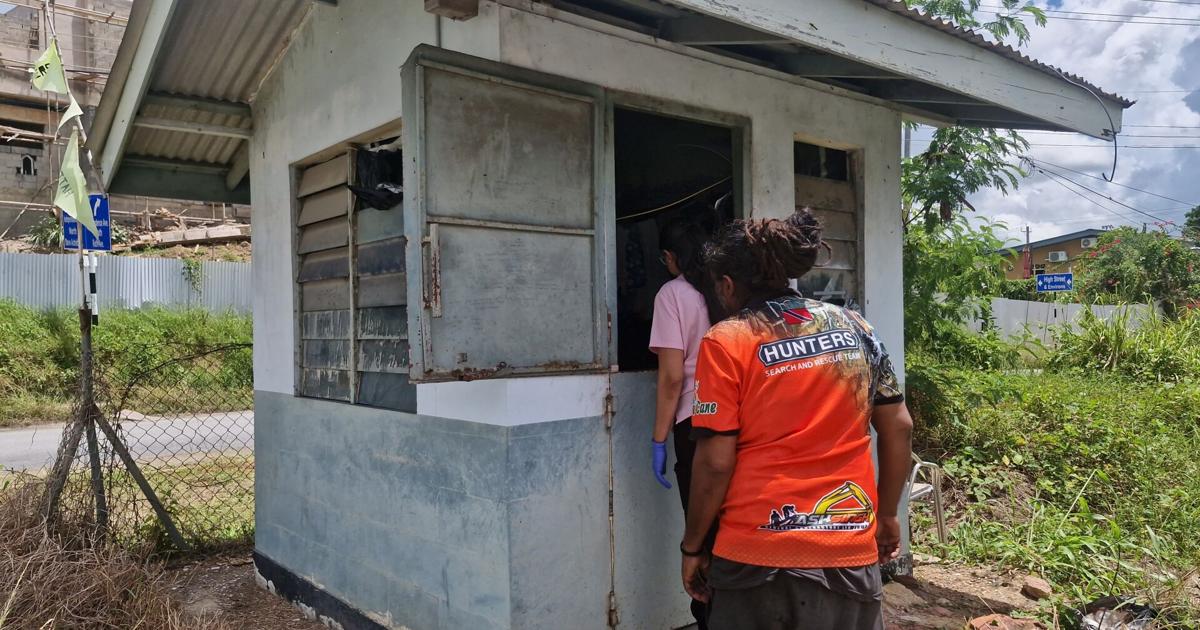
    A brutal early-morning ambush shooting in the quiet Belmont neighborhood of Port of Spain, Trinidad and Tobago, has left three people dead – including a toddler just two weeks shy of his third birthday – and a mother fighting for her life, sending shockwaves through the tight-knit community and amplifying long-simmering anger over persistent violent crime.

    The attack unfolded at approximately 8:35 a.m. on Wednesday, when four people were traveling through the Holder Steps/Rifle Hill area off Upper St Francois Valley Road in a Toyota Aqua. Akil “Fats” Kafi, 30, the toddler’s father, and his companion Anthony “Monster” Wilson occupied the front seats, while Akil’s partner Antonia Cain-Kafi sat in the back holding their two-year-old son Akinni Kafi. Without warning, a second vehicle blocked the car’s path, and unidentified gunmen stepped out and opened a barrage of fire on the trapped vehicle.

    Hit by gunfire, Kafi and Wilson fled the car but collapsed a short distance away, succumbing to their wounds at the scene. Cain-Kafi was struck four times in the back, and the toddler was also fatally hit. Despite her own critical injuries, Cain-Kafi refused to release her grip on her injured son. A neighbor who rushed to the scene after hearing the gunshots drove the pair to Port of Spain General Hospital. Only after reaching the hospital’s emergency department did Cain-Kafi hand over her child, before immediately collapsing from her wounds. Tragically, medical staff confirmed Akinni was already dead upon arrival.

    As of Wednesday night, Cain-Kafi remained in critical condition at the hospital. The attack marks a second devastating loss for Akil Kafi: police confirmed he lost another son from a previous relationship to gang-related violence in Belmont just one year prior.

    Senior Trinidad and Tobago Police Service officers, including Acting Assistant Commissioners Richard Smith and Suzette Martin, arrived at the crime scene within minutes to launch the investigation. Speaking to reporters at the scene, Smith expressed unreserved anger over the senseless killing of the toddler, calling the attack “quite ridiculous” and emphasizing that investigators would not treat the case lightly.

    “This child would have turned three years in two weeks’ time,” Smith said. “What we are seeing here in this district, in the Port of Spain Division, is a series of homicides that we have been working on assiduously to bring these murders under control. Yes, we may not be omnipresent, but we have our patrols out on a 24/7 basis trying to keep the peace in these areas. We are quite concerned because it shows a blatant disregard for life and to the authorities, and we will do all that it takes to keep the country safe. We will go after all those who intend on committing these crimes and we continue to go after them, and let the chips fall where they may.”

    Martin echoed Smith’s frustration, framing the rising violent crime rate as a national issue rather than a problem solely for law enforcement to solve. She urged community members to step forward with information about the attackers, emphasizing that police are available around the clock to accept tips, and warned against residents taking vigilante action.

    “This is not just a police issue, this is a Trinidad and Tobago issue where people have to come together to make Trinidad and Tobago a safer place, so if you see something, say something,” Martin said. She also announced that the police service would ramp up targeted patrols across the Belmont area in response to the attack and a recent string of local homicides.

    Local residents, who have grown increasingly weary of persistent violence in their neighborhood, shared their outrage and grief with reporters Wednesday. Multiple residents said many locals now avoid certain high-crime pockets of Belmont out of fear for their safety, and criticized community members who hold information about violent actors but refuse to cooperate with police.

    “The innocent can’t even count to 1, 2, 3 as yet and they dead,” one local grocery worker said. “What are these young men fighting for? Are we not praying with them or counselling them because if my children are doing something wrong, I will tell them because at this stage, we really don’t know who is next. We should all feel that pain.”

    Another long-time Belmont resident noted the neighborhood’s natural beauty and convenient location, but said young criminals have made the area unsafe for older residents, and that the silence of community members who know what is happening has enabled the violence.

    “I know that people know what is taking place in their own homes and they are not speaking out, and now children are paying the price,” she said.

    A friend of the Kafi-Cain family, who shared her grief on social media Wednesday, highlighted the years of struggle the couple went through to have their son. “My heart is completely shattered. To know the journey my friend travelled, the years of waiting and the miracle of finally having her son, only for it all to be stolen in a moment of senseless violence. A whole family gone. There are no words for this kind of pain. I am hurt. I am outraged and I am tired. How can we live like this? A father and a child wiped out on the side of the road like their lives meant nothing. FOR WHAT? When will the innocent stop paying the price? Our country is bleeding,” she wrote.

    As of Wednesday night, the national murder toll for the current calendar year reached 130, underscoring the scale of the ongoing violent crime crisis facing the twin-island nation. No suspects have been arrested as of the latest updates, and police continue to appeal for public information to track down the gunmen responsible for the triple killing.

  • Alexander vows action against killers

    Alexander vows action against killers

    In the wake of a shocking triple homicide in Belmont that claimed the life of a two-year-old boy and triggered opposition demands for his ousting, Homeland Security Minister Roger Alexander has pushed back firmly against calls for his removal, vowing to fulfill his mandate to tackle the nation’s deepening gang-related crime crisis.

    Speaking in a phone interview with the Express on Thursday, Alexander gave a public guarantee that all individuals linked to the recent killings would face full legal consequences, while appealing directly to community members to share intelligence with local law enforcement to help crack down on criminal activity.

    The minister launched a counterattack on the opposition People’s National Movement (PNM), the party that led the country for a decade before the current United National Congress Government took office one year ago. Alexander argued that the same figures now demanding his resignation are the same officials who allowed gang activity and organized crime to spread unchecked across the country over ten years in power. He called the PNM’s calls for his removal deeply ironic, noting that gangs grew in influence and territorial control during the party’s tenure.

    Alexander also pointed to the opposition’s recent decision to block the Zones of Special Operations (ZOSO) Bill, a piece of legislation he said would have enabled targeted, direct intervention in high-crime communities that the opposition claims to represent. He accused opposition lawmakers of abandoning the very constituents who voted them into office, saying, “They have the audacity to speak about who should go and who shouldn’t go. They should have gone ten years ago. They left this problem for us.”

    While the minister acknowledged that the current administration and law enforcement agencies have made tangible progress in reducing criminal activity, he admitted that decades of systemic neglect cannot be reversed overnight. Describing the nation’s crisis as a deeply rooted “disease”, Alexander stressed that the government is committed to ongoing, systematic treatment of the problem.

    When pressed to address public anger over continued gang killings even as the country operates under a national state of emergency (SoE), Alexander clarified that officials never marketed the SoE as a one-size-fits-all solution to the crime problem. Instead, he framed the measure as just one critical tool in a broader, multi-pronged strategy designed to restore law and order to troubled communities.

    Alexander explained that the emergency measures became necessary after the previous administration left the national crime-fighting infrastructure in a state of severe disrepair. He listed a litany of systemic failures inherited by the current government: crumbling physical infrastructure, critical shortages of police personnel, limited operational mobility, unreliable telecommunications systems, and minimal integration of modern crime-fighting technology. Rebuilding these broken systems to reach full operational capacity, he said, requires the government to secure significant new resources, and all components of the national security strategy must work in sync like a well-functioning clock. “A clock can’t work with parts missing so it’s my responsibility to fix it, and that’s what this Government is doing,” he noted.

    Alexander pushed back on criticism that the current government has had enough time to turn the tide of crime, pointing out that the UNC has only held office for 12 months, compared to the PNM’s decade-long tenure. “In one year they wanted us to fix what they took their time to destroy and as it relates to crime what they fed and gave life to and encourage the gang culture,” he said.

    Contrary to common public misunderstanding, Alexander said the SoE does not impose restrictions on civilian movement. Instead, it grants law enforcement expanded authority to collect intelligence and target high-risk criminal networks. He added that more suspects have already been detained under the current SoE than were held during the previous national emergency declaration.

    Repeating his appeal for public cooperation, Alexander noted that multiple anonymous channels exist for community members to share tips about criminal activity. For residents too afraid of gang retaliation to come forward directly, he suggested passing information through contacts outside their communities or even through family and friends living abroad to ensure it reaches police safely.

    While police have already received significant amounts of intelligence, Alexander explained that investigators require sufficient tangible evidence to bring strong cases against suspected criminals and secure convictions in court. He lamented the ruthless nature of modern gang violence, noting that gang members prioritize loyalty to their criminal organizations over the safety of their own families and loved ones. “Because you’re committing crimes and then going home to sleep. The other persons involved, other persons who are victims, who are targets, obviously they will target you and by extension, your family,” he said, highlighting the collateral harm that community-wide inaction allows to continue.

  • TRAFFIC CHAOS

    TRAFFIC CHAOS

    Just after 10 a.m. on Tuesday, an accidental rupture to a 30-inch booster transmission line operated by Trinidad’s Water and Sewerage Authority (WASA) triggered cascading disruptions, snarling traffic on the Beetham Highway’s eastbound carriageway and cutting water service to more than a dozen communities across the Port of Spain region. The incident, which sent thousands of gallons of water gushing onto the busy roadway, forced motorists to navigate hazardous, flooded conditions, leading to a widespread traffic pile-up that backed up travel for hours. Amid the sweltering early morning heat, some local Beetham residents took advantage of the unexpected fountain of water, stepping into the flow to bathe and cool off. The rupture, later confirmed by Public Utilities Minister Barry Padarath, occurred when Ministry of Works and Infrastructure crews conducting routine drainage clearance work on the Beetham waterway accidentally struck the main with heavy equipment. “Earlier this morning the Ministry of Works and Infrastructure was doing some works on the Beetham as it relates to drainage and water course clearance. They inadvertently through one piece of equipment ruptured a main, this resulted in thousands of gallons of water being spilled and lost,” Padarath explained in an interview with the Express. Immediately after the incident, WASA activated full emergency response protocols, dispatching senior leadership including acting CEO Dain Maharaj and distribution manager Marvin Miguel to the Beetham Gardens site to assess damage and coordinate repair work. Crews quickly worked to isolate the line, accessing and operating control valves to de-water the affected pipeline, a critical safety step before permanent repairs could begin. All required repair materials were mobilized from WASA’s central storage facilities and en route to the job site within hours of the rupture being reported. The broken line is a critical feed connected to the El Socorro Booster Station, whose operations were fully suspended after the incident to reduce line pressure and facilitate safe repairs. As of Tuesday evening, WASA confirmed that repair work was advancing steadily, with a target completion deadline of noon on Wednesday. The outage has forced water service disruptions across a wide swath of the greater Port of Spain area, including Knaggs Hill, Picton II Reservoir, Black River, Barataria, Laventille, Port of Spain, Morvant, East Dry River, St Barbs, Gonzales, Long Circular, Dundonald Hill, Dibe, Woodbrook, St James, Cocorite, Belmont, Cascade, and St Ann’s. Disruptions have also been reported along Boundary Road and Boundary Road Extension, Aranjuez Main Road, El Socorro Road and Don Miguel Road due to the shutdown of the El Socorro High Lift Station. Local lawmaker Kareem Marcelle, Member of Parliament for Laventille West, confirmed that while only a small number of homes were affected by flooding from the gushing water, no residents required emergency relocation. However, one wooden residential structure suffered significant flood damage that destroyed all of the occupants’ personal belongings. Marcelle announced that the San Juan/Laventille Regional Corporation’s Disaster Management Unit would deploy teams Wednesday to provide direct assistance to impacted households. Responding to the incident, Works and Infrastructure Minister Jearlean John confirmed that her ministry would work in full collaboration with WASA to complete repairs and address related drainage issues. The ministry is also responsible for ongoing desilting work on the major Beetham drain, which outfalls directly into the Caribbean Sea and is prone to flooding near the local market. “If it is a WASA leak we are there to help with the repair,” John stated. Marcelle struck a conciliatory tone regarding the accidental incident, noting that human error is unavoidable even for the most careful teams. “We understand that mistakes do happen, even the most prudent man is prone to mistakes, and therefore we will continue to support them in their efforts to continue cleaning up our community,” he said, commending public workers and contracted crews for their rapid response to the emergency. Padarath, who has received hourly updates from WASA’s leadership throughout the response effort, said he recognized public concern over the large volume of water lost in the incident, which was widely documented in viral social media videos shared by onlookers. The minister said he expects full water service to be fully restored to all impacted areas by Wednesday morning at the latest.

  • India minister begins two-day visit

    India minister begins two-day visit

    A new chapter of deepened bilateral cooperation between India and Trinidad and Tobago (T&T) is set to unfold this week, as India’s Minister of External Affairs Dr. Subrahmanyam Jaishankar commences a high-stakes two-day official visit to the Caribbean nation. This stop forms part of Jaishankar’s broader 9-day regional tour encompassing Jamaica, Suriname, and Trinidad and Tobago, running from May 2 to 10, aimed at advancing mutually beneficial ties across the Caribbean. The visit is rooted in the momentum generated by Indian Prime Minister Narendra Modi’s official trip to T&T in July of last year, which saw a suite of bilateral memoranda of understanding (MoUs) signed to expand partnership. According to T&T’s Foreign and Caricom Affairs Minister Sean Sobers, Jaishankar’s visit will turn those signed agreements into tangible, on-the-ground action, with both governments sticking closely to the implementation timeline agreed 12 months prior.

    Jaishankar’s packed official itinerary kicks off this afternoon at T&T’s Parliament building, where T&T Prime Minister Kamla Persad-Bissessar will deliver an official welcoming address. Following the opening ceremony, the two top leaders will hold formal bilateral talks to align on shared priorities. After discussions, the delegation will move to the Rotunda Gallery for a formal MoU exchange ceremony and the official handover of a batch of laptops donated as part of people-to-people cooperation.

    On the second day of the visit, Saturday, the joint delegation will travel to Nelson Island, where both leaders will deliver public remarks and unveil a commemorative plaque honoring shared historical ties. Next on the schedule is a ribbon-cutting ceremony for a new agro-processing facility at Namdevco in Brechin Castle, Couva, marking progress in agricultural development cooperation. A flagship initiative of the visit will follow: the official launch of T&T’s National Prosthetics Programme in the town of Penal, where Persad-Bissessar will deliver the keynote address and unveil a second commemorative plaque for the program. The visit will wrap up with two key engagements: an official lunch reception hosted by Persad-Bissessar in Penal, and a community reception at the Mahatma Gandhi Institute for Cultural Cooperation in Mt Hope, where Jaishankar will meet and interact with members of the large Indian diaspora community in T&T.

    India’s Ministry of External Affairs has framed the entire regional tour as an effort to sustain the pace of high-level political engagement with the three Caribbean nations, while strengthening longstanding partnerships rooted in South-South cooperation and shared development goals. In a pre-visit op-ed published in a T&T newspaper Wednesday, Jaishankar outlined his priorities for the talks, noting that discussions will center on delivering concrete, actionable outcomes and accelerating the rapid expansion of bilateral economic engagement between India and T&T.

    He highlighted that bilateral trade between the two nations has seen a dramatic upswing in recent years, having nearly doubled over the past five years to hit a current annual volume of US$350 million. Against a backdrop of global economic turbulence and volatile commodity markets, Jaishankar noted that energy cooperation has emerged as a central pillar of the bilateral relationship, with growth prospects only strengthening in coming years. Trade is also expanding steadily across a range of other key sectors, including healthcare and pharmaceuticals, automotive manufacturing, industrial machinery, iron and steel, and textiles and apparel. Notably, Jaishankar added, Trinidad and Tobago has become the first country in the Caribbean region to agree to roll out India’s United Payment Interface (UPI), a digital platform that enables low-cost, seamless cross-border digital payments.

    Looking ahead, Jaishankar emphasized that the two nations hold immense untapped potential for expanded cooperation, a potential amplified by India’s far-reaching economic and technological transformation over the past decade. He noted that many of India’s homegrown development experiences can offer actionable, relevant models to support T&T’s own national development agenda. Key areas of mutual interest for future collaboration include the development of digital public infrastructure, frameworks for expanding access to affordable medical care, cutting-edge agricultural technologies, and specialized training modules for public sector professionals. “My expectation is that more conversations on changes under way will generate new ideas for our bilateral agenda,” Jaishankar added, signaling a forward-looking approach to deepening the decades-long partnership between the two nations.

  • Howai: We’ll find a balance

    Howai: We’ll find a balance

    A brewing controversy over new banking service fees implemented by one of Trinidad and Tobago’s largest financial institutions has spurred regulatory intervention and widespread pushback from business leaders across the country, with ongoing negotiations aimed at striking a compromise between bank profitability and consumer affordability.

    Starting May 1, 2026, Republic Bank rolled out a series of increased service charges that immediately sparked frustration among retail and business customers. In response to widespread public concern, Central Bank Governor Larry Howai confirmed Wednesday that regulators have been in active discussions with the bank to review the new fee structure.

    Speaking to reporters on the sidelines of the inaugural FINLIT Live 2026 financial literacy event hosted by the Central Bank at the Macoya Centre of Excellence, Howai emphasized that both sides are working to identify a middle ground. He noted that the bank has committed to re-examining the increases to balance the institution’s need for fair compensation for services against the financial burden passed to consumers. “We understand why citizens are frustrated, and we do not take this sentiment lightly,” Howai said, referencing an official statement the Central Bank released earlier this week. “Our role as regulator is defined by law, but it is not a passive one. Citizens deserve a financial system that works in their interest, and we will continue to advocate for that.”

    Howai clarified that while existing legislation prevents the Central Bank from issuing fines for approved price increases, the regulator will use its advocacy authority to prevent excessive markup of banking costs. He added that while service fees are an unavoidable part of offering banking services, key questions remain about whether the current increases are justifiable, properly communicated, and deliver clear value to customers. Ultimately, Howai expressed confidence that negotiators will develop a fee framework that leaves customers comfortable.

    The controversy comes as Republic Bank reports strong ongoing profitability: the bank posted a half-year net profit of $1.07 billion for the period ending March 31, 2026, a 5.4% increase from the same period in 2025. For the full year ending September 2025, parent company Republic Financial Holdings recorded a record annual profit of $2.2 billion, a figure that has amplified criticism of the timing of the fee hikes from leading business groups.

    Dianne Joseph, president of the T&T Coalition of Services Industries (TTCSI)—whose members contribute more than 60% of the country’s gross domestic product—framed banking services as an essential operational utility for businesses, not a discretionary luxury. While she acknowledged that financial institutions need to recover costs associated with digital infrastructure upgrades, Joseph argued that the cumulative fee increases, coming on the heels of record annual profits, raise serious questions about economic fairness. For small and medium-sized enterprises (SMEs) and sole traders, she explained, higher banking overheads create a downstream multiplier effect that ultimately pushes up prices for end consumers. Joseph urged the Central Bank to go beyond routine monitoring and leverage its regulatory influence to push for a fairer balance between strong bank earnings and the financial stability of the business sector and everyday citizens. She added that a sustainable economy depends on a financial system that invests in the productivity of local communities, and she looks forward to a resolution that keeps banking accessible as a catalyst for service-led growth, not a barrier.

    Multiple business chamber leaders echoed Joseph’s concerns. Vivek Charran, chairman of the Confederation of Regional Business Chambers, noted that given the bank’s growing annual profits, consumers and small businesses have a valid right to question why they must absorb higher routine banking costs. Charran emphasized that the Central Bank’s involvement confirms the issue has expanded beyond a private disagreement between a bank and its customers to become a broader concern impacting consumers, small businesses, and overall cost of living in the country. He added that public anxiety over the new fees goes beyond individual transaction costs, noting that new charges for digital transactions directly contradict national policy goals to expand cashless digital transformation.

    Kiran Singh, president of the Greater San Fernando Area Chamber of Commerce, added that new fee increases place an extra financial strain on businesses already navigating tight budgets. “While we recognise the importance of maintaining a stable and profitable banking sector, it is equally critical that financial institutions remain aligned with the realities facing their customers,” Singh said, noting that banks have remained consistently profitable through recent economic challenges and must collaborate with the businesses they serve.

    Baldath Maharaj, president of the Chaguanas Chamber of Industry and Commerce, explained that for local SMEs, the May 1 fee hikes come amid a “perfect storm” of already rising costs for utilities, freight, and labor. With the banking sector posting six-month profits exceeding $1 billion, Maharaj argued that these additional costs are increasingly difficult to justify. He added that high switching costs in the banking sector effectively lock business customers into their current institutions, leaving them no option but to absorb the new charges. Maharaj commended Howai’s intervention and urged the Central Bank to deliver immediate, tangible relief for SMEs, which he described as the engine of the national economy. “Profitability is necessary for stability, but it must not come at the expense of the very businesses and consumers struggling to navigate this fragile recovery period,” he said, adding that a quick resolution would send a signal to other financial institutions considering similar fee increases to hold off on their plans.

    As of Wednesday, Republic Bank had not responded to requests for comment on the ongoing negotiations and criticism.

  • Alderman beaten by students

    Alderman beaten by students

    A violent public incident in Port of Spain, Trinidad and Tobago, has sparked widespread concern after a senior local political official was beaten by a group of high school students when he attempted to break up a street brawl on Monday afternoon.

    Alderman Wayne Griffith, 62, who serves as chairman of the Port of Spain South constituency executive for the ruling People’s National Movement (PNM), recalled the chaotic encounter in a detailed phone interview with local media. The attack unfolded around 2:30 p.m. on Dundonald Street, near the intersection with New Street, when Griffith was blocked by a crowd of students from Tranquillity Government Secondary School who had gathered in the middle of the roadway.

    Upon stopping, Griffith noticed that more than a dozen teenagers were ganging up to beat a single younger boy. Griffith told reporters that one 15- to 16-year-old girl had the boy pinned in a chokehold, while the rest of the group rained down blows on him. Choosing to intervene, Griffith exited his vehicle, ordered the crowd to disperse, and pulled the girl away from the victim. What followed was a sudden, violent turn against the 62-year-old.

    “Immediately, this young lady cuffed me straight in my mouth,” Griffith recalled. He attempted to step away from the confrontation, but the girl and other students continued to pursue him. Griffith tripped and fell to the ground, and the group immediately followed up with repeated punches and kicks to his head and body. A 36-second cellphone video of the assault, which has circulated widely across social media platforms, captures the female student punching Griffith, grabbing his shirt, and throwing him to the ground before other members of the group join in the attack.

    Despite the sustained beating and intense pain, Griffith made the deliberate choice not to retaliate against the teenage attackers. “Although they did not act like children, I was cognisant they were children and youths,” he explained. “I took no action that could cause them harm.”

    After the assault ended, Griffith slowly regained his composure and attempted to call police for help, only to discover that his cellphone and a watch, valued together at TT $7,000, had been stolen during the attack. With bystanders from nearby businesses only watching the ordeal, Griffith had to drag himself to the door of a local agency to get help.

    Griffith detailed the extent of his injuries, which include deep lacerations across both knees, both elbows, and the palms of his hands, as well as severe damage to his left hamstring. While no bones were broken, he has suffered persistent severe headaches and underwent a CT scan to rule out internal brain damage, seeking treatment from a private medical provider. He added that he has no regrets over his decision to step in to stop the group attack on the younger student.

    Local political leaders have publicly expressed their concern and support for Griffith following the attack. Port of Spain South MP Keith Scotland praised the alderman for his remarkable restraint, noting that if Griffith had retaliated against the minors, he would have faced widespread public condemnation instead of support. “He’s an elder, a hard worker, a patriot,” Scotland said. “I want to commend him for his restraint and discipline.”

    Port of Spain Mayor Chinua Alleyne confirmed the May 4 incident in a statement, noting that the Ministry of Education and the Trinidad and Tobago Police Service (TTPS) are both currently investigating the attack. Walter Stewart, president of the National Parent-Teacher Association, extended condolences to Griffith over the violent encounter.

    As of Tuesday, local media have been unable to secure comments from Education Minister Dr Michael Dowlath and Crystal Ashe, president of the Trinidad and Tobago Unified Teachers’ Association, on the incident.

  • Senate meets briefly, then adjourns

    Senate meets briefly, then adjourns

    In an unusual development that has raised unanswered questions about parliamentary procedure, Trinidad and Tobago’s Senate wrapped up its sitting on Wednesday in less than one hour, adjourning without setting a firm return date after government leaders pushed through the sudden end of proceedings. The truncated session came only after Justice Minister Devesh Maharaj introduced the long-awaited Victims’ Rights Bill, a key piece of legislation focused on supporting crime victims across the country. Immediately following the bill’s first reading, Senate Government Business Leader Darrell Allahar tabled a motion to adjourn the upper chamber to a date yet to be announced.

    When local media outlet the Express reached out to Allahar to request clarity on why the session was cut short without any debate on the introduced legislation, he declined to offer any on-the-record comment, leaving the public without an official explanation for the abrupt end to proceedings. Opposition Senate Business Leader Dr. Amery Browne later confirmed that the Opposition caucus had received informal notice of the planned early adjournment on Tuesday, but was never given a clear, formal justification for the decision. “The early adjournment was the decision of the Government, which they signalled to us since yesterday evening. They gave no clear reasons,” Browne stated in an interview.

    While government officials have refused to comment on the cause of the early adjournment, multiple sources familiar with the situation have confirmed to the Express that the sudden end of the sitting is directly tied to an ongoing ethics controversy involving two sitting Opposition Senators: Faris Al-Rawi and Janelle John-Bates. Both lawmakers were present and took their seats on the Opposition bench during yesterday’s short sitting, despite ongoing calls for disciplinary action over their involvement in a document preparation scandal linked to a former cabinet minister.

    The controversy first erupted during last Friday’s Senate sitting, when John-Bates made a surprise announcement that she had submitted her resignation to Opposition Leader Pennelope Beckles. She also issued a formal public apology to the entire Senate for her role in the scandal, which came to light after tracked changes in a publicly submitted document revealed that she and Al-Rawi had assisted former Health Minister Terrence Deyalsingh in drafting his witness statement for the Public Administration and Appropriations Committee (PAAC), a legislative oversight body.

    During last Friday’s debate on a special PAAC report that called on Parliament to review John-Bates’ conduct, Al-Rawi publicly confirmed that he serves as Deyalsingh’s legal counsel. Shortly after the disclosure, Government Senator David Nakhid tabled a successful motion to refer both Al-Rawi and John-Bates to Parliament’s Privileges Committee, which is tasked with investigating potential breaches of parliamentary ethics and privilege. The committee will now hold closed hearings to determine whether any rules were broken and what disciplinary measures, if any, should be imposed.

    Following the referral last Friday, Beckles told reporters that she was still reviewing John-Bates’ resignation offer and planned to hold a one-on-one meeting with Al-Rawi to discuss his role in the incident before making any final decisions. To date, the Opposition Leader has not issued any further public statements on the controversy, and has indicated she will announce her final decisions on the matter when she has completed her internal review.

  • TRAINEES BULLIED

    TRAINEES BULLIED

    Systemic workplace abuse, including persistent bullying and sexual harassment, has been revealed as a pervasive problem for trainee participants in a national On-the-Job Training (OJT) program, with past efforts to bring dedicated mental health support ultimately collapsing, according to testimony given before a parliamentary committee addressing youth unemployment. OJT Director Joann David shared the details of the crisis during the seventh convening of the Committee on Social Services and Public Administration, held to examine rising youth unemployment and underemployment. The discussion of workplace mistreatment was triggered when committee member Sean Sobers pressed David on protections for female trainees, after noting in her written submission that women make up the majority of participants across all five OJT stipend pay brackets. David’s disclosure confirmed that over the three-year period a contracted in-house psychologist served the program, roughly 50 verified cases of workplace abuse were documented by program leadership. Currently, the program relies on placement and marketing officers to act as de facto human resources contacts for trainees, with each staff member managing between 200 and 250 trainees. During pre-placement orientation, all trainees are told these officers are their first point of contact if they experience issues at their host workplaces. David acknowledged that many trainees delay reporting out of fear of retaliation or professional repercussions, but said that once the program is notified via its frontline officers, formal intervention is initiated. In 2022, David, who took over leadership of the OJT program in 2019, pushed for the creation of the in-house psychologist role after observing widespread mental health struggles among trainees between 2019 and 2022. Beyond common workplace stress and anxiety, David said the most pervasive problematic issues uncovered were bullying and sexual harassment. Prior to adding the in-house role, trainees were referred to public mental health services run by the Ministry of Social Development and Family Services, but extensive wait times and backlogs left many without timely care. “We felt it was prudent to be able to have somebody on staff to be able to guide and provide that support system for the trainees while they were in the programme,” David explained. The role was launched as a pilot project to gather data on the scope of need to justify expanding the program’s mental health services, a point David emphasized in response to Sobers’ observation that one psychologist could not adequately address the volume of abuse cases. Though the pilot successfully collected data demonstrating clear demand for ongoing mental health support, the psychologist’s contract expired and was not renewed, leaving the program with no dedicated mental health support for trainees currently. David also fielded questions about two other gaps in trainee protection: access to the national Employee Assistance Programme (EAP) and penalties for host employers found responsible for perpetrating or allowing harassment. She confirmed that OJT trainees are not eligible for EAP benefits, and called on the Ministry of Tertiary Education to step in to address this gap. When abusive conduct is confirmed, David added, the only current consequence for problematic host employers is that they are removed from the program as training providers, with no further regulatory or legal penalties pursued through the OJT program itself.

  • Couple ambushed in car: woman killed, man injured

    Couple ambushed in car: woman killed, man injured

    In the pre-dawn hours of Wednesday, a targeted ambush by masked gunmen left a young woman dead and her partner fighting for his life in a quiet Princes Town neighborhood, sending shockwaves through the local community and reigniting fears of violent crime. The fatal attack unfolded just 16 minutes after midnight, along Malgretoute Road, cutting short the life of 27-year-old Monifer Carrie, a resident of Beetham Gardens. Her traveling companion, 31-year-old Isaiah Cruickshank—who goes by the street name “Touchy” and lives in Princes Town’s Moonan Avenue neighborhood—sustained multiple gunshot wounds and was rushed into emergency medical care.

    According to official police accounts, the couple was traveling east in a white Nissan Sentra when their path was suddenly blocked by another white vehicle, a Nissan AD wagon, close to the intersection of Manahambre Branch Street. Two assailants, their identities hidden by masks, exited the blocking vehicle and unleashed a barrage of gunfire directly into the couple’s car before making a quick escape from the area.

    Though struck multiple times by gunfire, Cruickshank managed to flee the immediate scene to get help before returning to the ambush site. It was one of Cruickshank’s relatives who eventually found Carrie lying on the roadside after the attack. First responders transported both victims to the Princes Town District Health Facility, where medical staff pronounced Carrie dead at 12:36 a.m., just 16 minutes after the shooting began. Cruickshank was subsequently transferred to the larger San Fernando General Hospital to receive more advanced care for his injuries.

    When local media outlet Express visited the tight-knit community just hours after the violence, residents were still reeling from the terrifying incident, with many describing profound trauma from the attack. One resident told reporters they counted roughly 18 separate gunshots fired during the ambush. A local woman, who asked to remain unnamed, shared that she immediately pulled her children out of their beds and threw them to the floor of her home to shield them from stray bullets when the shooting started. “I heard the bang, and shots pelting. I saw flashes. The shooting was for a good while,” she recalled. “A bullet went through the house. I took my children and put them on the ground. I told them to duck their heads. I was real frightened. My daughter is traumatised.”

    She went on to detail the chaotic sequence of events she witnessed from her home: after the first round of fire, the wounded Cruickshank drove a short distance before crashing into a wall near a local standpipe. One of the gunmen then moved behind the damaged vehicle and continued firing, before opening the car’s front door and shooting again—at which point she heard Carrie scream. Carrie fell from the vehicle onto the road, while the second gunman fled through a residential yard adjacent to a local shop, before family members arrived to retrieve the victim.

    A relative of Cruickshank shared that the couple left their two-year-old son with Carrie’s family for the night, meaning the young child was not present during the attack. As local law enforcement launched a full investigation, led by teams from the Princes Town Criminal Investigations Department and the Region Three Homicide Bureau of Investigations, officials confirmed that the country’s national murder toll now stands at 127 for the year to date. That figure is slightly lower than the 135 recorded during the same period last year.