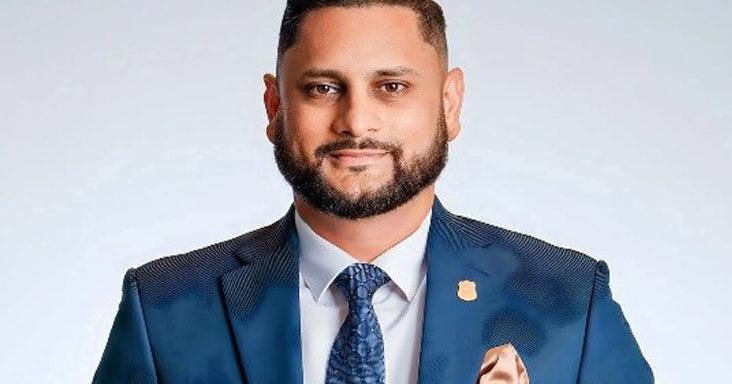
A high-stakes legal dispute has emerged in Trinidad and Tobago’s telecommunications sector, as two top leaders of state-owned telecommunications firm TSTT have threatened to pursue defamation litigation against Communication Workers’ Union (CWU) Secretary General Joanne Ogeer, stemming from inflammatory allegations she made during a union-hosted press conference earlier this month.
标签: Trinidad and Tobago
特立尼达和多巴哥
-

$1 billion in drugs seized by my Govt
One year after the United National Congress (UNC) administration took office in Trinidad and Tobago, Prime Minister Kamla Persad-Bissessar has announced a landmark milestone in the country’s war on illegal narcotics: security forces have intercepted contraband drugs with a combined local street value of approximately $1 billion. The announcement comes on the heels of a major high-profile cocaine bust carried out by the Trinidad and Tobago Coast Guard earlier this week, a seizure that underscores the government’s ongoing push to disrupt transnational and domestic drug trafficking networks.
On Monday, Coast Guard operatives intercepted a shipment carrying 440.2 kilograms of cocaine, valued at an estimated $204.5 million on local streets, and took four men into custody following the operation. Speaking to reporters from the Trinidad Express on Wednesday, Persad-Bissessar, who also leads the country’s National Security Council, framed this latest bust as clear evidence that the country’s security apparatus is delivering measurable progress against the illegal drug trade.
Going beyond the announcement of aggregate seizure numbers, the Prime Minister pulled back the curtain on the structure of the narcotics trade in the small Caribbean nation, arguing that large-scale drug shipments cannot be funded or operated by low-level couriers or small-time criminal operators. She emphasized that well-connected, wealthy business leaders are the true masterminds behind most large-scale trafficking activity in Trinidad and Tobago. “Trinidad is a small place. Everyone knows it’s wealthy so-called business people who are behind drug trafficking. No poor person or small operator can traffic a billion dollars’ worth of drugs,” she stated.
This marks a continuation of the administration’s long-stated pledge to target every tier of drug trafficking networks, not just low-level street dealers and street gangs that handle the final stages of distribution. Persad-Bissessar has made dismantling the “big fish” financiers and criminal kingpins that operate behind the scenes a core priority of her government’s national security agenda.
When asked whether investigators would move up the criminal chain to apprehend the organisers and funders behind the latest cocaine seizure, the Prime Minister declined to prejudge the ongoing investigation, noting that local police and partner international law enforcement agencies are conducting a full, thorough inquiry. While she would not speculate on procedural outcomes, she made clear her expectation that the probe will result in arrests of higher-level players in the network. She also alleged that major trafficking operations are actively enabled by corrupt actors within local financial institutions, who facilitate the movement of United States currency — the primary currency used by international drug cartels, which do not transact in the local Trinidad and Tobago dollar.
Persad-Bissessar confirmed that a number of local businesses tied to narcotics activity are already under active surveillance by both local and international law enforcement. While members of the public have not seen high-profile arrests of these elite figures to date, she says behind-the-scenes action is already underway to disrupt the cross-border movement and criminal business operations of trafficking-linked individuals. When pressed on whether investigators would trace the financial trail through bank accounts, corporate holdings, real estate and other assets tied to the latest shipment, the Prime Minister said law enforcement would follow all formal investigative protocols and procedures.
International collaboration is a central pillar of the government’s campaign against organised drug crime, Persad-Bissessar confirmed. Over the past 18 months, key international partners including the United States and the United Kingdom have implemented a series of punitive measures against suspected trafficking figures, including visa revocations, restrictions and entry refusals, and the Prime Minister says she expects this cooperative support to continue. When asked if cross-border cooperation includes intelligence sharing, maritime surveillance, vessel tracking, financial investigations, personnel training and joint operational work, she confirmed the partnership includes all of these measures and additional coordinated initiatives. She declined to comment on whether foreign intelligence supported the latest cocaine interception, as well as questions about the cocaine’s origin, intended destination, and whether Trinidad and Tobago is being used as a transshipment point or final market, noting that these details remain part of confidential ongoing investigations.
The latest large seizure has reignited public debate over the country’s ability to secure its extensive territorial waters from sophisticated transnational trafficking operations. Acknowledging that no border security system is perfect and that some illicit shipments are likely to evade detection, Persad-Bissessar reaffirmed that security forces have made consistent, tangible progress in interceptions. When asked whether the government plans to allocate additional resources — including new coastal vessels, advanced surveillance technology, radar systems, drones, aircraft and other equipment — to boost the Coast Guard and police’s maritime interdiction capabilities, she confirmed additional resources are being deployed but declined to share specific details for operational security reasons.
The Prime Minister also tied recent gains in intelligence gathering to the national State of Emergency (SoE), which is scheduled to expire on September 17. She explained that the emergency public security measures, paired with major upgrades to information technology hardware and software at the Strategic Services Agency (SSA), have significantly boosted the country’s national intelligence gathering capacity. With emergency powers set to lapse, Persad-Bissessar says the government stands ready to reimpose emergency measures or take other extraordinary action if national security conditions deteriorate. She noted that the government has already delivered tangible progress, with overall crime rates and particularly murder rates falling across the country, but added that “if there is a reversion to an increase in crime the government has no problem taking every action available to us.”
Throughout her remarks, the Prime Minister reiterated a clear, uncompromising message: no amount of wealth, social status, or elite business connections will shield actors involved in the illegal drug trade from prosecution and disruption under her administration.
-
Senator awaits Govt changes to ZOSO
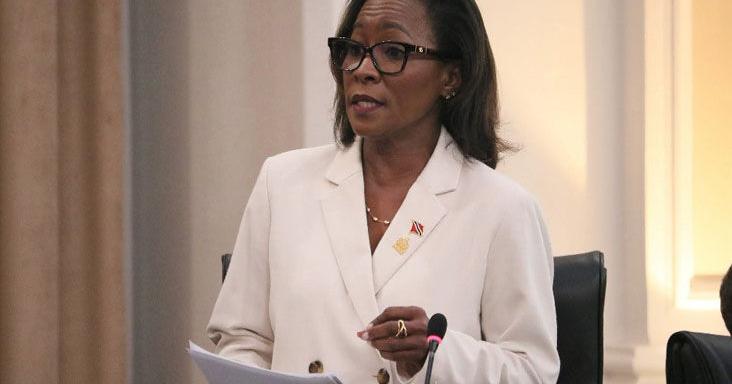
As the country prepares for the upcoming expiration of the national state of emergency on September 17, a key independent lawmaker has adopted a wait-and-see stance on whether the senate’s crossbench will revisit its proposed amendments to the revised Zones of Special Operations (ZOSO) Bill.
Independent Senator Marlene Attzs shared her position with reporters outside Parliament on Wednesday, noting that she would not commit to supporting the government’s reintroduced legislation until she reviews what modifications the administration has made to the draft text. During the bill’s last parliamentary iteration, more than 50 amendments were submitted by lawmakers, nearly half of which originated from the independent senate bench. Attzs’ own proposed changes were crafted to strike a deliberate balance between two core national priorities: the government’s urgent push to curb the country’s rising violent crime rate, and the protection of fundamental civil liberties, governmental transparency, and legislative accountability.
On the previous iteration of the bill, the governing party refused outright to consider any crossbench amendments, a point Attzs did not shy away from recalling. Still, she says she holds cautious optimism that the revised draft will incorporate at least some of the crossbench’s proposed safeguards for how ZOSO powers are deployed by law enforcement.
Addressing the critical need for coordinated action on crime, Attzs emphasized that the national security crisis demands a collective response from all parliamentary blocs, rather than unilateral action from the governing party. “We’re hoping that this time around, as we collectively try to deal with the issue of crime in the country, that some of those amendments are taken on board and given consideration so that collectively we can address this issue that is facing the country,” she said.
When asked if she would be willing to compromise on any of her proposed amendments ahead of the bill’s introduction, Attzs declined to pre-judge the government’s revised text. She noted that she will assess the new draft in its full context once it is officially tabled, and declined to assume it will retain the exact same structure and content as the earlier, unrevised version.
Among the core unresolved questions the amendments seek to clarify is the methodology for designating areas as official Zones of Special Operations. Attzs pointed out that the draft legislation lacks clear guidance on what criteria and data are used to draw ZOSO boundaries, a fundamental policy gap that independent lawmakers intend to raise during parliamentary debate once the revised bill is officially introduced.
The conversation also turned to lingering tensions from a past controversy: Prime Minister Kamla Persad-Bissessar’s earlier claim that some unnamed senators had offered to exchange their votes on the bill for political favors. When asked if independent senators remain concerned by the accusation, Attzs noted that a significant period of time has passed since the claim was made, and no public evidence has been presented to substantiate it. Echoing a common line from the country’s political leaders, she added that if any evidence of improper activity exists, those making the claim should bring it to law enforcement for investigation, noting that positions on the controversy have softened in the absence of proof.
-

TSTT rejects Cox misconduct claims
A major telecommunications firm in Trinidad and Tobago is pushing back forcefully against a wave of misconduct allegations brought by its former interim top executive, drawing clear lines around contractual terms and corporate governance standards in a formal legal response.
Telecommunications Services of Trinidad and Tobago (TSTT) has issued a comprehensive rebuttal to pre-action letters submitted by attorneys representing Keino Cox, the company’s former acting chief executive officer. In the response filed Thursday, September 10—addressed to two pre-action protocol letters dated August 26 and September 8 from Cox’s legal team—company representative Samantha Singh-Poona, TSTT’s attorney, voiced disapproval over the widespread circulation of Cox’s correspondence among employees who have no direct connection to the dispute, labeling the move “wholly improper”.
The firm pushed back against any negative speculation stemming from its request for extra time to craft a response, noting that a full, thorough legal review of the complex claims required additional lead time. At the core of TSTT’s argument is a clear breakdown of the terms of Cox’s temporary appointment: the company emphasized that Cox’s tenure as acting CEO was set to expire on July 31, 2026, and carried no implicit or explicit contractual or legal guarantee that the role would be renewed. Per TSTT’s official position, the company’s board and chairman retain full discretionary authority to end an acting appointment at any time, for any reason or no reason at all.
Cox’s allegations of misconduct in public office were rejected outright, with the firm clarifying its legal status: TSTT is a private sector entity governed by general company law, not a public authority exercising sovereign state power, meaning its executives and directors cannot be categorized as public officers. The company also dismissed Cox’s reliance on a prior legal precedent, the TSTT v Ravi Balgobin Maharaj case, calling the citation “misplaced”.
Underlining core corporate governance principles, TSTT noted that company directors hold fiduciary duties to the organization as a whole, not to individual staff members. Any formal obligations to Cox, the firm added, are exclusively outlined in his standard employment contract, with no additional obligations implied.
The company also came to the defense of its Corporate Secretary, Viveka Pargass, who has been targeted by multiple allegations from Cox. After the company’s full board reviewed all claims of misbehavior against Pargass, no evidence of wrongdoing was uncovered, TSTT confirmed. Allegations of a conflict of interest tied to Pargass’s other directorship were also refuted: the company confirmed the role was properly disclosed to Cox, who acknowledged the information upfront. On claims related to unapproved hiring, TSTT explained that Pargass only acted on formal guidance provided by the company’s human resources department, and any minor procedural gaps rest with the HR team, not the Corporate Secretary. The firm went a step further, suggesting that Cox’s allegations against Pargass are retaliatory, timed in response to her push for stricter adherence to proper governance protocols at the firm.
TSTT also addressed the decision to place Cox on administrative leave, explaining the move was a standard procedural step to protect the integrity of an ongoing independent investigation into internal matters. The firm confirmed that Cox continues to receive full remuneration and has not lost any of his contractual entitlements during the leave period.
The company denied claims of chairman interference and procurement irregularities, noting it will issue additional comment once it receives more detailed information about these specific allegations. It also pushed back on claims of improper conduct and insufficient documentation tied to a recent bond refinancing process, releasing a full timeline of events to clarify Pargass’s limited role: the Corporate Secretary’s only responsibility in the process was distributing documents drafted by external legal counsel, TSTT confirmed.
On Cox’s request for pre-action disclosure, TSTT argued that the demand is legally unfounded and premature, noting that the former acting CEO has not demonstrated any provable quantifiable loss or damage stemming from the company’s actions. The firm added that it will fully uphold procedural fairness standards in any future legal proceedings tied to the dispute.
In closing, TSTT rejected every allegation brought by Cox in its entirety. The company confirmed it is fully prepared to vigorously defend itself against any future legal action Cox may initiate, and reserved its right to submit evidence of potential criminal misconduct to relevant law enforcement authorities should the situation warrant it.
-

NIB executive director retires early
After 23 years of dedicated service to the National Insurance Board of Trinidad and Tobago (NIBTT), including 12 years at the organization’s helm as executive director, Niala Persad-Poliah has formally confirmed her early retirement from the role, effective December 13, 2026.
The retirement announcement came via a formal letter addressed to NIBTT Chairman Judy Kalloo, dated one day prior to public confirmation. In the correspondence, Persad-Poliah framed her decision as the outcome of extensive careful reflection, emphasizing that her decades of work with the state social insurance agency had been a profound privilege.
“This decision was a difficult one and was made after careful reflection. It has been a privilege to serve the organisation, and I am grateful for the opportunity to have contributed to its mandate and strategic direction,” Persad-Poliah wrote in the letter. She added that throughout her entire tenure, her core priorities remained centered on delivering high-quality service to the agency’s beneficiaries and workforce, while safeguarding the long-term financial sustainability of the National Insurance Fund. “My passion has always been service to our customers and staff, and for 23 years, including 12 years as executive director, I have approached my responsibilities with a deep commitment to those we serve, and strong advocacy for the preservation of the Fund,” she stated.
To ensure uninterrupted operations for the thousands of Trinidad and Tobago residents who rely on NIBTT benefits, Persad-Poliah pledged full support for a seamless leadership transition ahead of her departure. “As I prepare to proceed on retirement, please be assured of my commitment to facilitating continuity of leadership and operations,” she added. Notably, the letter did not include any specific explanation for her choice to retire earlier than expected. When contacted via WhatsApp for additional comment, Persad-Poliah confirmed the letter was authentic but declined to share further details. As of Tuesday, repeated attempts to reach Chairman Kalloo for a response on the retirement announcement were unsuccessful.
Persad-Poliah’s career with NIBTT spans more than two decades, having first joined the organization in 2003. Over the course of her tenure, she worked her way through a series of progressively senior leadership roles, including legal officer, Manager of Legal Services, Executive Manager, Corporate Secretary with oversight for corporate communications, and Deputy Executive Director, before being appointed to the top executive role on December 2, 2014. She succeeded former executive director Karen Gopaul in the position.
Persad-Poliah’s departure comes at a critical juncture for NIBTT, which has been grappling with growing financial strain driven by shifting demographic patterns and steadily increasing benefit payout costs. Data from the agency’s recently released 2025 annual report shows that total National Insurance Fund reserves stood at TT $27.36 billion as of June 30, 2025, representing a 2.6% decline from the TT $28.09 billion recorded at the same point the previous year. Total agency assets also fell over the 12-month period, dropping 2.32% from TT $28.47 billion in 2024 to TT $27.81 billion in 2025.
Despite the overall decline in total reserves and assets, NIBTT saw a welcome rebound in contribution income during the 2025 fiscal year. In her introductory remarks to the annual report, Persad-Poliah highlighted the agency’s resilience in the face of ongoing headwinds, noting that contribution income rose 5.3% year-over-year to hit TT $5 billion. “This growth, alongside a steady rise in long-term beneficiaries and benefit recipients more generally, reflects our ongoing commitment to supporting working persons and their dependants with relevant social insurance benefits,” she wrote.
The annual report also confirmed that the total number of benefit recipients across all programs grew by 4,104, or 1.81%, to reach 230,722 in FY 2025, up from 226,618 in the prior fiscal year. Even with the solid growth in contribution income, however, the revenue gain was not large enough to offset the consistent expansion of benefit expenditure that has plagued the system for more than a decade. “Despite the growth in Contribution Income, demographic trends continue to exert pressure on the National Insurance System (NIS). The increased number of beneficiaries relative to contributors has resulted in Benefit Expenditure consistently exceeding Income since FY 2013,” Persad-Poliah explained in the report. For the 2025 fiscal year, NIBTT recorded a total revenue-expenditure shortfall of TT $1.6 billion.
-
Seized at sea
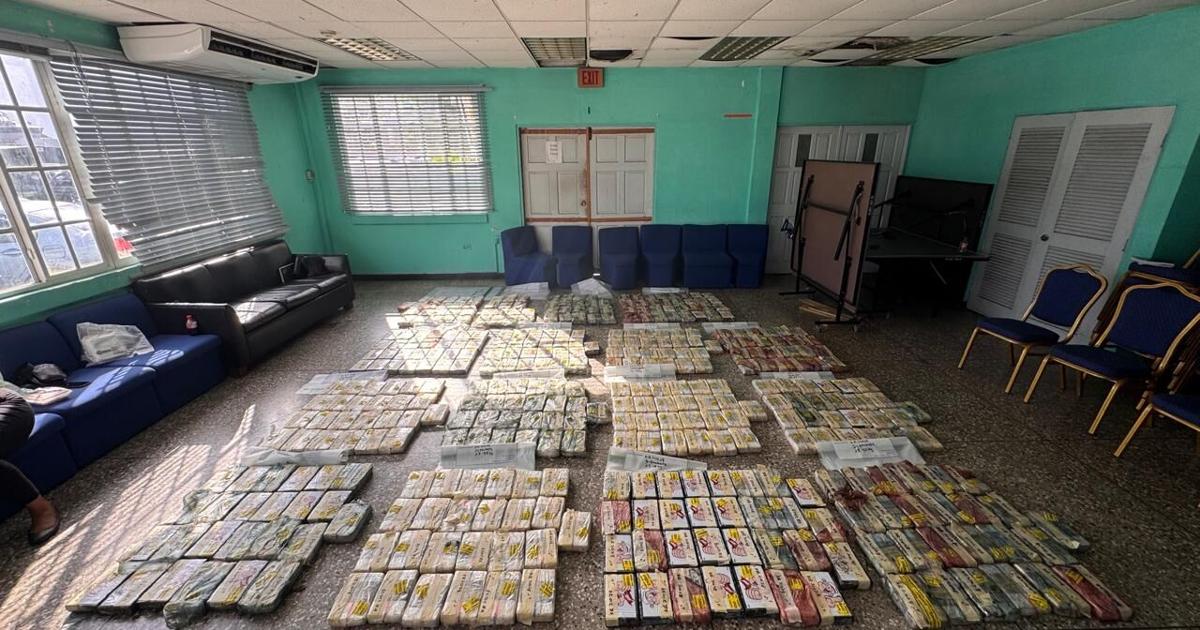
In a landmark strike against transnational drug trafficking, Trinidad and Tobago law enforcement agencies have intercepted a massive cocaine shipment off the country’s north-western coast, seizing more than 440 kilograms of the illegal narcotic valued at an estimated $204.5 million and taking four suspects into custody. The operation, carried out early yesterday morning by the Trinidad and Tobago Coast Guard (TTCG), targeted a small fishing vessel identified as the *FISH POT BOY* near Huevos Island, in the northern zone of the Gulf of Paria.
According to official law enforcement details released to local outlet the *Express*, the interception unfolded at approximately 5:56 a.m., roughly 600 feet northeast of Umbrella Rock off Huevos Island. The intercepted vessel features a white hull, grey gunwale and grey interior, and is powered by three Yamaha 200-horsepower two-stroke outboard engines. When TTCG officers boarded the craft, they found four men — three Trinidadian nationals and one Venezuelan national — alongside 394 individually plastic-sealed packages holding a white powder substance.
The vessel was immediately escorted to TTCG headquarters at Staubles Bay in Chaguaramas for a full search operation, and the Trinidad and Tobago Police Service’s (TTPS) Special Investigations Unit was called in to process the seizure. Forensic testing later confirmed the powder was cocaine. All four suspects, along with the contraband and the vessel, were transferred to TTPS and other relevant law enforcement bodies for ongoing investigation and legal processing.
To calculate the street value of the seizure, authorities used the local estimated retail rate for cocaine in Trinidad and Tobago, which stands at roughly $464,640 per kilogram. Applied to the 440.20-kilogram haul, that puts the total estimated retail value at approximately $204.5 million.
Responding to the successful operation, Minister of Defence Wayne Sturge praised the ongoing work of the country’s law enforcement community, stressing that authorities are gaining ground in the fight against transnational drug cartels. Sturge acknowledged that the enormous profits of the illegal drug trade will continue to incentivize traffickers to attempt smuggling operations into Trinidad and Tobago, but emphasized that security forces will remain relentless in their efforts to intercept shipments and disrupt criminal networks.
“Drug trafficking is lucrative for the cartels so they will continue to try to find ways to evade law enforcement. It is our job to be one step ahead of the cartels and to anticipate them. We are winning at this point and we will continue to do everything in our power to keep on top of our game,” Sturge said in an interview with the *Express*. He added that continued smuggling attempts are “par for the course” in this work, but agencies will sustain their aggressive anti-trafficking operations. This seizure marks one of the largest maritime drug busts in recent months for Trinidad and Tobago.
In an official statement released yesterday, the TTCG reaffirmed its longstanding commitment to protecting the country’s territorial waters and maritime borders. “The Trinidad and Tobago Coast Guard remains committed to safeguarding the nation’s maritime domain, executing duties in accordance with our motto of Service Before Self,” the statement read.
Yesterday’s high-value bust comes just two days after Prime Minister Kamla Persad-Bissessar announced a renewed, aggressive crackdown on drug and gun trafficking gangs. Speaking on Sunday, the Prime Minister targeted what she called “filthy, greedy” criminal networks operating out of upscale Trinidadian neighborhoods including Westmoorings, St Clair and Federation Park, which she accused of flooding the country with illegal narcotics and weapons. She also clarified that the government’s aggressive anti-crime campaign will not end when the current national state of emergency is lifted on September 17, noting that her administration is working closely with international law enforcement partners to target both local traffickers and wealthy criminal figures who believe they are beyond prosecution.
This seizure is the latest in a string of major narcotics recoveries recorded since the Persad-Bissessar administration took office in May 2025. Since that time, combined operations by land and maritime law enforcement agencies have intercepted hundreds of millions of dollars worth of cocaine and marijuana across the country.
-

Judge sides with prisoner
In a landmark ruling that upholds core constitutional protections for incarcerated people, the High Court of Trinidad and Tobago has ruled that the State cannot carry out routine interception and recording of confidential communications between prisoners and their legal representatives. The judgment, delivered by Justice Robin Mohammed last Friday, has invalidated key provisions of the 2020 Interception of Communications (Amendment) Act, declaring them unconstitutional, illegal, null and void.
The constitutional challenge was brought by Lyndon James, a prisoner who is currently awaiting retrial for the 2008 murder of businesswoman Vindra Naipaul-Coolman. James, represented by a team of senior attorneys from Freedom Law Chambers led by Anand Ramlogan SC, targeted two specific sections of the 2020 amendment: sections 6(b)(v) and 7. These clauses expanded the State’s authority to intercept all prisoner communications within correctional facilities and stripped the vast majority of these exchanges of their longstanding legal professional privilege protection.
In his detailed judgment, Justice Mohammed found that the challenged amendments directly violated multiple fundamental constitutional rights, including the explicit right of detainees to retain legal counsel and communicate confidentially with them, as well as the foundational right to a fair judicial hearing. Beyond the substantive rights violation, the judge also determined that the legislation was never enacted in compliance with the special constitutional procedure required for any law that limits fundamental human rights, marking a fatal procedural flaw in the amendment’s passage.
Justice Mohammed emphasized the inextricable link between legal professional privilege, the rule of law, and functional democratic governance. “The courts are the guardians of the Constitution, they can only fulfil that role of guardianship if there is unimpeded access to the justice system,” he wrote in his judgment. He further noted that confidential communication between prisoners and their lawyers takes on heightened importance, given that incarcerated people rely on these discussions to address a wide range of critical issues, from challenges to their detention and claims of mistreatment to claims of constitutional violations and safety threats within the facility. “A safe space is an integral element to fostering open dialogue between attorneys and clients,” he added.
A key finding in the ruling was that the 2020 amendments effectively imposed a blanket ban on legal professional privilege for all prisoner communications. Justice Mohammed pointed out that no ministerial orders were ever issued to designate specific areas within prisons where privilege would remain protected, leaving no exception for confidential legal discussions.
The judge also rejected the State’s core argument that legal privilege could not apply to conversations held over illegal mobile phones that prisoners may smuggle into correctional facilities. “The Defendant’s proposition that the Claimant cannot reasonably expect to attach privilege to conversations facilitated by illegal cellular phones, is unsustainable,” he ruled. While he confirmed that communications made in furtherance of ongoing criminal activity never qualify for privilege protection, Justice Mohammed stressed that the mere use of an unapproved device does not automatically strip a defendant of their right to confidential legal discussion about their own case.
Justice Mohammed acknowledged that the State has a legitimate public interest goal of curbing criminal activity within prison walls. However, he found that the government failed to prove that sweeping, routine interception of all legal communications is a proportionate response to that goal. “Plainly a telephone call made by an inmate or detainee to his lawyer, to provide instructions or take advice, is not the same thing as the issuing of criminal instructions or the furtherance of criminal activity,” he explained.
The judge also noted that a far less intrusive alternative was available to the State: engaging independent legal counsel to review any intercepted communications to determine whether they qualify for legal privilege before retaining or using the content. “The option of engaging independent counsel provided a less intrusive measure which could and ought to have been used,” he said. “A fair balance has not been struck between the rights of the individual (the prisoners) and the interests of the community (the public),” he added.
Going a step further, Justice Mohammed found that the entire amendment was enacted on an “erroneous premise”: that the changes did not conflict with constitutional rights, and thus did not require the special legislative majority mandated under Section 13 of the national constitution. “Indeed, it is plainly obvious that if the parent Act was passed in compliance with Section 13, an Amendment Act which imposes further restrictions on Sections 4 and 5 rights ought to be passed in compliance with Section 13,” he wrote.
In final orders, Justice Mohammed formally declared the challenged provisions unconstitutional, and ruled that the amendments to the Interception of Communications Act are “illegal, null, void and of no effect”. James was awarded full costs for his successful challenge, with the judgment certified to allow for costs at the senior and junior counsel level. The Office of the Attorney General, which defended the law, was represented by Senior Counsel Gilbert Peterson, Rishi Dass SC, and Rachel Wright.
-
‘Wealthy drug mafia’ targeted
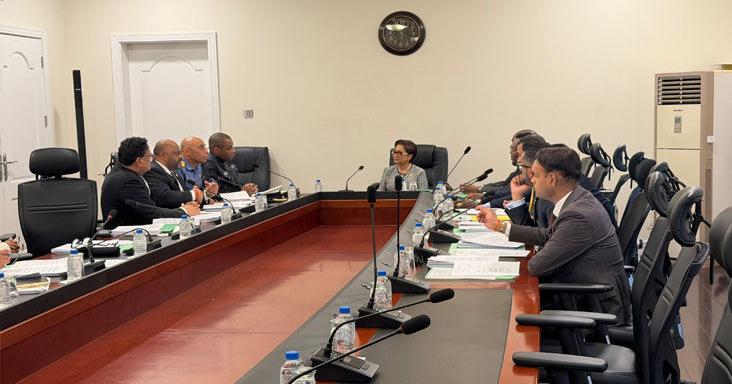
Trinidad and Tobago’s Prime Minister Kamla Persad-Bissessar has issued a stark public warning to the country’s wealthy drug trafficking networks, signaling that her administration will not ease its aggressive anti-crime push even after the expiration of the national state of emergency (SoE) on September 17.
In an official statement released via social media, the Prime Minister outlined a clear, uncompromising stance against organized criminal groups, specifically calling out drug gangs operating out of the upscale West Trinidad neighborhoods of Westmoorings, St Clair and Federation Park. She slammed these networks as “filthy, greedy” for flooding the twin-island nation with illegal narcotics and unregistered firearms that fuel violent crime and harm local communities.
Persad-Bissessar made clear that the end of emergency powers would not bring a halt to the government’s law enforcement campaign. She emphasized that criminals, their backers and their family members will still face harsh consequences for any ongoing criminal activity, noting that holding cells at the Teteron and Maximum Security Prison (MSP) remain ready for anyone who continues to terrorize law-abiding residents. “Negotiating with or placating criminals only emboldens them to continue their criminal activities,” she stressed.
As part of her commitment to transparency and public accountability, the Prime Minister declassified previously confidential law enforcement data submitted to the National Security Council, which outlines the results of the six-month state of emergency. The data shows that the operation has been “highly successful”: authorities arrested 5,802 people across the country, with 3,552 of those arrested – 61.2 percent of the total – facing formal criminal charges. Persad-Bissessar confirmed that the six-month period saw the “primary threat” of organized crime reduced, with crime rates dropping in every single police division across Trinidad and Tobago.
The Prime Minister used the address to critique decades-long trends that she said eroded public safety in the nation. She argued that over the past 30 years, Trinidad and Tobago slid from a peaceful society to what she called a “lawless dump,” a shift driven in part by a widely perceived two-tiered justice system. Under that unequal system, she explained, ordinary citizens face the full force of the law, while what she termed “eat-a-food fake elite and politically connected” actors get special treatment and avoid consequences for criminal activity. “I am working to bring those days to an end. Everyone must now bear personal responsibility for their individual behaviour,” she said.
To target high-level criminal networks that believe their wealth and influence put them beyond legal reach, Persad-Bissessar confirmed her administration is coordinating closely with foreign law enforcement agencies to dismantle local drug trafficking operations. This collaborative effort will ensure that even wealthy mafia figures face the same prosecution procedures as any other person accused of breaking the law, she said. The Prime Minister stressed that gangs from wealthy West Trinidad neighborhoods will not receive preferential treatment, and will face the same legal consequences as long-recognized street gangs from areas including Siparia, Arima and Laventille.
This public warning is consistent with Persad-Bissessar’s ongoing campaign to root out white-collar facilitation of organized crime, not just low-level street gang activity. Back in June, she backed a similar warning from Attorney General John Jeremie that the anti-crime push would target wealthy, influential figures suspected of profiting from drug trafficking and organized crime, not just traditional street-level groups. Reiterating the principle that “justice is blind,” the Prime Minister affirmed that the law applies equally to all citizens, no matter their net worth, social status, political connections or public influence.
Later that same month, Persad-Bissessar revealed that United States intelligence agencies had identified a network of local individuals, business owners and banking staff allegedly linked to large-scale money laundering and drug trafficking for international cartels, moving millions in U.S. currency out of the country. She confirmed at the time that U.S. authorities had already begun punitive action against these actors, including restricting their access to U.S. territory and American financial institutions. To strengthen domestic enforcement, the Prime Minister added that her government is bolstering the capacity of the Inland Revenue Division to increase regulatory scrutiny of white-collar criminals and businesses tied to drug trafficking, financial crime and gang activity.
Persad-Bissessar closed her statement by extending formal gratitude to all government officials and frontline personnel who supported the state of emergency operations, including the Attorney General, defense and security ministerial teams, police and prison leadership, and all rank-and-file protective service workers who worked extended shifts to keep the public safe. She also thanked law-abiding Trinidad and Tobago residents for their patience, support and willingness to cooperate with authorities during the emergency period, saying their backing was critical to the operation’s early success.
-
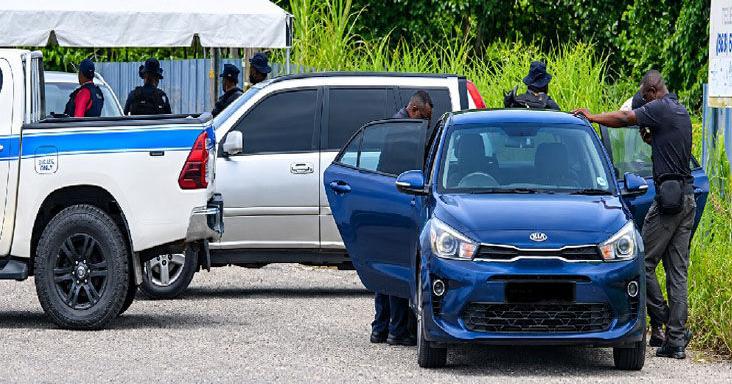
PM hails SoE ‘success’
As the Government of Trinidad and Tobago prepares to wrap up a six-month state of emergency (SoE) on September 17, Prime Minister Kamla Persad-Bissessar has made public previously classified operational data to demonstrate what she frames as the security initiative’s success.
In a social media post published this week, Persad-Bissessar published the full contents of an internal document marked “SECRET”, which lays out the most granular breakdown of arrests, charges, and preventive detentions recorded during the operation to date. The dataset covers the full operational period from March 3 through September 10, 2026, with cumulative figures updated through day 192 of the SoE. The document was reportedly compiled in response to an urgent request for updated statistics on detained and charged individuals, though the identity of the requester has been redacted in the version released by the Prime Minister.
According to the declassified figures, law enforcement arrested a total of 5,802 people between the launch of the SoE and September 10, with 3,552 of those detainees — 61.2% of the total arrested population — formally criminally charged. This total marks an increase from the previously reported 5,767 arrests, with 35 additional people taken into custody on day 192 of the operation.
Of the 3,552 total charges, more than 60% (2,154 cases) were classified as Serious Reported Crimes (SRCs), with the remaining split between 816 Minor Crime charges (23%) and 582 Minor Offence charges (16.4%). The report explicitly notes that serious offences make up the majority of all charges filed during the SoE.
Within the Serious Reported Crimes category, charges related to illegal possession of firearms and ammunition were the most common, with 558 people facing these charges alone — accounting for more than a quarter of all serious offence charges. Following firearms charges, the most common serious offences were robbery (246 charges), general larceny (238), breaking and entering offences (225), narcotics possession with intent to traffic (214), fraud (140), other serious crimes (135), sexual offences (118), wounding or shooting offences (69), home invasion (66), motor vehicle larceny (48), murder (46), kidnapping (41), serious indecency (5), and larceny of a dwelling house (5).
For the 816 Minor Crime charges, possession of narcotics was the most frequent offence, with 494 people charged. Other minor crime charges include 82 for unspecified other offences, 79 for possession of drug paraphernalia, 39 for fraud and related minor financial offences, 38 for minor larceny, 30 for assaulting a police officer, 18 for malicious wounding, 13 for unlawful possession of contraband, 10 for praedial larceny, eight for possession of housebreaking tools, four for indecent assault, and one for minor larceny of a dwelling.
A further 582 people were charged with Minor Offences, the lowest-level classification in the report. Of these, 216 fell under the “Other Minor Offences” grouping, with 129 charged with breach of the peace, 115 charged with assault on police, 54 charged with assault, battery, or criminal threats, 39 charged with unlawful weapon possession, 23 charged with gambling or betting offences, four charged with malicious property damage, and two charged with loitering or public vagrancy.
The classified report also includes contextual data on home invasion trends, clarifying the difference between the 66 people charged with home invasion during the SoE and the 238 total home invasion incidents recorded nationwide in 2026 to date. Long-term trend data shows that national home invasion incidents fell roughly 42.6% from 535 incidents in 2024 to 307 in 2025. While associated murders rose slightly from 28 to 31 over that period, burglary (down from 179 to 79), robbery (down from 295 to 177), and shootings/woundings (down from 33 to 20) all recorded sharp declines.
The document also details the use of Preventive Detention Orders (PDOs), a special power granted under the SoE’s emergency regulations. As of day 192, authorities had recommended 801 PDO applications, with 702 (87.6% of recommendations) approved by relevant bodies. Of those approved, 574 PDOs were executed, after one additional detention was carried out on day 192.
Of the 574 people detained via PDO, 240 (41.8%) have been formally charged with criminal offences, while the remaining 334 (58.2%) do not currently appear on the charged list. The report explicitly warns against interpreting this to mean the uncharged detainees are innocent, noting that “investigations may remain ongoing” for those not yet charged.
Persad-Bissessar’s decision to release the sensitive security data comes just days before the SoE’s authorized mandate expires on September 17. Last Friday, Minister of Homeland Security Roger Alexander confirmed to Parliament that the government would not seek an extension to the emergency period, confirming the operation will end as scheduled.
-

‘T&T flag could be on the moon’
A 19-year-old medical student from Trinidad and Tobago is poised to see her small twin-island nation make global aerospace history, after she returned home from a groundbreaking all-female international space initiative in India that will send the country’s flag to the surface of the Moon.
Kaitlyn Sahatoo, one of Trinidad and Tobago’s official representatives to the ShakthiSAT Mission 2026, recently shared details of her week-long experience hosted by the Indian Space Research Organisation (ISRO) at Gautam Buddha University in Greater Noida, Uttar Pradesh. Held from August 23 to 30, the program brought together 12,000 young women from 108 nations to collaborate alongside leading ISRO scientists and international aerospace developers on cutting-edge satellite and lunar mission projects. Participants gained hands-on training in core aerospace fields ranging from satellite engineering and payload development to leadership and transnational space diplomacy.
According to Sahatoo, the program’s culminating mission — which includes a satellite deployment and lunar payload carrying the flags of all participating nations — is scheduled to launch on October 11, coinciding with the International Day of the Girl Child. While the young student has maintained her core career focus on medicine, the unprecedented opportunity has kept her deeply engaged with the project even after returning home. Sahatoo says she hopes to earn a chance to return to India to witness the launch in person, noting that even if that dream does not come to fruition, she remains intensely proud to have represented her nation on a global aerospace stage.
“It has been a wonderful experience knowing that I went there, represented our small twin-island Republic of Trinidad and Tobago on a mission of that level and scale, and that our country’s flag, I believe, is now going to be on the moon,” Sahatoo shared during a recent interview.
During the program, Sahatoo gained direct practical experience working on 12U low Earth orbit satellite technology, helped assemble and reassemble the engineering model of the ShakthiSAT satellite alongside veteran aerospace experts, and contributed to pre-launch preparations for the upcoming lunar mission. The experience deepened her understanding of core aerospace engineering challenges, particularly the systems that allow satellites to generate and store solar power. She explained that satellite solar panels harvest energy from the sun to recharge on-board batteries, which sustain operations during eclipse periods or when orbital debris blocks sunlight from reaching panels — a technical challenge she says she found particularly fascinating to explore.
Beyond space exploration, the experience has opened new professional avenues that align with Sahatoo’s medical career goals. She now is considering exploring the emerging field of space medicine, a specialty that remains largely untapped in Trinidad and Tobago. She also points to tangible opportunities for satellite technology to transform local healthcare, from remote patient monitoring to large-scale disease surveillance, and says she hopes to play a role in advancing that integration to strengthen the nation’s healthcare system.
As launch day approaches, Sahatoo says her primary hope is that the satellite will operate as planned and deliver the valuable scientific data it is designed to collect. She also hopes her participation will open doors for other young Trinidadians to access similar global opportunities, and has called on the Trinidad and Tobago government to expand investment in youth STEM initiatives, including supporting more young people to travel abroad for hands-on training alongside international scientific experts.
Laura Rambaran-Seepersad, one of two Trinidad and Tobago ShakthiSAT ambassadors who accompanied Sahatoo on the trip, echoed that commitment to expanding local opportunities. In a message shared after the team’s return, Rambaran-Seepersad noted that she and co-ambassador Donna Scoon-Moses returned from the initiative not just with new technical knowledge, but with a global network of professional connections that they plan to leverage to create new local opportunities in space science, satellite technology and STEM education.
Beyond technical work, the program included a Women’s Leadership Summit that brought participants together to discuss pressing global issues including climate change, sustainable development, women’s economic and professional empowerment, and cross-border scientific cooperation. Rambaran-Seepersad emphasized that the next critical step is translating the knowledge and connections gained through the program into tangible, accessible opportunities for young Trinidadians, including structured training, mentorship programs, international research collaborations, and greater exposure to the fast-growing global space sector.
The long-term goal of this work, she says, is to build a clear, accessible pathway for Trinidad and Tobago to play a more active role in the global aerospace industry. “For me, that is the real value of the mission: taking one extraordinary international experience and using it to help create a pathway for the generation that comes next,” Rambaran-Seepersad said.
ShakthiSAT’s core mission, she added, is to ensure small developing nations like Trinidad and Tobago have both a voice and a visible presence in the global movement to prepare young women for leadership in the future of science and space exploration. “Our young people should not only dream about space—they should know that they have a place in it,” she said.