标签: Trinidad and Tobago

特立尼达和多巴哥

  • Support for Nelson name change

    Support for Nelson name change

    A planned renaming of Trinidad and Tobago’s Nelson Island, announced by Prime Minister Kamla Persad-Bissessar during a joint visit with Indian External Affairs Minister Dr. Subrahmanyam Jaishankar, has drawn broad approval from local historical experts—though many are calling for the new title to honor the site’s full, multifaceted past rather than centering only its connection to Indian indentureship.

    Persad-Bissessar framed the change as a long-overdue tribute to the so-called jahaji legacy, marking the entry point for more than 143,000 Indian indentured laborers who arrived at the island between 1845 and 1897, after the abolition of chattel slavery in the British colony. To guide the process, the Prime Minister announced a steering committee led by Natasha Barrow, Permanent Secretary in the Office of the Prime Minister, in partnership with the National Trust of Trinidad and Tobago. A public-facing website will also be launched to open the naming process to community input, allowing residents to submit their own suggestions for the island’s new title.
    In her announcement, Persad-Bissessar did not ignore the island’s other layers of history, noting that long before the indentureship era, enslaved Africans were forced to build British military fortifications on the site. In the 1930s, it served as a detention camp for Jewish refugees fleeing rising Nazi persecution in Europe, and it later held prominent Trinidadian labor leaders including Tubal Uriah “Buzz” Butler and George Weekes. Still, the Prime Minister emphasized that the island’s core historical identity is most strongly shaped by the hundreds of thousands of indentured laborers who passed through its quarantine and processing facilities before being dispatched to work on Trinidad’s sugar and cocoa plantations.
    Leading local historians have broadly praised the initiative to replace the current name, which derives from 19th-century island owner Dr. Thomas Neilson, a figure historians agree made no lasting meaningful contribution to Trinidadian national life. “There is no problem in setting aside his name,” noted retired history professor Bridget Brereton, one of the nation’s most prominent scholars of colonial Caribbean history. Brereton called the renaming plan “quite appropriate,” arguing that the site’s central role in processing indentured immigrants makes a name honoring that legacy fitting. “Thousands of indentured immigrants from India went to the island to be inspected, examined, and in some cases quarantined before they were sent out to the plantations,” she explained. For her own suggestion, Brereton proposed “Arrival Island,” a simple title that acknowledges the moment that shaped the ancestry of a large share of modern Trinidad and Tobago’s population. She added that while it is impossible for any single name to capture every chapter of the site’s past, a title centered on the arrival of indentured communities is a reasonable and respectful choice.
    Other historians, while supportive of the renaming as a whole, have pushed for a more inclusive approach that accounts for the island’s full timeline of use. University lecturer Dr. Jerome Teelucksingh commended the government for moving to preserve and elevate the island’s history, but emphasized that the site’s story stretches back long before the indentureship era, starting with its original occupation by Trinidad’s First Peoples. In addition to the Jewish refugees and colonial-era labor leaders detained there, Teelucksingh noted the island was also used to incarcerate Black Power movement leaders including Khafra Kambon and Makandal Daaga in the 1970s. “Nelson Island isn’t just about indentureship; it goes further than that,” he explained. “I support the name change, but whatever name the committee comes up with has to encompass the broad history that reflects the island.”
    History lecturer Dr. Sherry-Ann Singh echoed that call, urging the process to be carried out responsibly to honor all layers of the site’s past. While she acknowledged that the island served its longest and most prominent role during the indentureship era, it functioned for other critical purposes before and after that period. Done correctly, she said, the renaming will become a meaningful commemoration of a core part of Trinidad and Tobago’s shared national history.
    Historian Dr. Aakeil Murray also welcomed the government’s move, framing the renaming as an opportunity to reflect the modern identity of Trinidad and Tobago’s diverse population. “It is necessary that a change in name reflects who we are becoming and who we are now as a people,” he said, adding that the new title should account for the island’s diverse history rather than being tied exclusively to the arrival of Indian indentured laborers.

  • Gopeesingh slams ‘mischief’

    Gopeesingh slams ‘mischief’

    A brewing public dispute over healthcare service integrity has emerged in Trinidad and Tobago, after the North Central Regional Health Authority (NCRHA) launched a forceful rebuttal of circulating social media claims surrounding recent nurse resignations and a critical oxygen system incident at two of its major facilities. NCRHA chairman Dr Tim Gopeesingh has labeled the spreading narratives “mischievous” efforts to sow unnecessary division and public anxiety, pushing back against assertions that the departures of three nursing staff were tied to poor working conditions or operational failures at a newly opened hospital ward. As the public health body pushes back against what it calls deliberate misinformation, it has also revealed new details about ongoing nursing recruitment and service improvements across its network.

    The controversy ignited after unsubstantiated claims began spreading across social media platforms, prompting the NCRHA to issue two formal official statements on Friday and Saturday, followed by additional comments to local media outlet *The Express* from Gopeesingh. Addressing the nurse resignation claims first, the NCRHA clarified that none of the three departing registered nurses were ever assigned to or worked at the recently opened Adult Medical Ward at the Eric Williams Medical Sciences Complex (EWMSC) — directly contradicting rumors that their departures stemmed from problematic operations or unsafe conditions at the new facility. All three resignations, the authority confirmed, were driven exclusively by personal circumstances: two nurses moved to new roles at other regional health authorities that were closer to their homes, while the third opted to leave to pursue full-time advanced academic study.

    Gopeesingh emphasized that out of the NCRHA’s total workforce of approximately 1,200 practicing nurses, the overwhelming majority remain deeply committed to delivering high-quality patient care, and the small number of recent departures has not disrupted service delivery across the authority’s footprint, which serves half a million residents and handles roughly 20,000 patient encounters each month. Contrary to claims of a mass staffing exodus, Gopeesingh noted that the authority has recently hired 51 new nursing professionals, 48 of whom have already been placed in key roles across high-demand departments including Accident and Emergency and intensive care units. These new hires are currently completing hands-on supervised training alongside experienced senior nursing staff, and the NCRHA has already published new open recruitment advertisements to continue expanding its nursing complement.

    The second set of social media claims addressed by the NCRHA surrounded an incident at the Neonatal Intensive Care Unit (NICU) of Mt Hope Women’s Hospital, where online posts suggested a prolonged oxygen outage put vulnerable infant patients at severe risk. The NCRHA confirmed that a temporary low-voltage fault did occur at approximately 1:58 p.m. during the incident, which did impact line pressure in the facility’s oxygen system and triggered automatic safety alarms. But the authority stressed that its established contingency protocols were activated within seconds: a standby reserve oxygen supply was immediately brought online to ensure uninterrupted care, and engineering and maintenance teams from the NCRHA, alongside technical representatives from the system’s external supplier, were on site rapidly to resolve the underlying fault. At no point during the incident were any patients denied oxygen or placed in danger, the NCRHA confirmed, and all ventilated NICU patients received continuous medical care and support throughout the incident. The fault was fully stabilized quickly, and the system has remained under close continuous monitoring by clinical, technical and supplier staff ever since.

    The NCRHA has directed sharp criticism at the Trinidad and Tobago National Nursing Association (TTNNA) for spreading what it calls “unverified, sensational and alarmist statements” about both incidents before pursuing any independent fact-checking or verification of the claims. Gopeesingh specifically called out TTNNA president Idi Stuart, accusing him of deliberately peddling false information to create disharmony among nursing staff and win professional support through fearmongering. The authority warned that the spread of these false narratives poses real harm: it undermines public confidence in the country’s public healthcare system, causes unnecessary emotional distress to vulnerable patients and their families, and can disrupt the smooth delivery of critical care services. The NCRHA also confirmed that it is reserving all legal rights and remedies to pursue action over what it deems false, defamatory statements that have damaged the reputation of the authority, its leadership and its frontline healthcare professionals.

    Alongside its rebuttal of misinformation, Gopeesingh highlighted tangible recent service improvements across NCRHA facilities. Previously, 30 to 35 patients from the emergency department often faced extended waits for available inpatient beds, but recent operational adjustments have created 51 additional available beds, making it possible to place patients from the ER on short notice — a shift Gopeesingh called unprecedented at the authority. The NCRHA is also currently working to strengthen its patient escort system and refine inpatient admission criteria across all wards to further improve care flow and service quality. Reaffirming the organization’s commitment to transparency, patient safety and uninterrupted care delivery, the NCRHA assured the public that all services remain fully operational, and oxygen supply systems across all its facilities continue to be monitored closely to prevent future incidents. Gopeesingh closed by extending public recognition to the NCRHA’s nursing workforce, praising their ongoing professionalism and dedication to patient care, and urging staff to maintain their focus on delivering compassionate, high-quality care with full institutional support.

  • National prosthetics centre launched

    National prosthetics centre launched

    On a historic Saturday in Siparia constituency, Trinidad and Tobago Prime Minister Kamla Persad-Bissessar formally opened the country’s first permanent National Prosthetics Centre, a landmark collaborative project between the Trinidad and Tobago government, the Government of India, and U.S.-based non-profit Jaipur Foot USA. The opening ceremony was attended by India’s Minister of External Affairs Dr. Subrahmanyam Jaishankar, marking another milestone in the deepening bilateral partnership between the two nations.

    In her keynote address delivered at the centre’s Penal compound on Clarke Road, Persad-Bissessar framed the new facility as a transformative step forward for the Caribbean nation’s differently-abled community. For years, Trinidadian patients requiring prosthetic limbs faced a daunting set of barriers: they were forced to travel abroad for care, absorb prohibitive treatment costs, and endure months-long waiting periods for life-changing support. Now, all essential prosthetic and rehabilitation services will be provided completely free of charge to citizens right at home, eliminating those systemic barriers.

    “This centre does more than provide physical devices—it restores dignity, confidence, and independence to thousands of our citizens,” Persad-Bissessar emphasized. “It opens the door for people to return to work, to participate fully in their communities, and to live life on their own terms.” The project embodies her administration’s core promise to expand specialized healthcare access and ensure no citizen is left behind due to disability, she added.

    Beyond serving domestic needs, the new centre is poised to reshape prosthetic care across the entire Caribbean. Persad-Bissessar noted that the facility positions Trinidad and Tobago as a regional hub for specialized rehabilitation, with capacity to treat patients from across the Caricom bloc and eventually grow into a regional training centre for prosthetic expertise. She tied the project’s success to the 2025 state visit of Indian Prime Minister Narendra Modi, saying the centre stands as tangible, people-centered proof of what bilateral cooperation can deliver for ordinary communities.

    This latest initiative expands a growing healthcare partnership between the two nations, which already includes joint development of haemodialysis units, pharmaceutical cooperation, and the deployment of two sea ambulances to Trinidad and Tobago. Persad-Bissessar offered public gratitude to both the Indian government and Jaipur Foot USA for their partnership, noting that she was moved to “tears of emotion and joy” after reviewing patient testimonies from a preliminary prosthetic fitment camp held at Divali Nagar last year. That camp, organized with support from the Indian High Commission in Trinidad and Tobago, was the first of its kind held outside of India, a distinction she highlighted while praising the work of High Commissioner Dr. Pradeep Singh Rajpurohit and his team.

    Speaking at the ceremony, one early beneficiary of the partnership, limb recipient Joshua Gloud, shared his excitement about the permanent centre. “It is an encouragement to see that something like this is taking place in our nation,” Gloud said. “I really thank the honourable prime minister and everyone that has done everything possible to get this done, and I look forward to all the good this centre will do in the years ahead.”

    Trinidad and Tobago Health Minister Lackram Bodoe echoed that sentiment, framing the centre as a practical, compassionate response to a long-unmet national need. Operating under the oversight of the Ministry of Health and the South-West Regional Health Authority, the facility will clear the existing backlog of patients waiting for prosthetic care while meeting ongoing demand into the future. Local energy firm Heritage Petroleum Company Ltd supported the project by facilitating acquisition of the centre’s building, Bodoe confirmed.

    The centre will deliver a full spectrum of care, from initial patient assessment and prosthetic fitting to long-term follow-up care, while also building local capacity by providing technical training for Trinidadian healthcare workers. “Right now, more than 200 patients are on our waiting list for prosthetic services and follow-up care, and work is already underway to see those patients,” Bodoe said. He added that clinical teams have already taken measurements for the first two patients, who will receive their custom limbs in the coming weeks.

    In his remarks at the inauguration, Jaishankar reaffirmed the Indian government’s long-term commitment to supporting the centre and expanding access to care. He noted that demand for prosthetic services was far higher than initial projections from last year’s fitment camp, and India is prepared to go the extra mile to meet that growing need.

    “Following the success of last year’s camp, we as partners to Trinidad and Tobago recognized how transformative this permanent service would be for this country,” Jaishankar said. “This initiative does more than restore mobility—it reduces vulnerability, strengthens human dignity, and imparts the self-confidence that lets people rebuild their lives.” He commended Prime Minister Persad-Bissessar for prioritizing the project and locating the centre in her own constituency, a choice that reflects her deep personal commitment to supporting vulnerable communities, and confirmed that India will continue providing all necessary support to the centre as it grows.

  • I don’t know, says Lee

    I don’t know, says Lee

    A growing corruption controversy surrounding Trinidad and Tobago’s $3.4 billion suspended housing development program has put the government in the spotlight, after a local newspaper exposed an attempted bribe to scrap an investigative report into alleged bid-rigging at the state-run Housing Development Corporation (HDC).

    The Sunday Express, the outlet that broke the story, revealed that a self-described intermediary for an HDC official under investigation arranged a closed-door meeting with the paper’s investigative journalist Mark Bassant last Thursday on Ariapita Avenue in Woodbrook. During the meeting, the intermediary, a well-known figure in local political circles, offered a substantial cash compensation package to Bassant on the condition that the outlet drop the story entirely. In addition to the payout, the man also promised the journalist exclusive internal documents detailing alleged mismanagement of the HDC during the previous People’s National Movement (PNM) administration, according to the report.

    The intermediary explicitly noted that senior figures at the HDC wanted to avoid the negative public scrutiny that would come from the publication of the collusion allegations. The Sunday Express immediately rejected the bribe offer, reiterating that the probe into the HDC contract awards is a matter of critical public interest that demands full transparency.

    The sequence of events that led to the attempted bribe began last week, after the newspaper received complaints of collusion in the awarding of two large contracts under the housing program. Reporters then sent formal questions to both the implicated HDC official and the two contractors that received the contracts. The day after the queries were sent, the intermediary reached out to the paper, claiming the HDC official was willing to discuss the contract issue openly, and arranged Thursday’s meeting.

    Following the publication of the report on Sunday, Housing Minister David Lee moved quickly to distance himself from the entire affair. When contacted by the outlet for official comment, Lee stated he had no prior knowledge of any bribe attempt or the underlying allegations of collusion. He emphasized that as the cabinet minister overseeing the housing portfolio, he does not interfere in the daily operations of the HDC or any other state agency under his jurisdiction, nor does he involvement in any public procurement processes managed by those entities.

    In response to the newspaper’s investigation, legal action has already been threatened by one of the two contractors. Last Thursday afternoon, Denelle S Singh, an attorney based in Chaguanas, submitted a pre-action protocol letter to the Sunday Express on behalf of the contractor and his firm. The letter denies all collusion allegations and warns that the contractor will file a lawsuit if the outlet publishes his client’s name in connection with the story.

    The second contractor, who secured a multi-million-dollar contract under the program and spoke briefly with Bassant earlier that week, took a different approach. In a detailed set of responses sent via WhatsApp late Friday evening, the contractor said his company is unable to release any information related to confidential client relationships, commercial agreements, or project-specific details unless compelled by law or given formal permission by all relevant involved parties.

  • Car split in two in deadly highway crash

    Car split in two in deadly highway crash

    A routine social gathering turned into a devastating early-morning tragedy on the Uriah Butler Highway in Caroni, after a speeding vehicle carrying four people crashed headlong into a concrete lamppost. The force of the collision was so severe that the sedan split cleanly in half, leaving one passenger dead at the scene. Local law enforcement confirmed that emergency dispatch received the distress call shortly before 6 a.m., reporting the catastrophic collision on the highway’s northbound stretch, close to the Caroni Flyover. When first responders arrived to secure the area, they discovered the wreckage of a black Hyundai Elantra, bearing registration number PCZ 4157, resting on the road’s shoulder, its two severed halves scattered across the pavement. Investigators located the deceased passenger’s body a short distance from the destroyed vehicle. As of midday yesterday, the victim had not been officially identified by authorities. Police described the victim as a man of African descent, wearing a plain white T-shirt and three-quarter length pants, with no form of personal identification found on his person at the time of recovery. Two additional passengers pulled from the wreckage sustained life-threatening critical injuries in the crash. They have been positively identified as Renesha Joseph, a resident of Malick, Barataria, and Ronnie Rodriguez. Both injured survivors were rapidly transported by emergency ambulance to the Eric Williams Medical Sciences Complex in Mt Hope, where they remain hospitalized in stable condition under ongoing care as of the latest update. Police have not yet released additional details on the events leading up to the crash, including whether speed or impaired driving were contributing factors, and the investigation remains ongoing.

  • Kamla to honour ‘jahaji legacy’

    Kamla to honour ‘jahaji legacy’

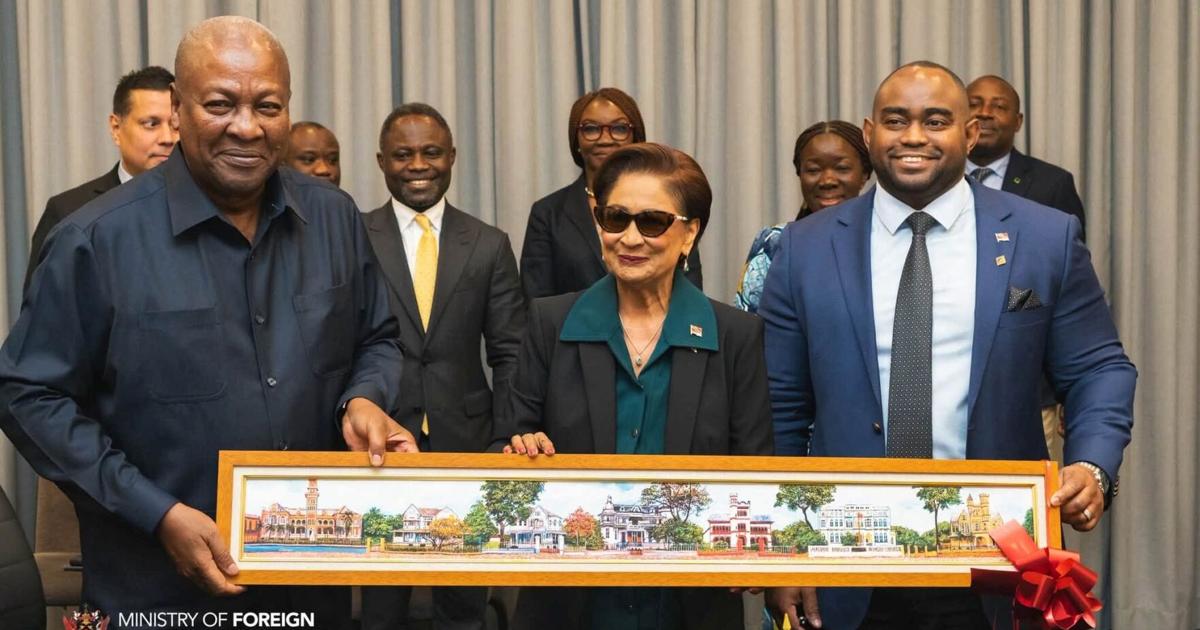
    On a historic visit to a small island off the coast of Trinidad that holds deep meaning for the nation’s Indo-Trinidadian community, Prime Minister Kamla Persad-Bissessar has formally unveiled plans to rename Nelson Island, a landmark forever tied to the arrival of more than 140,000 Indian indentured labourers between 1845 and 1917. The announcement, made alongside India’s Minister of External Affairs Dr Subrahmanyam Jaishankar, frames the renaming as a long-overdue act of historical reclamation that centers the stories of the people who gave the site its enduring cultural significance, rather than the colonial figures for which it was originally named.

    Persad-Bissessar emphasized that the island is far more than a geographic landmark: for descendants of indentured labourers, it is the sacred first touchpoint of their ancestors’ journey across the Kala Pani, the dark waters of the Atlantic that separated workers from their home country. The Prime Minister’s own family history is intertwined with this legacy; her maternal great-grandmother, 16-year-old Sumaria Seepersad, arrived at the island from Madras in the 1880s speaking only Bhojpuri, and went on to toil on south Trinidad’s sugarcane estates after being widowed young. “I do not believe Sumaria could ever have imagined that one day, upon the very shores where she first arrived, her great-granddaughter Kamla would stand as Prime Minister of Trinidad and Tobago,” Persad-Bissessar told the gathered crowd.

    In her remarks, the Prime Minister drew a clear line between the injustices of indentureship and the transatlantic slave trade that preceded it, calling the system a deliberate form of human trafficking designed to prop up the British colonial economy after emancipation. “Indentureship was a form of human trafficking, bearing many of the same labour controls, abuse and humiliation of the transatlantic slave trade that preceded it,” she said. Workers endured a grueling three-month voyage, often signed contracts they could not understand, and faced harsh, exploitative conditions on sugar plantations across the country. Despite this, Persad-Bissessar celebrated the resilience of the labourers, who built community and persevered through hardship out of hope for a better future for their descendants.

    Addressing the once-pejorative term “coolie” used to describe indentured labourers, a label that is still sometimes used against people of Indian descent today, Persad-Bissessar rejected any shame associated with the term. “I feel no shame at that. We were coolies, and I said the other day, it took a little coolie girl from a place down in Siparia to become the Prime Minister of Trinidad and Tobago,” she said, drawing loud applause from attendees including government ministers and members of the Indian delegation.

    To guide the renaming process, Persad-Bissessar announced that a cross-institutional committee led by Natasha Barrow, Permanent Secretary in the Office of the Prime Minister, in partnership with the National Trust of Trinidad and Tobago, will oversee the project. A public-facing website will also be launched to collect name suggestions from communities across the country, making the renaming a collective, public-led process.

    Following the announcement, Persad-Bissessar and Jaishankar unveiled a commemorative plaque on the island to mark the occasion. The visit was the first of three official engagements for the day, which also included the launch of a new agro-processing facility at Brechin Castle and a national prosthetics center in Penal.

    Persad-Bissessar framed the renaming as part of a broader global movement of post-colonial self-definition, pointing to India’s renaming of colonial-era cities such as Bombay to Mumbai, Madras to Chennai, and Calcutta to Kolkata as a precedent. “Such changes reflect historical reclamation, cultural dignity, and national self-definition by a free people,” she noted. She added that Trinidad and Tobago has a long history of renaming colonial sites after independence, from renaming King George V Park to Nelson Mandela Park to rebranding streets after national cultural icons including Janelle “Penny” Commissiong, Black Stalin, and Lord Kitchener.

    While the island’s legacy is most closely tied to Indian indentured labour, Persad-Bissessar also acknowledged its layered history: under British colonial rule, enslaved Africans were forced to build military fortifications on the site, and the name “Nelson Island” itself is derived from Thomas Neilsen, a British doctor who took ownership of the land after it was originally called Stephenson’s Island. The island also holds other important chapters of national history: in the 1930s, Jewish refugees fleeing Nazi Germany were detained on the island, and prominent 20th century labour leaders Tubal Uriah “Buzz” Butler and George Weekes were once imprisoned there. Still, Persad-Bissessar argued, the island’s core identity is shaped by the tens of thousands of indentured labourers who first stepped onto its shores on their journey to building new lives in the Caribbean, and that identity deserves to be permanently enshrined in its name.

  • Man offers ‘compensation’ to suppress HDC contracts story

    Man offers ‘compensation’ to suppress HDC contracts story

    An ongoing investigation into alleged bid-rigging and contract collusion within Trinidad and Tobago’s suspended $3.4 billion national housing program has taken an unexpected turn, after an intermediary claiming to represent a senior Housing Development Corporation (HDC) official under scrutiny offered a cash compensation bribe to the *Sunday Express* in exchange for scrapping the investigative story.

    The meeting took place last Thursday on Ariapita Avenue in Woodbrook, with the intermediary — a well-connected figure with deep ties to local political circles — laying out a clear quid pro quo for the newsroom’s investigative team. If the outlet agreed to kill the story about the alleged collusion, the journalist behind the investigation would receive financial compensation, plus access to a cache of internal documents detailing claims of mismanagement that occurred at HDC during the previous People’s National Movement (PNM) administration.

    “Bringing this kind of negative light on the HDC at this time is not what they want,” the 6-foot-tall intermediary told *Sunday Express* reporters. When pressed for clarification on the offer, he repeated the terms: dropping all coverage of the collusion allegations would result in the payout, plus additional documented scoops on other HDC controversies.

    The *Sunday Express* immediately rejected the bribe offer, noting that the contract awarding process under investigation is a matter of significant public interest, given the multi-billion-dollar scale of the housing program and the public funds allocated to it.

    The attempt at hush money came after the newspaper had spent the preceding week reaching out to the implicated HDC official and the two private contractors awarded the contested contracts, in response to formal complaints of collusion filed by whistleblowers. The intermediary first contacted the newsroom on Wednesday morning, the day before the in-person meeting, claiming the official was open to negotiating a discussion about the contract controversy. Since the bribe offer was made, the story has moved forward with new developments from the contractors involved.

    Within 24 hours of the meeting, Chaguanas-based attorney Denelle S Singh submitted a pre-action protocol letter to the *Sunday Express* on behalf of one contractor and his firm. The letter denied all collusion allegations and threatened immediate legal action if the contractor’s name is published in any upcoming coverage.

    The second contractor, who secured one of the multi-million-dollar HDC contracts under investigation, initially spoke briefly with the *Sunday Express* last Tuesday, before submitting a detailed formal response via WhatsApp late Friday evening. In his statement, the contractor emphasized that his company is barred from disclosing confidential client arrangements, commercial terms, or project-specific details unless required by law or explicitly authorized by involved parties.

    He firmly denied that his company has ever engaged in collusion with any HDC official related to housing projects in Freeport or any other location across the country, adding that all of the firm’s construction work has always been carried out in strict compliance with legal contractual and commercial standards. When asked directly about any personal or improper business relationship between his firm and the implicated HDC official, the contractor brushed the question aside, noting that like all construction firms operating in the country, his company interacts with dozens of industry stakeholders and public officials as part of routine commercial activity.

    “[Company name] has provided construction, renovation, and related contracting services for numerous commercial entities over time,” he said in response to questions about whether the firm had ever done work for businesses owned by the HDC official. “As a matter of company policy, we generally do not publicly disclose confidential client relationships, commercial arrangements, or project-specific details unless legally required to do so or authorised by the relevant parties. Any services provided by the company, where applicable, would have constituted legitimate commercial construction services performed at arm’s length and in the ordinary course of business.”

    The contractor “firmly and unequivocally” rejected all allegations, suggestions, or implications of collusion, noting that the company maintains a strict zero-tolerance policy toward bribery, corruption, and all forms of unethical business conduct. When asked about his relationship with the other contractor awarded a contested multi-million-dollar HDC contract, he repeated his policy of not disclosing confidential commercial arrangements, adding that the company has always acted properly, professionally, and in full compliance with the law throughout the entire contracting process for the HDC project.

    “We complied with the applicable procurement, tendering, and submission requirements as communicated by the relevant authorities,” he said. “We remain confident that our experience, technical capability, operational capacity, and performance record qualified us to participate in and be considered for such opportunities.”

    The $3.4 billion national housing program at the center of the allegations has already been suspended by authorities, and the bribery attempt has intensified questions about transparency and accountability in public infrastructure contracting across Trinidad and Tobago. The *Sunday Express* has confirmed it will continue its investigation into the collusion allegations, despite the bribe attempt and pending legal threat.

  • HDC official under scrutiny for collusion

    HDC official under scrutiny for collusion

    A corruption and conflict of interest scandal has thrown Trinidad and Tobago’s massive $3.4 billion public housing programme into limbo, after a whistleblower complaint prompted regulators to order an immediate halt to newly awarded contracts. The case centers on a senior official at the country’s Housing Development Corporation (HDC), who is alleged to have long-standing personal and private business ties to two of the 11 contractors that secured shares of the multi-billion public works package.

    Shortly after the HDC announced the list of winning contractors for the public-private partnership programme in early April, the Office of Procurement Regulation (OPR) received multiple formal and informal complaints. Acting on these submissions — which included a formal complaint filed on behalf of activist Wendell Eversley by attorney Randall Mitchell — the regulator ordered the state-owned housing agency to suspend all programme activities pending a full, independent review of the entire bidding and award process.

    Multiple independent sources with direct knowledge of the award process and the ongoing investigation have confirmed to local outlet the Sunday Express that the ties between the HDC official and the two contractors date back roughly a decade. The first contractor, a prominent local businessman who owns a popular chain of retail stores, previously purchased an entire chain of businesses from the HDC official. While the businessman’s company currently holds contracts with another state entity, multiple sources confirmed it has never led a large-scale residential construction project before this award.

    Records indicate the second contractor also shares a long personal and professional history with the HDC official. Around 10 years ago, the two partnered on a private housing development in Trinidad’s Freeport area, and the HDC official previously hired the second contractor to complete renovation and repair work on multiple commercial properties across the country. The second contractor also has well-documented business ties to the first contractor, and has assisted in constructing several of the first contractor’s commercial buildings over the years. Sources familiar with the investigation confirm these overlapping relationships will be a core focus of the OPR’s review.

    Public concerns about the integrity of the procurement process were first raised by opposition People’s National Movement (PNM) officials, including Member of Parliament Camille Robinson-Regis and former prime minister Stuart Young. Young publicly questioned the qualifications of multiple winning firms, noting that many of the awarded companies have little to no prior experience delivering large-scale housing construction projects. A check of the Ministry of Land and Legal Affairs’ Companies Registry Online System confirmed all winning companies have been legally registered in the country for multiple years, though that verification does not address their industry experience.

    When contacted for comment last Friday, HDC chairman Feeroz Khan declined to speak on the record about the allegations. “Given that the matters relating to the procurement process in question are currently engaging the attention of the Office of the Procurement Regulation, Senior Counsel has advised that the matter is sub judice, and hence it would be improper to comment on same,” Khan said.

  • Faith and heartbreak on Mother’s Day

    Faith and heartbreak on Mother’s Day

    For Sharon Vasquez-Rochard, this Mother’s Day brings no quiet celebration—only a heavy heart, as she waits by the hospital bed of her 28-year-old son Christon Battersby, a Caribbean Airlines first officer who has remained on life support for nearly 14 months after a catastrophic diving accident. What began as a casual day out with friends in March 2025 turned into an ongoing battle for survival that has tested her family’s resilience, faith, and financial stability, prompting an urgent public appeal for support to access life-changing specialized care abroad.

    The fateful accident unfolded on March 15, 2025, at Tobago’s popular Pigeon Point Heritage Park. Battersby, a resident of Maracas Valley, St. Joseph, was socializing with friends near the jetty when he dove into shallow water and struck his head against an unseen submerged object. He was pulled unconscious from the water immediately by on-duty lifeguards, who began cardiopulmonary resuscitation (CPR) right away. Two visiting tourists—Sarah Persson from Sweden and Anna Hospedales from Canada—stepped in to assist with ongoing resuscitation efforts, a moment captured in a widely circulated video that spread across local social media. By the time emergency responders arrived, Battersby had already suffered a broken neck, cardiac arrest, and near-drowning; his heart had stopped beating, he had no pulse, and he was not breathing. Yet the quick action of bystanders saved him long enough to reach care, and he was first transported to Scarborough General Hospital before being transferred to the Intensive Care Unit (ICU) at Port of Spain General Hospital, where he has remained ever since, dependent on a mechanical ventilator to breathe.

    In the 14 months that have followed the accident, Vasquez-Rochard says the entire experience has been an unrelenting ordeal that has strained her family in every possible way. “Watching my son fight for his life after such a devastating diving accident in Tobago has been the most painful experience we have ever faced,” she shared in an interview with the *Sunday Express* ahead of this year’s Mother’s Day. Despite the overwhelming severity of his injuries and the emotional drain of more than a year in the ICU, Battersby has never stopped fighting. Vasquez-Rochard says he has already shown small but meaningful signs of progress that keep the family’s hope alive. He can eat normally, shrug his shoulders, and make small voluntary movements of his neck. He remains fully mentally alert, with unimpaired brain function, and is deeply engaged in his own recovery process. “He is fully mentally alert and aware, and very knowledgeable about what is happening to him. He is like a doctor right now,” his mother said.

    Still, his condition remains extremely complex. Prolonged immobility has led to persistent nerve pain, frequent muscle spasms, and progressive muscle atrophy. The advanced, integrated neurological and physical rehabilitation he needs to make meaningful recovery is not available in any single local medical facility. Two specialized international centers—one in Panama and one in Colombia—have evaluated Battersby’s case and confirmed they can provide the comprehensive care he requires, including intensive physical therapy, respiratory rehabilitation, neurological therapy, and mobility training tailored specifically for high cervical spinal cord injuries. When factoring in treatment costs, travel, accommodation, medical equipment, and ongoing rehabilitation, the total price tag comes to more than US$400,000 (equivalent to roughly TT $2.72 million), a sum far beyond what Battersby’s family can cover on their own. Insurance coverage has not materialized as the family expected, forcing them to turn to public fundraising. Vasquez-Rochard launched a GoFundMe campaign, alongside a dedicated bank account for direct donations, to raise the required funds in time to begin treatment as soon as possible. “I believe timely, specialised care at an international institution can maximise his chances of recovery, independence and quality of life,” she said.

    For the family, every small improvement is a milestone worth celebrating. Battersby has already been able to speak briefly through a tracheostomy valve, shown improvements in sensory function, and demonstrated consistent small neurological responses to stimulation. “These are small steps, but they give us hope,” Vasquez-Rochard said. “Every small improvement is a victory for us and a reminder that progress is still possible. With God’s grace and mercy, anything is possible through faith.”

    This Mother’s Day marks 14 months since the accident, and Vasquez-Rochard acknowledged the emotional weight of the moment, noting that the crisis has impacted her family emotionally, physically, spiritually, and financially. Still, she says faith has been the family’s anchor through the most uncertain moments. “There were many moments of fear and uncertainty, especially in the early months. But we have had to remain strong for Christon and continue encouraging him every single day,” she said. “We say to each other daily, ‘I love you,’ and we trust God completely.”

    The family has extended heartfelt gratitude to the many groups and individuals who have supported them since the accident. They thanked the medical staff at Port of Spain General Hospital for their consistent care, Christon’s colleagues at Caribbean Airlines, the Trinidad and Tobago Airline Pilots Association (TTALPA), their local church community, and prayer groups across Trinidad and Tobago. They also reaffirmed their thanks to the tourists and bystanders who saved Battersby’s life on the day of the accident, whom Vasquez-Rochard has long called “angels.” “Angel Sarah, angel Anna, and the other angels who came and rescued, revived, and gave back life to my son—I want to say thank you from the bottom of my heart,” she said.

    Just before the accident, Battersby had gained social media attention for sharing a video documenting his journey to become a commercial pilot at a young age, a dream he still holds onto today. Now, his family is asking the public to stand with them to give him a second chance to achieve that dream. Members of the public can contribute to Battersby’s recovery fund via the family’s GoFundMe campaign or through direct deposits to Republic Bank savings account 3500 2188 9031.

  • ‘Crime is bigger  than race and colour’

    ‘Crime is bigger than race and colour’

    A public debate over race, crime and systemic inequality has erupted in Trinidad and Tobago after Homeland Security Minister Roger Alexander made targeted comments calling on young Black men to reject a life of criminality. The remarks came in the immediate aftermath of a fatal police shooting of four Black men suspected of carrying out a string of home invasions, putting the long-simmering conversation over how to address crime and racial stereotyping back into the national spotlight.

    In his public address, Alexander urged young Black men to abandon criminal activity, framing collective action within the community as a path to national and familial pride. “To the young black men, life does not revolve around crime and criminality. We must not be seen as a threat to humanity. We can do better than that,” Alexander said, adding that young people should choose to build stable foundations rather than become part of troubling crime statistics.

    But community and academic leaders across the country have pushed back on the minister’s framing, arguing that the conversation about crime must extend far beyond racial targeting to address the underlying systemic and social conditions that drive violent offending.

    Reverend Kwame Clarke was among the first to respond, acknowledging that Alexander had every right to speak publicly on rising crime but emphasizing that the problem is far more complex than surface-level discussions about race allow. “I think that as a minister, it is within his purview to comment on the impact of crime on both the community and in the lives of those involved in criminal activity,” Clarke noted. However, he argued that concentrated economic disadvantage and failing social systems are the true catalysts for criminal behavior, noting that “the issue is more tied to economics and socialisation. It is a fact that communities which are considered oppressed by dysfunctional family structures, little to no income in the home, or insufficient social support infrastructure are the farm houses for gang culture and criminalisation.”

    Clarke added that solving the national crime crisis requires a collective “whole village approach” that brings together all segments of society to contribute resources and solutions to the multifaceted problem, rather than focusing on a single demographic.

    David Muhammed, founder and director of the Black Agenda Project, shared that while he understands the minister’s concern over rising violent crime, he worries that narrowly targeting Black youth reinforces harmful, unfounded stereotypes that paint an entire community as inherently dangerous. He compared the framing to unfair generalizations made against other ethnic groups, such as stereotypical assumptions linking Syrians to drug trafficking or Indo-Trinidadian men to domestic abuse.

    Muhammed also pointed out that the outsized focus on street crime committed by poor Black people often overshadows the far greater economic damage caused by white-collar crime, which is predominantly committed by non-Black Trinidadian citizens. “The impact of white-collar crime by non-Africans still has much more of a consequential effect on our economy than all the crimes committed by poor black people all put together,” he said. He further criticized the repeated politicization of Black youth, noting that politicians from all parties regularly deploy these comments to score cheap political points, with little sincerity behind the calls for change.

    Criminologist Kerron King added his expertise to the debate, arguing that crime statistics should be used to investigate root causes, not to stigmatize an entire group of people. He noted that while Black men are overrepresented as both perpetrators and victims of violent crime in national statistics, the vast majority of young Black men in Trinidad and Tobago never engage in criminal activity. “The vast majority of young black men in our nation are not involved in crime, and whilst it’s true that they are over-represented in violent crime statistics as both perpetrators and victims of violent crime, we must use this statistic to ask why,” King said.

    King outlined multiple well-documented social risk factors that push youth toward crime: poor academic performance, low civic engagement, association with criminally involved peers or family members, and a lack of consistent adult supervision during adolescence. To address these gaps, he called for a sweeping overhaul of the national education system, from primary to secondary school, with a core policy goal of ensuring every child completes secondary education. “We must adopt a policy that no child, boy or girl, must be left behind. Every child will graduate, every child will cross the stage. This should be our mantra. It’s such a low-hanging fruit with such great returns. We’re not too far gone—we just need to be smart on crime and not tough on crime,” King said.

    Rhondall Feeles, president of the Single Fathers Association of Trinidad and Tobago, echoed the critique of the minister’s broad comments, noting that the speech overgeneralized a problem that is specific to gang-related crime, not all Black communities. Feeles pointed out that every ethnic group in Trinidad and Tobago is stereotypically linked to specific types of crime: gang-related murder is most often associated with Afro-Trinidadian communities, while domestic murder is more prevalent in Indo-Trinidadian communities, and drug and arms trafficking stereotypes are frequently attached to Syrian and Hispanic communities.

    Crucially, Feeles emphasized that no ethnicity is inherently predisposed to crime, arguing that environmental factors are the primary shaper of criminal behavior. “Someone is not born criminal. If you are in a location where gang affiliation is prominent and strong, and you don’t have the right mentorship and the right person to harness that young mind in a positive way, then you will end up with someone with gang affiliation,” Feeles said. He extended this logic to all types of crime, noting that exposure to domestic abuse cultivates domestic abusers, and growing up around corrupt unethical parents often produces people who engage in white-collar crime.

    Feeles also raised a critical underdiscussed point: the street-level gang members that are the focus of public attention are rarely the ones behind the large-scale importation of illegal weapons and narcotics that fuel gang violence. He argued that focusing solely on Black street gang members ignores the larger transnational criminal networks that supply the weapons driving the violence, many of which are led by people of other ethnicities.

    To truly eradicate crime, Feeles said, the country must focus on preventing the development of criminal minds by transforming vulnerable communities through a collaborative two-pronged approach that pairs state institutions with local non-governmental organizations. This strategy would center on empowering marginalized communities with critical skills: financial literacy, small business development, digital literacy, emotional and psychosocial support, and trade training, giving residents viable alternatives to criminal activity and reducing the systemic conditions that drive offending.