标签: Trinidad and Tobago

特立尼达和多巴哥

  • Family welcomes conviction

    Family welcomes conviction

    Sixteen months after a brutal double homicide claimed the life of an abused woman and her 14-month-old daughter, the perpetrator has been convicted and sentenced to death, bringing a measure of closure to the victim’s family — while also shining a harsh light on systemic failures that allowed the fatal violence to occur.

    On Monday, Justice Nalini Singh delivered a guilty verdict on two counts of murder against 31-year-old Rishi Motilal, who killed his estranged partner Tara “Geeta” Ramsaroop and their young child Shermaya Motilal. Motilal was sentenced to death following the conviction.

    The tragedy unfolded on October 8, 2024, inside Motilal’s Barrackpore residence on Rig Road, during a confrontation that escalated from a verbal dispute to fatal violence. Prosecutors laid out the gruesome sequence of the attack: Motilal first struck Ramsaroop with an iron pipe, then grabbed a cutlass, repeatedly chopping the 31-year-old woman before slitting her throat. He turned the same weapon on their toddler daughter to complete the killing. After the attack, he fled the scene in a blue station wagon owned by a relative of Ramsaroop’s new partner.

    In interviews with local media outlet *Express* following the verdict, Ramsaroop’s sister Jassodra Rajaram broke down in tears as she described the family’s overwhelming mix of relief, grief, and gratitude for the judicial outcome.

    “I am very grateful and thankful to the judge. If I could just meet her, I would hug her and say, ‘thanks very much for justice for my sister’,” Rajaram said. “This is a moment of long-awaited justice for my sister and niece. For 16 months, we have waited for this outcome, and many families go years or even decades without ever seeing justice for their loved ones. Our whole family is content that we got this result.”

    Yet for all the family’s satisfaction with the verdict, Rajaram stressed that the trauma of the brutal murders will never fade. “This will never heal; it has been 16 months and I feel it has been only yesterday. When we were getting the verdict, I feel my heart was pounding out of my chest. Everything came back fresh. The sentencing cannot bring them back and we have to learn to adjust to live. We cannot heal from this,” she said.

    Most critically, Rajaram drew attention to the repeated failures by local police to intervene, even as Ramsaroop endured ongoing abuse at Motilal’s hands. She said multiple reports of domestic violence that she and her sister filed with law enforcement were ignored, with officers dismissing the conflict as a routine marital disagreement that the couple would resolve on their own.

    “To the police, think of the women in these reports as if they were your family members — your sister, mother or someone close to you. Say, ‘let me get myself involved and help in this situation’,” Rajaram urged. “Not everyone wants to make up and reconcile. Some women want to leave and never go back.”

    Rajaram recalled that after Ramsaroop eventually left Motilal to build a new life for herself and her child, he stalked her and escalated his threats before carrying out the fatal attack at his home. “She went through torture with him,” Rajaram said. “My sister wanted to work, achieve, and accomplish. She endured enough. She came out of it and was happy to build her house, sit on her step, and be at peace—not knowing that was when her life was going to end.”

    Drawing on her family’s devastating loss, Rajaram used the moment of the verdict to issue a urgent message to other women trapped in abusive relationships: prioritize your own safety and escape whenever possible.

    “Get out of it. I know it is hard. I used to go through it with my sister. Some men feel they own women, and act as if they are property. These men have to realise that women have feelings and ambitions,” she said. “Acknowledging how hard it is to leave, I still stress that getting out can save your life.”

  • ‘Nurses alone on wards’

    ‘Nurses alone on wards’

    A escalating standoff between nursing leadership and regional health authorities in Trinidad and Tobago has plunged the country’s public healthcare system into crisis, with patient safety now hanging in the balance following the rollout of targeted industrial action by the nation’s nursing body. On April 28, the Trinidad and Tobago National Nursing Association (TTNNA) launched the second phase of its campaign to push for long-overdue wage adjustments, advising all 1,800+ of its nursing and midwifery members to adhere strictly to an evidence-based one-nurse-to-six-patient ratio — a standard aligned with global best practices for safe care. Nurses across the public sector have remained frozen on 2013 salary scales, making their pay among the lowest in all of Trinidad and Tobago’s public service, prompting the industrial action to force government negotiators back to the table.

    According to TTNNA president Idi Stuart, the North Central Regional Health Authority (NCRHA) — already the most understaffed regional health body in the country, operating with less than half of the required nursing and midwifery personnel — has responded to the action with aggressive retaliation. Stuart claims NCRHA management has systematically forced single nurses and midwives to cover entire hospital wards, creating potentially life-threatening conditions for patients. The authority has long relied on undercompensated “pool” nurses, who work extra shifts for a flat rate rather than overtime pay, to fill crippling staffing gaps. When nurses pushed back to uphold the new ratio mandate, management responded by cutting staffing rather than adjusting allocation.

    Stuart highlighted specific dangerous understaffing cases across NCRHA-managed facilities. At Caura Hospital, a facility dedicated primarily to treating communicable diseases, one single nurse was left responsible for two full wards. At Mt Hope Women’s Hospital, one of the nation’s largest dedicated maternity care centers, just three registered midwives were assigned to cover six separate wards spanning antenatal care, postnatal care, labor and delivery, and the emergency department. The overstretched team was forced to rely on unlicensed pupil midwife students to meet basic care needs, putting expectant mothers, unborn fetuses, and newborn infants at direct risk. On understaffed wards that should normally carry three registered nurses, Stuart said facilities are now operating with just one or none at all.

    The staffing crunch has already disrupted care across multiple regions. On the first day of phase two action, the Barataria Health Centre under the North West Regional Health Authority (NWRHA) was forced to turn away patients entirely after no nurses reported for scheduled duty, requiring emergency staff reallocation from other facilities to restore operations. When journalists from the Express visited the center days later, on-site staff confirmed Tuesday’s disruption but declined further comment, noting operations had returned to normal by Wednesday. Additional complaints of service disruptions have poured in from nurses across eastern and southwestern Trinidad, according to the TTNNA.

    Despite the disruption to everyday care, the nursing body has reported overwhelming public support for its campaign. A recent poll conducted by local broadcaster CCN TV6 found that more than 75% of respondents back the nurses’ demands for wage adjustment and safe staffing ratios. Interviews with patients and visitors at the Eric Williams Medical Sciences Complex reflected this solidarity: most respondents agreed that nurses deserve a long-overdue pay raise, and many noted that safer staffing would ultimately improve care outcomes for all patients. One patient from Arima, Sandra James, who has three nurses in her immediate family, noted that even new graduate nurses face years of unemployment before securing public sector posts, arguing that sustained pressure will force authorities to hire more staff. Another respondent, Thomas, pointed out the injustice of politicians approving their own salary increases while denying nurses a long-promised raise.

    Stuart confirmed that the phase two action will remain in place indefinitely, framing the one-nurse-to-six-patient ratio not as a temporary protest tactic but as a permanent best practice that the TTNNA will continue to uphold until government officials address the wage dispute and formalize the standard across all regional health authorities. As of press time, repeated attempts to contact chief executives and board chairs for both the NCRHA and NWRHA for comment on the allegations have gone unanswered.

  • ‘Express’ wins appeal over police search

    ‘Express’ wins appeal over police search

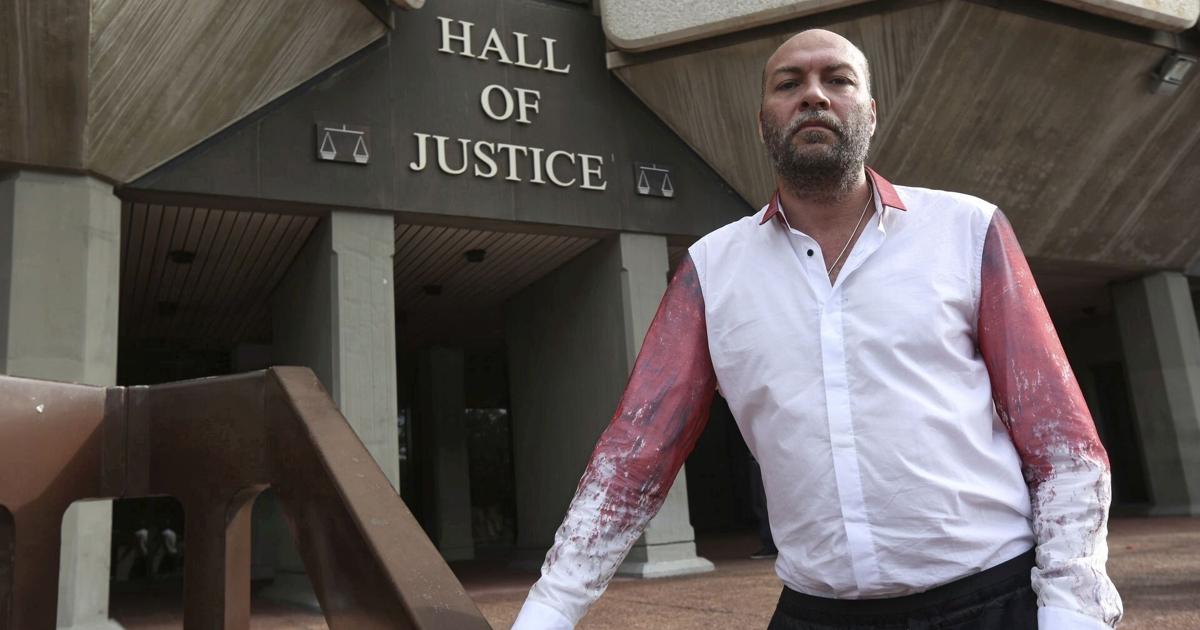
    A landmark ruling from Trinidad and Tobago’s Court of Appeal has cemented critical protections for press freedom in the country, after the judiciary sided with Trinidad Express Newspapers Ltd in an appeal brought by state law enforcement and a senior police superintendent.

    The legal battle traces back to a 2020 investigative report published by the Express, written by veteran journalist Denyse Renne, which exposed questionable financial transactions linked to a high-ranking police official. In the wake of the publication, police launched a probe into alleged “tipping off” violations, led by Superintendent Wendell Lucas, and secured judicial search warrants to enter the newspaper’s Port of Spain headquarters. The stated goal of the operation was to unmask Renne’s confidential source.

    On March 11, 2020, law enforcement executed the second of the two approved warrants, entering the Express’ headquarters, Express House, and seizing four digital flash drives from the office of then-editor-in-chief Omatie Lyder. The media entities involved—parent company One Caribbean Media Ltd, the Express itself, and Lyder—immediately challenged the constitutionality of the warrants. They argued that the search violated fundamental rights enshrined in Trinidad and Tobago’s constitution, specifically the guarantee of press freedom outlined in Section 4(k).

    The case was first heard at the High Court, which ruled in favor of the media group and struck down both warrants as unconstitutional. Undeterred, the Office of the Attorney General and police appealed that ruling, asking the higher court to overturn the lower court’s decision.

    In the judgment delivered Wednesday, a majority of the three-justice panel upheld the core of the High Court’s ruling that the executed search violated constitutional press freedom protections. Justices of Appeal Nolan Bereaux and Peter Rajkumar formed the majority, while Justice James Aboud issued a separate dissenting opinion, marking a clear split among the judiciary on the balance between police investigative powers and press rights.

    Writing the lead majority judgment, Justice Bereaux reaffirmed that the second search warrant was unlawful on two key grounds: first, police failed to submit sufficient evidence to justify granting the warrant, and second, the Justice of the Peace who approved the warrant did not conduct the required balancing of competing public interests. “The justice of the peace could neither be satisfied that there was probable cause for the search nor that the search struck the right balance,” Bereaux explained.

    The justice emphasized that when law enforcement seeks to search a media organization—especially for the purpose of identifying a confidential journalistic source—extraordinary care must be taken to balance the public interest in solving crime against the foundational role of a free press in democratic governance. “The sanctity of the confidentiality of journalistic sources is an essential element of the right to freedom of the press,” he added.

    The court also highlighted two additional flaws in the warrant: its overly broad scope, which allowed police to search nearly all of the newspaper’s electronic data without any restrictions or safeguards to protect unrelated confidential material, and the absence of any evidence that police had exhausted alternative, less intrusive investigation methods before targeting the newsroom.

    While the majority departed from the High Court on one narrow point—finding the first, never-executed warrant did not itself violate constitutional rights—it upheld the ruling that the second executed warrant and the seizure of the flash drives were unconstitutional. In a departure from the lower court’s order that damages be assessed at a later hearing, the appellate panel awarded the media respondents a fixed compensation sum of TT$25,000, framing the award as a deliberate step to vindicate the fundamental right to press freedom.

    In his concurring opinion, Justice Rajkumar echoed the majority’s concerns, agreeing that the warrants were impermissibly broad and failed to properly account for their harmful impact on journalistic work, including the risk of creating a chilling effect that would discourage sources from coming forward with information of public interest.

    In his dissenting opinion, Justice Aboud took an alternative position on the legal and constitutional questions raised by the case, underscoring the court’s internal division over how much latitude police should have to intrude on media operations in the course of criminal investigations.

    Legal teams for both sides were led by senior bar members: Sophia Chote SC, Peter Carter, and Samantha Ramsaran represented One Caribbean Media, the Express, and Lyder, while Senior Counsel Fyard Hosein, Rishi Dass, and Kadine Matthews argued the case for the state.

  • Marabella tenants win appeal in $3m flooding damage case

    Marabella tenants win appeal in $3m flooding damage case

    In a landmark split decision that reshapes landlord-tenant liability rules across Trinidad, the Court of Appeal has handed down a pivotal ruling that reverses a prior High Court judgment, opening the door for two affected commercial tenants to secure millions in compensation for property damage caused by an unforeseen plumbing failure.

    The legal dispute traces back to a 2018 flooding event at Marabella’s Allum’s Shopping Centre. A PVC angle valve connected to an upper-level unit’s kitchen sink, leased by local firm O.T.I. Trinidad Ltd, unexpectedly failed. The resulting leak seeped downward into five ground-floor commercial suites, two of which are operated by Western Industrial Solutions Ltd and entrepreneur Debera Rampersad, who runs the retail outlet Debera Fashion Step Up and Save. The damaged inventory and forced business interruptions pushed the two affected tenants to claim more than TT$3 million in total losses.

    When the case first went to trial, High Court Justice Avason Quinlan-Williams dismissed the claims against the property owner, J.T. Allum and Company Ltd. The trial judge ruled that commercial landlords cannot be held responsible for sudden plumbing failures that occur within spaces exclusively controlled and occupied by their tenants, clearing the company of any legal obligation to compensate the businesses for their losses.

    But the appellate court, a three-judge panel led by Chief Justice Ronnie Boodoosingh alongside Justices of Appeal Nolan Bereaux and James Aboud, rejected this lower-court interpretation of property law. In a 2-1 majority decision delivered Wednesday, the panel found that even though the landlord was not found to be negligent in causing the pipe failure, it still bears legal responsibility for the resulting damage under the law of private nuisance.

    Writing the lead judgment for the majority, Justice Bereaux — whose reasoning was backed by Chief Justice Boodoosingh — explained that the critical factor establishing liability is the landlord’s reserved right under all commercial leases for the property to enter tenant-occupied spaces to conduct inspections and complete necessary repairs. This retained right, the justice argued, is sufficient to uphold a nuisance claim against the property owner. He further noted that the landlord had previously argued in separate legal proceedings against the upper-floor tenant that the site’s plumbing was already in a state of disrepair, meaning the company cannot now claim the hidden defect was unidentifiable through reasonable inspection.

    Justice Bereaux also clarified a longstanding point of nuisance law: when a landlord explicitly retains the right to conduct repairs on a property, they can be held liable for damage caused to third parties even if they had no direct, actual knowledge of the hazardous defect before the incident occurred.

    Justice Aboud issued a dissent, arguing the appeal should have been thrown out. He characterized the pipe failure as an isolated, entirely unforeseeable event: the 10-year-old pipe joint had failed suddenly with no warning signs, and this does not meet the legal standard for a private nuisance. He also cautioned that the majority’s legal reasoning could impose an unfair and unreasonable burden on commercial landlords across the country, forcing them to conduct exhaustive searches for hidden defects in spaces fully occupied and controlled by their tenants.

    On the separate claim of negligence brought by the tenants, the appellate court was unanimous. The full panel agreed to dismiss the negligence claim, as no evidence presented during the trial linked the landlord’s actions or inactions to the pipe failure itself. The court also upheld the trial judge’s ruling to exclude proposed testimony from former landlord employee Vedesh Gopaul, finding his statements about the original plumbing installation were not relevant to the core legal questions in the case.

    The matter will now return to the High Court, where a Master will assess and determine the final amount of damages to be awarded to the two successful appellants. The appellate court also left in place an earlier unrelated order requiring Rampersad to settle all outstanding back rent owed to the property owner, which has no connection to the 2018 flooding incident. Attorneys Chanka Persadsingh and Anand Rampersad represented the two affected tenants, while Shankar Bidaisee, instructed by Rachael Jaggernauth, appeared on behalf of the landlord.

  • Kamla warned about fallout over Trump

    Kamla warned about fallout over Trump

    Against the backdrop of shifting global political tides, a leading international relations scholar has sounded a urgent alarm over the strategic choices shaping Trinidad and Tobago’s foreign policy. Dr. Andy Knight, speaking at the weekly Movement for Social Justice (MSJ) Tuesday Talk forum hosted by MSJ leader David Abdulah, argued that the current close alignment of Prime Minister Kamla Persad-Bissessar’s administration with U.S. President Donald Trump carries significant long-term risks that the small Caribbean nation cannot afford to ignore.

    At the core of Knight’s warning is the unpredictable nature of American political cycles, which stand in sharp contrast to the stable long-term relationships small states depend on for their security and economic prosperity. “Right now, we see one or two Caricom nations tying their fate to a sitting U.S. president, but leaders in these capitals need to remember that no presidential term lasts forever,” Knight explained. He noted that even before the next presidential election, midterm congressional shifts could easily turn the sitting president into a lame duck, drastically limiting their ability to deliver on any informal or formal commitments made to Caribbean allies.

    For a country like Trinidad and Tobago, which relies heavily on consistent, mutually respectful diplomatic ties to sustain its trade and security, this overalignment could leave the nation exposed when the inevitable leadership change occurs in Washington. “When you hitch your entire wagon to a single president, you set yourself up for long-term harm,” Knight emphasized. “If a new administration takes power in the next U.S. election, your close ties to the previous president could leave you on the wrong side of Washington, with few paths to repair the damage. That’s an existential threat for a small state that can’t afford to burn diplomatic bridges.”

    Knight also pointed out growing unease across the Caribbean Community (Caricom) over Trinidad and Tobago’s close adoption of U.S. security priorities, noting that regional rifts have already begun to emerge. One high-profile example he cited was Venezuela’s decision to suspend energy cooperation with Trinidad and Tobago shortly after a U.S. warship was deployed to the region, a move that illustrates how quickly alignment with a major power can trigger damaging diplomatic and economic tension with neighboring states.

    This reality, Knight argued, underscores the need for Trinidad and Tobago to prioritize both major power relations and regional integration. The nation maintains extensive trade and people-to-people ties across the Caribbean, and a breakdown of those relationships would carry severe economic and political consequences. “The smarter long-term play is to align your national interests with your Caribbean neighbors,” he said. “If regional partners grow frustrated with your choices and scale back cooperation, Trinidad and Tobago will find itself in an extremely difficult position.”

    Adding another layer of risk is Trump’s well-documented unpredictability, Knight argued. Even in the short term, there is no guarantee that the current favorable alignment will hold: “We have no certainty that this president will maintain his support for Trinidad and Tobago, given how fickle he has proven to be. He can reverse course on past allies in an instant, which would leave the nation isolated almost overnight.”

    Instead of tying the nation’s future to Washington, Knight argued that all Caribbean states should pursue a more balanced, independent foreign policy that preserves regional autonomy and unity. “We shoot ourselves in the foot when we tie our entire future to one individual or one single administration,” he said. “The entire region needs to think strategically about how to protect its sovereignty, strengthen regional cohesion, and avoid being left vulnerable when the inevitable shifts in global politics occur.”

  • Uncertainty over Venezuela

    Uncertainty over Venezuela

    In a sharp rebuke of Trinidad and Tobago’s ruling United National Congress (UNC) administration, People’s National Movement (PNM) political leader Pennelope Beckles has raised alarms over the rapidly deteriorating diplomatic relationship between the twin-island nation and neighboring Venezuela, arguing that the fractured bilateral ties are directly undermining the country’s ability to lock in critical energy contracts that underpin its economy.

    Speaking at a “State of the Economy” political gathering hosted at Port of Spain’s City Hall Monday night, Beckles emphasized that strained cross-border relations have severely eroded Trinidad and Tobago’s negotiating leverage at a moment when the energy sector remains the backbone of the country’s public revenue, export earnings, and overall economic stability. She told attendees that growing uncertainty around official engagement with Caracas has slowed progress on high-priority cross-border energy initiatives, most notably the long-planned Dragon gas project.

    Beckles called out the current government for inconsistent public messaging around the status of the Dragon gas development, criticizing its clumsy handling of international diplomacy. She noted that nearly 12 months have passed since Prime Minister Kamla Persad-Bissessar announced the securing of a new Office of Foreign Assets Control (OFAC) license and the revival of the Dragon gas deal, yet administration officials have still not been able to conduct official visits to Venezuela to advance the project. She contrasted this inaction with progress under the previous PNM administration, recalling that former energy minister Stuart Young made repeated trips to Caracas to lay the critical groundwork for the agreement.

    “They say the Dragon gas deal is dead, they repeat it over and over, but imagine they are so bold-faced and have no shame. All of a sudden the same deal they said was dead they supposedly revived,” Beckles said, accusing the current administration of taking credit for diplomatic and technical progress achieved by the previous government while simultaneously dismissing those past efforts.

    She also reiterated criticism of Persad-Bissessar’s past confrontational approach to Venezuela, noting that the prime minister’s aggressive, undiplomatic attacks on the Venezuelan government led to her being declared persona non grata. “Be careful how you bad talk people,” Beckles warned.

    Turning to the broader health of Trinidad and Tobago’s economy, Beckles underscored the outsized role the energy sector plays in sustaining national livelihoods, breaking down its contribution to key economic metrics: it accounts for one-third of total government revenue, one-fifth of overall gross domestic product, and roughly 80 percent of the country’s total export earnings. “Without the benefits of the energy sector we would not enjoy the lifestyle we have come to take for granted,” she said.

    Beckles stressed that Trinidad and Tobago’s entire economic model is built around natural gas, with upstream extraction feeding a robust downstream industrial sector that includes some of the largest petrochemical facilities in the Caribbean and Latin America. This industrial estate model, she noted, relies entirely on stable, long-term access to natural gas supplies.

    Against this backdrop, she explained, declining production from maturing domestic gas fields has put growing pressure on the sector, making strategic cross-border partnerships and binding international energy agreements more important than ever. Production volumes have dropped sharply from historic highs, she said, while proven domestic reserves continue to decline, creating an urgent need to develop new supply sources like the Dragon field off Venezuela’s coast.

    Beckles also criticized what she described as repeated attempts by the ruling administration to misrepresent the true state of the energy sector, arguing that political messaging often disregards hard technical realities around declining production and shrinking reserves. She closed by noting that previous negotiations under the PNM administration had strengthened Trinidad and Tobago’s standing in the global energy market, securing more favorable pricing structures and expanded participation in liquefied natural gas operations that benefit the entire nation.

  • ‘HEAT’ OVER WATER

    ‘HEAT’ OVER WATER

    A simmering public grievance boiled over into direct action in the quiet coastal village of Castara, Tobago, on Wednesday, when angry residents ignited debris, blocked key local roads, and demanded urgent intervention to resolve a debilitating month-long disruption to their piped water supply. For weeks, the community has endured inconsistent or completely absent water access, forcing households to ration stored reserves and rely on unregulated alternative sources to carry out even the most basic daily tasks, from cooking to cleaning.

    Renrick Jackson, a long-time Castara resident and one of the organizers of the demonstration, told reporters that the community’s patience had run out after repeated unaddressed complaints to local water officials. “We are exhausted and fed up with this ongoing neglect,” Jackson said during the protest. “We took to the streets today to make our voices heard, and if this issue is not resolved as quickly as possible, this will not be the last you see of us. The disruption has upended every part of our lives – families are being forced to reallocate water set aside for farm and livestock just to drink and cook, simply because there is no other option.”

    Residents specifically point to unaddressed leaks along the local transmission line and inconsistent, unfair distribution as the core of the crisis. Omari Solomon, another hillside resident, explained that geographic inequity has exacerbated the problem for households located at higher elevations. “Water does make it to some parts of the village, but it all goes to low-lying, flat areas,” Solomon said. “The problem is simple: WASA technicians are supposed to adjust the valve and pressure line to get water up the hill, but they never show up when they say they will. Most of us up here have gone weeks without consistent running water.” Jackson added that WASA crews have been observed driving past the known leaks daily for weeks without stopping to make repairs, leaving residents feeling completely ignored.

    Shortly after the protest began, local and national officials acknowledged the crisis and outlined steps to resolve the issue. Minister of Public Utilities Barry Padarath confirmed that the community’s demands had been escalated to his office, noting that cross-island logistical delays had held up critical repair work for weeks. “We have been struggling to transport heavy required equipment from Trinidad to Tobago to fix the faults that are straining the local distribution line,” Padarath explained. “But we have now secured assistance from the Tobago House of Assembly to source local heavy equipment while we wait for our mobilization from Trinidad to be completed.”

    To provide immediate relief to affected residents, especially those on elevated terrain where low pressure has cut off access entirely, Padarath added that additional emergency water trucking routes have been arranged, with service expected to be fully operational by the end of the protest day. Public Utilities Secretary Ricky Joefield also traveled to Castara on Wednesday to meet with residents and oversee the ongoing relief and repair efforts.

    In an official public statement released Wednesday, the Water and Sewerage Authority (WASA) confirmed it had launched an urgent response to the community’s concerns, noting that multiple leaks along the transmission line connecting the Bloody Bay Water Treatment Plant to Castara and surrounding areas had left high-elevation customers without consistent service for more than a month. The authority announced it had already deployed two water trucks to serve affected communities across Northside Tobago, including Castara and neighboring Parlatuvier, while repair teams worked to seal active leaks across the network.

    WASA officials explained that while a major pressure-reducing leak was successfully repaired on Saturday, unforeseen electrical and mechanical failures at Bloody Bay Well #1 on Monday extended the service disruption. Full restoration of the water system was projected to be completed by 2 a.m. Thursday. The authority also implemented a temporary scheduled water distribution program for high-elevation areas to ensure fair access while final repairs are completed: high points in the Castara Housing Scheme will receive water from 6 p.m. to 6 a.m. Sunday through Wednesday and on Saturdays, while high points in Parlatuvier will receive daily scheduled distribution limited by overall system capacity.

    WASA has also deployed dedicated customer response and communications teams to the area to provide residents with real-time updates and address individual concerns. “We fully understand the deep inconvenience and frustration this extended outage has caused our customers, especially those in elevated areas, and we share the community’s sense of urgency,” the statement read. “We can assure all residents that every available resource is being deployed to stabilize the distribution network and restore a reliable, consistent water supply as quickly as possible.” Residents seeking additional information or emergency trucked water deliveries are encouraged to contact WASA’s 24/7 call center, operating three dedicated lines for the affected region.

  • Man to hang for killing wife, infant

    Man to hang for killing wife, infant

    In a landmark judge-alone trial held this week, a 31-year-old Barrackpore resident has been handed the ultimate capital punishment for the brutal 2024 murders of his separated common-law wife and their 14-month-old child. Rishi Motilal, who also goes by the street alias “Cook Meat”, was found guilty on two separate counts of premeditated murder by Justice Nalini Singh on Monday, who formally sentenced him to death by hanging.

    The guilty verdict follows the prosecution’s thorough presentation of evidence connecting Motilal to the fatal October 8, 2024 attack that claimed the lives of 31-year-old Tara “Geeta” Ramsaroop and the couple’s young daughter, Shermaya Motilal. Court proceedings laid out a grim timeline of the violence, which erupted inside Motilal’s Rig Road residence after a routine argument between the estranged couple escalated to lethal force. Per the case presented by the State, Motilal first assaulted Ramsaroop with an iron pipe before retrieving a cutlass, which he used to repeatedly slash his victim before cutting her throat. After killing Ramsaroop, he turned the weapon on their defenceless toddler to end her life as well.

    Following the attack, Motilal fled the scene in a blue station wagon owned by a relative of Ramsaroop’s new romantic partner. Investigators later located the vehicle torched and abandoned in a dense, bushy terrain off Rochard Road in Penal, a finding that Motilal did not contest. He also entered a guilty plea for the charge of malicious property damage related to the arson, for which he was sentenced to time already served behind bars leading up to the trial.

    A core pillar of the prosecution’s case rested on first-hand testimony of Motilal’s own confessions delivered immediately after the killings. Both his mother, Farisha Mohammed, and sister-in-law, Gayatri Motilal, told the court they received phone calls from a distraught Motilal, who openly admitted to carrying out the double homicide. An independent civilian witness corroborated this account, confirming that Motilal had made a similar admission to them as well.

    In an effort to reduce the charges against his client, Motilal’s defence team mounted a provocation defence, arguing that the killings were not premeditated. Motilal testified that Ramsaroop’s comment that he would never be allowed to see their children again pushed him over the edge, saying he fell into a “dark hole” and could not clearly remember the sequence of events that followed. His legal team urged Justice Singh to reduce the charges from murder to manslaughter on these grounds.

    Justice Singh ultimately rejected the defence’s argument, pointing to multiple pieces of evidence that proved Motilal acted with clear, deliberate intent to kill. She noted that the sequence of events—from Motilal choosing to arm himself with two separate weapons to the brutal nature of the injuries inflicted—demonstrated premeditation rather than a sudden, uncontrollable outburst of rage. She further highlighted Motilal’s own statement to police, in which he explained he killed the infant to prevent her from “suffering” without her mother, as additional confirmation that he made a calculated choice rather than acting out of uncontrolled passion. The judge emphasized that the deliberate manner of the child’s killing left no room for any finding other than intentional murder.

    The prosecution team was led by barristers Dylan Martin, Josiah Soo Hon and Khi Cambridge, while Motilal was represented throughout the trial by defence attorneys Stephen Wilson and Ayanna Norville-Modeste.

  • Crime Scene Investigator falls victim to criminal

    Crime Scene Investigator falls victim to criminal

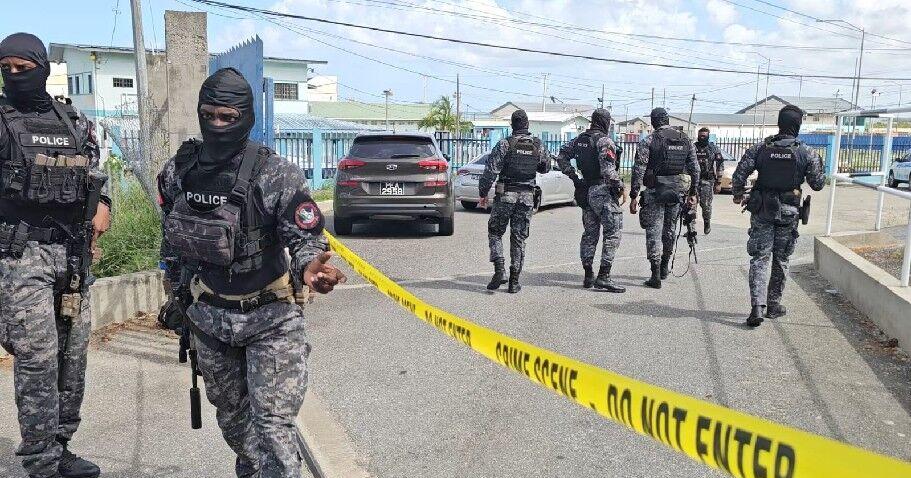
    In a brazen early-morning assault that has sent shockwaves through local law enforcement circles, a 50-year-old Crime Scene Investigator assigned to Trinidad and Tobago’s Northern Division was violently attacked and robbed of his brand-new SUV in Tunapuna on Tuesday.

    The incident unfolded just after 3:30 a.m., as the veteran officer cruised along Auzonville Road in his privately owned Kia Sonet, a vehicle valued at roughly TT $220,000. When he reduced his speed near the Roslyn Hall community area, an unidentified assailant who had been hiding in plain sight behind a parked maxi-taxi launched his surprise attack.

    Wearing a plain grey hoodie to obscure his facial features, the suspect lunged toward the driver’s side window the moment the officer slowed. He immediately locked the investigator in a chokehold, raining repeated blows to the man’s head before forcibly dragging him out of the idling vehicle onto the asphalt. A physical struggle unfolded along the quiet roadway, but the outnumbered officer—off-duty at the time of the attack—was eventually overwhelmed by the attacker.

    Leaving the injured investigator lying on the ground, the suspect jumped into the SUV, reversed quickly down Auzonville Road, and fled the area before backup could arrive. First responding officers, called to the scene shortly after the attack, provided immediate first aid to the victim, who was left with non-life-threatening head injuries from the assault. After receiving initial on-site medical attention, the officer was transported back to his home to recover.

    Police confirmed that along with the vehicle, the suspect made off with the officer’s wallet, which was left inside the Kia. The wallet held critical personal items including the investigator’s national identification card, driver’s license, and a bank card, putting the officer at risk of identity theft following the attack.

    Local law enforcement has launched a full manhunt for the suspect, reviewing nearby CCTV footage and canvassing the surrounding neighborhood for any witnesses who may have seen the attacker or the stolen vehicle in the hours after the incident. Investigators are also working to trace the Kia Sonet’s movement as they pursue leads to make an arrest and recover the stolen vehicle.

  • Police: Bank card used after disappearance

    Police: Bank card used after disappearance

    For decades, Bernard Mahabir, 71, and Kenneth Gill, 67, shared a close bond as friends who regularly gathered socially. What began as an ordinary day of casual meeting would end in a senseless tragedy that has left their small community reeling in shock.

    Investigative details from local law enforcement outline the sequence of events that led to their deaths. On Sunday morning around 11 a.m., Gill left his residence in Cazabon Gardens, Trincity, and picked up his lifelong friend Mahabir from his home in Pasea, Tunapuna. The pair first drove to a Lopinot community center, where Gill parked his white Nissan Tiida, before Gill’s son transported them to a social gathering in La Pastora, Lopinot. By 5 p.m., the two men were dropped back at the community center, and from there they walked to a nearby neighborhood bar for an additional hour of casual time together.

    Investigators now believe that this stop at the bar would ultimately seal their fates. After observing Gill making payments with his bank card during their time at the bar, attackers targeted the pair, seeing two older retirees as vulnerable, easy targets for a violent robbery. The two men were last seen alive by relatives at approximately 6 p.m., when they drove out of the Lopinot area in Gill’s car.

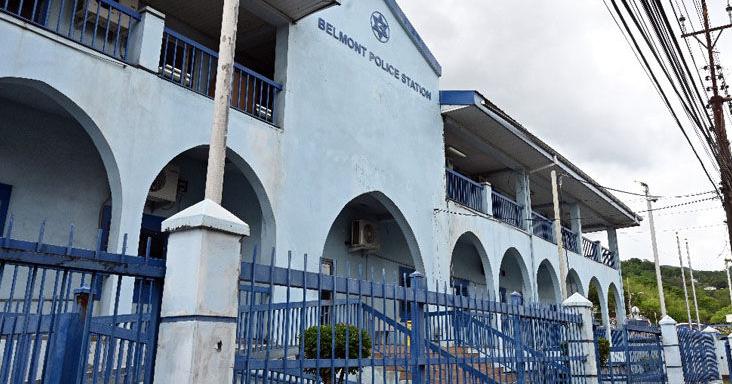
    By 9:40 a.m. the following Monday, concerned wives of both men had filed official missing person reports at the Arouca Police Station. Law enforcement immediately launched an investigation and called in the volunteer Hunters Search and Rescue Team, led by Shamshudeen Ayube, to assist in the search. Before their remains were located, Gill’s stolen bank card was used by the attackers to make multiple unauthorized withdrawals: $3,000 was pulled from ATMs in Sangre Grande in two separate transactions, and an additional $1,500 was withdrawn from an ATM in Arima.

    Roughly five and a half hours after the missing reports were filed, at 3:15 p.m. Monday, police received a tip that led them to Tapana Road, a side route off Valencia Old Road in Valencia. There, they discovered the charred remains of Gill’s Nissan Tiida, with the burnt bodies of the two friends locked inside the vehicle’s trunk. The following morning, the remains were transported to the Forensic Science Centre in Federation Park, where family members formally identified the victims.

    The tight-knit community where the men lived has remembered the pair as beloved, upstanding members. One neighbor of Gill told local reporters that Gill was an exceptionally kind neighbor who had lived in the Trincity neighborhood with his family for 30 years. Relatives of Mahabir shared that the two men had grown up together on the same street in Pasea, Tunapuna, and their decades-long friendship was so close that each man’s children considered the other a surrogate uncle. Mahabir, a retired married father of two, had left his position with the Tunapuna Piarco Regional Corporation roughly a decade prior; outside of his public service, he was known as a skilled tailor and an enthusiastic beekeeper.

    As of Monday night, this double murder brings the national homicide toll for the current year to 117. For comparison, the homicide count on the same date last year was 126, marking a modest year-over-year decrease in total killings despite this high-profile violent crime.