Sixteen months after a brutal double homicide claimed the life of an abused woman and her 14-month-old daughter, the perpetrator has been convicted and sentenced to death, bringing a measure of closure to the victim’s family — while also shining a harsh light on systemic failures that allowed the fatal violence to occur.
On Monday, Justice Nalini Singh delivered a guilty verdict on two counts of murder against 31-year-old Rishi Motilal, who killed his estranged partner Tara “Geeta” Ramsaroop and their young child Shermaya Motilal. Motilal was sentenced to death following the conviction.
The tragedy unfolded on October 8, 2024, inside Motilal’s Barrackpore residence on Rig Road, during a confrontation that escalated from a verbal dispute to fatal violence. Prosecutors laid out the gruesome sequence of the attack: Motilal first struck Ramsaroop with an iron pipe, then grabbed a cutlass, repeatedly chopping the 31-year-old woman before slitting her throat. He turned the same weapon on their toddler daughter to complete the killing. After the attack, he fled the scene in a blue station wagon owned by a relative of Ramsaroop’s new partner.
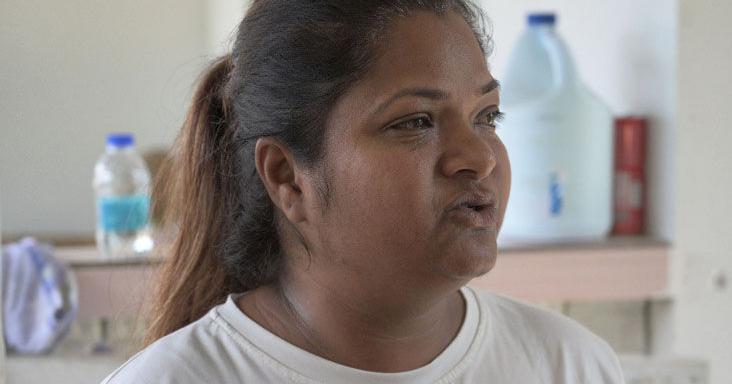
In interviews with local media outlet *Express* following the verdict, Ramsaroop’s sister Jassodra Rajaram broke down in tears as she described the family’s overwhelming mix of relief, grief, and gratitude for the judicial outcome.
“I am very grateful and thankful to the judge. If I could just meet her, I would hug her and say, ‘thanks very much for justice for my sister’,” Rajaram said. “This is a moment of long-awaited justice for my sister and niece. For 16 months, we have waited for this outcome, and many families go years or even decades without ever seeing justice for their loved ones. Our whole family is content that we got this result.”
Yet for all the family’s satisfaction with the verdict, Rajaram stressed that the trauma of the brutal murders will never fade. “This will never heal; it has been 16 months and I feel it has been only yesterday. When we were getting the verdict, I feel my heart was pounding out of my chest. Everything came back fresh. The sentencing cannot bring them back and we have to learn to adjust to live. We cannot heal from this,” she said.
Most critically, Rajaram drew attention to the repeated failures by local police to intervene, even as Ramsaroop endured ongoing abuse at Motilal’s hands. She said multiple reports of domestic violence that she and her sister filed with law enforcement were ignored, with officers dismissing the conflict as a routine marital disagreement that the couple would resolve on their own.
“To the police, think of the women in these reports as if they were your family members — your sister, mother or someone close to you. Say, ‘let me get myself involved and help in this situation’,” Rajaram urged. “Not everyone wants to make up and reconcile. Some women want to leave and never go back.”
Rajaram recalled that after Ramsaroop eventually left Motilal to build a new life for herself and her child, he stalked her and escalated his threats before carrying out the fatal attack at his home. “She went through torture with him,” Rajaram said. “My sister wanted to work, achieve, and accomplish. She endured enough. She came out of it and was happy to build her house, sit on her step, and be at peace—not knowing that was when her life was going to end.”
Drawing on her family’s devastating loss, Rajaram used the moment of the verdict to issue a urgent message to other women trapped in abusive relationships: prioritize your own safety and escape whenever possible.
“Get out of it. I know it is hard. I used to go through it with my sister. Some men feel they own women, and act as if they are property. These men have to realise that women have feelings and ambitions,” she said. “Acknowledging how hard it is to leave, I still stress that getting out can save your life.”