A landmark ruling from Trinidad and Tobago’s Court of Appeal has cemented critical protections for press freedom in the country, after the judiciary sided with Trinidad Express Newspapers Ltd in an appeal brought by state law enforcement and a senior police superintendent.
The legal battle traces back to a 2020 investigative report published by the Express, written by veteran journalist Denyse Renne, which exposed questionable financial transactions linked to a high-ranking police official. In the wake of the publication, police launched a probe into alleged “tipping off” violations, led by Superintendent Wendell Lucas, and secured judicial search warrants to enter the newspaper’s Port of Spain headquarters. The stated goal of the operation was to unmask Renne’s confidential source.
On March 11, 2020, law enforcement executed the second of the two approved warrants, entering the Express’ headquarters, Express House, and seizing four digital flash drives from the office of then-editor-in-chief Omatie Lyder. The media entities involved—parent company One Caribbean Media Ltd, the Express itself, and Lyder—immediately challenged the constitutionality of the warrants. They argued that the search violated fundamental rights enshrined in Trinidad and Tobago’s constitution, specifically the guarantee of press freedom outlined in Section 4(k).
The case was first heard at the High Court, which ruled in favor of the media group and struck down both warrants as unconstitutional. Undeterred, the Office of the Attorney General and police appealed that ruling, asking the higher court to overturn the lower court’s decision.
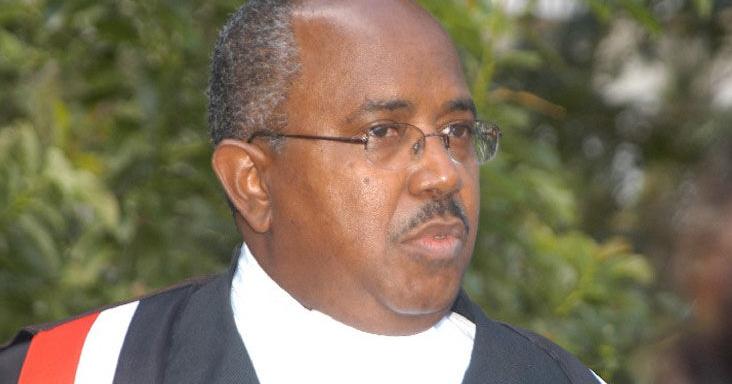
In the judgment delivered Wednesday, a majority of the three-justice panel upheld the core of the High Court’s ruling that the executed search violated constitutional press freedom protections. Justices of Appeal Nolan Bereaux and Peter Rajkumar formed the majority, while Justice James Aboud issued a separate dissenting opinion, marking a clear split among the judiciary on the balance between police investigative powers and press rights.
Writing the lead majority judgment, Justice Bereaux reaffirmed that the second search warrant was unlawful on two key grounds: first, police failed to submit sufficient evidence to justify granting the warrant, and second, the Justice of the Peace who approved the warrant did not conduct the required balancing of competing public interests. “The justice of the peace could neither be satisfied that there was probable cause for the search nor that the search struck the right balance,” Bereaux explained.
The justice emphasized that when law enforcement seeks to search a media organization—especially for the purpose of identifying a confidential journalistic source—extraordinary care must be taken to balance the public interest in solving crime against the foundational role of a free press in democratic governance. “The sanctity of the confidentiality of journalistic sources is an essential element of the right to freedom of the press,” he added.
The court also highlighted two additional flaws in the warrant: its overly broad scope, which allowed police to search nearly all of the newspaper’s electronic data without any restrictions or safeguards to protect unrelated confidential material, and the absence of any evidence that police had exhausted alternative, less intrusive investigation methods before targeting the newsroom.
While the majority departed from the High Court on one narrow point—finding the first, never-executed warrant did not itself violate constitutional rights—it upheld the ruling that the second executed warrant and the seizure of the flash drives were unconstitutional. In a departure from the lower court’s order that damages be assessed at a later hearing, the appellate panel awarded the media respondents a fixed compensation sum of TT$25,000, framing the award as a deliberate step to vindicate the fundamental right to press freedom.
In his concurring opinion, Justice Rajkumar echoed the majority’s concerns, agreeing that the warrants were impermissibly broad and failed to properly account for their harmful impact on journalistic work, including the risk of creating a chilling effect that would discourage sources from coming forward with information of public interest.
In his dissenting opinion, Justice Aboud took an alternative position on the legal and constitutional questions raised by the case, underscoring the court’s internal division over how much latitude police should have to intrude on media operations in the course of criminal investigations.
Legal teams for both sides were led by senior bar members: Sophia Chote SC, Peter Carter, and Samantha Ramsaran represented One Caribbean Media, the Express, and Lyder, while Senior Counsel Fyard Hosein, Rishi Dass, and Kadine Matthews argued the case for the state.