标签: Trinidad and Tobago

特立尼达和多巴哥

  • Wrongly suspected for plot against PM

    Wrongly suspected for plot against PM

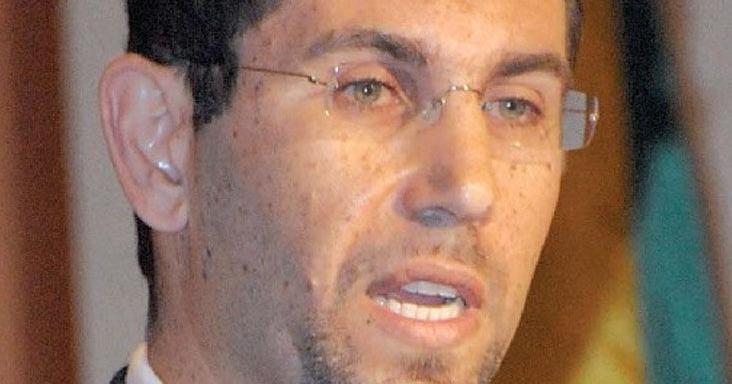
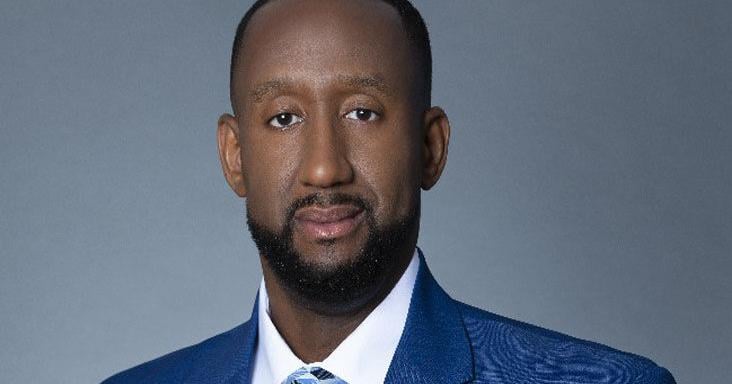
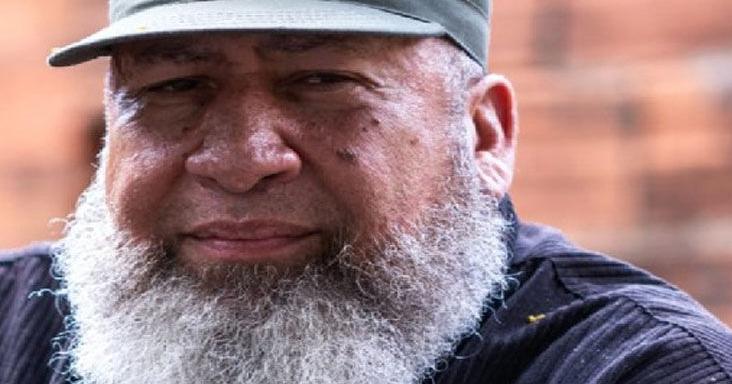
    Fifteen years after he was taken into custody amid unproven claims of a conspiracy to assassinate Trinidad and Tobago’s then-prime minister Kamla Persad-Bissessar and multiple senior cabinet members, David “Buffy” Milliard is opening up about the lasting harm of the 2011 ordeal that never led to a single criminal charge against him. Speaking in an exclusive interview with the Sunday Express at the outlet’s Port of Spain headquarters on a recent day, Milliard detailed the irreversible damage to his personal reputation and professional livelihood—while still voicing unexpected understanding for the actions state security officials took at the time.

    The 2011 incident unfolded at the peak of a nationwide state of emergency declared by Persad-Bissessar’s administration to curb rampant gang violence. In a shock address that grabbed national headlines, the prime minister announced a retaliatory assassination plot against her and three cabinet ministers, allegedly orchestrated by criminal networks targeted in the government’s anti-gang crackdown. Milliard was among 16 men—15 of whom were Muslim—picked up under a Preventive Detention Order, a sweeping security measure that allowed authorities to hold individuals without immediate charge. To this day, Milliard maintains his complete innocence, and no legal action was ever taken against him or any of the other 15 detainees in connection to the alleged plot.

    Milliard recalled the moment of his arrest vividly: he was socializing at a barbecue stand on Port of Spain’s Independence Square shortly before midnight when dozens of police officers surrounded the area. “I looked up and said, ‘Chief, you have about 30 police officers here, so I guess I’ll come in quietly,’” he shared. Officers searched his van before moving him through three different police stations, and it was only at the final stop that a senior commander laid out the extraordinary accusation against him: “We have detained you because we believe you may be involved in an assassination plot to assassinate the prime minister and four sitting ministers.”

    Milliard said he was left stunned by the claim. “I said, ‘Please say it again.’ He said it again. I said, ‘Say it one more time. I’m hoping on the third time it will disappear,’” he recalled. The following morning, he was interrogated by roughly 15 agents from multiple national intelligence and security agencies. He voluntarily surrendered his cellphones and other electronic devices for inspection, inviting investigators to produce any evidence tying him to the conspiracy. In the end, no such evidence—digital or otherwise—was ever presented to him.

    Even without evidence to support the accusation, Milliard rejects the idea that security officials acted out of malice or a deliberate intent to frame the detainees. “The police are not crazy men,” he argued. “If somebody, anybody, said to them somebody is planning to kill the prime minister of our country and four ministers, would you not establish a net and start investigating? Of course, you would.” He pushed back against claims of a coordinated frame-up, noting that if authorities had wanted to falsely convict the group, they easily could have filed criminal charges that public opinion would have accepted. “If they wanted to set us up, we would have been charged,” he said. “Instead, none of the detainees were charged in connection with the alleged assassination plot.”

    While Milliard escaped formal prosecution, the harm from his detention was immediate and lasting. “Perception is reality to he or she who perceives,” he explained. “Once you are detained for something like that, your business disappears.” Longtime clients cut ties, others demanded hours of explanation before agreeing to continue working with him, and even strangers approached him in public with baseless accusations. He recalled one encounter at a local supermarket where a customer directly asked why he wanted to kill Persad-Bissessar. After a 20-minute conversation clarifying his innocence, the man apologized—a moment that reinforced Milliard’s belief that honest dialogue can correct harmful public misperception.

    Unlike many other detainees who were encouraged by legal counsel to pursue multi-million dollar compensation lawsuits against the state, Milliard has deliberately refused to take legal action for damages. He argues that any government compensation would ultimately draw from public tax revenue paid by ordinary working citizens. “The government has no money of their own. The government has money that is derived from taxation,” he explained. “Why would I take $15 million from the people who live around me because somebody heard something and took the necessary steps to prevent it? Who pays taxes? Ordinary citizens. My neighbours, whether they are 1%ers or they are 99%ers like me. Sufferers. You pay taxes. And when that money goes into the treasury, people perceive it to be Government funds, but it’s not. The lineage of that money is the pocket of a hardworking man.”

    Milliard also praised the respectful and professional treatment he received from police and prison staff throughout his detention. He noted that correctional officers accommodated religious needs, providing halal meals for Muslim detainees and allowing regular prayer, and there was never any attempt to intimidate the held men. When detainees were released on December 5, 2011, shortly after midnight, then-prisons commissioner Martin Martinez personally arranged for each man to contact their families for a ride home, refusing to leave them stranded on the side of the highway late at night. “He said, ‘I cannot in good conscience let you go to stand on the highway at 12 o’clock at night.’ Who does that?” Milliard said.

    Drawing a parallel to a recent high-profile detention case, Milliard expressed sympathy for businessman Dominic Hadeed, his wife Genevieve Hadeed, and their relative Star Sabga, who were recently taken into custody in an ongoing investigation. He urged the public to let law enforcement complete their work without rushing to judgment. “I feel sorry for Mr Hadeed. It’s a very hard experience for himself and his wife, but in actuality, if there’s any truth whatsoever, any reason for the national security apparatus to operate, they have no choice,” he said. When asked for advice for Hadeed, Milliard simply said, “May the truth come out.” Reflecting on his own case, he noted that while the current Trinidadian government is led by the same party that ordered his 2011 detention, “they could have sank me” — a comment that underscores the lasting vulnerability of his reputation after the uncharged detention.
  • MY HEART STILL HURTS

    MY HEART STILL HURTS

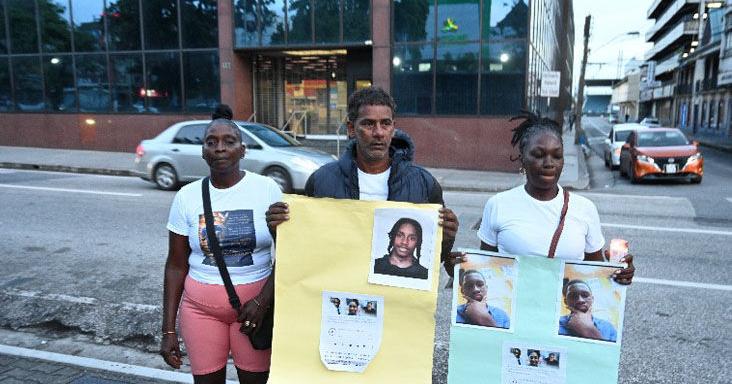
    For Nicole Richards, a matriarch from Beetham Gardens, four years have passed without the justice she has grieved and fought for. On a recent evening, she gathered roughly 20 supporters near the Republic Bank at the intersection of Chacon Street and Independence Square, where her 21-year-old son Fabien Richards was killed by Trinidad and Tobago police on July 2, 2022. Attendees lit white candles in memory of Fabien and his two companions, 24-year-old Isaiah Roberts and 17-year-old Leonardo Williams, who also lost their lives in the shooting.

    The tragedy unfolded in the early hours of that July Saturday, when Western Division police officers responded to a report of stolen motor vehicle and attempted to stop a white Toyota Aqua carrying six young people in Port of Spain. A high-speed chase ensued, ending when the vehicle crashed into an exterior wall of the Republic Bank on Independence Square. According to official police accounts, officers from the Guard and Emergency Branch who had joined the pursuit claimed they came under gunfire from people inside the vehicle, and returned fire at the car. Three of the occupants — Fabien, Roberts, and Williams — were killed instantly. A fourth teen was rushed to Port of Spain General Hospital for treatment of injuries, while the remaining two passengers were detained unhurt. Investigators later said they recovered a Smith & Wesson pistol from the crashed vehicle. The three detained passengers were eventually released pending further inquiry, and lead investigator Senior Superintendent Neil Brandon-John recorded statements from all three before his passing, which left the investigation stalled.

    For the Richards family, the pain of their loss remains as raw as the day they received the news of the shooting. In an interview with the *Sunday Express*, Nicole Richards, a mother of four, shared that the investigation went cold immediately after Brandon-John died, and authorities have not provided any updates to the family in the years since. “It’s painful because we are not getting the justice we want,” she said. “We will not stop until we get justice for all three boys. I want justice for my son Fabien.”

    Fabien never got the chance to hold or meet his own daughter, Soria John, who is now three years old. That unfulfilled future haunts Nicole every day. “His baby is three. A little sweetheart. She knows her daddy died, that he’s in heaven,” Nicole said. “When I look at her, I keep pleading for justice.”

    This is not the first devastating loss Nicole has endured: her son Garth Richards was killed after being hit by a bus in 2014. She says she draws her strength to keep fighting from her two daughters, Nicola and Isoma, and her faith in God. Remembering Fabien, she painted a picture of a playful, loving young man who would sneak up behind her, cling to her calf, and pretend to be a dog chasing her to make her laugh. He loved corned beef served over rice or pasta, and enjoyed making YouTube videos in his free time.

    Fabien had been on his way home with his friends from a farewell party held in Diego Martin when the shooting happened, Nicole explained. Today, he would have turned 25. Refuting the police’s claim that the young men were armed, Nicole described her son’s death as an execution: he was shot ten times in the head. “The children were on their way home. Fabien was talking to his cousin on the way home,” she said. “We want justice. They need to get rid of the corrupt ones who hold high office. It’s not right. It can’t be right in the eyes of God and man.”

    Amid a rising tide of violent crime and police-involved deaths across the country, Nicole is calling for sweeping leadership changes. She is demanding the immediate resignation of Director of Public Prosecutions Roger Gaspard, as well as Homeland Security Minister Roger Alexander and Defence Minister Wayne Sturge. “A state of emergency is not stopping crime,” she said. “I don’t dabble in politics. But it’s almost every day you are hearing an innocent person died. When I hear somebody died at the hands of the police, I wonder who is next.”

    Nicole Richards, Fabien’s older sister, echoed her mother’s call for justice, saying she has mourned her younger brother like he was her own son. Fabien lived with Nicola at her El Socorro home from primary school onward, growing up alongside her son Nicholai. “My heart still hurts. The pain is still fresh,” she told the *Sunday Express*. “Every day you hear horror stories: people being killed, children murdered, teenagers missing. You see his scenario being replayed in your head over and over. It’s not easy.”

    She cherishes the memory of her last birthday with Fabien, in November 2021, when the family held a lively games night. The two of them were the final pair left standing in a game of musical chairs, sharing a moment of joy that she still holds close. Today, the family shares their love with Fabien’s daughter Soria, who spends every weekend with them and is described by Nicola as “a darling.”

    “Only God can give justice because he sees and knows everything,” Nicola said. “He would have seen what unfolded in the car. He would have heard their cries.”

    The vigil drew solidarity from other families who have also lost loved ones to police-involved violence and been left without answers. Among the attendees was Alyssa Phillip, who has organized multiple protests demanding clarity for her friend Kaia Sealy. Sealy is currently facing charges connected to the January police shooting death of her husband Joshua Samaroo, and Phillip and the Richards family say their shared grief has forged a bond of mutual support in the fight for accountability.

  • Central Bank plans tighter oversight

    Central Bank plans tighter oversight

    A high-profile seizure of $2 million in U.S. currency at Trinidad and Tobago’s Piarco International Airport has spurred the Central Bank of Trinidad and Tobago (CBTT) to announce sweeping planned reforms to the country’s foreign exchange regulatory framework, addressing long-standing public concerns over oversight amid persistent domestic U.S. dollar shortages.

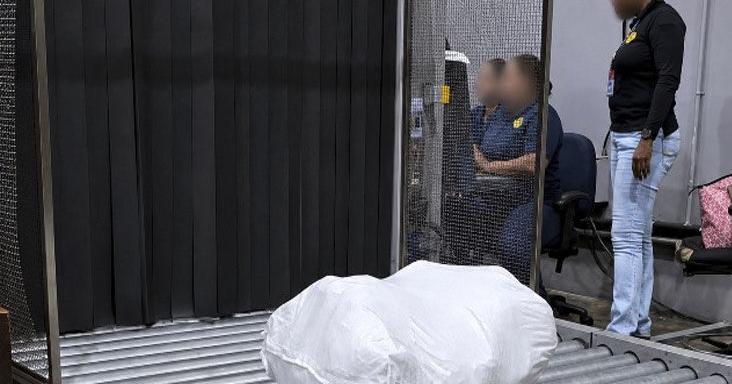
    The incident, first exclusively reported by the *Express* on Friday, unfolded on June 25, when Customs and Excise officials intercepted the cash shipment bound for Miami via Jamaica. Stowed in a white crocus bag, the funds were seized after authorities raised questions about accompanying documentation. The currency was later transferred to CBTT custody as investigations proceed, with U.S. law enforcement already brought on to assist with the probe.

    NCB Merchant Bank (Trinidad and Tobago) Ltd. has since publicly confirmed it is the owner of the seized funds, saying the shipment was part of standard daily business operations. In an email response to *Express* inquiries, CEO Marli A. Creese emphasized the bank had followed all applicable legal and regulatory protocols for cross-border cash transport. “All usual and required protocols were adhered to,” Creese stated, adding that the institution has fully complied with all information requests from investigators, and has already submitted additional supporting documentation that authorities requested. As of the latest updates, Creese confirmed the $2 million remains held in CBTT custody pending clearance to proceed with the shipment.

    While CBTT has declined to comment on the specific details of the ongoing investigation to avoid compromising investigative work, the central bank used the public attention sparked by the seizure to outline planned regulatory overhauls designed to close gaps in the current foreign exchange system. The institution acknowledged public frustration over persistent U.S. dollar shortages, where domestic demand consistently outpaces available supply, leading to widespread questions about the legality of large-scale U.S. currency exports.

    In a formal statement titled “Central Bank statement on current foreign exchange matters”, CBTT clarified that authorized foreign exchange dealers – licensed banks and non-bank financial institutions operating under the existing Exchange Control Act – are legally permitted to export foreign currency as part of their routine cross-border operations. The central bank added that in many cases, including the transport of U.S. cash, an equivalent credit is wired back to Trinidad and Tobago, resulting in no net loss of foreign currency to the domestic market. This clarification, CBTT stressed, does not address any specific allegations or questions being examined by investigative agencies.

    Even as it defended its existing management of the national foreign exchange system, CBTT confirmed that sweeping reforms are already in the works, developed in collaboration with the Ministry of Finance and other key industry and regulatory stakeholders. The core of the reform package is a full update of the decades-old Exchange Control Act, which will be renamed the Foreign Exchange Act to reflect its modernized scope. The revisions will clarify regulatory standards for foreign currency transactions, strengthen mandatory reporting requirements for authorized dealers submitting data to the central bank, and impose stricter oversight rules for cross-border cash shipments.
    CBTT noted that these regulatory updates are a targeted response to ongoing foreign exchange challenges the country has faced in recent years, with changes intended to address gaps in the current framework over the short to medium term. A series of new regulatory initiatives will be rolled out in the coming months, building on the legislative revisions to enhance overall supervisory capacity.

  • Detention politically driven

    Detention politically driven

    A prominent Trinidad and Tobago business leader is fighting what he calls a pre-planned, politically driven detention, vehemently rejecting unproven accusations that he plotted to assassinate government officials. In a 30-page affidavit filed with the High Court on July 3, Dominic Hadeed, founder and managing director of Blue Waters Products Limited, has launched a constitutional challenge against the country’s Police Commissioner, Minister of Homeland Security, Attorney General, and police corporal Eldon Calliste, laying out his full account of the events that led to his June 24 arrest and detention without criminal charges.

    Hadeed, who has never been convicted of or even charged with a criminal offense alongside his wife Genevieve, says the couple has been held in custody since late June without ever being interviewed or given a chance to respond to the allegations before preventive detention orders (PDOs) were issued. In clear, unreserved terms, he denied any involvement in conspiracy to harm members of the government or parliament.

    “I have never plotted to assassinate anyone. I have never plotted to engage in any criminal activity whatsoever and I have never acted in any manner prejudicial to public safety by taking steps to carry out the type of allegations that are being levelled against me or otherwise,” Hadeed wrote in the affidavit. He added that he remains fully willing to cooperate with law enforcement investigators, despite authorities failing to confront him with the allegations even after days in custody before the PDO was formally issued.

    A core part of Hadeed’s legal challenge targets the vague wording of the PDO itself. The document notes that the order fails to identify any supposed statements Hadeed is alleged to have made, the people he supposedly made them to, any co-conspirators linked to the claimed plot, or any overt actions taken to advance an assassination conspiracy. The allegations, he argues, are entirely unsupported by specific particulars.

    Hadeed also pulls attention to controversial remarks made by Attorney General John Jeremie during a June 10 parliamentary debate over extending the country’s state of emergency. According to the affidavit, Jeremie deliberately revived a 2017 comment from a Anthony Bourdain interview, where another local businessman described the country’s small Syrian-Lebanese community as the most powerful ethnic group in the nation. Jeremie’s repeated references to the so-called “1%”, Bayshore residents, government land leases, and the Teteron prison effectively singled out Hadeed and other members of the Syrian-Lebanese community long before any detention orders were approved, Hadeed contends.

    Those parliamentary remarks, he argues, amounted to a public preview of his arrest, proving that the decision to detain him was made before any serious investigation was completed. The “1%” label, Hadeed claims, has been deliberately used by government officials as a political weapon to stigmatize the minority ethnic group, and his current detention is the latest example of this targeted campaign.

    Behind the assassination plot allegations, Hadeed says, lies a years-long public dispute with the Trinidad and Tobago state over agricultural and commercial land leases that forms the true backdrop for his arrest. He explains that Blue Waters Products acquired the leasehold interests of PR Trinidad in 2007, when those existing leases were set to expire in 2015. Immediately after the acquisition, the company entered talks with state authorities to secure new long-term leases. Relying on repeated official assurances that formal leases would be granted, Blue Waters invested millions of dollars into developing the properties, according to Hadeed.

    Over the years, three successive national cabinets approved offers and amendments for multiple parcels of state land controlled by Blue Waters and its associated companies. Even though formal lease documents were never finalized, Hadeed maintains that binding legal agreements were already established through official offer letters, acceptance correspondence, and payments of premiums and processing fees to the Commissioner of State Lands.

    The situation shifted dramatically earlier this year, after Hadeed publicly criticized government ministers over business tax policies and delays in VAT refunds at a March 25 leadership event hosted by the Trinidad and Tobago Manufacturers’ Association. Just weeks later, on May 5, Minister of Land and Legal Affairs Saddam Hosein notified Hadeed that the cabinet had voted to rescind all previous approvals to grant leases to Blue Waters Products Ltd, OG C1 Property Ltd and OG C2 Property Ltd. Hadeed adds that Attorney General Jeremie also referred all matters connected to the proposed leases to the Commissioner of Police for criminal investigation.

    Hadeed retained top legal counsel, including former attorney general Ramesh Lawrence Maharaj SC, who responded to the government by asserting that his companies had acted lawfully and in good faith, and that binding enforceable agreements were already in place. After multiple rounds of correspondence failed to resolve the dispute, Hadeed’s legal team issued a pre-action protocol letter on June 22, formally notifying the government of a planned constitutional claim over the breached lease agreements.

    Just 48 hours later, police executed search warrants at Hadeed’s properties—a timeline that reinforces Hadeed’s belief that the entire police operation is directly tied to the land dispute, not any fabricated assassination plot. When officers arrived at his Bayshore residence before dawn on June 24 to seize electronic devices, Hadeed writes that he “immediately and honestly believed” the operation was connected to the state land lease controversy, given Jeremie’s earlier referral of the matter to police. “It never occurred to me, nor could it have, that the exercise had anything to do with any allegation of a plot to murder anyone,” he stated.

    Hadeed again points to Jeremie’s June 10 parliamentary remarks, noting that references to people “living in Bayshore” and “stealing government land and property” were clearly directed at his companies’ ongoing lease dispute, and proved that his detention had been planned in advance. The Attorney General’s references to “state leases” and “extraordinary steps taken…to secure valuable State lands” were an unambiguous reference to the holdings controlled by Hadeed’s businesses, he adds. When the searches were conducted, Hadeed says he remained convinced the action was solely tied to the lease dispute, and only learned later that authorities were linking the operation to an unsubstantiated murder conspiracy claim.

    In his account of the early morning raid, Hadeed says police searched his family home, seized electronic devices belonging to all members of the household—including his children’s devices—and later executed additional searches at Blue Waters’ corporate offices. He was not informed that he was under arrest until most searches were completed, and was never given a police caution or advised of his fundamental legal rights at the time of the operation, he claims.

    The sequence of events—from the pre-detention parliamentary remarks, to the escalating land dispute, to the execution of search warrants, and finally the issuance of the PDO—proves that the decision to detain Hadeed was made long before any investigation was completed that could justify the extreme measure, the affidavit argues. Hadeed is now asking the High Court to rule that his core constitutional rights have been violated, and to grant appropriate constitutional relief as his legal challenge to the legality of his detention moves forward.

  • Kamla: Most don’t meet criteria

    Kamla: Most don’t meet criteria

    Trinidad and Tobago’s Prime Minister Kamla Persad-Bissessar has announced sweeping corrective changes to the country’s controversial diplomatic passport system, revealing that systemic abuse has left hundreds of ineligible people holding the high-privilege documents. As part of the new policy framework, two former top leaders — ex-prime ministers Dr Keith Rowley and Stuart Young — have been ordered to surrender their diplomatic passports and will receive official passports in their place, the head of government confirmed this week.

    The announcement came in response to public pushback from Young, who had publicly criticized the move after receiving an unexpected notification to turn in his diplomatic passport. In a social media video released Thursday, Young framed the order as ongoing political victimization, arguing that diplomatic passports are a standard entitlement for former prime ministers. Issued his document in May of last year without any request from him, Young said he was blindsided by the sudden demand to surrender the credential. “Get a call out of the blue: return the passport,” he described the interaction.

    Persad-Bissessar pushed back sharply against Young’s complaints in an interview with the Express on Monday, dismissing the former leader as a “cry baby” while laying out the catalyst for the policy review. She confirmed that the review was launched after a foreign government formally requested Trinidad and Tobago examine its loose diplomatic passport issuance practices, which an internal investigation found had resulted in 985 people holding diplomatic passports — most of whom do not meet the official eligibility criteria.

    Under international and domestic rules, Persad-Bissessar explained, diplomatic passports are reserved exclusively for individuals acting as official representatives of the Trinidad and Tobago state on international assignments. Official passports, by contrast, are designated for non-cabinet parliamentarians and government staff carrying out state technical, administrative, or departmental work abroad. While both passport types carry special travel benefits, only diplomatic passports grant potential diplomatic immunity, a privilege that is strictly granted by receiving nations in line with the Vienna Convention on Diplomatic Relations.

    Young, who no longer holds a qualifying office for a diplomatic passport, will be switched to an official passport under the new rules, Persad-Bissessar confirmed. He is not the only one affected: the policy overhaul will reclassify many current diplomatic passport holders to official passports, move some entirely to standard ordinary passports, and allow a small number of eligible holders to retain their diplomatic status. The prime minister stressed that the reclassification is not a punishment or a reflection of wrongdoing for any affected individual, but simply a long-overdue correction of past abuses.

    “When some people get used to preferential treatment, equal treatment seems like discrimination to them. Stuart should stop his cry baby, beh-beh behaviour. It’s unbecoming,” Persad-Bissessar said, pushing back on claims the move is politically motivated.

    Addressing the status of former prime minister Keith Rowley, Persad-Bissessar confirmed he will also be required to surrender his diplomatic passport. Per existing regulations, all diplomatic passport holders must return their documents to the Ministry of Foreign and Caricom Affairs once their overseas posting ends, they retire from public office, or they leave a political position that qualifies them for the credential. Rowley is retired from office and no longer represents Trinidad and Tobago in any official capacity, so he does not qualify to retain the document, she said.

    Ministry staff will contact Rowley in the coming weeks to coordinate the surrender and issue him an official passport, which will retain most of the travel benefits of a diplomatic passport but will not include eligibility for diplomatic immunity, Persad-Bissessar added. Rowley had not issued any public response to the announcement as of Monday, when reached for comment by the Express.

    In addition to the passport policy announcement, Persad-Bissessar confirmed she will travel to St. Lucia tomorrow to attend the 51st Regular Meeting of the Conference of Caricom Heads of Government, scheduled to run from July 5 to 8. She will be joined on the trip by Foreign and Caricom Affairs Minister Sean Sobers and Prime Minister’s Office Minister Nicholas Morris.

    The conference will also oversee an upcoming leadership transition for the regional bloc: St. Lucia Prime Minister Philip J Pierre will assume the Caricom chairmanship on July 1, 2026, and will hold the role through the end of the year, replacing current chairman Dr Terrance Drew, the prime minister of St Kitts and Nevis. Persad-Bissessar noted she has already held preliminary discussions with Pierre ahead of the formal meeting.

  • Perfect scores for SEA trio

    Perfect scores for SEA trio

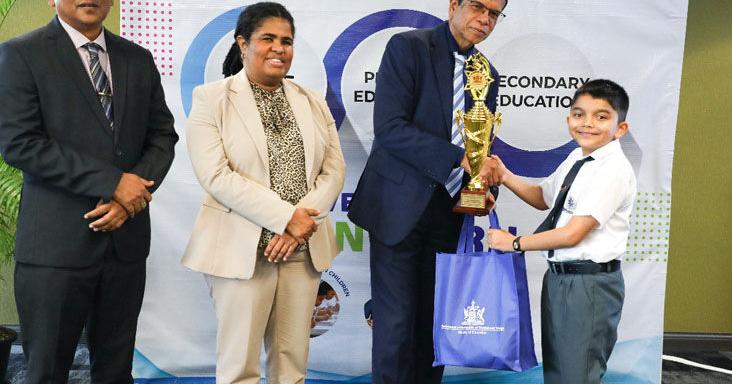
    A landmark achievement for Trinidad and Tobago’s primary education system was celebrated this week, as nine top-performing students from across the country were honored at an awards ceremony hosted by the Ministry of Education at its Port of Spain headquarters.

    Among the standout cohort, three students achieved a rare perfect 100% score on the 2026 Secondary Entrance Assessment (SEA), the national examination that determines placement for secondary school. While Ministry officials opted not to publicly rank the top nine awardees to avoid singling out individual students, Education Minister Dr. Michael Dowlath confirmed the three-way tie for first place, adding that the highest overall Composite Weighted Standard Score hit an exceptional 253.423. One of the perfect scorers, Shazana Mohammed of Debe Hindu School, publicly shared her full-mark achievement during her acceptance speech at the event.

    Senior education officials including Acting Permanent Secretaries Simone Williams and Keshore Lutchman, Chief Education Officer Dr. Peter Smith, and National Parent-Teachers Association (NPTA) president Walter Stewart joined the ceremony to congratulate the cohort. The nine honorees, called to the stage in alphabetical order to deliver remarks and collect their awards, are Katherine Ajodha (St Peter’s Private School), Amara Batan (Curepe Presbyterian), Shivan Khan (Caroni Hindu), Shazana Mohammed (Debe Hindu), Adam Ng Tang (Montrose Government), Liam Rajnauth (Trinidad Renaissance Preparatory), Ethan Ramlackhansingh (San Fernando TML), David Ramlakhan (Montrose Government), and Vivek Supersad-Maharaj (Munroe Road Hindu).

    Beyond the top individual performances, the 2026 SEA results reflect broad, encouraging gains across the entire national student body, Dowlath announced. A total of 17,509 students sat the examination this year, and across all subject areas, national mean scores improved from 2025 results. In Mathematics, the average score rose from 52.10 to 53.84; English Language Arts saw an increase from 66.70 to 68.66; and the writing component of the exam edged up from 11.25 to 11.57 out of a possible 20 points.

    These improvements extended across all performance tiers, the minister noted. This year, 70.73% of all test-takers (12,384 students) scored above the 50% benchmark, up from 66.18% (11,827 students) in 2025, meaning 557 more students crossed this key achievement threshold. Gains at the highest end of performance were even more striking: 670 students scored above 90% in 2026, compared to just 421 in 2025, a jump of 249 exceptional performers.

    “These results demonstrate that our collective efforts to strengthen teaching and learning are beginning to bear fruit, and it signals what I believe is a meaningful return to excellence across our education system,” Dowlath said. “The data tells us a clear story: more students are reaching higher levels of achievement, and more students are proving that with the right support, academic success is within reach.”

    NPTA president Stewart opened his remarks saying he felt ecstatic and proud of the cohort, highlighting a particularly notable trend: six of the nine top awardees are boys. For years, education stakeholders in Trinidad and Tobago have flagged persistent underperformance among male primary students, making this outcome especially welcome. “When I see boys excelling in this way, I’m doubly proud and doubly pleased,” Stewart said.

    He also praised the resilience of this year’s entire SEA cohort, noting that these students entered primary school just as the COVID-19 pandemic hit, and spent their first two years of primary education learning remotely through digital devices. “That speaks volumes about their resilience and perseverance. Apart from their incredible achievement, I really want to applaud that determination that gave us the kind of results we are seeing today,” Stewart added. He also thanked principals and teachers for their tireless work to lift student outcomes, and expressed optimism for even stronger results in coming years as the education system transitions to integrate a new Continuous Assessment Component into student evaluations.

  • Triumph amid tragic loss

    Triumph amid tragic loss

    For one Trinidadian family, the long-awaited release of Secondary Entrance Assessment (SEA) results brought a bittersweet moment: a brilliant academic achievement that should have been a cause for full celebration is instead marked by the gaping absence of a father killed just hours after his daughter sat for the high-stakes exam.

    Rajkumar Pope, a 45-year-old engineering supervisor at Trinidad’s Ministry of Agriculture, Land and Fisheries and father of two, was killed in a fatal altercation at a local community shop in Friendship Village, Golconda, just outside San Fernando on March 26. The tragedy unfolded on the very day his younger daughter completed her SEA, the standardized exam that determines placement into Trinidad’s secondary schools.

    On the day of the attack, Pope and his family had enjoyed a quiet outing together: after picking up his daughter following her exam, they collected their 17-year-old son, browsed local malls in San Fernando, and headed home. It was only when they stopped at a neighborhood shop at 6:25 p.m. to buy bread that the violent confrontation broke out.

    Circulated security camera footage of the incident shows a 17-year-old male and an older man with an infant waiting inside the shop moments before Pope entered. When Pope walked past the teen inside the store, an unprovoked attack began, with both men exchanging blows before the fight ended after several seconds and Pope left the shop.

    Pope returned to his home unharmed at first, but collapsed later that night. Emergency paramedics rushed him to San Fernando General Hospital, where he was pronounced dead just over three hours after the attack, at 9:30 p.m. A post-mortem examination later confirmed his death was caused by a combination of blunt force trauma from the beating and pre-existing heart complications.

    Following the killing, the 17-year-old suspect was arrested, charged with Pope’s murder, and remanded into custody to await trial.

    In an interview with local outlet *Express* this week, Pope’s widow Annie Pope opened up about the family’s months-long struggle to navigate crippling grief while celebrating their daughter’s hard-won academic successes. For the family, every milestone – from June’s Father’s Day, their first without Pope, to their wedding anniversary, to the recent SEA results release – has been marked by equal parts pride and sorrow.

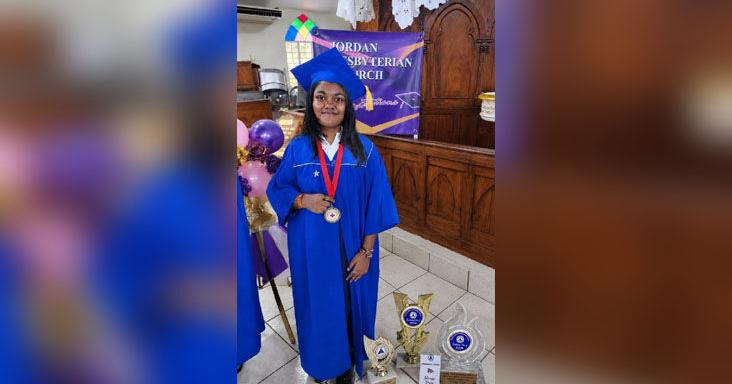
    Just days after Father’s Day, Pope’s daughter graduated as valedictorian from Jordan Hill Presbyterian School in Princes Town, a crowning achievement that would have brought enormous joy to the father who was her biggest cheerleader.
    “Her daddy was her biggest supporter. He should have been there to see her receive that honour. He would have been so proud,” Annie said, her voice breaking as she recalled her husband’s constant encouragement of their daughter’s academic goals.
    That same ache resurfaced when SEA results were officially released this month. Pope had long prioritized his children’s education, and had been eagerly anticipating his daughter’s transition into secondary school after her exam. Annie said that even in his absence, the family holds onto his support and love.
    “His children’s education was very important. He’s not here, but she has his blessings and he will always be with her. I told her no matter what, he will always be there with you and he will be rooting for you. He knew she worked very hard and that she would do well. He was looking forward to her continuing on her journey into secondary school,” she said.
    Annie added that her daughter is excited to start her new secondary school and meet new classmates, and carries with her the final encouragement her father gave her on exam day. “The last thing he told her that day was that he was proud of her.”
    Though the family is doing their best to cope with the tragedy and move forward, the void left by Pope’s sudden, senseless death remains, turning every hard-won win into a reminder of the man who is no longer there to share in the joy.

  • Normal course of business

    Normal course of business

    A high-profile currency seizure at one of Trinidad and Tobago’s busiest international airports has drawn the involvement of multiple regional and U.S. law enforcement agencies, after local customs officials intercepted $2 million in U.S. currency bound for Miami. In an exclusive statement to local outlet the Express, NCB Merchant Bank (Trinidad and Tobago) Ltd. has formally claimed ownership of the seized funds, maintaining the transaction was a routine, fully compliant part of its regular commercial operations.\n\nThe interception unfolded on June 25 at Piarco International Airport, where customs and excise inspectors flagged the cash, stowed inside a plain white crocus bag, during pre-shipment checks. The currency was scheduled to be routed to Miami via a stopover in Jamaica, but regulators raised concerns about gaps in the accompanying shipping documentation. Following the interception, the funds were transferred to the Central Bank of Trinidad and Tobago for secure holding while official investigations proceed. As of the latest reporting, the cash remains in the central bank’s custody, with no clearance for shipment granted yet.\n\nIn an email response to the Express’ questions Thursday evening, NCB Merchant Bank chief executive Marli A. Creese laid out the bank’s official position on the incident. “The cash referred to belongs solely to the bank,” Creese confirmed, emphasizing that the courier shipment followed all standard internal protocols and aligned with every applicable domestic and international law. “All usual and required protocols were adhered to,” he added, addressing questions about whether the bank had followed its own internal compliance procedures for large currency shipments.\n\nCreese also confirmed that the bank has been in direct contact with investigating authorities and is committed to full cooperation throughout the probe. The Customs and Excise Division reached out to the bank requesting additional verification and supporting documentation related to the shipment, he said, and the institution has already fulfilled all information requests. Addressing early reports that customs identified major documentation deficiencies, Creese clarified that the situation only amounted to a routine request for supplementary information, which the bank has already resolved.\n\nTrinidad and Tobago’s Finance Minister Davendranath Tancoo confirmed Thursday that the investigation is ongoing, with multiple security and financial regulatory agencies working in parallel to resolve the case. “This matter is now engaging the attention of several relevant security and financial agencies. Obviously, it would be inappropriate to comment at this time. Suffice it to say that a thorough investigation is being pursued involving all parties to this transaction,” Tancoo told the Express. Multiple sources also confirm that U.S. law enforcement and financial authorities are assisting with the probe, a standard step for large currency shipments bound for the U.S.\n\nThe Express submitted additional follow-up questions to both NCB Merchant Bank and Central Bank Governor Larry Howai on Thursday, but neither party issued an immediate additional comment. Investigations are expected to continue in the coming days as authorities work to confirm all regulatory requirements for the large currency export were met, before a final decision on releasing the funds is made.

  • CoP: No ‘sacred cows’  as 17 officers lose jobs

    CoP: No ‘sacred cows’ as 17 officers lose jobs

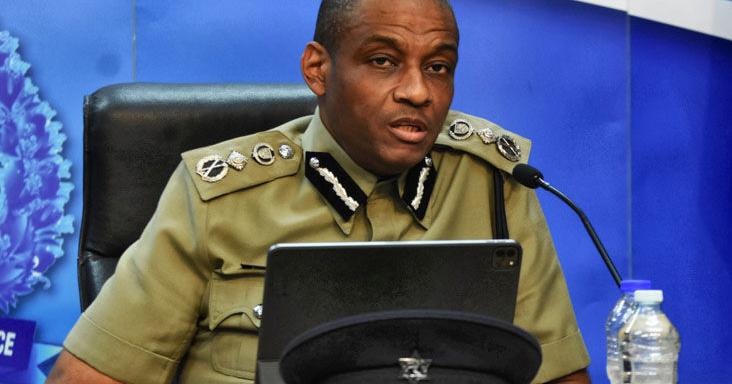
    A major anti-corruption and disciplinary overhaul is underway in the Trinidad and Tobago Police Service (TTPS), after top official Allister Guevarro announced the permanent revocation of appointments for 17 suspended police officers this week, reaffirming a zero-tolerance policy for misconduct that leaves no member of the force exempt from accountability.

    The 17 affected officers are just a fraction of the 280 TTPS personnel currently suspended over a range of alleged rule-breaking and criminal infractions. Their names were formally released in an official advisory, with the revocation confirmed in a public voice note address from Police Commissioner Guevarro shared with media over the weekend following Thursday’s initial announcement.

    In his address, Guevarro centered his remarks on a core principle guiding the disciplinary push: there are no “sacred cows” within the TTPS. Police officers across all ranks are granted extraordinary public authority to maintain safety and uphold the law, Guevarro explained, and this public mandate comes with a non-negotiable duty to hold themselves to the highest standards of integrity, discipline, and service to the people of Trinidad and Tobago.

    “Any officer who wears this uniform and engages in criminality will face the full weight of lawful action. I will take every step necessary to remove you from this organisation,” Guevarro said. He stressed that when officers break their oath of office, consequences will be unambiguous, swift, and applied equally to all ranks, regardless of position or seniority. Drawing on a vivid local turn of phrase to underscore his commitment to equal accountability, Guevarra argued that all criminals face the same consequence: “it will be big gouti, small gouti, same shot.”

    The commissioner added that the TTPS remains fully committed to the values of transparency, accountability, and the highest ideals of public service. This disciplinary crackdown is part of a broader push to strengthen institutional integrity, rebuild public confidence in the force, and remind every serving officer that their core duty is to serve the public without bias or favoritism. Guevarro promised that as the zero-tolerance policy is rolled out, the public will see a more determined, united response to widespread crime.

    Reaction to the decision from the Trinidad and Tobago Police Service Social and Welfare Association, the representative body for officers, has been measured but broadly supportive. Association president ASP Ishmael Pitt told reporters that if Commissioner Guevarro is acting within the bounds of his legal authority, the association has no objections to the revocations.

    “We support any move to improve the image of the TTPS and address issues of accountability, integrity and ethics,” Pitt said. But Pitt did highlight a longstanding point of friction between the association and TTPS leadership: the association has concerns in cases where disciplinary action is taken prematurely, without adhering to core principles of natural justice that guarantee officers fair process. Pitt stressed that once all due process requirements and legal parameters are met for the 17 revoked officers, the association will not challenge the decision.

    Following the announcement, the TTPS released the full list of officers whose appointments have been revoked: Tamara Boyce, Vijay Singh, Elliot Chin, Joanne Jadoo, Owen Hem-Lee, Jilann Holder, Kizzy Thomas, Karlon Murray, Christopher Gobin, Michael Alcala, Carlos Thorne, Devon Basant, Akiel Smith, Desron Dillon, Shaun Reid, Joff Awong and Daryl Baksh.

  • UWI confirms Venezuela quakes caused Cedros coastline rise

    UWI confirms Venezuela quakes caused Cedros coastline rise

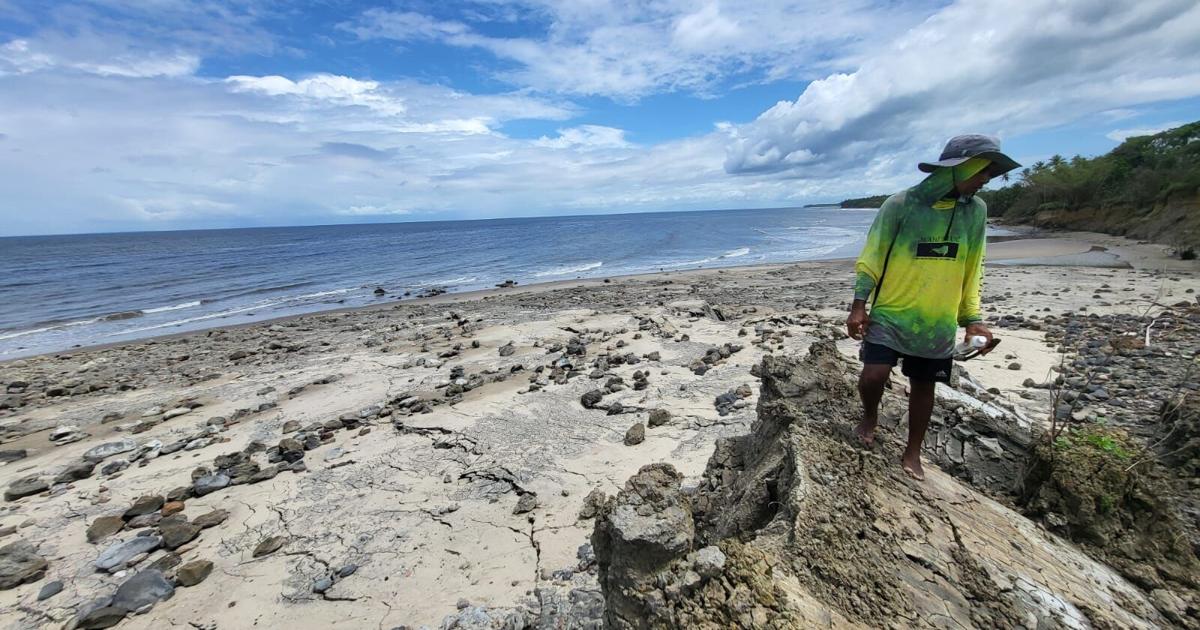
    Two of the deadliest earthquakes to hit northern Venezuela in recent memory have left a visible geological mark more than 300 miles away on the southwestern coast of Trinidad, researchers from The University of the West Indies (UWI) Seismic Research Centre (SRC) have confirmed in their first official assessment of the unusual coastal shift. The back-to-back magnitude 7.2 and 7.5 quakes that struck Venezuela last month have killed more than 2,000 people, displaced thousands more as homeless, and left hundreds unaccounted for, with search and rescue operations still ongoing in the hardest-hit La Guaira State. Just days after the large seismic event, residents of Cedros’ Galfa coastline reported a shocking transformation: large stretches of shoreline had lifted nearly instantaneously, leaving hundreds of stranded sea creatures trapped between new rock formations and exposing new sections of previously submerged land.

    Initial on-site observations by geologist Xavier Moonan put the maximum elevation gain from the sudden uplift at roughly 20 feet. Moonan also noted unusual natural oil seeps bubbling up through new shallow rippling pools formed by the shifted terrain. In its preliminary analysis released this week, the UWI SRC confirmed that the extreme coastal movement was directly triggered by energy from the Venezuelan twin earthquakes, drawing a parallel to similar geological fracturing that followed a large 6.9 magnitude quake near Trinidad in 2018.

    Trinidad’s southern coast sits atop a major east-west geological formation called the Southern anticline, a folded rock system crisscrossed by active faults, the SRC explained. This structure creates a linear geological corridor along the south coast that allows pressurized water, oil, and gas trapped deep below the surface by tectonic plate movement to rise toward the crust, resulting in a dense concentration of mud volcanoes across the region.

    Mud volcano formations are defined by fluid-saturated substrate close to the surface, which gives the surrounding ground very low shear wave velocities. Because shear waves—one of the primary types of seismic energy generated by earthquakes—travel far slower through softer, less compact rock and sediment, these geologically unique areas become far more sensitive to shaking from large distant earthquakes, the research team noted.

    The two Venezuelan quakes occurred along the same interconnected fault system, shared nearly identical focal mechanisms, and struck within minutes of one another, meaning they can effectively be treated as a single massive seismic event that produced more than 10 minutes of continuous shaking across the region. Testing at the L’Envieuse mud volcano near Icacos, just west of Cedros, found the natural fundamental vibration frequency of the local geology before the quake was exactly half the frequency of the seismic waves from the Venezuelan earthquakes. This resonance effect amplified the shaking energy, reactivating subterranean mudflows and triggering the sudden coastal uplift seen in Galfa.

    “These unique geological responses are to be expected on Trinidad’s south coast and other regions with similar geology after large magnitude seismic events,” the SRC assessment noted. “As such, targeted efforts must be made to mitigate future risk to lives and livelihoods located in these geologically susceptible areas.” The center plans to release a full, comprehensive report after completing additional on-site testing and data analysis.

    This is not the first time large seismic activity has triggered extreme coastal and land movement in Cedros. In August 2018, a 6.9 magnitude quake centered off Trinidad’s coast caused widespread infrastructural damage across the island, with tremors felt as far away as Barbados, Guyana, St Lucia, and Venezuela. In Cedros, the shaking fractured large sections of land, crumpled key roadways, and cut off dozens of farmers participating in a local food production project from their agricultural plots in the Los Iros area. Farmers reported massive ground cracks that swallowed farming equipment, destroyed crop fields and livestock storage structures, and drained local ponds. Just one year ago, renewed activity at the nearby Los Iros mud volcano triggered a similar coastal uplift at the local beach, pushing some sections of shoreline up as long as 20 feet. That event left key agricultural routes impassable during peak farming season and caused thousands of dollars in lost crop and infrastructure damage for local producers, according to on-the-ground reports from environmental activists and farmers.