标签: Trinidad and Tobago

特立尼达和多巴哥

  • FLOODS IN SOUTH

    FLOODS IN SOUTH

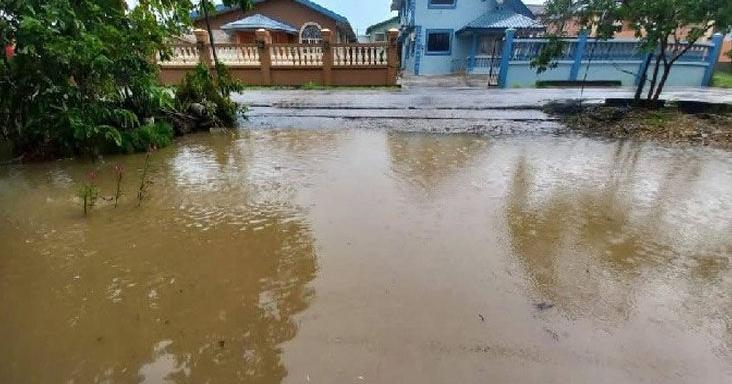
    Intense overnight rainfall across southern Trinidad has sparked dangerous flash flooding, forcing an elderly pensioner to evacuate her flood-swamped residence in Barrackpore as local authorities move forward with long-planned infrastructure and drainage upgrades to address recurring flooding in the region.

    The resident, who lives alone on Cumuto South Trace, has dealt with repeated flooding episodes for years: even 10 to 15 minutes of steady rainfall is enough to send water surging into her property, according to local councillor Joseph Lorant. When floodwaters rose rapidly this week, knee-high levels inundated the ground floor of her home. Though the property has an upper level she could retreat to, mobility impairments that make climbing stairs difficult left her with no option but to flee the premises entirely for safety.

    Lorant confirmed that the pensioner was the only resident displaced by flooding in her immediate neighborhood during this latest rain event, though the heavy downpour triggered flash flood events across multiple communities in Moruga and other districts of Barrackpore.

    For years, local crews have repeatedly cleared the waterway near the pensioner’s home to reduce flooding, but persistent blockages in key drainage sections have kept the problem unresolved. Now, after gaining the resident’s approval to conduct private land remedial works, officials are preparing targeted interventions to fix the issue long-term. Lorant explained that immediate steps will include targeted dredging of the local waterway to improve drainage flow, which will serve as a temporary solution until permanent infrastructure upgrades—including the construction of new box drains—can be completed.

    Across the wider Penal/Debe region, this week’s flooding has also offered a real-world test of a groundbreaking new drain and waterway maintenance initiative launched two months ago. The VAC master cleaning programme, which uses specialized high-pressure machinery and vacuum extraction to clear blockages from underground culverts, has already delivered measurable improvements, according to Penal/Debe Regional Corporation chairman Gowtam Maharaj.

    Unlike traditional maintenance that only cleared surface blockages, the new programme reaches deep into closed underground culverts—the primary source of most urban street flash flooding, Maharaj explained. Crews have already serviced high-risk areas including town centers and major road junctions, pulling out a surprising array of discarded debris that had clogged drainage systems for years: plywood sheets, fallen logs, discarded mattresses, and hundreds of plastic bottles, among other waste.

    Maharaj noted that while flash flooding did occur this week, water levels receded far faster than in past events, a improvement he directly attributes to the new maintenance programme. He added that coordinated work between the regional corporation, which uses smaller excavators for local drainage clearing, and the Ministry of Works, which handles large-scale river maintenance, also supported faster water run-off after the downpour. Following this week’s flood events, crews will expand the VAC programme to new areas including the front of a Barrackpore secondary school and other sites where minor flooding was reported. In addition to drainage work, the corporation’s disaster management unit quickly responded to a separate incident, clearing a fallen tree that blocked a local road after the heavy rain.

    Officials say they remain optimistic that the combination of targeted remedial works for high-risk private properties and expanded systematic drainage maintenance will reduce future flood risk for vulnerable residents across the region.
  • Young condemns ‘orchestrated attack’ on PNM

    Young condemns ‘orchestrated attack’ on PNM

    In a sharp rebuke issued yesterday, former Trinidad and Tobago Prime Minister Stuart Young has levied serious accusations against the current People’s National Movement (UNC)-led government, claiming it is orchestrating a systematic campaign of political persecution against the People’s National Movement (PNM). Young has publicly called on the ruling administration to uphold constitutional principles and address all alleged wrongdoing exclusively through established legal frameworks and due process. Young frames the coordinated push against the PNM as far more than a partisan dispute, arguing that it represents a fundamental threat to the nation’s democratic foundations. In his statement distributed to local media outlets, Young threw his full support behind a previous address by PNM chairman Marvin Gonzales, who first publicly denounced the string of political attacks targeting the opposition party.

    “I unreservedly condemn these unprincipled attacks,” Young stated in the release. He emphasized that while any proven illegal activity or corrupt behavior must be properly investigated and sanctioned, these actions must follow formal legal protocols, free from partisan political meddling. “Make no mistake about it: this is a direct attack on the core of our democracy,” Young added. He doubled down on his claims, confirming that the UNC administration has carried out deliberate, targeted political persecution and victimization of PNM members and affiliates for an extended period.

    As key evidence of the government’s targeting, Young pointed to mass terminations of thousands of low-income and vulnerable workers employed through state-run programs including CEPEP, URP, and national reforestation initiatives, as well as layoffs across dozens of state-owned entities spanning multiple ministries, energy giants Heritage Petroleum and Paria Fuel Trading, the National Gas Company, National Energy, Phoenix Park Gas Processors Ltd, the Water and Sewerage Authority (WASA), the Housing Development Corporation (HDC), and the Trinidad and Tobago Electricity Commission (T&TEC). He argued that the UNC leadership is deliberately diverting public attention from core governance failures with misleading rhetoric and distraction tactics, warning that the country is entering one of the most perilous periods in its modern political history.

    Beyond the political targeting claims, Young sounded a urgent alarm over the nation’s growing fiscal instability, revealing that the ruling government has withdrawn more than US$500 million from the country’s critical Heritage and Stabilisation Fund (HSF) over the past 12 months without any public transparency or advance notification to citizens. He also noted that the administration has taken on more than US$1.8 billion in new high-interest foreign currency debt, at a time when the country’s foreign exchange earnings are declining. “Our overall national indebtedness has reached a dangerously high threshold,” Young asserted. “Even a single late payment or default on any state-backed loan could push us over a fiscal cliff with devastating long-term consequences.”

    Young, who previously served as the country’s energy minister, also warned that the nation’s critical energy sector is currently facing a deepening crisis, noting that two of the country’s largest petrochemical producers, Nutrien and Methanex, have completely ceased operations in recent months. He added that the current government has also failed to participate in critical cross-border natural gas negotiations with neighboring Venezuela in Caracas, adding that this is just one of many growing warning signs threatening the nation’s key economic driver.

    In a related development yesterday, PNM Treasurer and former government minister Robert Le Hunte pushed back against recent government claims about the cost of the party’s new Balisier House headquarters in Port of Spain, describing the published figures as “grossly exaggerated”. In a telephone interview with media, Le Hunte rejected the ruling administration’s claim that the party has spent some TT$118 million on constructing the new facility. Le Hunte stated that based on his professional assessment, the cited price point is wildly inflated for the size and scope of the building in question. He also confirmed that he has not been given access to any of the documentation the state is referencing as part of its ongoing investigation into the source of funding for the construction project.

  • In the dark on  party finance

    In the dark on party finance

    A recent High Court ruling forcing a major political party to disclose funding for a high-profile construction project has reignited longstanding calls for comprehensive campaign finance regulation in Trinidad and Tobago, with the local chapter of global anti-corruption watchdog Transparency International (TTTI) drawing a sharp distinction between the power of existing asset recovery laws and the dangerous gaps still plaguing the country’s political accountability framework.

    On Friday, Justice Margaret Mohammed granted a court order requested by the Trinidad and Tobago Police Service (TTPS), compelling the ruling People’s National Movement (PNM) to explain the source of funding used to build Balisier House, the party’s headquarters in Port of Spain. When reached for comment Saturday, TTTI framed the ruling as a clear demonstration of the value of the 2019 Civil Asset Recovery and Management and Unexplained Wealth Act, calling the legislation a robust, effective tool that lives up to its design.

    Unlike previous regulatory frameworks, the 2019 act gives courts formal authority to force any individual or organization—regardless of political standing—to account for assets that appear to far outstrip their confirmed legal income. TTTI emphasized this is exactly the sort of accountability mechanism the organization has campaigned for over years of anti-corruption advocacy, noting the court’s order proves the law delivers on its promised purpose.

    However, TTTI was quick to point out a critical transparency gap that still undermines the country’s political system: there is currently no equivalent legal requirement for proactive transparency around how political parties raise money in the first place. The Unexplained Wealth Act only acts after the fact, once a criminal investigation has already been opened, leaving the public completely blind to party financing until a scandal forces disclosure through the courts.

    “Trinidad and Tobago still has no law requiring parties to proactively disclose their donors, funding sources, or spending as they raise and spend it,” the organization wrote in an emailed response to the *Trinidad Express*. Current regulation only goes as far as capping individual candidate election spending at 50,000 Trinidad and Tobago dollars, with no spending limits and no mandatory disclosure requirements for political parties as entities. Notably, even the national Constitution and the existing Representation of the People Act do not formally define a political party for regulatory purposes, creating a foundational legal loophole.

    TTTI argues that while the Unexplained Wealth Act has already proven effective at enabling investigators and courts to scrutinize suspicious unexplained assets, the absence of binding campaign finance rules means the public cannot access information about political party financing until formal legal proceedings are underway. “The tools that exposed this matter work. What is missing is the tool that would have made this kind of financing visible years earlier, before it needed a court order to surface,” the statement read.

    The watchdog noted that the long-proposed Representation of the People (Amendment) Bill would directly address this gap. The proposed legislation would introduce mandatory registration for all political parties, require public release of audited annual financial statements, mandate disclosure of all donations above a set threshold, and establish an independent oversight body to enforce the rules. In light of the Balisier House ruling, TTTI has renewed its urgent call for parliament to pass the long-delayed campaign finance reform legislation, saying the measures are critical to strengthening transparency and accountability across Trinidad and Tobago’s political system.

    Speaking to the broader public implications of the Balisier House investigation, TTTI explained that the case underscores a long-standing problem: political financing in the country can remain hidden from public view for years, only coming to light through court orders or criminal probes rather than routine, proactive disclosure. The organization described the current political financing framework as a “serious accountability deficit” that affects all administrations and political parties, regardless of which holds power.

    TTTI stressed that when voters have no way to know who is funding the political parties they support, they cannot accurately judge whether government policies and public contracts are being awarded to serve the public good, or to advance the private interests of party donors. This lack of transparency, the organization added, does not just erode trust in the individual party facing scrutiny—it undermines public confidence in the entire political system as a whole.

    “The lesson for Trinidad and Tobago isn’t about this case alone—it’s that we need the guardrails Parliament has left sitting on the table: campaign finance disclosure, spending limits for parties, and an independent body with real power to enforce them, before the next election cycle, not after the next scandal,” TTTI concluded.

  • US$20,000 in quake aid for V’zuela

    US$20,000 in quake aid for V’zuela

    Weeks after a pair of powerful earthquakes struck Venezuela on June 24, leaving more than 4,000 dead and thousands more displaced, the humanitarian situation in the hardest-hit regions remains catastrophic, according to a leading Trinidad and Tobago-based aid group.

    The Concerned Muslims of Trinidad and Tobago (CMTT), which has already completed its first cross-border relief mission in partnership with two international NGOs, has issued an urgent appeal for continued public support, as hundreds of vulnerable Venezuelans – including children and elderly residents – still lack access to basic food and safe shelter.

    In a telephone interview with *Express* from Caracas on Monday, CMTT public relations officer Imtiaz Mohammed detailed the outcomes of the group’s initial $20,000 relief operation, which was carried out alongside U.S.-based Helping Hands USA and U.K.-based Muslim Hands UK. All funds raised were used to source emergency supplies directly within Caracas, with a total of 500 food hampers distributed across two displacement camps over the weekend: 250 hampers at a government-run camp in the capital, and another 250 at a camp in the hard-hit coastal town of La Guaira.

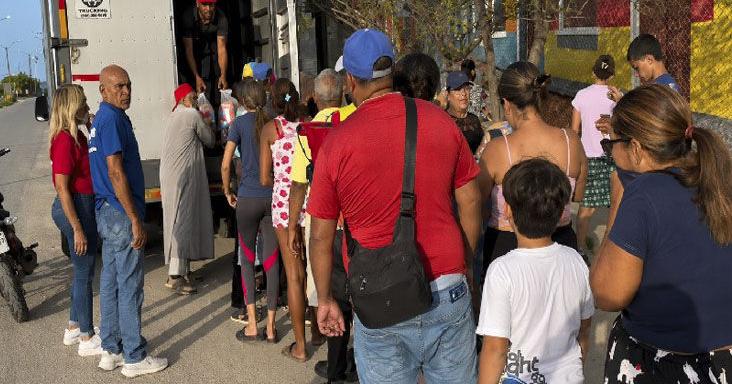
    Mohammed described the on-ground distribution process as fraught with difficulty, often chaotic especially in La Guaira, where desperate displaced people rushed arriving relief trucks amid widespread anxiety over unmet basic needs. Footage of the distribution shared by Mohammed shows long lines of survivors, including large numbers of young people, waiting to receive assistance. Each hamper contains staple food items that have become scarce for earthquake-affected households, including rice, flour, beans and cooking oil.

    Beyond the immediate chaos of aid delivery, Mohammed outlined structural barriers slowing recovery efforts: most heavily damaged regions are under heavy patrol by Venezuelan national security forces, and the absence of sufficient heavy rescue equipment has dragged out search and recovery operations for missing residents. Current reports indicate thousands of people remain unaccounted for, while entire neighborhoods of homes, local schools and small businesses have been completely destroyed. For survivors who have lost everything, Mohammed emphasized that short-term aid is not enough – long-term sustained support will be required to help affected communities regain a sense of normalcy.

    The CMTT is currently collecting donations of food and sanitary supplies, and is already preparing its second aid shipment from Trinidad and Tobago to Venezuela, which the group expects to finalize in the coming days.

    CMTT is not the only local organization mobilizing to support Venezuela’s earthquake survivors. Across Trinidad and Tobago, multiple NGOs and individual volunteer groups have launched ongoing collection drives for non-perishable food, prescription medicine, personal hygiene products, and construction materials for emergency shelter.

    On the same day of Mohammed’s appeal, nearly 200 volunteers from Sewa International TT gathered at the National Council for Indian Culture facility in Chaguanas to assemble 1,000 pre-packed emergency relief buckets for displaced Venezuelan families. The event was attended by senior guests including Venezuelan Ambassador to Trinidad and Tobago Álvaro Sánchez Cordero, Office of the Prime Minister Minister Darrell Allahar, Sewa International TT president Revan Teelucksingh, and Proman head of corporate communications Colin Greaves. Ambassador Sánchez Cordero extended his formal gratitude to the volunteers and organizers for their show of international solidarity in the wake of Venezuela’s crisis.

    The twin June 24 earthquakes have left a devastating humanitarian mark on the country, with an official death toll exceeding 4,000 and tens of thousands of residents left without permanent housing.

  • Barry: ‘I will not live in fear’

    Barry: ‘I will not live in fear’

    A high-stakes political bombshell has emerged in Trinidad and Tobago, where sitting Public Utilities Minister Barry Padarath has publicly revealed details of an alleged $250,000 assassination plot targeting him, orchestrated by a former minister from the previous People’s National Movement (PNM) administration. While the sitting minister says he remains deeply troubled that the alleged mastermind remains at large, he has stressed that he will not step back from his public duties or live in fear, placing his full confidence in the Trinidad and Tobago Police Service (TTPS) to see the investigation through to its conclusion.

    Padarath shared the full timeline of the revelation in an exclusive interview with the *Sunday Express*, recalling that the first official warning came in December 2025, when the head of the country’s Special Branch police unit requested an urgent meeting. At the time, Padarath was at Parliament, and he attended the meeting accompanied by fellow cabinet minister Saddam Hosein. At that meeting, senior police officials told him that a detained gang leader had submitted a sworn statement to the TTPS, confirming he had been hired by a former PNM government minister to carry out the killing. The police shared key details of the plot with Padarath, including the agreed $250,000 payment for the hit, and implicitly identified the former minister without naming him publicly.

    Following the briefing, police recommended an immediate upgrade to Padarath’s personal security, ordering a full risk assessment by Special Branch. The minister was offered additional personal protection, and advised to implement new security measures for both his family members and his residential property. Padarath admitted that the revelation left him completely stunned, noting that the allegation came with a disturbing level of detail that made the threat feel all too real. Adding to his concern is the fact that some of the individuals allegedly linked to the plot live and operate in the parliamentary constituency he represents, putting his family in close proximity to potential danger.

    Speaking specifically about his young child, Padarath said the safety of his loved ones is his top priority, and he has already implemented all necessary additional security measures to protect them. He acknowledged that living with the constant shadow of an assassination threat is deeply unsettling, particularly for a public servant with young family members. Even so, he emphasized that the plot will not deter him from upholding the oath he took to serve the country, uphold the constitution and the rule of law, and carry out his work without fear or favor. He stressed that he will not be silenced on the issues that led to the alleged threat.

    Padarath also confirmed that the gang leader who provided the sworn statement implicating the former minister remains in police custody. He told reporters that he has received two official briefings from the head of Special Branch since the initial revelation, though he has not gotten a recent update on the progress of the investigation. Police have confirmed that the probe remains active, and Padarath said he is willing to wait for law enforcement to complete their work.

    As for why he believes he was targeted, Padarath pointed to his high-profile work leading oversight and audits of three large state-run entities: the Community-Based Environmental Protection and Enhancement Programme (CEPEP), the Maintenance Training Services Limited (MTS), and the Water and Sewerage Authority (WASA). He alleged that close friends, family members, and political financiers of the former PNM administration amassed enormous illicit benefits from state contracts awarded at these entities during their time in power. Padarath, a vocal supporter of the current prime minister’s anti-corruption and anti-crime crackdown, has pushed for transparent audits of these contracts, which have already uncovered serious irregularities that could expose wrongdoing by multiple powerful figures. It is this outspoken, forthright work on corruption that he believes made him a target.

    Reaffirming his trust in law enforcement, Padarath said he will continue to follow the lead of the TTPS, noting that the proverb “time is longer than twine” holds true, and the full truth of the plot will eventually come to light.

  • ‘The lies ruined my life’

    ‘The lies ruined my life’

    More than a decade after being swept up in a high-profile 2011 anti-crime dragnet that he claims was a politically fabricated frame-up, a 60-year-old Trinidadian man is still demanding official compensation for the irreversible damage done to his reputation, livelihood and family bonds.

    Ashmeed Mohammed, who now runs a small chicken processing operation and maintains a small farm in the rural community of Rio Claro, is one of approximately 17 Muslim men detained in August 2011 over unsubstantiated claims that they had plotted to assassinate then-Prime Minister Kamla Persad-Bissessar, her Attorney General Anand Ramlogan, and multiple sitting cabinet ministers. The false plot was the core justification the ruling United National Congress (UNC) government used to impose a nationwide state of emergency that lasted from August 21 to December 5 that year, a move framed as a aggressive response to rising violent crime at a time when the opposition People’s National Movement (PNM) was heavily criticizing the administration for failing to address public safety concerns.

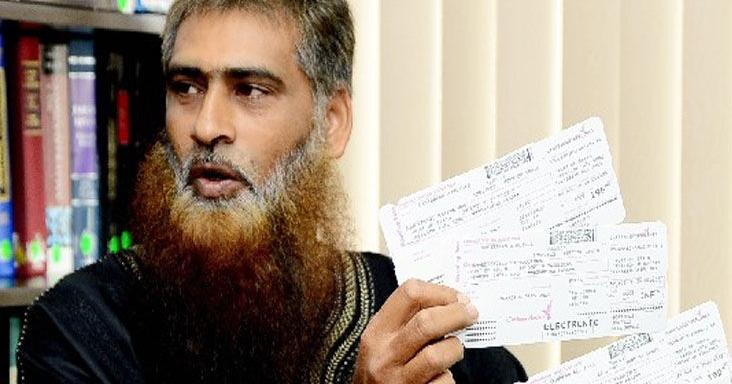
    Mohammed says the entire assassination plot narrative was invented from thin air to shore up the UNC’s political standing, with local Muslim communities deliberately targeted to create the illusion of decisive action against a major national threat. He points to what he calls a deeply suspicious coincidence: the date the government claimed the plot was scheduled to launch was exactly the day authorities carried out the coordinated arrests. At the time of his arrest, Mohammed was running a successful import business out of La Romaine, supplying cooking oil to local Chinese restaurants along with event rental equipment like tents, tables and chairs. He was arrested immediately after leaving a bank, where he had just processed a wire transfer to China for an incoming shipment. Police surrounded him with drawn weapons, detaining him on initial claims of illegal weapons and drug possession.

    Over the course of his two-week detention, Mohammed says authorities never presented a shred of evidence linking him to any criminal activity, nor did any senior official question him about the alleged assassination plot. It was not until three days after his arrest that a police officer at the Santa Rosa detention center privately informed him he was being held on treason charges connected to the purported plot. The officer even acknowledged that many people within law enforcement already suspected the government had manufactured the entire scheme, asking Mohammed to keep their conversation confidential.

    He told the *Sunday Express* via WhatsApp that he had no prior connection to 80% of the other men arrested alongside him. Only a handful were familiar acquaintances from his local mosque, including the late Ashmeed Choate, who later died in Syria. Other high-profile detainees named by Mohammed, including David “Buffy” Milliard and Selwyn “Robocop” Alexis, were people he had only heard of before the arrest, never met.

    The aftermath of the unfounded allegations destroyed Mohammed’s life piece by piece. Even though he was never charged or convicted of any crime, all of his domestic and international bank accounts were immediately shut down, forcing him to abandon his import business entirely. He describes the experience as both religious targeting of Muslim residents and deliberate economic ruin.

    The damage extended far beyond his career, fracturing his entire family. Even some immediate relatives cut off contact with him after his release, many out of fear that police would monitor their homes if they associated with him. Others, he says, were die-hard political loyalists of the UNC who fully accepted the government’s false narrative and believed he genuinely planned to harm party leadership. Mohammed, who even had a personal and business relationship with a sitting UNC cabinet minister at the time of his arrest—their wives were both connected to the local Chinese community, and the pair socialized regularly—says this political blind spot affects hardline supporters of both major Trinidadian parties, acting as a form of brainwashing that stops voters from acknowledging wrongdoing by their preferred group. Ironically, the minister Mohammed was supposedly part of a plot to kill was the same official he had counted as a personal friend. When Mohammed sought an explanation from him days after his release, the minister flew into a rage and dismissed him out of hand; now that the minister is out of office, Mohammed says he greets him with friendly hugs whenever they meet.

    Unable to face the constant stigma and public scrutiny in La Romaine, Mohammed retreated to rural Rio Claro, where he has kept a low profile ever since. He has spent hundreds of thousands of Trinidadian dollars on legal efforts to secure compensation from the state, but all attempts have failed. Looking back, he says he and the other exonorated detainees made a mistake by pursuing the case through the courts rather than pushing aggressively for an out-of-court settlement, adding that he believes the government once offered a settlement that the group failed to negotiate properly.

    Now that the UNC has returned to national power, Mohammed says the administration has a moral obligation to redress the injustice it committed. For his part, he says he would accept a grant of state land to expand his current farming business as fair compensation, arguing that after more than a decade of harm, the government can even resolve the matter off the official record if it chooses. “The lies told by the government left a lasting stain on my name and my life,” he says. “All I want now is what is fair for me and my family, who have paid this price alongside me.”

  • Balisier House case could test unexplained wealth laws

    Balisier House case could test unexplained wealth laws

    A high-profile case centered on the construction of the People’s National Movement (PNM)’s multimillion-dollar Port of Spain headquarters, Balisier House, is poised to become a groundbreaking precedent for Trinidad and Tobago’s relatively new unexplained wealth legislation, marking the first documented application of the law in legal proceedings involving a major political party. This assessment comes from attorney Saira Lakhan, who shared her analysis in a WhatsApp response to inquiries from the Sunday Express, following a recent High Court ruling granting an order compelling the PNM to disclose full details of the funding that supported the building’s development. High Court Justice Margaret Mohammed issued the compulsory disclosure order, opening the door for what legal experts say will be a defining moment for the nation’s anti-illicit wealth framework.

    Lakhan emphasized that the case gives domestic courts an unrivaled opportunity to clarify the boundaries and operational mechanics of a law that has only been on Trinidad and Tobago’s books for a few years. “What makes the Balisier House matter unique is that, to the best of my knowledge, this marks the first reported use of the country’s unexplained wealth legislation in proceedings that directly involve a political party,” Lakhan explained.

    Beyond its status as a first-of-its-kind political case, Lakhan noted the proceedings will produce much-needed judicial clarity on how the legislation applies to political party-linked assets, resolving lingering uncertainties around core questions including formal ownership structures, de facto control of assets, identification of eligible respondents in such cases, and the scope of financial disclosure required under the law.

    Crucially, Lakhan cautioned that the court’s approval of this preliminary order does not equate to a formal finding of illegal activity or proof that the funds used to build Balisier House were obtained through unlawful means. “A Preliminary Unexplained Wealth Order is not a final ruling of criminal misconduct, nor does it constitute a definitive determination that the property in question was acquired with funds from illegal sources,” she clarified.

    This case is not the first time Trinidad and Tobago’s courts have examined the country’s unexplained wealth framework. Prior high-stakes proceedings involving multiple individuals — including David and Kendra Neeranjan, and several parties connected to the estate of Sheldon Spring — led to a major review of the legislation by the Court of Appeal in 2023. Those cases ultimately advanced to the Judicial Committee of the Privy Council, which delivered its binding judgment in *Richard Taylor, Assistant Superintendent of Police v Natalie Natasha Spring and another* on April 29, 2026.

    In that ruling, the Privy Council addressed key foundational questions for the legislation: the standard of evidence required to establish reasonable suspicion of unlawful wealth, whether law enforcement can rely on investigations conducted before the law came into effect, and whether a Preliminary Unexplained Wealth Order can be issued against the estate of a deceased person. The appellate body dismissed the appeal and upheld the Court of Appeal’s original ruling. Lakhan explained that the judgment confirms reasonable suspicion required under the act can draw on pre-legislation investigations, so long as the suspicion remains active at the time the application is filed.

    Lakhan also pointed to lessons from jurisdictions like the United Kingdom, which has more experience with unexplained wealth regimes, that can guide Trinidad and Tobago as authorities expand their use of these anti-corruption tools. “One of the clearest takeaways from international experience is that legislation by itself is not enough. Its effectiveness hinges on the quality of underlying investigations, the specialized expertise of the legal and investigative professionals involved, and the fairness and independence of the judicial process,” she said.

    Unexplained wealth probes regularly involve tangled cross-border financial transactions, complex corporate structures, opaque beneficial ownership arrangements, and assets held through shell companies, trusts, nominee holders or third parties, Lakhan noted. As a result, these investigations demand specialized skills from investigators, forensic accountants, legal counsel and other trained professionals.

    “For the legislation to work effectively and retain public trust, every application must be backed by thorough investigation and sufficient credible evidence,” she added. As use of the law becomes more common, Lakhan argued that greater transparency will be critical to maintaining public confidence. She proposed that authorities consider publishing regular aggregated statistics on the volume of applications filed, the number of preliminary and final orders granted, the total value of assets recovered through the framework, and the final outcomes of all proceedings.

    Lakhan stressed that public trust in the unexplained wealth regime will rise or fall based on consistent, impartial application of the law — particularly in high-stakes cases with political implications. “Public confidence depends on both the reality and the perception that the legislation is applied consistently and independently, regardless of the political affiliation, social standing or influence of any person or entity involved,” she said.

    She further clarified that unexplained wealth legislation should be understood as one component of a broader national framework to combat money laundering, organized crime and the illegal accumulation of assets. It is not intended to replace thorough criminal investigations, respect for due process, or formal criminal prosecution in cases where evidence supports criminal charges.

    When asked whether the decision to hire a UK King’s Counsel signals the unusual complexity of these cases, Lakhan noted that Trinidad and Tobago’s still-evolving unexplained wealth legal framework often requires specialized outside expertise as the law develops. The use of international counsel should be evaluated based on the specific legal issues at hand, and is not an extraordinary practice: both the state, private clients and other entities regularly retain overseas legal professionals depending on the unique circumstances of a given case.

    “The hiring of King’s Counsel or other external legal counsel is not inherently unusual,” Lakhan said. She explained that the selection of counsel is shaped by a range of practical factors, including the nature of the proceedings, the specific experience and expertise required for the novel or complex legal questions at hand, the availability of qualified counsel, the composition of the broader legal team, and cost considerations.

    Lakhan concluded that unexplained wealth law remains a developing area of practice in Trinidad and Tobago. The governing legislation, the Civil Asset Recovery and Management and Unexplained Wealth Act No. 8 of 2019, has already been reviewed by both the domestic Court of Appeal and the Privy Council, a fact that underscores the ongoing evolution of legal standards for these proceedings.

  • Padarath’s security tightened

    Padarath’s security tightened

    A shocking plot to assassinate sitting Trinidad and Tobago Public Utilities Minister Barry Padarath has prompted authorities to ramp up his personal protection, after a detained gang member confessed to police that a former government minister offered him $250,000 to carry out the killing. The heightened security detail now includes specialized protection from the Trinidad and Tobago Police Service (TTPS) Special Branch, a unit tasked with high-risk security assignments for public officials. The full details of the plot have emerged from a sworn statement given to investigators at the Carenage Police Station, dated December 4, 2025, by the suspect who is currently in police custody on unrelated criminal charges.

    According to redacted excerpts of the statement obtained by the Sunday Express, the alleged plot was first set in motion in November 2025. The gang member told investigators he was searching for a high-paying job through a relative, who connected him to a former government minister that owned a local club in McBean. When the suspect approached the ex-minister asking about work, complaining that other connected figures were securing large government contracts, the former official offered him a far more dangerous opportunity: a $250,000 payment to eliminate Padarath, whom the ex-minister criticized as overly outspoken.

    In the confession, the suspect quoted the former minister as saying he would provide all the logistical support needed for the attack, including firearms, vehicles, and detailed information on Padarath’s schedule and locations. The former minister also instructed the suspect to recruit additional accomplices and warned him to keep the plot completely secret. To solidify the agreement, the ex-minister reportedly handed the suspect an upfront payment of $3,000, calling it a “sweetener” to secure his cooperation and pressured him to complete the assassination as quickly as possible.

    When questioned by investigators, the suspect confirmed he understood the phrase “get rid of” Padarath meant killing him, noting the former minister made a throat-slitting gesture to clarify his intent. The ex-minister also described Padarath to the hitman as a talkative, slim Indo-Trinidadian government minister in the current UNC administration, adding that the minister “talks too much” and “had to go.”

    The suspect told police he had never previously accepted a contract killing, though he admitted to carrying out smaller acts of violence for his relative, including assault, intimidation, and needle injection to threaten targets. He added that the relative connected him to the plot because he assumed the suspect had prior experience with violent criminal work. When told of the $250,000 payout, the suspect said he immediately thought the former minister must be insane, calling the offer to kill a sitting sitting government minister shocking even to him.

    Beyond the assassination plot, the suspect also made additional allegations against the former minister, claiming the official runs a large criminal network that traffics cocaine from Colombia and smuggles firearms from both the United States and Colombia through the Port of Point Lisas, with ties to multiple gangs across Trinidad and Tobago. He also named another associate of the former minister who he says manages the drug and weapons smuggling operations.

    The suspect explained he chose to confess to the plot while in custody because he feared for his life outside of detention. He claimed the criminal network has corrupt police officers on its payroll at multiple stations across the country, describing the operation as a well-organized “big organization” that would target him if he spoke publicly about the plot while free. As a result of the confirmed plot, authorities have moved quickly to expand Padarath’s security to neutralize the threat to the sitting minister’s life.

  • PNM fights back

    PNM fights back

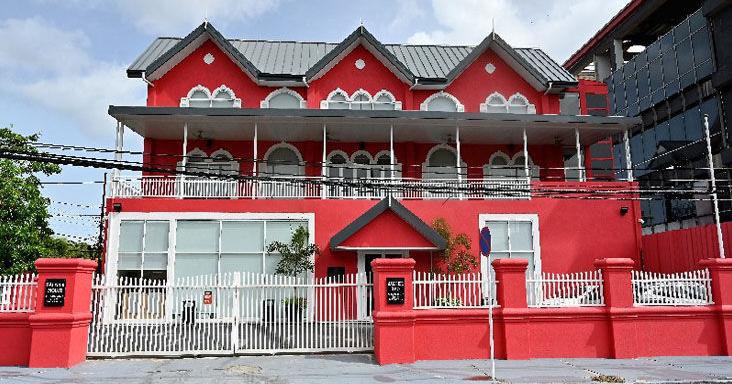
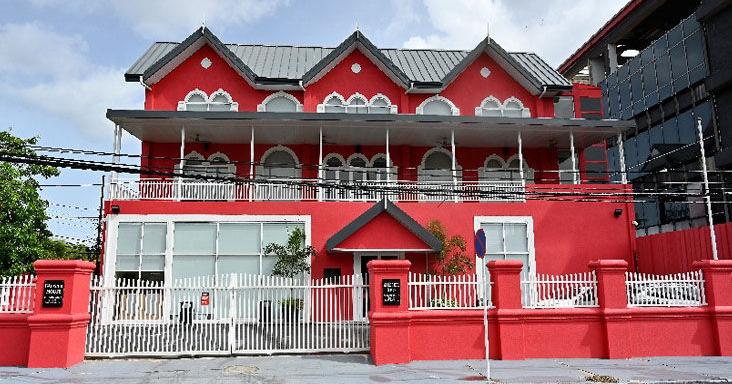
    A high-stakes legal conflict has broken out in Trinidad and Tobago, centered on the funding of the People’s National Movement’s (PNM) new party headquarters, Balisier House, located in Port of Spain’s Tranquillity Street. The clash began after High Court Judge Margaret Mohammed granted a court order on Friday that compels the PNM to disclose the sources of funding behind the multimillion-dollar construction project, a move the ruling political party has decried as a politically motivated attack.

    The court order stems from an ongoing investigation by the Trinidad and Tobago Police Service (TTPS). In July 2026, Police Commissioner Allister Guevarro appointed acting Assistant Commissioner Ramdath Phillip to lead the probe, and subsequently authorized Phillip to file an application for a Preliminary Unexplained Wealth Order (PUWO) under the 2019 Civil Asset Recovery and Management and Unexplained Wealth Act, Section 58(1). The application names PNM trustees as the first respondent and the PNM, represented by its general secretary, as the second. The Commissioner of Police is represented by a high-profile legal team including King’s Counsel Anthony Peto and junior counsel Thomas Cleaver of London’s Blackstone Chambers, with local attorney Dayadai Harripaul acting as instructing counsel.

    In an affidavit supporting the application, Phillip referenced a report from UK-based international consultants Berkeley Research Group (UK) Ltd, commissioned by the Office of the Attorney General. The report estimates the total completed construction cost of Balisier House will reach roughly TT$118.4 million, with around TT$73.272 million of work already finished. Phillip stated that investigators have not been able to identify any legitimate source of PNM income large enough to fund a project of this scale, prompting the request for the court order.

    Responding to the public revelation of the court order, PNM chairman Marvin Gonzales issued a scathing three-page media statement announcing that the party has assembled its own full legal team to challenge the order, and will pursue every available legal remedy to protect the party and its members. As of the statement’s release, Gonzales confirmed the PNM had not received official correspondence or formal service of the High Court order from any state body, in line with court rules that give police seven days from the order’s granting to complete service.

    Gonzales rejected the claims laid out in the police application, dismissing the cost estimates as “grossly exaggerated” and denying any wrongdoing in the project’s funding. He explained that the PNM has owned the land and original Balisier House structure for more than 65 years, and the current redevelopment was never conducted or funded in secret. For over 15 years, Gonzales said, the party has raised funds for the project through open, legal means: official party events, public fundraising appeals, and voluntary donations from thousands of party members, supporters, and backers who view the headquarters as a key democratic institution for Trinidad and Tobago.

    The PNM chairman framed the entire investigation as the latest step in a coordinated smear campaign orchestrated by the incumbent ruling United National Congress (UNC). He claimed the effort first began with unsubstantiated public attacks, then escalated when UNC lawmakers abused parliamentary privilege to make unproven allegations under legislative immunity. Gonzales accused the TTPS of cooperating with a political witch hunt, noting that it was the PNM that originally introduced campaign finance reform legislation in Trinidad and Tobago – a bill the UNC refused to support.

    “Today, the very same political party that rejected campaign finance reform and has been at the centre of well-documented corruption, political kickback and bid-rigging scandals now seeks to cast suspicion on the lawful fundraising activities of the People’s National Movement,” Gonzales said. He accused the UNC government of prioritizing partisan attacks over pressing national issues including economic stagnation, rising crime, unemployment, and gaps in healthcare and education, arguing the administration is weaponizing state institutions to target its main political opposition.

    Gonzales warned that the case fits a growing, dangerous pattern of state-sponsored political intimidation over the UNC’s 14 months in office. He claimed the ruling party has increasingly sought to silence political dissent, using state bodies to collect personal information on opposition figures that could be misused for partisan gain. He called the misuse of state power a threat to all Trinidad and Tobago citizens, regardless of political affiliation, and reaffirmed the PNM’s commitment to defending not only its own legacy but the constitutional democratic rights of all citizens.

    In closing, Gonzales expressed confidence in the eventual outcome of the legal battle: “We remain confident that truth will prevail over propaganda, justice will prevail over political persecution and democracy will prevail over tyranny.”

  • Autopsy reveals  girl, 14, beaten  and strangled

    Autopsy reveals girl, 14, beaten and strangled

    A Trinidadian community has been shaken by the tragic death of 14-year-old Andrea Francis, a young teenager with dreams of becoming a hairdresser, whose death was initially ruled a suspected suicide before an autopsy uncovered she was killed via blunt force trauma and strangulation. The teen’s father, Andy Francis, has spoken out publicly to express his horror at the official findings and deny any involvement in his daughter’s death, while authorities confirm the homicide investigation remains ongoing with no suspects detained to date.

    Andrea’s story unfolded against a backdrop of joyful excitement: the 14-year-old had recently sat her Secondary Entrance Assessment (SEA) exams in May 2026, and just two days before her body was discovered on July 4, she received results confirming she had earned a spot at her top-choice institution, Cunupia Secondary School. Described by her father as a friendly, jolly teen who loved singing and dancing, Andrea had been thrilled by her acceptance and was already looking forward to starting the new school term. She had also grieved deeply for her mother, who passed away from medical complications in Guyana just nine months earlier in October 2025.

    On the night of July 3, Andrea went to bed around 9 p.m. in her family’s home at Phyllis Lane Extension, Enterprise, sharing a room with her older sister Arielle, who slept in a separate bed. The following morning at approximately 10:30 a.m., Arielle found Andrea unresponsive in her bed. Initial police assessments did not find visible marks of violence or any suspicious signs on the teen’s body or in her bedroom, leading to early assumptions that her death was a suicide. Andy Francis told local reporters in the days after her death that Andrea had been her usual happy, normal self in her final days, with no indication anything was wrong.

    A formal autopsy was conducted by pathologist Dr. Hubert Daisley on the Friday following Andrea’s death. The examination revealed the true cause of death: a combination of manual strangulation, blunt force trauma to the skull and right eye, and aspiration pneumonitis, confirming Andrea was murdered. In a striking twist, Andy Francis told the *Sunday Express* he learned of the homicide finding not from police or medical officials, but from a random social media post he saw while scrolling at around 11:30 a.m. that same day.

    Francis told reporters that authorities never officially shared the autopsy results or cause of death with him directly. He explained that he visited the San Fernando General Hospital, where the procedure was scheduled, three times that week—on the Monday, Wednesday, and Friday following his daughter’s death. On the day of the autopsy, he told reporters he waited at the hospital until after 3 p.m., when officials only told him the procedure was complete, no cause of death had been determined, and police would continue the investigation. He also pushed back hard against any insinuation of his involvement, saying, “To tell you the truth, I never beat my daughter or anything. The night before, no other time. Look my next daughter here. I have witness in the place here. Nobody never beat her Andrea Francis.”

    To date, Francis says the only contact he has had from investigators is a single phone call from an officer who came to the neighborhood to collect security camera footage from nearby homes, with no formal discussion of the case or notification that he is considered a suspect. Still, Francis acknowledged that the lack of communication from authorities leads him to believe he is being treated as a person of interest: “Well, it looking so to me ’cause nobody ain’t really talking to me. They just doing their thing.”

    Reached for comment by the *Express*, a senior homicide official confirmed that no arrests have been made in the case as of the latest updates. The official added that the investigation is active and that detectives are continuing to pursue all leads to identify and apprehend the person responsible for Andrea’s death.