标签: Trinidad and Tobago

特立尼达和多巴哥

  • Balisier bombshell

    Balisier bombshell

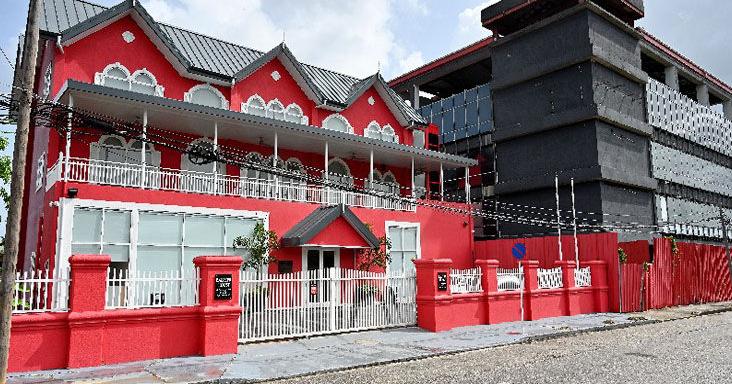
    A landmark High Court ruling in Trinidad and Tobago has ordered the main opposition People’s National Movement (PNM) and its trustees to publicly disclose the source of millions of dollars used to build its new Port of Spain headquarters, Balisier House, following a corruption investigation launched by the Trinidad and Tobago Police Service (TTPS).

    Justice Margaret Mohammed granted the TTPS’s request for a Preliminary Unexplained Wealth Order (PUWO), a powerful investigative tool under the 2019 Civil Asset Recovery and Management and Unexplained Wealth Act, which allows law enforcement to compel entities to explain the origin of assets when reasonable suspicion of unlawful derivation exists. The application for the order was filed July 10, 2026, after the TTPS launched an ongoing probe into the financing and construction of the Balisier House compound between 2018 and 2025.

    The investigation, led by Acting Assistant Commissioner of Police Ramdath Phillip—head of the TTPS Legal Department with 23 years of service—names the PNM’s trustees as first respondents and the party, represented by its general secretary, as the second respondent. The case is being handled by a top legal team including King’s Counsel Anthony Peto and junior counsel Thomas Cleaver of London’s Blackstone Chambers, with local instructing attorney Dayadai Harripaul. Both British barristers were called to the local bar immediately before the application was filed.

    In a 21-page sworn affidavit filed to support the order, Phillip outlined four core grounds for reasonable suspicion: that the respondents’ total wealth far exceeds the value of assets acquired through lawful means; that their combined wealth exceeds the TT$500,000 threshold set by law; that the Balisier House property is owned or effectively controlled by the respondents; and that the asset was acquired through criminal activity.

    The affidavit centers on two structures in the Balisier House compound: a renovated historic “Old Building” and the incomplete, multi-storey “New Building” that became the focus of the probe. A commissioned report from international consultants Berkeley Research Group (UK) Ltd estimates the total completed construction cost of the new headquarters will hit approximately TT$118.4 million, with TT$73.272 million worth of work already finished before works halted.

    Phillip emphasized that investigators have uncovered no evidence that the PNM’s declared legitimate funding sources could cover a project of this size. For years, PNM leaders publicly claimed the construction was financed through internal party fundraising, including cruises, a “buy-a-brick” campaign, a ten-car raffle, and sales of branded jewelry from the Balisier Collection. But Phillip noted that even former PNM Prime Minister Dr Keith Rowley admitted in a 2024 speech that small donations from members and regular supporters could not cover the project’s costs, and the party has repeatedly refused to disclose the identities of its major financiers.

    Investigators found that construction stopped abruptly immediately after the PNM lost the April 28, 2025 general election. Phillip argued in the affidavit that the halt aligns with suspicions of corrupt funding: “I suspect that the demitting of PNM from office brought an end to the corrupt funding of the construction of this building. This is because those who were making corrupt payments then realised it was pointless to pay further bribes to people who were not going to be in office. I believe that is the reason why the building has been left abandoned.” If the project had genuinely relied on independent fundraising, Phillip added, construction would have continued regardless of the election outcome.

    The affidavit also lays out detailed allegations of corrupt quid pro quo arrangements between the PNM and private contractors who received favorable treatment on state contracts during the party’s 10-year incumbency from 2015 to 2025. One key case cited is primary contractor Woodgreen Construction Services Ltd, which initially submitted a TT$68.3 million bid for the headquarters contract before cutting the price by TT$9 million to TT$59 million. Phillip alleges the discounted price was a covert bribe to the PNM, and the company was subsequently rewarded with multiple major state housing contracts, including a TT$22 million San Fernando development project in 2019 and the 2023 Citrus Close housing contract. For the Citrus Close project, Phillip notes Woodgreen was not the lowest bidder, yet received a higher cost scoring than a competitor with a far lower bid, with “no obvious legitimate reason” for the decision.

    The affidavit also identifies other suspicious payments: a TT$1 million contribution from Amalgamated Security Services Ltd in 2019, a TT$500,000 payment from Kall Co Ltd that same year, and incremental payments from PNM accounts and the party’s Tranquillity Fund between 2018 and 2021. All these combined amount to only a small fraction of the total project cost, investigators found. Phillip further alleges that companies linked to former PNM minister Foster Cummings completed work on the Balisier House project, and those same firms later received more than TT$37.6 million in state contracts and extensions—including a TT$15.6 million extension from the Housing Development Corporation (HDC) just weeks before the 2025 general election, and over TT$22 million in payments from the Urban Development Corporation of Trinidad and Tobago (UDeCOTT) between 2010 and 2022. Investigations into these contract awards are ongoing.

    The PUWO now compels the PNM and its trustees to submit formal asset declarations and answer detailed questions about the origins of the funding for Balisier House. In his affidavit, Phillip noted that the investigation has proceeded cautiously over months over fears of information leaks, adding that recent public statements from former Prime Minister Rowley confirmed that sensitive investigation details have already been improperly released. Phillip warned that leaks could allow implicated persons to tamper with evidence and undermine the probe, justifying the urgent ex parte application for the court order.

  • Activist calls for  passport accountability

    Activist calls for passport accountability

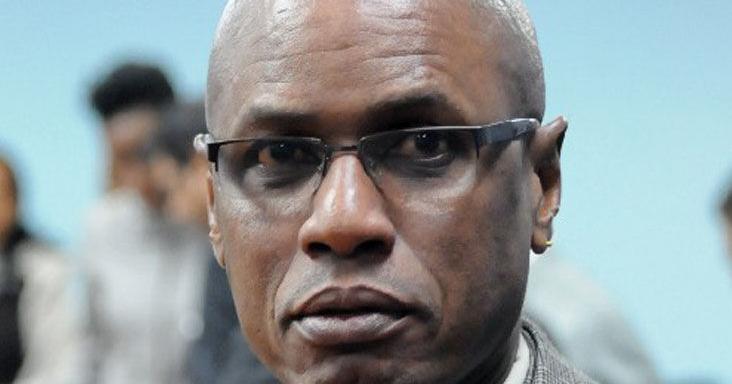
    Transparency advocate Wendell Eversley has launched a landmark push to unseal more than four decades of confidential government documents tied to the management of diplomatic and official passports, arguing that full disclosure is critical to determining whether successive national administrations have uniformly applied existing laws governing these special travel credentials.

    Eversley formally submitted the sweeping freedom of information request on Tuesday through his legal representative, attorney Renuka Sagramsingh-Sooklal. The request was filed with two top government officials: the permanent secretary of the Ministry of Foreign and Caricom Affairs, and the Chief Immigration Officer. The documents being sought cover a broad range of materials, including internal policy guidelines, formal legal opinions, confidential Cabinet records, statistical datasets, and other official documents related to every stage of diplomatic and official passport processing — from initial issuance and ongoing retention to temporary suspension and permanent revocation.

    The filing comes at a moment of rising public scrutiny over the current government’s management of diplomatic passports, with growing public conversation centered on whether decisions regarding these credentials for former public office holders have been applied fairly and consistently across political transitions.

    In the cover letter accompanying the official request, Sagramsingh-Sooklal emphasized that Eversley’s push for documents is not rooted in partisan political gain, but rather a broader push for greater transparency and accountability in how executive branch power is exercised. “My client neither approaches this matter from a partisan perspective nor seeks to advance any political narrative,” the attorney wrote in the filing. “Rather, he seeks to ascertain whether the powers entrusted to the Executive have been exercised consistently, lawfully, rationally and in accordance with established legal principles over successive administrations.”

    Sagramsingh-Sooklal further noted that diplomatic and official passports are far more than standard travel documents. They are formal instruments through which a state extends sovereign privileges and official international recognition to specific designated office holders, giving the public’s right to know about their distribution significant weight. She argued that there is an “overwhelming public interest” in answering core unaddressed questions: who qualifies for these elite passports, what formal criteria are used to approve applications, under what conditions recipients may retain their credentials after leaving public office, what legal framework governs cancellation or revocation, and what safeguards exist to ensure executive power is applied consistently across all administrations.

    The FOI request is structured to cover three distinct time frames: January 1, 1981 through April 28, 2025; May 2, 2025 through May 3, 2026; and May 4, 2026 through the date the ministry issues its formal response to the request.

    Beyond the core categories of documents already outlined, Eversley is also seeking all internal policy manuals, formal circulars, and executive directives governing passport administration, rosters of eligibility categories for these credentials, documentation outlining which government authorities hold power to approve, renew, cancel, and recover passports, full Cabinet notes and formal decisions related to eligibility standards, all legal opinions prepared by the foreign ministry, the Chief State Solicitor, or the Attorney General, and complete statistical records tracking how many diplomatic and official passports have been issued, cancelled, and remain in active circulation. The request also specifically asks for records detailing whether spouses, children, and other dependents of current and former office holders qualify for diplomatic or official passports, as well as all documentation related to policies requiring the surrender or recovery of passports following resignation, retirement, dismissal, loss of elected office, or a change in governing administration.

  • Woman charged with  businessman’s murder

    Woman charged with businessman’s murder

    A fatal violent incident in Trinidad’s Woodford Gardens neighborhood has led to a formal murder charge for a 25-year-old local woman, following weeks of investigative work and legal review. Aaliyah Naipal, a resident of the Woodford Gardens area at the intersection of Oak Avenue and Coconut Drive, has been accused of killing Gregory Reece, a local Chaguanas businessman who died from multiple stab wounds on the night of June 28.

    Naipal made her first court appearance on Monday before a High Court Master, after Director of Public Prosecutions officials reviewed the case file and provided formal legal advice authorizing the murder charge. Following the brief hearing, the accused was remanded into state prison custody to await further legal proceedings in the capital case.

    Law enforcement investigators have outlined the timeline of the fatal incident: Reece traveled to the Woodford Gardens apartment the evening of June 28, and shortly after his arrival, he became involved in a verbal altercation with an individual at the property. During the confrontation, Reece was stabbed multiple times.

    Emergency Health Services first responders were dispatched immediately to the scene after emergency calls were placed. When they arrived, medics found Reece already unresponsive, and he was officially pronounced dead at the apartment by medical personnel. Naipal was taken into police custody at the scene directly after the stabbing, and has remained in detention throughout the ongoing investigation.

    Reece, a 50-something-year-old local businessman, was laid to rest in a public funeral service held this past Sunday. Court records also show Reece had a prior interaction with the Trinidad and Tobago justice system: in 2017, he was arrested and charged with two criminal offences – uttering forged valuable securities and obtaining funds by false pretences. Those charges stemmed from allegations that more than TT$1.4 million in fraudulent cheques, issued from an official account controlled by the Arima Borough Corporation, were illegally deposited into a commercial bank account linked to Reece. At the time of his death, that earlier 2017 case was still pending in the court system.

  • FERRY FEARS

    FERRY FEARS

    A plan announced by Trinidad and Tobago’s Prime Minister to launch a temporary regional cargo ferry service aimed at cutting inter-island trade costs has sparked concerns from top Tobago business leaders, who warn that domestic transportation capacity for the island is already stretched dangerously thin. The proposal was brought forward by Prime Minister Kamla Persad-Bissessar in the wake of the 51st Regular Meeting of the Conference of Heads of Government of Caricom held in St Lucia, where she reaffirmed the government’s commitment to easing regional cargo expenses by offering a Trinidad and Tobago-owned vessel for cross-regional cargo movement.

    In comments following the announcement, Minister of Works and Infrastructure Jearlean John told local media on Thursday that the prime minister had extended the offer of ferry access to Caricom member states, and confirmed the government has a actionable plan to roll out the regional service. But Diane Hadad, a prominent Tobago businesswoman and former head of the Tobago Division of the Trinidad and Tobago Chamber of Industry and Commerce, is pushing for clear answers before the government moves forward with implementation. Hadad says she broadly supports efforts to strengthen regional trade, but argues that putting Tobago’s already overburdened domestic seabridge at risk is not an acceptable trade-off.

    Hadad pointed to the fragile state of Tobago’s current cargo infrastructure, noting that the island relies on just one dedicated cargo vessel, the Blue Wave Harmony, whose reliability she described as precarious. “It is only in God we trust that it performs right,” she told reporters. Hadad says her working assumption is that the government plans to reassign one of the country’s existing fast ferries to the new regional route, but she questions whether any vessel can be pulled from domestic service without crippling Tobago’s supply chains. She highlighted that Tobago already struggles with inadequate service during peak travel periods, including long weekends, summer holidays, and the Easter and Christmas seasons, when additional sailings are rarely approved by the Port Authority.

    Tobago depends entirely on the Blue Wave Harmony for consistent cargo movement, Hadad explained, with fast ferries only used to carry limited extra cargo when the dedicated vessel is out of service for maintenance or repairs. “When that cargo vessel goes down, we then rely on any one of the fast ferries that they allow us to put certain tonnage vehicles on, and that’s what brings the necessary items across. Other than that, we are crippled,” she said. Hadad says she remains unconvinced that the country’s existing ferry fleet can support both the new regional service and meet Tobago’s domestic transportation needs. “I’m not sure what capacity we have to go up the islands and make food cheaper for anybody,” she said. “I think a lot more information needs to be given so that we can make informed decisions. There has been no proper communication with the real stakeholders.”

    She also raised additional concerns about the reliability of the country’s existing ferry fleet: the Galleons Passage, while capable of carrying cargo, has drawn frequent complaints from passengers over its poor performance in rough seas compared to older vessels the Buccoo Reef and APT James. Meanwhile, the T&T Spirit remains out of service for unspecified reasons, and the operational status of the T&T Express is unclear, Hadad added.

    Curtis Williams, current chairman of the Tobago Division of the Trinidad and Tobago Chamber of Industry and Commerce, echoed Hadad’s measured approach. Williams welcomed the regional ferry proposal in principle, calling it “a positive and forward-thinking initiative” that has the potential to cut transportation costs, expand regional trade, stimulate cross-Caribbean tourism, and bring down the overall cost of living across the region. But like Hadad, he says the success of the project hinges entirely on whether Trinidad and Tobago actually has the excess maritime capacity to sustain the new service without harming domestic operations.

    Williams noted that the idea of a regional ferry service is not new – a similar plan was proposed by the previous national administration but never moved forward. He says ongoing concerns about vessel availability and reliability persist, particularly because the domestic seabridge between Trinidad and Tobago has already dealt with regular service disruptions caused by mechanical failures and a limited active fleet. “The Government must first ensure that there is sufficient maritime capacity, reliable vessels, adequate maintenance arrangements and a sustainable operational model before committing to such an undertaking,” Williams said in a written response to media inquiries.

    Williams added that long-term success for any regional ferry service depends on consistent, uninterrupted operations. “Businesses and travellers must have confidence that schedules will be maintained and that the service can operate without recurring interruptions. Without these assurances, the initiative could face the same challenges that prevented previous proposals from becoming a reality,” he said.

  • PDOs for 5 kidnap accused

    PDOs for 5 kidnap accused

    Nearly four months after a dramatic high-seas rescue foiled a cross-border kidnapping plot in Trinidad and Tobago, five men have been formally charged with the abduction of 73-year-old landlady Tara Poliah from her San Juan residence. The accused, identified as Hakeem Amzad Ali, Hector Jimenez, Reynaldo Alexander Martinez, John Evans and Johniken Gonzales, have remained in preventive detention at Golden Grove Prison in Arouca since authorities first disrupted the scheme in March. On July 9, investigators from the country’s Anti-Kidnapping Unit, led by Woman Corporal Rajkumar, carried out the formal charging process at the prison, with a Spanish interpreter on hand to assist with procedural communications. The five defendants are scheduled to make their first court appearance next week before a master of the District Court in North Trinidad. The investigation into the kidnapping has been overseen by a team of senior officers led by ASP Lazarus, Inspector Phillip, Sgt Katerson and Rajkumar.

    The kidnapping unfolded on March 25, when four assailants confronted Poliah inside the garage of her San Juan home, forced her into a waiting vehicle, and fled the area. By midnight that same day, investigators confirm the kidnappers had moved Poliah to a small vessel, with plans to sail her across the Caribbean to Venezuela. The plot was derailed before it could be completed, however, when the Trinidad and Tobago Coast Guard intercepted the boat roughly one nautical mile off the country’s North Coast, acting on advance radar intelligence that tracked the vessel’s movement. Poliah was recovered unharmed from the vessel, and multiple suspects were taken into custody immediately during the interception. Authorities later confirmed that eight people—six Venezuelan nationals and two citizens of Trinidad and Tobago—were on board the intercepted boat.

    In additional details of the operation, the Trinidad and Tobago Defence Force confirmed that two other suspects tried to avoid capture by jumping overboard during the coast guard chase. The pair was rescued by a local fisherman the following day, March 26, and turned over to the coast guard before being transferred to police custody. In total, law enforcement detained 11 suspects in connection with the kidnapping: the eight intercepted at sea, plus three additional suspects—two men and one woman—who were arrested at Tyrico Bay shortly after the interception. While unofficial police sources have confirmed that some detainees were released without charge, the Trinidad and Tobago Police Service has not issued an official public update on the status of the other six detainees not named in the recent charges.

    The five charged men were first listed in 23 preventive detention orders (PDOs) signed by Homeland Security Minister Roger Alexander on April 13. In those orders, 12 people total were identified as members or associates of a dedicated kidnapping enterprise that operates across national borders. The five charged men, alongside seven other uncharged co-conspirators named in the PDOs, are accused of participating in coordinated, multi-offender criminal operations that rely on cross-border infrastructure, including dedicated maritime vessels and pre-established land transport networks. The PDO documents outline that different network members take on specialized roles: some act as facilitators, others as drivers or coordinators, while core participants directly carry out the abduction, transport and holding of kidnap victims. Of the five men now formally charged, only Martinez is listed as having a residential address in Venezuela. The seven other people named in the April 13 PDOs are Diogenes Adrian Arcia, Crystal Le Blanc, Daniel Williams (also known as “Kimba”), Eduardo Jose Febres Rodriguez, Ishmael Salvary, Nathaniel Rojas, and Jorge Casadilla Caldea.

    Shortly after the March rescue and arrests, Police Commissioner Allister Guevarro announced that law enforcement had successfully dismantled a well-established transnational kidnapping ring. “This successful operation represents a significant breakthrough in our ongoing efforts to dismantle organised criminal groups involved in cross-border kidnappings,” Guevarro said in a statement following the operation. “The speed, precision, and professionalism displayed in this rescue demonstrates that Trinidad and Tobago’s law enforcement agencies are prepared, united, and resolute in protecting our citizens.”

  • Blue Waters land deal sent to police

    Blue Waters land deal sent to police

    A high-stakes political and legal controversy is unfolding in Trinidad and Tobago after the national Cabinet revoked controversial land lease approvals for private company Blue Waters Products Ltd, with Attorney General John Jeremie, SC, referring the entire matter to national police for criminal investigation. A senior government official confirmed the developments to local outlet the Express this week, shedding light on years of questionable political maneuvering surrounding the 450-acre prime property at Orange Grove Estate.

    Blue Waters Products Ltd, a local water company, is owned by businessman Dominic Hadeed and his wife Genevieve. The couple was arrested at their Westmoorings residence on June 24, 2026, during an ongoing police probe into allegations of a conspiracy to assassinate Prime Minister Kamla Persad-Bissessar, Attorney General Jeremie, and other senior government officials, alongside alleged breaches of the country’s Emergency Powers Regulations.

    The land dispute traces back to 1995, when the property was first leased to global French spirits conglomerate Pernod Ricard. Blue Waters acquired Pernod Ricard’s local assets in 2007, and has held ongoing negotiations with every consecutive national government over formal renewal of the expiring leases ever since. Questions about irregularities in the approval process were first raised publicly by current Minister of Lands and Legal Affairs Saddam Hosein during the 2025 national budget debate in October 2025.

    Hosein told Parliament that the previous People’s National Movement (PNM) administration rushed through approval of the Blue Waters leases during its final Cabinet meeting on April 17, 2025, just 11 days before the April 28 general election. He detailed that on April 27, 2025—the night before election day—a former PNM general election candidate who worked in the then Office of the Attorney General sent a WhatsApp voice note instructing civil servants to move forward with processing the lease, even before official paperwork could be routed through the proper approval channels. Hosein noted the instruction came directly from then-Attorney General Camille Robinson-Regis.

    According to Hosein’s parliamentary testimony, internal irregularities plagued the lease approval process for years before the rushed final approval. Two separate commercial parcels, labeled C1 and C2, were up for lease: in 2019, the PNM Cabinet cut the lease price for C1 in half, while for C2, the approved premium of $50 million was reduced to an offered price of just $22.1 million. Public servants raised red flags over these discrepancies, and no formal lease documents were drafted between 2019 and 2022. Most notably, Hosein said the 2025 final approval relied on a property valuation conducted back in 2010, a decade and a half prior, which drastically undervalued the prime land in 2025 market conditions.

    “Why rush the approval the night before a general election?” Hosein asked Parliament. “They knew they were likely to lose power, and they pushed this through before leaving office.” At the time, Hosein publicly called on Attorney General Jeremie to launch a formal review, warning that irregular dealings over public land could not be hidden from public scrutiny.

    In June 2026, during a parliamentary debate on extending the national state of emergency, Jeremie confirmed the matter had been escalated to the Commissioner of Police, framing the irregular approvals as part of a broader pattern of unchecked corrupt activity under the previous administration. “This is not simply white-collar crime,” Jeremie told Parliament. “The previous government turned a blind eye to blue-collar crime and the expanding grip of special interest groups on our public institutions.”

    In a sworn affidavit filed on July 3, 2026, Hadeed has pushed back against the government’s actions, arguing the land lease dispute is politically motivated retaliation. Hadeed claims that after acquiring the property in 2007, Blue Waters remained in occupation and invested millions of dollars in developing the land based on repeated assurances from successive governments that formal leases would be granted. He notes that three separate previous Cabinets—including prior administrations led by the current ruling party—already approved offers and amendments to the leases between 2019 and 2022. Hadeed maintains that binding legal agreements already exist between Blue Waters and the State, supported by written offer letters from the Commissioner of State Lands, formal acceptance of the terms, and full payment of all required premiums and processing fees.

    Most notably, Hadeed argues the government’s decision to revoke the leases came just weeks after he publicly criticized the administration over tax policy and delayed VAT refunds at a public Trinidad and Tobago Manufacturers’ Association event on March 25, 2026. Hadeed told attendees that the government takes a large share of business earnings without contributing proportional investment, and called on ministers to improve engagement with the private sector—comments that received widespread media coverage across the country. Less than two months later, on May 5, 2026, Minister Hosein formally notified Hadeed that Cabinet had voted to rescind all previous lease approvals for Blue Waters and its associated holding companies, OG C1 Property Ltd and OG C2 Property Ltd. That same day, Attorney General Jeremie notified Hadeed that all matters related to the lease approvals had been referred to police for criminal investigation.

    Hadeed moved quickly to mount a legal defense, retaining four senior Trinidadian attorneys including Ramesh Lawrence Maharaj to challenge the government’s actions. His legal team sent a formal pre-action protocol letter to the Attorney General on June 22, 2026—just two days before Hadeed and his wife were arrested in connection with the alleged assassination conspiracy. The letter asserts that Blue Waters and its owners acted in good faith at all times, in full compliance with national law, and hold binding, enforceable lease agreements with the State.

  • T&T secures US$800m bond issue

    T&T secures US$800m bond issue

    Trinidad and Tobago has closed a landmark $800 million sovereign bond issuance on the United States capital market, marking one of the most successful debt offerings in the country’s recent history, the Ministry of Finance announced in an official statement this week. The offering saw a roughly 400% oversubscription – the highest level of investor demand the Caribbean nation has recorded since it launched its first benchmark-sized sovereign bond back in 2013.

    The new 10-year notes were priced at a 6.20% coupon, and achieved a rare negative new issue concession, an outcome the ministry described as exceptional. A negative new issue concession means investors did not demand any extra cost incentive to commit capital to the transaction, a result that directly reflects the overwhelming strength of investor appetite and widespread market confidence in Trinidad and Tobago’s sovereign credit standing.

    According to the ministry’s statement, the successful offering repriced the country’s entire sovereign yield curve, a shift that grew out of a two-day investor roadshow hosted by a high-level Trinidadian government delegation. The roadshow was led by Finance Minister Davnedranath Tancoo, Energy Minister Dr Roodal Moonilal, and Central Bank Governor Larry Howai, who walked international investors through the country’s current economic trajectory and policy agenda.

    The transaction drew participation from more than 150 high-quality institutional investors across the globe, with allocations spread across the United States, United Kingdom, continental Europe, the Caribbean, and significant participation from local institutional investors based in Trinidad and Tobago. This broad uptake has not only deepened the country’s existing international investor base but also boosted secondary market liquidity and reinforced broader confidence in Trinidad and Tobago’s credit profile, the ministry added.

    The strong outcome of the offering did not come about by chance: it was underpinned by a year-long, sustained investor engagement strategy executed by the Trinidadian government. In a push to maintain consistent, transparent dialogue with the global investment community, the Ministry of Finance hosted the country’s first ever non-deal roadshow in Washington, DC, back in April 2026. That event gave policymakers the chance to update international investors on the country’s recent fiscal performance, progress in both the energy and non-energy economic sectors, and the government’s ongoing policy reform initiatives.

    Speaking on the milestone, Tancoo emphasized that the overwhelming investor demand is a clear signal that the international community has restored its confidence in Trinidad and Tobago, a shift he attributes directly to the current government’s policy direction. He noted that the administration has prioritized two core economic goals: expanding the non-energy sector to diversify the national economy, while also modernizing and growing the country’s traditional energy sector. This dual strategy has built a more credible, balanced economic outlook that has resonated with global investors, he explained.

    To put the result in perspective, Tancoo compared the 2026 offering to the country’s last similar issuance, a $800 million 10-year bond brought to market by the previous administration in 2024. That earlier offering carried a 6.4% coupon, 20 basis points higher than the current issuance, despite taking place in a less volatile global financial environment. “Today, Trinidad and Tobago has attracted stronger investor interest at a lower coupon interest rate, on more favourable terms, for a longer period and in a more volatile economic and financial environment,” Tancoo said. “This is a clear indication of global confidence in the policy direction and future prospects of Trinidad and Tobago.”

  • Nunez-Tesheira recovering after medical emergency on live TV

    Nunez-Tesheira recovering after medical emergency on live TV

    A sudden medical incident has drawn national attention in Trinidad and Tobago, after former finance minister Karen Nunez-Tesheira was rushed to the hospital Wednesday morning when she fell ill mid-way through a live televised interview. The unexpected event unfolded approximately 14 minutes into the taping of *Conversations with Zelisa*, a talk show broadcast on Real TV, which operates under the San Juan-based media firm ZM Network Ltd. Hosted by veteran journalist Zelisa Boodoosingh Rupani, the interview was proceeding as normal when Boodoosingh Rupani posed a question to her guest. As Nunez-Tesheira began to formulate her response, she abruptly fell silent and slumped forward in her studio chair, shocking the production team on set. In an official public statement released the same day, ZM Network Ltd confirmed that the former cabinet minister had suffered an unanticipated medical emergency during the program’s recording. Quick-thinking members of the show’s production team immediately intervened, transporting Nunez-Tesheira to a nearby hospital for urgent care. The media company added that as of Wednesday evening, Nunez-Tesheira was in stable condition, resting and recovering with her close family members at her side. Boodoosingh Rupani later released a personal statement emphasizing that the entire production team’s top and only priority from the moment of the incident had been Nunez-Tesheira’s health and safety. “Mrs Nunez-Tesheira is a national icon whose service to Trinidad and Tobago spans decades,” the host said. “Over her decades-long public career, she has served this country as an attorney, a law lecturer, a member of parliament, and our nation’s former minister of finance. Our entire team is holding her in our prayers for a full and speedy recovery. At this time, we ask the public to join us in respecting the privacy of Mrs Nunez-Tesheira and her family as she recovers.” A well-known figure in Trinidad and Tobago’s political landscape, Nunez-Tesheira first won election to the country’s House of Representatives on November 5, 2007, standing for the newly created D’Abadie/O’Meara constituency. A trained attorney by profession, she was appointed to the post of finance minister just weeks after her historic election victory, marking one of the highest points of her decades of public service.

  • Families seek court declaration of death

    Families seek court declaration of death

    Eight months after a controversial United States military kinetic strike in Caribbean waters left two Trinidadian nationals missing, their family members are preparing to petition Trinidad and Tobago’s High Court to formally declare the men legally dead. Next week, Lenore Burnley — mother of missing man Chad Joseph — and Sallycar Korasingh, sister of Rishi Samaroo, will appear before the court to request the death declaration, a step that comes one day after Prime Minister Kamla Persad-Bissesssar publicly stated there is no confirmed evidence that any Trinidadian citizens were killed in the strike.

  • Caricom mobilising aid for Venezuela

    Caricom mobilising aid for Venezuela

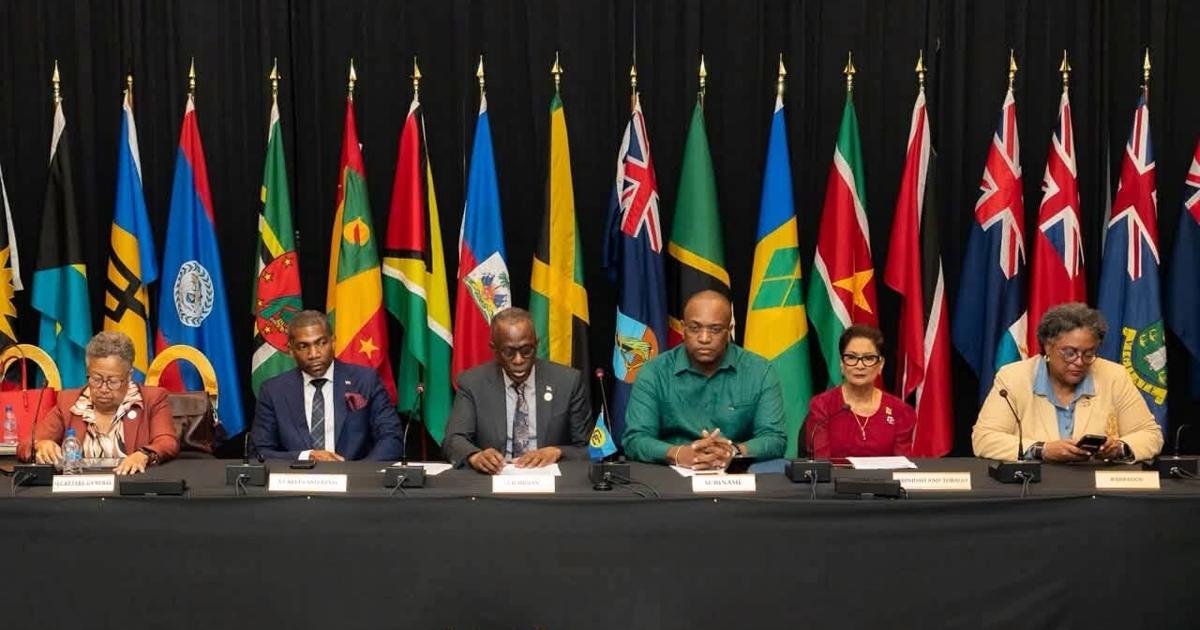
    In the final press briefing of the 51st Regular Meeting of the Conference of Heads of Government of the Caribbean Community (Caricom) held in St. Lucia, regional leaders announced a coordinated, collective humanitarian response to support two neighboring nations, earthquake-stricken Venezuela and economically strained Cuba.

    Trinidad and Tobago Prime Minister Kamla Persad-Bissessar, one of the key figures leading the relief coordination, emphasized the deep interconnectedness of the Caribbean region that drives this collective action. Just seven nautical miles separate Trinidad from Venezuela, meaning any crisis unfolding across the border directly shapes social and economic conditions in Trinidad and Tobago, she explained. Persad-Bissessar added that she, alongside Barbados Prime Minister Mia Mottley and other regional heads, held extensive talks on the relief effort during a late-night session on the Tuesday of the conference.

    Following a series of destructive earthquakes that hit Venezuela, Caricom member states moved rapidly to launch assistance efforts, with regional governments aligning logistics to dispatch both essential supplies and emergency response personnel. Persad-Bissessar confirmed that immediately after the conference, a fully loaded cargo ferry would depart her country for Venezuela carrying tons of relief goods for affected communities. She noted that Guyana and Barbados had already deployed their own shipments of aid to Venezuela, aligning with the community-wide collective effort.

    Expanding on the Venezuela relief operation, Mottley shared that a single vessel coordinated by the Guyanese government is currently transporting 88 containers of aid donated by the vast majority of Caricom member states. Barbados, for its part, mobilized emergency response personnel through the Regional Security System (RSS) within 72 hours of the earthquakes to support search and rescue operations, she added.

    Additionally, Barbados has redirected a certified pre-deployed field hospital to Venezuela. The mobile medical unit was originally staged for response to Hurricane Melissa in Jamaica, and will now address the critical gap in medical care left by the earthquake, which has left thousands injured and stretched Venezuela’s already strained public health system to breaking point. Mottley emphasized that the regional bloc has maintained open communication with Venezuelan President throughout the response, noting that the Caribbean community shares a moral obligation to support neighbors in crisis: “as we said, there but for the grace of God goes any of us, and we believe that we have a responsibility morally to help the people of Venezuela.”

    Beyond the response to Venezuela’s earthquake, Caricom has also prioritized delivering life-saving humanitarian assistance to Cuba, which faces ongoing international trade restrictions that have limited access to essential goods. Mottley revealed that Barbados’ initial attempts to transfer funds earmarked for the purchase of baby formula were blocked twice, with the full amount being returned to regional authorities on two separate occasions. Acknowledging that political and economic external factors have complicated aid delivery to Cuba, Mottley said Caricom remains committed to advancing purely humanitarian goals, and is ready to facilitate dialogue between the United States and Cuba to resolve logistical and political barriers. “When you live in a neighbourhood, what happens in the neighbourhood affects everyone,” Mottley said, framing the entire Caribbean basin – stretching from Florida in the north to Suriname and Guyana in the south – as a single interconnected community.

    Caricom Chairman and St. Lucia Prime Minister Philip J Pierre brought a last-minute update on the Cuban aid effort, confirming that after three failed attempts to transfer the funds, the payment was successfully processed on the fourth attempt. The first shipment of baby milk is now cleared for delivery to Cuban communities in need. Pierre added that Caricom leaders also held preliminary discussions on establishing a dedicated permanent regional humanitarian relief fund to streamline future cross-community crisis response efforts.