标签: Suriname

苏里南

  • Twintigste kinderhartchirurgieweken AZP en LUMC: elf succesvolle hartoperaties

    Twintigste kinderhartchirurgieweken AZP en LUMC: elf succesvolle hartoperaties

    After a two-week series of life-saving procedures, the 20th edition of the CAHAL Pediatric Cardiac Surgery Weeks has concluded successfully at the Academic Hospital Paramaribo (AZP) in Suriname. This landmark anniversary mission, held between June 29 and July 10, is a core component of a long-standing structural partnership between AZP and the Leiden University Medical Center (LUMC) in the Netherlands.

    During this mission, surgical teams successfully completed open-heart procedures on 11 patients: nine children (including one patient traveling from neighboring Guyana) and two adults. For two decades, this collaborative program has advanced a clear shared goal: expanding access to high-specialty pediatric cardiac care within Suriname, while steadily building the clinical skills and experience of local healthcare providers.

    The on-the-ground Surinamese care team was led by pediatric cardiologist Amadu Juliana and pediatrician Kevin van ‘t Kruys, who worked side-by-side throughout the mission with a specialized LUMC team headed by lead pediatric cardiac surgeon Dave Koolbergen. In remarks following the conclusion of the mission, Koolbergen emphasized that the 20th anniversary milestone is a powerful reflection of what long-term cross-institutional collaboration can achieve. Treating children in their home country allows patients to stay surrounded by their families and familiar support networks, he noted, while also giving Suriname’s local clinicians and nursing staff the chance to gain hands-on specialized experience each year. This steady progress, he added, is foundational to the long-term development of pediatric cardiac care capacity across Suriname.

    Pediatric cardiologist Lukas Rammeloo, who has participated in the mission for 19 consecutive editions, echoed that sentiment, calling the 20th anniversary program a particularly meaningful milestone. He explained that what began as a temporary outreach initiative has grown into a fully sustainable program that saves lives annually while transferring critical specialized knowledge to local Surinamese medical colleagues. The ultimate end goal of the work, Rammeloo noted, remains unchanged: to ensure that an increasing number of children born with cardiac conditions can access the specialized care they need without leaving their home country.

    For the families of the young patients who received care, the successful outcomes of the mission mark the end of a period of anxious waiting. Fontuella Tjokrosentono, the mother of a 17-month-old boy who underwent surgery, shared that she maintained hope throughout the uncertain weeks despite her worry. Her son’s procedure went smoothly, and he is now cleared to return home healthy in the coming days.

  • Misiekaba waarschuwt nieuwe arbeidsinspecteurs: ‘Laat u niet omkopen’

    Misiekaba waarschuwt nieuwe arbeidsinspecteurs: ‘Laat u niet omkopen’

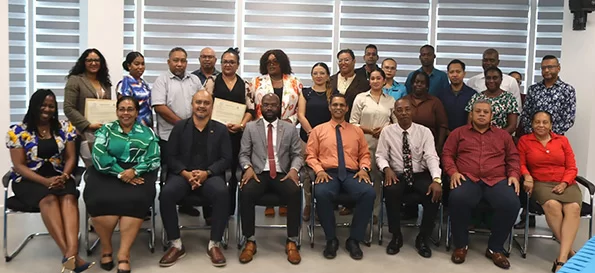
    On a formal ceremonial day this week, a cohort of junior labor inspectors with Suriname’s Directorate of Labor Inspection took the oath of confidentiality, marking a key milestone in the country’s ongoing push to strengthen labor regulation and worker protection.

    Hosted by the Ministry of Public Health, Welfare and Labor (VWA), the swearing-in ceremony was led by VWA Minister André Misiekaba, who used the occasion to outline the core responsibilities of the new inspectors and deliver a stark warning against unethical conduct. By signing the oath, the new inspectors formally committed to upholding the Labor Inspectorate’s three foundational values: unwavering integrity, strict confidentiality, and diligent compliance with legal requirements for all official duties. Following the collective swearing-in, each inspector received an official certificate confirming their oath, a formal document recognizing their entrance into full professional service.

    Under the terms of the oath, inspectors are bound to never share confidential information obtained through their work with unauthorized parties — a requirement that remains in effect both during their employment and after they leave the agency. Ministry officials frame this oath as a critical step forward in the broader professionalization of Suriname’s labor oversight system.

    Addressing the new inspectors directly, Minister Misiekaba emphasized the profound social responsibility that comes with their roles. He noted that workers are most often the economically disadvantaged party in employment relationships, placing a legal and moral obligation on the state to act as their protector. The minister made clear that worker exploitation remains an ongoing challenge in Suriname, with widespread violations including unsafe working conditions, unpaid or underpaid wages, and other breaches of the country’s labor laws still being reported across multiple sectors.

    Misiekaba’s sharpest warning came on the topic of corruption: he explicitly cautioned the new inspectors against accepting bribes from unethical employers seeking to cover up labor violations. He made clear that any inspector found guilty of corruption or dereliction of duty will face severe disciplinary action, while the government will stand firmly behind inspectors who carry out their work honestly and in line with the law. Moving forward, the minister announced plans to allocate additional resources and funding to expand the capacity of the Labor Inspectorate, enabling it to carry out more effective and consistent workplace oversight across the country.

    Rowan Noredjo, Inspector-General of the Labor Inspectorate, called the swearing-in ceremony a defining milestone in every labor inspector’s professional journey. He noted that this cohort of inspectors only took their oath three full years after completing their training, a delay from the legal requirement that the oath be administered upon accepting the position. Noredjo stressed that confidentiality is not just a formality, but a non-negotiable requirement for the inspectorate to function effectively. Inspectors routinely handle sensitive private data on both companies and individual workers, and they regularly receive anonymous reports from workers who fear retaliation if their identity becomes known. If the identity of a reporting worker or confidential details of an investigation are leaked, Noredjo explained, it can lead to intimidation, demotion, or dismissal for workers at the hands of unethical employers. He reaffirmed that this obligation of confidentiality never expires, even after an inspector ends their career with the agency.

  • Kinderhartmissie AZP en LUMC maakt steeds complexere operaties in Suriname mogelijk

    Kinderhartmissie AZP en LUMC maakt steeds complexere operaties in Suriname mogelijk

    A cross-border collaboration between two leading medical institutions has delivered life-changing care to young patients born with complex congenital heart defects in Suriname, marking another milestone in the annual pediatric heart outreach initiative run by the Academic Hospital Paramaribo (AZP) and Leiden University Medical Center (LUMC) of the Netherlands. The medical team involved says that growing collective experience and deepening on-the-ground partnership have now made it possible to perform increasingly complex procedures that were previously out of reach for local patients.

  • Beijing ontvluchten: Een nieuwe bladzijde voor de jonge generatie in China

    Beijing ontvluchten: Een nieuwe bladzijde voor de jonge generatie in China

    For centuries, Beijing has stood as a global symbol of Chinese ambition, opportunity, and national legacy. From its centuries as an imperial capital to its modern role as the country’s political and economic core, the city has drawn millions of dreamers from across the nation, all chasing upward mobility and a higher standard of living. Centuries ago, imperial scholars flocked to the city to prove their worth and secure prestigious positions; in recent decades, as China experienced an unprecedented economic boom, waves of new graduates, ambitious entrepreneurs, and rural migrant workers arrived in Beijing, each betting on the city to deliver a brighter future.

  • Één jaar regering-Simons: tussen ambitie en uitvoering

    Één jaar regering-Simons: tussen ambitie en uitvoering

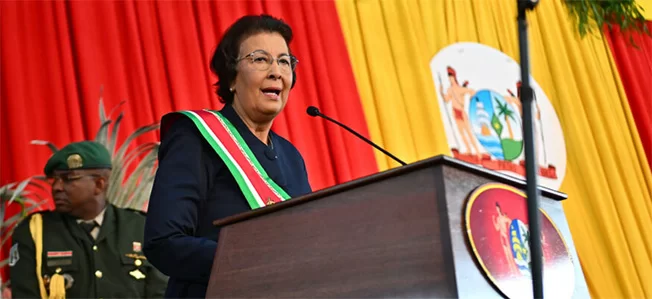
    On July 16, 2025, Jennifer Simons was inaugurated as President of Suriname, opening her term with a clear vision: to steer the country toward long-term economic recovery and inclusive growth. In her inaugural address, she outlined four core pillars of her administration: a new culture of governance, strict fiscal discipline, broad-based economic diversification, and the equitable distribution of future oil revenues to lift all Surinamese communities. One year after she took office, it is an opportune moment to take stock of the Simons administration’s progress, challenges, and unmet promises.

    Simons did not sugarcoat the severe economic headwinds her government would face from the outset. She acknowledged that Suriname entered her term grappling with deep systemic economic vulnerabilities, but held out hope that the nation could emerge stronger if it navigated the early difficult years successfully. That early assessment quickly proved prescient: almost immediately after Simons took office, rising geopolitical tensions in the Middle East sent global oil prices soaring. For Suriname, a net fuel import nation, this price shock created immediate downward pressure on inflation and eroded household purchasing power, testing the new administration’s response.

    In March, the government moved swiftly to mitigate the crisis, implementing a temporary fuel price cap and accelerating targeted social support programs for vulnerable groups, public servants, teachers, and pensioners. The policy choice deliberately prioritized social stability, even though it cost the national treasury hundreds of millions of Surinamese dollars in monthly government revenue from energy sales.

    Fiscal discipline was one of Simons’ signature campaign and inaugural pledges, and it is on this front that the administration faces its most significant test to date. As the government ramps up spending on purchasing power protections, public healthcare, and social assistance, both the national budget deficit and Suriname’s total public debt have continued to widen.

    This expansionary fiscal stance is not inherently misguided: many governments opt for temporary increased spending during periods of global economic uncertainty. However, the critical questions now growing louder among analysts and the public are how long this spending window can remain open, and when temporary emergency measures will be scaled back. Greater transparency around the government’s long-term fiscal roadmap has become an increasingly urgent demand.

    Perhaps the most transformative economic promise Simons made was a commitment to end Suriname’s historic overreliance on finite natural resource exports. For decades, the country’s economy depended heavily on bauxite; today, it leans heavily on gold, and is preparing for a major new oil sector. To avoid persistent boom-and-bust cycles, the president pledged to strengthen underdeveloped productive sectors including agriculture and tourism to build a more balanced economy.

    After one year, the administration has established interagency working commissions across multiple target sectors and announced broad policy intentions. But the private sector and civil society organizations are still waiting for detailed, actionable sector-specific plans and concrete production-boosting programs. As the onset of large-scale commercial oil production draws near, the need for a cohesive, well-executed economic diversification strategy has become more pressing than ever.

    One of the most memorable warnings of Simons’ inaugural address centered on avoiding the so-called “resource curse” that has plagued many resource-rich developing nations. She explicitly noted that in other countries, oil wealth has only enriched a small elite, leaving the majority of the population excluded from gains and facing deeper economic instability.

    Over the past year, the administration has prioritized foundational preparations to avoid this outcome: local content requirements to ensure Surinamese workers and businesses benefit from oil development, institutional capacity building, workforce training programs, and targeted international collaboration have all been placed high on the policy agenda. Even so, questions remain over whether Suriname is moving quickly enough to maximize shared benefits from oil production, which is now approaching rapidly.

    Beyond economic reform, Simons campaigned for a fundamental shift in how the country is governed, promising more collaborative, participatory, and decentralized decision-making. To its credit, the administration has repeatedly held structured consultations with trade unions, private sector leaders, civil society groups, and other key stakeholders on major policy decisions.

    Yet criticism persists on the governance front. The growing number of presidential ad hoc commissions, ongoing debates around government transparency, slow progress on anti-corruption enforcement, and the gradual pace of structural reform have led many to question whether the promised systemic change is yet visible enough to the public.

    After 12 months in office, it is still too early to issue a final verdict on the Simons administration. Major transformative reforms across the economy, education, healthcare, and public governance require far more than one year to implement and deliver visible results. That said, the Surinamese public is right to expect that the broad contours of these reforms will become increasingly clear in the months ahead.

    The second year of Simons’ term will almost certainly prove more decisive than the first. The policy focus is set to shift from agenda-setting and planning to tangible implementation, and from stated intentions to measurable results. It will not be the ambition of Simons’ agenda that defines her administration’s legacy, but the concrete, on-the-ground changes it delivers.

    Broad consensus already exists across Suriname’s political and social spectrum that the government has set the right core policy goals. The critical open question today is whether the administration can translate those ambitions into stronger public institutions, more accountable governance, and an economy that is less dependent on temporary commodity windfalls and built on a foundation of sustainable, inclusive development.

    In closing her inaugural address, Simons invoked the words of Surinamese poets Dobru and Shrinivási, centering her vision on national unity, solidarity, and shared collective responsibility. That message remains just as relevant one year on as it was on the day of her inauguration. Sustainable economic recovery, good governance, and long-term development will never depend on government policy alone: they require coordinated action and shared commitment from the public sector, private industry, and civil society alike to shape Suriname’s future together.

    After one year, the ultimate destination Simons outlined on inauguration day remains unchanged. The question facing the country now is no longer where Suriname aims to go, but how quickly the promised policy direction will translate into tangible improvements in daily governance, and what necessary adjustments the president will make to keep the administration on track to deliver for all Surinamese.

  • Nieuwe peiling toont China en Xi populairder dan de VS en Trump in veel landen

    Nieuwe peiling toont China en Xi populairder dan de VS en Trump in veel landen

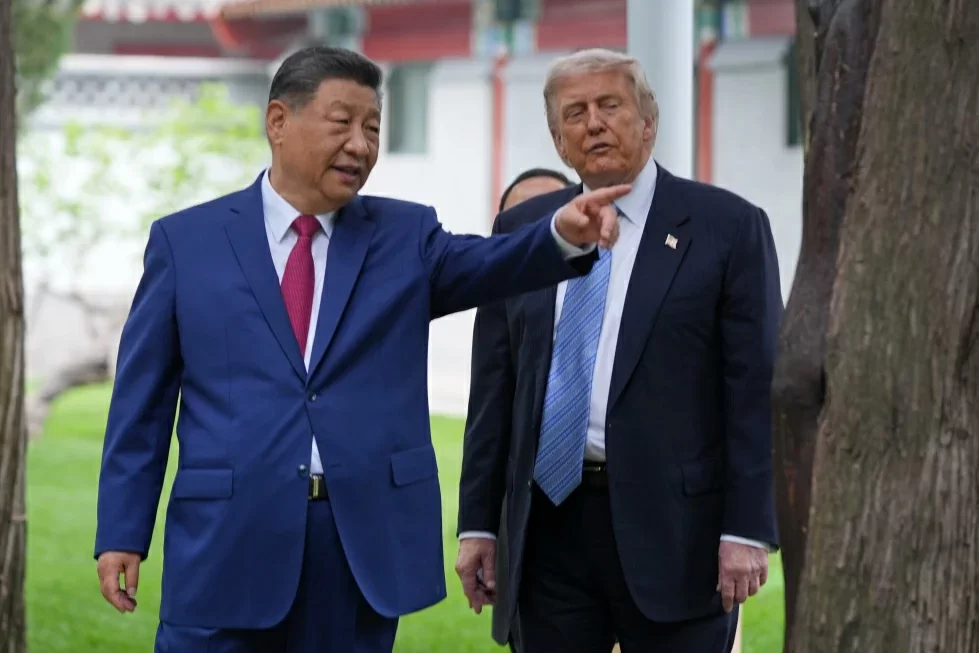
    A landmark 2026 global public opinion survey from the Pew Research Center has recorded a historic shift in global attitudes toward major world powers: for the first time in 20 years of tracking, China and its leader President Xi Jinping hold a higher net favorable rating globally than the United States and former President (current officeholder as of 2026) Donald Trump. Researchers link this striking reversal to growing global distrust of the U.S. driven by controversial foreign policy moves of the Trump administration that have strained longstanding alliances.

    Across the 36 countries and territories included in the survey, a majority of respondents held more positive views of China than the U.S. in 25 nations – including key U.S. neighbors Canada and Mexico. Only six nations still ranked the U.S. as more popular than China. When it comes to individual leader approval, President Xi earned higher favorable ratings than Trump in 22 nations, including major European powers France, Germany, and the United Kingdom. Notably, the survey also found low overall confidence in both leaders across much of the world.

    Laura Silver, associate director of Pew’s Global Attitudes Research, emphasized the uniqueness of this milestone. “Prior to this survey, global opinions of Beijing and Washington were often comparable, but China had never held a significant lead in overall popularity,” she explained.

    Silver outlined multiple overlapping factors driving the shift, coming as the global impact of the COVID-19 pandemic continues to fade. “The outbreak of new global conflicts, the widespread perception that the U.S. is not contributing to global peace and stability, and eroding confidence in Trump’s leadership have all played key roles,” she said. Controversial Trump administration policies, including the public proposal to acquire Greenland from Denmark, unilateral military actions in Venezuela, and the U.S. approach to the Israel-Hamas conflict, have sparked widespread negative international pushback, she added. “The U.S. is facing significant international pressure over its recent policy choices.”

    Against this backdrop, China has benefited from a growing global perception as a more reliable partner committed to upholding global peace and stability, Silver noted.

    Officials from both sides have reacted to the poll findings with contrasting framing. A White House spokesperson defended the Trump administration’s global record, arguing that “President Trump has done more to advance global stability than any other leader in modern history,” pointing to U.S. actions against Iran and narcoterrorism as evidence. In contrast, the Chinese Embassy in Washington said the poll reflects “broad global recognition of China’s governance achievements and development progress.”

    The erosion of U.S. favorability is most pronounced among America’s longstanding traditional allies. In Canada, for example, positive views of the U.S. plummeted from 57% in 2023 to just 33% in 2026, while positive views of China jumped from 14% to 44%. Researchers attribute this sharp shift in Canada to trade tensions, including the steep tariffs Trump imposed on Canadian goods.

    Across major Western European nations including France, Germany, Spain, Italy, and the United Kingdom, China’s popularity has climbed steadily while U.S. favorability has fallen. In the UK, opinions of the two powers are now nearly evenly matched – a stark change from three years ago, when the U.S. held a large lead in public approval.

    Of the six nations where the U.S. still outranks China in favorability, Israel leads with roughly 80% of respondents holding positive views of the U.S., compared to just 19% for China. The other five nations are Japan, India, South Korea, the Philippines, and Poland, though even in these countries, U.S. approval ratings continue to trend downward.

    The U.S. still maintains a lead over China in global public perceptions of respect for personal freedoms, though that gap has narrowed in recent years as fewer people around the world believe the U.S. government upholds these values consistently.

    Pew researchers conducted the survey by polling more than 42,000 respondents across 35 countries plus the West Bank and East Jerusalem, with a margin of error ranging from 2.3 to 5.5 percentage points, meeting standard global survey research benchmarks.

    This notable shift in global public opinion carries far-reaching geopolitical implications. Nations that have long maintained close ties to the U.S. may now be inclined to re-evaluate their foreign policy orientations and economic partnership frameworks. Growing global confidence in China could strengthen Beijing’s global influence, particularly in regions where it has already expanded investment and collaboration through signature initiatives such as the Belt and Road.

    The decline in U.S. popularity is partially rooted in America’s domestic political climate, where deep partisan divisions and the Trump administration’s policy agenda have damaged the country’s long-held image as a stable, reliable global partner. On the international stage, controversial U.S. actions – from unilateral military interventions to escalating trade disputes – have fostered a widespread perception of American unpredictability.

    Global media coverage also plays a significant role in shaping public perceptions. Widespread reporting on China’s economic expansion, large-scale global infrastructure projects, and commitment to multilateral cooperation has boosted its positive image, while constant coverage of U.S. domestic political conflict and controversial foreign policy moves has eroded global public trust.

    Regional variations in preferences remain clear: Israel and several key Asian nations still favor the U.S. due to shared security interests and longstanding historical alliances. This confirms that deep-rooted geopolitical and cultural ties still weigh heavily in shaping global public opinion.

    Looking ahead, the global image of both powers will almost certainly continue to evolve. Shifts in U.S. leadership, potential changes in American foreign policy, and China’s continuing emergence as a leading global actor will all shape future global perceptions. This is a dynamic global landscape where trust, stability, and collaborative leadership remain the most critical factors shaping national influence. The shifting tides of global public opinion are already set to impact international negotiations, trade relationships, and security alliances, making it a key factor reshaping the global balance of power in the coming years.

  • Private sector wil onafhankelijke Local Content Council voor snellere uitvoering oliebeleid

    Private sector wil onafhankelijke Local Content Council voor snellere uitvoering oliebeleid

    Suriname’s united private sector has put forward a bold proposal to establish an independent Local Content Council, aimed at speeding up the implementation of local participation policies in the country’s fast-growing oil and gas sector. Leading industry and business groups argue that the South American nation does not need to delay progress by waiting for new national legislation, as existing Production Sharing Agreements (PSAs) already create sufficient legal space to help domestic Surinamese businesses capture greater benefits from the emerging offshore oil and gas industry.

    Per the private sector coalition, the foundational framework for local content requirements is already partially embedded within the PSAs signed between state-owned oil firm Staatsolie and major international oil companies. Specifically, Article 32 of these agreements provides a solid legal foundation to boost the participation of Surinamese enterprises, local workers, and domestic service providers in sector activities, the coalition notes.

    To turn these existing legal opportunities into tangible outcomes for local businesses, the private sector is calling for clear policy agreements on core regulatory details, starting with a standardized, official definition of what qualifies as a Surinamese domestic company. The coalition emphasizes that clear, consistent guidelines of this kind will deliver much-needed legal certainty, greater industry transparency, and a level competitive playing field — particularly for small and medium-sized domestic enterprises that have historically faced barriers to entering the sector.

    The proposed Local Content Council is designed to operate as an independent public-private collaboration platform, bringing together key stakeholders from across the ecosystem: the national government, Staatsolie, international oil operators, major contractors, and official representatives of Suriname’s domestic business community. All parties will work collectively to advance the rollout of local content policies under the council’s structure.

    Initiators of the proposal stress that the council is not intended to take over core government responsibilities. Instead, its core mission is to improve cross-stakeholder coordination, identify implementation bottlenecks at an early stage, boost overall transparency, and support the practical on-the-ground execution of local content policies. This approach will allow the coalition to deliver quick, early wins (often referred to as “low-hanging fruit”) while work continues on developing a full, formal national legislative framework for local content requirements.

    The proposal already enjoys broad cross-sector support, backed by a wide coalition of leading Surinamese business organizations. These include the Association of Surinamese Manufacturers, the Federation of Surinamese Farmers, the Suriname Business Association, and the Suriname Energy Chamber, alongside 17 additional industry and business groups.

    On behalf of the coalition, preliminary discussions have already been held with Staatsolie to outline a practical implementation model for the local content framework. Talks have also been conducted with the Local Content Board based in the Office of the President of Suriname. According to private sector representatives, all parties have agreed that the coalition’s proposals will be integrated into the ongoing development of national local content policy.

    Looking ahead, the business coalition plans to hold follow-up discussions with two key government bodies: the Ministry of Oil, Gas and Environment, and the Ministry of Economic Affairs, Entrepreneurship and Technological Innovation. The overarching goal is to finalize a fully implementable policy framework in the near term, which will allow Surinamese companies to better prepare for the significant economic opportunities created by the country’s offshore oil and gas development.

    The coalition notes that early conversations with all relevant stakeholders confirm that every party shares the same core end goal: securing a strong, sustainable position for Surinamese businesses and workers within the expanding oil and gas sector. The main challenge ahead, the group says, is not aligning on the ultimate objective, but rather coordinating to agree on the collective path, set clear priorities, and establish a feasible pace for delivering on these shared goals.

  • Derde helft Wk 2026: Argentinië verslaat Engeland en speelt WK-finale tegen Spanje

    Derde helft Wk 2026: Argentinië verslaat Engeland en speelt WK-finale tegen Spanje

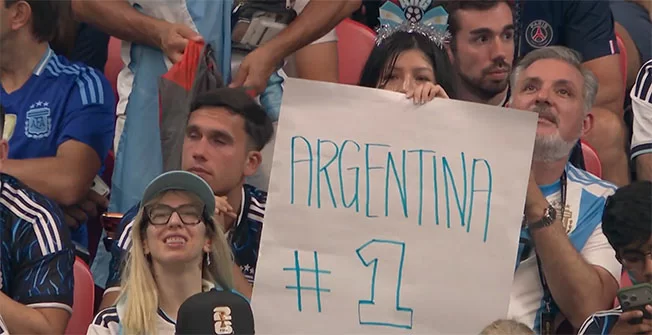
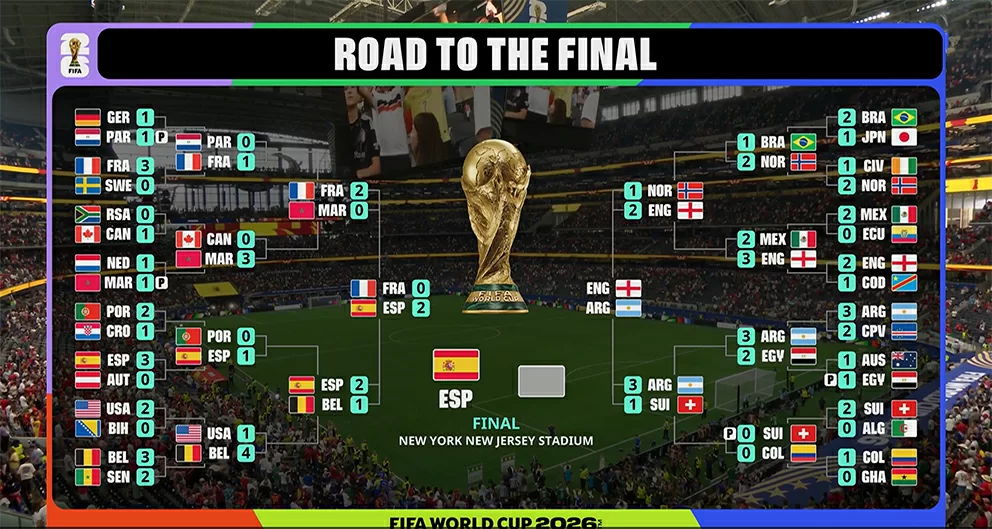
    The 2026 FIFA World Cup semi-final clash between Argentina and England delivered a rollercoaster of drama at Atlanta Stadium on Wednesday, as the defending champions pulled off a stunning late turnaround to secure a 2-1 victory and book their spot in the tournament’s final. For nearly 85 minutes, England looked on course to reach the title decider, but two goals in the closing stages from Enzo Fernández and Lautaro Martínez flipped the script, sending Argentina through to face Spain in Sunday’s championship match.

    From the first whistle, both global football powerhouses approached the high-stakes encounter with extreme caution, unwilling to cede any ground to their opponents. The opening 45 minutes unfolded as a tightly contested tactical battle, where defensive discipline and organized team shape dominated play. Both backlines held firm under pressure, clearing nearly every dangerous chance that came their way, and the two sides went into the half-time break locked at 0-0, leaving all to play for in the second half.

    The complexion of the game shifted dramatically after the interval, as England emerged from the dressing room with renewed attacking intensity and quickly reaped the rewards. In the 55th minute, Morgan Rogers threaded a clever, incisive pass through Argentina’s defense to put Anthony Gordon clear one-on-one with the goalkeeper. Gordon kept his composure under immense pressure, slotting the ball home to put England 1-0 up, sending the pro-English crowd into celebration and sparking hopes of a first World Cup final appearance for the nation in recent years.

    But defending champions Argentina refused to accept defeat, led by their iconic captain Lionel Messi, who ramped up the pressure on England’s defense minute by minute. Argentina dominated possession deep in English territory, and chances began to pile up as Gareth Southgate’s side was forced into a deep, defensive block, barely able to launch meaningful counterattacks to relieve the pressure.

    The equalizer finally arrived with five minutes left on the clock, and it was Messi who created the opening. The 39-year-old found a gap between England’s defensive lines, playing a perfectly weighted pass to Fernández, who hit a clinical finish beyond England goalkeeper Jordan Pickford to level the score. Most spectators expected the match would go to extra time, but Martínez had other plans deep into stoppage time. Once again, Messi was the orchestrator, delivering a pin-perfect cross into the penalty area that Martínez converted with a flawless first-time finish.

    The final whistle sparked jubilant scenes among Argentina’s players and fans, while England’s squad were left devastated after coming so close to a final spot. Two late goals turned a certain elimination into a dream ticket to the World Cup final in the space of just seven minutes.

    For Argentina, the victory sets up a chance to defend their world title on Sunday, against a Spanish side that earned their final spot with a 2-0 semi-final win over France on Tuesday. The final will be a clash between two of the most technically gifted football nations on the planet, a matchup that many football fans had dreamed of before the tournament began.

    Messi, who produced a match-winning performance with two assists, is now on the cusp of making history. A victory on Sunday would see him claim a second consecutive World Cup title, capping off an already legendary international career in fairy-tale fashion. Spain, for their part, will be fully focused on ending a 16-year wait for a second World Cup crown, and will leave everything on the pitch to claim the sport’s biggest prize.

  • Nieuwe fase voor relatie Suriname en Frankrijk

    Nieuwe fase voor relatie Suriname en Frankrijk

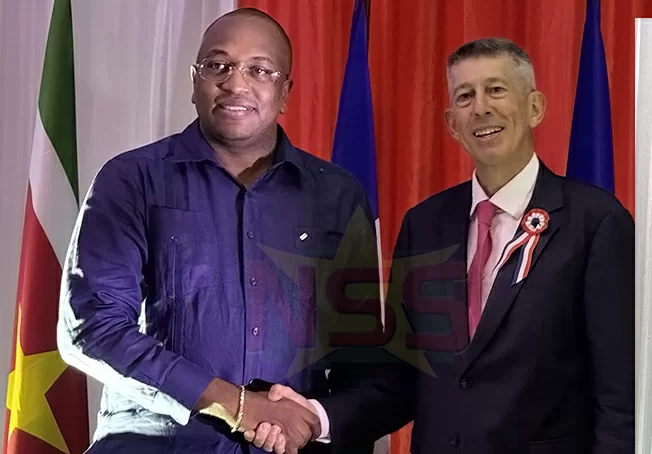
    As France prepares to bid farewell to its long-serving ambassador to Suriname Nicolas de Lacoste, diplomatic leaders from both nations have laid out an ambitious vision for a new chapter of partnership between the neighboring countries, coinciding with the upcoming 50th anniversary of formal diplomatic relations.

    Speaking at a joint event Tuesday evening marking both Bastille Day (Le Quatorze Juillet) and his upcoming departure from the South American nation, de Lacoste expressed both nostalgia for his posting and firm confidence in the future of bilateral relations. “Suriname and France are neighboring countries bound by centuries-old ties as sister nations, built through generations of shared history,” the outgoing ambassador told attendees.

    De Lacoste outlined that the new phase of cooperation will span four key areas: economic development, cross-border security, cultural exchange, and regional integration. He pointed to Suriname’s strong growth potential over the coming years, highlighting the active involvement of French energy giant TotalEnergies in the nation’s offshore energy sector as tangible proof of the mutual trust that underpins current relations. He also noted that the French community residing in Suriname has seen explosive growth in recent years, a sign of deepening people-to-people connections.

    Suriname’s Minister of Foreign Affairs Melvin Bouva echoed de Lacoste’s optimism, noting that France, as a close neighbor, already delivers tangible opportunities for Suriname, even as untapped potential remains across trade, agriculture, infrastructure development, and tourism. This August 25, the two nations will mark a major diplomatic milestone: the 50th anniversary of the establishment of formal diplomatic ties. Bouva emphasized that the anniversary offers an ideal opportunity to deepen and strengthen the bilateral partnership.

    A core priority for advancing cooperation is finalizing and implementing the bilateral border agreement. Bouva confirmed that Suriname is moving forward with the final ratification steps to conclude what he described as a long, intensive, but critically important process. The minister stressed that operational cross-border collaboration is essential to maintaining a secure frontier that facilitates legitimate travel and trade. “Neither country will serve as a safe haven for illegal activities,” Bouva affirmed, noting that transnational challenges demand coordinated joint action.

    De Lacoste echoed this commitment, saying he is fully confident that the shared border between France and Suriname will be strengthened, adding that leaders on both sides share a common goal of improving quality of life for border communities that have consistently called for greater public safety. He added that joint cross-border patrols have already delivered tangible results, leading to the interception of criminal suspects wanted on both sides of the shared river border.

    On the regional cooperation front, de Lacoste thanked Suriname for its support in securing associate member status for French Guiana and Martinique in the Caribbean Community (CARICOM), a step that he says will further boost regional integration for French Guiana and strengthen ties between Paris and Paramaribo. “Suriname can always count on France as a reliable, predictable partner within the European Union,” he added.

    The ambassador emphasized that centuries of shared history remain the foundational bedrock of bilateral relations. The historical connections stretch back hundreds of years: when Suriname offered shelter to French exiles including Huguenots, and later French Guiana provided protection to Surinamese Maroons during the era of slavery, the country’s civil conflict, and in the aftermath of the 1986 Moiwana massacre, which marks its 40th anniversary this year. “Nothing will ever erase this part of our shared history,” de Lacoste said.

    Looking back on his four-year tenure in Suriname, de Lacoste shared that he leaves with only minor regrets: wishing he had been able to explore more of the country’s interior and reach greater fluency in Dutch and Sranantongo. One of his most cherished memories is a walk through Paramaribo with celebrated Surinamese author Cynthia McLeod, who told him that French was once the most widely spoken language in the Surinamese capital. In line with this history, de Lacoste expressed hope that French will gain a greater foothold in Suriname’s education system, particularly in border regions along the Marowijne and Lawa rivers.

    The ambassador also said he was deeply impressed by Suriname’s peaceful multicultural society, calling it a “truly admirable Surinamese secret.” He joked, “If there is any country where we will never hear racist comments about the French national football team, it is Suriname.” He also highlighted his fond memories of visits to remote interior communities including Tepu and Apoera, as well as trips to the country’s border regions.

    Bouva praised de Lacoste for his “dedication, openness, professionalism, and sincere commitment” to advancing bilateral ties during his tenure. While not all of the ambassador’s planned initiatives have been completed, Bouva noted that a strong foundation for future progress has been laid. “Thanks to your efforts, ambassador, we are well on our way toward reaching the shared vision we have for our relationship,” Bouva said. Looking ahead, the minister outlined plans to invest in cross-border infrastructure and policy initiatives designed to bring communities closer together, rather than dividing them along the frontier.

    At his farewell event, de Lacoste honored three long-serving members of the French embassy staff in Suriname with official French distinctions: Jolanda Solingen, the embassy head chef; Stanley N’Gadimin, the ambassador’s chauffeur; and Eric Champier, head chef of the ambassador’s official residence.

  • Derde helft WK 2026: Spanje wacht op winnaar Engeland-Argentinië

    Derde helft WK 2026: Spanje wacht op winnaar Engeland-Argentinië

    The 2026 FIFA World Cup has entered its decisive closing stage, with La Roja of Spain already booking their place in the tournament final, while England and Argentina prepare to face off for the second remaining spot in the championship match. The second semi-final showdown will kick off on Wednesday, 15 July at 16:00 local time at Atlanta’s Mercedes-Benz Stadium. The winner will advance to the World Cup final on Sunday, 19 July at MetLife Stadium in New Jersey to face Spain, while the defeated side will compete in the third-place play-off against France on 18 July at Hard Rock Stadium in Miami Gardens, Florida.

    Spain secured their place in the final with a dominant 2-0 semi-final victory over defending contenders France in Dallas, marking the first time the Spanish side has reached the World Cup final since their 2010 tournament win in South Africa. The result was defined by Spain’s elite defensive organization, which notched their sixth consecutive clean sheet of the tournament, holding off a high-powered French attack led by captain Kylian Mbappé, one of the tournament’s most dangerous offensive weapons.

    The turning point of the match came in the 22nd minute, when 19-year-old Spanish prodigy Lamine Yamal forced a foul in the penalty box from French defender Lucas Digne, earning a penalty for La Roja. Veteran winger Mikel Oyarzabal coolly converted the spot kick to put Spain ahead, notching his fifth goal of the tournament. Pedro Porro extended Spain’s lead to 2-0 in the 58th minute, cementing La Roja’s control of the tie and closing out any route back for France.

    Yamal, who celebrated his 19th birthday just one day before the semi-final, has turned heads across the globe with his mature performances in his first World Cup appearance. While the Barcelona winger has only scored one goal throughout Spain’s run to the final, his impact extends far beyond the score sheet: his sharp off-ball movement, dynamic dribbling, and consistent ability to create high-danger chances have been central to La Roja’s tournament success. Spanish head coach Luis de la Fuente highlighted Yamal’s poise after the win, noting the young star’s exceptional understanding of the team’s game plan at such a young age.

    For France, the defeat brings an end to their bid to become the first men’s national team to reach three consecutive World Cup finals. Les Bleus entered the semi-final undefeated through six matches, having scored 16 goals across the tournament, but they were unable to break through Spain’s well-organized midfield and defensive block to create clear scoring chances. After the match, Mbappé acknowledged his side fell short both tactically and technically, ceding too much control of possession and tempo to Spain. He specifically highlighted the dominance of Spanish midfielders Rodri and Fabián Ruiz, who controlled the pace of the match and retained comfortable possession of the ball through the 90 minutes. Communication lapses in defense and an inability to sustain consistent high pressing left France unable to disrupt Spain’s signature passing game, which repeatedly cut through Les Bleus’ pressure and quickly reclaimed possession after turnovers.

    Wednesday’s semi-final clash between England and Argentina is set to reignite one of the most historic rivalries in men’s international football, with both sides entering the tie in elite form and boasting some of the tournament’s top offensive talent. England captain Harry Kane and midfield star Jude Bellingham have both notched six goals apiece at this World Cup, marking the first time in men’s World Cup history that two players from the same nation have reached the six-goal mark in a single tournament. Argentina, led by eight-time goal scorer Lionel Messi, enters the match as the highest-scoring team of the tournament with 17 total goals – just one goal short of tying the all-time record for most goals scored by a single team in a single World Cup.

    Ahead of the tournament’s closing, FIFA has announced the full lineup for the World Cup closing ceremony, scheduled to take place 90 minutes before the final kickoff at MetLife Stadium. The star-studded event will feature performances from global celebrities including actor Tom Cruise, content creator IShowSpeed, and singers Laura Pausini, Nicole Scherzinger, and Robbie Williams. The ceremony will cap off a historic month of football that saw 48 national teams compete across 16 host cities spread across three North American nations.