标签: Suriname

苏里南

  • Trinidad hekelt Caricom stilte na Venezolaanse dreiging tegen Guyana en Trinidad

    Trinidad hekelt Caricom stilte na Venezolaanse dreiging tegen Guyana en Trinidad

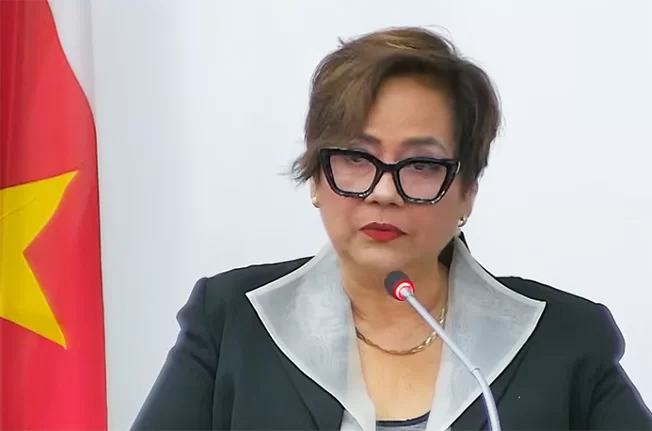
    In a striking address at the 50th CARICOM Heads of Government Conference in St. Kitts and Nevis, Trinidad and Tobago Prime Minister Kamla Persad-Bissessar delivered a blistering critique of the regional organization’s failure to present a unified front against Venezuelan aggression toward member states. The Prime Minister characterized CARICOM’s response as a “concerning silence” despite repeated security threats emanating from Caracas.

    Persad-Bissessar questioned CARICOM’s continued designation as a “zone of peace” when member nations face external threats without demonstrated regional solidarity. She emphasized that both Guyana and Trinidad and Tobago operate under direct pressure from Venezuela, noting her government’s public support for Guyana in its ongoing border dispute with Venezuela while criticizing other CARICOM members for insufficient backing.

    Citing national security imperatives, the Prime Minister revealed her administration has pursued independent security arrangements, including enhanced defense cooperation with the United States. She specifically acknowledged support from the Trump administration and Secretary of State Marco Rubio, highlighting collaborative efforts against drug trafficking, arms smuggling, and illegal migration originating from Venezuela.

    The Prime Minister reported that increased U.S. regional engagement has contributed to significant homicide reduction in Trinidad and Tobago, where criminal activity maintains strong connections to transnational gangs and smuggling networks.

    Persad-Bissessar also addressed challenges surrounding CARICOM’s free movement principle, stating that while her government supports integration conceptually, Trinidad and Tobago cannot currently sustain full open borders due to overwhelming pressures on healthcare systems, social services, and national finances from tens of thousands of illegal migrants.

    The address exposed deepening fractures within CARICOM regarding security policy, migration management, and foreign relations. While reaffirming the importance of regional cooperation, the Prime Minister made clear that national security priorities outweigh regional consensus for Trinidad and Tobago. Her unusually forthright critique has forcefully reinvigorated discussions about CARICOM’s effectiveness and strategic direction.

  • Suriname benadrukt belang regionale integratie tijdens Caricom-ministerraad

    Suriname benadrukt belang regionale integratie tijdens Caricom-ministerraad

    Suriname’s Minister of Foreign Affairs, International Business, and Cooperation (BIS), Melvin Bouva, participated in the 16th Special Meeting of the Caribbean Community (CARICOM) Council of Ministers held in Basseterre, Saint Kitts and Nevis. Accompanied by a technical delegation from his ministry, Bouva’s engagement underscored Suriname’s commitment to strengthening regional integration and collaborative governance within the Caribbean community.

    The meeting commenced with standard procedural formalities, including opening remarks and agenda adoption, before advancing to substantive policy discussions. Key agenda items encompassed the operationalization of the CARICOM Single Market and Economy (CSME), with particular focus on expanding recognized categories of aviation personnel under the free movement of skills regime. This initiative aims to enhance labor mobility and economic cooperation across member states.

    Additional critical topics addressed included reparations, membership and associate membership applications—notably from Bermuda—and a proposed amendment to the Revised Treaty of Chaguaramas concerning CARICOM Rules of Origin. The development of a common industrial policy for the Community was also deliberated, alongside administrative matters such as the Secretariat’s 2026 work program, budget, and contribution formula.

    Suriname’s participation signals its strategic prioritization of a cohesive, economically resilient Caribbean region, reinforcing the nation’s role in shaping collaborative decision-making processes within CARICOM’s governance framework.

  • Abrahams bij herdenking 25 februari: President, treed hard op tegen wie de idealen beschamen

    Abrahams bij herdenking 25 februari: President, treed hard op tegen wie de idealen beschamen

    In a solemn nighttime address marking the 46th anniversary of Suriname’s February Revolution, National Democratic Party (NDP) Vice Chairman Ramon Abrahams delivered a politically charged speech blending historical reflection with contemporary warnings. Dressed entirely in black, the veteran revolutionary figure addressed the gathering as the final speaker during the February 25, 1980 commemoration event.

    Abrahams opened by acknowledging the absence of NDP Chairwoman and President Jennifer Simons, who was detained by state obligations but had submitted a prerecorded message. He praised Assembly Chairman and NDP Vice Chairman Ashwin Adhin, who spoke earlier, as “the pristine example of how the revolution’s ideals have been integrated” into contemporary leadership.

    This year’s ceremony marked the third commemoration without former leader Desi Bouterse, whose absence remains palpably felt within the movement. Abrahams suggested Bouterse would have taken pride in the NDP’s electoral victory and subsequent return to governing authority.

    The vice chairman reflected on what he characterized as a turbulent post-election period, noting the administration had inherited both governmental weakening and systemic ‘wreckage’ from the 2020-2025 period. He further referenced surprising developments that allegedly disrupted the nation’s reward structures.

    Abrahams issued particularly stern warnings to fellow party members, cautioning against engagement in social media debates that he claimed are engineered by groups who lost power in 2025 to pit NDP members against each other. He emphasized the heightened responsibility borne by party representatives, stating they are “automatically placed under a microscope” due to their NDP affiliation.

    Regarding internal party matters, Abrahams stressed that such discussions would occur exclusively within established party structures, utilizing statutory and regulatory frameworks available through ongoing dialogues with the party chairwoman and president.

    The revolutionary veteran framed the 1980 uprising as an ongoing process requiring continuation by newer generations. He referenced sacrifices made throughout previous decades and affirmed the revolution’s ideals remain fundamentally guiding principles.

    Abrahams’ most forceful moment came during his direct appeal to President Simons: “President of the Republic of Suriname, I call upon you to act firmly without regard for persons against those who disgrace the process and ideals of February 25.” He reiterated that no individual, regardless of position or background, should stand above the revolution’s foundational ideals.

    Concluding his address, Abrahams emphasized February 25’s indelible place in Surinamese history and the NDP’s responsibility to contribute toward national development while honoring the revolution’s legacy. He advocated reinstating the date as a national holiday and specifically remembered detained comrades Ernst Gefferie, Stephanus Dendoe, and Benny Brondenstein, insisting their sacrifices must never be forgotten.

  • Adhin laat Bouterse herleven tijdens herdenking van 25 februari

    Adhin laat Bouterse herleven tijdens herdenking van 25 februari

    In a politically charged address during Suriname’s commemoration of the February 25, 1980 revolution, National Assembly Speaker and NDP Vice Chairman Ashwin Adhin positioned former leader Desi Bouterse at the center of national discourse. Adhin emerged as a staunch revolutionary advocate, dedicating his entire speech to Bouterse’s political legacy while calling for national unity and hinting at potential legal resolutions for three convicted ex-military personnel.

    The assembly speaker characterized the absence of Stephanus Dendoe, Ernst Gefferie, and Benny Brondenstein as a significant loss, revealing that legal ‘pathways’ remain open for their cases. Adhin expressed confidence that President Jennifer Simons would exercise her constitutional authorities appropriately, including potential pardon powers, at the proper time and manner.

    Adhin redefined the 1980 revolution as a multicultural, unifying people’s movement that transcended ethnic divisions in Surinamese society. He acknowledged the period’s mixed legacy of achievements and painful moments, emphasizing that meaningful commemoration requires transforming history into acts of unity, discipline, and national development.

    In a deeply personal segment, Adhin reflected on his relationship with Bouterse, stating he had not only admired but actively sought to understand and share responsibility for the revolutionary ideology. The speaker emotionally channeled Bouterse’s tradition by singing lines from ‘I Did It My Way’ and Hindi ballad ‘Zara Chahra To Dikhaao,’ symbolizing Bouterse’s political and personal journey.

    Linking his message to current political cooperation between former rivals in government, Adhin framed this constellation as a historic opportunity for reconciliation with the past. He warned against increasing polarization while advocating for humanity, discipline, and solidarity as essential conditions for national development and sovereignty protection.

    Through his address, Adhin imbued the revolution anniversary with distinct political significance, explicitly connecting Bouterse’s legacy, revolutionary heritage, and contemporary constitutional questions within Suriname’s ongoing political narrative.

  • Al 1150 chikungunya besmettingen, tweede sterfgeval onderzocht

    Al 1150 chikungunya besmettingen, tweede sterfgeval onderzocht

    Suriname is confronting a rapidly accelerating chikungunya virus outbreak, with confirmed infections surging to 1,150 cases since the disease reemerged in January. Health authorities are currently investigating a potential second fatality, though the exact cause of death remains undetermined.

    The Chikungunya Task Force, led by chairperson Maureen van Dijk, disclosed these concerning developments during a press conference at the Ministry of Health. The working group confirmed the virus continues its expansion across the country while large-scale containment measures face significant delays.

    Critical shortages have hampered response efforts, with available larvicide chemicals completely depleted. Although spraying operations were conducted at multiple locations two weeks ago to eliminate mosquito breeding grounds, these interventions have been suspended. New shipments of pesticides and larvicides from Barbados and Brazil are en route, but the timeline for launching comprehensive spraying campaigns remains uncertain.

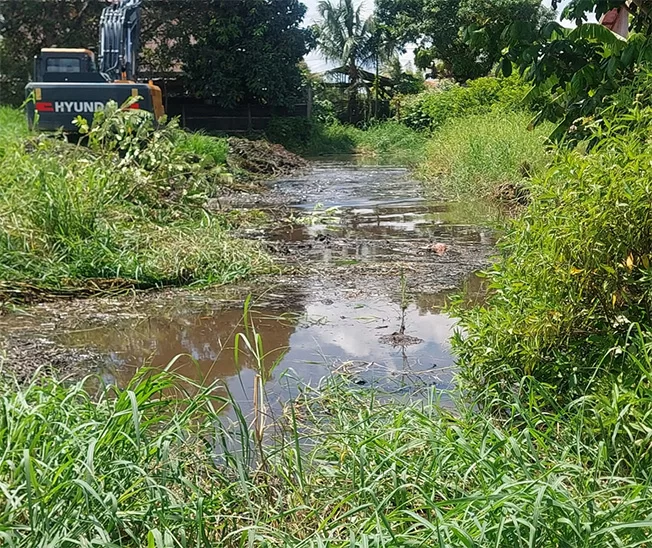
    Among Suriname’s ten districts, Brokopondo, Sipaliwini and Saramacca have thus far reported no confirmed infections. Health officials are urgently appealing for public cooperation in virus containment measures, emphasizing that eliminating stagnant water sources remains crucial since mosquitoes transmitting chikungunya can deposit eggs in minimal water reservoirs including flower pots and vases.

    Additional protective recommendations include wearing appropriate clothing, using mosquito repellents such as gels, vaporizers and incense, and ensuring infants and young children sleep under mosquito nets. Pregnant women, elderly individuals and those with underlying health conditions have been identified as particularly vulnerable groups.

    Healthcare authorities warn that further virus spread could strain medical personnel who themselves face infection risks. Despite the concerning trends, some positive developments have emerged among infected infants. One newborn, whose mother contracted the virus during pregnancy, recovered following prompt medical intervention. Two other infected infants have been discharged from hospital care.

    The Task Force confirms adequate testing materials remain available, with fever and severe joint pain representing primary symptoms. Individuals experiencing these symptoms are advised to seek immediate medical attention.

    The current outbreak appears to be progressing more rapidly than the 2014 chikungunya epidemic, which lasted approximately four months, resulted in around 700 confirmed cases and one fatality. The speed of transmission was highlighted during the recent press conference when confirmed cases jumped from 983 to 1,150 within a single hour.

    While individuals previously infected with chikungunya typically develop immunity, joint discomfort may recur later. Health services across districts continue actively gathering data on chikungunya and other mosquito-borne diseases, including dengue fever.

  • President tijdens maiden speech: Regionale eenheid is geen keuze, maar noodzaak

    President tijdens maiden speech: Regionale eenheid is geen keuze, maar noodzaak

    Surinamese President Jennifer Simons delivered her inaugural address as head of state during the 50th Regular Meeting of the Conference of Heads of Government of CARICOM in St. Kitts and Nevis, outlining a visionary agenda for Caribbean regional cooperation. The historic speech marked her first appearance at the premier regional forum since assuming office seven months ago as Suriname’s first female president.

    In her opening remarks, President Simons extended congratulations to Prime Minister Terrance Drew of St. Kitts and Nevis on assuming the CARICOM chairmanship while expressing appreciation for the leadership of outgoing chair, Jamaican Prime Minister Andrew Holness.

    Emphasizing the familial nature of the Caribbean community, President Simons asserted that “CARICOM is not merely an institution; it is a family.” Against the backdrop of global economic uncertainty, climate change, geopolitical shifts, and social pressures, she framed regional unity not as an optional approach but as an essential requirement for small states to maintain influence and enhance resilience.

    A substantial portion of her address focused on youth development, education, and technological advancement. President Simons highlighted how today’s youth navigate a world fundamentally different from previous generations, characterized by rapid digitalization, artificial intelligence, and green transition developments. She advocated for educational systems that equip young people with digital literacy, entrepreneurial skills, and adaptive capabilities, positioning youth empowerment as central to regional policy-making in innovation, technology, and social inclusion.

    Addressing Suriname’s emerging oil and gas sector, the president positioned energy resources as catalysts rather than endpoints for development. Within the global energy transition framework, she committed Suriname’s contribution to regional energy security while emphasizing strategic reinvestment of hydrocarbon revenues into economic diversification and environmental protection to ensure post-sector economic resilience.

    President Simons identified climate change as an existential reality for the region, with rising sea levels, extreme weather events, and food insecurity disproportionately affecting Caribbean nations. She advocated for equitable and accessible climate financing for small island and low-lying states, noting Suriname’s unique carbon-negative status through its extensive forests absorbing more CO₂ than the country emits. The president called for collective CARICOM advocacy toward just climate financing mechanisms.

    In her concluding remarks, President Simons urged fellow heads of state and government to demonstrate the courage and determination necessary to guide the region through challenging times, expressing hope that the conference would yield clear strategies and renewed shared responsibility.

    This maiden speech at CARICOM’s highest regional platform positions Suriname under President Simons’ leadership as a constructive partner focused on youth empowerment, sustainable energy development, regional cooperation, and climate justice advocacy.

  • Sonkei Invitational brengt judo weer tot leven na lange wedstrijdpauze

    Sonkei Invitational brengt judo weer tot leven na lange wedstrijdpauze

    After months without local competitions, the fourth edition of Judoclub Sonkei’s international invitational tournament has revitalized competitive judo in the region. The event featured 110 matches on a single judo mat, providing athletes with their first opportunity in months to gain competitive experience on home soil.

    This tournament arrived at a critical juncture, as the last locally organized judo competition dated back to June of the previous year. For numerous competitors, this marked their first official appearance in many months, making the event particularly significant for their athletic development.

    Regional Exchange Initiative
    The competition forms part of an ongoing exchange program between Judoclub Sonkei and French Guiana’s CSAB club. What began in 2015 as an initiative by coaches Shies Madhar and Eric Emanuel has evolved into a regional platform combining athletic development, cultural exchange, and international friendship.

    CSAB traveled to Suriname with 38 judokas, joined by competitors from Judoclub de Guyane and Judoclub Jigoro Kano. Sonkei fielded 27 competitors, while Jigoro Kano participated with a select team of seven athletes. The diverse participation underscored the tournament’s growing importance within the regional judo community.

    Beyond Competition
    According to organizers, the exchange program focuses on more than medal counts. Young judokas gain international experience, learn to handle competitive pressure, and engage with different languages and cultures. Simultaneously, family members and supporters in Suriname can closely observe their athletes’ development.

    The extended period without competitions made this edition particularly meaningful. The invitational tournament finally provided a competitive platform where judokas could measure their progress and sharpen their competitive rhythm.

    Technical Excellence on Display
    Spectators witnessed technically refined judo with multiple high-level ippons. Among girls under 15, Jade Bougeunon of Sonkei received the award for most beautiful ippon, while Gariel Soemo earned recognition among the boys.

    In the Cadets and U21 categories, Juan Swedo of Judoclub Jigoro Kano impressed with varied and technically pure judo. Among female Cadets, Seraya Sylvestre received special distinction for her performance.

    Medal Standings
    CSAB topped the overall standings with 11 gold, 14 silver, and 8 bronze medals. Sonkei followed with 5 gold, 4 silver, and 11 bronze medals. Judoclub Jigoro Kano secured 3 gold, 2 silver, and 3 bronze medals, while Judoclub de Guyane claimed 1 silver and 1 bronze medal.

    For Judoclub Sonkei, this tournament serves as preparation for upcoming international challenges, including CSAB’s All Female Tournament on March 7, 2026, in Cayenne and the Copa das Fronteras on May 30, 2026, in the Brazilian border town of Oiapoque.

    Through this exchange program, the club aims not only to develop competitive judokas but also to equip young people with skills that hold lasting value beyond the sport itself.

  • Vijf-jarig overeenkomst Atompai van ruim SRD 95.000 per maand boven water

    Vijf-jarig overeenkomst Atompai van ruim SRD 95.000 per maand boven water

    A significant contractual agreement has surfaced involving Monché Atompai, Director of the Milk Central, who previously denied any formal arrangement with the State Health Fund (SZF). Despite his categorical denial to Starnieuws media outlet, documentation reveals SZF Director Rudrakanth Oemraw formalized a five-year advisory contract with Atompai on February 1, 2026.

    The contract establishes Atompai as an external consultant rather than a formal employee, operating under a assignment agreement framework within Suriname’s Civil Code. His advisory responsibilities encompass policy and organizational consultation, analytical reporting, guidance for improvement initiatives, and specialized advisory services within SZF’s operational scope.

    Notably, the agreement permits a minimum weekly commitment of 96 hours, adjustable according to SZF’s requirements through mutual consultation. Work may be conducted either at SZF premises or alternative locations, with strict adherence to confidentiality and information security protocols.

    Financial terms reveal a substantial monthly compensation of SRD 95,856 (approximately $7,200 USD) excluding taxes, with invoicing occurring monthly based on pre-approved timesheets. Payment follows within fourteen days of invoice approval. Travel and additional expenses require prior written authorization for reimbursement.

    The contract stipulates that all reports, analyses, and advisory outputs become SZF property upon payment completion. A confidentiality clause remains effective during and for one year post-contract termination.

    Termination provisions include mutual agreement, one-month notice period, or immediate termination for urgent reasons or substantial breach. When recently contacted for comment, Atompai declined to respond, stating he was “unavailable at this moment” to Starnieuws.

  • President-commissaris TAS Donaghy Malone legt functie neer

    President-commissaris TAS Donaghy Malone legt functie neer

    In a significant development within Suriname’s governance sector, Donaghy Malone has abruptly resigned from his position as President-Commissioner of the Telecommunication Authority Suriname (TAS). The resignation, effective immediately, was formally communicated through a letter addressed to President Jennifer Simons dated February 23, 2026.

    Malone’s departure comes just months after his official appointment to the regulatory body on October 2, 2025, pursuant to an October 14, 2025 administrative decree. In his resignation correspondence, Malone articulated that his decision stemmed from profound moral-ethical considerations and national interest concerns.

    The former commissioner emphasized that his resignation followed meticulous deliberation and was motivated by the imperative to prevent any perception of conflict of interest, external influence, or administrative obstruction. Malone stressed the critical importance of maintaining the TAS’s operational independence, stating that the authority and its supervisory organs must execute their duties with complete autonomy, transparency, and administrative stability.

    Despite his premature departure, Malone expressed gratitude for the confidence placed in him and acknowledged the privilege of having served in the capacity of president-commissioner. The resignation underscores ongoing challenges within regulatory governance frameworks and highlights the delicate balance between administrative appointments and ethical governance in public institutions.

  • Interpellatie  over SZF en RZW donderdag op agenda Nationale Assemblee

    Interpellatie over SZF en RZW donderdag op agenda Nationale Assemblee

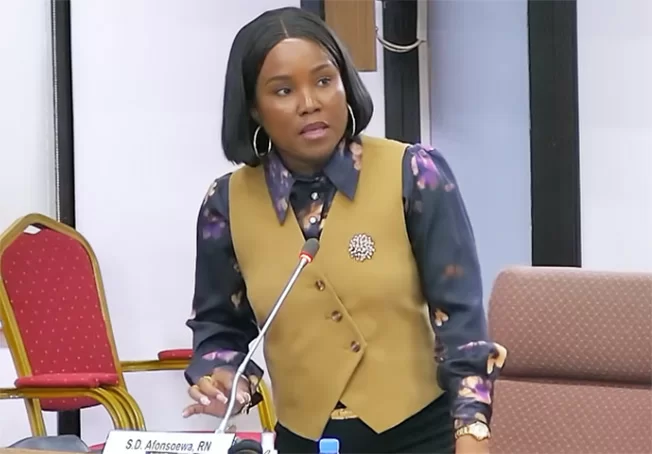
    Suriname’s National Assembly has scheduled a critical public hearing for Thursday at 12:00 hours to address mounting concerns regarding the financial management and governance of the country’s healthcare institutions. The session will feature an interpellation initiated by assembly members Silvana Afonsoewa and Rosseillie Cotino from the NDP faction, targeting the operations of the State Health Fund (SZF) and the Wanica Regional Hospital (RZW).

    The parliamentary inquiry demands the government provide comprehensive and transparent explanations regarding three fundamental areas of concern. Legislators are seeking immediate clarification on the current financial status, outstanding obligations, and governance framework of the State Health Fund. Additionally, they require full disclosure of contractual agreements with external service providers at the Wanica Regional Hospital, including detailed financial impact assessments on operational costs and healthcare expenses, along with complete documentation of approval procedures for these contracts.

    Furthermore, the interpellation calls for the government to outline specific measures that will be implemented to structurally enhance transparency, strengthen accountable governance, and ensure protection of public healthcare resources. This parliamentary scrutiny occurs amidst ongoing developments at SZF, including the recent suspension of the general director and growing public discourse about financial management practices within Suriname’s healthcare sector.

    The hearing represents a significant legislative challenge to the administration’s handling of healthcare governance, reflecting deepening concerns about fiscal responsibility and institutional transparency in public health management.