标签: Suriname

苏里南

  • Plan voor extra verkeershandhavers krijgt steun van minister Monorath

    Plan voor extra verkeershandhavers krijgt steun van minister Monorath

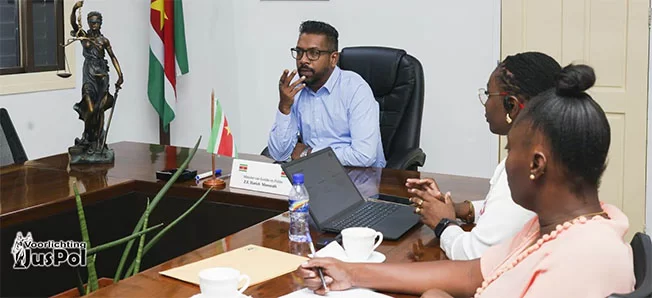
    PARAMARIBO, Suriname – July 14 – Suriname’s Minister of Justice and Police Harish Monorath has announced full backing for a targeted proposal designed to expand the enforcement capabilities of the Korps Politie Suriname (KPS), the country’s national police force, in a major push to cut traffic violations and improve public road safety. The initiative, which centers on training and deploying dedicated traffic enforcement officers to step up monitoring of road rule compliance, was formally presented to the minister by the Traffic Enforcement Commission, a body chaired by Joanne Kasno-Adraai, director of Suriname’s National Road Safety Institute (VVI).

    Members of the commission laid out core details of the proposal during a formal presentation attended by a cross-section of key stakeholders, including KPS’ head of traffic policing, the lead traffic official for the national investigative team, a representative from the national legislation bureau, a retired senior police chief inspector, and a senior staff member from VVI. During the gathering, commissioners walked attendees through the plan’s core objectives, projected public safety outcomes, and outlined next steps for moving the initiative forward.

    Per the commission’s analysis, expanding dedicated enforcement capacity will directly increase the likelihood that drivers who violate traffic laws will be caught, creating a stronger deterrent effect that addresses high-risk dangerous driving behaviors that have contributed to road accidents and casualties across the country. Following the presentation, Minister Monorath publicly praised the commission for developing the targeted initiative and reaffirmed his full support for moving it toward implementation.

    Monorath emphasized that strengthening targeted traffic enforcement is not a discretionary measure, but a necessary step to deliver long-term, sustainable improvements to Suriname’s road safety outcomes for all road users, from pedestrians to professional drivers. The minister also stressed that the project should move forward with urgency, calling for the training and deployment of the new dedicated traffic enforcement officers to begin as soon as possible.

    In the coming weeks, relevant government bodies will hold additional working sessions to work through the fine details of the plan and finalize implementation arrangements. For the initiative’s architects, the expansion of traffic enforcement capacity marks a critical foundational step toward higher rates of road rule compliance and a safer road environment for every person using Suriname’s road networks.

  • Verkeersveiligheidsinstituut slaat alarm na vier jonge verkeersdoden in vijf dagen

    Verkeersveiligheidsinstituut slaat alarm na vier jonge verkeersdoden in vijf dagen

    In a devastating five-day stretch that has sent shockwaves through road safety circles, four young people have lost their lives in traffic incidents across the Netherlands, prompting urgent alarm from the national Verkeersveiligheidsinstituut (VVI, the Institute for Road Safety) over the rapidly growing toll of fatal crashes involving young road users. Multiple of these recent deadly accidents involved moped riders and motorcyclists, a high-risk group that safety officials have long targeted for additional prevention efforts.

    The uptick in fatalities has drawn fierce concern from top national officials, including Minister of Justice and Police Harish Monorath, who has labeled the recent string of deaths as an issue of extreme severity. The VVI emphasized that this cluster of fatal incidents should not be dismissed as a series of isolated, random events; instead, it represents a critical wake-up call for the entire nation to address systemic gaps in road safety culture.

    VVI Director Joanne Kasno-Adraai described the consecutive deaths as an unmitigated tragedy. “Four young people never made it home,” she said, noting that grieving family members, partners, friends, and children are left to navigate overwhelming grief with few answers for why these losses occurred. On behalf of the entire institute, Kasno-Adraai extended heartfelt condolences to the bereaved, wishing them strength as they process their irreversible loss.

    Moving forward, the VVI confirmed that the Ministry of Justice and Police, led by Minister Monorath, will continue partnering with the institute and other relevant agencies to invest in expanded road safety education, public awareness campaigns, targeted prevention initiatives, and stricter enforcement of existing traffic rules. Even as institutional authorities commit to action, the institute stressed that individual road users bear a critical share of responsibility for preventing future deaths.

    In an urgent appeal directed at high-risk groups, the VVI called specifically on moped riders, motorcyclists, and all young road users to moderate their speed, always wear an approved, properly fitted safety helmet, and eliminate distractions including alcohol consumption and mobile phone use while on the road. The institute also issued a call to passenger vehicle drivers to increase their vigilance, reminding motorists to account for blind spots, maintain safe following distances, and give adequate space to two-wheeled road users.

    “One moment of rushing, recklessness, or inattention can change a life forever,” Kasno-Adraai said. “Instead of waiting for the next tragic report, let us work together to build safer roads for everyone.”

  • Column: Tijdelijke maatregelen vragen blijvende openheid

    Column: Tijdelijke maatregelen vragen blijvende openheid

    There is an old adage that holds true across many policy contexts: no measure is more permanent than a temporary policy that never gets scheduled for review. This principle is now playing out in Suriname, where a temporary fuel price cap implemented amid the outbreak of conflict in the Middle East continues to operate without the public transparency and scheduled evaluation that good governance demands.

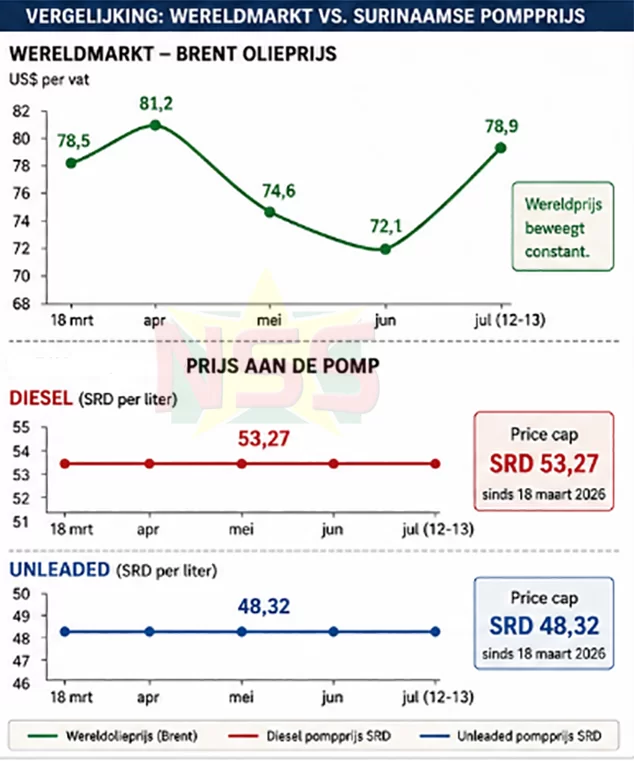
    When regional hostilities sent international oil prices skyrocketing in early 2025, threatening to accelerate already strained inflation levels, the Surinamese government faced a critical policy choice. To protect household purchasing power and avoid adding additional pressure to already strained manufacturing and transportation sectors, authorities introduced a fuel price cap on March 18. The policy set maximum retail prices of 53.27 Surinamese dollars (SRD) per liter for diesel and 48.32 SRD per liter for unleaded gasoline. At the time of its introduction, the emergency measure was widely viewed as a justifiable decision to counter volatile market conditions.

    But every temporary intervention raises an unavoidable question over time: when and how will policymakers assess whether the policy is still needed? Since March, the global oil market has been anything but stable, with prices swinging sharply between steep increases and sudden drops before climbing again amid continued Middle Eastern geopolitical tensions. This volatility underscores just how challenging it is to implement and sustain fuel price policy in an unpredictable global economy – and that reality makes transparency all the more critical for public accountability.

    During recent parliamentary budget deliberations, Minister of Finance and Planning Adelien Wijnerman confirmed that the government would review the future of the fuel subsidy program in the near term. She also noted that a gradual phase-out of the cap would likely be more prudent than an abrupt end to the policy. Wijnerman added that without the current price cap, retail prices would rise to roughly 64 SRD per liter for diesel and 62 SRD per liter for unleaded gasoline.

    President Jennifer Simons has also shed light on the significant fiscal cost of the policy, revealing that the government foregoes approximately 300 million SRD in monthly revenue to keep fuel prices artificially low, through a reduction in state levies on fuel. This represents a major fiscal commitment: public funds can only be spent once, and every month that the state treasury forgoes hundreds of millions of Surinamese dollars means less budget available for critical investments in healthcare, education, public safety, infrastructure, and other core public services.

    This fiscal trade-off does not automatically mean the fuel subsidy must be eliminated entirely. But it does mean that Surinamese society has a right to know how policymakers are weighing these competing priorities. The core debate around this policy is not ultimately whether fuel prices should rise or fall – it is a question of responsible governance and an open, accountable government.

    Multiple critical questions remain unanswered for the public: How is the current price cap calculated on a monthly basis? Exactly how much revenue is the state actually foregoing? What is the current size of the effective subsidy, given that global oil prices have shifted dramatically multiple times since the cap was introduced? When will policymakers assess whether market conditions have changed enough to require policy adjustments? And when will these trade-off decisions be shared openly with the public?

    Beyond fiscal impacts, the price cap also reshapes competitive dynamics among private oil companies. Before the policy was introduced, companies competed on retail pump prices to attract customers; today, motorists pay nearly identical prices at every filling station across the country. This market intervention has spawned new questions: How does healthy competition still function in this regulated market? Is the subsidy calculated uniformly for every operating oil company? How will policymakers prevent unequal outcomes that stem from differing cost structures and price-building processes among companies? Precisely because the government has chosen to intervene directly in the fuel market, the full workings of this system deserve complete public transparency.

    Price stability for consumers is a legitimate policy goal, and no government is required to adjust retail fuel prices on a weekly basis to match shifts in global commodity markets. But stability does not justify silence on policy trade-offs. Precisely because the government made the deliberate choice in March to implement a sweeping market intervention, the public has a reasonable expectation that authorities will periodically explain how the system works, what trade-offs guide decision-making, and when the policy will next be evaluated. This approach also aligns with the original process the president used to develop the policy, which included open consultations with business groups, trade unions, independent economists, political parties, and other civil society organizations.

    Remarkably, almost no public information is currently available about how fuel prices under the cap are calculated. This information vacuum pushes public debate toward speculation rather than fact-based discussion – an outcome that serves no one, neither the government, operating oil companies, nor the Surinamese public.

    At its core, the debate over the temporary fuel price cap is not about the cost of a liter of gasoline. It is about how much transparency and open accountability good governance is worth. Temporary emergency measures can remain in place for extended periods when conditions justify it. But secrecy around those measures never can.

  • Olieprijzen stijgen fors door escalatie VS-Iran over Straat van Hormuz

    Olieprijzen stijgen fors door escalatie VS-Iran over Straat van Hormuz

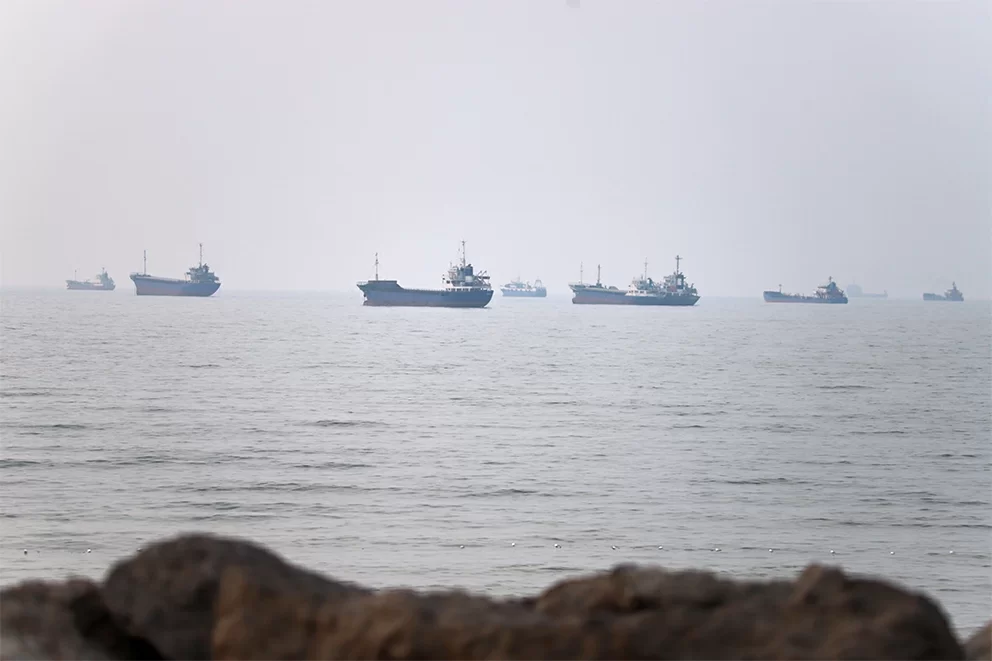
    Global oil markets saw a sharp upward spike on Tuesday, with benchmark Brent crude climbing to $83.32 per barrel to mark a 4.5% one-day gain. The sudden surge comes on the heels of rapidly escalating geopolitical tensions between the United States and Iran centered on the Strait of Hormuz, the world’s most critical chokepoint for global energy trade.

    The escalation unfolded after U.S. Central Command (Centcom) launched dozens of airstrikes on Iranian targets in the region, an operation explicitly designed to reduce Iran’s capacity to launch attacks on commercial vessels transiting the waterway. This U.S. military action was itself a response to an earlier alleged Iranian attack on a container ship registered under the flag of Cyprus. In a public statement, Centcom reaffirmed that the United States remains committed to guaranteeing freedom of navigation through the strait, despite what it calls continued aggressive actions by Tehran.

    Iran hit back quickly, launching a wave of drone and rocket attacks targeting states across the Persian Gulf region, including the United Arab Emirates, Qatar, Kuwait, Oman and Bahrain. The Iranian authority that manages maritime traffic through the straat also issued a stark warning: any commercial vessel that deviates from the Tehran-designated shipping corridor will not be guaranteed safe passage. “The consequences of transiting via unauthorized routes are the sole responsibility of the vessel’s owner, operator and captain,” the official statement read.

    Geopolitical analysts widely recognize the Strait of Hormuz as an irreplaceable strategic energy artery, with roughly one-fifth of all globally traded oil passing through the narrow waterway each year. The sharp spike in tensions has already triggered a dramatic drop in daily vessel transits, fanning widespread market fears over potential disruptions to global oil supply chains.

    The drop in traffic comes after a brief period of de-escalation earlier in June, when Washington and Tehran signed a memorandum of understanding to de-escalate hostilities. Data from maritime intelligence firm Windward illustrates the severity of the recent decline: between Thursday evening and Friday morning during the latest escalation, only six vessels completed transits of the strait, down from a steady 18 to 22 daily transits recorded earlier in June. Between Saturday evening and Sunday morning, just nine vessels passed through, four of which sailed under the Iraqi flag.

    Compounding market concerns is the ongoing drawdown of the U.S. Strategic Petroleum Reserve (SPR), which has now fallen to its lowest level since 1983. The reserve has released 172 million barrels of crude onto global markets in an effort to offset price spikes and stabilize supply, leaving storage at a multi-decade low.

    Industry analysts forecast that oil prices will remain elevated through August and September, holding in a range of $70 to $80 per barrel with continued volatility tied directly to geopolitical developments and shifting global demand patterns. The latest escalation between the U.S. and Iran has also accelerated a long-running trend of major energy importers reducing their dependence on Middle Eastern crude, though analysts note that persistent geopolitical risk premiums will continue to support higher global prices.

    Beyond energy markets, the renewed tensions have also rippled through global equity markets, putting downward pressure on major Asian exchanges. Japanese and South Korean stock indices posted notable declines, though the Hang Seng Index in Hong Kong recorded a modest gain.

  • Ismaël Holtuin bezorgt Suriname goud en brons op PanAm Aquatics Championships

    Ismaël Holtuin bezorgt Suriname goud en brons op PanAm Aquatics Championships

    The 2026 PanAm Aquatics Swimming Championships, held from July 8 to 12 in the Colombian city of Ibagué, delivered a historic milestone for Surinamese swimming, as veteran competitor Ismaël Holtuin secured one gold and one bronze medal to cement his place among the nation’s most accomplished aquatics athletes.

    Competing in the men’s 19-and-over division, Holtuin claimed top honors in the 50m freestyle, clocking a winning time of 22.85 seconds to secure the gold. He followed up this breakthrough performance with a third-place finish in the 100m freestyle, touching the wall in 50.40 seconds to take home bronze. Beyond his medal-winning runs, Holtuin also posted solid results in two additional events: he finished fifth in the 50m backstroke with a time of 26.95 seconds, and placed 10th in the 50m butterfly with a 25.62-second swim.

    Organized as the official continental swimming championship for all of North America, Central America, South America and the Caribbean, the PanAm Aquatics Championships brings together the region’s top competitive swimmers. The tournament serves as a critical international platform for nurturing emerging swimming talent and elevating the standard of elite aquatics competition across the Americas. Suriname sent a small three-person delegation to the 2026 event, consisting of Ismaël Holtuin, his younger brother Hassan Holtuin, and fellow competitor Tyrell Mokkum.

    Hassan Holtuin competed in the 16-to-18-year-old age group, where his strongest showing came in the 50m breaststroke. He posted a time of 30.84 seconds to secure eighth place overall in the event. He also competed in three additional races: the 50m freestyle (25.44 seconds), 50m butterfly (27.17 seconds), and 100m breaststroke (1:11.12).

    Tyrell Mokkum, also competing in the 16-to-18-year-old division, took part in five different events across the championship. He recorded times of 26.51 seconds in the 50m freestyle, 27.35 seconds in the 50m butterfly, 32.29 seconds in the 50m breaststroke, 1:13.27 in the 100m breaststroke, and 1:01.96 in the 100m butterfly.

    The Suriname Swimming Federation has hailed the delegation’s overall results as an outstanding achievement for the nation’s swimming program. Officials highlighted that Ismaël Holtuin’s dual medal finish is a direct reward for years of dedicated training, strict discipline, and unwavering commitment to the sport. They added that the historic medals underscore the steady growth and rising international competitiveness of Surinamese competitive swimming.

    The federation has officially extended congratulations to Ismaël Holtuin, his coaches Fabienne Nabibaks and Vincent Babel, as well as Hassan Holtuin, Tyrell Mokkum, and all supporting staff for their strong performances throughout the championship. Official final results will be published by the tournament organizing committee only after all post-event administrative processes, including any required doping control procedures, are fully completed.

  • Leidinggevenden getraind om cyberrisico’s beter te herkennen

    Leidinggevenden getraind om cyberrisico’s beter te herkennen

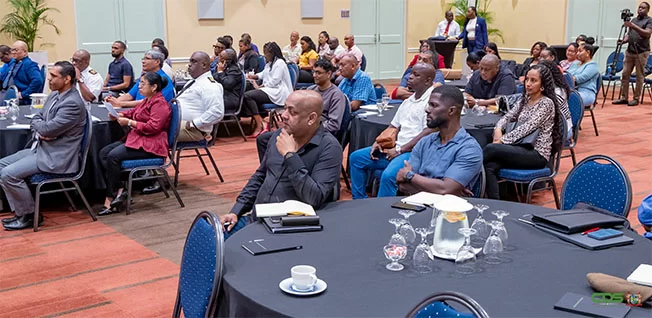
    Paramaribo, Suriname – As government operations grow increasingly digital across the globe, Suriname’s e-Government Directorate (e-Gov) has taken a key step to boost national cyber resilience, hosting a second specialized cybersecurity awareness workshop for senior leaders across all national ministries. Held at Hotel Torarica, the workshop is part of a broader ongoing initiative designed to build threat awareness and strengthen protection for sensitive government data and digital infrastructure.

    The series of training sessions is a joint effort between e-Gov and the Inter-American Development Bank (IDB), with instruction delivered by experienced IT professionals from leading local cybersecurity firms based in Suriname. The first workshop in the series, held on June 3, was targeted at IT staff and civil servants across a range of public agencies, expanding awareness to frontline public sector workers before the targeted session for top decision-makers.

    Llydion Dalfour, Director of Suriname’s e-Government Directorate, opened the workshop by framing the dual reality of public sector digital transformation. He emphasized that widespread adoption of digital tools has unlocked major benefits for Suriname’s government, including more efficient public services, greater administrative transparency, and improved access to services for ordinary citizens. But Dalfour also stressed that growing digital dependence comes with unavoidable new responsibilities. “Every new digital service, every connected system, every new integration brings new vulnerabilities,” he explained, noting that cybercriminal networks continue to grow more sophisticated and organized each year.

    Dalfour outlined the two core goals of the targeted workshop for senior leaders. First, the session aims to embed a culture of cyber awareness at the highest levels of government, where policy and budget decisions shape the overall security posture of public agencies. Second, the workshop provides practical, actionable technical guidance to help leaders identify emerging cyber risks early and implement effective mitigation measures across their departments.

    Krish Dwarkasing, an IT security consultant at Suriname’s leading OMNI Information Security Consultancy N.V., emphasized the pervasive nature of modern cyber threats in his remarks. As both public and private organizations grow more reliant on data and digital workflows to carry out core operations, protecting that information from internal and external threats has become a core operational priority. “Cybersecurity is fundamentally about safeguarding the data that organizations depend on to function,” Dwarkasing explained. He noted that threats can originate both from outside actors seeking unauthorized access and from internal gaps in training or process, making organization-wide awareness just as critical as advanced technical defenses. To sustain long-term resilience, Dwarkasing added, organizations must also implement clear, formal cybersecurity policies that set consistent standards for all staff.

    Marlon Roosveld, a member of the Suriname Customs management team, highlighted the immediate relevance of the training for his agency, which handles vast volumes of sensitive personal and commercial data on a daily basis. Roosveld noted that a successful cyber attack on customs systems would have far-reaching consequences for national trade, public safety, and citizen privacy, making ongoing staff training and awareness non-negotiable for the agency. “This workshop equips our leadership to address gaps and build a more resilient security posture that protects the critical information we manage every day,” Roosveld said.

  • Trinidad & Tobago wil regionaal centrum worden voor kunstmatige intelligentie

    Trinidad & Tobago wil regionaal centrum worden voor kunstmatige intelligentie

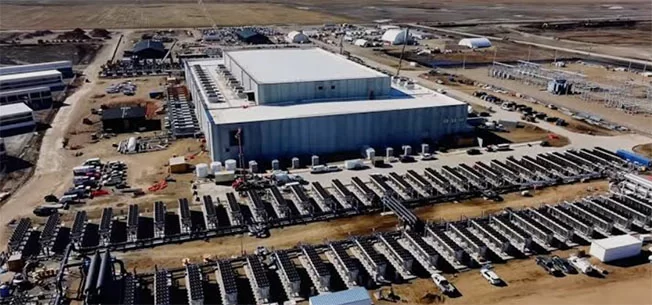
    The twin-island Caribbean nation of Trinidad and Tobago has unveiled an ambitious plan to carve out a new role as a regional artificial intelligence and data processing hub, signing three landmark partnership agreements with United States-based firms to build large-scale AI data centers and restart the country’s idled steel industry. The deals, struck by the administration of Prime Minister Kamla Persad-Bissessar, are projected to generate more than 5,000 new jobs across the projects, marking the first large-scale partnerships of this kind between any Caribbean country and U.S. companies focused on AI infrastructure development.

    The memoranda of understanding were signed with three entities: Florida-headquartered Hummingbird AI Holdings, global professional services firm Ernst & Young LLP based in New York, and Pinnacle Steel and Vanadium Corporation. Under the terms of the agreements, Ernst & Young will lead development of a 300-megawatt data center purpose-built for AI workloads, while Hummingbird AI Holdings will handle pre-development and planning for a second 150-megawatt AI and data processing facility. The third agreement formalizes plans to restart operations at a steel plant that was recently acquired by Pinnacle Steel and Vanadium, bringing a key industrial sector back online after a period of inactivity.

    Prime Minister Persad-Bissessar framed the suite of projects as a transformative step in Trinidad and Tobago’s long-running push for economic diversification. For decades, the country’s economy has been heavily reliant on oil and gas exports, leaving it vulnerable to global commodity price swings. The government now aims to establish the nation as the Caribbean’s leading technology and innovation hub over the coming years, with the AI data center projects serving as a cornerstone of that strategy. Persad-Bissessar also noted that the United States played a facilitating role in bringing the agreements to fruition.

    But the government’s optimistic outlook has been met with sharp criticism from environmental organizations and industry analysts, who warn that the massive infrastructure projects pose significant risks to the nation’s already strained natural resources. Large-scale AI data centers are among the most energy-intensive industrial facilities in the world, requiring massive volumes of water for cooling systems to manage the heat generated by high-density AI computing hardware. Those demands have sparked particular alarm because Trinidad and Tobago has battled chronic water shortages for years, with many households relying on stored water due to inconsistent public drinking water distribution.

    Social activist Wayne Kublalsingh argues that economic progress cannot be measured solely by new investment and job creation. He emphasized that large, energy- and water-intensive projects place disproportionate stress on local natural resources, and called on the government to release a clear, public plan explaining how it will meet the additional demand for water and electricity generated by the new data centers without harming residential access to critical resources.

    The concerns raised in Trinidad and Tobago align with a growing global debate over the environmental tradeoffs of AI expansion. A recent report from the United Nations University projects that data centers could account for nearly 3 percent of total global electricity consumption by 2030, as demand for AI computing continues to surge worldwide. This growth has forced governments and industry stakeholders around the world to grapple with balancing the significant economic opportunities of AI development against the substantial environmental footprint of the infrastructure required to support it.

    For the broader Caribbean region, the Trinidad and Tobago agreements mark a notable departure from the region’s traditional economic development models. While most Caribbean nations have built their economies around tourism, fossil energy production, or financial services, Trinidad and Tobago is now seeking to position itself as a competitive destination for large-scale AI and data processing operations. Whether this initiative can serve as a replicable new economic model for the region will depend on two key factors: the successful execution of the planned projects, and the government’s ability to effectively address the environmental and infrastructure challenges that have already drawn public scrutiny.

  • Irak onderschept 375 kg goud in omvangrijke anti-corruptieoperatie

    Irak onderschept 375 kg goud in omvangrijke anti-corruptieoperatie

    BAGHDAD – In a landmark development for Iraq’s sweeping new anti-corruption campaign, judicial authorities have announced the seizure of 375 kilograms of illicit gold linked to a corruption investigation involving a former senior oil ministry official. The massive haul marks one of the largest recoveries of stolen state assets since Prime Minister Ali Faleh al-Zaidi took office and ramped up efforts to root out high-level graft earlier this year.

    The confiscation was carried out in a coordinated operation with security forces from Iraq’s Kurdistan Region, which yielded 358 kilograms of the precious metal. An additional 17 kilograms of gold were intercepted the same day in a separate, unspecified related operation, Iraq’s Supreme Judicial Council confirmed in an official statement. Following the seizure, all recovered gold has been transferred to the Issue and Treasury Department of the Central Bank of Iraq, as investigative teams continue to hunt for other illegally obtained assets tied to the case.

    The investigation centers on Adnan Al Jumaili, Iraq’s former deputy oil minister for refinery affairs, who was taken into custody in May and officially removed from his post on June 2. Al Jumaili faces allegations that he misappropriated public funds and manipulated state oil contracts to generate personal profit, with probes focusing on corrupt activities dating back to October of last year.

    Judge Dhia Jafar, head of the Central Anti-Corruption Criminal Court, confirmed that this seizure is just one component of a far broader anti-graft push that accelerated after al-Zaidi assumed office in May. Since the new administration took power, multiple senior government officials have been arrested, and investigators have recovered more than $100 million in missing public funds and high-value stolen assets. The gold recovery comes just weeks after authorities uncovered 14 billion Iraqi dinars (equivalent to roughly $10.6 million) hidden inside a rainwater drainage pipe, a discovery that underscored the scale of deep-rooted corruption in Iraqi state institutions.

    The ongoing crackdown, dubbed “Operation Dawn,” is explicitly focused on recovering lost or embezzled state resources, regardless of the political standing of the individuals involved, according to government spokesperson Haider al-Aboudi. To advance this goal, parliamentary immunity has already been lifted for multiple sitting members of parliament to allow formal corruption prosecutions to proceed. “The Iraqi people demand that all those who have stolen public money be held accountable. This money belongs to every Iraqi citizen,” al-Aboudi stated in a press briefing.

    Prime Minister al-Zaidi has made eradicating high-level corruption a central campaign promise, pledging to bring all implicated parties to justice. The Iraqi Integrity Commission is currently preparing legal action to extradite hundreds of corruption suspects who have fled the country and recover smuggled assets, and has issued “red notices” through international partners to facilitate the cross-border pursuit of suspects and stolen funds. Analysts broadly characterize the current anti-corruption campaign as one of the most aggressive and far-reaching efforts to target elite graft in modern Iraqi history.

  • Derde helft WK 2026: Messi tussen voetbal, slavernij, racisme en nationale identiteit

    Derde helft WK 2026: Messi tussen voetbal, slavernij, racisme en nationale identiteit

    For decades, a national football jersey has stood for far more than just 11 athletes stepping onto the pitch. For millions of fans across the globe, it carries layers of meaning tied to history, colonialism, slavery, migration, national pride, political ideology and core societal values. This shift explains why Lionel Messi, widely lauded as the greatest footballer of his generation, is no longer judged solely on his on-pitch performances – he has become the global face of Argentina, a nation with a deeply complex history of ethnicity and national identity. This intersection of sport and society is particularly visible in Suriname during the World Cup, where tournament fandom is shaped as much by history, politics, identity, migration and cultural values as it is by 90 minutes of play.

    For millions of people around the world, Messi remains first and foremost a once-in-a-generation footballing talent. His unrivaled technical skill, game-changing vision, understated public persona and trophy cabinet packed with every major honor in the sport have cemented his status as a global icon. To many of his fans, Messi exists separate from politics; they evaluate him exclusively on what he delivers on the pitch.

    But this separation between sports star and national identity is no longer a given. Across social media, an increasing number of posts frame Messi not just as a footballer, but as a symbolic representative of Argentina, tying his public image to a range of political and social conversations. Critics point to the Argentine government’s vote against a United Nations resolution condemning the transatlantic slave trade, ongoing debates over the lack of Black Argentine representation in the national team, and past racism controversies tied to Argentine football. For some observers in Suriname, these issues mean Surinamese football fans should not support Messi or Argentina during the World Cup.

    This reaction is emotionally understandable, but it demands nuance. Can a top professional athlete reasonably be held responsible for the policy decisions of their home country’s government? Sovereign states make political choices; footballers represent their nations only on the sporting field. To date, Messi has not made any public statement on the UN vote in question, so holding him personally accountable for a decision made by Argentina’s elected government is a difficult position to defend.

    That said, this does not mean the broader social conversation taking place is unwarranted. Football has not been a politically neutral pastime for many years. National teams have evolved into powerful symbols of their home countries, and fans naturally tie individual players to national history, colonial power dynamics, migration histories, human rights and contemporary political movements. This means footballers often end up as the focal point of public debates that extend far beyond the sport itself.

    Argentina’s history of ethnicity and national identity adds additional layers to this conversation. While the nation has a long, rich Afro-Argentine history, that legacy was largely underrepresented in mainstream national narratives for centuries. This gap has sparked international discussions about representation, national identity and how Argentina presents itself to the world. Past incidents, in which Argentine players or fans have been accused of racist language and behavior, have further fueled this ongoing debate.

    For Suriname, this conversation carries unique weight. The nation’s identity is defined by its extraordinary ethnic diversity: Afro-Surinamese, Hindustani, Javanese, Indigenous peoples, Maroons, Chinese, Europeans and people of mixed heritage collectively shape the country’s national character. As a result, issues like slavery, colonialism, discrimination and equity are not abstract academic concepts – they are central to Suriname’s collective national history. It is therefore understandable that many Surinamese feel more acutely sensitive to discussions of racism or political positions tied to the lingering legacy of slavery. But this raises a core question: should admiration for a footballer like Messi be contingent on the political choices made by his country of birth?

    In practice, there is no simple answer to this question. One camp argues that sport can never be separated from social responsibility, meaning athletes must be held accountable for the actions of the nations they represent. The opposing side believes football is meant to unite people, and individual athletes should not be blamed for political decisions over which they have no direct control. Both perspectives deserve to be taken seriously.

    This same double standard can be observed when we compare how fans treat players from other nations. Few people hold English striker Harry Kane personally responsible for the United Kingdom’s centuries of colonial violence. Portuguese icon Cristiano Ronaldo is almost never judged on Portugal’s historic role in the transatlantic slave trade. French star Kylian Mbappé is not held accountable for France’s controversial migration policies. Egyptian winger Mohamed Salah is rarely called out to answer for Egypt’s domestic political landscape.
    what many observers also overlook in this debate is the fact that Messi has spent the vast majority of his life outside Argentina. Born in Rosario, Argentina in 1987, Messi moved to Barcelona at age 13 to join FC Barcelona’s famed youth academy. He lived in the Barcelona region for nearly 20 years starting in 2000, before a short two-year stay in Paris during his time at Paris Saint-Germain. Since 2023, he has resided in the United States, where he plays for Major League Soccer’s Inter Miami CF. While he retains strong cultural ties to his country of birth, most of his childhood and adult life has been spent in Spain.

    The World Cup has made clear that modern football is increasingly about far more than football itself. Fans do not choose which team or player to support based only on on-pitch quality. Historical connections, shared language or culture, political beliefs and core social values all shape fandom. As a result, a win or a loss carries meaning that stretches far beyond the final score on the scoreboard.

    The World Cup has never been only a sports tournament. Fans often gravitate toward a specific nation because they have family ties there, share a language, have a shared migration or colonial history, or connect with its cultural identity. That is why so many Surinamese cheer for the Netherlands, while others feel a closer bond to Brazil for its signature attacking style of play, and still others support Ghana, Senegal or Morocco because of shared connections to the African continent.

    For many fans, Messi will always remain a footballing genius. For others, he is inextricably tied to the nation whose public face he has become. This tension is likely to persist long after the final whistle of the World Cup. Perhaps that is both the great strength and the defining challenge of modern football: the game brings people together, but it also forces us to confront the big questions that divide our societies. It pushes us to reflect on identity, history, responsibility and how we view nations, athletes and one another. Ultimately, a World Cup always tells us as much about the world we live in as it does about the game played on the pitch.
  • Grondbezitters in Coronie opgeroepen percelen te ontwikkelen

    Grondbezitters in Coronie opgeroepen percelen te ontwikkelen

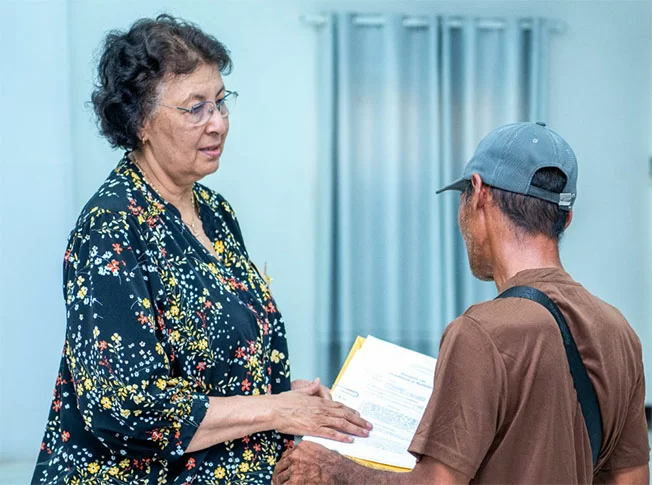
    On July 13, Suriname’s government announced sweeping updates to national land policy during a landmark ceremony in the Coronie district, where 24 local residents officially received their long-awaited land ownership documents. The new measures, led by President Jennifer Simons, are designed to close loopholes in current legislation that have allowed large swathes of allocated state land to sit unused or be repurposed illegally for years, creating land shortages for local residents looking to build homes or expand agricultural operations.

    During the official title handover event, which also featured Land Policy and Forest Management Minister Stanley Soeropawiro in attendance, President Simons laid out the core changes coming to national land law. The updated legislation will serve two key purposes: it will strengthen legal protections and tenure security for legitimate landholders, while also establishing clear mandatory guidelines for the intended use of every parcel allocated by the state. “We are revising the law not only to solidify the ownership title you receive today, but also to enforce the requirement that you use this land for the purpose it was granted to you,” Simons told the gathered recipients. Under the new rules, the state will retain the right to reclaim any parcel that is left unused for multiple consecutive years or repurposed for activities that do not match the approved allocation terms.

    The Coronie title distribution came just one day after the government issued more than 180 land documents in the neighboring Nickerie district, marking a broader push by the administration to clear backlogs in pending land applications across the country. Simons also confirmed that the government is developing a new national financing program to help new landowners build homes at affordable, below-market interest rates, addressing a key barrier to development for low-income residents. She added that old, unresolved land applications in Coronie will be prioritized to clear the district’s lengthy backlog of requests.

    Minister Soeropawiro emphasized that balanced land management in Coronie goes far beyond housing and agriculture, highlighting the district’s unique coastal ecosystem that depends on intact mangrove forests for natural storm protection and biodiversity conservation. Any new land allocation in the district will account for the critical role of these natural habitats, he noted, ensuring environmental protection remains a core priority alongside local development.

    Bronto Somohardjo, chair of the permanent committee for Land Policy and Forest Management in the National Assembly of Suriname, pointed out a long-standing inequity in Coronie’s land distribution: in past decades, large portions of available land were allocated to foundations based outside the district, leaving few parcels available for local residents. The new policy reforms will include a review of these existing allocations to free up more unused land for Coronie residents, he confirmed.

    Multiple members of the National Assembly echoed the government’s call for responsible land use. Lawmaker Le-Roy Doorson urged new landholders to develop their parcels rather than sell them for quick profit, emphasizing that sustained use will drive both personal and district-wide growth. Fellow parliament member Ivanildo Plein highlighted the suite of supporting government policies alongside the land allocation, including low-interest mortgage access, expanded access to agricultural land, and government-backed support for marketing local agricultural products, which together create unprecedented opportunities for smallholder farmers and new landowners. Steven Reyme, another lawmaker, stressed that secure land ownership creates intergenerational wealth, noting that “Land gives a family a stable foundation, and creates a lasting legacy to pass down to children and grandchildren.”

    Closing the ceremony, President Simons offered her congratulations to the 24 new landowners, expressing her hope that they will leverage their new parcels to build a more prosperous future for themselves and for the entire Coronie district.