标签: Suriname

苏里南

  • Luchtvaartmaatschappijen gaan over tot prijsverhogingen en aanpassingen

    Luchtvaartmaatschappijen gaan over tot prijsverhogingen en aanpassingen

    The global commercial aviation industry is facing an unprecedented financial shockwave, triggered by a dramatic spike in jet fuel prices fueled by escalating geopolitical conflict between the United States and Iran. Over the past several weeks, the cost of a barrel of jet fuel has skyrocketed, jumping from a stable range of $85 to $90 to between $150 and $200 – an increase that has upended cost projections for airlines across every region. For an industry where fuel expenses typically account for as much as 25% of total operating costs, this sudden surge has delivered a heavy blow to already fragile profit margins, forcing carriers around the world to implement urgent, sweeping adjustments to their operations and pricing strategies.

    Major airlines from every continent have moved quickly to mitigate growing losses, with a wide range of cost-cutting and revenue-raising measures now being rolled out. Greek carrier Aegean Airlines has warned that higher fuel costs and suspended services to the Middle East will deliver a visible hit to its first-quarter financial results. Long-haul budget operator AirAsia X, a subsidiary of Malaysia’s Capital A, has cut overall flight capacity by 10% and introduced a new 20% fuel surcharge on tickets. Air Canada has announced it will eliminate four daily flights to New York between June and October, directly citing elevated fuel expenses as the driving factor.

    European aviation giant Air France-KLM is raising long-haul round-trip fares by approximately €50 per ticket, while partner airline KLM will cut 160 short-haul European flights over the next month. Air India has shifted to a distance-based fuel surcharge model, replacing the previous fixed surcharge system that no longer covers the full extent of rising fuel costs. The Airline Operators of Nigeria has issued an ultimatum, threatening a total suspension of all domestic and international flights unless government officials intervene to lower local jet fuel prices.

    Air New Zealand has reduced flight frequencies across its network for May and June, implemented across-the-board fare hikes, and suspended its full-year profit guidance entirely. Indian startup carrier Akasa Air has introduced a new fuel surcharge ranging from $2 to $14 on both domestic and international routes. Two major U.S. carriers, Alaska Air and American Airlines, have sharply increased checked baggage fees to offset growing fuel outlays, a move that has been mirrored by fellow U.S. giant Delta Air Lines, which is also cutting overall network capacity and lowering its annual profit forecast.

    UK-based budget carrier EasyJet has warned that it will report a larger first-half operating loss than initially projected due to unplanned extra fuel costs, and has announced broad ticket price increases to counter the pressure. Germany’s Lufthansa is accelerating the retirement of 22 older aircraft from its fleet and cutting back on short- and medium-haul flight capacity, responding both to higher fuel prices and recent costly labor strikes. Australia’s Qantas Airways has upwardly revised its fuel cost projection for the second half of 2026 and delayed a planned share buyback program to preserve cash. A number of other major U.S. carriers including Southwest Airlines have followed the trend of raising baggage fees to pass a portion of higher operating costs onto consumers. Virgin Atlantic and Virgin Australia have both introduced new fuel surcharges and adjusted base fares to limit growing losses.

    Across Asia, many leading carriers have also taken aggressive action: China Eastern Airlines, Cathay Pacific, Korean Air and Vietnam Airlines have rolled out a range of measures, from raising fuel surcharges and cutting underperforming routes to requesting government financial support to weather the crisis.

    Persistent elevated jet fuel prices have put the entire global aviation sector under intense strain. While a small number of carriers that locked in fuel hedging contracts at lower price points have been able to maintain stable ticket prices for the time being, most other airlines have been forced to pass increased costs directly onto passengers. The coming months will be a critical test for the global aviation industry, which remains mired in deep uncertainty over how long the US-Iran conflict will last and how long jet fuel prices will stay at these historically high levels.

  • Suriname neemt voorzitterschap CARICOM-ministerraad over; voorbereiding afgerond

    Suriname neemt voorzitterschap CARICOM-ministerraad over; voorbereiding afgerond

    Georgetown, Guyana – Preparations for Suriname’s upcoming assumption of the rotating chairmanship of the Caribbean Community (CARICOM)’s Council of Foreign and Community Relations (COFCOR) have been successfully wrapped up during a gathering of senior regional officials hosted at the CARICOM Secretariat in Georgetown.

    In May, Suriname will officially succeed the outgoing presidency, taking over the leadership gavel for a 12-month term during the 29th COFCOR ministerial meeting, scheduled to take place on May 20 and 21 in Paramaribo, Suriname’s capital. Senior representatives from across CARICOM’s 15 member states gathered at the preparatory session to finalize the agenda and key priorities for the upcoming high-stakes regional gathering.

    The preparatory meeting was led by Ambassador Miriam Mac Intosh, Director of Foreign Policy at Suriname’s Ministry of Foreign Affairs, International Trade and Cooperation. In her opening remarks, Mac Intosh underscored COFCOR’s central role within the CARICOM framework, noting that the body serves as the core coordinating platform for foreign ministers across the bloc to align regional policy positions and co-develop collective regional strategies.

    Key topics already locked into the agenda for the May ministerial summit include a deep review of CARICOM’s ongoing international partnerships, covering existing and future collaboration with global and regional stakeholders such as Canada, Saudi Arabia, the African Union, the United Kingdom, Japan, Morocco, Singapore and the United Arab Emirates. Discussions will prioritize expanding technical exchange and strengthening mutually beneficial partnerships with these third parties. Additional agenda items include assessing the implications of the UN80 initiative, a comprehensive update on the ongoing humanitarian and security crisis in Haiti, and the outcomes and follow-up actions from global and regional gatherings including the Summit of the Americas.
    Mac Intosh emphasized that rising global geopolitical tensions and growing fragmentation in the international order have made unified collective action from the CARICOM bloc more critical than ever. She reaffirmed that CARICOM member states must remain steadfast in upholding shared core values including democratic governance, the rule of law, and a commitment to inclusive multilateral cooperation to advance regional interests.

    As the incoming president, Suriname has outlined three core priorities for its one-year term: strengthening regional unity among CARICOM member states, deepening cross-bloc collaboration on shared priorities, and preserving the bloc’s consistent, credible voice in global international fora. The outcomes of the Georgetown preparatory meeting will form the foundational framework for all final decision-making at the full ministerial session in Paramaribo next month.

  • Personeelstekort luchtverkeersleiders blijft problemen geven

    Personeelstekort luchtverkeersleiders blijft problemen geven

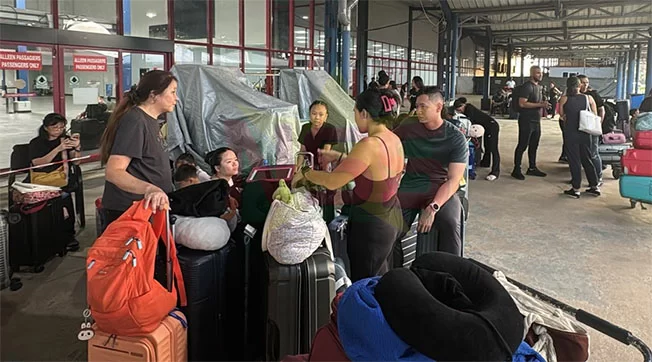
    A years-long staffing crisis in Suriname’s air traffic control sector has boiled over into major travel disruptions this month, with widespread cancellations and delays hitting operations at Johan Adolf Pengel International Airport, the country’s primary air gateway. The disruptions are not the result of a formal strike, but rather air traffic controllers refusing to continue taking on unplanned extra shifts to cover persistent understaffing, industry representatives have confirmed.

    International aviation standards require a control tower team of between 4 and 5 air traffic controllers to maintain safe operations. Currently, Suriname’s air navigation system only has two controllers on duty at any given time. With staffing already stretched to breaking point, even a single unexpected absence during a shift is enough to grind flight operations to a halt.

    The Suriname Air Traffic Controllers Association (Satca), which represents the country’s air traffic control workforce, first warned of growing systemic pressure on staff last week. The scale of the shortage is staggering: the sector requires 80 fully trained controllers to meet operational demand, but only 25 are currently active in service. This leaves each existing worker covering the workload of three full-time positions, a burden that has been building for decades without meaningful intervention.

    The ongoing disruptions are already carrying tangible economic costs. On Friday alone, tons of cargo—including high-value fresh fish exports—were unable to depart the country, threatening producer revenues and Suriname’s trade reputation. Compounding the uncertainty, a number of current controllers have recently taken accrued leave to use up accumulated vacation days, leaving even fewer staff to cover daily operations with no clear timeline for restoring full staffing capacity.

    Satca leaders emphasized that controllers have upheld their end of a January agreement reached with Suriname’s president, maintaining constructive engagement and fulfilling all core responsibilities over recent months. To date, however, none of the promised critical improvements to working conditions and systemic gaps have been delivered. Key unaddressed issues include an unfair pay structure that sees less responsible roles in the sector often earn higher compensation than air traffic controllers and operational managers, with a promised pay adjustment still not implemented. Backlogged overtime pay has only been partially disbursed, with the entire processing stalled since March 2023. Trainee candidate controllers still receive just 5,000 Surinamese dollars a month, with no salary improvements after five months of training. Existing job allowances no longer reflect the extreme weight and complexity of air traffic control work. Recent recruitment rounds have failed to attract enough qualified candidates, further worsening staffing pressures. Mandatory medical certifications required for license renewals have not been carried out since 2023, leaving many controllers’ active status in limbo. And critical operational equipment is long overdue for replacement and modernization.

    Satca has warned that controller willingness to continue covering staffing gaps with extra shift work is rapidly eroding under current conditions. The association stresses that voluntary extra shifts cannot act as a permanent, unlimited solution to systemic understaffing. For more than 15 years, active controllers have compensated for staffing shortfalls by taking on extra shifts and working unpaid or backlogged overtime, but successive Surinamese governments have failed to implement long-term, sustainable fixes to the crisis.

    Satca attributes the ongoing failure to address the crisis to mismanagement of leadership appointments in the sector: senior roles are currently filled based on non-technical criteria rather than being awarded to candidates with hands-on operational expertise. The association notes that effective leadership of the sector requires direct operational knowledge, ideally from a current or former active air traffic controller.

    The association calls the current situation, where unqualified leadership, organizational failures and crippling work pressure are tolerated, unacceptable, particularly given past aviation accidents where gaps in communication and organization contributed to deadly disasters. For Satca, the safety of air traffic control is a non-negotiable priority that cannot be compromised for any reason.

  • Surinaamse vrouwen verliezen van Belize na sterke eerste helft

    Surinaamse vrouwen verliezen van Belize na sterke eerste helft

    In a CONCACAF women’s tournament qualifying clash held on April 17, Belize picked up a well-earned 2-0 win over Suriname’s women’s national football team, capitalizing on their opponents’ lack of finishing quality to claim three points in the regional qualification campaign.

    The first 45 minutes of the encounter proved to be a tightly contested, evenly matched affair. Suriname put in a solid defensive performance and managed to keep the balance of play neutral, preventing Belize from carving out many high-danger clear-cut chances. When the halftime whistle blew, both sides went into the break locked at 0-0, with all to play for in the second half.

    The deadlock was finally broken in the 69th minute, when Belize was awarded a penalty that they converted to take a 1-0 lead. Just a short span of time after opening the scoring, Belize doubled their advantage, putting the result of the match beyond doubt in the process.

    While Suriname ultimately left the pitch with a disappointing defeat, the team did show glimpses of promising quality throughout the 90 minutes. There were multiple phases of play where Suriname matched Belize competitively, and the side did create several goal-scoring opportunities of their own. However, they failed to convert any of these chances into goals, a shortcoming that ultimately cost them in the final result. Belize, by contrast, proved far more clinical in front of goal, turning their few clear opportunities into a comfortable victory.

    This fixture forms part of Suriname’s ongoing qualifying journey, a campaign where the side is focused on developing its competitive quality and testing its strength against other top regional opponents. Following the defeat, Suriname’s technical staff has confirmed they will conduct a full review and analysis of the match, with particular focus placed on improving the team’s finishing efficiency and their performance in high-stakes decisive moments of future games.

  • Oproep tot Surinaamse Corporate Governance Code tijdens lezing juristen

    Oproep tot Surinaamse Corporate Governance Code tijdens lezing juristen

    On Thursday, April 17, the Suriname Bar Association (SJV) in partnership with the Suriname Law Journal hosted a public expert lecture focused on answering a critical policy question: Does Suriname need its own stand-alone national Corporate Governance Code? The event centered discussion on three core pillars of effective institutional management: strong governance, full operational transparency, and unwavering institutional integrity.

    The event’s lead presenters, legal experts Mirto Murray and Karan Doekhi, opened the discussion by breaking down Curaçao’s existing national Corporate Governance Code, drawing key parallels between Curaçao’s regulatory framework and the current institutional landscape in Suriname. Throughout the lecture, the concept of integrity — defined by speakers as “upholding ethical standards even when no one is watching” — served as the throughline for all conversation.

    The legal experts emphasized that robust corporate governance standards are particularly critical for state-owned enterprises, public utility providers, national port authorities, and financial institutions including the Central Bank of Suriname. These organizations, they noted, manage public financial resources and hold foundational roles in national economic activity, making it non-negotiable for them to adhere to strict requirements for transparency and public accountability.

    Following the presentation, a open discussion was held with attendees, who included senior policymakers, practicing legal professionals, law students, and representatives from both public and private sector institutions. Participants focused particular attention on the division of responsibilities between key institutional bodies: the state as primary shareholder, institutional executive leadership, and boards of commissioners. Attendees stressed that every governing body must operate within clear, legally defined boundaries to mitigate a range of risks, including legal liability for mismanagement.

    While Suriname currently does not have a dedicated national Corporate Governance Code, speakers highlighted that the country’s recently updated Civil Code already enshrines key core standards for careful, responsible institutional management, and these standards already apply to all organizations carrying out public tasks.

    The event concluded with a formal call to action for the development of a Suriname-specific Corporate Governance Code through a broad, inclusive consultation process that includes representation from the national government, national parliament, regulatory oversight bodies, the national business community, civil society organizations, and academic institutions.

    The SJV has publicly confirmed that it stands ready to serve a facilitating and advisory role throughout the process of developing the code. In a statement following the event, the association stressed that strong corporate governance is not an unnecessary luxury for Suriname, but a core requirement for protecting citizen and stakeholder rights, reducing the national risk of corruption, and unlocking sustainable long-term economic growth opportunities for the country.

  • Wijnerman in Washington voor IMF- en Wereldbankvergaderingen: focus op financiering en hervormingen

    Wijnerman in Washington voor IMF- en Wereldbankvergaderingen: focus op financiering en hervormingen

    A Surinamese government delegation, headed by Minister Adelien Wijnerman, is participating this week in the annual spring meetings hosted by the International Monetary Fund (IMF) and the World Bank, where global economic reform, development financing, and cross-border economic cooperation are the central topics on the agenda.

    These high-profile annual gatherings bring together a diverse range of key stakeholders from across the globe: finance ministers, central bank governors, senior policymakers, leading academic researchers, private sector representatives, and civil society organization delegates. Every year, participants use this platform to shape collective direction for global economic governance, and this year’s sessions will focus on assessing near-term global economic outlooks alongside discussions on pressing priorities including global financial stability, the growing sovereign debt crisis, persistent inflation pressures, climate action financing, and global poverty reduction efforts. A key overarching theme for this year’s meetings is building stronger support for developing economies as they implement structural economic reforms and boost their resilience to unforeseen external economic shocks.

    For the South American nation of Suriname, this year’s spring meetings represent a critical opportunity to advance its domestic economic goals. The country is currently working through ongoing IMF-backed adjustment programs and World Bank-funded development projects, and the gathering will allow Suriname’s delegation to review progress on these initiatives and negotiate new agreements for additional technical and financial support from the two global institutions. Beyond formal institutional meetings, the Surinamese delegation is also scheduled to hold bilateral talks with representatives from other international financial bodies and development partners. These discussions will focus on attracting future investment and expanding cooperation in priority areas for Suriname, including economic diversification, sustainable debt management, and inclusive long-term sustainable development.

    As outlined ahead of the meetings, the World Bank’s core priorities for this year’s spring sessions center on expanding accessible financing for high-impact development projects across developing nations, strengthening institutional capacity in low and middle-income countries, and expanding programming focused on climate adaptation and mitigation. By contrast, the IMF’s core focus at the meetings remains on advancing macroeconomic stability across global economies, supporting sound fiscal discipline, and guiding pro-growth structural reform agendas in member states facing economic challenges.

    In addition to lead delegate Minister Wijnerman, the full Surinamese delegation includes three senior senior economic officials: Iris Sandel, Director of Planning and Development Financing; Charlene Soentik, General Administrator of the Suriname Bureau of State Debt; and Georgetine Marapengopie-Tjalim, Head of the Department of Economic Affairs.

  • Iran kondigt heropening Straat van Hormuz aan na staakt-het-vuren in Libanon

    Iran kondigt heropening Straat van Hormuz aan na staakt-het-vuren in Libanon

    On April 17, a fragile 10-day ceasefire between Israel and the Iran-backed militant group Hezbollah in Lebanon came into force, triggering a chain of developments that have sent ripple effects across global energy markets and international diplomacy. A day after the truce took effect, Iranian Foreign Minister Abbas Araqchi announced that the Strait of Hormuz — one of the world’s most critical energy chokepoints — would reopen to all commercial shipping traffic for the full duration of the ceasefire. The US-brokered ceasefire marks the first major de-escalation of cross-border violence that erupted between the two sides in early March.\n\nA senior anonymous Iranian official clarified that all commercial traffic will be restricted to designated safe shipping corridors, with military vessels barred from accessing the waterway during the truce. Around 20% of the world’s total oil and liquefied natural gas supplies pass through the 21-mile-wide strait, making its closure earlier this month a shock to global energy systems that sent crude prices soaring to record multi-year highs and sparked widespread anxiety across international financial markets. Within hours of Araqchi’s announcement, global crude prices dropped 11% and major stock indexes around the world extended upward gains as investor fears of prolonged energy supply disruptions eased.\n\nDespite the positive market reaction, major global shipping firms have adopted a cautious approach to resuming transit through the strait. German shipping giant Hapag-Lloyd announced it would pause transits through the waterway indefinitely while it assesses ongoing security risks, while the Norwegian Shipowners’ Association has highlighted lingering hazards including unmarked naval mines and unpredictable security conditions in the region.\n\nThe volatility around the strait has already impacted broader global economic projections: the International Monetary Fund revised down its 2024 global growth forecast earlier this week, warning that a prolonged escalation of Middle Eastern tensions would significantly increase the risk of a global recession, driven largely by energy supply disruptions tied to the strait’s closure.\n\nWhile the truce has cleared the way for the strait’s reopening, the US military blockade of commercial vessels bound for Iranian ports remains in full effect. US President Donald Trump confirmed via social media that the blockade will stay in place until a comprehensive broader agreement is reached with Iran, noting that most core negotiating points have already been settled and he expects a final deal to come together quickly. Trump added that while talks were originally scheduled to potentially take place this weekend, logistical hurdles have made that timeline increasingly unlikely.\n\nIranian officials have confirmed that significant disagreements remain between the two sides, most notably over the future of Iran’s nuclear program. During Friday prayers in Tehran and Isfahan, senior Iranian clerics emphasized that Iran would not accept any negotiating terms that amount to national humiliation, rejecting the current US proposal out of hand. Behind the scenes, however, Pakistani-mediated negotiations have reportedly made quiet progress. An anonymous Pakistani diplomatic source told reporters that a preliminary memorandum of understanding could be signed in the coming days, with a full comprehensive agreement targeted within 60 days. A senior Iranian official has also confirmed that the preliminary deal includes provisions to unfreeze billions of dollars in Iranian assets held in overseas accounts.\n\nThe most intractable sticking point in the nuclear negotiations remains the timeline for a pause in Iran’s enrichment activities. The US has proposed a 20-year moratorium on high-level uranium enrichment, while Iran has offered to accept a three to five year pause. Iran continues to demand the full lifting of all international sanctions, and has so far refused to agree to the complete removal of its stockpiles of highly enriched uranium, though diplomatic observers have noted early signals that a compromise on this issue could be possible.\n\nTrump has repeated his previous claims that US forces have already destroyed Iran’s stockpiles of highly enriched uranium, a claim that Iranian state media has flatly denied, adding that Iran has never entered into negotiations to transfer its nuclear material to the US.\n\nTurning back to the ceasefire between Israel and Hezbollah that paved the way for the strait’s reopening, the truce has largely held so far despite scattered reports of minor violations by Israeli forces. The cross-border conflict reignited on March 2, after Hezbollah launched rocket attacks into northern Israel, prompting a full-scale Israeli military offensive into southern Lebanon that Lebanese authorities confirm has killed more than 2,000 people to date. Israel has not yet issued an official response to the ceasefire announcement as of Friday.\n\nEven with the temporary truce in place, displaced Lebanese residents have begun returning to their homes in southern Beirut’s suburban districts, a small sign of tentative normalization after weeks of deadly conflict.

  • Slechts één sterilisatie- en castratieproject dit jaar door gebrek aan geld

    Slechts één sterilisatie- en castratieproject dit jaar door gebrek aan geld

    On Wednesday, the U.S.-based non-profit Caribbean Spay Neuter launched its 21st annual spay and neuter initiative for dogs and cats across Suriname at the Indra Mayu complex. A long-running staple of the country’s animal welfare efforts, the project has operated annually since 2016, with a core mission to curb the growing overpopulation of domestic cats and dogs, reduce widespread animal suffering, and cut down on public nuisance caused by unmanaged stray populations.

    This year, however, the ongoing session will be the only one held in 2026 — a change from the organization’s usual schedule of two projects per year — caused by a critical shortage of funding that has forced the group to scale back its operations.

    Angelique Tjang-A-Sjin, treasurer of Caribbean Spay Neuter, explained that the overpopulation crisis is driven in large part by economic barriers facing local pet owners. Most Surinamese pet owners cannot afford the high fees charged by private local veterinarians for sterilization procedures, leaving many animals unaltered and allowing stray populations to surge rapidly. “When owners can no longer care for unexpected litters of puppies and kittens, they often end up abandoning the animals on the street, and that’s when the cycle of hardship begins,” Tjang-A-Sjin noted.

    Registration for the 2026 project opened in early March, with heavily subsidized participation rates made possible by private donations: just 500 Surinamese dollars for a dog procedure, and 300 Surinamese dollars for a cat, a fraction of the 2,000 Surinamese dollar price tag for the same procedure at a private clinic. The initiative brings together a mixed team of international and local volunteers, with a goal of completing at least 700 sterilization procedures during the current session. Even unowned stray animals are included in the effort, with volunteers trapping, feeding, and caring for the animals before and after their procedures.

    Tjang-A-Sjin added that the organization relies almost entirely on the voluntary goodwill of international supporters, who even cover their own travel and accommodation costs to participate in the project. The group has long called on Suriname’s Ministry of Agriculture, Livestock and Fisheries to develop long-term, structural policy to manage cat and dog populations, noting that without consistent sterilization efforts, the number of unmanaged stray animals could grow by thousands in just a few years.

    Project founder and chair Karin Wanner, who resides in the United States, was unable to attend the 2026 launch due to personal health issues. She continues to coordinate the initiative remotely from the U.S., where she mobilizes a team of volunteer veterinarians drawn mostly from the U.S. and Nicaragua. The visiting medical team works alongside 20 local volunteers, including university students and working professionals, to carry out the daily procedures and care for participating animals.

    Joyce Kerstens, a board member of local animal welfare group Stichting Help Save Animals Suriname, emphasized that the low-cost initiative fills a critical gap in the country’s animal welfare infrastructure, making life-saving population control accessible to low-income owners and reducing systemic animal suffering. Local pet owner Anand Khemai, who brought two of his own cats to be sterilized through the project, praised the effort as a vital public and social good. “Uncontrolled population growth creates so many problems for both animals and communities,” Khemai said. “This project addresses a real need that no other local service is filling.”

  • Nieuwe vliegroute versterkt band met Dominicaanse Republiek

    Nieuwe vliegroute versterkt band met Dominicaanse Republiek

    On Thursday, a landmark new direct air connection entered service between the Dominican Republic’s capital Santo Domingo and Suriname’s capital Paramaribo, marking the first commercial flight of Dominican carrier Sky High Dominicana on the route. The new link is designed to deepen bilateral collaboration between the two Caribbean nations, and the inaugural flight received a celebratory water salute greeting upon its arrival at Suriname’s Johan Adolf Pengel International Airport.

    Multiple high-ranking officials traveled on the debut flight, including Suriname’s Minister of Foreign Affairs Melvin Bouva, Minister of Transport, Communication and Tourism Raymond Landveld, and Dominican ambassador to Suriname Ernesto Torres Pereyra.

    For Bouva, the new air route represents far more than improved travel access between the two countries. He framed the connection as a critical milestone in strengthening the economic and diplomatic ties that bind the Dominican Republic and Suriname. The route is projected to drive measurable growth across three key sectors: tourism, bilateral trade, and cross-border foreign direct investment.

    The minister further noted that bilateral cooperation between the two nations has recently evolved into a formal strategic partnership. Better regional connectivity, he emphasized, addresses a long-standing bottleneck that has held back integration across the Caribbean, where transportation infrastructure and direct links have long been a persistent barrier to growth.

    Both nations have high hopes that the new direct connection will stimulate increased mutual exchange of people, goods and services, while creating new opportunities to deepen collaboration across the broader Caribbean region.

  • Israël en Libanon beginnen tiendaagse staakt-het-vuren

    Israël en Libanon beginnen tiendaagse staakt-het-vuren

    A 10-day ceasefire between Israel and Lebanon entered into force Thursday, coinciding with growing global optimism that a breakthrough may be imminent in high-stakes nuclear negotiations between the United States and Iran. In a public statement, former U.S. President Donald Trump announced that a follow-up meeting between the two countries could take place as early as this weekend, raising hopes that the months-long conflict sparked by disputes over Iran’s nuclear program may finally be moving toward resolution.

    Trump told reporters that Iran has proposed a voluntary moratorium on developing nuclear weapons that would last more than two decades, a core sticking point that has dominated recent talks hosted in Islamabad. “We’re going to have to wait and see what happens, but I think we are really close to a deal,” he said.

    The current crisis between the U.S. and Iran erupted on February 28, when joint U.S.-Israeli military strikes launched against Iranian targets. The conflict has killed thousands of people, sent global oil prices soaring, and left regional and world leaders scrambling to de-escalate tensions. A final peace deal would mark a major policy win for the Trump administration, which has prioritized reopening the strategically critical Strait of Hormuz and rolling back Iran’s nuclear development goals.

    In Lebanon’s capital Beirut, celebratory gunfire and light displays lit up the sky Thursday evening as the ceasefire came into effect. Crowds gathered in the coastal city of Sidon to celebrate displaced residents beginning to return to their homes, captured in photos from Reuters. Even with the ceasefire in place, however, the security situation remains fragile. Reports emerged shortly after the truce took hold that Israel was still carrying out artillery fire in southern Lebanon, with scattered clashes continuing in border areas. The Israel Defense Forces issued an urgent warning to residents in southern regions not to move south of the Litani River, citing ongoing active Hezbollah operations in the area. For its part, Hezbollah confirmed that its last offensive strike was carried out 10 minutes before the ceasefire went into effect, and released a full account of its military operations conducted through the end of Thursday.

    Diplomatic efforts to lock in a longer-term peace are already underway. Trump said he held “excellent conversations” with Israeli Prime Minister Benjamin Netanyahu and Lebanese President Joseph Aoun, and plans to invite both leaders to the White House in the coming weeks for substantive talks aimed at cementing the truce. He added that top U.S. officials, including Vice President JD Vance and Secretary of State Marco Rubio, are working closely together to broker a lasting, sustainable peace agreement between Israel and Lebanon. Iran has welcomed the 10-day ceasefire, framing it as part of an understanding reached with the U.S. through mediation by Pakistan.

    Key details of the nuclear negotiation remain challenging even with the recent momentum. When Iran closed the Strait of Hormuz – the transit route for roughly one-fifth of the world’s total oil supply – it triggered the largest single shock to global oil prices in modern history. The International Monetary Fund subsequently downgraded its global growth forecasts, warning that a prolonged conflict could push the already fragile world economy to the brink of recession.

    During the Islamabad talks, U.S. negotiators proposed a 20-year pause on all sensitive Iranian nuclear activities, a major concession from the previous U.S. demand for a permanent ban on Iran’s nuclear program. Iran, for its part, has only offered a three- to five-year halt to these activities. Negotiators are also working to reach a compromise on the amount of highly enriched uranium Iran is allowed to keep, with a tentative framework emerging that would see part of Iran’s existing stockpile removed from the country.

    On Wednesday, Pakistani mediator and army chief Asim Munir announced limited progress on several long-standing sticking points, though fundamental disagreements over the future of Iran’s nuclear program still remain. Iran has stated it will fully reopen the Strait of Hormuz once a deal is finalized, on the condition that it receives binding guarantees the U.S. and Israel will not launch new military attacks in the future.

    U.S. Defense Secretary Pete Hegseth warned that American forces remain on high alert and ready to resume combat operations if no final agreement is reached. According to anonymous sources familiar with the negotiations, Washington has offered to lift existing economic sanctions on Iran and unfreeze billions of dollars in Iranian assets held abroad to secure a final nuclear deal.