标签: Suriname

苏里南

  • Mexico, Spanje en Brazilië steunen Cubaanse soevereiniteit

    Mexico, Spanje en Brazilië steunen Cubaanse soevereiniteit

    A gathering of left-wing political leaders from across the globe held in Barcelona on Saturday has drawn international attention, after three major regional heads of state issued a joint statement sounding the alarm over the deepening humanitarian crisis in Cuba while reaffirming unwavering support for the Caribbean island’s territorial sovereignty and self-determination.

    Claudia Sheinbaum, President of Mexico, Pedro Sánchez, Prime Minister of Spain, and Luiz Inácio Lula da Silva, President of Brazil, co-authored the statement, which explicitly pushed back against the sustained pressure campaign led by U.S. President Donald Trump that aims to force regime change in Havana. The three leaders committed their administrations to expanding existing humanitarian assistance programs to Cuba to help alleviate ongoing hardship on the island.

    In their formal statement, the trio emphasized that any sustainable resolution to Cuba’s current challenges must center the fundamental right of the Cuban people to shape their own future in full autonomy. They also issued a clear warning against actions that violate established international law as outlined in the United Nations Charter, a direct reference to Washington’s unilateral coercive measures against Havana.

    The United States has maintained a sweeping trade embargo against Cuba since the Cold War era, but the Trump administration has drastically escalated economic and political pressure on the island in recent months. Since January, Washington has banned all imports of Venezuelan crude oil, and has threatened to impose harsh secondary sanctions on any third-party countries that continue to supply fuel to Cuba. This pressure campaign has already triggered severe fuel shortages and widespread rolling power outages across Cuba, exacerbating existing humanitarian struggles.

    Trump has also ramped up rhetorical aggression against Cuban President Miguel Díaz-Canel, recently suggesting that the U.S. could launch military intervention in Cuba once the ongoing U.S.-Israel-Iran conflict is resolved.

    During the Barcelona summit, Spanish Prime Minister Sánchez delivered a sharp rebuke of right-wing populist movements and growing attacks on multilateralism, stopping short of naming Trump directly. The U.S. president responded within hours via social media, attacking Spain for its refusal to allow the U.S. to use Spanish military bases for regional operations and criticizing Madrid’s alleged insufficient defense spending.

    Despite mounting international pressure from Washington, Díaz-Canel maintained a defiant stance during a Thursday address marking the 65th anniversary of Cuba’s socialist revolution. He warned the Cuban public of the rising risk of foreign military aggression and stressed the nation’s obligation to maintain full defensive preparedness to protect its sovereignty.

  • Parmessar pleit voor versterkte parlementaire samenwerking op IPU-bijeenkomst in Turkije

    Parmessar pleit voor versterkte parlementaire samenwerking op IPU-bijeenkomst in Turkije

    On Saturday, at the ongoing Inter-Parliamentary Union (IPU) global conference hosted in Türkiye, Rabin Parmessar, leader of the National Democratic Party (NDP) parliamentary faction in Suriname, delivered a landmark address to an assembly of over 1,000 parliamentary representatives from more than 150 countries.

    Parmessar centered his speech on the urgent need for coordinated cross-border parliamentary collaboration to address pressing shared global challenges. Against a backdrop of rising geopolitical friction across multiple regions, he emphasized that robust democratic institutions, unwavering commitment to democratic values, and shared global responsibility are non-negotiable foundations for navigating today’s turbulent international landscape.

    As one of the world’s largest multilateral platforms for parliamentary dialogue, the IPU conference brings together not only elected parliamentarians but also delegates from dozens of international intergovernmental organizations and civil society non-governmental organizations. The summit serves as a critical space for constructive discussion and coordination on core global issues ranging from democratic governance and inclusive sustainable development to international peace and security.

    In his remarks, Parmessar also highlighted the outsized importance of continued active engagement from smaller sovereign nations in global multilateral forums. Specifically pointing to his own country Suriname, he stressed that national parliaments across all states, regardless of size or economic power, play an irreplaceable role in upholding governmental transparency, advancing good governance, and ensuring accountability to citizens.

    Parmessar is leading the three-person Surinamese parliamentary delegation to the conference, joined by Asis Gajadien, parliamentary faction leader of the Progressive People’s Party (VHP), and Ines Pané of the Basic Party for Renewal and Democracy (ABOP). Suriname’s participation in this year’s IPU conference aligns with the country’s broader long-term diplomatic strategy to strengthen its global standing and deepen its contributions to inclusive multilateral cooperation, according to delegation sources.

  • GBB grijpt in bij gronduitgifte Apoera; BV’s ingetrokken en South-Drain opnieuw bekeken

    GBB grijpt in bij gronduitgifte Apoera; BV’s ingetrokken en South-Drain opnieuw bekeken

    In an official announcement dated April 19, Stanley Soeropawiro, Suriname’s Minister of Land and Forest Management (GBB), has ordered the revocation of multiple statements of willingness (BVs) for land parcels located along the highway leading to Apoera, following the confirmation of procedural violations during the original allocation process. Simultaneously, a separate land parcel at South-Drain, earmarked for the construction of a new docking pier, has been placed on an accelerated re-evaluation track to resolve outstanding procedural questions.

    An internal ministry audit found that the initial land allocations failed to fully comply with existing regulatory protocols and legal requirements. According to a statement from the GBB, decisive intervention was a necessary step to restore the rule of law in land allocation processes and safeguard public trust in the government’s management of state land resources. The ministry emphasized that it is proactively addressing all confirmed irregularities, with a dual focus on upholding legal certainty and advancing sustainable long-term development across the entire Apoera region.

    Beyond the Apoera road parcels, the South-Drain plot is undergoing a full second review across both legal and administrative dimensions. Internal ministry reports have flagged potential gaps and shortcomings in the original decision-making process that led to the parcel’s allocation, as well as in subsequent administrative actions related to the site. Minister Soeropawiro has issued a formal warning that any legal transactions involving the South-Drain parcel carry significant unaddressed legal risks, and has called on all involved parties to refrain from entering into such agreements until the review is completed.

    The South-Drain parcel is classified as a strategically critical asset for the broader economic and infrastructure development of the Corantijn region, as well as for overland connectivity to Apoera. Because of this strategic importance, the legality and validity of all original decisions regarding the site will undergo a full, comprehensive audit to resolve all outstanding questions.

    The Surinamese state has reserved the right to pursue additional legal action or implement alternative arrangements aligned with the public good if the review finds that further action is necessary. Once the full legal review process is concluded, the Ministry of Land and Forest Management will release a full public update on the findings and next steps.

  • Brandstofprijzen voorlopig bevroren; regering volgt impact Midden-Oosten nauwlettend

    Brandstofprijzen voorlopig bevroren; regering volgt impact Midden-Oosten nauwlettend

    Against a backdrop of growing global economic uncertainty triggered by the ongoing conflict in the Middle East, the government of Suriname has announced a temporary fuel price cap to lock in current rates and protect domestic consumers from sudden volatile price swings.

    The decision, finalized following coordinated consultations between key stakeholders, the Ministry of Finance and Planning, and Staatsolie, Suriname’s state-owned oil company, fixes diesel prices at 53.27 Surinamese dollars and regular unleaded gasoline at 48.32 Surinamese dollars for the immediate future.

    Policy makers framed the measure as a proactive buffer designed to shield households and businesses from the unpredictable market shifts that often accompany regional geopolitical tensions in major energy-producing areas. The core priority of the intervention, officials emphasized, is to minimize the economic spillover that would disproportionately impact everyday citizens, while maintaining a careful balance between public expenditure and available state revenue.

    Suriname’s authorities have committed to continuous close monitoring of international market dynamics and the evolving situation in the Middle East, with regular evaluations of how global developments are impacting the domestic economy. Any future adjustments to the current fuel price policy will be communicated to the public in a timely manner to ensure full transparency and keep all segments of society informed of changing conditions.

  • Nederland activeert eerste fase van energiecrisisplan

    Nederland activeert eerste fase van energiecrisisplan

    The Netherlands is set to put into motion the first phase of its contingency energy crisis plan starting Monday, according to reports from Dutch national news agency ANP, which cited anonymous government sources in a Saturday briefing. This activation marks the first time the pre-approved emergency framework has been deployed since it was drafted in 2022, following Russia’s full-scale invasion of Ukraine that upended global energy markets and triggered a continent-wide energy crisis across Europe.

    As of Saturday, official government spokespersons had not issued an immediate on-the-record confirmation or comment on the planned activation to independent media outlets.

    Under the structure of the multi-phase emergency plan, triggering the first phase indicates that fuel markets are currently experiencing disruption, but no immediate supply shortages are being recorded across the country. In this initial stage, national energy regulators and market watchdogs will ramp up continuous, close monitoring of supply and pricing dynamics across all fuel and energy segments. At the same time, national government agencies and private sector energy stakeholders will coordinate preparations to respond quickly if market conditions worsen in the coming weeks.

    The move comes just one day after Dutch Prime Minister Rob Jetten announced on Friday that the cabinet would unveil a new package of measures on Monday to offset rising energy costs for households and commuters. Early indications suggest the support package will include targeted tax benefits for private vehicle owners, though current planning does not include a cut to national fuel excise duties, multiple sources familiar with the plan have confirmed.

    Officials have framed the activation of the emergency energy plan as a proactive step to address persistent pressures on global and regional energy markets, and to limit the spillover impact of ongoing global geopolitical and economic developments on domestic energy supply security across the Netherlands.

  • Newmont voert nieuw rooster in om vermoeidheid te verminderen; werktijden blijven gelijk

    Newmont voert nieuw rooster in om vermoeidheid te verminderen; werktijden blijven gelijk

    Paramaribo, Suriname – April 18 – Leading gold mining firm Newmont Suriname is set to implement a revised employee work rotation schedule from April 20 as the centerpiece of a company-wide Fatigue Risk Management program. The initiative is explicitly designed to cut workplace fatigue, strengthen overall site safety, and elevate the long-term wellbeing of the company’s on-site workforce.

    The most substantial change brought by the policy is an overhaul of the existing rotation structure. Previously, workers followed a 28-day cycle that split into two consecutive two-week blocks: 14 days of day shifts followed immediately by 14 days of night shifts. Under the new framework, the rotation will shorten each work block to one week, following a 21-day repeating cycle: 7 days of scheduled day shifts, 7 consecutive days of night shifts, and a full 7-day period of rest for employees between rotations.

    In addition to the adjusted block scheduling, the new policy requires employees to arrive at the work site one full day before their rotation is set to begin. This extra buffer time is intended to allow workers to acclimate to the site environment and get sufficient rest before starting their first shift, helping to reduce transition fatigue. Core daily shift hours will remain unchanged under the new plan, so workers will not face adjustments to the length or timing of their individual on-the-job shifts.

    Company leadership noted that the new roster was not developed in isolation. The policy went through an almost three-year consultation process, which included ongoing discussions with frontline employees and the official Newmont Employee Organization. Throughout the process, multiple competing scheduling models were evaluated for their impacts on worker health, operational output, and regulatory compliance. After reviewing all feedback and test data, the company selected the 7-7-7 rotation model for its balanced ability to support three key priorities: safety performance, employee health, and consistent production continuity across the mine’s operations.

    As compensation for the change to the rotation schedule, Newmont is also introducing tangible benefits for participating employees. All workers will receive a higher rotation-based allowance, along with additional paid time off days to offset the scheduling adjustments. The company has emphasized that the new full rotation structure meets all Surinamese labor laws and industry safety regulations. To ensure the new policy delivers on its intended goals, Newmont will closely monitor outcomes, worker feedback, and safety metrics after the policy goes into effect, adjusting elements of the program if needed to protect both worker interests and operational stability.

  • Wegenautoriteit start onderhoud primaire wegen; SRD 125 miljoen uitgetrokken

    Wegenautoriteit start onderhoud primaire wegen; SRD 125 miljoen uitgetrokken

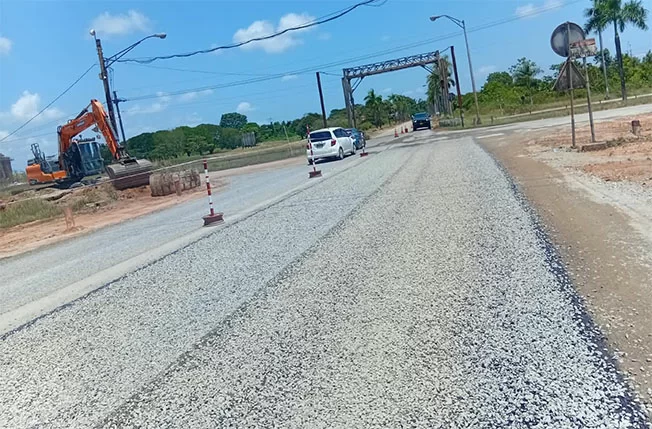
    The Suriname Road Authority is preparing to kick off a large-scale rehabilitation program for key primary road networks across three key regions of the country: Greater Paramaribo, Nickerie, and Para. The ambitious infrastructure initiative has been allocated a total budget of 125 million Surinamese dollars, marking one of the most significant public works investments in the country’s road sector in recent years.

    Three local contracting firms have been selected to carry out the construction and maintenance work, with each assigned responsibility for a specific district. Baitali Group will lead projects in Nickerie, Caremco Holding NV will handle upgrades across Greater Paramaribo, and I-Roads NV will oversee works in Para. The public tender process for the program was completed back in February, and all formal construction contracts have already been finalized and signed by all involved parties, clearing the way for work to begin.

    According to Ridgeley Kasantirto, Director of the Suriname Road Authority, the comprehensive maintenance work has become an urgent necessity. Years of heavy use have left large sections of the country’s primary road network suffering from severe deterioration, including widespread road subsidence and persistent rutting that creates major safety hazards for motorists and slows traffic flow. Kasantirto confirmed that all roads selected for inclusion in the program were identified based on rigorous technical assessments of their current condition, and independent third-party consultants will be on-site throughout the project to monitor construction quality and ensure full compliance with project specifications. This oversight is designed to deliver a long-lasting, high-quality upgrade that avoids the need for premature repeated repairs.

    The Suriname Road Authority, which manages approximately 890 kilometers of the country’s primary road infrastructure, anticipates that on-site construction work will get underway within the next three to four weeks. Once completed, the overhaul program is expected to deliver widespread benefits: it will drastically improve overall road safety, cut down on travel time by smoothing traffic flow, and create the more reliable transport infrastructure needed to support long-term regional economic development across the three districts.

  • Iran hernieuwt controle over Straat van Hormuz, schepen melden beschietingen

    Iran hernieuwt controle over Straat van Hormuz, schepen melden beschietingen

    On April 18, new escalations in the long-simmering conflict between Iran, the U.S. and Israel have thrown global energy security into fresh uncertainty, after Tehran announced it had strengthened military control over the strategic Strait of Hormuz and issued a warning that the critical global energy shipping lane has once again been closed to traffic.

    Citing anonymous shipping industry sources, local reports confirm that at least two civilian vessels attempting to traverse the narrow waterway have come under fire. Iranian officials frame the new move as a direct response to the ongoing American blockade of Iranian ports, which Tehran says constitutes a clear violation of an existing two-week ceasefire that is set to expire this coming Wednesday. Iran’s Supreme Leader Mojtaba Khamenei emphasized in a statement that the Iranian Navy is fully prepared to inflict “new bitter defeats” on the country’s regional and international adversaries.

    The situation shifted rapidly over the course of last weekend. Early in the day, initial indicators suggested partial resumption of commercial shipping, after a convoy of eight oil tankers successfully completed transit through the narrow passage. However, shortly after this crossing, multiple commercial vessels received radio notifications from the Iranian Navy ordering all traffic to halt, confirming the full activation of tightened military oversight over the strait.

    The current standoff arrives at a defining moment for regional diplomacy. Just one day before Iran’s announcement, former U.S. President Donald Trump struck a mixed tone, describing recent developments with Iran as “reasonably good news” while simultaneously warning that full-scale hostilities could resume immediately if a lasting peace agreement is not reached before the ceasefire expires. Trump also reaffirmed that the U.S. blockade of Iranian ports will remain in place regardless of ongoing diplomatic talks.

    This is not the first time the strait has been closed in recent weeks. Iran previously announced a temporary reopening of the waterway after a 10-day ceasefire between Israel and Lebanon was reached with U.S. mediation. The broader regional conflict escalated earlier this year when Iran-backed Hezbollah militant group entered the active fighting in early March.

    Energy and geopolitical experts have repeatedly underscored the strategic importance of the Strait of Hormuz: roughly 20% of the world’s daily global oil supply transits through the waterway, making any disruption a direct trigger for rising crude prices and volatility across global commodity markets. Even after the earlier partial resumption of traffic, hundreds of commercial vessels and tens of thousands of crew members remain stranded in the Persian Gulf region, waiting for clarity on when they will be allowed to complete their transit.

    Efforts to negotiate a durable long-term ceasefire have remained stalled in recent weeks. Iranian official sources confirm no new date has been set for the next round of high-level talks, noting that a broad framework agreement must be finalized before any substantive negotiations can move forward. The core sticking point in talks remains Iran’s nuclear program: Tehran continues to assert its sovereign right to develop nuclear technology for peaceful civilian purposes, while the U.S. demands complete removal of Iran’s stockpiles of enriched uranium.

    In recent days, Pakistani mediators have held closed-door talks in Tehran and other regional capitals to break the diplomatic deadlock. Unnamed diplomatic sources indicate that a preliminary memorandum of understanding could be reached in the near term, with a full comprehensive peace agreement targeted within a 60-day window if talks stay on track.

  • DNA-lid Wang slaat alarm over verslechterde veiligheid; vraagt om ingrijpen regering

    DNA-lid Wang slaat alarm over verslechterde veiligheid; vraagt om ingrijpen regering

    PARAMARIBO, 18 April – A sitting member of Suriname’s National Assembly is sounding a urgent alarm over the country’s fast-worsening public security landscape, calling on the presidential administration to move quickly to implement sweeping, structural reforms to reverse rising violent crime. Chuanrui Wang, a lawmaker from the VHP party and member of the parliamentary DNA body, outlined his deep concerns in a formal letter addressed to Suriname’s president, warning that criminal activity is surging across both densely populated urban centers and remote interior regions, posing grave risks to ordinary residents, business owners and public authority figures alike.

    Wang’s letter documents a relentless string of violent offenses, armed robberies and fatal criminal incidents that have rocked communities across the country in recent months. Even remote gold mining regions and the Lawa area, long considered relatively stable, are now grappling with skyrocketing insecurity, he noted, adding that police officers and public officials have increasingly become targets of violent attacks. While recent temporary measures in Paramaribo – including the creation of dedicated security zones – have underscored the severity of the crisis, Wang argues that ad-hoc responses are insufficient, and long-term structural solutions are desperately needed.

    Beyond street crime, Wang highlights two underreported growing threats: rising youth violence in the education sector, and unregulated e-bike use fueling both traffic hazards and criminal activity. Multiple troubling reports have confirmed that increasing numbers of young people are being drawn into violent acts, and in some cases even bringing weapons onto school grounds, eroding safety in Suriname’s educational institutions. For e-bikes, the lack of clear regulatory frameworks and consistent enforcement has created dangerous conditions on public roads, while also giving criminals a discreet, unmonitored tool to carry out illegal acts, according to the lawmaker.

    To address these overlapping security challenges, Wang is calling for a comprehensive, whole-of-government approach that integrates crime prevention, updated legislation, stricter enforcement and targeted social interventions. He has laid out clear demands for the Surinamese government: formally add the escalating security crisis to the official policy agenda, submit a full public report to the National Assembly within a short timeline, and roll out concrete intervention measures paired with a clear implementation road map. Wang also specifically called for stricter regulatory rules for e-bikes and increased budget allocations to strengthen Suriname’s police and justice sectors, which have been stretched thin by rising crime.

    In closing, Wang emphasized that guaranteeing public safety is a core fundamental responsibility of the state, warning that Suriname’s society cannot afford to allow security conditions to deteriorate any further.

  • AdeKUS eert statistiekpionier Iwan Sno met eredoctoraat

    AdeKUS eert statistiekpionier Iwan Sno met eredoctoraat

    On April 18, Anton de Kom University of Suriname (AdeKUS) awarded an honorary doctorate to Iwan Aschwin Sno, MSc, honoring his decades of extraordinary contributions to advancing statistical science and data-informed policy development across Suriname and the broader Caribbean region. The formal award ceremony was followed by Sno’s public lecture titled *The Importance of Good Data and Good Statistics*, where he emphasized that high-quality, reliable numerical data forms an irreplaceable foundation for evidence-based public policy making.

    Sno’s professional career in official statistics spans more than 30 years, 22 of which he served as the director of Suriname’s General Bureau of Statistics (ABS). Under his leadership, the country’s entire national statistical system underwent major expansion and institutional strengthening. Key milestones during his tenure include the successful execution of multiple national population censuses, the restart of critical national socioeconomic surveys, the establishment of the ABS’s first dedicated research department, and the introduction of a fixed annual publication calendar for statistical outputs. These reforms have vastly improved transparency and predictability for public and private sector users of national statistical data.

    Beyond Suriname’s national borders, Sno has built a prominent reputation across the global and regional statistical communities. He served 16 years as a member of the United Nations Statistical Commission, holding senior leadership roles including vice-chair and rapporteur. He also contributed directly to developing regional statistical standards, most notably the CARICOM Code of Good Statistical Practices, and co-founded the Caribbean Association of Professional Statisticians to promote professional excellence across the region.

    Sno’s impact also extends deeply to academic capacity building. He has held teaching positions at both AdeKUS and the University of the West Indies, and played a key role in designing graduate level programs in research methods and applied statistics. Through his teaching and mentorship, he has shaped generations of new students, researchers, and public policy leaders across the Caribbean.

    In announcing the honorary degree, AdeKUS officials highlighted that the award recognizes Sno’s lifelong, sustained commitment to the advancement of statistical science, evidence-based governance, and public service that has benefited both Suriname and the wider regional community.