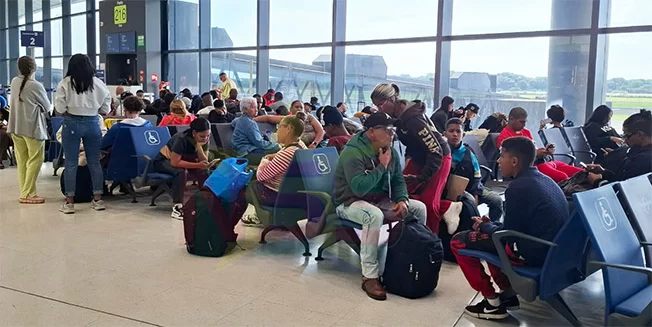
Between January 2020 and April 2026, more than 60,000 Cuban migrants arrived in Suriname, with roughly 20,000 departing the South American nation after arrival, leaving a net total of 40,000 Cubans who have settled in the country over the past six years, according to new official data and investigative reporting. The overwhelming majority of these new arrivals live and work in Suriname without legal authorization, creating growing strain on public services, the local labor market and national law enforcement.
标签: Suriname
苏里南
-
Derde helft WK 2026: Drie landen, drie mascottes, één anthem
The 2026 FIFA World Cup, set to kick off on June 11, is poised to make history as the most expansive edition of global football’s flagship event. For the first time since the World Cup’s inception nearly a century ago, the tournament will be jointly hosted by three North American nations: the United States, Canada, and Mexico. Expanded to feature 48 participating national teams from across the globe, this year’s iteration will break new ground for inclusivity, cultural exchange, and sporting passion, bringing together the world’s best talent on a truly continental stage.
Beyond the excitement of on-pitch action and the rise of new global football stars, organizers have centered the 2026 tournament on highlighting the unique cultural identities of its three host nations. The centerpieces of this cultural celebration are three brand-new official mascots — one for each host country — and a collaborative official tournament anthem crafted to unite fans worldwide.
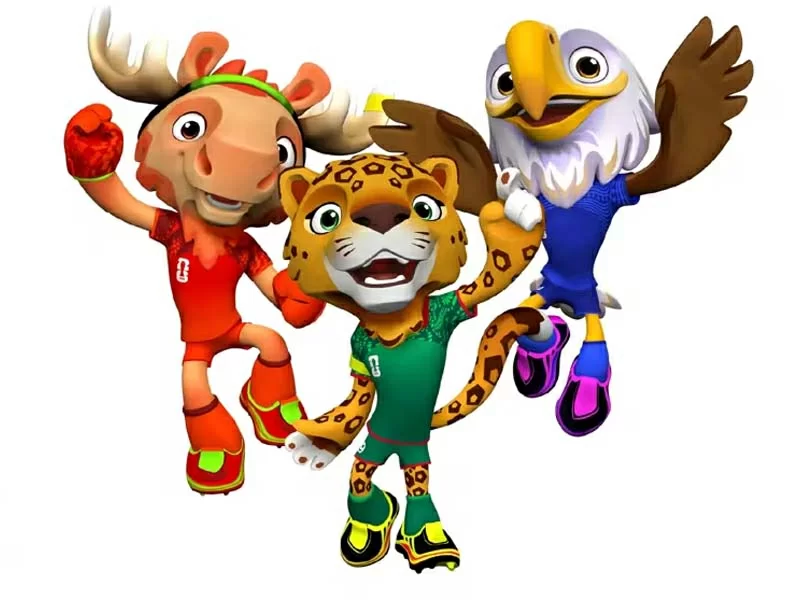
Breaking another longstanding World Cup tradition, 2026 is the first tournament to feature three official mascots, each designed to reflect the character, heritage, and natural landscapes of its home nation.
Representing Canada is Maple, a cheerful moose whose name pays homage to Canada’s iconic national symbol, the maple leaf. Embodying the values of resilience and creativity that define Canadian culture, Maple is framed as a skilled goalkeeper, with hidden passions for music and street art that showcase the nation’s vibrant creative scene.
For Mexico, the official mascot is Zayu, an energetic jaguar that symbolizes strength and the country’s deep, rich indigenous and cultural heritage. As a striker on the pitch, Zayu celebrates Mexico’s beloved culinary and dance traditions, and honors the wild southern Mexican landscapes that remain one of the last natural habitats for jaguars across North America.
Rounding out the trio is Clutch, the mascot for the United States, a bald eagle — America’s national animal — that stands for speed, power, and unbridled passion for the game. Positioned as a dynamic midfielder, Clutch embodies the curiosity and relentless optimism that are central to American national identity, aligning with the growing energy of the country’s men’s national team.
The 2026 mascots carry forward a decades-long tradition of beloved World Cup icons, stretching back to Italy 1990’s stick-figure Ciao, South Africa 2010’s leopard Zakumi, and most recently Qatar 2022’s La’eeb, the floating traditional keffiyeh that captured fans’ hearts across the globe.
Alongside the mascot reveal, organizers have announced the 2026 official tournament anthem, titled “Dai Dai.” For the first time in many years, the anthem is a collaborative track between two global music superstars: Colombian pop icon Shakira and Nigerian Afrobeat legend Burna Boy. This marks Shakira’s second official World Cup anthem, following her 2010 global smash “Waka Waka (This Time for Africa),” which remains one of the best-selling and most recognizable World Cup anthems of all time. She also contributed the secondary theme song “La La La” for the 2014 Brazil World Cup, performing it during the Rio de Janeiro closing ceremony, and delivered a memorable performance of “Hips Don’t Lie” at the 2006 World Cup closing ceremony in Germany.
“Dai Dai” blends Afro and Latin musical styles to create a sound that reflects the global diversity of the 2026 tournament, centered on themes of resilience, passion, dream-chasing, and international unity. Key lyrics reinforce the song’s core message of strength: “What broke you once made you strong.” To emphasize the World Cup’s truly global reach, the chorus includes rallying cries in multiple languages, from Italian, Japanese, and Spanish to French: “Dai, dai, ikou, dale, allez, let’s go.” Additional verses highlight the hard work and determination of competing athletes, with lyrics that reinforce individual agency: “You are the owner of that fire, no one can take it away. Sweat and blood to write your story, that is how you paved the way.”
Colombia, Shakira’s home nation, has qualified for the 48-team 2026 tournament, which will run from June 11 through July 19. Together, the three new mascots and genre-blending anthem have given the 2026 World Cup a vivid, culturally rich identity that does more than just highlight the three host nations: it celebrates the shared passion and unity that football brings to communities across the entire world.
-
President Simons aangekomen in Brazilië voor gesprekken over economie, landbouw en veiligheid
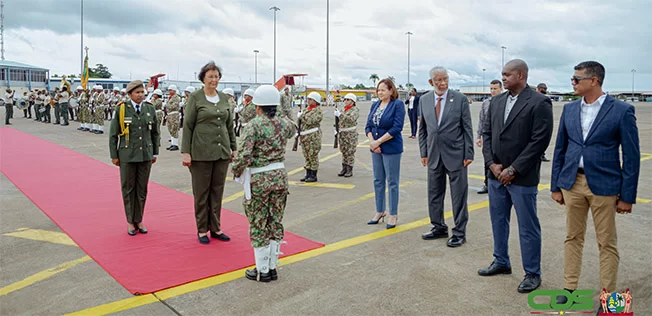
Suriname’s President Jennifer Simons has touched down in Brazil for a high-stakes official working visit focused on expanding bilateral collaboration across multiple key policy areas, according to official government announcements. The visit, which kicked off after months of detailed pre-negotiations between the two nations, will center on deepening economic partnerships, advancing agricultural development, boosting cross-border security, and advancing regional integration across South America.
Simons is not traveling alone: she is accompanied by a high-level delegation that includes five cabinet ministers and a team of technical specialists, covering every priority sector set for the talks. The delegation includes Foreign Affairs, International Trade and Cooperation Minister Melvin Bouva, Transport, Communication and Tourism Minister Raymond Landveld, Social Affairs and Housing Minister Diana Pokie, Agriculture, Livestock and Fisheries Minister Mike Noersalim, and Defense Minister Uraiqit Ramsaran.
The centerpiece of the Brazil trip will be a formal meeting between Simons and Brazil’s President Luiz Inácio Lula da Silva, where the two leaders are set to lay the foundational framework for future strategic cooperation between Suriname and Brazil. Ahead of the presidential summit, Surinamese ministers have already held preliminary working sessions with their Brazilian counterparts to hash out details of concrete joint projects, streamlining negotiations ahead of the leaders’ meeting.
Each minister will lead sector-specific discussions aligned with their portfolios. Landveld will prioritize upgrading direct air connectivity between the two countries to boost trade and tourism flows. Pokie will travel to Brazil to study the country’s landmark Bolsa Familia social welfare program, with an eye toward adapting successful frameworks for Suriname’s own social policy initiatives. Noersalim will lead talks on advancing sustainable agricultural development, expanding farmer training programs, and coordinating regional responses to cassava witches’ broom disease, a devastating pathogen that threatens cassava production across the entire region. For the defense portfolio, discussions will focus on enhancing joint border patrols, protecting shared border territories, and securing shared airspace against transnational security threats.
Following the conclusion of her official engagements in Brazil, Simons and her full delegation will travel onward to the Dominican Republic for a second leg of the overseas trip. This visit is framed as primarily exploratory and economic, with a core goal of attracting new foreign direct investment to Suriname, particularly in the agricultural and tourism sectors.
Simons will use the Dominican Republic leg to explore new models of collaboration between Suriname’s landowners, national government, and international investors that can drive growth in agricultural output and expand Suriname’s tourism footprint. The presidential delegation is scheduled to return to Suriname on June 2 following the conclusion of both overseas engagements.
-
Bolivia versoepelt regels noodtoestand te midden van aanhoudende onrust
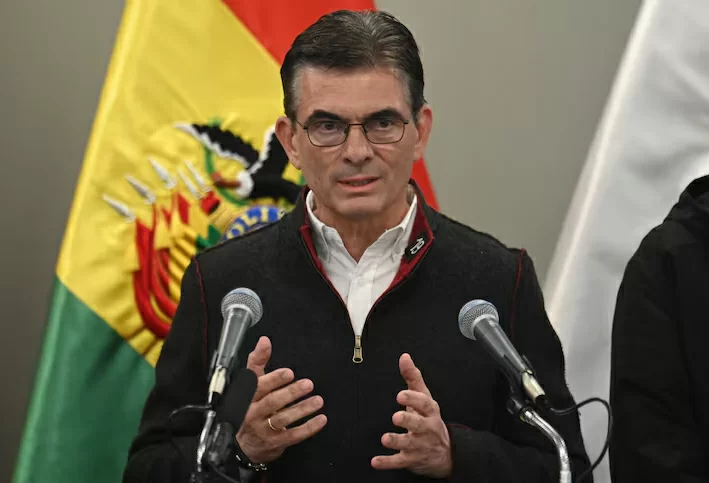
LA PAZ, BOLIVIA – In a move that reshapes the executive branch’s emergency powers amid ongoing nationwide unrest, Bolivian President Rodrigo Paz has formally revoked a law that previously set strict parameters and limits on the declaration of national states of emergency. Official government gazette confirmed the revocation on Wednesday, a change that streamlines the process for the Paz administration to enact emergency measures when facing public instability.
-
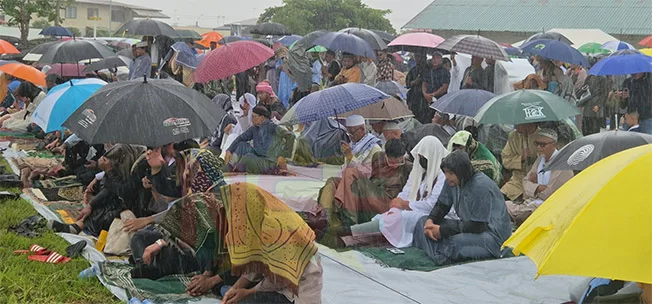
Gelovigen trotseren regen tijdens Ied-gebed; hoge prijzen offerdieren drukken feest
On the morning of May 27, hundreds of Muslim worshippers gathered on the large open field of Nabawi School in northern Paramaribo, the capital of Suriname, to hold a collective Eid al-Adha prayer, kicking off the annual four-day religious festival. Torrential downpour soaked the entire gathering, turning the open ground damp and muddy, but the crowd of believers remained steadfast, completing both the sermon and scheduled prayer without leaving early.
This year, the celebration of the festival has come with unique financial pressure for local communities: the price of sacrificial animals has surged to unprecedented levels, putting core religious traditions out of reach for many low-income households. Local authorities confirmed that a single sheep now costs roughly 20,000 Surinamese dollars, while a full bull can exceed 100,000 Surinamese dollars, a burden that many local families cannot absorb. Industry observers predict that far fewer animals will be slaughtered for the ritual this year than in previous years.
Against this backdrop, the sermon delivered during the collective prayer emphasized that the core meaning of Eid al-Adha extends far beyond the ritual slaughter of animals. Rather, the festival centers on obedience to Allah, willingness to sacrifice, communal brotherhood, and inner spiritual purification. Believers are called to draw closer to their faith by sacrificing negative personal traits including ego, pride, and jealousy, rather than focusing solely on the material requirement of animal sacrifice.
Nasir Eskak, director of the Ministry of Home Affairs, who also participated in and completed the prayer alongside other worshippers in the pouring rain, echoed this message. He referenced the foundational story of the Prophet Ibrahim and his son Ismail, a narrative that anchors the festival’s emphasis on obedience and devotion to faith. Eskak stressed that sacrifice in the context of the festival can take both material and non-material forms.
“When God asked Ibrahim to sacrifice his son, that was a sacrifice that could never be measured in monetary terms,” he explained, noting that particularly amid difficult economic times, the most meaningful sacrifice comes from setting aside personal ego and negative traits to support neighbors and care for one another. He added that even with the steep price hikes, he expected believers who can afford the cost of a sacrificial animal will still carry out the traditional ritual as their faith calls. -
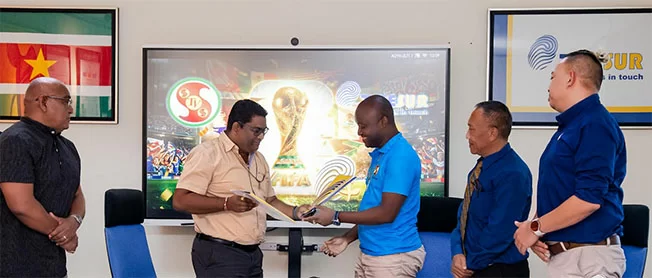
Exclusieve WK-rechten STVS maken uitzending via ATV en SRS mogelijk
As the much-anticipated 2026 FIFA World Cup approaches, Suriname has finalized its broadcast rights arrangement for the global tournament, though the deal has quickly drawn political scrutiny over financial transparency. The Surinaamse Televisie Stichting (STVS), Suriname’s state-owned public broadcaster, now holds the exclusive national broadcast rights for the 2026 tournament, enabling coverage across traditional television, radio and digital streaming platforms for audiences across the South American nation.
To ensure widespread, nationwide access to all matches, STVS has already issued sublicenses to two major local media operators: N.V. Telesur and SRS Radio. The latest formal step in this partnership was marked by a document exchange ceremony between Telesur director Doric Ramlakhan and STVS representative Raoul Abisoina, formalizing Telesur’s sublicense to air matches via its ATV television channel and stream content through its on-demand platform TelesurPlus.
Ramlakhan emphasized in comments after the ceremony that the core goal of this partnership is to bring the world’s biggest football tournament within reach of every Surinamese football fan. “We want every person, whether they’re at home, commuting, at work, in the coastal districts or the rural interior, to be able to follow the action wherever they have internet access,” he explained. Beyond live match broadcasts, Telesur plans to deliver a comprehensive, immersive football experience for fans, including dedicated studio discussion shows, expert pre- and post-match analysis, interactive fan content, public viewing events and targeted digital activations to engage audiences across age groups.
The 2026 FIFA World Cup, which kicks off on June 11 and runs through July 19, marks a historic expansion of the tournament, featuring a record 104 total matches played across three host nations. Widely regarded as one of the largest and most-watched media and entertainment events on the global calendar, the tournament presents Suriname’s media sector with both a major opportunity and a significant financial outlay.
STVS has reaffirmed its status as the official rights holder for Suriname, noting that its rights acquisition aligns fully with FIFA’s official licensing framework. The broadcaster referenced a FIFA statement issued on April 16, 2026, that confirms IRIS LATAM Limited holds the authority to issue sublicenses for the Caribbean and Latin American region, including Suriname. A subsequent confirmation letter dated May 12, 2026, formalized STVS’s acquisition of exclusive national media rights for the tournament, and the state broadcaster emphasized that the sublicense agreements with Telesur and SRS Radio do not alter its position as the primary rights holder responsible for compliance with FIFA and IRIS LATAM Limited requirements.
In a clear warning to unauthorized users, STVS noted that any redistribution or use of 2026 World Cup audio-visual content without explicit written permission violates international copyright law, and the broadcaster will not hesitate to pursue legal action against violators.
Despite the focus on public access, the deal also has a clear commercial angle: STVS has positioned the broadcast rights as a business opportunity for local and international brands, framing it as a “unique chance” for companies to build their profile during the world’s largest sporting event. The broadcaster has developed a range of commercial advertising packages designed to deliver maximum visibility and impact for partnering brands.
The agreement has not come without controversy, however. Lawmaker Mahinder Jogi of Suriname’s ruling VHP party has raised pointed questions about the $500,000 public investment reportedly made by the government to secure the exclusive rights. Jogi is calling for full transparency around the financial terms of the rights acquisition, specifically pressing for answers on how the public funds allocated for the purchase will be recouped through commercial and other revenue streams.
To address public and political questions, STVS has scheduled a press conference for Thursday, May 28 at the Mingle Cocktail Lounge in Paramaribo’s International Mall of Suriname, where it will provide additional details on the rights deal, partnerships with local media outlets and ongoing preparations for tournament broadcasts.
-
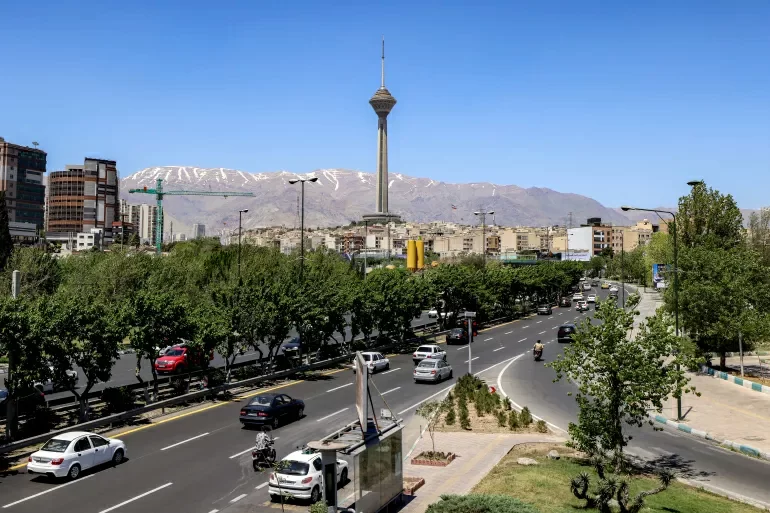
Teheran veroordeelt Amerikaanse aanvallen tijdens staakt-het-vuren
Fresh United States airstrikes against targets in southern Iran have triggered fierce condemnation from Tehran, which has branded the military incursion a blatant, severe violation of the fragile ceasefire that has held across the region since April. The strikes come at a critical juncture, just as both Washington and Tehran had begun showing tentative signs of progress in indirect negotiations aimed at forging a broader peace agreement and reopening the strategically vital Strait of Hormuz, a chokepoint through which nearly 20% of the world’s daily oil supplies pass.
Seyed Majid Moosavi, commander of the Islamic Revolutionary Guard Corps Aerospace Force — the branch of Iran’s military that oversees the country’s ballistic missile and drone programs — issued a stark warning in response to the attacks. He stated that Iran is fully prepared to retaliate against the U.S. aggression, dismissing ongoing diplomatic engagement with Washington as a pure waste of effort. Moosavi added that his force remains on high alert, standing by for formal orders from Iran’s supreme commander to launch any response deemed necessary.
Even in the wake of the airstrikes, senior Iranian diplomatic officials have continued indirect talks with U.S. mediators in Doha, Qatar. A core sticking point in the current negotiations remains the release of approximately $24 billion in Iranian assets frozen by Western sanctions, which sources close to the talks identify as the final major hurdle to reaching a preliminary agreement. Such a deal would not only work toward ending ongoing regional hostilities but also restore unimpeded commercial shipping through the Strait of Hormuz.
U.S. officials have publicly confirmed the airstrikes, saying the targets included boats suspected of planning to lay naval mines and Iranian missile launch facilities. The U.S. Central Command argued the operation was a defensive measure carried out to protect American troops in the region from imminent threats posed by Iranian-aligned forces. Meanwhile, U.S. Secretary of State Marco Rubio reaffirmed Washington’s stance that the Strait of Hormuz must remain open to international shipping under all circumstances.
Tensions across the Middle East have climbed even higher as Israel escalates its military campaign against the Hezbollah militant group in southern Lebanon. Following an announcement from Israeli Prime Minister Benjamin Netanyahu, the Israeli military carried out a series of overnight air raids that Lebanese authorities confirm killed 12 people. Regional analysts broadly view this Israeli escalation as a major complicating factor for the ongoing U.S.-Iran peace talks, creating new uncertainty for a potential deal.
Lorenzo Kamel, a historian at the University of Turin specializing in Middle Eastern affairs, noted that without outside pressure to rein in Israeli policy led by Netanyahu, any prospective U.S.-Iran agreement will remain extremely fragile. There are also growing regional fears that Iran could retaliate for Israeli strikes in Lebanon by ramping up its own military activities against other regional actors, including the United Arab Emirates.
The situation around the Strait of Hormuz remains highly tense, with Iranian officials repeatedly stating the country is prepared to push back against any U.S.-led blockades or external pressure. Tehran-based analyst Mohammad Eslamy argues the latest U.S. airstrikes are no coincidence: he suspects Washington is deliberately engineering military escalation to force greater concessions from Iran during the ongoing negotiations, shifting the balance of power in Washington’s favor ahead of any final agreement.
-
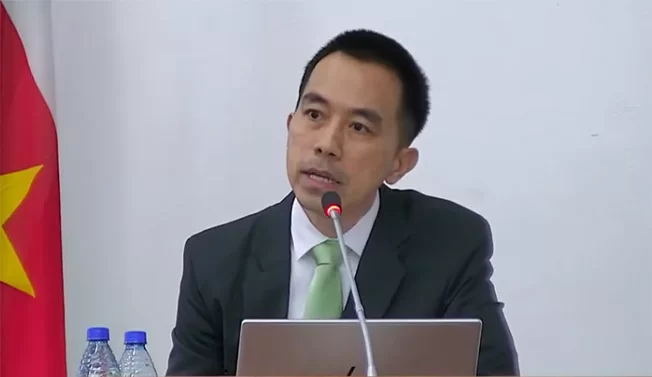
DNA zoekt werkbaar compromis met regering over Comptabiliteitswet
Parliamentary proceedings to amend Suriname’s 2024 Comptabiliteitswet (Accountability Act) were paused on Tuesday, with the debate rescheduled for this Thursday. The extension grants Finance and Planning Minister Adelien Wijnerman additional time to refine proposals submitted by both governing coalition and opposition lawmakers, as cross-party consensus grows around retaining core provisions of the new law while building a feasible implementation framework.
The administration has proposed pushing full implementation of the 2024 Accountability Act to the 2029 national budget, arguing that critical administrative infrastructure, regulatory frameworks, and oversight mechanisms remain insufficiently prepared to roll out the full reform package. The scheduled Tuesday session, originally set to begin at 10 a.m., was delayed until 1:45 p.m. due to a lack of quorum. Once underway, multiple assembly members pushed back against the idea of pausing all provisions of the law, instead advocating for a phased rollout that would keep already actionable provisions in effect immediately.
Lawmakers also clashed over the length of the proposed delay, with many arguing a two-year postponement is sufficient rather than the administration’s requested three-year delay. The debate repeatedly centered on 2028, the year Suriname expects to begin collecting revenues from offshore oil production. Multiple parliamentarians emphasized that by 2028, the country’s financial oversight mechanisms, procurement rules, and accountability structures must be fully operational and aligned with the new law’s standards.
Following a procedural suspension, closed-door negotiations were held between faction leaders, National Assembly Speaker Ashwin Adhin, and Minister Wijnerman. After the talks, Rabin Parmessar, leader of the opposition NDP faction, stated that participants had collaborated to develop workable implementation models. “We reviewed every proposal put forward in this chamber, and I believe we have developed shared frameworks that we have presented to the minister,” Parmessar said, noting that negotiators had drawn a clear distinction between budget drafting processes and post-implementation accountability requirements. “Especially on the accountability side, the minister’s responsibilities have now been clearly outlined,” he added, confirming that the minister will now refine the proposals and return an adjusted plan to the full assembly for consideration.
Asis Gajadien, leader of the governing VHP faction, echoed the call for shared parliamentary responsibility, noting that the reform is far more than a technical technical adjustment to legislation – it shapes the long-term financial and governance trajectory of Suriname. “This is about who we are and where we as Surinamese want to go,” Gajadien said. He reiterated that parliament must identify which components of the law can enter into force immediately, and which can be rolled out in stages. “At the end of the day, all of us want a system that can deliver accurate accountability both to the public and to this parliament,” he added.
Rossellie Cotino, an NDP lawmaker who chairs the assembly’s rapporteur committee, framed the current delay as a consequence of inadequate preparatory work when the 2024 Accountability Act was originally passed. She noted that the bill was originally approved without the required supporting legislation and institutional preparations in place, but emphasized: “This is not a cancellation of the 2024 Accountability Act, it is merely a postponement.” Cotino added that stakeholders have now mapped out all the supplemental reforms needed to make the law fully implementable.
She also confirmed that the Ministry of Finance has received technical support from an International Monetary Fund macroeconomic expert to assist line ministries in developing a multi-year financial framework and five-year strategic plan aligned with the act. Minister Wijnerman has already submitted an adjusted action plan and revised draft amendment, which includes a requirement for semi-annual progress evaluations of the act’s implementation.
Assembly member Jeffrey Lau of the opposition NPS has emerged with broad cross-party support for his proposal to implement already ready provisions of the act on a phased basis, rather than delaying the entire legislation for years. Lau stressed that as Suriname prepares to receive 2028 offshore oil revenues, the country urgently needs strong oversight mechanisms, transparent procurement procedures, and a robust financial accountability system. He argued that policymakers must avoid pushing needed, long-awaited reforms off for additional years, at a time when the public is demanding greater transparency and improved public financial governance.
-

Milieu autoriteit benadrukt: nog geen besluit over opslag radioactieve bronnen
Public concern over a proposed permanent radioactive source storage facility tied to Suriname’s oil development sector has prompted an official response from the country’s National Environmental Authority (NMA), which has moved to clarify the project’s current status and regulatory process.
In a statement released on May 26, the NMA acknowledged that widespread anxiety has emerged among Suriname’s communities regarding the planned facility, which will store radioactive materials used in oil exploration and production operations. The regulator emphasized that all mandatory legal protocols for environmental impact assessment are being strictly followed at every stage of the project review, and no final evaluation or approval decision has been issued to date.
According to the NMA, the proposal is currently in the active public consultation period, a key requirement for major infrastructure projects with potential environmental risks in Suriname. The authority has issued a formal call for all relevant stakeholders and ordinary citizens to submit their concerns, feedback, alternative perspectives and expert input either in written form or through scheduled public consultation sessions.
The NMA stressed that every submission of public concern will receive a full substantive review, and all input will be weighted seriously when the authority conducts its final evaluation of the facility proposal. Under Suriname’s environmental regulations, the project developer and its contracted environmental consultants are legally required to integrate all public objections, proposed alternative solutions, and suggested risk mitigation measures in full into the final consolidated environmental impact report (EIR) for the project.
Only after this complete, updated EIR is officially submitted to the regulator will the NMA begin its in-depth substantive assessment and move forward with formal decision-making on whether to approve the permanent radioactive storage facility, the authority confirmed.
-
Derde Helft WK 2026: Spanning stijgt met het grootste toernooi ooit
With just over two weeks remaining until the opening kickoff of the 2026 FIFA World Cup, the global football community is gearing up for what is poised to be the largest, most inclusive edition of the tournament in the sport’s history. For the first time ever, the men’s World Cup will be co-hosted by three North American nations: the United States, Canada, and Mexico, and the expanded 48-team field has created space for both long-standing football powerhouses and exciting underdog newcomers to compete for soccer’s most coveted prize. Below, we break down the qualified teams by confederation and explore key storylines to watch as the tournament approaches.
### Europe: Dominant Favorites and a Shock Absence
European football leads all confederations with 16 qualified teams, making it the largest contingent in this year’s tournament. Traditional global giants including France, Germany, Spain, and England enter as early favorites to progress deep into the knockout stages. France heads into the competition brimming with confidence, boasting a well-balanced roster that blends veteran world-class talent with a new wave of exciting young prospects. One of the biggest shocks of the qualifying cycle has been confirmed: four-time World Cup winners Italy, one of the most successful national teams in tournament history, failed to qualify for 2026, marking another major upset that highlights how increasingly competitive modern qualifying has become for traditional powerhouses.Beyond the top favorites, other strong European sides including Belgium, the Netherlands, and Croatia have already proven their ability to pull off upset wins against elite competition in past tournaments, with new generations of young stars injecting fresh quality and dynamism into their rosters. Portugal, led by iconic striker Cristiano Ronaldo—if he remains active in the squad—also stands as a potential dark horse capable of making a deep run. Key storylines to follow across European teams include breakthrough performances from young talent in rosters like England and France, as well as how sides rebound from past tournament disappointments.
### South America: Passion and Technical Flair Abound
The South American Football Confederation (CONMEBOL) brings five qualified teams to 2026, including perennial contenders Brazil, Argentina, and Uruguay. Brazil is eager to bounce back after failing to claim a podium finish at the 2022 Qatar World Cup, while current world champions Argentina enter to defend their title and cement their status as one of the sport’s modern greats. South American sides are universally renowned for their technically gifted play and unrivaled on-pitch passion, and this year’s cohort mixes emerging young stars with seasoned veteran leaders, setting the stage for thrilling, high-energy matches. Fans should keep an eye out for the confederation’s signature creative play, elite dribbling skill, and mental toughness in high-stakes knockout matches.### Africa: Record Representation Marks the Rise of New Contenders
Africa will send 9 teams to the 2026 World Cup, a new record for the confederation that signals its growing influence on the global stage. Nations including Senegal, Morocco, Cameroon, and Ghana have already established themselves as serious competitors for elite sides over the past several tournaments, with Senegal and Morocco both turning in standout performances that shocked the football world in recent cycles. African sides bring blistering speed, physical strength, and refined technical ability to the pitch, and a large share of their players currently compete in top European club leagues, giving them valuable big-match experience ahead of the tournament. This year, many analysts expect at least one African side to progress to the quarterfinals or beyond, making their rising momentum one of the most exciting stories to watch.### Asia: Growing Ambition and Rising Profile
Asia sends 8 qualified teams to 2026, with sides including Japan, South Korea, and Iran leading the confederation’s charge as it continues to emerge as a competitive force on the global stage. Japan and South Korea have already proven themselves as consistent, tough competitors capable of pulling off major upsets against top-ranked sides in past tournaments, and Asian sides are widely known for their tactical discipline and cohesive team play. Key storylines to watch for Asian teams include their refined strategic organization, relentless fighting spirit, and breakthrough performances from young talent looking to make their mark on the global stage.### North and Central America: Home Advantage and Hunger for Success
With three host nations—the United States, Canada, and Mexico—the North and Central American confederation (CONCACAF) has 6 qualified teams total, all set to benefit from massive home crowds that will bring unprecedented energy and atmosphere to their matches. The United States looks to build on its strong performances in recent consecutive tournaments, while Mexico aims to reinforce its legacy as one of the confederation’s most consistent World Cup contenders. Canada makes its return as a strong contender, while underdog sides including Costa Rica and Panama have the potential to pull off surprise results against higher-ranked opponents. The impact of the massive home crowd support and the motivation of first-time tournament debutants are major stories to follow for the host confederation.### Oceania: Small Contingent, Big Aspirations
New Zealand is Oceania’s sole representative at the 2026 World Cup, marking the nation’s return to the tournament for the first time in over a decade. While the confederation has just one qualifier, New Zealand brings a fresh energy and relentless determination to prove itself against the world’s best teams, carrying the hopes of the entire region on its shoulders.The full list of qualified teams by confederation is as follows:
– **AFC (Asia):** Australia, Iran, Japan, Jordan, South Korea, Qatar, Saudi Arabia, Uzbekistan, Iraq
– **CAF (Africa):** Algeria, Cape Verde, Ivory Coast, Egypt, Ghana, Morocco, Senegal, South Africa, Tunisia, DR Congo
– **CONCACAF (North and Central America):** Hosts United States, Canada, Mexico, plus Curaçao, Haiti, Panama
– **CONMEBOL (South America):** Argentina, Brazil, Colombia, Ecuador, Paraguay, Uruguay
– **OFC (Oceania):** New Zealand
– **UEFA (Europe):** Belgium, Bosnia and Herzegovina, Croatia, Czechia, England, France, Germany, Netherlands, Norway, Portugal, Scotland, Spain, Sweden, Switzerland, Turkey### Key Storylines and Key Dates To Remember
The expanded 48-team format guarantees more unpredictability than ever before, with major upsets almost certain to occur in the expanded group stage. Beyond the on-pitch competition, the tournament is expected to launch the careers of dozens of new young stars, who will go on to sign with top European clubs after turning heads in North America. For the first time, improved VAR technology and advanced real-time data analytics will be rolled out to create fairer matches and add new strategic depth to competition.The co-hosting model across three nations, each with its own distinct football culture and stadium experience, will also create a one-of-a-kind atmosphere that celebrates the diversity of global football.
In summary, the 2026 World Cup is set to go down as a historic event: more teams, more opportunities for underdogs, and unprecedented cross-border collaboration between three host nations. Fans around the world can expect spectacular matches, unexpected plot twists, and a global celebration of the world’s most popular sport. Whether you are cheering for a traditional favorite or rooting for a Cinderella underdog run, this year’s tournament has something for every football fan.
Key dates and details to mark on your calendar:
– Tournament kickoff: June 11, 2026, with the opening match between host Mexico and South Africa
– Final match: July 19, 2026
– Tournament locations: 16 host cities spread across the United States, Canada, and MexicoGet ready for a full month of world-class football magic!