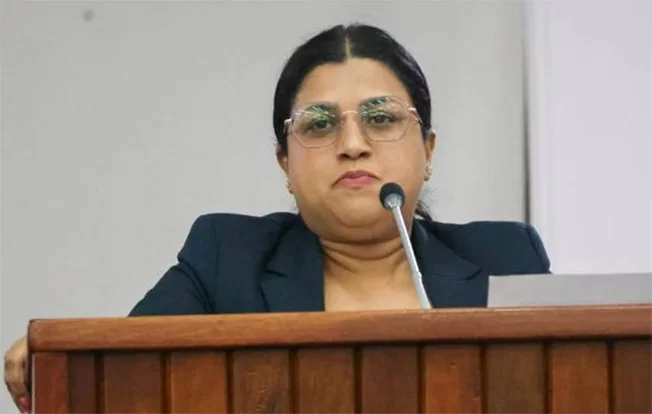
Suriname’s Minister of Youth Development and Sports, Lalinie Gopal, has announced a sweeping policy shift that will return most sports venue management to government oversight, alongside a multi-million dollar infrastructure upgrade program aimed at revitalizing the country’s sports sector.
Speaking during parliamentary debate on the ministry’s budget in the National Assembly, Gopal argued that the current model, which has handed control of most public sports facilities to private foundations over recent decades, is no longer sustainable and is holding back the sector’s growth. She told lawmakers that real-world implementation of the private foundation model has repeatedly shown that public interest is not always prioritized by independent managers, creating systemic barriers to equitable access and long-term development.
Under the proposed new management framework, Gopal said the government will reassert a central coordinating role to unlock new investment, while structuring revenue sharing to benefit both state authorities and facility operators. The preliminary plan outlines a 60/40 revenue split, with 60 percent of all generated income going to on-site managers and the remaining 40 percent allocated to the national government. Gopal emphasized that clear government ownership and governance is a critical prerequisite for attracting international donor funding, noting that many global funders have been unwilling to commit resources to projects where management and ownership structures remain ambiguous.
The policy overhaul is designed to address longstanding gaps in maintenance, improve management transparency, and lay the groundwork for sustainable growth of national sports infrastructure, according to the minister.
Alongside the management restructuring, Gopal unveiled a large-scale investment package to upgrade existing facilities and build new community sports spaces across the country. The centerpiece of the infrastructure program is the full rehabilitation of seven artificial turf pitches located in different regions, alongside planned renovations to multiple existing sports complexes, construction of new public swimming pools, and modernization of outdated venues.
Two new multi-purpose community centers are also currently under development in the Para and Commewijne districts, designed to host not only competitive and recreational sports, but also youth programming and broader community development activities. Additional investments will go toward upgrading public playgrounds and purchasing new equipment for national sports federations, with the goal of lowering barriers to grassroots sports participation and giving local clubs the resources they need to expand their programming.
Gopal highlighted the upcoming rehabilitation of the public swimming pool in Nickerie as a key early project, noting that work is set to begin shortly thanks to funding from a joint development partnership with the government of India.
Ultimately, the minister framed the dual reforms of management restructuring and infrastructure investment as a core investment in Suriname’s youth. By upgrading facilities and standardizing governance, the government aims to boost national sports participation rates, expand development opportunities for young athletes, and ensure equitable access to quality sports infrastructure across all regions of the country.