标签: Haiti

海地

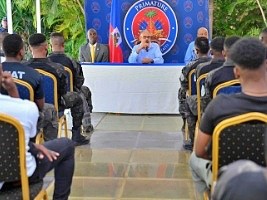
  • Election : The Prime Minister reiterates to the CEP his determination to support the electoral process

    Election : The Prime Minister reiterates to the CEP his determination to support the electoral process

    In a significant demonstration of governmental commitment to democratic processes, Haitian Prime Minister Alix Didier Fils-Aimé personally visited the Provisional Electoral Council (CEP) headquarters on December 30, 2025. During this high-profile engagement, the Prime Minister emphatically reaffirmed his administration’s comprehensive backing for the upcoming 2026 electoral cycle.

    The Haitian leader expressed particular satisfaction with the CEP’s publication of a revised electoral calendar, characterizing the timeline as both realistic and credible in meeting democratic standards. He further commended the Presidential Transitional Council (CPT) for its diligent work in preparing the crucial electoral decree that will govern the process.

    Security concerns emerged as a central theme of the Prime Minister’s address, with specific emphasis on protecting displaced populations and ensuring national stability. Fils-Aimé identified these elements as absolute prerequisites for guaranteeing all citizens the fundamental right to participate freely in the democratic process.

    Reaching beyond national borders, the Prime Minister issued a strategic appeal to the international community, urging intensified support for Haiti’s security apparatus. This call specifically referenced the need for enhanced backing of the Gang Suppression Force (FRG) and other law enforcement operations critical to establishing the secure environment necessary for successful elections.

    The government’s coordinated approach—combining domestic electoral preparation with international security cooperation—signals a determined effort to conduct Haiti’s 2026 elections under optimal conditions, potentially marking a turning point in the nation’s political landscape.

  • FLASH : Weapons and large quantities of ammunition seized at the Port of Cap-Haïtien

    FLASH : Weapons and large quantities of ammunition seized at the Port of Cap-Haïtien

    In a significant counter-trafficking operation on December 29, 2025, Haitian law enforcement intercepted a substantial cache of illicit weapons and ammunition at the Port of Cap-Haïtien. The joint operation conducted by the Anti-Narcotics Brigade (BLTS) and Customs authorities uncovered the concealed arsenal within shipping containers that had originated from the United States.

    Authorities discovered the weapons meticulously hidden inside boxes within a container operated by international shipping giant CMA CGM. The seizure included sophisticated military-grade equipment: three firearms comprising two 9mm pistols (manufactured by Ruger and Taurus) and one high-caliber 7.62mm AK-47 assault rifle. The inventory further revealed eight magazines (four for each caliber) alongside 1,800 rounds of 9mm ammunition systematically packaged across 36 boxes containing 50 rounds each.

    During the operation at the CTSA 2 terminal, law enforcement apprehended 43-year-old Jean Marie Clément Thelusma, identified as both the owner of the contraband and a suspected arms trafficker. Thelusma was taken into custody at the scene following the discovery.

    This successful interdiction highlights enhanced coordination between specialized units of the Haitian National Police (PNH) and customs authorities, demonstrating considerable progress in securing the nation’s critical entry points against transnational trafficking networks. The operation marks a substantial victory in Haiti’s ongoing efforts to combat organized crime and stabilize regional security.

  • Security : Prime Minister Fils-Aimé strengthens his support for the PNH and SWAT

    Security : Prime Minister Fils-Aimé strengthens his support for the PNH and SWAT

    In a decisive move to address Haiti’s ongoing security challenges, Prime Minister Alix Didier Fils-Aimé convened a high-level meeting on December 29, 2025, with key law enforcement leadership. Serving simultaneously as President of the Superior Council of the National Police (CSPN), the Prime Minister engaged directly with Acting Director General of the Haitian National Police (PNH) Vladimir Paraison and members of specialized units including SWAT teams.

    The strategic session focused on implementing tangible solutions to enhance operational capabilities against armed criminal groups. The dialogue identified critical logistical requirements for field officers while establishing immediate measures to strengthen the PNH’s effectiveness in combat operations.

    Substantial progress was achieved in three fundamental areas affecting police welfare. Risk compensation packages will be augmented for officers facing heightened danger, while medical coverage expands through both domestic enhancements and international partnerships with Cuba. Additionally, a dedicated housing support program will be implemented specifically for PNH personnel.

    The Prime Minister paid solemn tribute to officers who sacrificed their lives in service, observing a minute of silence while praising the courage of those maintaining security during the holiday period. Fils-Aimé emphasized that “the restoration of security is the essential condition for a return to democracy and the rule of law,” making an impassioned appeal for national unity against armed factions.

    The government reaffirmed its unwavering commitment to elite police units, positioning these measures as crucial steps toward reestablishing constitutional order and public safety across the nation.

  • Politic : Towards legal reform to protect Morne l’Hôpital

    Politic : Towards legal reform to protect Morne l’Hôpital

    In a significant environmental governance initiative, Haitian authorities have commenced a comprehensive legal modernization project targeting the protection framework for Morne l’Hôpital, a vital ecological zone. The ambitious reform effort is being spearheaded by Pierre Canisius Guignard, Director General of the Ministry of the Interior and Territorial Communities (MICT), alongside agronomist Jean Franck Junior Charles Pierre, Director of the Morne L’Hôpital Monitoring and Development Organization (OSAMH).

    The cornerstone of this initiative involves revamping obsolete legislation originally established in 1986 that has failed to keep pace with contemporary technical standards and administrative requirements. The three-month modernization process will feature 12 collaborative workshops engaging the Legal Affairs Department and multiple technical units within the Ministry.

    Agronomist Pierre emphasized the critical nature of the reforms, stating: “This new draft bill aims to equip OSAMH with modern technical structures to enable it to effectively fulfill its protection mission.”

    The ecological degradation of Morne l’Hôpital presents substantial risks to Port-au-Prince’s viability, with the reform addressing multiple urgent priorities:

    – Safeguarding the capital’s primary drinking water supply systems
    – Implementing advanced erosion control measures to mitigate catastrophic flooding
    – Launching comprehensive reforestation programs across the site’s 2,000 hectares
    – Establishing robust land use planning mechanisms to combat uncontrolled urbanization

    Director Guignard confirmed the initiative’s alignment with the Government Action Plan, noting that beyond legislative updates, the Ministry will address operational challenges including financial resource allocation and security provisions necessary for effective enforcement in high-risk areas. The protection of Morne l’Hôpital has consequently evolved from an environmental concern to a pressing national security imperative essential for Port-au-Prince’s long-term sustainability.

  • Les Cayes Airport : Modernization work nearing completion

    Les Cayes Airport : Modernization work nearing completion

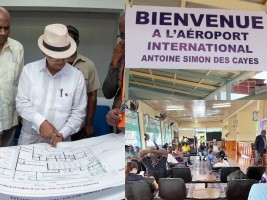
    Significant progress is being made on the comprehensive modernization of Haiti’s Antoine Simon International Airport in Les Cayes, with construction reaching 80% completion by mid-December. The ambitious renovation project, which commenced in September 2025, remains on track for its initial December 31st delivery deadline despite challenging circumstances.

    The transformative initiative has already achieved a critical milestone: formal approval from the U.S. Transportation Security Administration (TSA) was granted in early December. This authorization officially permits direct flight operations between the United States and Les Cayes, marking a substantial advancement for regional connectivity and economic prospects.

    A specialized task force from Haiti’s National Airport Authority (AAN) is currently overseeing operations on-site to ensure rigorous adherence to international aviation standards. This oversight team includes representatives from three key regulatory bodies: the International Civil Aviation Organization (ICAO), the Federal Aviation Administration (FAA), and Haiti’s own National Civil Aviation Office (OFNAC).

    The renovation project, executed by Haitian construction firm SD Construction S.A. under the technical supervision of BETA Consulting Engineers, encompasses comprehensive terminal enhancements designed to elevate passenger experience. Key improvements include complete reconfiguration of passenger flow systems with repositioned check-in counters and security checkpoints, establishment of dedicated sovereign service areas for immigration and customs processing, and enhanced traveler comfort through new international departure and VIP lounges complemented by full terminal air conditioning.

    Beyond terminal improvements, substantial security and technical infrastructure upgrades are simultaneously progressing. These include installation of temporary lighting systems, construction of a new Road Access and Screening Post (PARIF), and imminent commissioning of specialized technical rooms housing advanced IT and video surveillance systems. While these interventions represent temporary solutions pending a future master plan development, they ensure immediate operational capability meeting stringent international security protocols.

  • Social : The Mexican Catholic Church is concerned about the number of migrants coming from Haiti…

    Social : The Mexican Catholic Church is concerned about the number of migrants coming from Haiti…

    The Mexican Catholic Church in the southern border region has raised urgent concerns regarding the escalating humanitarian situation created by increasing migrant arrivals. Father César Augusto Cañaveral, leading migrant ministry for the Diocese of Tapachula, reported extensively populated migrant camps housing individuals from Haiti, Cuba, Venezuela, Guatemala, and El Salvador throughout the city’s periphery and surrounding neighborhoods.

    Tapachula, located in Chiapas state bordering Guatemala, serves as a critical juncture for asylum seekers. Father Cañaveral emphasized the necessity for local communities to develop coexistence strategies with incoming foreign populations, stating, “As a border church, we must intensify efforts toward integration and building constructive relationships.”

    The priest highlighted that while Central American migrants traditionally utilized these routes, current numbers show substantial increases with many stranded individuals seeking refuge in parish facilities. This surge appears linked to expectations of potential U.S. border policy changes under the renewed Trump administration’s stringent immigration measures.

    Ecclesiastical authorities have criticized the Mexican government’s inadequate response to this ongoing challenge. Despite some decline in migration flows, Tapachula—with its resident population of approximately 350,000—remains overwhelmed by asylum applications. Official data reveals that from January through September 2025, Mexico recorded over 52,000 asylum petitions, with 66% originating from Chiapas state.

    The International Organization for Migration identifies Haitian, Cuban, and Honduran nationals as predominant groups, though diverse nationalities are represented. Local labor representatives like Teodoro Vázquez Castillo of the Revolutionary Workers’ Federation acknowledge migrants’ presence in formal employment sectors but express concern over strained local resources in what he describes as an already crisis-affected zone.

  • CARICOM : Renewed attention to Haiti

    CARICOM : Renewed attention to Haiti

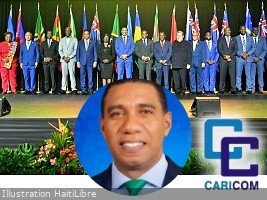
    As Jamaica’s Prime Minister Andrew Holness concludes his tenure as CARICOM president, he has outlined significant regional accomplishments while emphasizing the Caribbean community’s intensified focus on Haiti’s stabilization. The leadership transition, scheduled for January with Saint Kitts and Nevis assuming the pro tempore presidency, marks a pivotal moment for regional cooperation.

    In his valedictory address, Holness highlighted several landmark achievements during his presidency. The Caribbean Community demonstrated exceptional solidarity during Hurricane Melissa, showcasing the region’s collective disaster response capabilities. A historic integration milestone was reached with Barbados, Belize, Dominica, and St. Vincent and the Grenadines implementing full free movement of citizens among themselves since October 1, 2025. This ‘concentric circles’ approach mirrors successful integration models globally, enabling willing nations to deepen cooperation while maintaining flexibility for other members to join when prepared.

    Haiti emerged as a central focus of CARICOM’s diplomatic efforts, with sustained advocacy resulting in substantial international engagement. The community’s persistent diplomacy contributed to the UN Security Council establishing a Gang Suppression Force (GSF), partially funded by United Nations resources including equipment, infrastructure, and logistical support. CARICOM has now become an essential partner in the tripartite coordination of the Organization of American States’ Roadmap toward Stability and Peace in Haiti, with optimistic projections for free and fair elections in 2026.

    The Caribbean Community reaffirmed its commitment to maintaining the region as a Zone of Peace, grounded in respect for international law and peaceful conflict resolution. While acknowledging that member states may occasionally express divergent national perspectives, Holness emphasized that such diversity strengthens rather than weakens the community’s collective mandate, economic interdependence, and organic people-to-people connections that transcend temporary challenges.

  • Security : General mobilization of State security forces against gangs

    Security : General mobilization of State security forces against gangs

    In a decisive move to combat rampant gang violence, Haitian Prime Minister Alix Didier Fils-Aimé spearheaded a high-level security summit at the National Police headquarters in Clercine on December 28, 2025. The strategic meeting assembled key security officials including Justice Minister Patrick Pélissier, Public Security Secretary Mario Andrésol, and Acting Police Director Vladimir Paraison, signaling an unprecedented coordinated response to the nation’s security crisis.

    The gathering marked the formal activation of a tripartite security offensive involving Haiti’s National Police (PNH), Armed Forces (FAd’H), and specialized Gang Suppression Unit (FRG). This coordinated mobilization represents the most comprehensive security operation undertaken against armed criminal networks that have destabilized the nation.

    During the strategic briefing, Prime Minister Fils-Aimé officially acknowledged critical international support from the U.S. State Department’s Bureau of International Narcotics and Law Enforcement Affairs, which has provided 25 armored personnel carriers to enhance operational capabilities. This tactical equipment is expected to significantly improve officer protection and intervention effectiveness in high-risk operations.

    The Prime Minister delivered an unequivocal declaration of the government’s stance: “Our combat targets criminal elements exclusively. Our mission is national security restoration. The state will neither compromise nor negotiate with those who threaten public safety.” He emphasized that the newly acquired assets would enable systematic reclaiming of gang-controlled territories and establish sustainable security frameworks.

    Concluding the address, Fils-Aimé positioned security restoration as the foundational prerequisite for constitutional normalization, announcing that 2026 would be dedicated to organizing democratic elections and revitalizing Haiti’s republican institutions.

  • Mexico : Launch of the «Makaya – Cuitláhuac» University Chair

    Mexico : Launch of the «Makaya – Cuitláhuac» University Chair

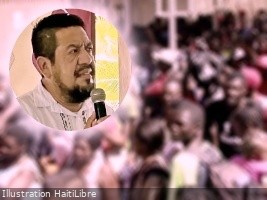
    In a landmark academic partnership, the University of Haiti (UEH) and Mexico’s National Autonomous University (UNAM) have established the “Makaya-Cuitláhuac” Chair, named after revered figures in Haitian and Aztec resistance history. This collaborative initiative, formalized through a five-year renewable agreement signed earlier this month, represents a significant advancement in cross-cultural academic cooperation between the two nations.

    The newly launched chair will serve as a platform for comprehensive studies addressing pressing contemporary challenges. Research and academic activities will encompass numerous critical domains including art and bio-resilience, poverty alleviation strategies, cultural heritage preservation, and human rights advocacy. The program will also facilitate specialized investigations into natural disasters, social discrimination, forced displacement patterns, and gender-based violence within armed conflicts.

    Academic exchanges will feature an array of conferences, specialized seminars, and research residencies, with hosting responsibilities alternating between UEH and UNAM. The partnership’s inaugural phase will commence at the Mexican institution, establishing a framework for sustained intellectual collaboration.

    During the signing ceremony, UEH Rector Prédélus acknowledged key contributors including Mexican Ambassador to Haiti José de Jesús Cisneros Chávez, Haitian Ambassador to Mexico Hubert Labbé, and several academic and diplomatic officials whose concerted efforts enabled the initiative’s realization.

    Rector Prédélus emphasized the agreement’s historical significance, noting that the partnership transcends conventional administrative cooperation. The collaboration embodies both institutions’ commitment to developing equitable academic partnerships that address the specific socioeconomic realities of Haiti and Mexico while creating enhanced educational opportunities for students, faculty, and broader communities.

  • Justice : Haiti’s double debt discussed at the Panthéon-Sorbonne University in Paris

    Justice : Haiti’s double debt discussed at the Panthéon-Sorbonne University in Paris

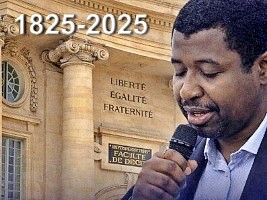
    In a landmark address at Paris’ prestigious Panthéon-Sorbonne University, Dieuseul Prédélus, Rector of Haiti’s State University and President of the Haitian National Committee for Restitution and Reparation (CNHRR), presented a compelling case for historical justice regarding what he termed Haiti’s “double debt” imposed by France in 1825.

    Addressing academics, students, diaspora members, and distinguished guests, Prédélus delivered an emotionally charged speech that traced Haiti’s two-century struggle for dignity and reparations. He recounted how Haiti, having achieved independence through bloodshed, was subsequently forced under threat of French naval invasion to pay massive indemnities to its former colonizers—creating what he described as a “moral absurdity” where a liberated people had to pay to avoid re-enslavement.

    The financial burden, contracted through what Prédélus characterized as “usurious” French banking interest rates, trapped the Caribbean nation in a century-long debt spiral that permanently crippled its development prospects. The CNHRR president emphasized that Haiti’s demand constitutes neither charity nor revenge but rather “an act of basic justice” grounded in contemporary international law and UN principles regarding crimes against humanity.

    Prédélus cited current estimates valuing the debt between $21-115 billion in today’s terms, posing a fundamental moral question: “How can one demand that a people pay for their liberation from a crime against humanity?”

    The address acknowledged evolving attitudes in France, including the emergence of a new generation willing to confront historical truths, the establishment of a joint Franco-Haitian historical commission, and the French National Assembly’s June 2025 resolution encouraging governmental consideration of restitution pathways.

    Outlining the CNHRR’s 2026 roadmap, Prédélus issued a passionate appeal for national unity and diaspora mobilization, framing the restitution struggle as transcending political and generational divisions. He positioned reparations not as historical score-settling but as an opportunity to build a more just future—for Haiti’s regained dignity and development possibilities, and for the international community to redress profound historical injustice.

    The speech concluded with a solemn call for global solidarity around what Prédélus characterized as a fundamental matter of historical justice and human dignity.