标签: Haiti

海地

  • Call for applications : National recruitment of the FAd’H (official)

    Call for applications : National recruitment of the FAd’H (official)

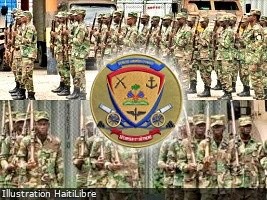
    Haiti’s Ministry of Defense has officially announced a sweeping national recruitment drive for the country’s Armed Forces ( Forces Armées d’Haïti, FAd’H), with application sessions set to run from June 8 to 12, 2026, between 9 a.m. and 4 p.m. local time at sites in all 10 of Haiti’s geographic departments. In total, the force aims to bring on roughly 1,000 new personnel, filling two broad candidate pools: entry-level soldier roles and specialized technical positions across junior non-commissioned, senior non-commissioned, and officer ranks.

    The specialized technical profiles prioritized in this recruitment span three core sectors. For engineering and architecture, the FAd’H is seeking civil engineers, licensed architects, and agricultural engineers. In the medical field, the force is recruiting general practitioners, internists, general surgeons, neurologists, ophthalmologists, anesthesiologists, and other specialized clinical providers. Legal roles are also open, with openings for general practice lawyers and criminal defense attorneys.

    Eligibility requirements are tailored to the two applicant categories. All candidates must hold Haitian nationality, enjoy full civil and political rights, be in sound physical and mental health, have no felony convictions on their record, and be willing to complete mandatory rigorous military training. They must also meet at least one publicly listed social profile criterion, with the full criteria available on the Ministry of Defense official website and via a published notice from HaitiLibre. Height minimums are set at 1.70 meters for male applicants and 1.60 meters for female applicants, with adjusted accommodations for candidates applying for technical leadership roles. Age limits also differ: general soldier candidates must be between 18 and 25 years old, while technical role applicants may be between 25 and 35 years old.

    Required documentation for all applicants includes a copy of a birth certificate or valid extract from Haiti’s National Archives, a working Tax Identification Number (NIF), a copy of the national unique identification card (CINU), official proof of required academic attainment, a certificate of good conduct issued by the national court or the Central Directorate of the Judicial Police (DCPJ), four formatted identification photos (two front-facing, two profile), two signed letters of recommendation, and one formal cover letter. For general soldier positions, applicants must provide at minimum a 9th-grade completion certificate, while technical role applicants are required to hold at least a bachelor’s degree in their relevant field.

    Application drop-off locations are organized by department. Candidates based in Haiti’s West Department can submit materials at either the Anacaona military base in Léogâne or the Clercine military base in Port-au-Prince. For all other nine departments, completed application packets can be filed at local Civil Protection Directorate offices. The recruitment drive comes as part of ongoing efforts to restructure and expand the FAd’H, with further information on the defense ministry’s long-term vision for force reconstruction available via official interviews and additional public briefings.

  • Leisure : Did you know ? #29

    Leisure : Did you know ? #29

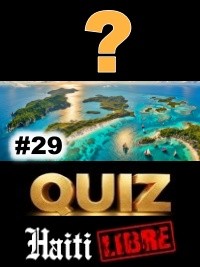
    Nestled along Haiti’s 1,700-kilometer Caribbean coastline lies a little-known geographic secret that many geography and travel enthusiasts have never encountered. While most general knowledge resources only reference the country’s four or five largest islands, the nation actually boasts more than 100 small islands, islets, and cays scattered across its surrounding territorial waters, creating a diverse coastal mosaic that adds unique complexity to Haiti’s national landscape.

    This sprawling archipelago includes a number of notable landmasses, from the twin Cayemite Islands (Grande Cayemite and Petite Cayemite) to Île à Cabrit, which sits in the sheltered bay of Port-au-Prince, the Sept Frères island chain off Haiti’s northern coast, and the remote Ilet-à-Brouée. The vast majority of these small landforms remain uninhabited by permanent human settlements, and most only see occasional use as temporary shelter for local fishermen working in nearby coastal waters.

    Beyond their geographic intrigue, these scattered island territories support remarkable ecological diversity, ranging from lush, protective mangrove forests that serve as critical nurseries for marine life to bright, pristine coral sandbanks that host unique coastal ecosystems. Managing this extensive maritime domain has emerged as a key priority for Haiti, both to preserve these fragile natural environments and to unlock opportunities for the development of sustainable, low-impact coastal tourism that can benefit local communities. What makes this geographic tapestry even more distinctive is that every tiny cay carries its own traditional local name and unique ecological or geographic characteristics, weaving together a richer, more diverse portrait of Haiti’s national territory than most popular sources share.

    This little-known geographic fact was shared as part of the answer key for the popular HaitiLibre Quiz platform, a free general knowledge resource that invites users to test their knowledge across a huge range of topics, from Haitian history, geography, and culture to global current events and specialized subject areas. Launched as an interactive public resource, the quiz platform does not require user registration, making it accessible to people of all age groups and backgrounds. It offers content across three distinct difficulty tiers—easy, intermediate, and hard—and all quizzes are available in both French and English to serve a broad international audience.

    As of a major monthly platform update rolled out on June 1, 2026, the site added 31 brand-new quizzes, bringing the total number of interactive games available to 150, with new content added on a monthly basis to keep the resource fresh for returning users. For those seeking more challenging content, the platform’s dedicated expert menu offers a curated selection of advanced quizzes on specialized topics. Users can explore the full collection of quizzes, share the platform with friends and family, and submit feedback to the HaitiLibre team directly through the official quiz website.

  • Training : List of Accredited Private Vocational Training Centers in Haiti

    Training : List of Accredited Private Vocational Training Centers in Haiti

    Haiti’s National Institute for Vocational Training (INFP) has published an updated official roster of accredited private vocational training centers across the country, fulfilling its core mandate to regulate, supervise and elevate the quality of Haiti’s national vocational education ecosystem.

    The release of the list aligns with all existing Haitian laws and regulatory frameworks governing vocational education provision. The full directory, available as a French-language PDF for public download via HaitiLibre, catalogs every private institution that has met the INFP’s strict quality benchmarks to operate legally.

    This public announcement is designed to bring clarity to a wide range of stakeholders, from prospective students and their families to local employers, international technical and funding partners, and the general public. By making the accreditation information easily accessible, the INFP aims to help learners distinguish between authorized, quality-assured programs and unaccredited providers that do not meet national standards.

    In a key advisory note accompanying the list, the INFP strongly encourages all individuals planning to enroll in vocational training to confirm an institution’s accredited status before committing to a program. This step ensures that the training received adheres to national vocational education standards, and that any certification awarded upon completion will carry the official institutional recognition required for employment or further education in Haiti.

    The INFP also emphasized that only the institutions included in the published list held valid accreditation as of the announcement’s date. The directory will be updated on a regular basis to reflect new accreditation approvals, status renewals, and any changes to existing institutions’ operating status going forward.

  • Elections : Electoral decree drastically modified, new crisis looming

    Elections : Electoral decree drastically modified, new crisis looming

    A fresh political standoff is unfolding in Haiti just months after ongoing institutional instability, as sweeping unilateral changes to an electoral decree have thrown the country’s planned electoral process into deep uncertainty and raised alarms over constitutional breaches. The conflict erupted on June 2, 2026, when Prime Minister Alix Didier Fils-Aimé convened an emergency information meeting with members of Haiti’s Provisional Electoral Council (CEP), the constitutionally mandated independent body tasked with organizing the nation’s elections. During the gathering, Prime Minister Fils-Aimé formally notified CEP leadership that his office had finalized and would move forward with publishing a revised electoral decree — a policy document that sets the legal framework for upcoming electoral contests. What made this announcement contentious, however, was the stark gap between the version of the decree tabled at the meeting and the original draft that the CEP had submitted to the executive branch for review back on April 24, 2026. According to official statements from the CEP, the modifications introduced by the Prime Minister’s office are not minor technical adjustments, but drastic alterations that fundamentally reshape the original text. Legal and constitutional observers note that this unilateral action directly violates Haiti’s constitutional order, which reserves the exclusive authority to draft the electoral decree for the independent CEP. By overriding the CEP’s draft and imposing a modified version without the council’s formal consent, the Prime Minister’s decision directly infringes on the core principle of electoral body independence, a foundational guardrail for democratic processes. In an official statement released the same day of the meeting, the CEP formally registered its firm disagreement with the Prime Minister’s approach, emphasizing that the altered decree fails to meet constitutional requirements and cannot be legitimately implemented as written. The controversy has drawn swift reaction from international democratic watchdogs, with the International Observatory for Democracy and Governance (OIDG) publicly acknowledging the CEP’s grievances and sounding the alarm over the potential fallout of the conflict. The institutional deadlock has already stirred deep concerns among both domestic stakeholders and international observers over the integrity of the upcoming electoral cycle. Polling and past political crises in Haiti have shown that public trust in elections depends heavily on the perceived independence of the electoral management body; unilateral changes to the foundational electoral framework without the CEP’s approval threaten to erode what little public confidence remains in the process, according to analysts. The growing dispute has already injected significant uncertainty into the timeline and legitimacy of Haiti’s planned elections, which were already delayed by years of political upheaval and institutional collapse. The OIDG has issued an urgent call for de-escalation, urging Prime Minister Fils-Aimé and his administration to uphold principles of political responsibility, take the CEP’s formal objections into full account, and resume good-faith negotiations with the council’s electoral advisors. The watchdog warns that failure to resolve the standoff could push Haiti into a new full-blown political crisis that would derail the electoral process entirely, deepening the nation’s long-running political and humanitarian instability. As of June 3, 2026, no new talks have been scheduled between the two sides, leaving the crisis unresolved and the future of Haiti’s electoral transition hanging in the balance.

  • 2026 World Cup Preparation : In a friendly match, Haiti crushes New Zealand [4-0]

    2026 World Cup Preparation : In a friendly match, Haiti crushes New Zealand [4-0]

    With less than two weeks remaining until the 2026 FIFA World Cup kicks off, Haiti’s national men’s football team, the Grenadiers, delivered a dominant performance to secure a lopsided 4-0 victory over New Zealand’s All Whites (commonly nicknamed the Kiwis) in a pre-tournament friendly hosted at Lockhart Stadium in Fort Lauderdale, Florida on June 2, 2026.

    Heading into the contest, the two sides entered with closely matched FIFA rankings: Haiti sat at 83rd globally, while New Zealand trailed just two spots behind at 85th, setting expectations for a tightly contested matchup. What unfolded instead was a masterclass in tactical substitution and attacking finishing from head coach Sébastien Migné’s side, which sent a clear signal of the Grenadiers’ form ahead of their first World Cup match.

    Haiti got off to a flying start in the opening half. In the 12th minute, a well-placed pass from starting striker Wilson Isidor found winger Ruben Providence, who fired a precise shot past New Zealand’s goalkeeper to put the Grenadiers up 1-0. Haiti held onto their narrow lead through the end of the first half, with no additional goals scored before the halftime whistle.

    Migné, who had planned to use the friendly to test the depth of his 2026 World Cup squad, made an unprecedented 11 total substitutions throughout the match, a strategic choice that paid off dramatically. The first change came at the break, when backup goalkeeper Alexandre Pierre replaced starter Johny Placide between the posts. Immediately following halftime restart, Migné made two key attacking changes: Lenny Joseph came on for Isidor, while Frantzdy Pierrot replaced starting forward Duckens Nazon.

    The substitutes made an instant impact. Just four minutes after entering the pitch, Joseph netted his first goal of the night, extending Haiti’s lead to 2-0 in the 51st minute. Ten minutes later, in the 62nd minute, full-back Carlens Arcus delivered a perfect setup for Pierrot, who slotted the ball home to make the score 3-0.

    Migné continued to rotate his squad through the second half, making seven more substitutions between the 57th and 72nd minute to give every member of his matchday squad game time. Among those late substitutions was winger Duke Lacroix, who replaced midfielder Martin Expérience in the 68th minute. With just three minutes left in regular play, Lacroix capped off the rout with a fourth goal for Haiti, solidifying the 4-0 final scoreline.

    The lopsided result comes as a major confidence boost for Haiti ahead of their 2026 World Cup campaign, which runs from June 11 to July 19. The Grenadiers are not done with their pre-tournament preparation, however: they are scheduled to face 53rd-ranked Peru in their final friendly on June 5, 2026 at DRV PNK Stadium in Miami, Florida. Fans can find the full official squad list for Haiti’s 2026 World Cup roster via the HaitiLibre news portal.

  • Japan : Call for Applications, MEXT Scholarship Program

    Japan : Call for Applications, MEXT Scholarship Program

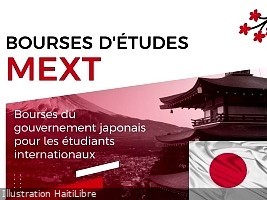
    The Embassy of Japan in Haiti has officially announced the opening of applications for the highly anticipated 2027-2028 cohort of the Japanese Ministry of Education, Culture, Sports, Science and Technology (MEXT) Research Scholarship program, offering life-changing academic opportunities for Haitian scholars seeking advanced study in Japan.

    Designed for Haitian students aiming to complete Master’s or Doctoral degrees, or conduct specialized research at accredited Japanese higher education institutions, the scholarship initiative serves as a cornerstone for bilateral academic cooperation. Its core mission is to deepen intellectual and scientific ties between Japan and Haiti, nurture a new generation of highly skilled global professionals, and drive sustainable progress for both nations and the broader international community.

    To qualify for the award, candidates must meet a clear set of eligibility criteria. All applicants must hold Haitian nationality, be under 35 years of age (meaning they must have been born on or after April 2, 1992), and hold an undergraduate degree, master’s qualification, or equivalent credential formally recognized by their intended host university in Japan. A strong working proficiency in English is also required, and candidates without prior Japanese language skills are welcome to apply: their coursework and research can be completed entirely in English, with optional opportunities to study Japanese during their time in Japan.

    Prospective applicants can access full program details, including the official Application Guidelines and all required submission forms, through the Embassy of Japan in Haiti’s official website. The application deadline for the 2027-2028 intake is June 12, 2026, and completed submissions may be sent via email to culture@ht.mofa.go.jp or delivered in person to the embassy’s offices located on the 2nd floor of the Hexagone Building, at the intersection of Clerveaux and Darguin Streets in Pétion-ville.

    The selection process follows a structured, multi-stage timeline. Following the application deadline, a shortlist of qualifying candidates will be compiled and notified in mid-June. Written language assessments in English and Japanese will be administered to shortlisted candidates at the end of June, with in-person interviews held at the Japanese Embassy in early July. Recommended candidates will then begin the process of applying to their selected Japanese universities immediately after interviews, with an August deadline for securing official acceptance letters. Successful scholars are scheduled to begin their academic stays in Japan in either April or September 2027, depending on their program of study.

    The embassy has also issued a key administrative note for all applicants: any application document written in French, with the exception of curriculum vitae, passport copies, and official language proficiency certificates, must be accompanied by a certified, accurate translation into either English or Japanese. The embassy does not provide translation services for applicants, so candidates are advised to arrange for this requirement well in advance of the submission deadline.

  • The 2026 hurricane season is beginning; preparations must begin now in Haiti

    The 2026 hurricane season is beginning; preparations must begin now in Haiti

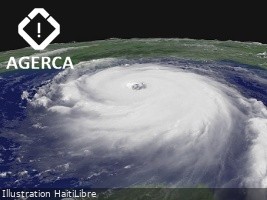
    The 2026 Atlantic hurricane season formally got underway on June 1, launching a six-month period of weather risk that will extend through the end of November for vulnerable coastal nations including Haiti. While official U.S. forecasting from the National Oceanic and Atmospheric Administration (NOAA) points to a higher likelihood of a milder-than-average season this year, local risk management leaders are sounding a clear warning: even one powerful storm is enough to trigger catastrophic damage in Haiti’s current unstable state.

    NOAA’s official outlook puts the probability of a below-normal hurricane season at 55%, with a 35% chance of near-normal activity and just a 10% chance of an above-normal season. The agency’s forecast, which carries a 70% confidence level, projects 8 to 14 total named storms (systems with sustained winds of 63 km/h or higher). Of those, 3 to 6 are expected to strengthen into hurricanes with winds of at least 119 km/h, and 1 to 3 could intensify into major Category 3, 4 or 5 hurricanes packing winds of 179 km/h or more. For comparison, an average Atlantic season typically sees 14 named storms, seven hurricanes, and three major hurricanes, putting 2026’s projected activity well below historical norms.

    But the Alliance for Risk Management and Business Continuity (AGERCA), a Haitian risk management body, stresses that a forecast for lower overall activity does not eliminate the threat of disaster for the Caribbean nation. “Even a single hurricane can devastate communities, claiming lives, forcing mass displacement, destroying critical infrastructure and knocking out essential services,” the organization noted, emphasizing that risk cannot be dismissed based on seasonal outlooks.

    This year’s hurricane season opens against an uniquely precarious backdrop for Haiti, which has been grappling with widespread gang violence that has driven massive population displacement, left large swathes of the country inaccessible to aid groups, weakened already fragile public infrastructure, and severely strained the government’s ability to coordinate emergency response.

    Against this context, AGERCA has issued an urgent call to action for all segments of Haitian society – from individual citizens and local communities to government institutions, private businesses, and civil society organizations – to prioritize immediate hurricane preparedness measures.

    The organization has outlined a set of key actionable steps for groups and individuals to take ahead of any potential storm landfall. First, it urges the public to only obtain weather and emergency updates through verified official channels, including Haiti’s Civil Protection Directorate, the national Hydrometeorological Unit, AGERCA itself, and established, reputable media outlets. It also advises organizations to update their internal emergency contact lists and key focal point information, review existing business continuity plans to account for current operating conditions, and secure critical physical documents, digital data, equipment and core assets.

    For individual households, AGERCA recommends assembling a customized emergency kit stocked to meet specific family needs, and pre-identifying reliable alternative communication channels that can be used if standard cell service and internet connections are disrupted during a storm. Finally, the organization urges the public to avoid spreading unconfirmed information, which can spark unnecessary public panic and undermine inter-agency emergency coordination efforts when a storm approaches.

  • Argentina : Strengthening cooperation in defense and security

    Argentina : Strengthening cooperation in defense and security

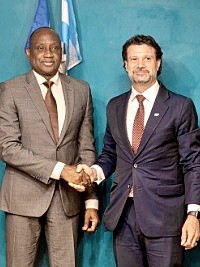
    On June 1, 2026, high-level defense officials from Haiti and Argentina held a targeted working meeting in Port-au-Prince centered on expanding collaborative ties in defense and public security, addressing the growing security challenges facing the Caribbean nation. Haiti’s Minister of Defense Mario Andrésol hosted Pablo André Graziano, Argentina’s interim Chargé d’Affaires in Haiti, for discussions that covered multiple priority areas of mutual cooperation.

    In response to a formal cooperation request submitted by the Haitian government, Graziano reaffirmed Argentina’s long-term commitment to deepening military partnership with Haiti. He outlined a concrete next step: Argentina stands ready to receive Haitian military cadets into its army, navy, and air force academies in the coming months, a training initiative designed to boost the professional development of Haiti’s Armed Forces (FAd’H).

    Beyond training, Graziano stressed that strengthening the institutional capacity of Haiti’s military is a critical step to ensure the force can fully integrate into regional security cooperation frameworks, supporting collective stability across the Americas.

    During the talks, Minister Andrésol underlined that nations across the region share a set of pressing transnational security challenges, including terrorism, transnational organized crime, and a range of other cross-border threats that no single country can address alone. Against this backdrop, he argued that the full restoration and steady strengthening of Haiti’s national armed forces are core requirements for consolidating domestic stability and upholding regional security balance.

    The meeting also delved into cooperation frameworks involving Haiti’s Ministry of Defense and the Gang Suppression Force (GSF). Both representatives reaffirmed the urgent need to enhance coordination and complementary action across Haiti’s security institutions. Specifically, they highlighted the critical importance of improving operational alignment between the GSF, the Haitian National Police (PNH), and FAd’H to boost the effectiveness of counter-offensives against armed criminal groups that have destabilized large swathes of Haiti.

    Additionally, the two sides discussed plans to develop formal cooperation mechanisms focused on building the institutional and operational capacity of Haiti’s public security forces. The ultimate goal of this effort is to enable Haitian institutions to fully take over their domestic security responsibilities, and gradually assume control from the Multinational Security Support Mission once its mandate concludes.

  • Cooperation : Working session on various development projects with France

    Cooperation : Working session on various development projects with France

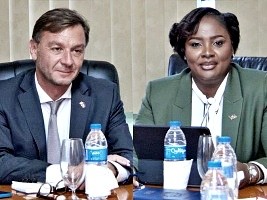
    On May 28, 2026, senior Haitian government officials and a senior French delegation gathered in Port-au-Prince for a substantive working session focused on advancing collaborative development initiatives aligned with Haiti’s top national priorities. Leading the Haitian side was Sandra Paulemon, Haiti’s Minister of Planning and External Cooperation, joined by her senior leadership team including Guy Roméro Latry, Director General of the Ministry, and Paul Ruddy Mentor, Chief of Staff. The French delegation was headed by Antoine Michon, French Ambassador to Haiti, and included senior representatives from two key French development institutions: Expertise France and the French Development Agency (AFD).

    Opening the session, Minister Paulemon opened by highlighting the longstanding productive partnership between Haiti and France, singling out the robust cooperation the two nations have built in the critical security sector. She outlined the three core priorities laid out in the current Haitian government’s National Pact, under the leadership of Prime Minister Alix Didier Fils-Aime: restoring widespread national security, driving inclusive economic and social recovery across the country, and successfully organizing upcoming general elections.

    Paulemon also raised a key procedural point to improve future project delivery: she called on international development partners to integrate Haiti’s Ministry of Planning and External Cooperation into project design and planning from the earliest stages. This closer involvement, she argued, would enable stronger cross-sector coordination, as well as more rigorous ongoing monitoring and evaluation of all external development interventions to ensure they deliver intended outcomes for Haitian communities.

    In response, Ambassador Michon and his team presented the full portfolio of French-supported projects currently active across Haiti, totaling roughly 15 initiatives spread across multiple regions and key sectors. These projects span agriculture, food security, primary and secondary education, public health, democratic governance, biodiversity conservation, and cultural preservation. Michon reaffirmed France’s unwavering commitment to supporting the Haitian government in advancing the three national priorities outlined by Paulemon.

    The ambassador detailed existing French security assistance already underway: this includes ongoing training programs for Haitian military personnel hosted in Martinique, and multiple capacity-building initiatives tailored to strengthen the operational capabilities of the Haitian National Police. He also outlined the scope of French humanitarian and social development work across the country, and confirmed France stands ready to provide full support to Haitian electoral authorities as they prepare for the upcoming planned elections.

    The session also touched on institutional capacity building within Haiti’s government. Minister Paulemon stressed the need for continued long-term technical support for staff at both her ministry and other sectoral government bodies, with a specific focus on leveraging specialized expertise from institutions like Expertise France. She outlined ongoing internal reforms aimed at strengthening the Ministry of Planning and External Cooperation, including expanding the mandate and resources of the Directorate of Public Investment and reinforcing the operational capacity of Study and Programming Units (UEPs) embedded within each sectoral ministry.

    Closing the working session, Paulemon reaffirmed the Haitian government’s commitment to deepening ongoing dialogue with all international development partners, with the shared goal of improving coordination of development interventions and ensuring all external support aligns closely with the national development priorities set by the democratically elected Haitian government.

  • Mother’s Day, Messages of Tribute to Haitian Mothers

    Mother’s Day, Messages of Tribute to Haitian Mothers

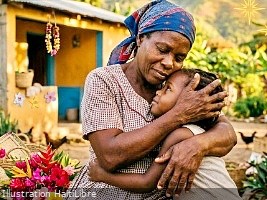
    As Haiti marked its 2026 Mother’s Day celebration on January 6, senior government officials across multiple cabinet portfolios have issued public tributes recognizing the extraordinary resilience, sacrifice and foundational role of Haitian mothers both at home and across the global diaspora. The tribute comes as the Caribbean nation continues to grapple with widespread political instability, insecurity and widespread uncertainty that has disrupted daily life for millions of Haitian citizens.

    In his official address, Prime Minister Alix Didier Fils-Aimé extended a solemn message of gratitude to all Haitian mothers, framing them as unshakable pillars of the nation. ‘In the midst of the turmoil our country is experiencing, they remain steadfast,’ the prime minister stated. He described Haitian mothers as living symbols of courage, dignity, and unwavering hope, noting that their daily sacrifices, boundless love and quiet faith keep families intact and preserve the shared values that bind Haitian society together.

    Fils-Aimé emphasized that these women serve as the quiet but indispensable foundation of national cohesion. By nurturing solidarity within their communities and households, Haitian mothers reinforce a core truth: that national unity is Haiti’s greatest strength, and long-term stability is rooted first in the love and connection of the home. ‘The Government bows before these women who, despite insecurity, fear, and uncertainty, continue to protect, educate, and love, without ever giving up,’ he said. ‘It is thanks to them that the hope for a more stable and fraternal future remains alive.’

    Closing his address, the prime minister extended the nation’s formal gratitude: ‘To you, mothers of Haiti: the Republic thanks you. Your strength honors the Nation. Your love shows us the way. Together, hand in hand, we will build upon your solid foundations a more united, more peaceful, and prouder Haiti. Happy Mother’s Day! May God bless every Haitian mother and protect Haiti.’

    Valéry Fils-Aimé, Haiti’s Minister of the Environment, also released a tribute centering the contributions of mothers working within his department and across the country. He praised the tireless commitment of Haitian mothers who balance professional responsibilities protecting Haiti’s natural environment—one of the nation’s most valuable shared heritage—with their demanding roles as caregivers and family leaders. ‘Through their courage, their sense of duty, their selflessness, and their constant commitment, they contribute every day to the smooth functioning of the institution and to the noble mission of protecting our environment,’ he noted. He added that even amid daily challenges, these women carry out their work with unwavering professionalism, pride and dignity, while still showing boundless devotion to their families. Fils-Aimé extended his gratitude for their contributions to national sustainable development and community well-being, wishing all Haitian mothers a day of joy and well-earned recognition.

    Kathia VERDIER, Minister for Haitians Living Abroad, used the occasion to shine a particular spotlight on Haitian mothers in the global diaspora. She highlighted the daily struggles these mothers face, from geographic separation from their extended communities to systemic and economic challenges, as they work tirelessly to build better futures for their children and support their families back in Haiti. ‘Despite distance, difficulties, and separation, [these mothers] continue to be the pillars of their families,’ Verdier stated, praising their strength, determination and commitment to core Haitian values, before extending holiday wishes to all mothers.

    In a break from official statements, Pedrica SAINT JEAN, Minister for the Status of Women, marked the occasion with on-the-ground outreach to new mothers. On May 31, Saint Jean visited two healthcare facilities: a hospital in Delmas 33 and the Eliazar Germain Hospital Center in Pétion-Ville, where she distributed essential maternity care kits to dozens of women who had recently given birth. During her visits, she commended the extraordinary courage, resilience and dedication that all Haitian mothers demonstrate, even amid daily hardship, noting their irreplaceable role in holding families together and driving long-term societal progress. She also reaffirmed her ministry’s ongoing support for Haitian mothers on the day dedicated to honoring their contributions.

    Rounding out the government’s tributes, Minister of Public Works Pierre Louis drew a connection between national development and the work of mothers. ‘Building the future of a nation is not just about infrastructure; it begins with the love, education, and resilience that you transmit every day,’ he said. ‘Through your sacrifices, you pave the most beautiful paths: those of life and hope. Honor and respect to you.’